The Bazaar of War
The Bazaar of War

@bazaarofwar

53 tweets 99 reads Aug 02, 2022
Hannibal’s famous victory at Cannae in 216 BC is one of the most misunderstood battles of all time. It is often cited as a tremendous victory won by a perfectly-executed double envelopment.
The truth is very different—and far more interesting.
Thread
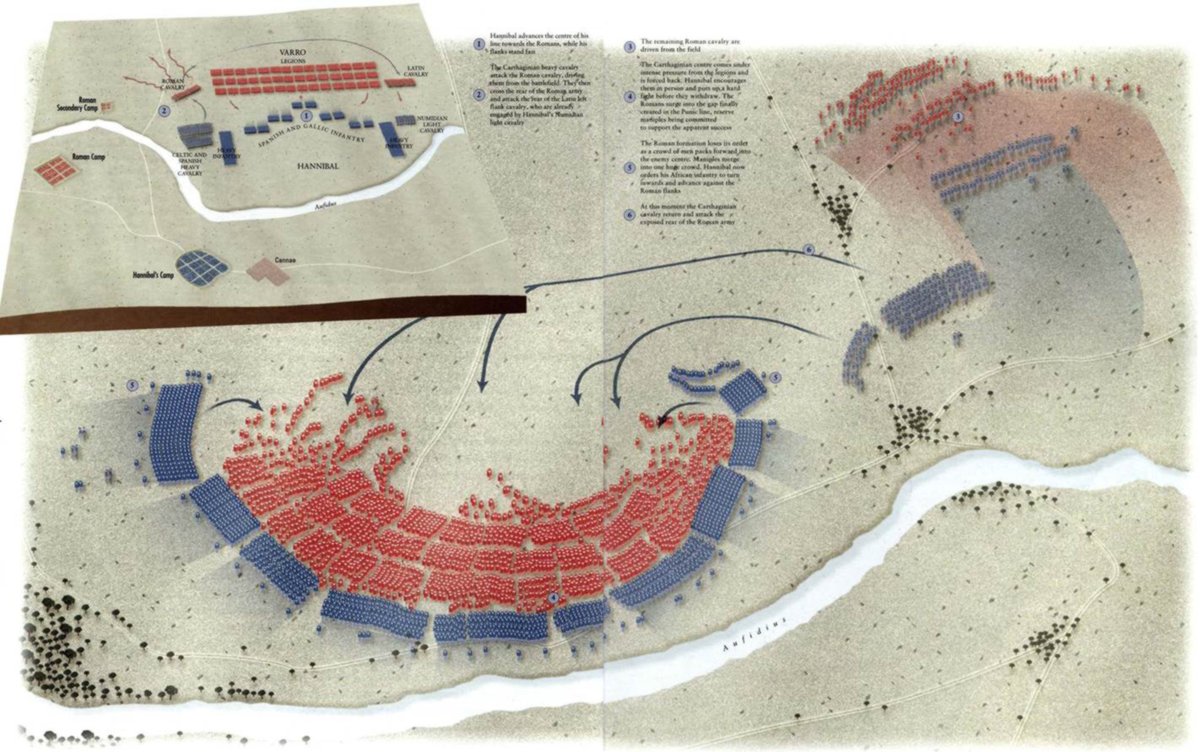
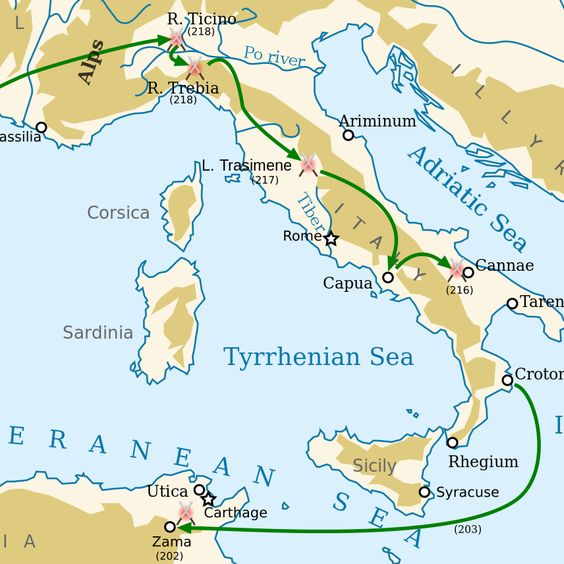
Early 216, southeastern Italy: Hannibal has been rampaging around Italy for the past year and a half during the opening stages of the Second Punic War, inflicting a number of serious defeats on Roman armies.
With the arrival of spring, Hannibal moves out of winter quarters and heads south. He is trailed by a MASSIVE Roman army—an unprecedented eight legions plus a roughly equal number of allies, numbering as much as 80,000 infantry and 6,000 cavalry.
Against this, Hannibal has only half the infantry—Libyans brought over from Africa, some from Spain, and still more recruited from among the Celts of northern Italy. His cavalry is more numerous and better than the Romans’, however, about 10,000 in all.
The Roman Senate gave their army strict orders to chase down the Carthaginians and defeat them quickly to avenge their earlier humiliations. Such a large force had to move quickly in any case just to keep so many men fed.
Hannibal responds by marching south and seizing the citadel of Cannae, which the Romans had been using to stockpile food from the surrounding area. This means the Romans can’t starve him out, but have to come and fight on his terms.
After a series of initial maneuvers around the river Aufidus, by the evening of 1 August both armies end up with the bulk of their forces encamped on the north bank of the river.
Early the next morning, they both cross the river and form up on the opposite shore.
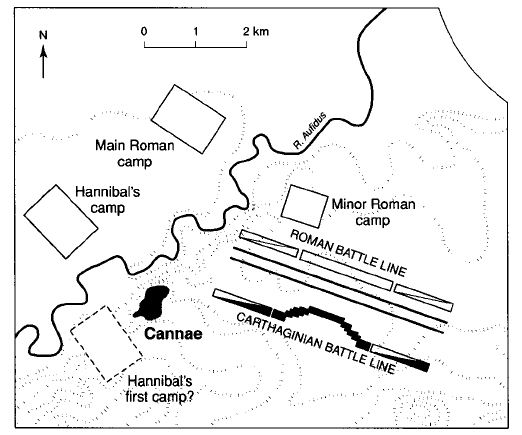
Hannibal has already stacked the deck in his favor. His back is to the sirocco out of the southwest, the hot summer wind that blows dust from the Sahara across the Mediterranean—and into the Romans’ eyes. Towards late morning, the sun would also start to blind them.
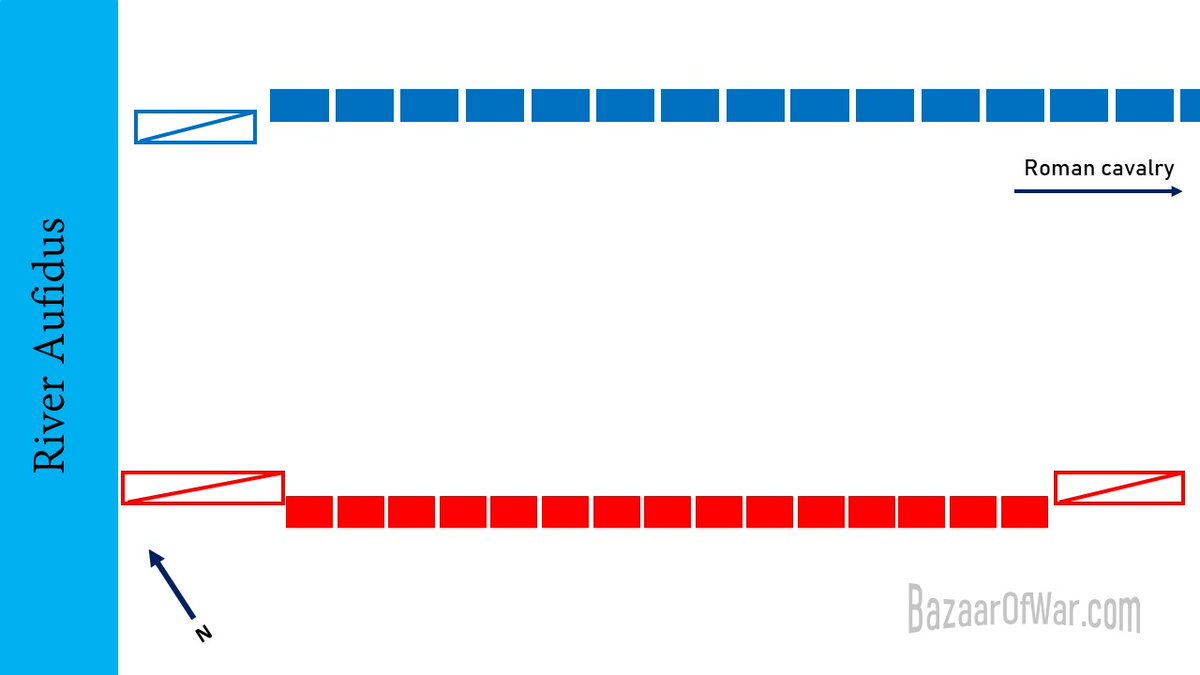
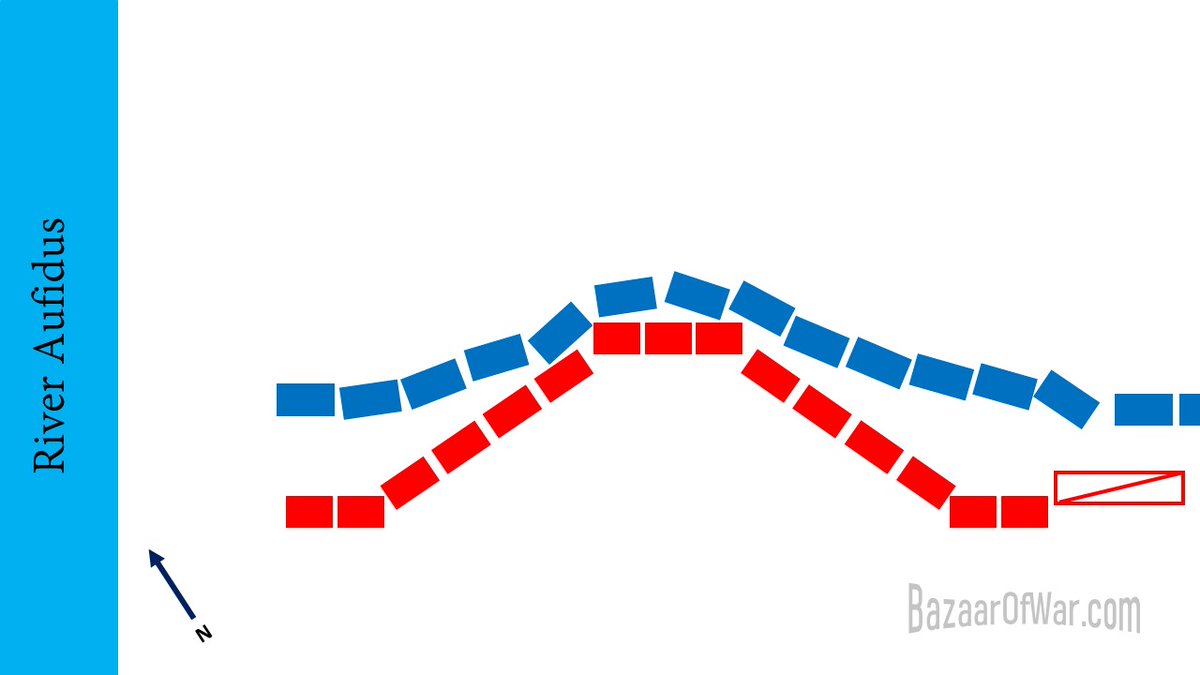
The two formations are roughly similar: cavalry on the wings, infantry in the center. The Roman right and Carthaginian left are both anchored on the river, while the horsemen on the opposite end are guarding the open flank.
This last point is a real problem for Hannibal, as his infantry is outnumbered over 3:2. If the opposing enemy wraps around right flank, he is finished.
So he adopts an unusual solution.
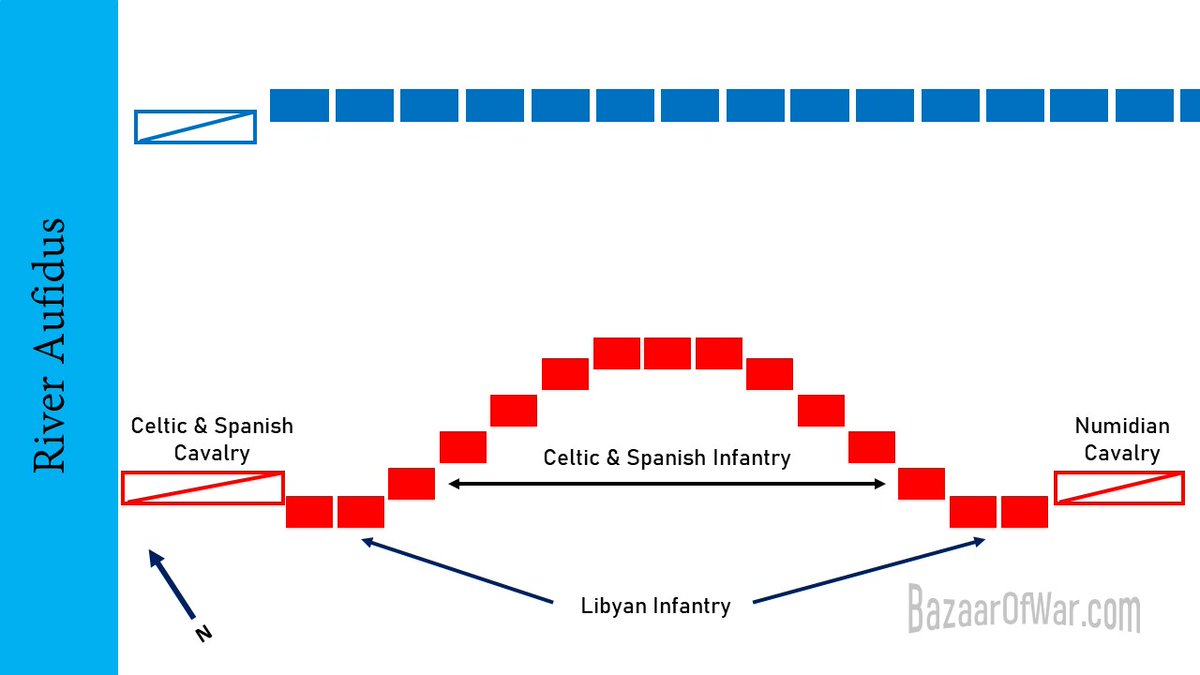
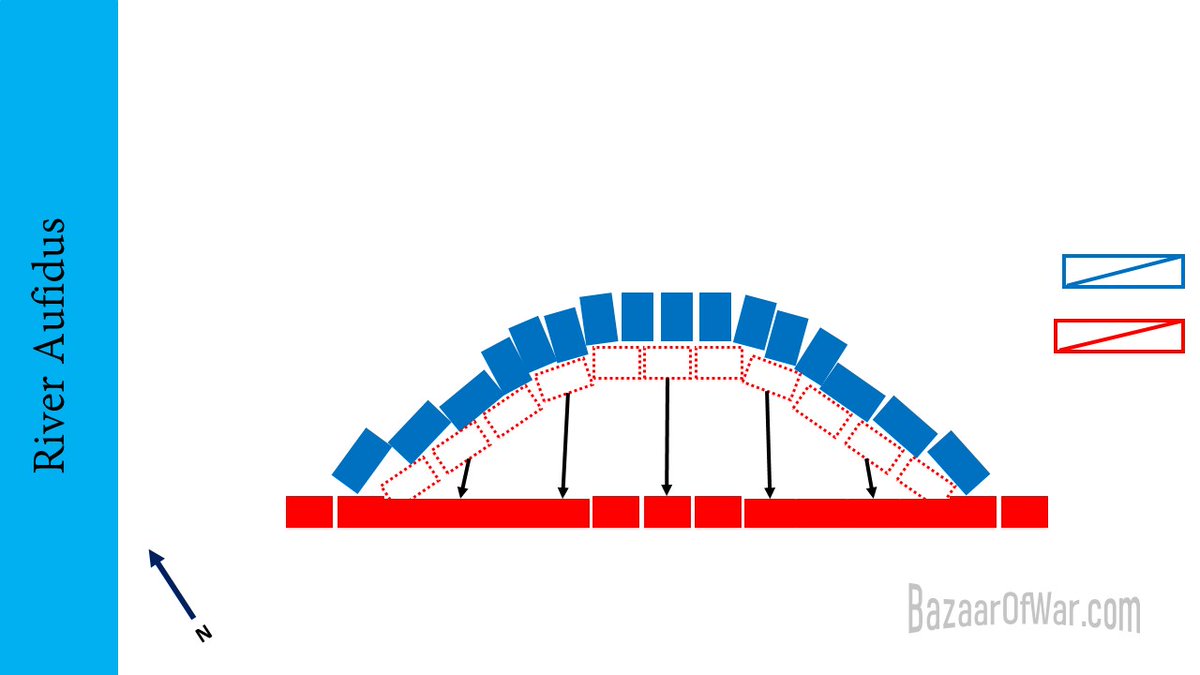
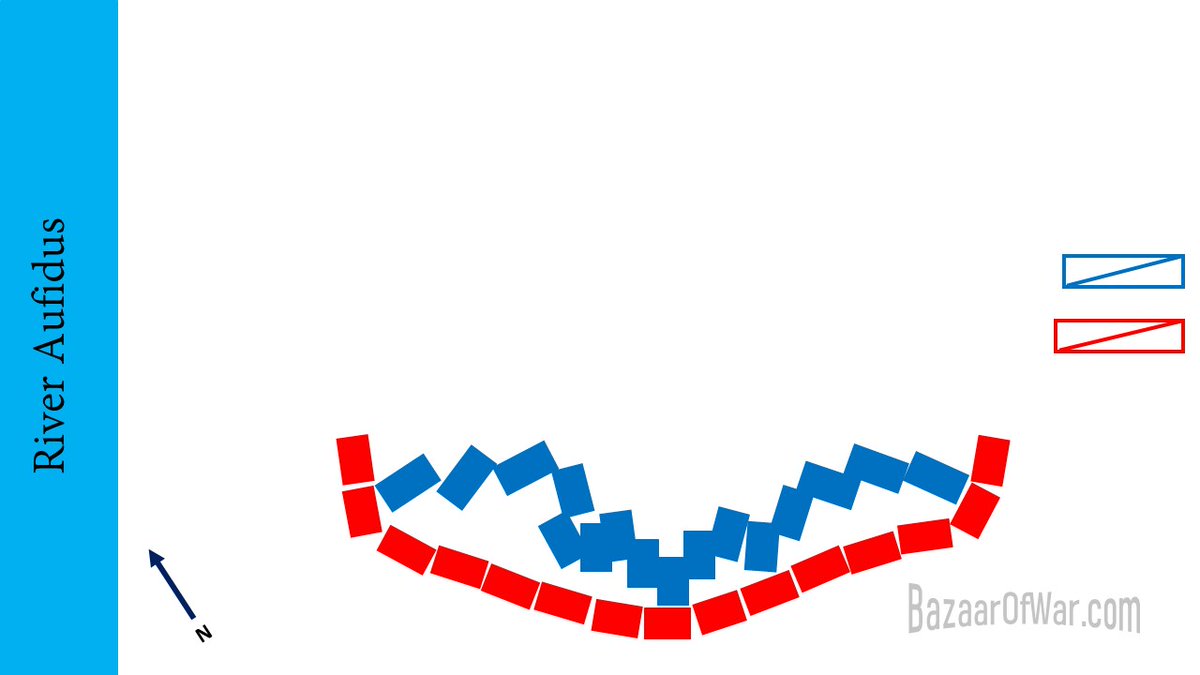
He places the Spanish and Celtic infantry in the center, with the heavily-armed Libyans on the flanks. He then pushes the centermost companies out in front, with the adjacent companies falling off to either side.
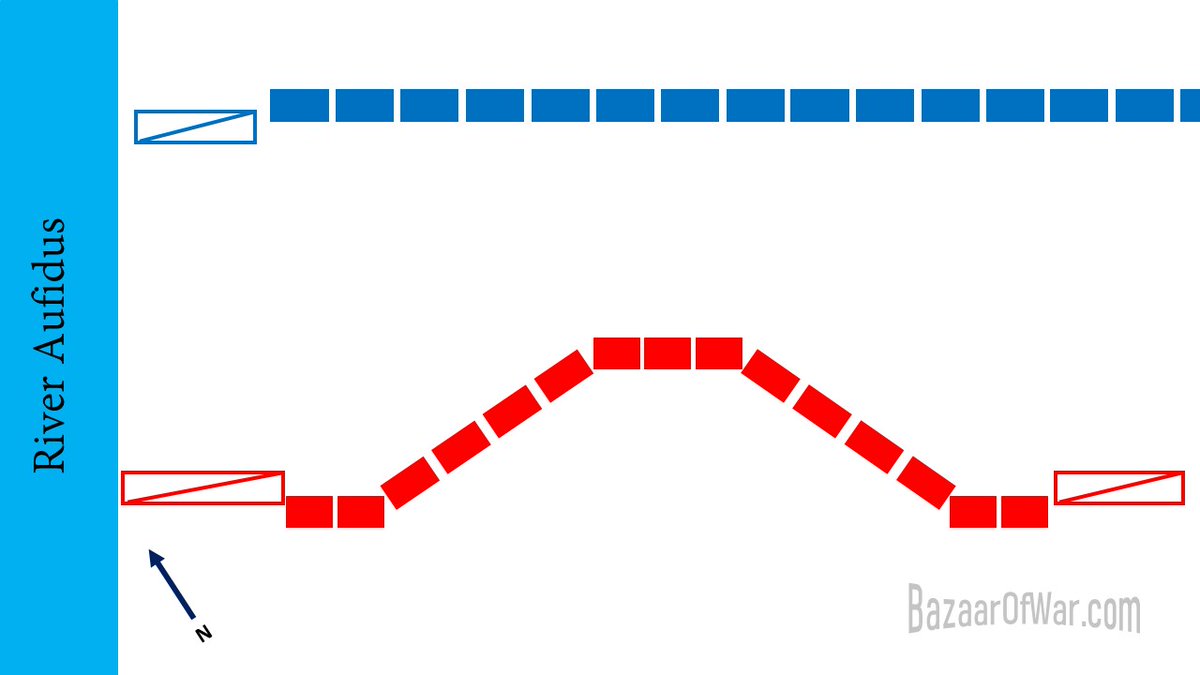
He then does something that most modern accounts miss: he orders the companies echeloned on either the side to wheel outward, forming a smooth flank—not the usual staggered echelon.
This is a detail that will prove crucial to his entire battle plan.
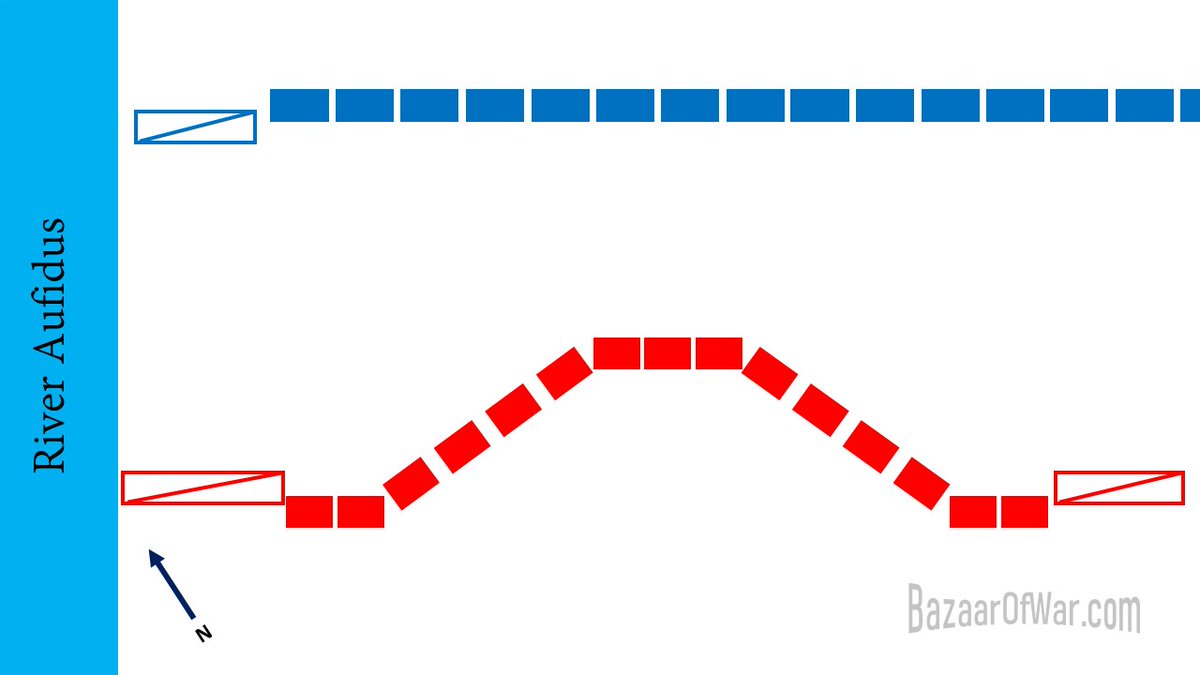
Modern writers miss this because Livy calls the formation a “wedge”, a word commonly used to describe an echeloned formation with a reinforced center. Such terminology was not standardized, however, and he was almost certainly just referring to the shape.
Polybius (who calls the formation a crescent, not a wedge), specifies that Hannibal had to thin out his line to adopt this formation. But if the companies simply advanced at staggered intervals, they would occupy the exact same frontage as a straight line.
It’s a simple geometry problem: an arc between two points covers a longer distance than a straight line. But even when staggered, the echelon's front stays the same.
Once the companies wheel outward, the entire line automatically becomes much thinner. While they might reduce the depth of their units to extend their frontage, they also probably leave substantial intervals between companies (we will see why later).
The battle begins with skirmishing by the light infantry on both sides. While this is going on, the Romans condense their lines, strengthening the center—a true echelon formation.
Why do this? The answer lies in the Romans’ perception during the opening phase of the battle.
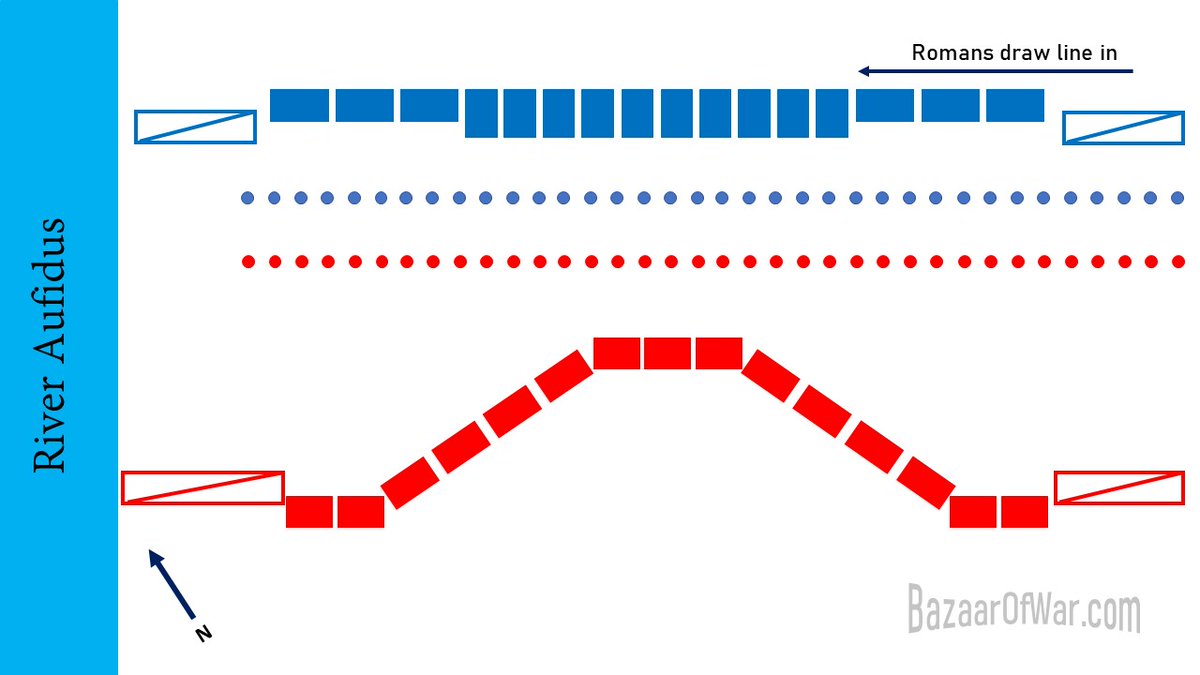
The purpose of deploying skirmishers before a battle, other than to soften the enemy line, is to screen a friendly force, preventing the enemy from observing their formation. This, plus the dust from the sirocco, makes it very hard for the Romans to tell what was going on.
All the Romans can see is the Punic center bulging out towards them. They can’t tell how many ranks deep it is, and probably figure that the center is heavily reinforced to smash through their own line.
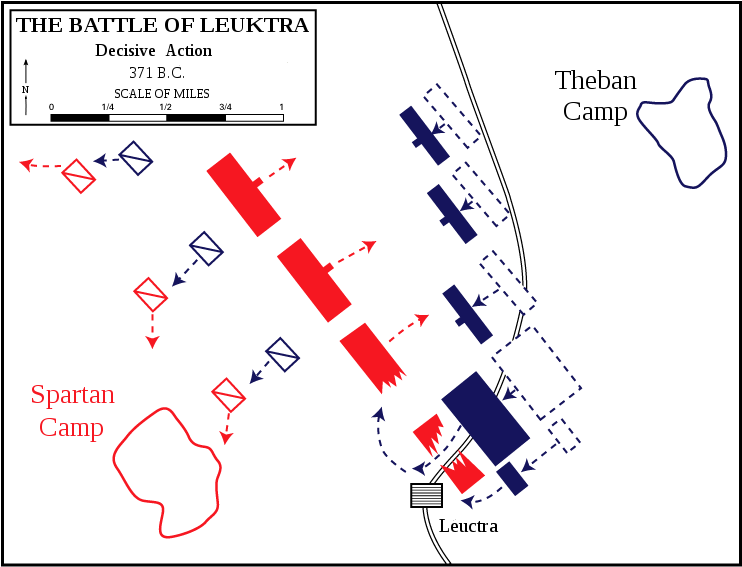
That is exactly what the outnumbered Thebans did at the Battle of Leuctra in 371 BC, when they famously defeated the hitherto invincible Spartans by heavily reinforcing their left and pushing it ahead to smash the Spartan right.
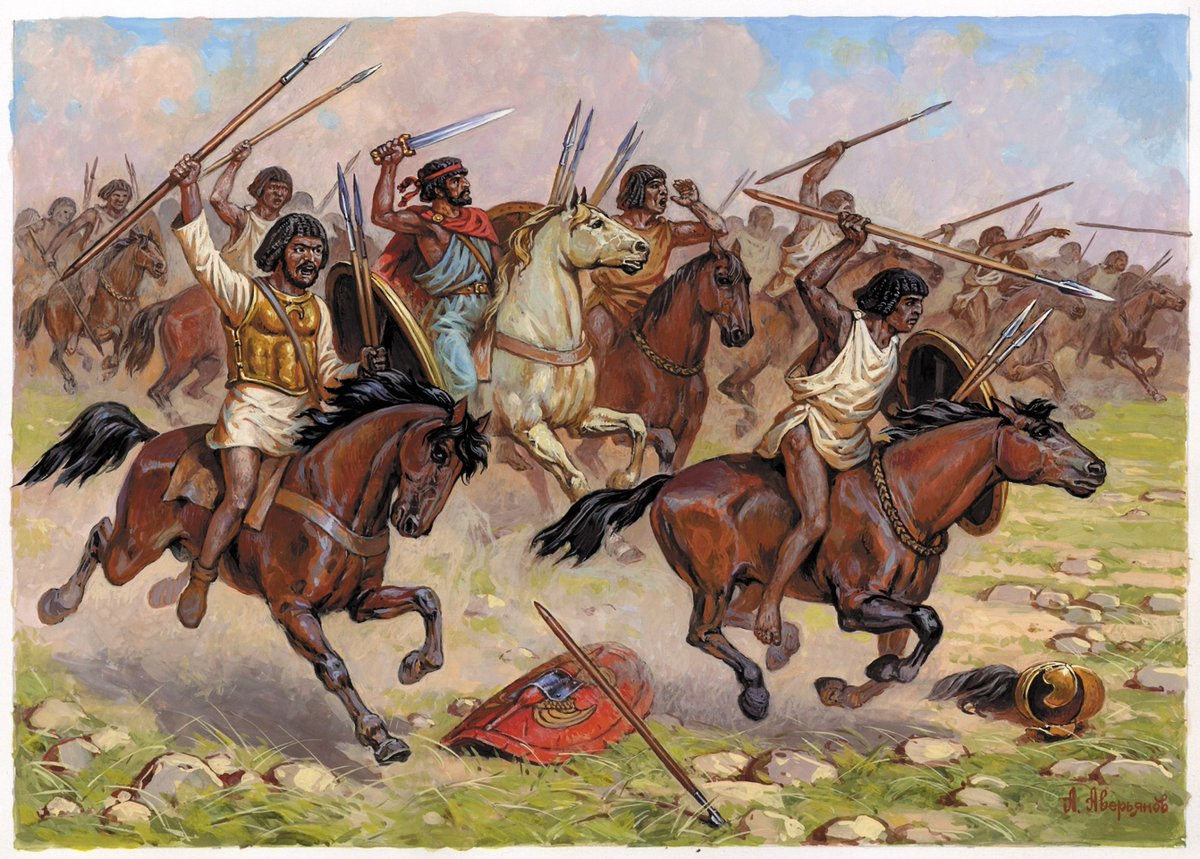
While all this is going on, Hannibal sends his Celtic cavalry on the left against the Roman right. These are crowded between the infantry and the river and lack room to maneuver. The Romans are soon routed by the better and more numerous Celts, who take off in pursuit.
By the time the cavalry fight is over, the Roman line is ready to advance. The whole formation moves forward as a mass.
The Numidian cavalry on the Carthaginian right skirmishes inconclusively with its Roman opposite while this is going on.
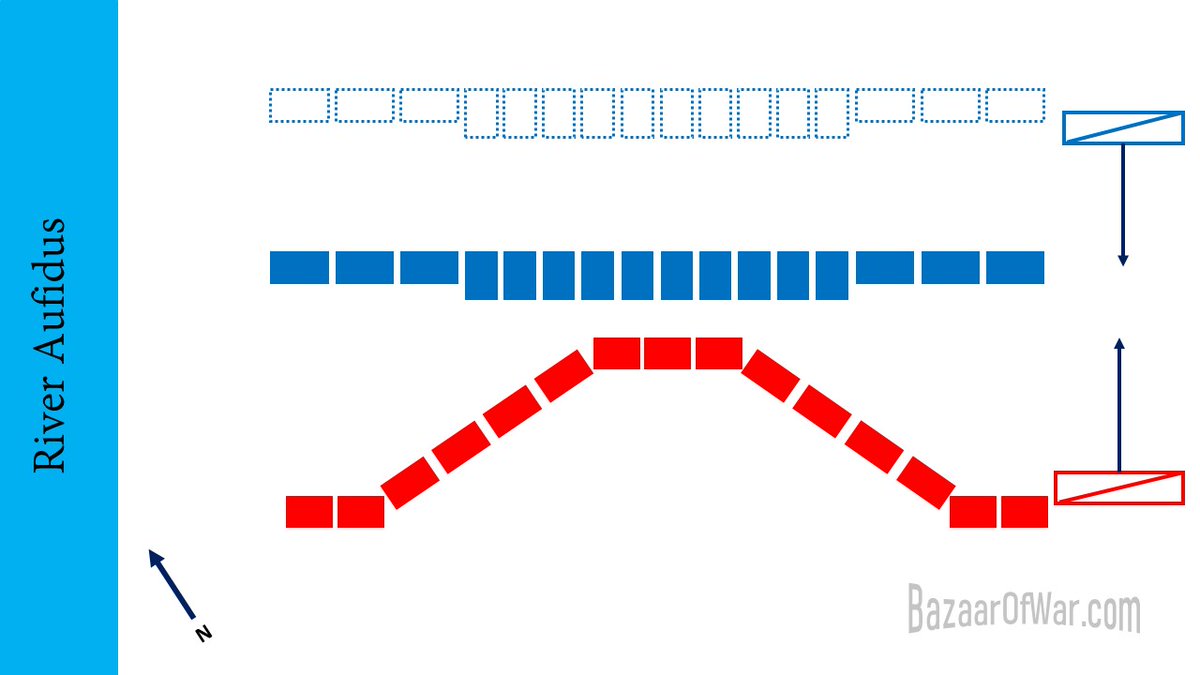
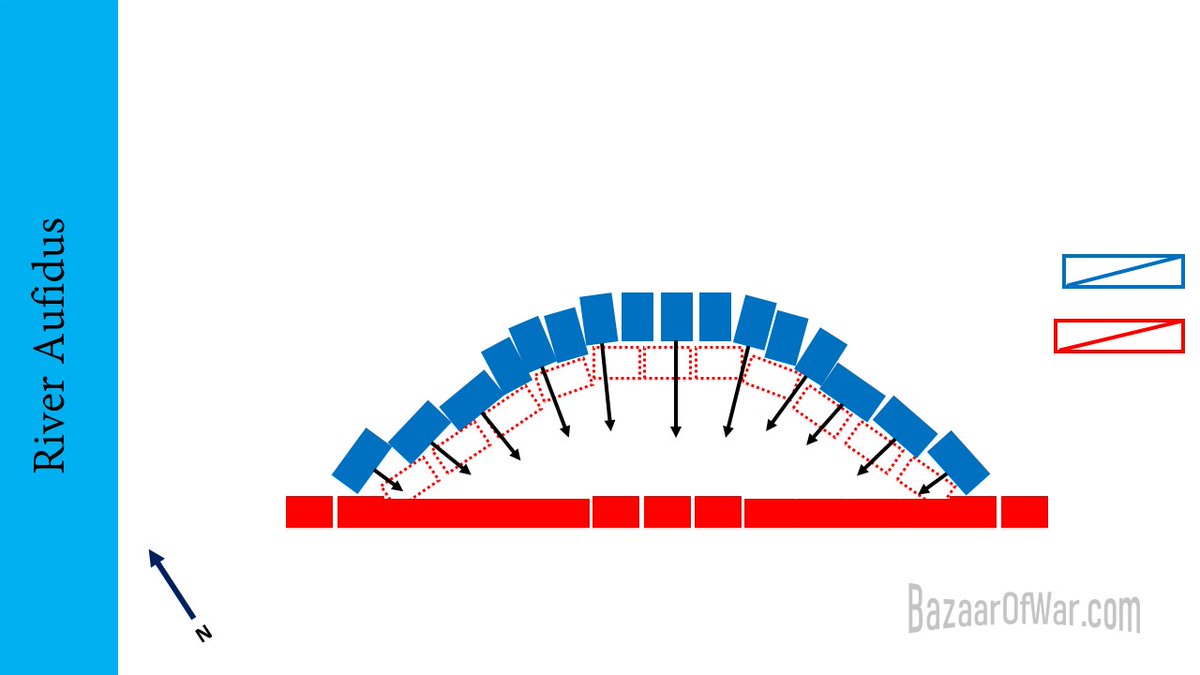
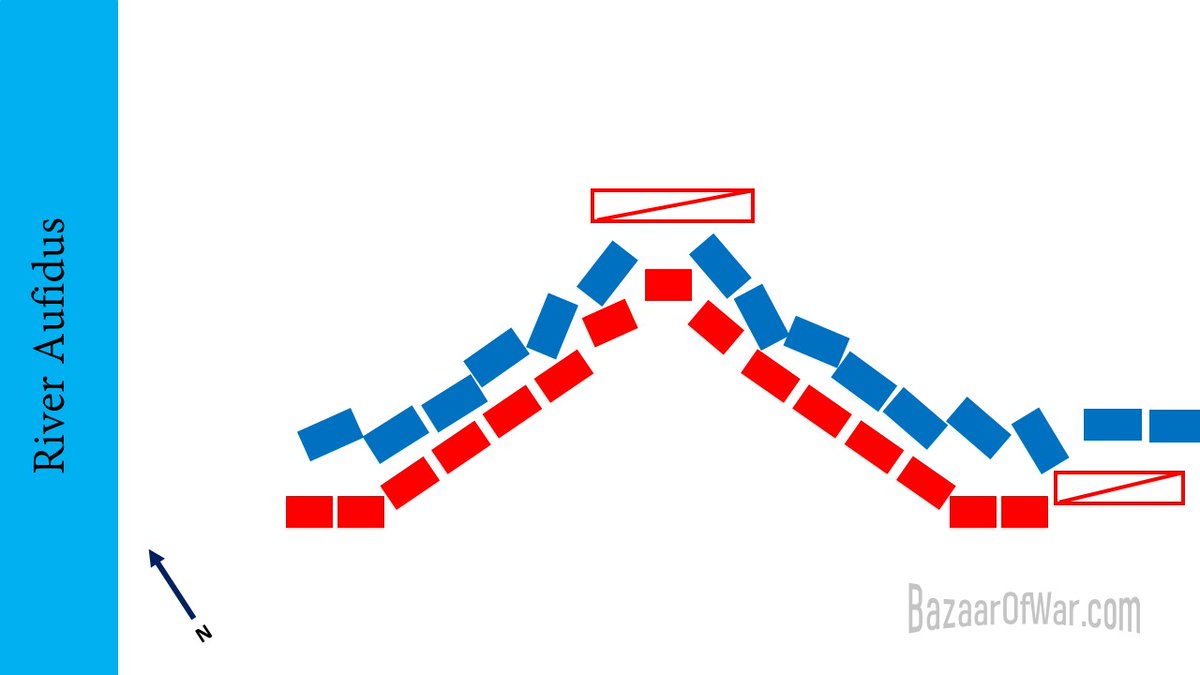
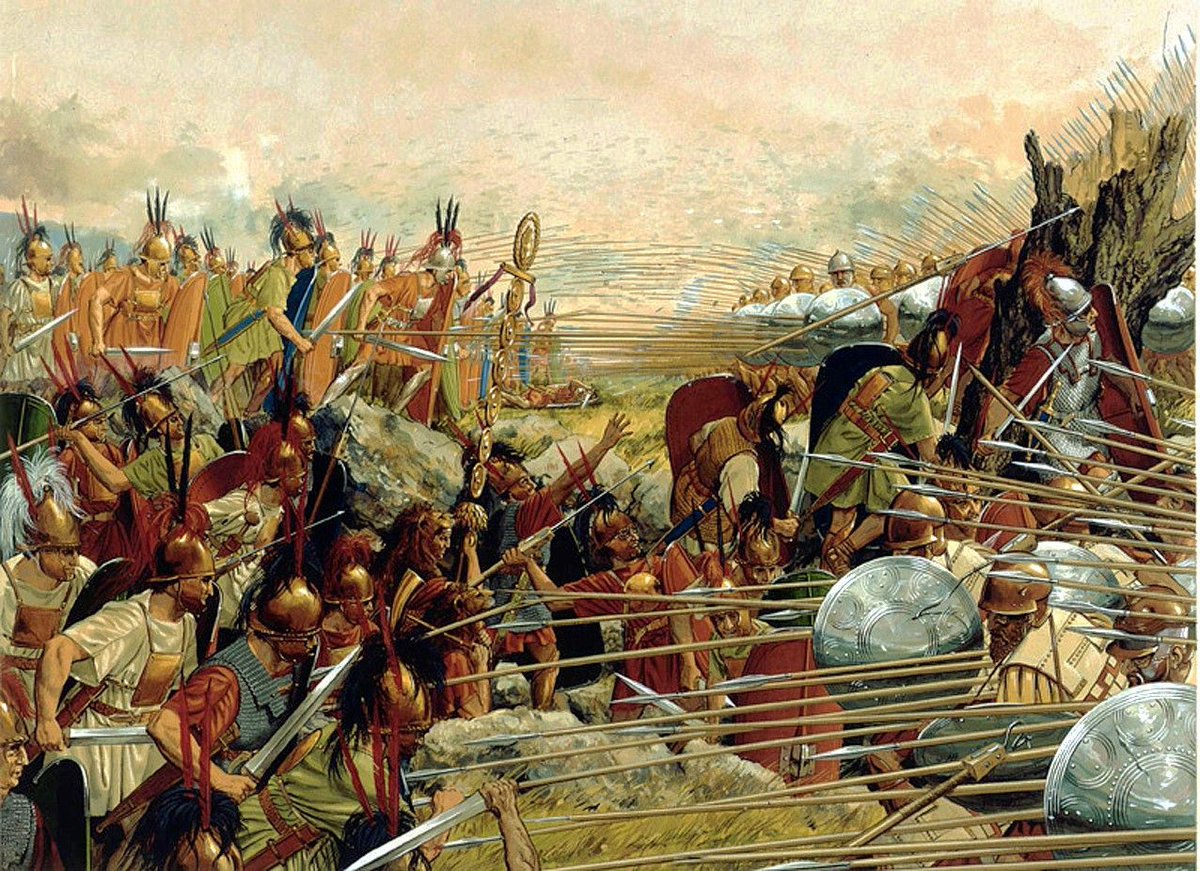
What the Romans are not prepared for is the shape of the Carthaginian front. As the line advances and the inner maniples start making contact with the angled line, they naturally turn inward. The deeper-than-usual columns start jostling the maniples on their outer flank.
Those outer maniples also have to speed up and swing around to maintain alignment with their neighbors—in such a situation, the entire formation aligns to the center. As they run to catch up, they turn in at even sharper angles.
This starts to disorder the densely-packed formations, but also does something more important: it molds the entire Roman line into a concave crescent of their own.
Not something that would happen if facing a normal echeloned front.
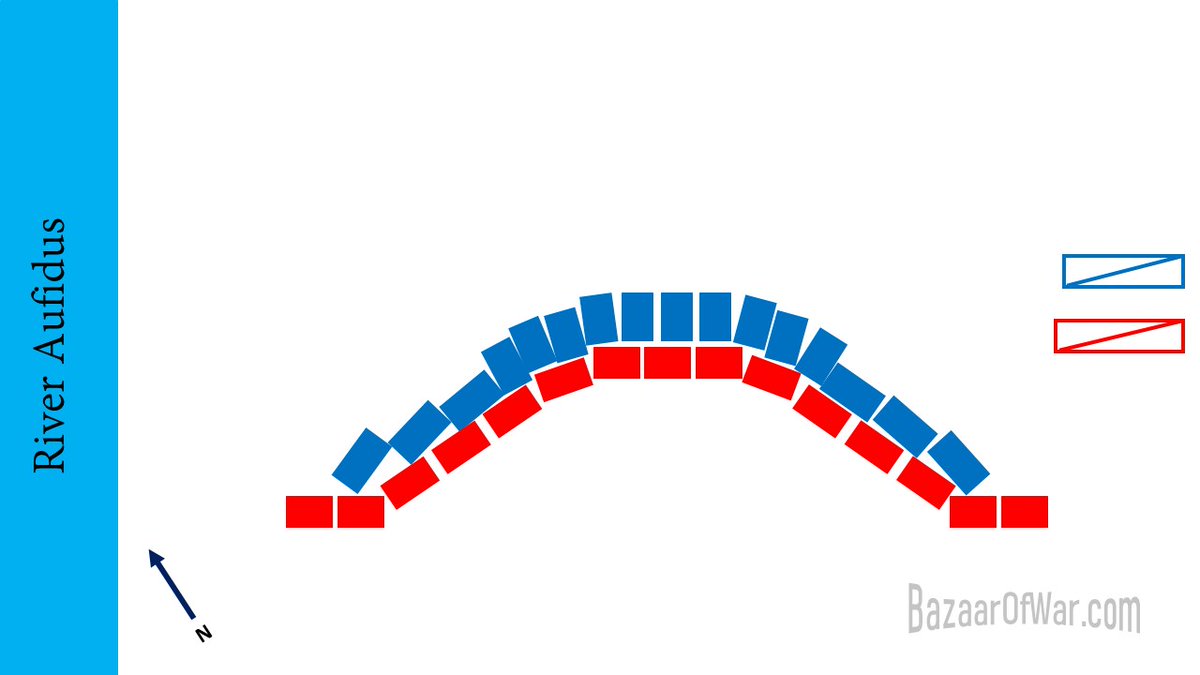
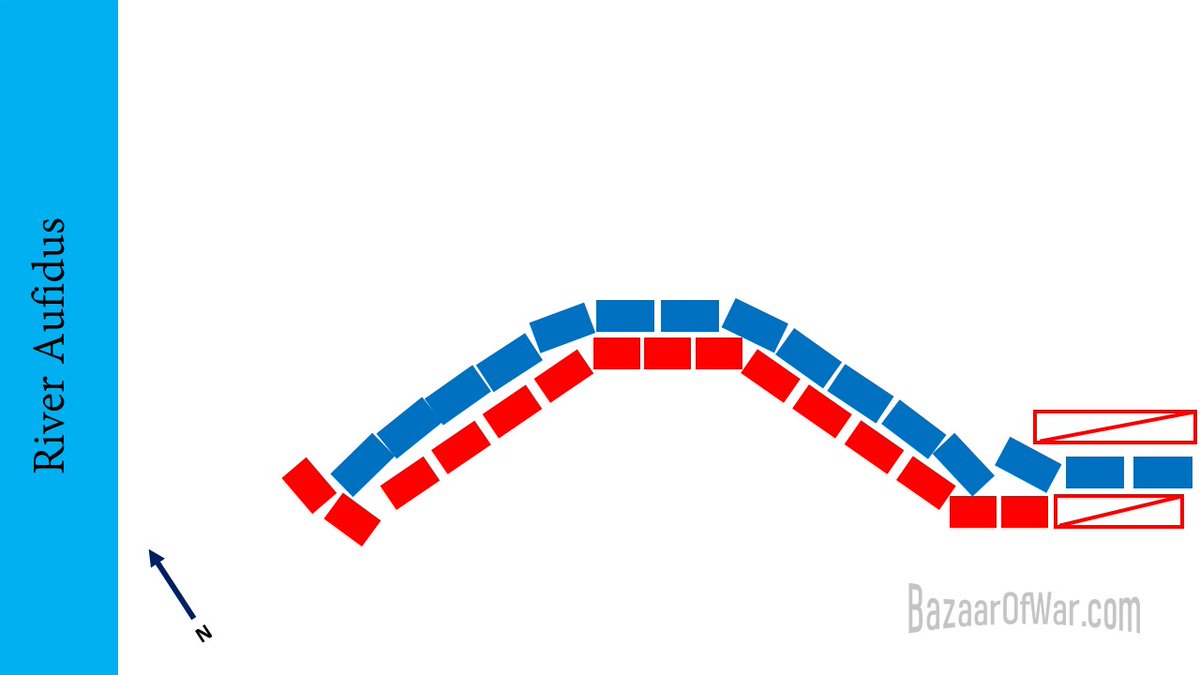
The Carthaginian center is surrounded by this point, but Hannibal is prepared, having placing himself at the center to lead a planned retreat. As the crescent collapses under the inexorable pressure, he ensures the entire formation reverts to a line.
In truth, this is probably complete chaos. The Celtic and Iberian infantry are taking heavy casualties from the strong Roman push, and it takes all of Hannibal’s abilities to prevent the planned withdrawal from turning into a rout.
The Roman, on the other hand, are already tightly packed and are converging on a single point. Even as the Carthaginians fall back onto a straight line, the Romans are prevented from changing course by the deep formations on either side.
Not that it would make much difference if they could: they are faced with the same geometry problem as before. Whereas the thinner Carthaginian units can squeeze back on line without running into one another, the Romans have to cram their entire frontage in a much narrower space.
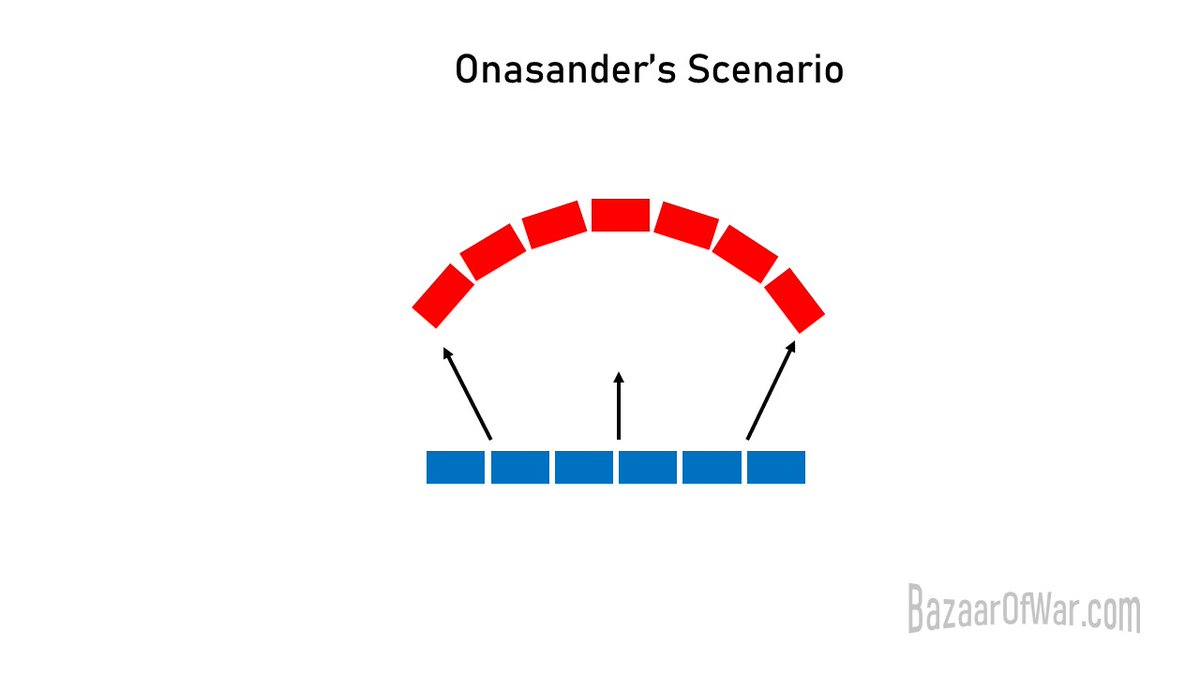
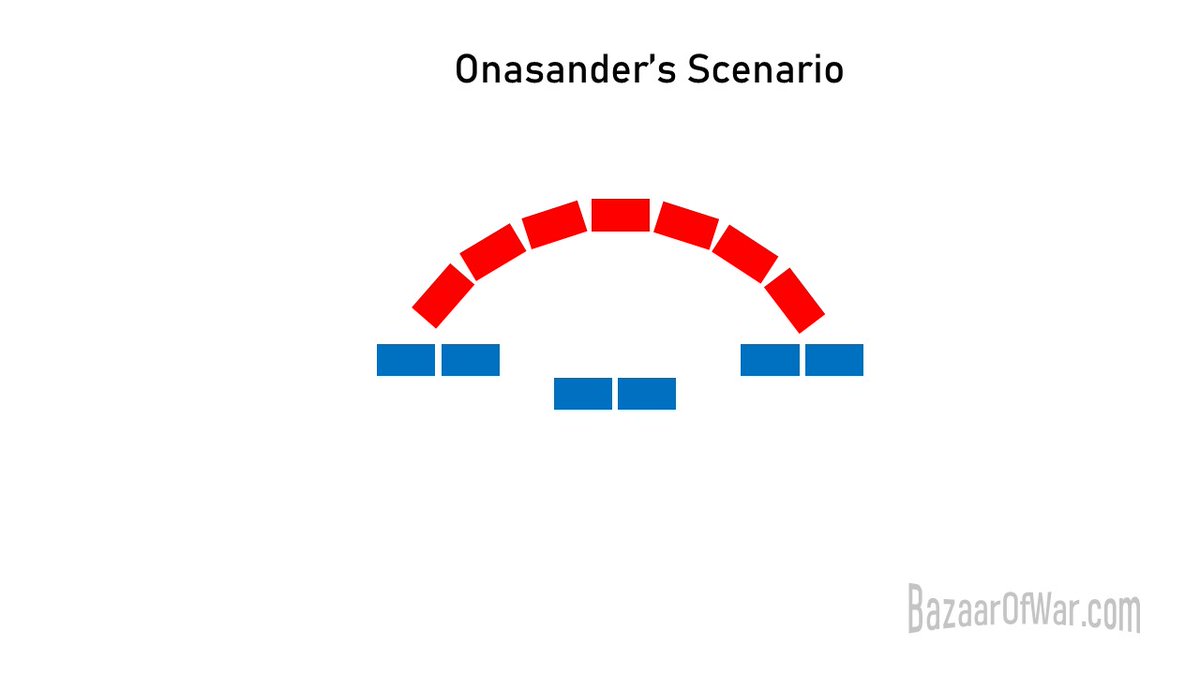
These problems are well known in the ancient world. Onasander’s Strategikos advises how to deal with a larger enemy arrayed in a concave formation: rather than march into the center, where the smaller force will get encircled, he recommends attacking the protruding flanks.
This way the smaller army can overpower the enemy flanks, but the enemy center cannot advance to help out without getting crowded together and losing formation.
This is exactly what is happening to the Romans. The centermost units, which had the most direct path and were the first to make contact with the enemy, continue to push the enemy center back.
That is when things start to go horribly wrong.
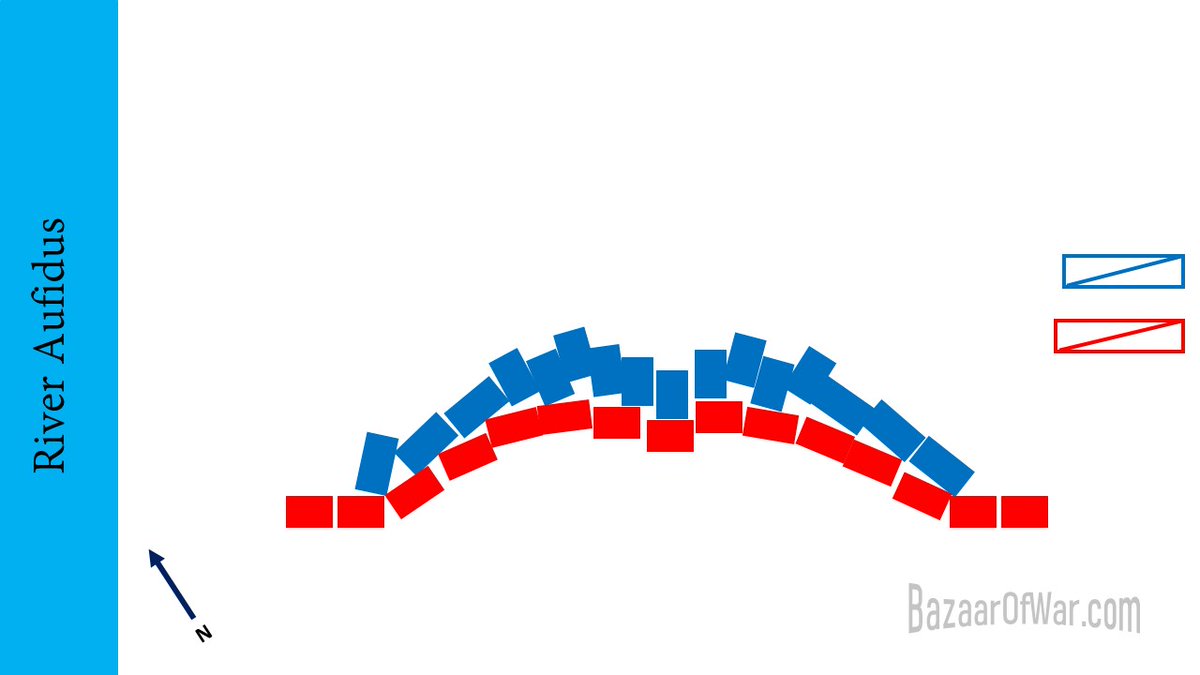
As the outer maniples converge from the wings, they start to run into the center units. They knock each other around and the men in the rear struggle just to stay upright. Without the support of these men behind them, the front ranks can’t maintain the forward pressure.
This allows the Carthaginian line to stabilize and reform. As this happens, the Libyans on the either end swing in and start attacking the Romans on their flanks.
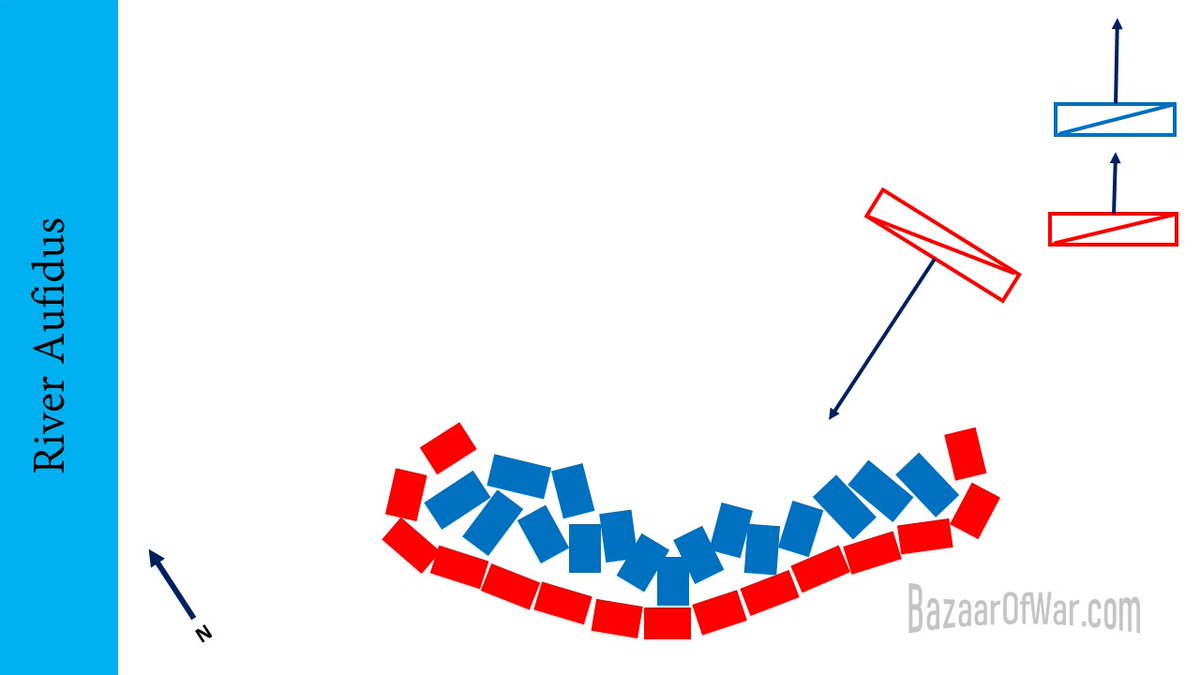
It keeps getting worse for the Romans. A few individual units might be able to maintain some cohesion and face outward, but they keep getting pushed on all sides by their own men. These shocks ripples through the packed mass, disrupting lines and knocking men over.
As the infantry gets squeezed tighter, the Celtic cavalry return from their pursuit of the Roman right and help the Numidians defeat the Roman left.
As the Numidians pursue, the Celts turn and attack the Romans from the rear.
It is all but over now.
The rest of the day is a slaughter. Groups of several thousand men break out and escape, but most are eventually captured. Those remaining are killed to a man.
So why isn’t Cannae a victory by double envelopment?
A true envelopment uses a flank attack to disrupt the enemy formation. To do that, Hannibal would have to extend his line, and the Romans would have kept formation and smashed through his thin line.
Hannibal didn't win by encircling the Romans. He didn’t even win by attacking their flanks. He won by turning their army into a disordered, concentrated mass. By the time the Libyans entered the fray, the battle was already won.
Far more brilliant than a mere double envelopment.
As a coda, what would have happened if things didn’t go according to plan? What if the Romans didn’t draw in their center?
There were probably other parts to Hannibal’s plan that went unmentioned because they never came into play, but we can take a guess.
(It should be noted that Livy mentions one additional stratagem: Hannibal sent 500 cavalry across enemy lines in false surrender; once the battle was engaged, they drew their hidden weapons and started attacking the Romans from the rear. Victory is won by a sum of small things)
As a first possibility, the battle might develop in a similar way, but the Romans don’t draw in their lines. The extended Roman front still wraps around the extended Carthaginian frontage and get crowded together as the crescent collapses.
Because the Roman center has less impetus, the Carthaginians conduct a more orderly withdrawal and suffer fewer cavalry. Both wings of cavalry then attack the flank and rear of the Roman left to prevent an envelopment.
As a second possibility, Hannibal might indeed be hoping for a breakthrough in the center. His Celts in the center are his fiercest warriors, and stood the best chance at piercing the line.
This would explain the rush to attack with the cavalry on the left: Hannibal needed them to punch through then attack the Roman rear in the center. This would split the Roman line and allow them to be defeated in detail (two separate envelopments).
Whatever the case, Hannibal knew it would be a hard-fought battle. As tempting as it is to imagine him as a mastermind leading the enemy by the nose, he was in a tight spot, and in the days before had twice failed to bring the Romans to battle on more favorable ground.
And all of these scenarios depend on one critical factor: the absolute superiority of his excellent cavalry.
Although it is hard to imagine a more smashing victory than Cannae, Hannibal still lost over a tenth of his army—a heavy loss when he couldn’t easily recruit more. This prevented him from marching on Rome, and ultimately lost him the war.
Which adds a final touch of irony: just thirty miles from Cannae is Asculum, where 63 years earlier Pyrrhus of Epirus won another great victory over the Romans, losing fewer men than Hannibal.
This was the battle that gives us the term “pyrrhic victory”.
Animation of the Battle of Cannae:
I have to give full credit to COL Tom Kratman for getting me thinking about this. He discusses Cannae in his excellent, excellent essay on the OODA loop:
tomkratman.com
I disagree with his reconstruction of the battle--it is not in fact difficult to march troops into a crescent formation (after advancing in echelon: "Company, to the right, wheel....MARCH!"). The retreat also was not nearly as orderly as his version requires.
Nevertheless...
....his is the only account I know of that focuses on the importance of the *shape* of the initial Carthaginian formation.
All as a minor aside in the most brilliant demolition of the OODA loop I have ever read!

Report this thread