

A PC power supply has a lot of interesting circuitry crammed inside. It converts the AC to high-voltage DC, chops it up into pulses, feeds them through a transformer, converts back to DC, and then filters the outputs. It may seem excessively complex, but it's cheap and efficient.


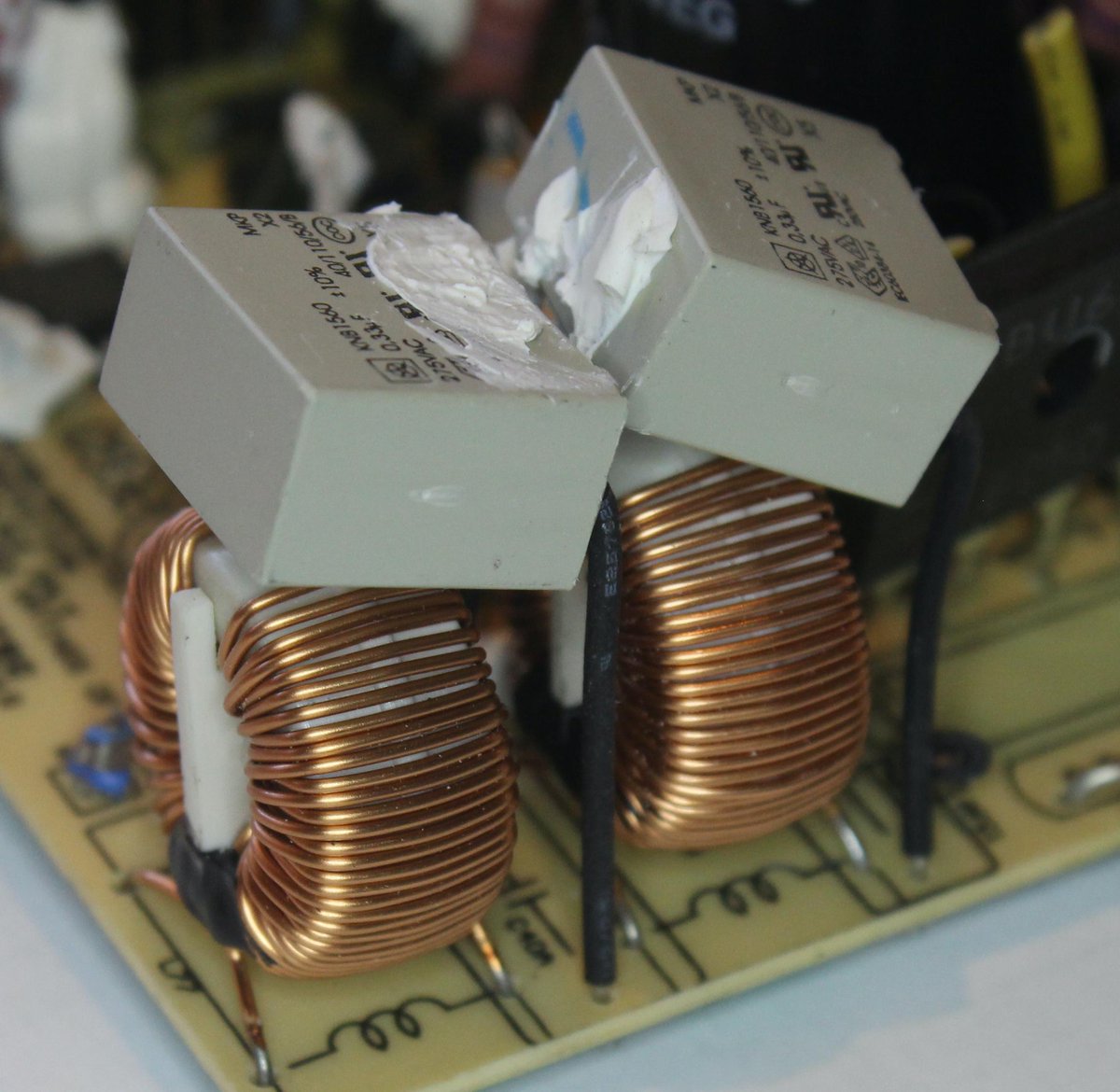
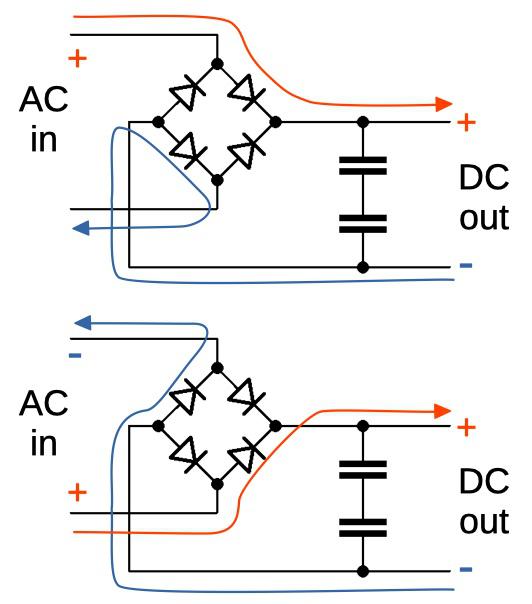
First, the input AC is filtered by inductors and capacitors, mainly to keep the power supply's electrical noise from escaping. Next, a bridge rectifier converts the AC to DC, with + and - outputs.

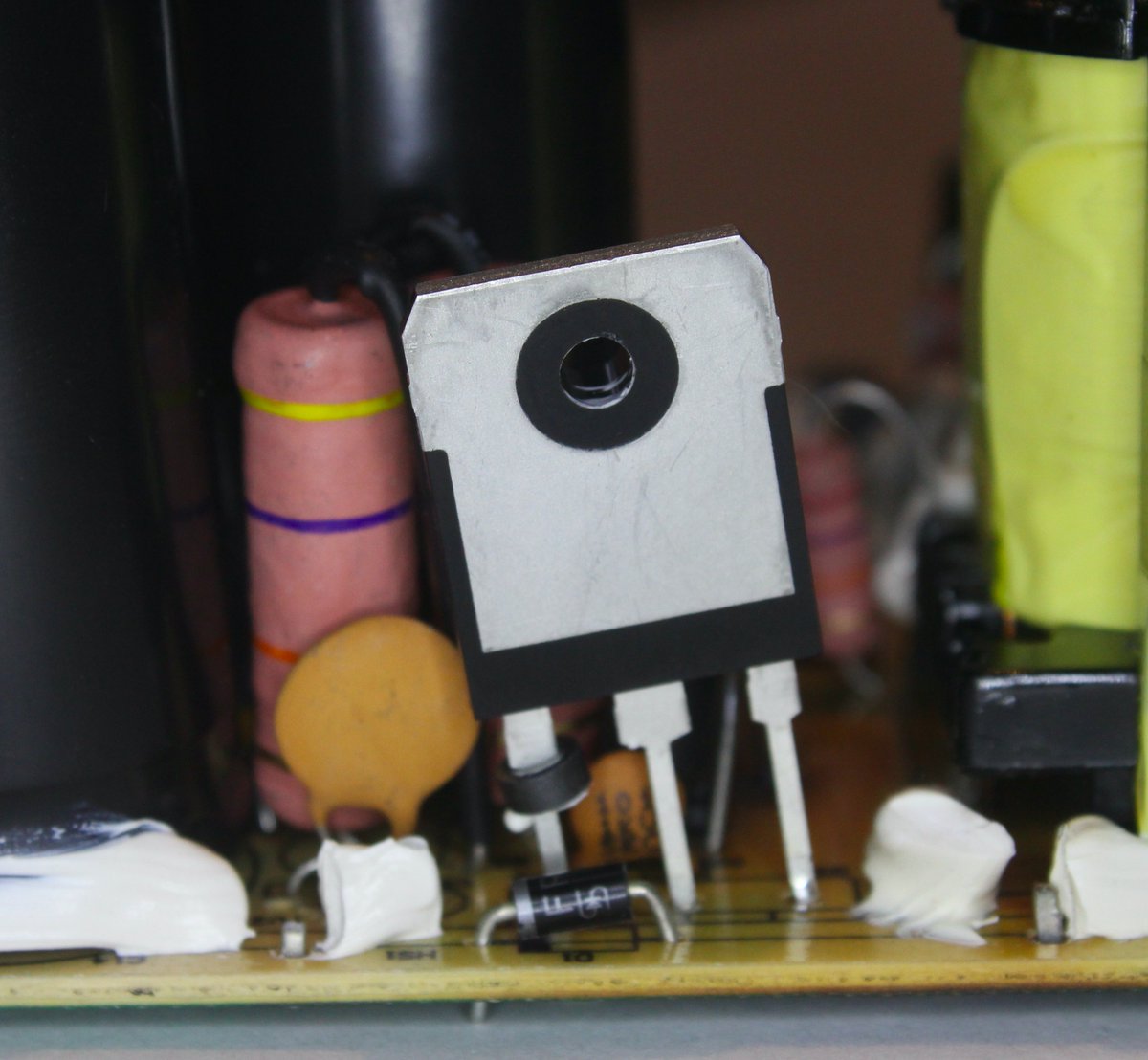
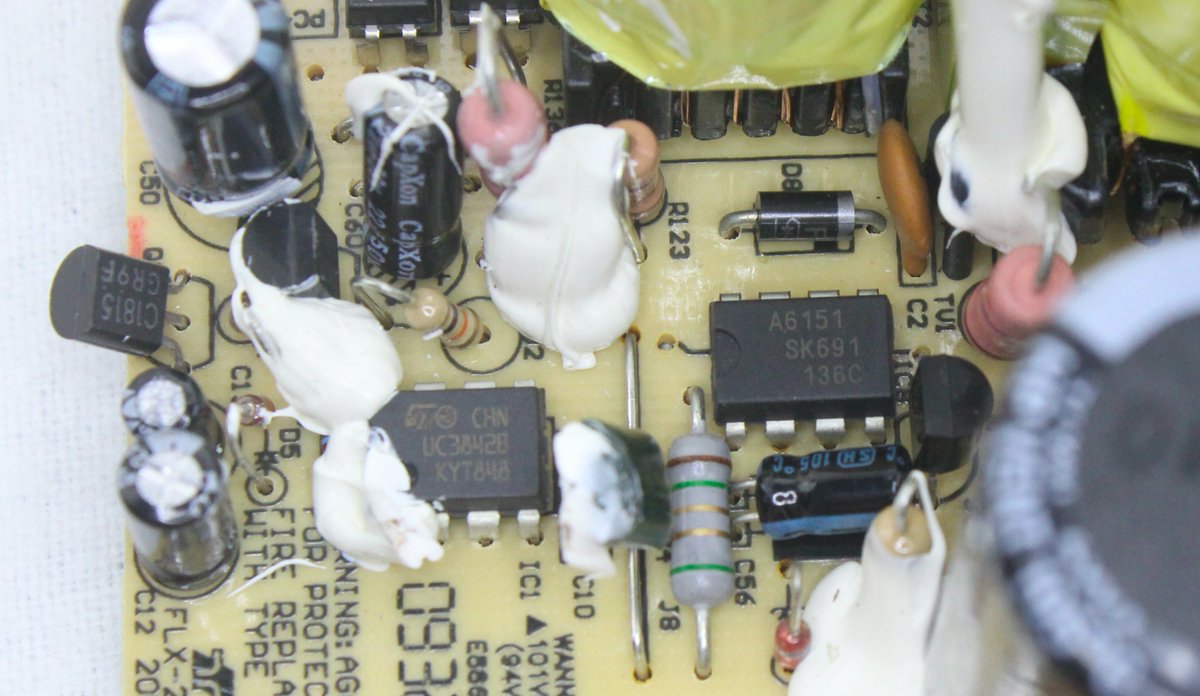
The DC is chopped into pulses by a power transistor. (I removed the heat sink so you can see it.) Next, the pulses are fed into the transformer. A control IC generates high-frequency pulses, adjusting the width to regulate the output voltage.
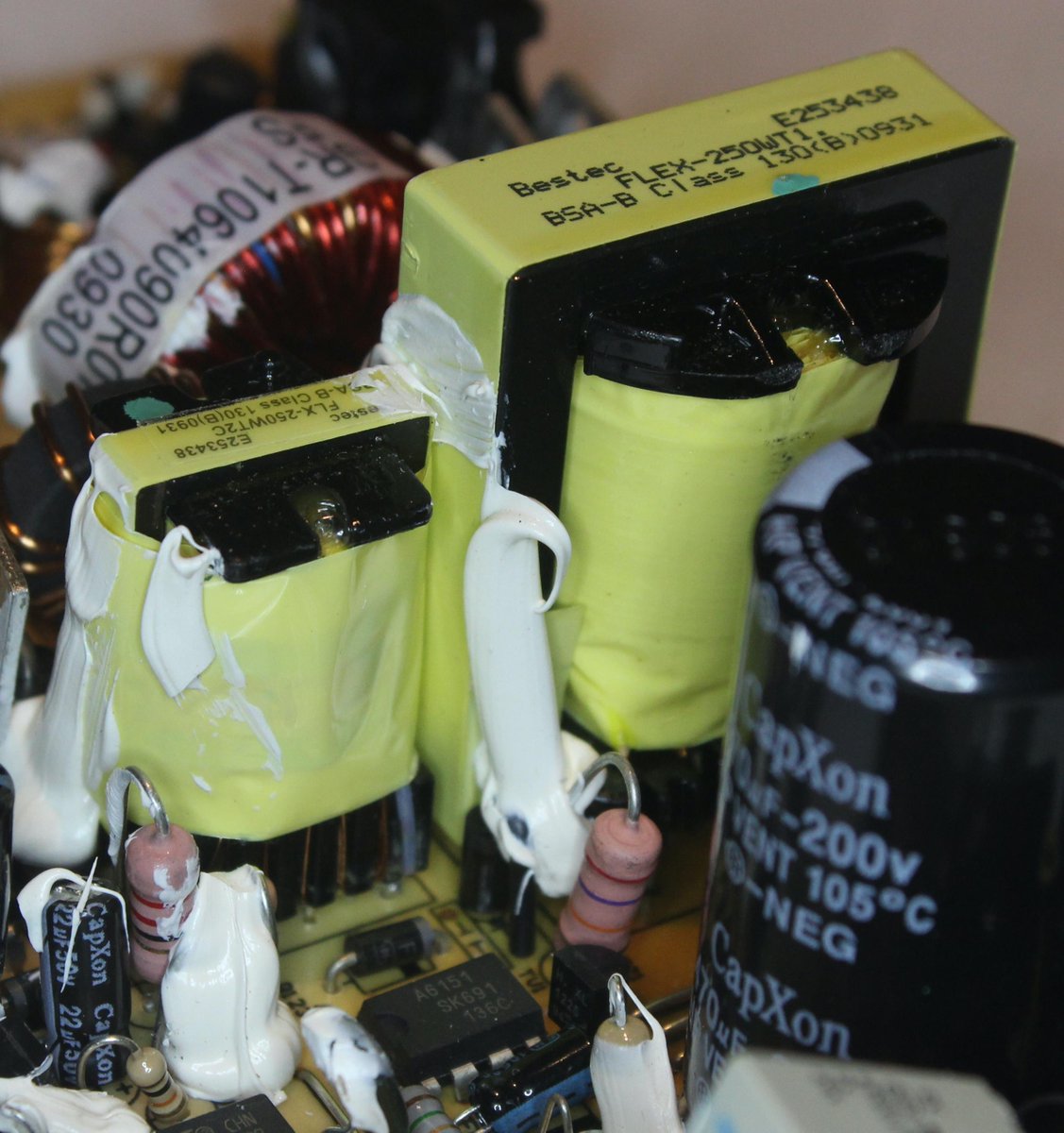
The transformer converts the high-voltage pulses into low-voltage, high-current. Diodes rectify the transformer output into DC. The large packages here each hold two special Schottky diodes. They were mounted on a big heat sink to keep them cool.
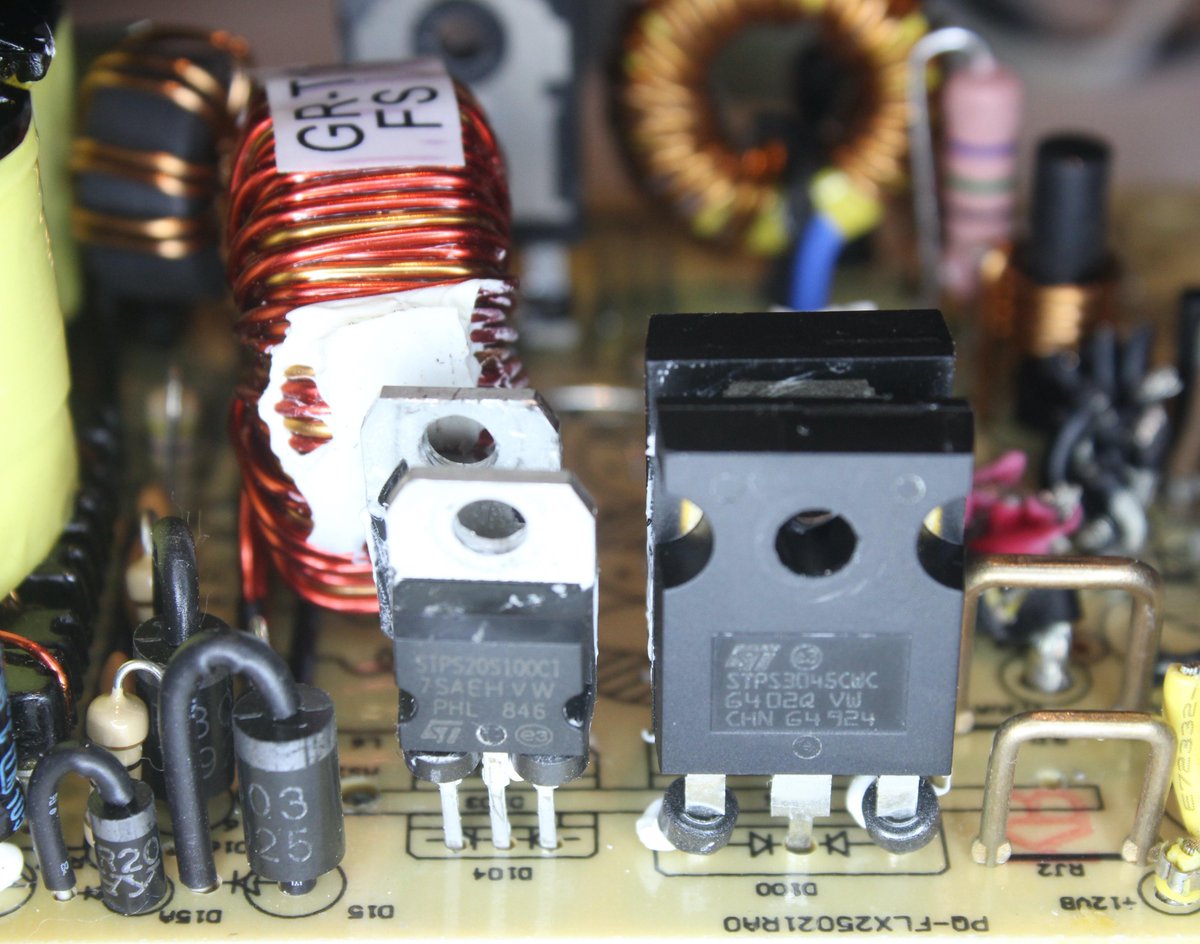
The outputs are filtered by inductors (the wire-wound rings) and capacitors (the cylinders) to produce nice, smooth voltages for your computer. It produces 12 volts, 5 volts, 3.3 volts, and -12 volts. The complete power supply is crammed into a box the size of a brick.
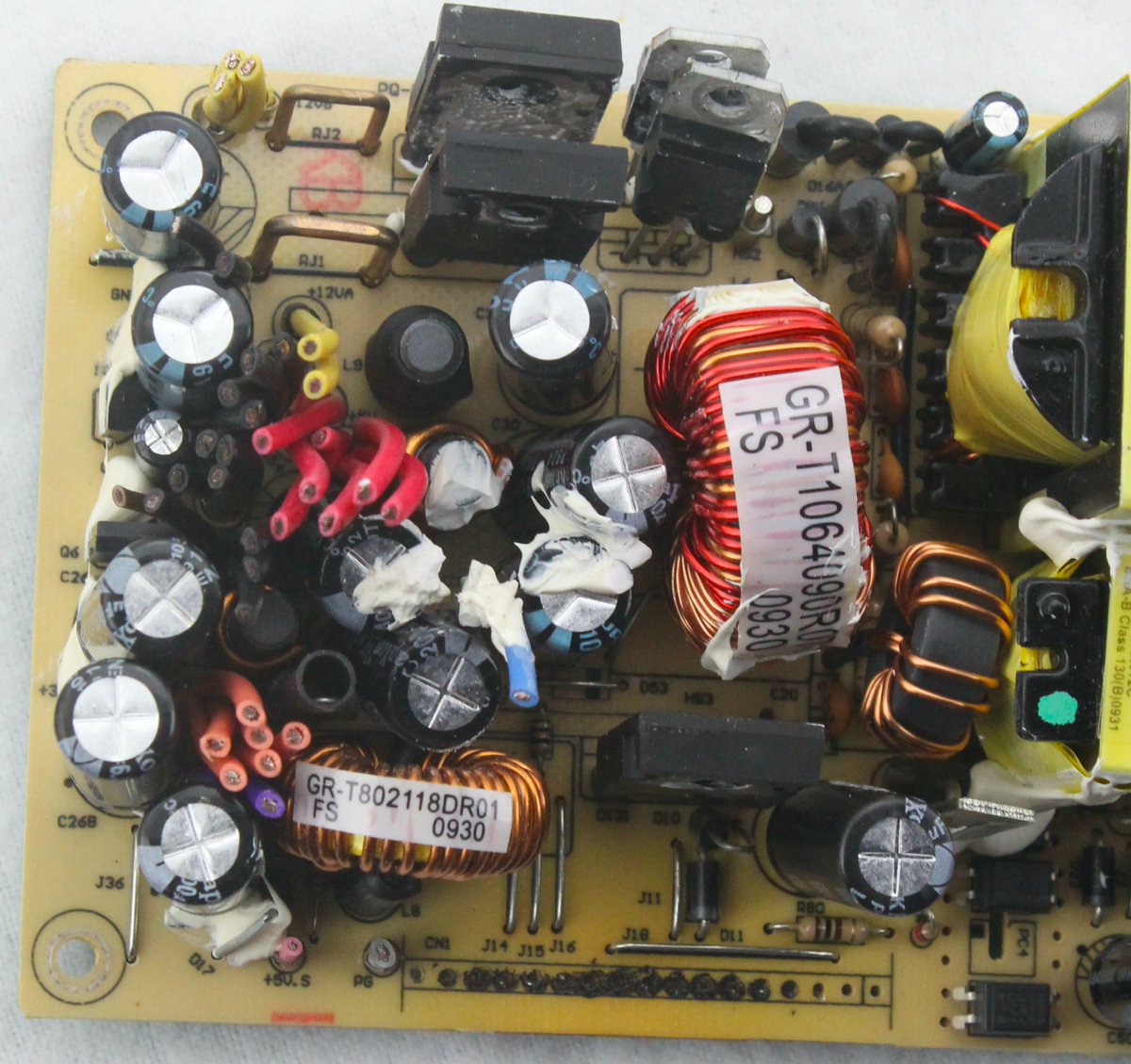
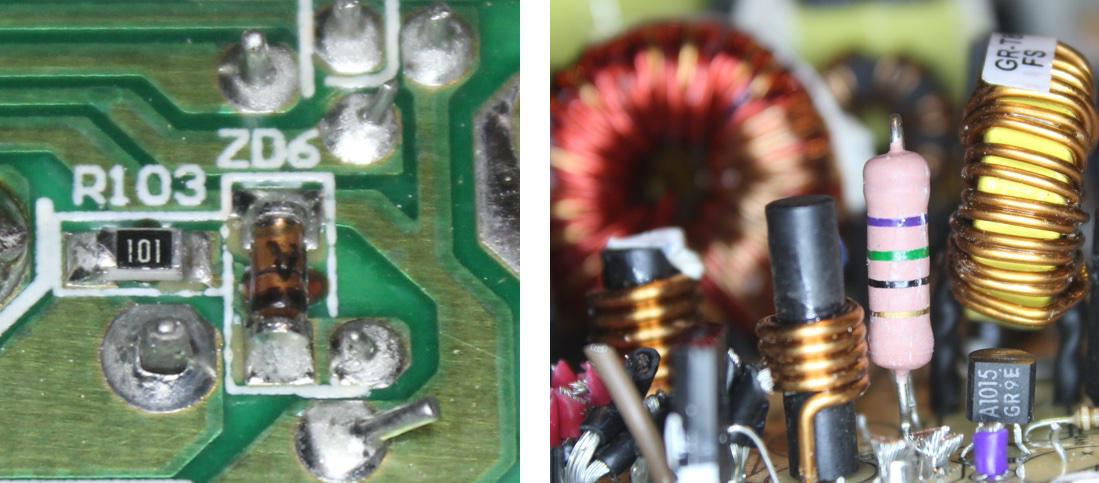
The main outputs (12 V and 5 V) are kept at the right voltage by the control IC, constantly adjusting the pulses. But the -12 V output is regulated separately: a tiny Zener diode keeps it at -12, with any excess turned into heat and dissipated through a pink cylindrical resistor.
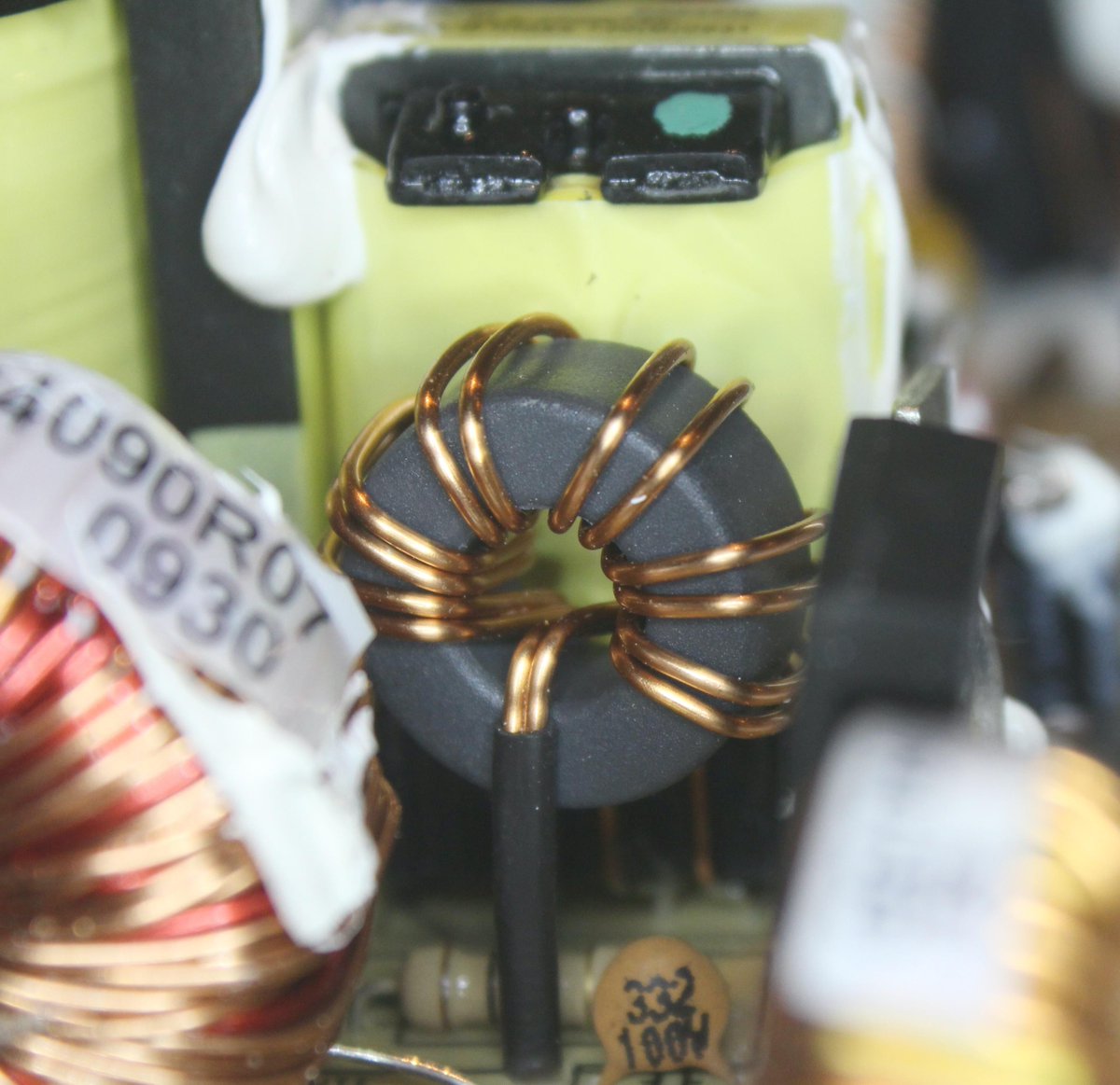
The 3.3 V output is kept stable by an unusual circuit: a magnetic amplifier. This special inductor switches between blocking current and passing current, reducing voltage by cutting down the pulses. Pulse width is controlled by partially demagnetizing it between pulses.
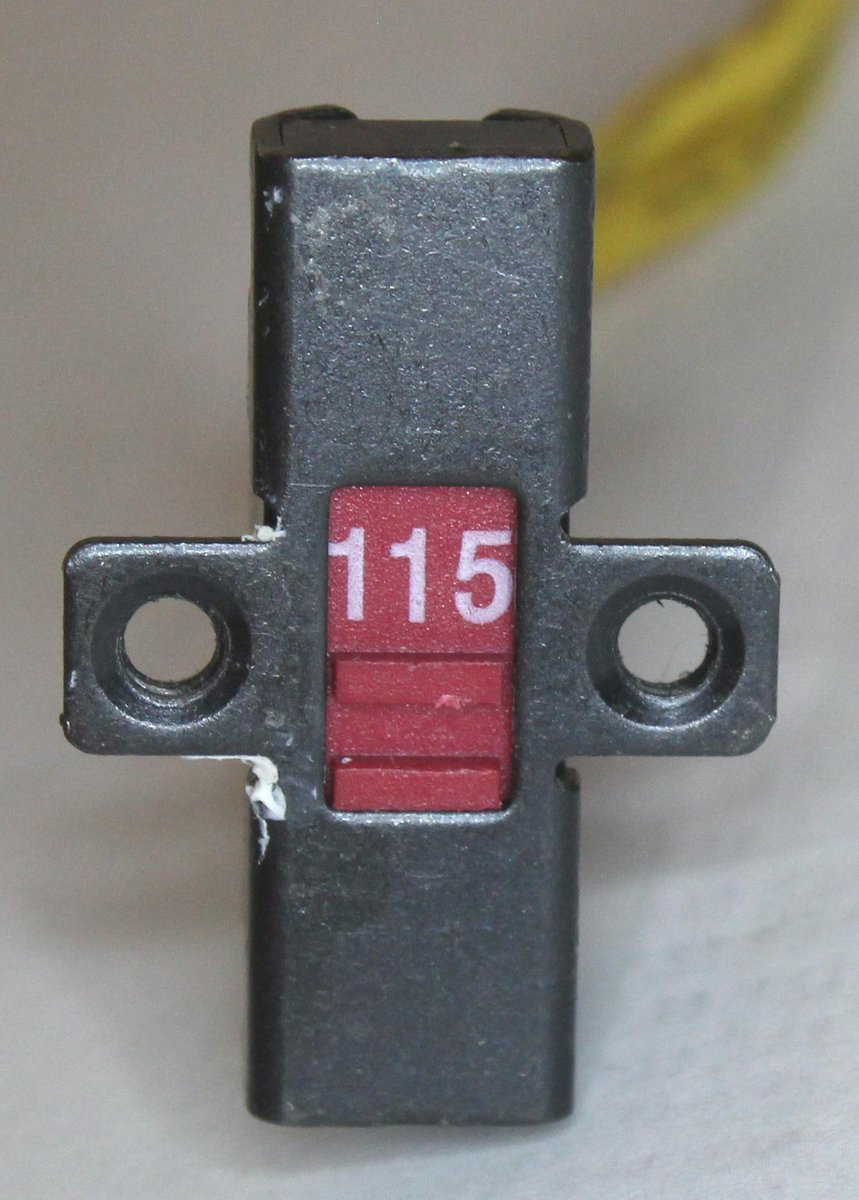
Unlike newer power supplies, you must set a switch for 115 or 230 V input on this supply. This controls a clever voltage-doubler circuit. It bypasses half of the bridge rectifier. Each of the large cylindrical capacitors gets charged with the full voltage, for double the result.

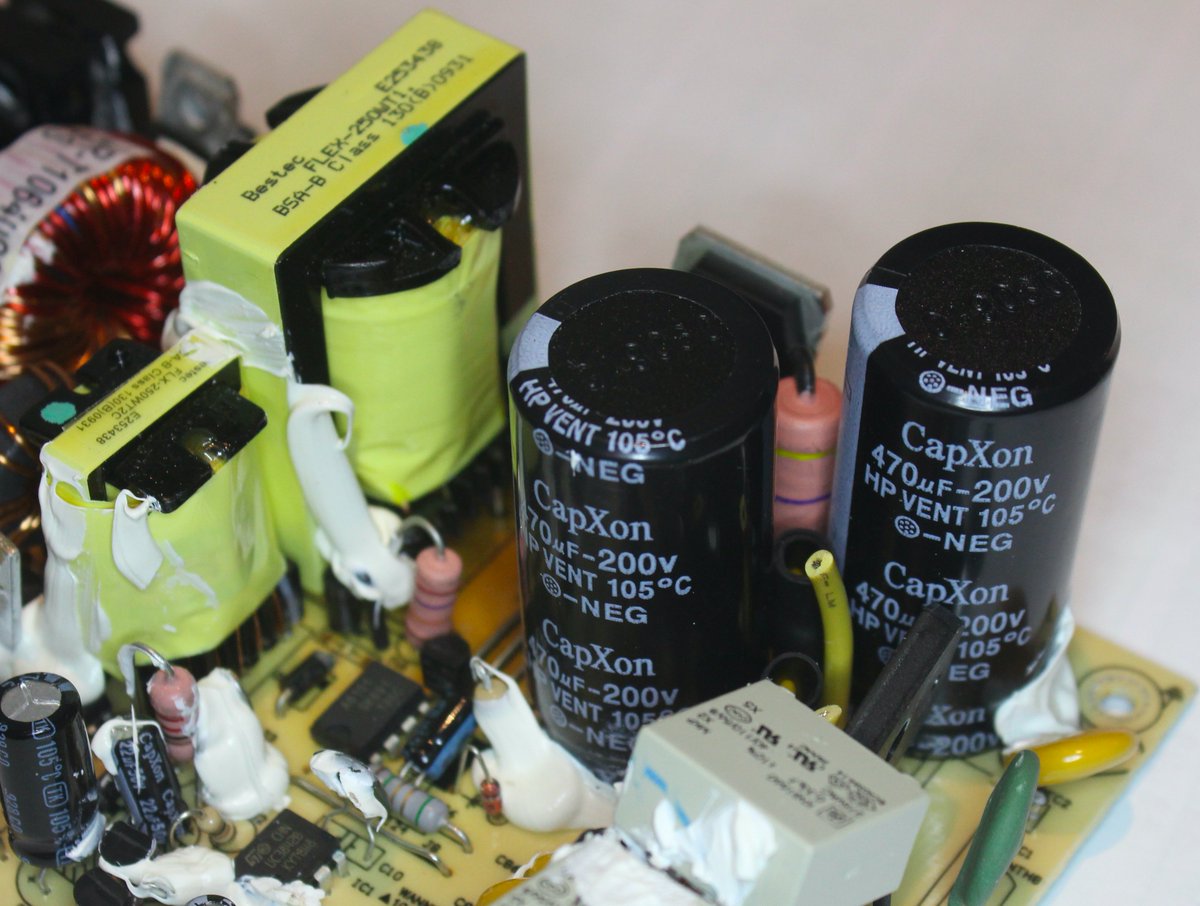
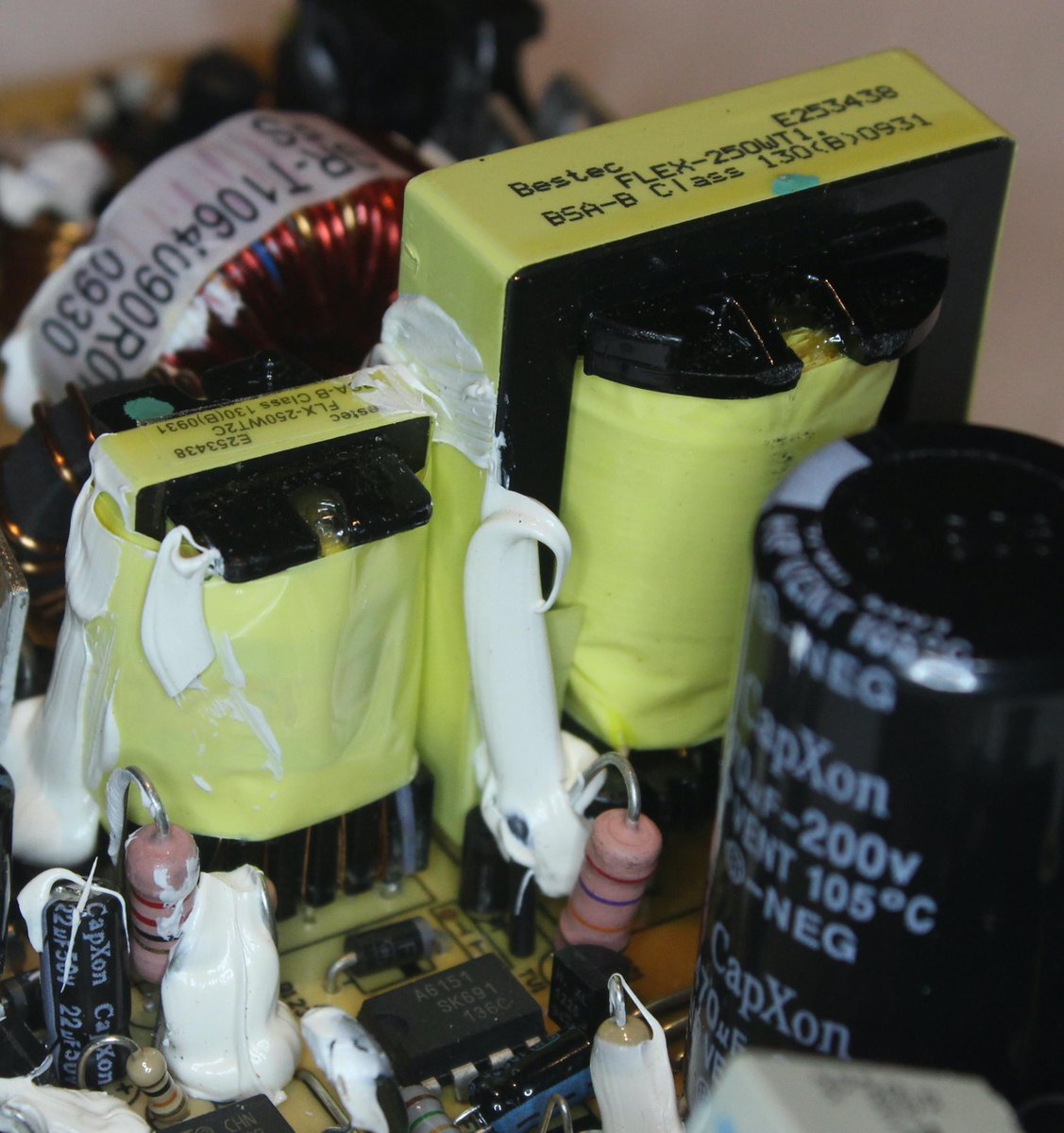
You might have noticed two control ICs and two transformers. This is because the power supply is really two supplies: the main supply and a standby supply, which runs when the computer is "off". The clock, soft power switch, "Wake on LAN" need power when the computer is off.
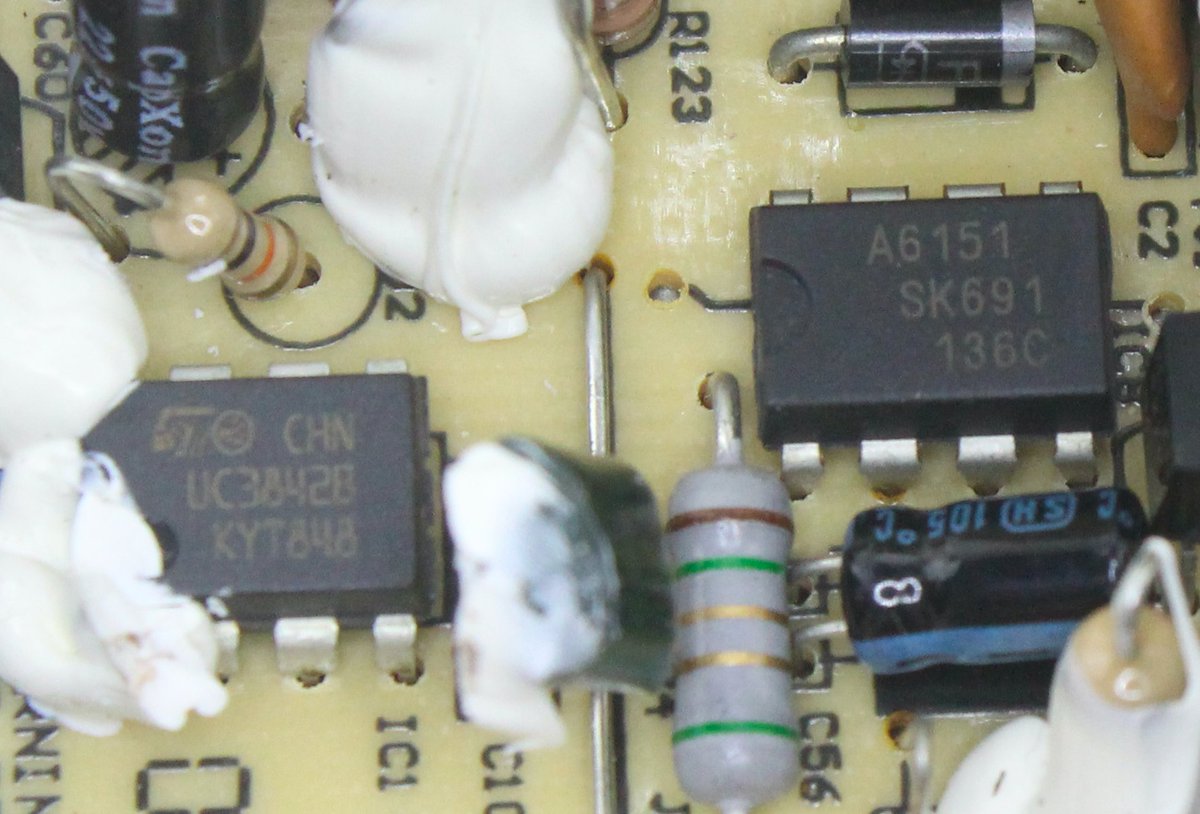
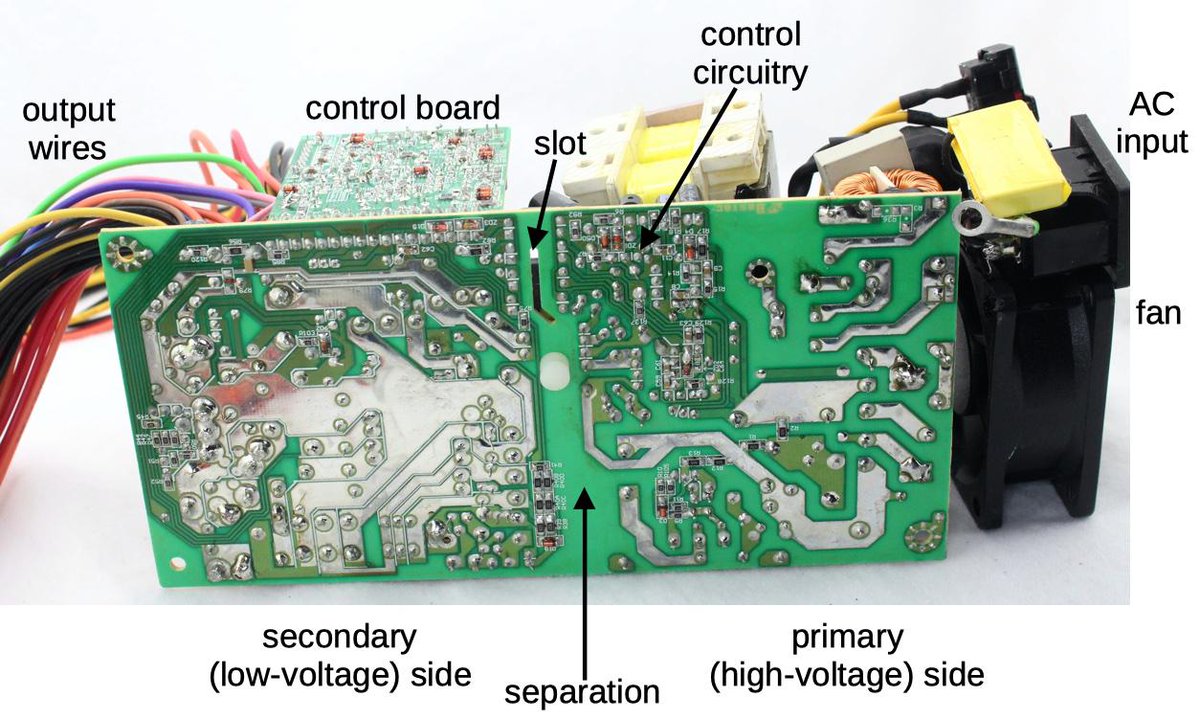
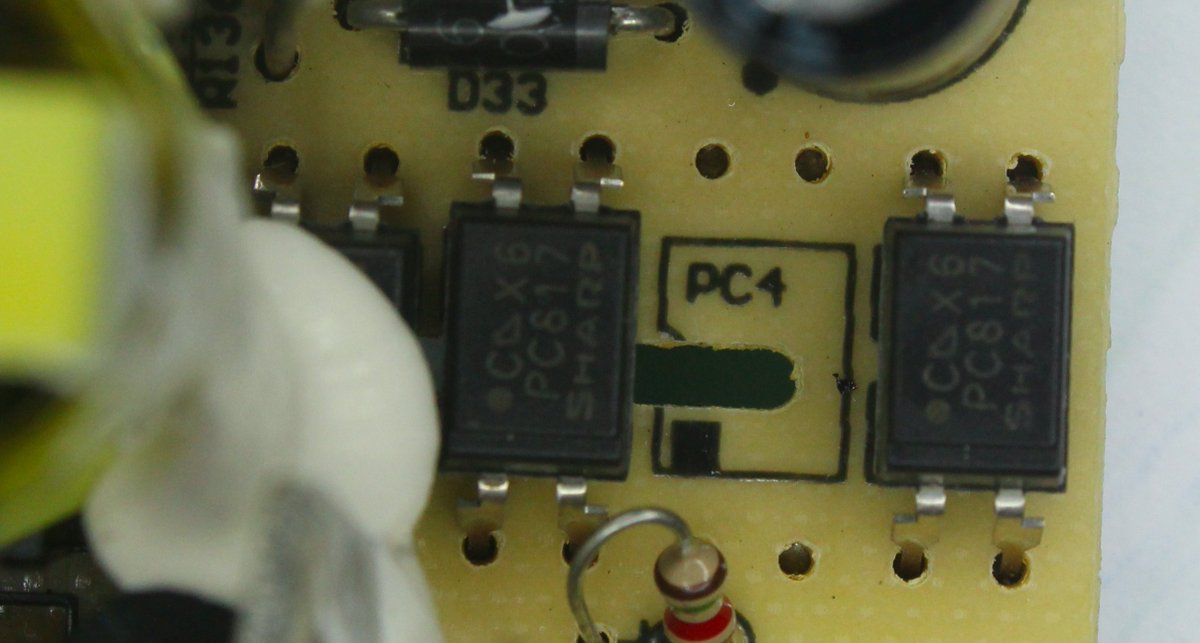
I'd like to emphasize safety. The high-voltage primary side and the low-voltage secondary side of the board are separated with no electrical connection to avoid shocks from AC. The transformers transfer power by magnetic fields. Optoisolators transmit feedback by light inside.
To summarize, a PC power supply is complex so it can be compact, efficient, safe, and inexpensive. It's amazing you can get an ATX power supply for under $50.
If you want more details of the teardown, see my blog post:
righto.com
If you want more details of the teardown, see my blog post:
righto.com
I also wrote about the interesting history of switching power supplies in the IEEE Spectrum a while ago: spectrum.ieee.org
Loading suggestions...