

As a former correspondent in Vietnam & a student of Vietnamese history, I've read many accounts of the US war in Vietnam. Elizabeth Becker's new book on three women who helped change the story of war reporting is an important addition to the canon (THREAD) soundcloud.com
Frances FitzGerald, Catherine Leroy & Australian Kate Webb came from very different backgrounds but these three intrepid women all made their own way to Vietnam as rookie reporters in their early to mid 20s to cover the war that was the biggest global news story of its time.
While many young men also decided to try their luck as reporters in Vietnam, these women faced many extra hurdles in the media industry, the military establishment and beyond. On their way to the frontlines, they had to defy sexist slights, unwanted advances and open hostility.
Elizabeth reveals how fearless French photographer Catherine Leroy had her US military credentials revoked after embittered male rivals spread smears against her, which the US authorities collected in a dossier. Not easily deterred, Catherine lobbied to overturn the decision.
These three journalists not only paved the way for other women to report on the frontlines, including Elizabeth Becker. They also brought fresh approaches to the coverage of war, shedding new light on the human costs and the social and political weaknesses of the US approach.
Frances FitzGerald, the blue-blooded daughter of a top CIA official, championed an in-depth, narrative and explicatory form of journalism that we know well today as "long form". This is what I've always thought about as "the little stories that tell the big story".
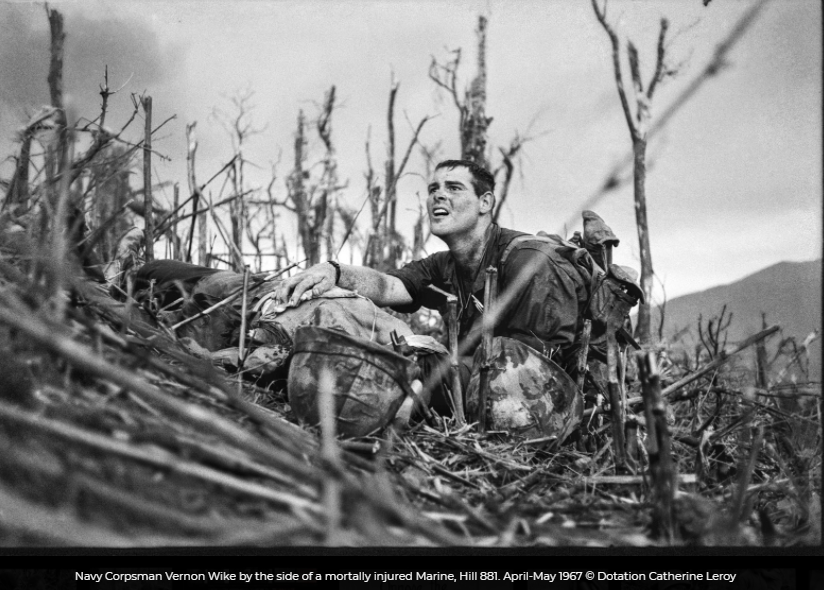
Leroy made use of her diminutive stature and her fearlessness (plus her parachuting skills) to put herself in the thick of the action, producing definitive, world famous photos like this one dotationcatherineleroy.org
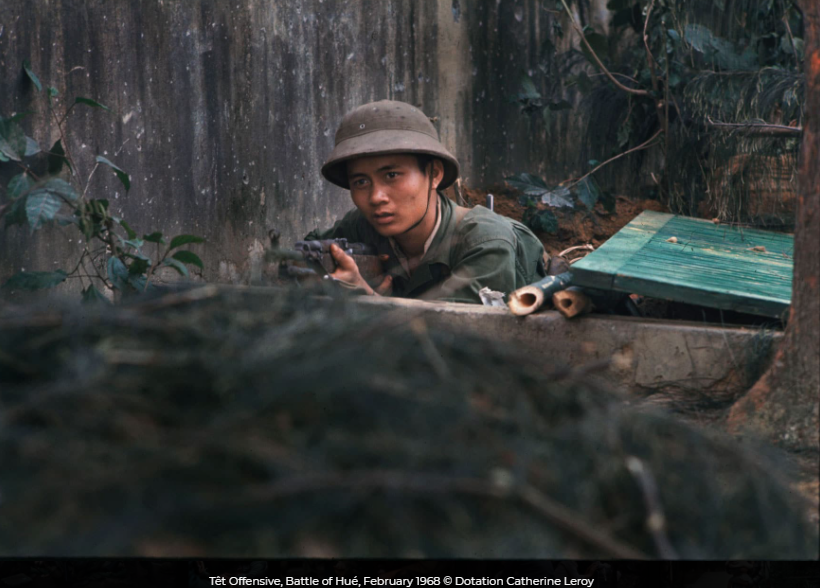
She crossed the front lines during the battle for Hue to photograph both sides during the heat of combat in the Tet Offensive dotationcatherineleroy.org
Kate Webb combined the doggedness & succinct writing of the best newswire reporters with an empathetic, evocative approach. She began a piece about the death of two US soldiers: "There are times when the Vietnam War makes a reporter’s fingers shake while holding a pencil"
"My pencil wobbles as I write the story of two young helicopter gunners I knew briefly as Smitty and Mac. I saw them go to war many times. Now I have seen their bodies come back and that is why this is a hard story for me." (from "Life and Death of a Helicopter Crew")
Webb's tenacity and desire to remain impartial put her in some strange situations. One time, she was with a Cambodian army unit under fire from the Khmer Rouge & the commander (who spoke no English) asked her in French to translate attack coordinates to the US air controller.
Thinking that journalists should not intervene in their stories, Webb said she would only do it if the officer put a gun to her head. He duly did so, saving his life and hers when the US air attack came in and deterred the Khmer Rouge onslaught.
The horrors of war reporting and the stresses of constantly fighting for their right to exist in a man's world took a personal toll on all three women. Leroy was badly injured in one attack. Webb was taken prisoner by the North Vietnamese Army.
Unlike many male correspondents, none of the three published full memoirs. So it is good to have Elizabeth's book to tell their stories. Listen to my podcast with Elizabeth, which also reflects on her own dramatic experiences in Cambodia, here soundcloud.com
And you can buy the book here publicaffairsbooks.com
Loading suggestions...