

We have Ladakh as part of India all thanks to Dogra Rajputs who snatched it from Tibet but if it weren't for British, we could easily have had Part Xinkiang and Tibet in India too. Read the story of how British purposedly restricted Dogras to conquer the Chinese lands.
Zorawar Singh's Tibet expedtion in 1841 alarmed the British and they used their sources at Lahore to re-call Zorawar Singh from Tibet, nonetheless the message to re-call didn't reach Zorawar Singh in Tibet where he breathed his last.
Fast forward to 1846, after first Anglo-Sikh war, British signed Treaty of Amritsar and in treaty British put a clause that Maharaja Gulab Singh would not expand his territory without the permission of the British. But British were aprehensive that Gulab Singh for his desire for
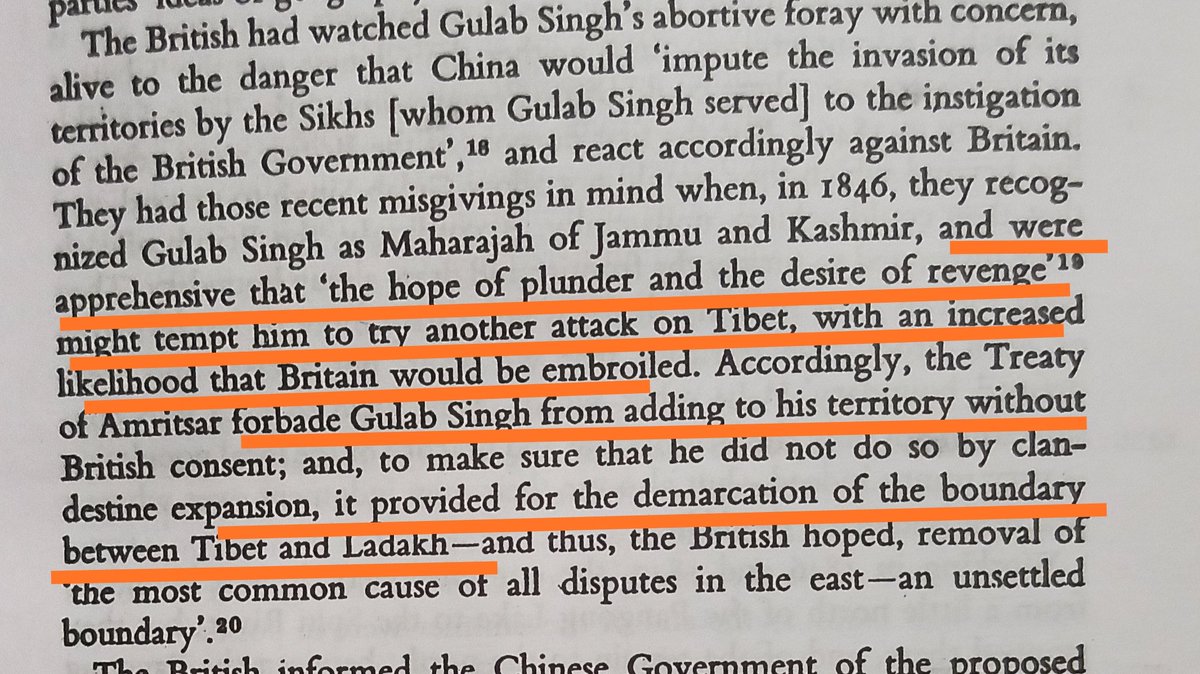
revenge and expansion might attack Tibet. British didn't want a war with China who was the overlord of Tibet at that time. So British to control Dogras tried to demarcate a boundary on the east side of Jammu Kingdom bordering Tibet. But to recognise a boundary line you need both
party but Tibetan and Chinese didn't cooperate with British. Nonetheless British went ahead and draw the line east of Dogra Kingdom from Spiti river in the south to Pangong Tso in the north. They didn't go north of that as the area was totally uninhabitated

Now a line if only recognised by one Party that was India and not by China/Tibet can be considered diplomatic disaster as now you restrict your area west of the line and can't cross that but chinese not only got their enemy restricted but also had no restriction on
themselves as they didn't sign on the border demarcation. But British did that anyway just to restrict Dogras to invade Tibet and not hopefully not get embroiled in a war with China. Needless to say this border is still disputed and have seen bitter fighting in 1962 war and

since then many chinese attempts to forcefully occupy parts of this side of the border. Nonetheless in the north there was enough room for Dogras to expand on the cost of the Chinese. Soon after Ranbir Singh, the Son of Gulab Singh became Maharaja of Jammu, he did just that
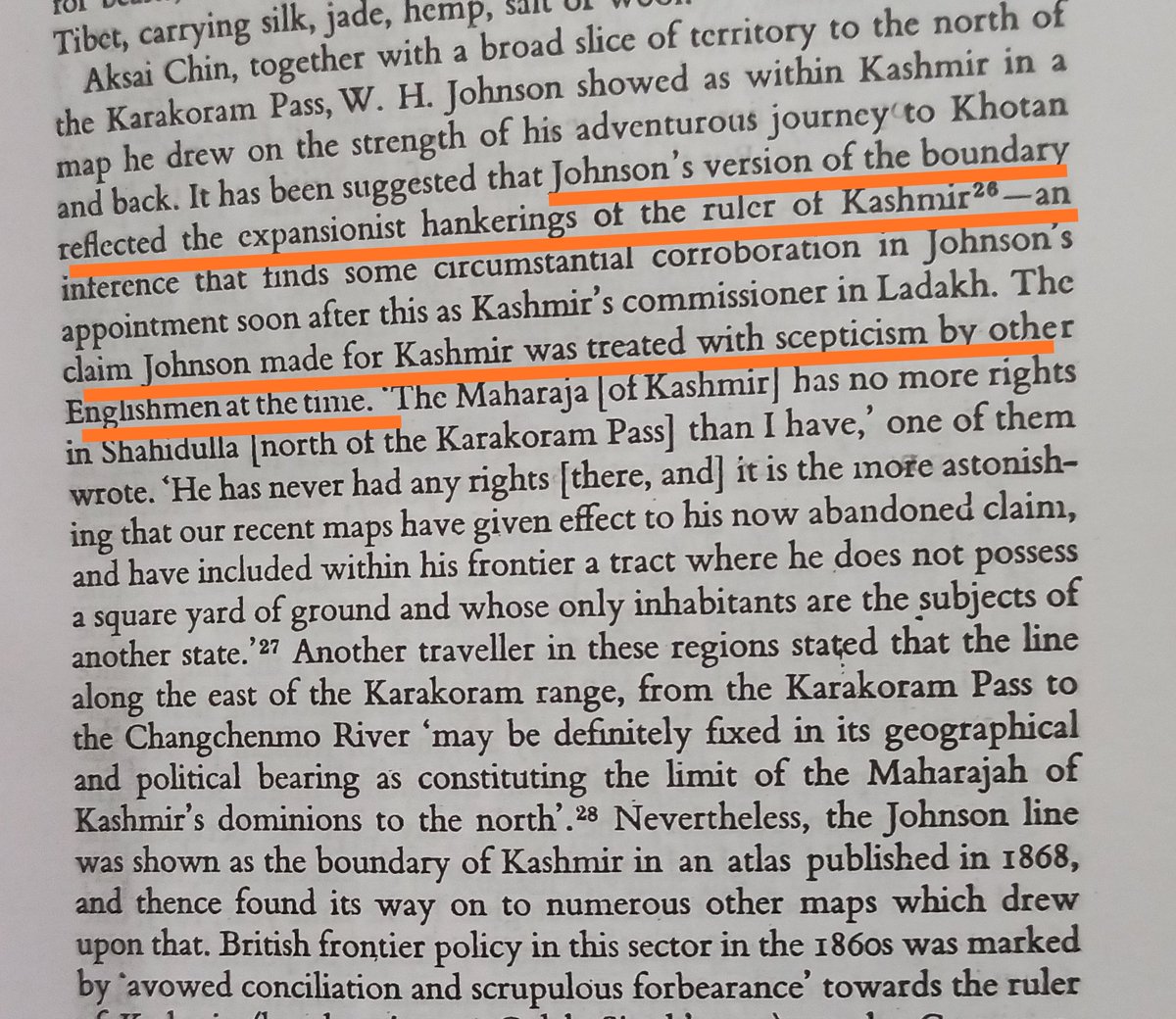
He sent a force and occupied and garrissoned Shahidulla way north of Karakoram Pass. W.H. Johnson, surveyor of Surveyor General of India surveyed land of Kashmir and mapped the whole territory north of Karakoram as part of Kashmir. But British authorities

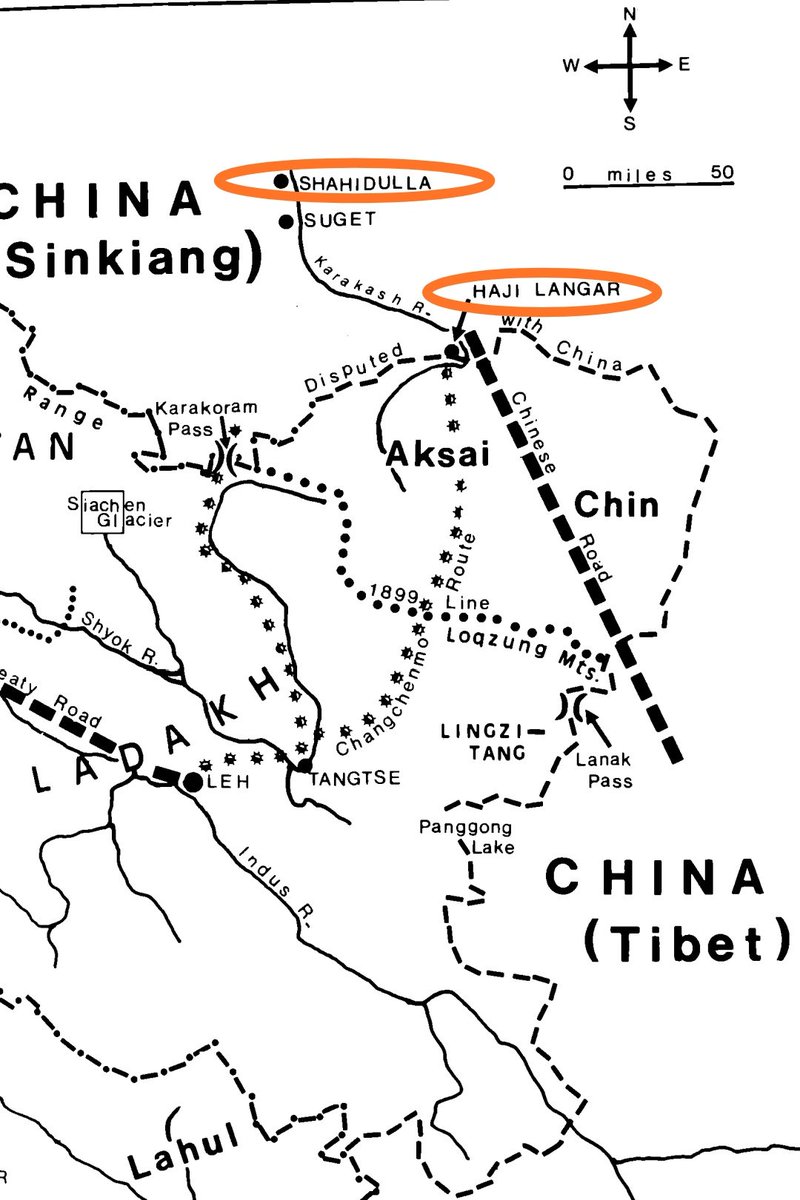
again were unhappy about this. Dogras' foreign policy in the northern areas were being watched by British authorities and Johnson was also reprimanded for his inclusion of such vast territory in the map of Kashmir which according to British belongs to China.
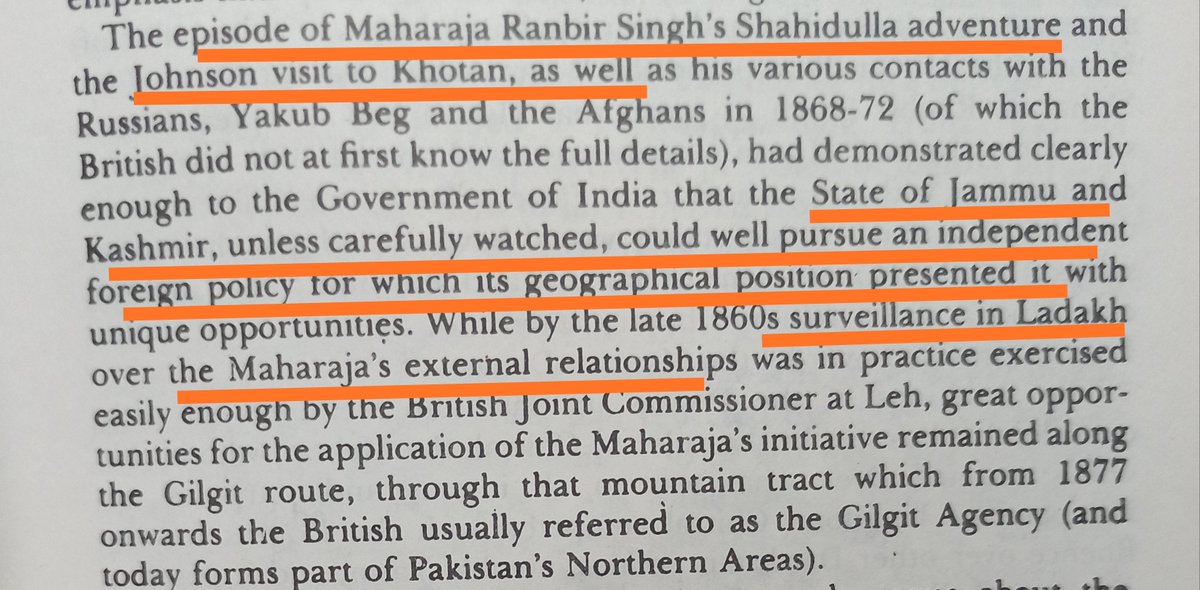
There was opposition from all sides against Johnson's what can be termed as validation of Dogra's gains. He was made mockery of. Shahidulla was once abandoned in later 1860s. In all this opposition by the British, lied the fear of Russians. They knew that both
superpower were inching together, Russia already occupied Tashkent and reached till western borders of china's xinkiang province. In the west they made Afghanistan a buffer state as both Empires didnt want to share border with each other for they fear some untoward
accident may lead to war. Hence in the north British wanted either to make China as buffer b/w both Britain and Russia or better to make China more powerful so Russia couldnt get his foothold in Xinkinag and not invade India through Kashmir. Dogras even asked permission
to re-occupy Shahidulla in 1888 but British govt declined. In 1892 Dogras tried once more but again British declined saying that areas north of Karakoram paid tributes to chinese authority hence their territory. Law of conquest do not see history, historically
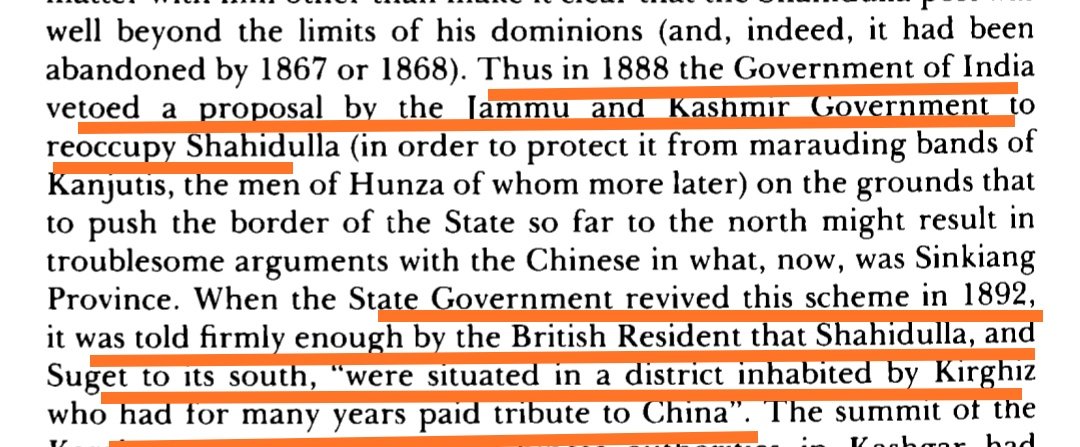
even Ladakh paid tribute to Lhasa and to China as their overlord but it was conquered nonetheless. Those were just excuses of British govt in the backdrop of the Great Game.
Not only did the legacy of British policy harmed in gaining new territories it also made a mess out of it by not getting recognised even the truncated territory by all the concerned parties. The legacy of which cost india the war of 1962 and the problem is still alive.
Loading suggestions...