

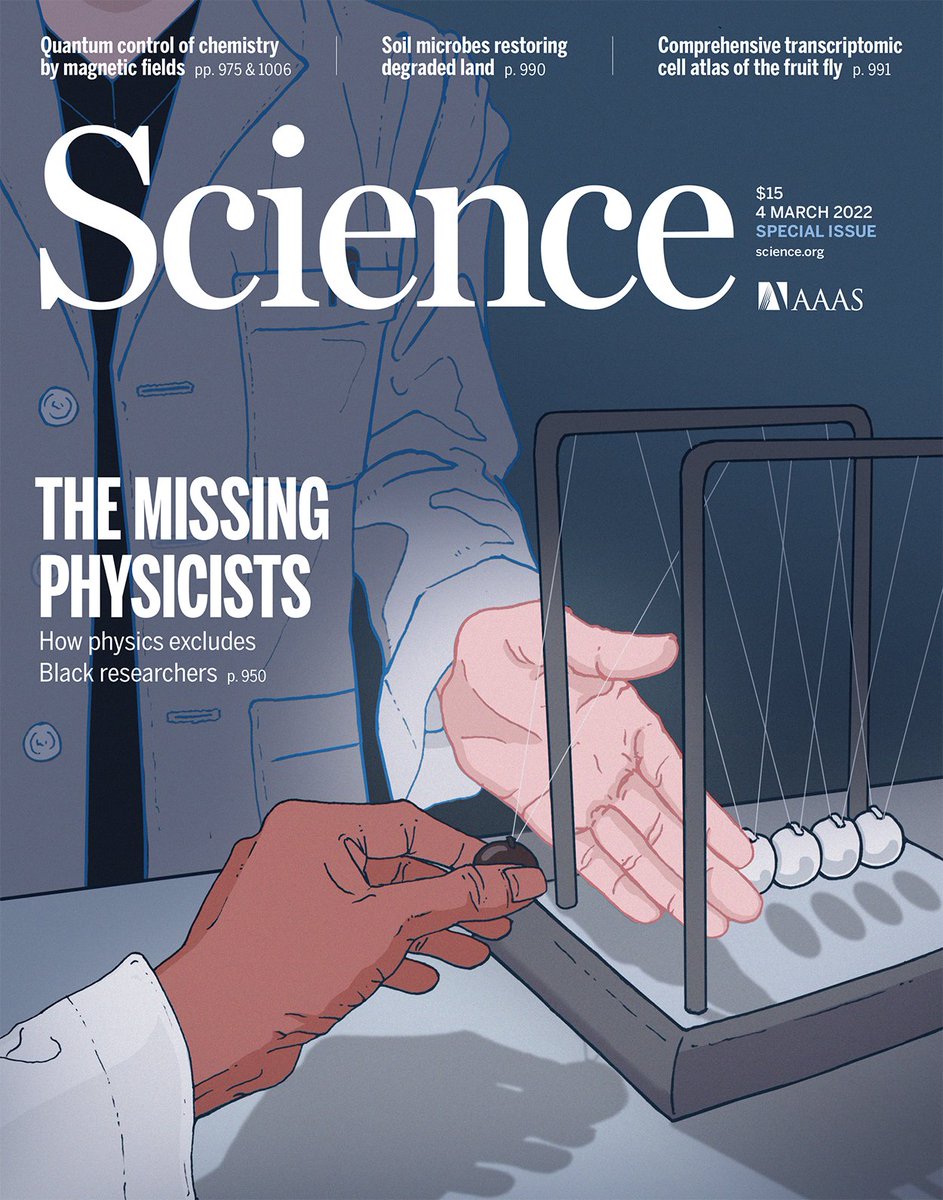
A special package of stories in the latest issue of Science attempts to portray the number of Black physicists in U.S. physics and identify institutions and programs that offer models for change. fcld.ly #TheMissingPhysicists (THREAD) 🧵
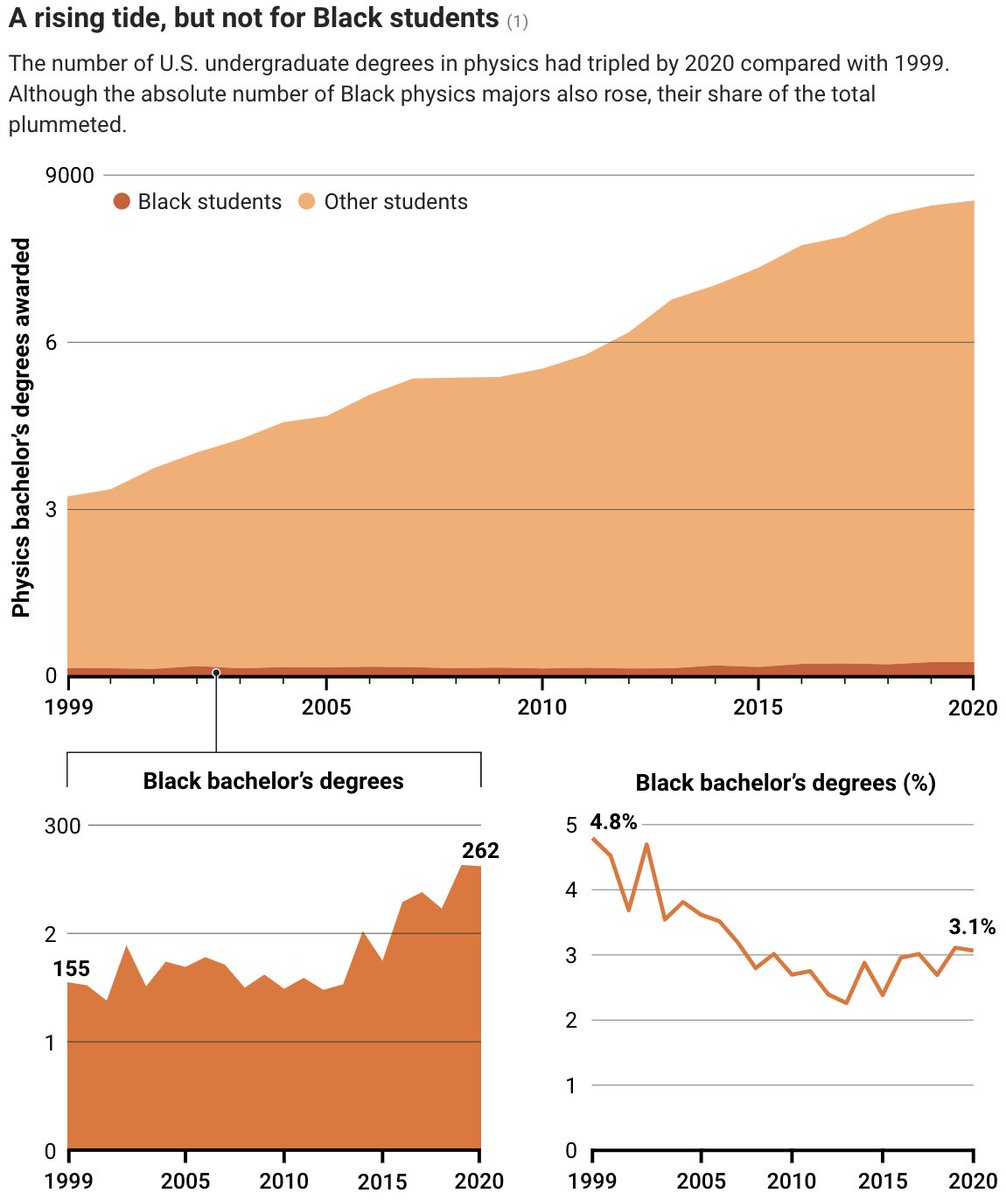
The number of U.S. undergraduate degrees in physics had tripled by 2020 compared with 1999. Although the absolute number of Black physics majors also rose, their share of the total plummeted. #TheMissingPhysicists fcld.ly
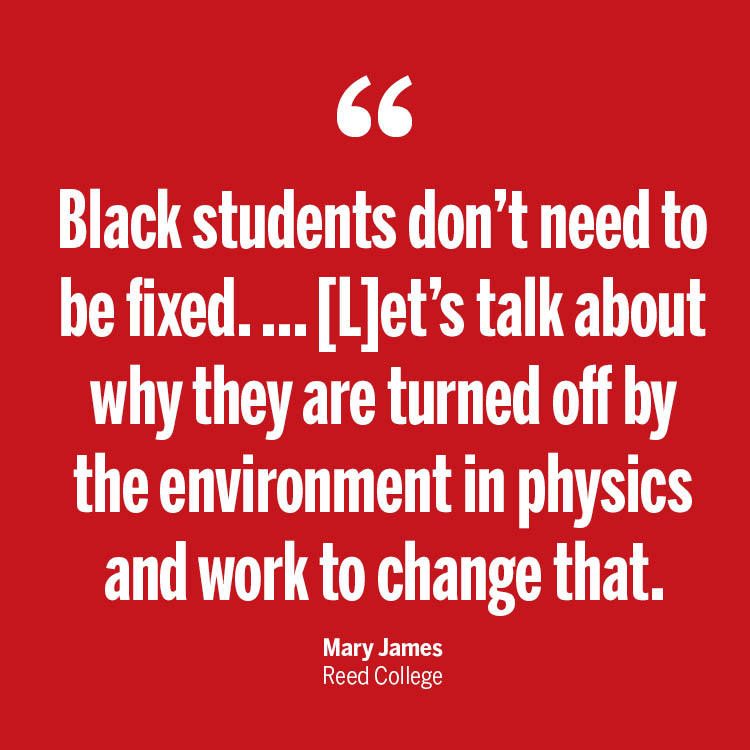
The dominant white male culture in U.S. physics has hindered diversity efforts to make meaningful change in the field. #TheMissingPhysicists fcld.ly

Some universities are building a more welcoming environment by dismantling policies that disadvantage students from marginalized groups. #TheMissingPhysicists fcld.ly
Historically Black colleges and universities in the U.S. have had outsize success in launching Black students into physics, but declining enrollments and tight funding are threatening their ability to do so. #TheMissingPhysicists fcld.ly

Black physics Ph.D.s are more than twice as likely as other groups to teach in high schools and community colleges, giving their students a chance to learn from new role models. #TheMissingPhysicists fcld.ly

Professors at @UmichPhysics have discarded the traditional playbook for graduate training in physics by removing barriers for students historically underrepresented in the field. #TheMissingPhysicists fcld.ly

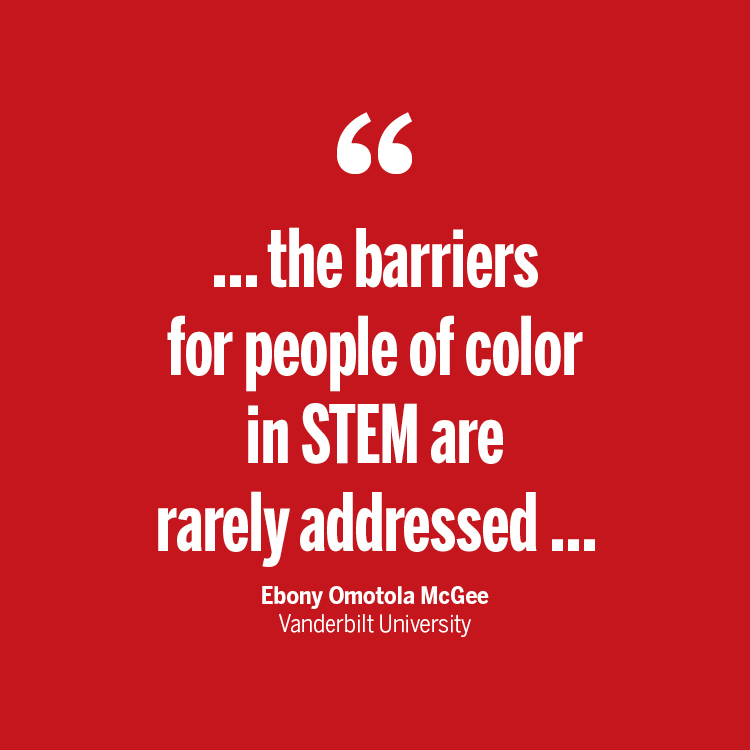
“Anti-racism work is hard work, but unless actions move beyond simply tossing about diversity and equity buzzwords, people of color will remain underrepresented in STEM fields,” writes Ebony Omotola McGee in this #ScienceEditorial: fcld.ly #TheMissingPhysicists
Loading suggestions...