

THE IMPORTANCE OF TYRE PRESSURE FOR SAFE DRIVING
Many road users are not aware of what an important role tyre pressure plays in ensuring their safety while travelling
[THREAD]
Many road users are not aware of what an important role tyre pressure plays in ensuring their safety while travelling
[THREAD]
A report from the Road Safety Authority revealed that vehicle factors played a major part in 1 in 8 fatal collisions during the period 2008 to 2012.
Of those deadly collisions, defective tyres were the most significant factor, representing 64.1% of all vehicle factors identified
Of those deadly collisions, defective tyres were the most significant factor, representing 64.1% of all vehicle factors identified
Since then, rising fuel costs have seen more and more road users forgoing regular car maintenance – most critically of all on their tyres where correct pressure is the key component in keeping you safe under the majority of road conditions.
Correct air pressure in a tyre helps to distribute the weight of your vehicle evenly across the tyre’s tread pattern, so that the tyre – and the vehicle itself – is at its most stable.
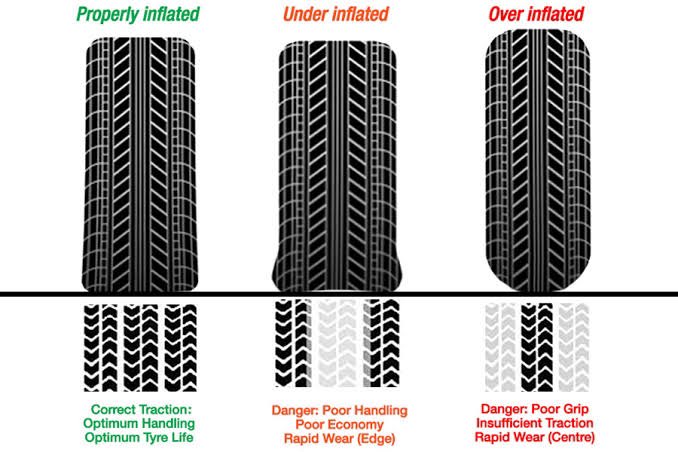
When a tyre is over- or under-inflated, it loses stability, negatively affecting handling, cornering and stopping.
Eventually the tyre will also start to wear unevenly and … you’re heading for trouble.
Eventually the tyre will also start to wear unevenly and … you’re heading for trouble.

When you maintain proper tyre pressure, you ensure that you’ll get more life out of your tyres.
On the other hand, improper tyre inflation may result in rapid or irregular wear.
On the other hand, improper tyre inflation may result in rapid or irregular wear.
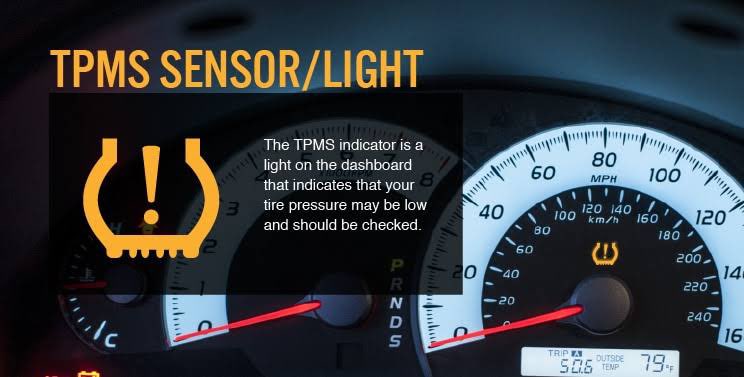
This can cause significant internal and external tyre damage that can lead to sudden and catastrophic tyre failure.
It can also lead to serious injury to driver, passengers and others.
It can also lead to serious injury to driver, passengers and others.
How often should you check your tyre pressure? Ideally, you should check it every two weeks; however, a good rule of thumb is to do it every time you fill up with fuel or at least once a month.
Tyres lose approximately one pound per square inch (PSI) per month with normal use.
Tyres lose approximately one pound per square inch (PSI) per month with normal use.
Always remember to check your tyres when they are cold, first thing in the morning of at least three hours after you were last on the road.
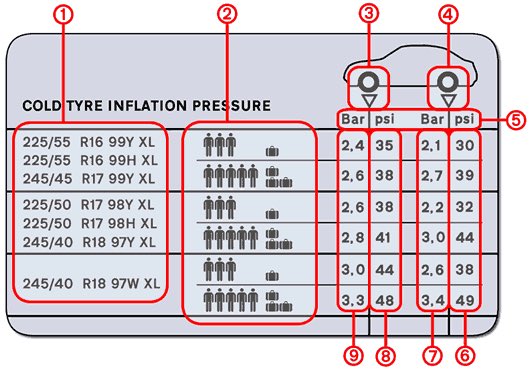
For ea car and make, tyre pressure will vary. Often, also front & rear pressure
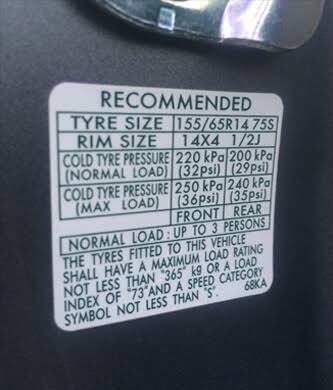
To find the correct air pressure for your tyres, check the info on the inside driver’s side panel of your car, your owner’s manual, inside of your glove compartment door/the inside of your petrol lid
To find the correct air pressure for your tyres, check the info on the inside driver’s side panel of your car, your owner’s manual, inside of your glove compartment door/the inside of your petrol lid


Always use a reliable air pressure gauge – either by yourself or by a trained and practiced garage attendant.
Always remember to check your spare tyre’s pressure too and make sure all your tyre valves have caps and replace any missing ones immediately.
Always remember to check your spare tyre’s pressure too and make sure all your tyre valves have caps and replace any missing ones immediately.
This prevents dust and other particles entering your valves and inner tyres and compromising your air pressure.
If you have any doubts or queries about this, don’t hesitate to visit your nearest tyre outlet immediately.
If you have any doubts or queries about this, don’t hesitate to visit your nearest tyre outlet immediately.
Over-inflation vs. under-under-inflation – why both are potentially problematic
Both over- and under-inflation reduce optimum tyre-to-road contact and shorten tyre life.
Both over- and under-inflation reduce optimum tyre-to-road contact and shorten tyre life.
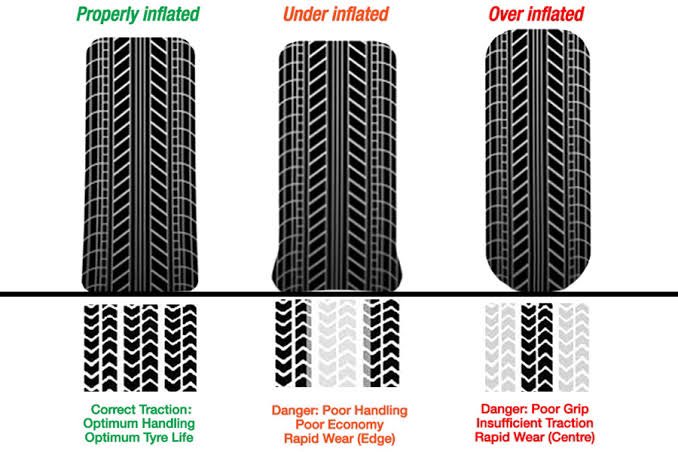
Over-inflation reduces the cushioning power of your tyres.
They are then more susceptible to impact, penetrations and abrasions as well as reduced road-tyre contact.
This negatively affects the handling characteristics of the vehicle and leads to excessive centre tread wear.
They are then more susceptible to impact, penetrations and abrasions as well as reduced road-tyre contact.
This negatively affects the handling characteristics of the vehicle and leads to excessive centre tread wear.
Under-inflation causes excessive flexing of the tyres’ sidewalls, which leads to overheating, casing break-up and tread separation
Reduced tyre-road contact leads to shoulder wear & badly affects vehicle handling.
Under-inflation is the major cause of tyre blowouts!
Reduced tyre-road contact leads to shoulder wear & badly affects vehicle handling.
Under-inflation is the major cause of tyre blowouts!
Your vehicle manufacturers recommended Pound Per Square Inch (PSI) is intended to enhance your:
•Ride comfort, safety and performance
•Load capacity
•Traction and wear
•Overall fuel economy
•Ride comfort, safety and performance
•Load capacity
•Traction and wear
•Overall fuel economy
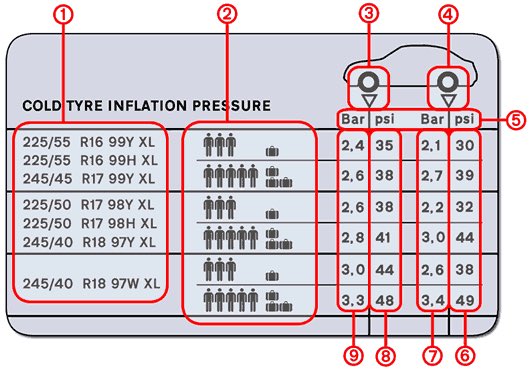
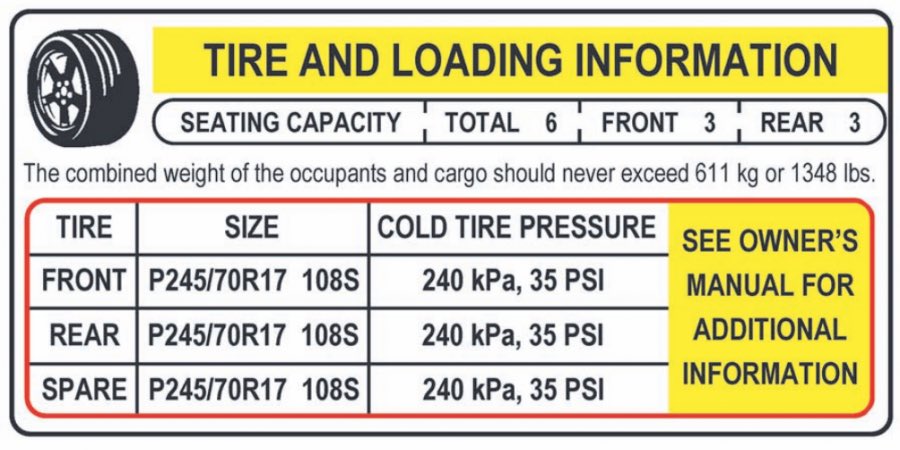
Correct tyre pressure can increase the lifespan of your tyres
Even if your tyres are under-inflated by just 0.5 - 1 bar, this can decrease the lifespan by as much as 25%
Having your tyres under-inflated has the potential of increasing your fuel consumption by more than 5%.
Even if your tyres are under-inflated by just 0.5 - 1 bar, this can decrease the lifespan by as much as 25%
Having your tyres under-inflated has the potential of increasing your fuel consumption by more than 5%.

I am not a car or tyre expert
I am not a car salesman
Im just sharing info 🤗
I am not a car salesman
Im just sharing info 🤗

Loading suggestions...