

A kuShANa coin showing the Eastern Iranic deity of victory vainaiti. In Zoroastrian branch of the tradition, the deity is the male vanant associated with the star Vega (𝛼 Lyrae). This evidently goes back to the proto-I-Ir period in the least as the vedic abhijit has an identical
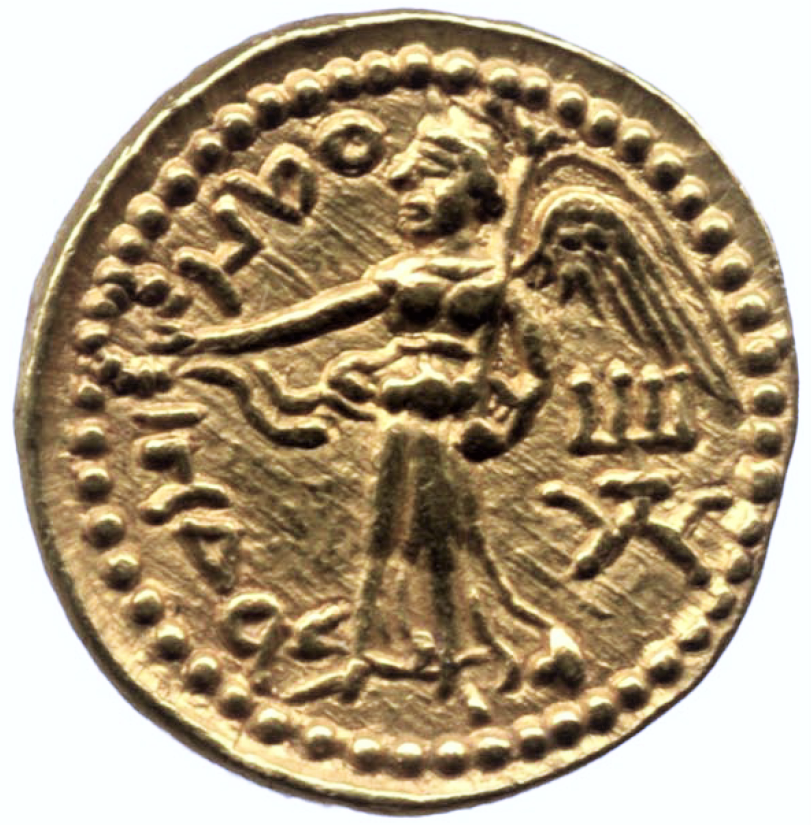
connotation & etymology; e.g. the taittirIya shruti states: अ॒भि॒जय॑त् प॒रस्ता॑द् अ॒भिजि॑त् | The change in gender in the Eastern Iranosphere seems to be a departure from the ancestral state. The iconography is clearly influenced by the cognate Greek deity Nike. Hence, 1 wonders
if the gender shift was also influenced by the Greek deity who appeared in the region during the yavana conquests & is often shown as being held by Zeus in the Indo-Greek coins. However, it may not be so simple as the H tradition as a female abhijiti going along with abhijit.
For e.g. the taittirIya shruti has: अ॒भिजि॑त्यै॒ स्वाहा᳚ । From the YV tradition abhijiti is generally understood as the star ε Lyrae beside Vega. Thus, it is not impossible that the E Ir tradition already had a female variant of vanant paralleling the Vedic abhijiti.
The worship of vanant or vanaiti in the E Ir world is indicated by a toponym -- the place close to what is today Bukhara in Ozbekistan was likely the seat of his/her cult. Unfortunately, little remains after its destruction by the marUnmatta-s.
Loading suggestions...