
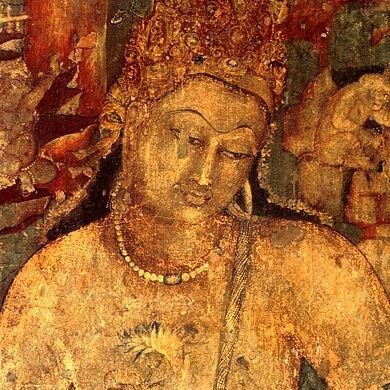
A Man guards his family from the cannibals during the Madras famine of 1877 at the time of British Raj, India
1876-1879 famine in India
-Digby estimated 10.3 million people starved to death most of which were in South India (some refer to the tragedy as the Madras famine).
1/n
1876-1879 famine in India
-Digby estimated 10.3 million people starved to death most of which were in South India (some refer to the tragedy as the Madras famine).
1/n

Maharatna estimated 8.2 million died from hunger and diseases that followed.
British colonial rule argued that famine relief would be an inappropriate response and encourage laziness. Some officials argued the Thomas R Malthus theory that famines are a nature's way for
2/n
British colonial rule argued that famine relief would be an inappropriate response and encourage laziness. Some officials argued the Thomas R Malthus theory that famines are a nature's way for
2/n

population control and argued British government should not intervene. British government continued its policy of "forced export" of food from India in 1876-1879, while the famine swept among its people. The poverty, misery and diseases wiped out villages and families.
3/n
3/n

Some farmers and their families committed suicide during this 3 year period from the trauma and the extended period of starvation. Parents killed themselves so that their children could eat the remaining scraps of food, creating a pool of abandoned and foresaken children.
4/n
4/n
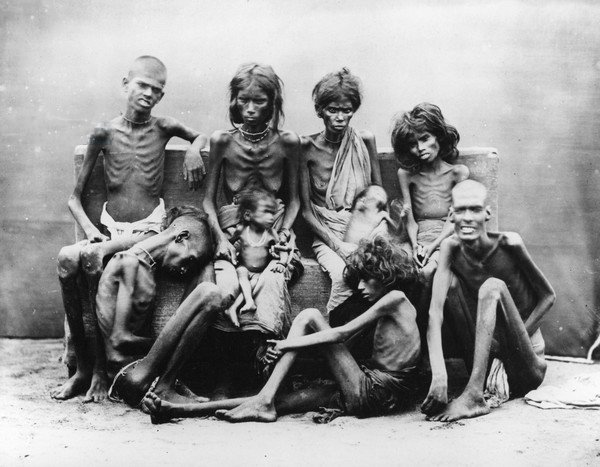
-1876 -1879 Famine Genocide in India Madras under British colonial rule 3
Photograph by Willoughby Wallace Hooper (1876-1879)
5/n
Photograph by Willoughby Wallace Hooper (1876-1879)
5/n
Loading suggestions...