

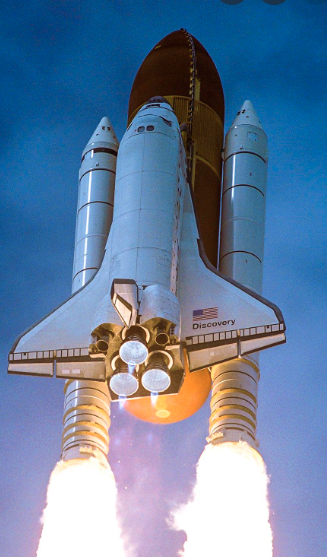
A popular theory is that the size of a horse’s butt in Ancient Rome determined the size of NASA’s shuttle rocket boosters.
There are holes in the story but it's an interesting way to think about path dependence and technological lock-in.
Here’s why (and 5 other examples)🧵
There are holes in the story but it's an interesting way to think about path dependence and technological lock-in.
Here’s why (and 5 other examples)🧵
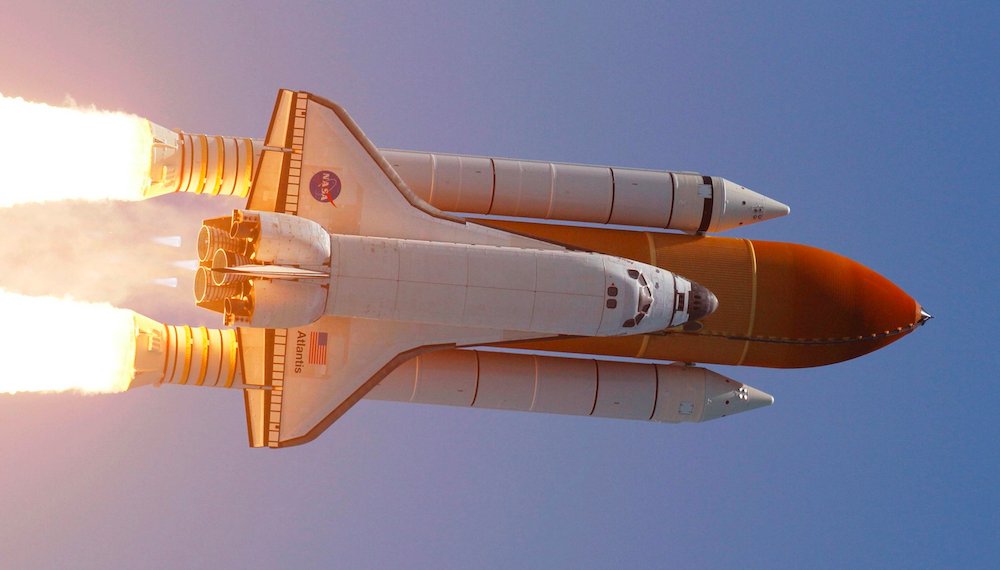
Let’s start in the early 1970s: When NASA developed rocket boosters for the space shuttle, it had to plan transport from the manufacturer Thiokol (Utah) to Florida (launch site).
It would do so by rail and had to make sure the rockets could fit through tunnels of a certain size.
It would do so by rail and had to make sure the rockets could fit through tunnels of a certain size.
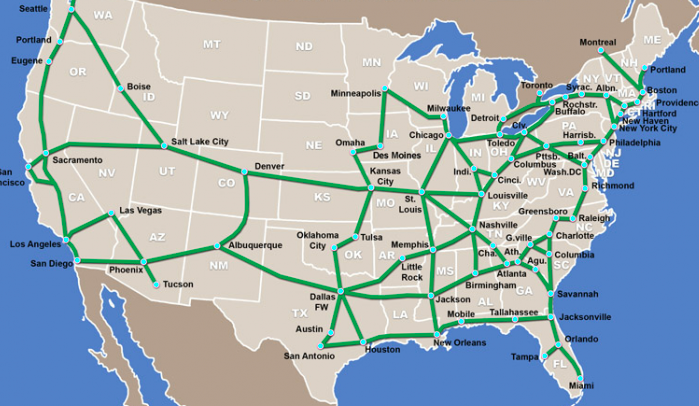
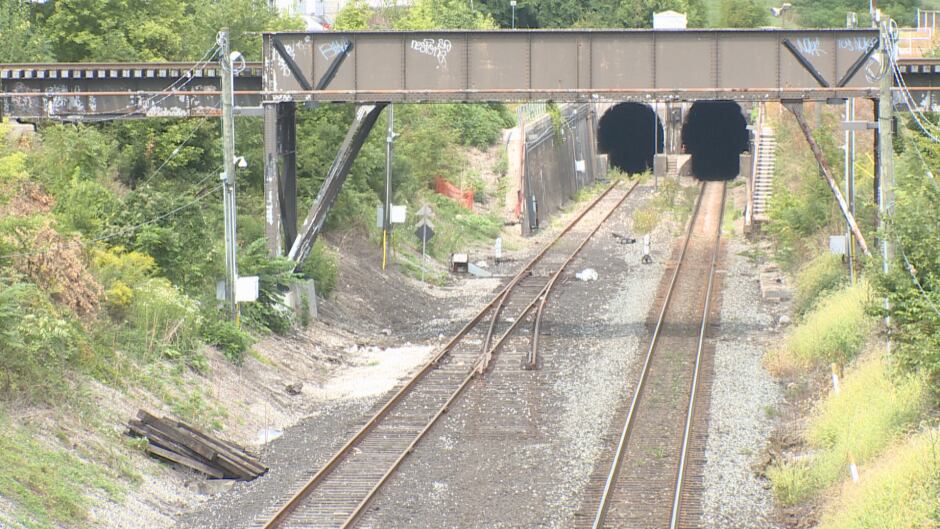
The standard rail gauge in America is 4 ft 8.5 inches and the smallest tunnels on the route were not too much bigger than that.
Why 4ft 8.5 inches?
The track size was set in the mid-1800s as rail was laid across the country. The process was based on English building techniques.
Why 4ft 8.5 inches?
The track size was set in the mid-1800s as rail was laid across the country. The process was based on English building techniques.
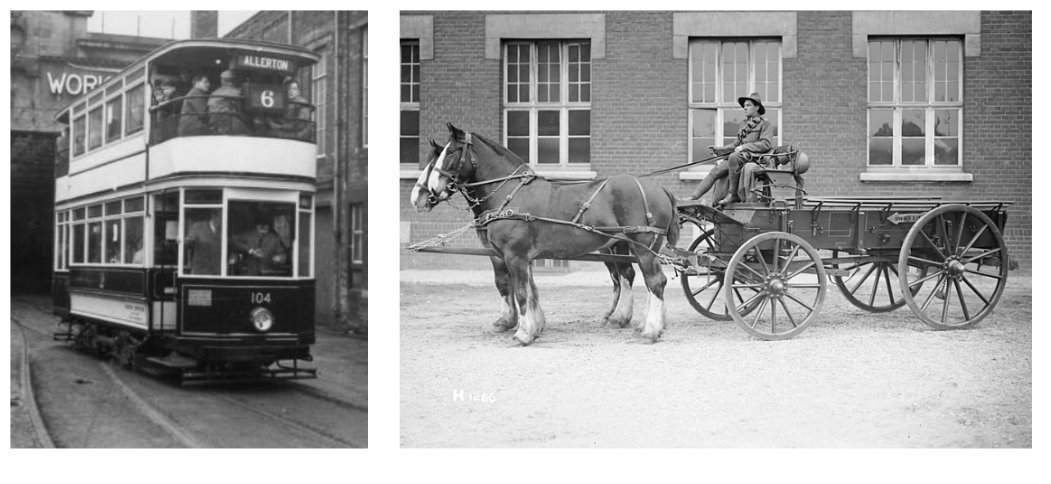
What was the basis of England’s rail system?
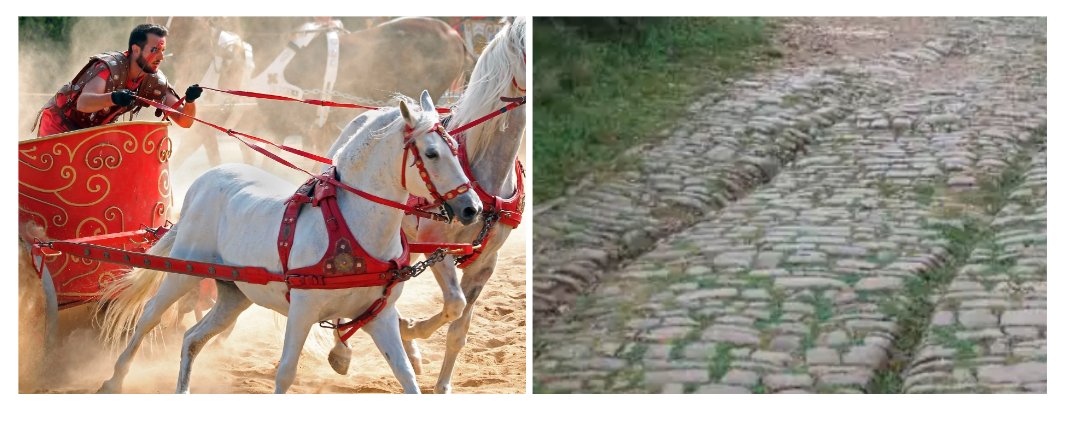
It was built to match the country's tramway tracks, which itself followed a horse and wagon system. The wagons relied on uniform ruts in the road (which could accommodate the wheels).
Now comes the connection to Ancient Rome.
It was built to match the country's tramway tracks, which itself followed a horse and wagon system. The wagons relied on uniform ruts in the road (which could accommodate the wheels).
Now comes the connection to Ancient Rome.
English roads go back to Roman engineering, which made the ruts for chariot wheels.
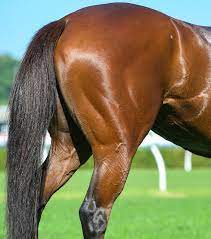
What set the chariot width? Two horse asses side-to-side, which were in the ballpark of 4 ft 8.5 in...
...and (apparently) influenced the dimensions of the shuttle boosters 1000s of years later.
What set the chariot width? Two horse asses side-to-side, which were in the ballpark of 4 ft 8.5 in...
...and (apparently) influenced the dimensions of the shuttle boosters 1000s of years later.
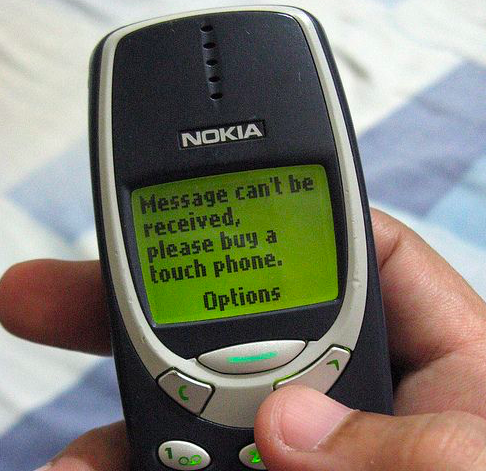
The Roman-era horse ass to shuttle rocket booster is a great example of path dependence.
A early decision made in one context locks in the course of development, whether or not the original parameters still make the most sense.
Here are 5 other examples:
A early decision made in one context locks in the course of development, whether or not the original parameters still make the most sense.
Here are 5 other examples:
QWERTY
The QWERTY keyboard layout is often attributed to the design of mechanical keyboards, which created the letter placement to prevent jamming from fast typers.
(Another theory attributes the design to Morse Code operators, who found QWERTY the most efficient layout).
The QWERTY keyboard layout is often attributed to the design of mechanical keyboards, which created the letter placement to prevent jamming from fast typers.
(Another theory attributes the design to Morse Code operators, who found QWERTY the most efficient layout).

Coding
A (often contentious) best practice in Python coding is that the character limit per line is 80.
Where does the standard come from? IBM. In the 1960s, the most popular punchcard for the computing giant’s terminal was 80 columns by 12 rows.
A (often contentious) best practice in Python coding is that the character limit per line is 80.
Where does the standard come from? IBM. In the 1960s, the most popular punchcard for the computing giant’s terminal was 80 columns by 12 rows.

App Store fees
Why do app devs pay 30% to Apple + Google?
Back in the 80s, 3 game firms (including Pac-Man team) paid Nintendo a 10% fee to be on the console.
One game maker couldn't manufacture its own cartridge, so it paid another 20% for Nintendo to do it (10% + 20% = 30%).
Why do app devs pay 30% to Apple + Google?
Back in the 80s, 3 game firms (including Pac-Man team) paid Nintendo a 10% fee to be on the console.
One game maker couldn't manufacture its own cartridge, so it paid another 20% for Nintendo to do it (10% + 20% = 30%).

Tweets
Twitter started with a tweet character limit of 140 characters?
Why? Before mobile apps, tweets were delivered by SMS, which had a limit of 160 characters. Twitter set the limit to 140 (leaving 20 characters for user name)
In 2017, it was doubled to 280 characters.
Twitter started with a tweet character limit of 140 characters?
Why? Before mobile apps, tweets were delivered by SMS, which had a limit of 160 characters. Twitter set the limit to 140 (leaving 20 characters for user name)
In 2017, it was doubled to 280 characters.
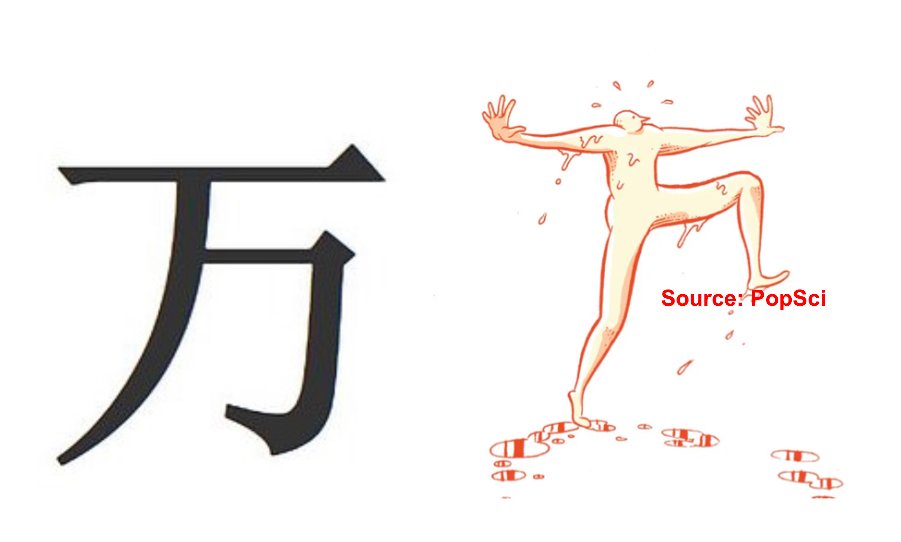
The fitness industry regularly advises 10k steps a day for health. But the number isn’t based on science.
It traces back to 1965 when a Japanese firm created a step counter and marketed the idea of 10k steps.
Why? The Japanese character for “10,000” looks like a man walking.
It traces back to 1965 when a Japanese firm created a step counter and marketed the idea of 10k steps.
Why? The Japanese character for “10,000” looks like a man walking.
Back to the boosters.
A flaw in the theory: Union + Confederates had different rail sizes and the 4ft 8.5in standard only exists b/c Union won the Civil War.
Still, path dependence remains. As shown by other examples, it’s worth asking: why is the current state the way it is?
A flaw in the theory: Union + Confederates had different rail sizes and the 4ft 8.5in standard only exists b/c Union won the Civil War.
Still, path dependence remains. As shown by other examples, it’s worth asking: why is the current state the way it is?
If you enjoyed that, I write interesting threads 1-2x a week.
Follow @TrungTPhan to catch them in your feed.
Here's another one:
Follow @TrungTPhan to catch them in your feed.
Here's another one:
PS. I'll be writing more on this topic in my Saturday newsletter on business and tech.
You can subscribe here (and also find sources for this thread): trungphan.substack.com
You can subscribe here (and also find sources for this thread): trungphan.substack.com
Relatedly, the first part of SpaceX engineering process is to audit "requirements" and see why they exist.
(Per @elonmusk: "you could have a requirement that an internet randomly came up with")
(Per @elonmusk: "you could have a requirement that an internet randomly came up with")
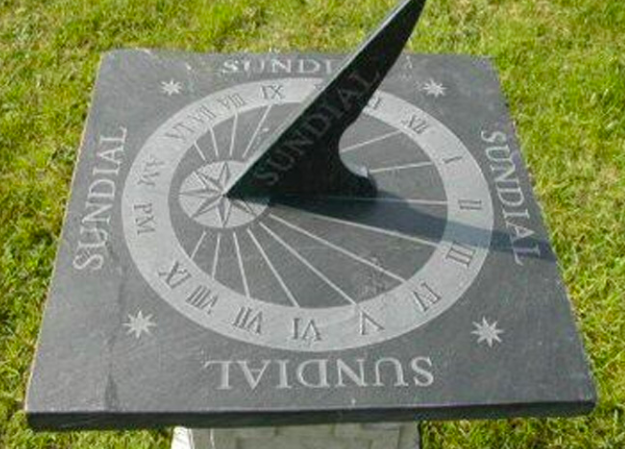
Another one: Why do clocks move “clockwise”.
A popular theory: the earliest time piece was the sundial. And if you are in the Northern hemisphere, the sun casts a “clockwise” shadow on the sundial as it moves from East to West.
A popular theory: the earliest time piece was the sundial. And if you are in the Northern hemisphere, the sun casts a “clockwise” shadow on the sundial as it moves from East to West.
Soccer ball
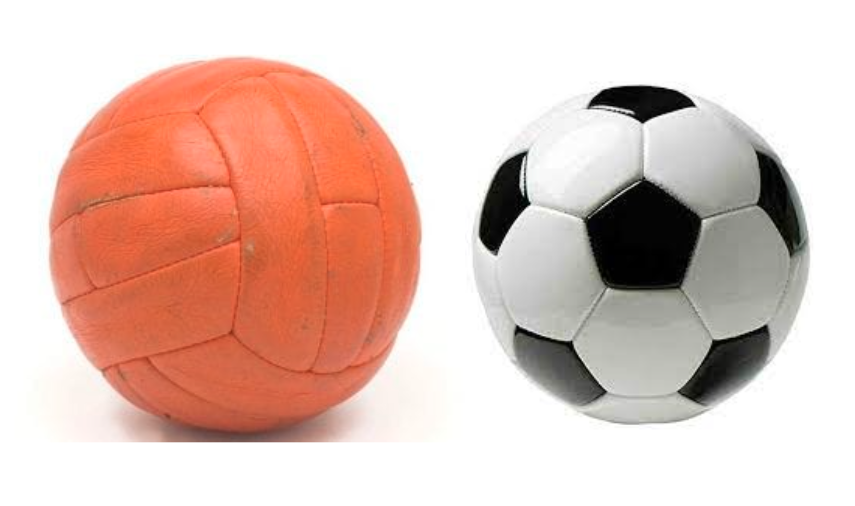
When England hosted the 1966 World Cup, it was broadcast to 400m by BBC. Unfortunately, the reddish-brown ball was hard to follow on black-and-white TVs.
4 years later, the World Cup used a checkered black-and-white ball for easy viewing. Hence the iconic look:
When England hosted the 1966 World Cup, it was broadcast to 400m by BBC. Unfortunately, the reddish-brown ball was hard to follow on black-and-white TVs.
4 years later, the World Cup used a checkered black-and-white ball for easy viewing. Hence the iconic look:
👀👀👀
.@emollick doesn’t miss!!!
One more:
Loading suggestions...