

Know about 4 types of Tulsi in Bharat and its Benefits:
Tulsi, the plant that we Indians are growing and worshipping in our homes for ages, is one of the 60 species of the genus Ocimum and it is known as ‘Tulasi’ in Sanskrit.
#Thread
Tulsi, the plant that we Indians are growing and worshipping in our homes for ages, is one of the 60 species of the genus Ocimum and it is known as ‘Tulasi’ in Sanskrit.
#Thread

Tulsi has been used for thousands of years in Ayurveda, for its diverse healing properties. It is mentioned in the ‘Charaka Samhita’, an ancient Ayurvedic text and it is regarded in Ayurveda as an “elixir of life” and believed to promote longevity.
In Indian Ayurvedic texts, there are 4 types of ‘Tulsi’ Plants mentioned and all four of them have amazing benefits.
1•Krishna (Purple Leaf) Tulsi, Shyama Tulsi
2• Rama (Green Leaf) Tulsi, Sri or Lakshmi Tulasi,
3•Vana (Wild Leaf) Tulsi
4•Kapoor Tulsi (Heavy Flowered)
1•Krishna (Purple Leaf) Tulsi, Shyama Tulsi
2• Rama (Green Leaf) Tulsi, Sri or Lakshmi Tulasi,
3•Vana (Wild Leaf) Tulsi
4•Kapoor Tulsi (Heavy Flowered)
1- Krishna Tulsi 🌿:
It is said that Krishna Tulsi got its name because of the purple leaves represents Shri Krishna’s skin colour. It is also famous for its crispy and peppery taste. Its hard to find in comparison to the other types of tulsi
It is said that Krishna Tulsi got its name because of the purple leaves represents Shri Krishna’s skin colour. It is also famous for its crispy and peppery taste. Its hard to find in comparison to the other types of tulsi
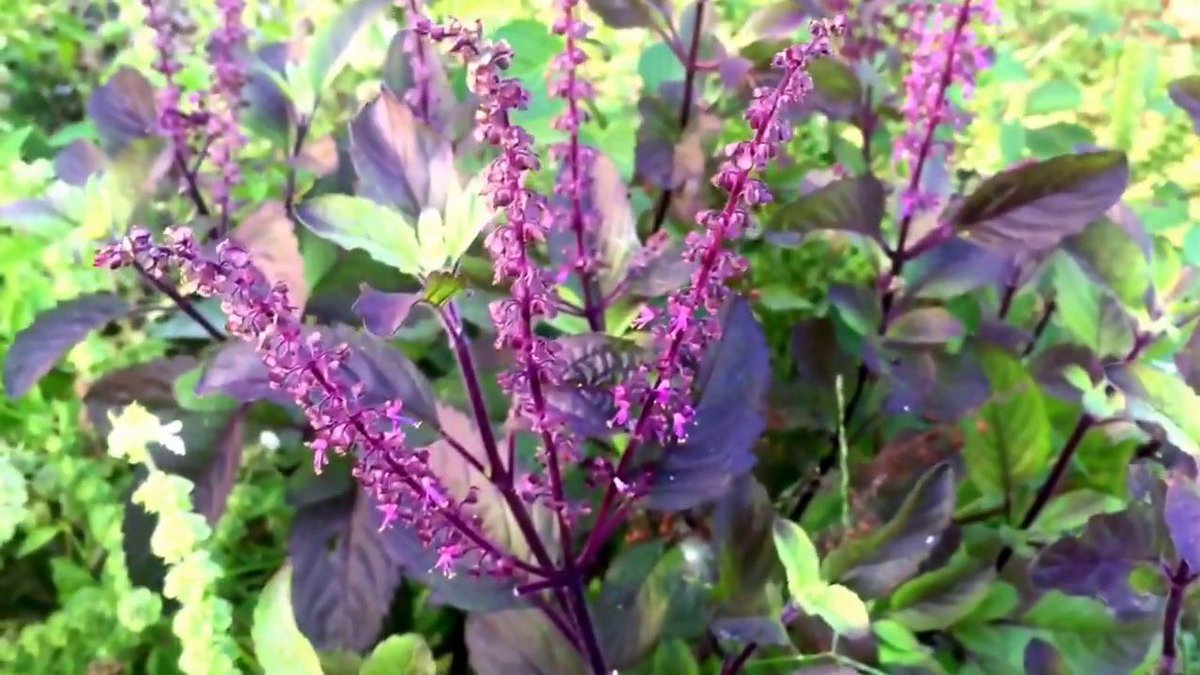
Its Purple leaf also used to treat throat infections, respiratory system, nasal lesions, ear-ache & skin diseases
2- Rama Tulsi or Green Leaf Basil🌿:
Rama tulsi is also known as Sri or Lakshmi Tulasi, Ocimum tenuiflorum, Ocimum sanctum, and green leaf tulsi (Basil).
2- Rama Tulsi or Green Leaf Basil🌿:
Rama tulsi is also known as Sri or Lakshmi Tulasi, Ocimum tenuiflorum, Ocimum sanctum, and green leaf tulsi (Basil).
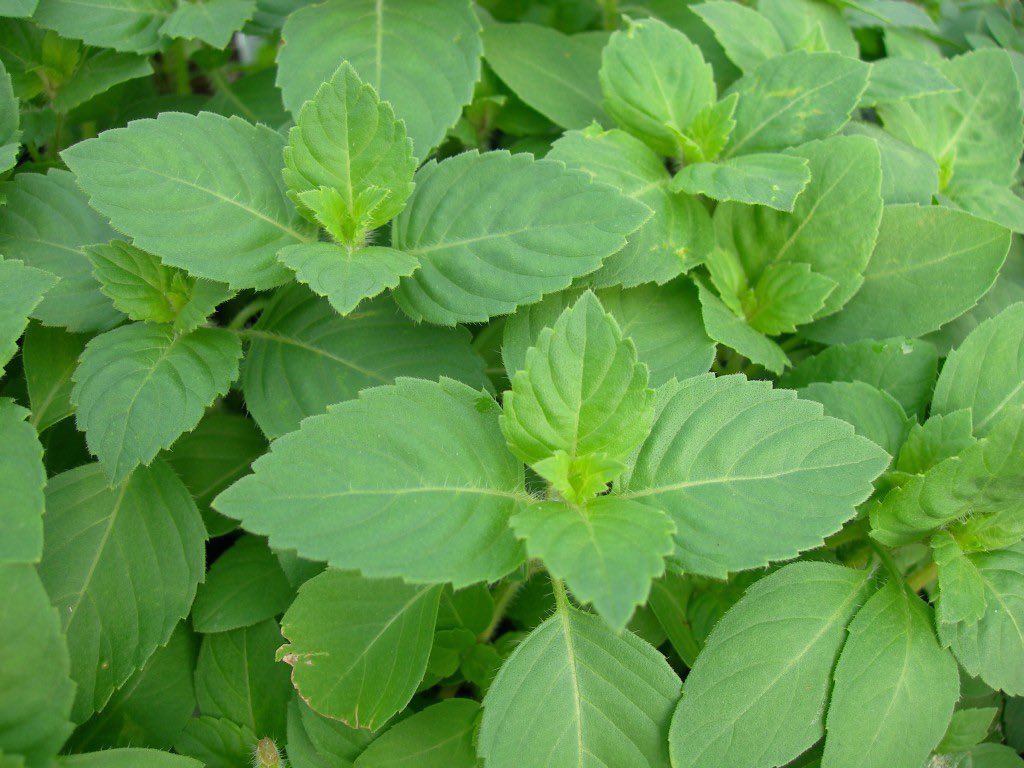
The Rama tulsi emits a strong aroma from its every part. It is also found in Eastern Nepal, Brazil, China, as well as in Bengal &, Bihar, . Rama Tulsi is widely famous for its cooling taste.
3- Vana Tulsi or Wild Leaf Basil🌿
It is native to India, Sri Lanka, Java and the northern and eastern parts of Africa. The scientific name of Vana tulsi is Ocimum gratissimum. It can grow up to 2m high with highly aromatic and slightly hairy green leaves.
It is native to India, Sri Lanka, Java and the northern and eastern parts of Africa. The scientific name of Vana tulsi is Ocimum gratissimum. It can grow up to 2m high with highly aromatic and slightly hairy green leaves.
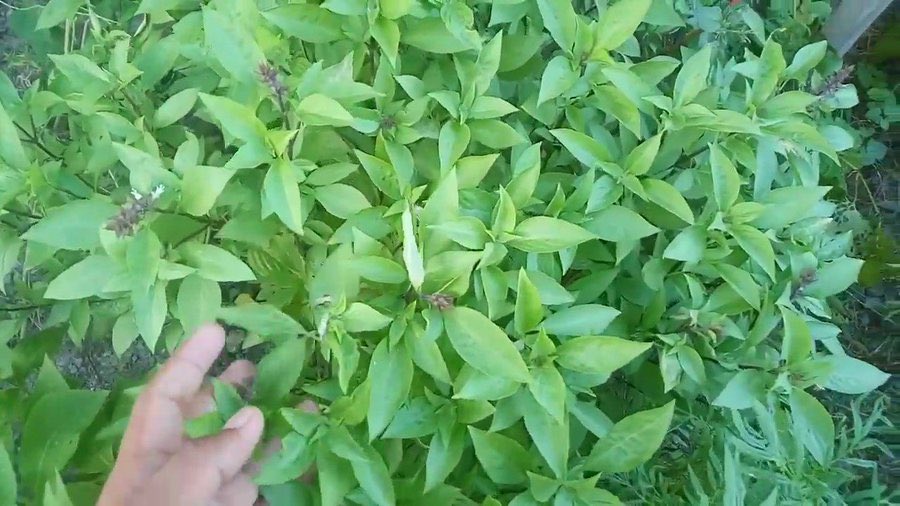
The strong antioxidant activity of Vana Tulsi slows down the ageing process.
4- Kapoor Tulsi or Heavy Flowered Basil🌿:
This type of tulsi has garnished its name due to the sweet fragrance that can keep insects and mosquitoes at bay. Kapoor tulsi is short in terms of heights
4- Kapoor Tulsi or Heavy Flowered Basil🌿:
This type of tulsi has garnished its name due to the sweet fragrance that can keep insects and mosquitoes at bay. Kapoor tulsi is short in terms of heights
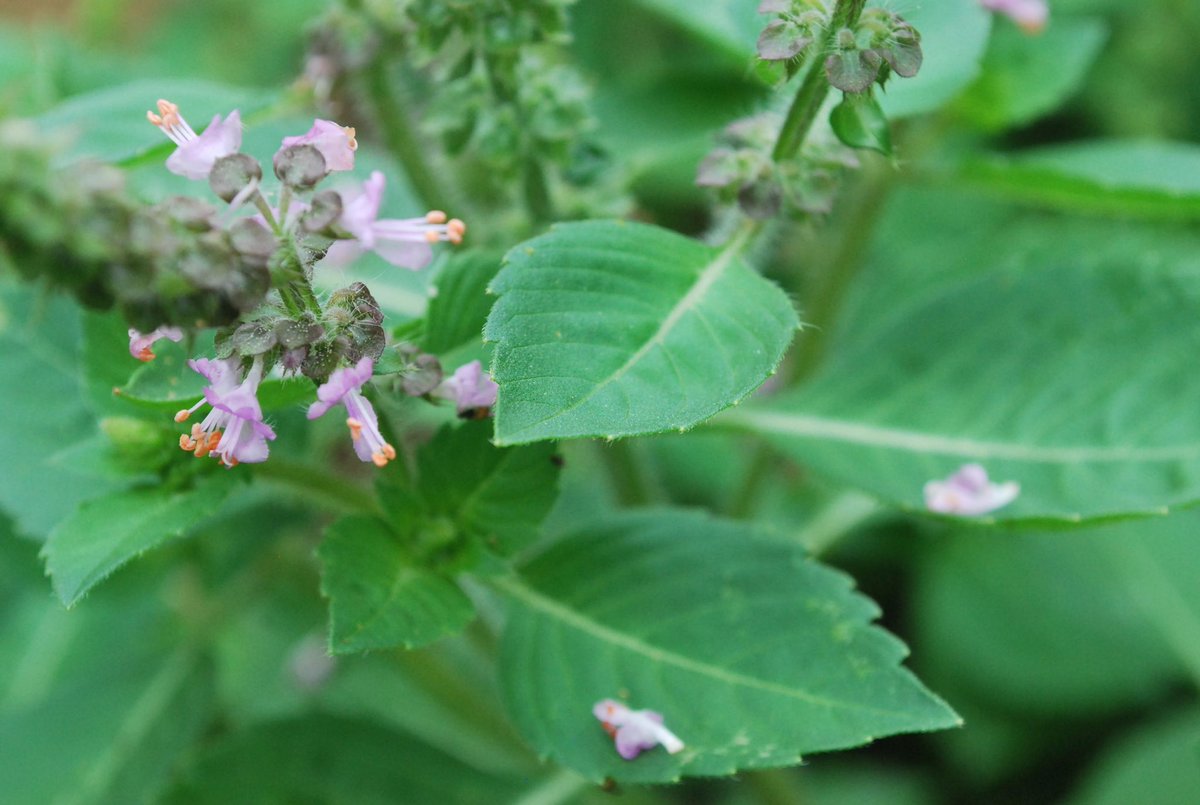
and gets the most number of flowers among all different types of the tulsi plant
Use of Kapoor tulsi can help in the treatment of bronchitis, malaria, diarrhoea, dysentery, skin disease, arthritis.
Use of Kapoor tulsi can help in the treatment of bronchitis, malaria, diarrhoea, dysentery, skin disease, arthritis.
"Tulsi gives out oxygen for 20 hours and ozone for four hours a day along with the formation of nascent oxygen which absorbs harmful gases like carbon monoxide, carbon dioxide and sulphur dioxide from the environment,"
said Shyamkant Padoley, an eminent botanist.
said Shyamkant Padoley, an eminent botanist.
That is why majority Hindu houses has Tulsi (Holy Basil) plant outside their homes as ancient Indian sages has suggested.
Source- harmonyveda.com and
timesofindia.com
Source- harmonyveda.com and
timesofindia.com

Loading suggestions...