

During the early 20th century, the western Indian city of Bombay had witnessed a first of its kind event in history that connected two culturally different countries. A Japanese spy who was assigned to gather intelligence, made his journey, all the way to the Hajj. A thread. 1/18
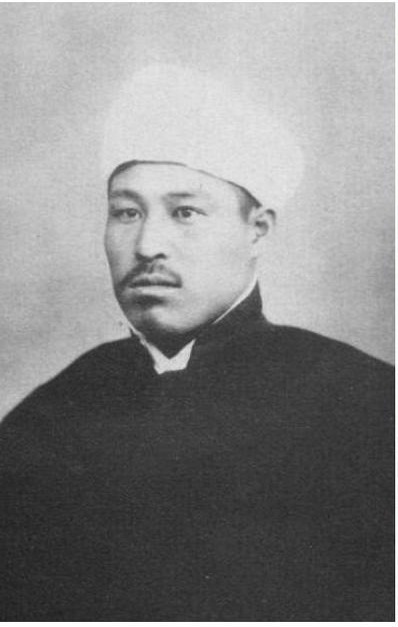
Japan’s victory in the Russo-Japanese War (1904-05) became a source of inspiration for the colonized people around the world. Their victory was widely appreciated by Muslim anti-imperialists. Using their support, Japan planned to corner Russia even more. 2/18
To garner support from China’s Muslims, the Japanese army onboarded Mitsutaro Yamaoka Kotaro – a bright graduate from the Tokyo School of Foreign Languages, Russian study department. 3/18
Yamaoka had served as an interpreter during the war in the Tenth Division of the Japanese army. After the war was over, he continued his career as a Russian language teacher for the Japanese military administration. 4/18
During his stint as a Russian language expert in the Japanese army, he took an active part in the Shinto propagation and moved to China where he went on to join the ‘Black Dragon’ – an ultranationalist paramilitary group, eponymous with the Chinese name of the Amur River. 5/18
Back in China, a Volga Tatar exile named Abdurreshid Ibrahim was on course to organize Crimean Tatars to start an insurgency against the Russians. The Black Dragon noticed him and assisted Ibrahim to travel to Japan and meet Yamaoka. 6/18
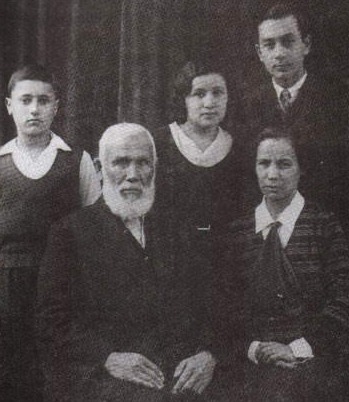
Yamaoka’s mission was to travel to the holiest Muslim site with Ibrahim to gather intelligence, under the pretence of a pilgrim. Back in the 20th century, the easiest way to reach Mecca from Japan was via the well-connected port of Bombay. 7/18
Despite Ibrahim’s good relationship with the representatives of the Ottoman Empire in the city, Yamaoka’s appearance created an air of mistrust among the Tatar pilgrims. To top it, Ibrahim revealed the true identity of Yamaoka among his Tatar friends. 8/18
The reveal created a clamor among the pilgrims. Before the situation could go out of control, Ibrahim convinced Yamaoka and helped him convert to Islam on the spot and thus began the journey of Umar Mitsutaro Yamaoka Kotaro. 9/18
The pilgrims weighed anchor from Yellow Gate of Bombay during the third week of November in 1909. 10/18
When they finally reached Jeddah after three weeks of rigorous journey, Yamaoka was nervous about how he'd be treated in the holy land of Muslims. But surprisingly, Yamaoka received the warmest hospitality upon his arrival. 11/18
He was invited to a dinner with Hashemite Sherif Husain, the Emir of Mecca and King of the Arabs and given the opportunity to take a tour inside the Ka'bah. After performing the Hajj, Yamaoka became conscious of his sudden celebrity status as the first Japanese Hajji. 12/18
The attention he received from Beirut to Damascus, was described as the “greatest honor” of his life in his own words. Once an advocate of the Shinto faith had now become a devout Muslim with a transformed purpose of life. 13/18
During the next five decades, he spent his life spreading the knowledge of Islam in Japan as well as other countries. He authored several books on Islam along with his experience of the Hajj, which became the maiden account of Hajj written in Japanese. 14/18
His peace activism and religious promotions became a new headache for the Japanese military government. However, they couldn’t hinder the undying spirit of the former spy. 15/18
When the Bolshevik Revolution forced thousands of Russian Muslims into refuge, Yamaoka helped them to resettle in Japan. 16/18
In the spring of 1938, Yamaoka spearheaded the foundation of the Islamic Culture Association that built the first mosque in Tokyo and Yamaoka’s friend, philosopher, and guide, Abdurreshid Ibrahim became the first imam of the mosque. 17/18
It is indeed fascinating to realize that a distant city of western India bore testimony to a cultural and religious transition that would eventually enrich m Japanese people, culture, arts and cuisines. 18/18
Sources:
@Wikimedia, Umar Mitsutaro Yamaoka (1880-1959): A Study of His Thought and Contributions to Da’wah by Hirofumi Oki
Forgotten Futures: Indian Muslims in the Trans-Islamic Turn to Japan by Nile Green
@Wikimedia, Umar Mitsutaro Yamaoka (1880-1959): A Study of His Thought and Contributions to Da’wah by Hirofumi Oki
Forgotten Futures: Indian Muslims in the Trans-Islamic Turn to Japan by Nile Green
Loading suggestions...