

Certain ideas which may be thought to be Buddhistic, could be found in some way in texts taken to be pre-Buddha by the likes of Hajime Nakamura.
In Nyāyasūtras, a pūrvapakṣa is seen professing 'origination of sat from asat'. Similar pūrvapakṣa is seen in Chāndogyopaniṣad.+
In Nyāyasūtras, a pūrvapakṣa is seen professing 'origination of sat from asat'. Similar pūrvapakṣa is seen in Chāndogyopaniṣad.+
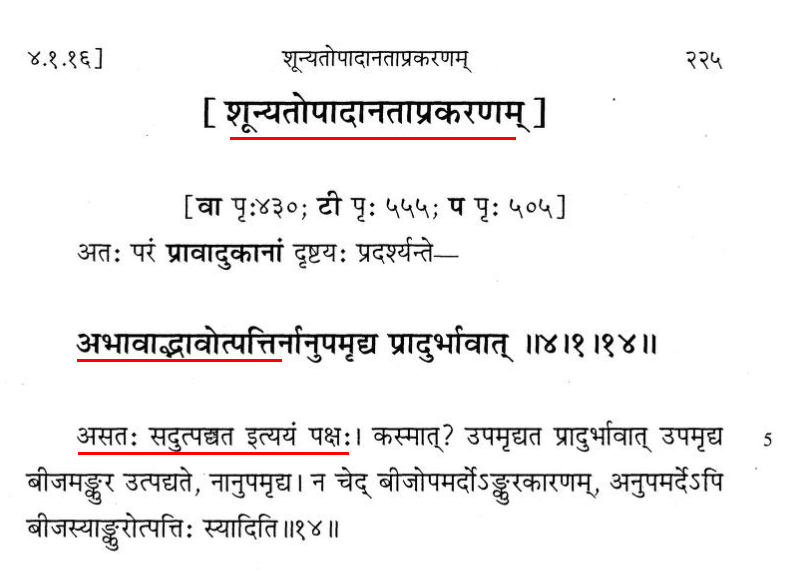
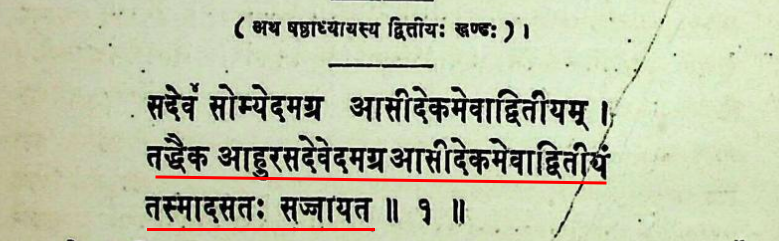
Would that lead to Chāndogyopaniṣad being dated post-Buddha?
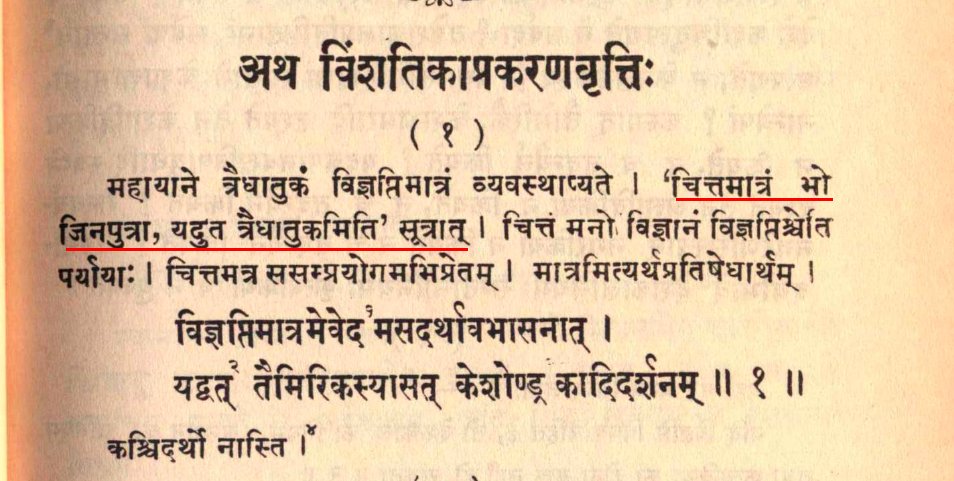
Similar is with the idea which is at the basis of Vasubandhu's Vijñaptimātratāsiddhi, a text on Vijñānavāda.+
Similar is with the idea which is at the basis of Vasubandhu's Vijñaptimātratāsiddhi, a text on Vijñānavāda.+
Sthiramati in his commentary on this text provides the basis of the idea that everything is ultimately vijñapti or citta. The basis is the Daśabhūmikasūtra. The basic idea is that everything is dependent on citta, or citta is at the basis of everything else.+
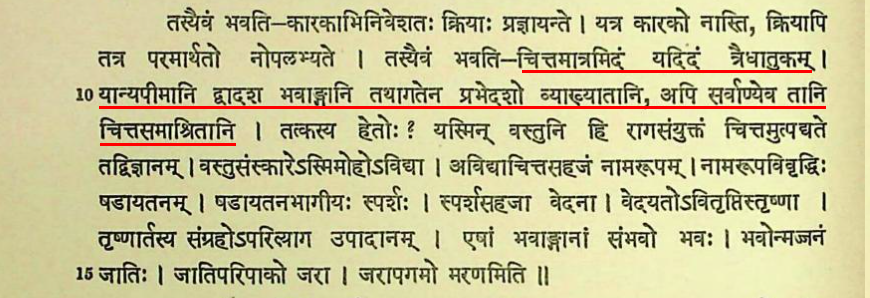
Similar is an idea expressed in the Śivasaṅkalpasūkta of Śuklayajurveda. In the 2nd verse of it, manas is called 'apūrva', one of 2 interpretations of which is that it is second to none, or that it is the first, which means that manas is at the basis of everything else.+
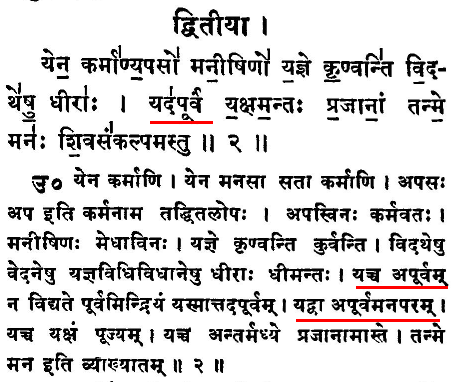
It is further expressed that both action (verse 3) and knowledge (verse 5) are dependent on manas. It's also been said that the (things of?) past, present and future have been enveloped by manas (verse 4).+
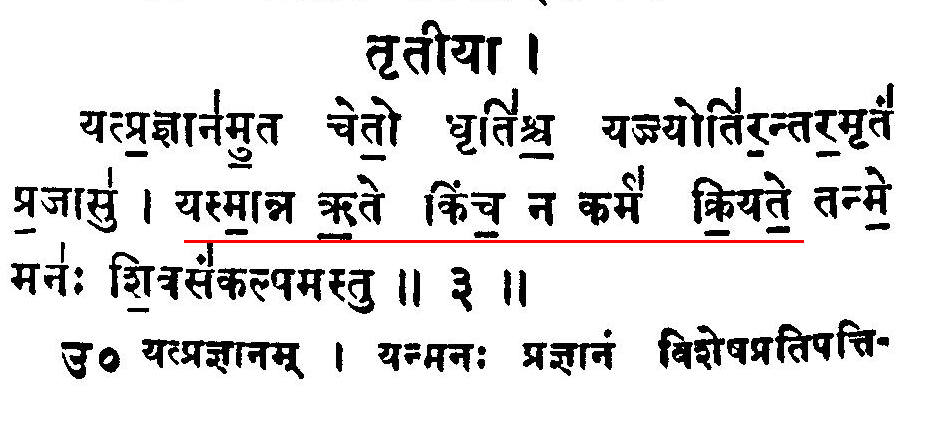
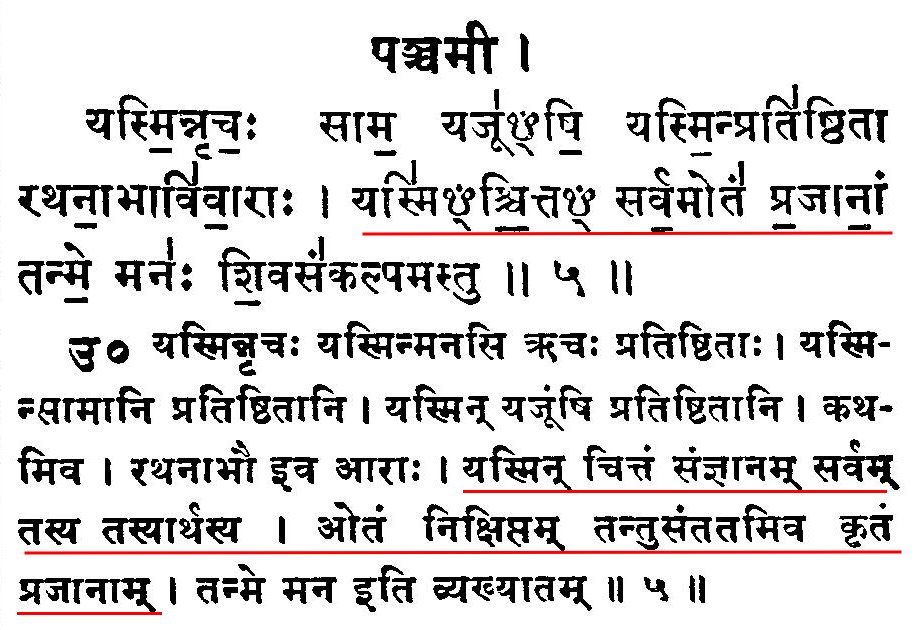
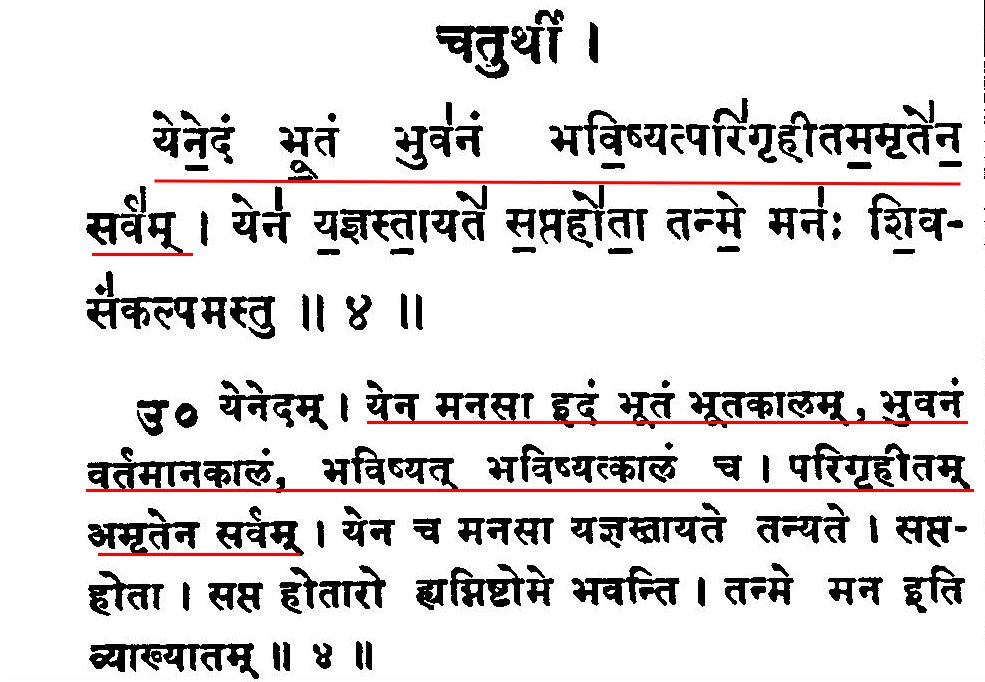
So now if one finds in any text an uttarapakṣa or pūrvapakṣa, which hints at the idea that citta or manas is at the basis of the whole world, should it be taken as being influenced by Buddhist philosophy?
Many such ideas could be found in Vedic & pre-Buddhist literature.+
Many such ideas could be found in Vedic & pre-Buddhist literature.+
Hence, while dating the texts where such ideas appear in some way or the other, one must also check if such ideas are found in some way in the pre-Buddhist Vedic texts, before one decides that they are indeed Buddhistic ideas.
Loading suggestions...