
History
Education
Roman Empire
Culture
Ancient Civilizations
Byzantine Empire
Academia
Byzantine Studies

Was the Byzantine Empire really just the Roman Empire? In a word, yes. In this thread, I explore some arguments for and against that answer, as well as alternatives to the use of the term "Byzantine." Read on. 🧵 #Roman #Byzantine #History

The people that modern historians call "Byzantines" referred to themselves as Romans and to their state as the empire of the Romans. They were Romans, through and through. Then why have modern historians adopted the terms "Byzantine" and "Byzantine Empire?"

In the medieval west, standard terms for the "Byzantine" Empire were "empire of Constantinople" and "empire of the Greeks." They were used to avoid calling the "Byzantines" Romans, because westerners wished that label for themselves.
The term "Byzantium" was coined in the west in the sixteenth century, but did not displace these other appellations until the mid nineteenth century.
For better or worse, all of these terms, including "Byzantine" for the people and empire, or "Byzantium" as a shorthand, are a product of the medieval and modern west, created for political and ideological reasons to deny the "Byzantines" their Roman identity.

For more on the history of these terms and why "Byzantine" continues to be used, see the first chapter of Anthony Kaldellis' book Romanland (2019):
amazon.com
amazon.com
If you are not sure you want to invest in reading the whole book, you can check out my review of the book here:
researchgate.net
researchgate.net
If the term "Byzantine" was created for ideological reasons, why do historians still use it? Many see a distinction between Roman and "Byzantine" Empires. For some, the Byzantine Empire is different because in it there was a combination of Roman, Greek, and Christian traditions.
For others, the "Byzantine" Empire is different because of its capital at Constantinople. Still others see the contraction of the Roman state after the Arab invasions of the seventh century as marking a decisive change which turned that state into a "Byzantine" one.

Unfortunately, none of these reasons really stand up well under scrutiny.
To take the first, yes, just about every scholar of this empire would agree that in it there was some combination of Roman, Greek, and Christian traditions. But it is hard to see how this ended an old state (Roman) and created a new state (Byzantine).
After all, the Romans had been self-consciously integrating Greek traditions for centuries before any modern scholar would advocate that a "Byzantine" Empire had come into being. The xenophobic Roman senator Cato the Elder had complained about this as early as the 2nd century BC.

As for Christianity, the religion was similarly around for centuries before a "Byzantine" Empire is said to exist. Some Byzantinists favor the reign of Constantine I in the fourth century AD, when Christianity earned imperial approval, as the start of this empire.

But then again, Christianity gained toleration and widespread acceptance in the decades after Constantine around the entire Roman empire, not just in the east, and no modern scholar is eager to call the fifth century Western Roman Empire "Byzantine."

What about the importance of Constantinople? Constantine I's refoundation of the town of Byzantion as Constantinople in 330 may seem to have initiated a new era! Power had shifted from Rome to Constantinople.

But the Roman Empire had many imperial residences in the century leading up to Constantine's creation of Constantinople. Milan, Trier, and Nicomedia had all been home to emperors during this time period without anyone suggesting a new "Nicomedian" Empire had been born.

In the seventh century, the Roman Empire lost a huge proportion of its territory to the invasion of the Arabs. Some historians see this as the beginning of the "Byzantine" Empire. But a state's loss of territory to invasion does not change that state into a new state.
This is simplifying the argument, because it is not all about territorial loss. The losses of the seventh century may have led to administrative and military reforms in the medieval Roman Empire. But states can and do reform their administrations without turning into new states.
All of these different explanations for the distinction between Roman and "Byzantine" Empires result in modern historians giving different dates for the creation of the "Byzantine" Empire, which is proof of the artificiality of the concept.
In general histories of Byzantium, I have seen starting dates for the empire as early as 284 and as late as 600, but most modern historians seem to place it in the reign of Constantine I, either at 324 or 330.
Historians cannot agree on when the "Byzantine" Empire began, because there is no date (short of 1453) at which the Roman Empire in the eastern Mediterranean ended.

While there are many (if not extremely convincing) reasons that historians use the term "Byzantine," there is really primarily one reason to not use the term: it denies the Romans their self-professed identity.
Whether they lived under the reign of Trajan, Constantine, Justinian, Irene, or Basil II, the inhabitants of this empire were Romans. We know because they tell us in the sources of each period. Insisting on calling them "Byzantines" strips them of their self-identification.
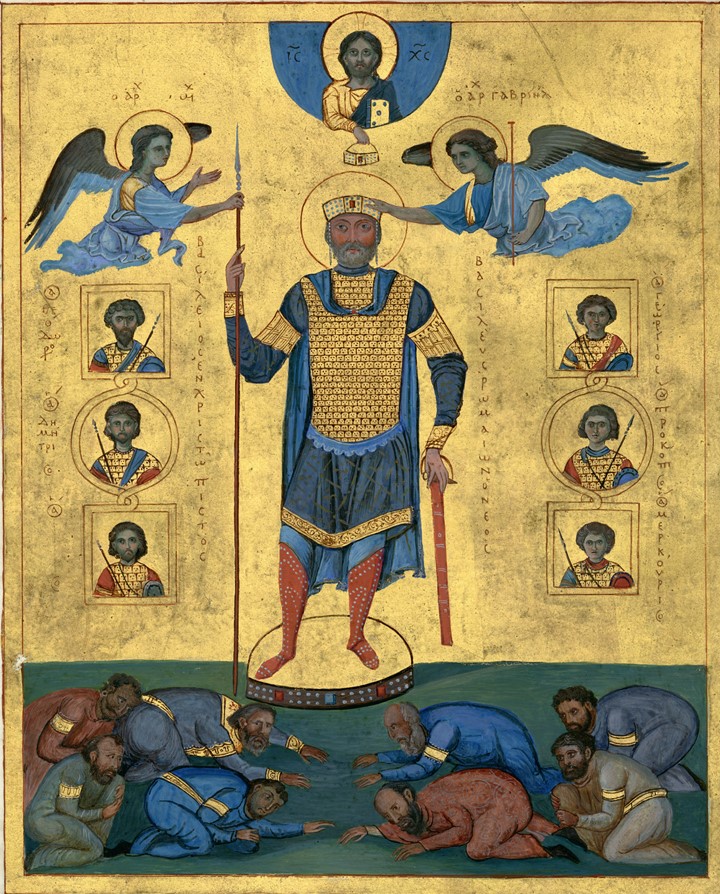
Imagine if we did this for other ancient or medieval states. What if we said of the ancient Athenians, "they called themselves Athenians" instead of "they were Athenians"? What if we decided to call the ancient Athenians "Agorans," after their famous agora, instead of Athenians?

The ancient Roman state lasted for a long, long time. Starting with the legendary founding of Rome (752 BC) and ending with the fall of Constantinople (1453 AD) gives us 2,205 years. A state that old is bound to go through significant changes over time.
It would be foolish to argue that the Roman state did not change. It clearly did. Systems of government changed, currency changed, territory expanded and contracted, religious beliefs changed radically, and the most common language shifted from Latin to Greek.
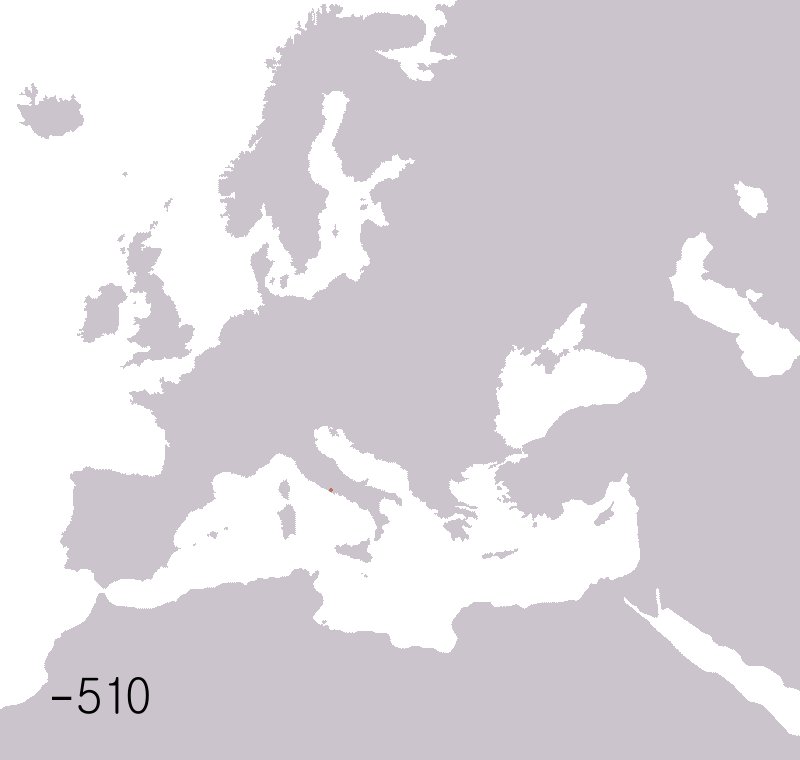
But all of these changes can be seen as the normal evolution of a state over the course of its very long history, not as the sudden (or even gradual) ending of that state and its replacement by another.
When I talk about this with my students, I like to compare the changes the ancient Roman state underwent with the evolution of the United States. Although a much younger nation than the ancient Roman state, the USA has already gone through seismic shifts in its short history.
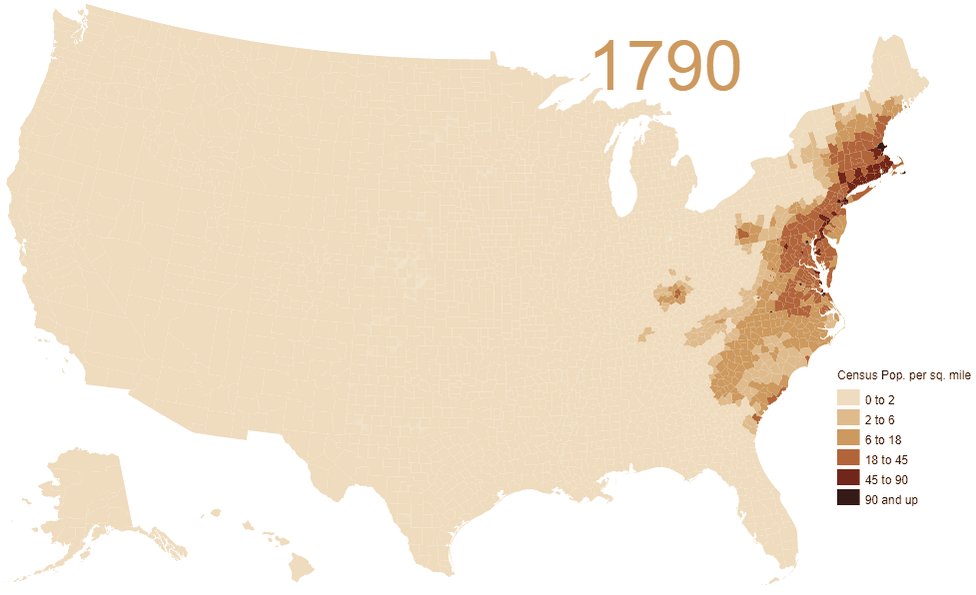
The United States has changed systems of government, changed capital cities, expanded its territory wildly, and is currently undergoing both religious change (becoming less Christian) and linguistic change (Spanish appears alongside English in most official communications).
And yet, despite all these changes, nobody has argued that the United States has become the Byzantine States, or suggested some other name change to accommodate the wild differences between the current nation and the nation of 1922, let alone that of 1797.
Today, the field of Byzantine Studies is debating the appropriate use of the term "Byzantine." If you want to devote an hour to the subject, this discussion between eminent Byzantinists Anthony Kaldellis and Leonora Neville is quite interesting:
podbean.com
podbean.com
For those who like the term "Byzantine," a recently published article by Panagiotis Theodoropoulos identifies one moment and context in which a 7th century Roman source actually used the term with reference to Roman citizens:
cambridge.org
cambridge.org
To conclude this thread, if historians do not use the term "Byzantine," then what should they use? Some options proposed include "eastern Roman" and "medieval Roman." For my taste, either would do, but I also do not have a problem with just using "Roman" without qualifier.
Some argue that using "Roman" to refer to the inhabitants of the "Byzantine" Empire would cause confusion when set against "Roman" as in the inhabitants of the city of Rome.
But I just managed to write a whole book on the sixth century without causing this confusion! Or at least I hope I succeeded in doing so. Anyway, I firmly believe it is possible.
The fact is, regardless of what terms we use, it is likely that "Byzantines," "Byzantine Empire," and "Byzantium" will be with us for a long time. There is simply too much cultural cachet in these words for them to be abandoned overnight.
However, if we can at least use these terms while recognizing their artificiality, and while acknowledging that those we sometimes call "Byzantines" were in fact Romans, that will be a step in the right direction. Fin.

Loading suggestions...