

Was intrigued to read Abdou’s book on Islam and Anarchism particularly as I recently wrote a book on the potential for an ethic of disobedience to be situated in the Qur’an and Sunnah.

I can understand at many points what Abdou is trying to do, particularly in relation to his concern over governance in Muslim majority countries (particularly the extent of authoritarianism) but also share his concern over the limitations of so-called Islamist political projects
I think the last couple of chapters, at least from the perspective of critiquing the world we live in spoke to me, especially in the way we speak of capitalism and violence. It was heartening to read him raise the notion of shared natural resources for the ummah as stolen wealth
As a fan of Ursula LeGuin’s works, and in particular her novel The Dispossessed, I’m always left with more questions than answers when engaging with anarchist material, and I think LeGuin’s own critiques speak to the heart of my concerns.
Ultimately though, I felt alienated by Abdou’s Islamic arguments because he centres a perennialist view of Islam that sits outside of my convictions in the message of tawhid in the Qur’an and sunnah.
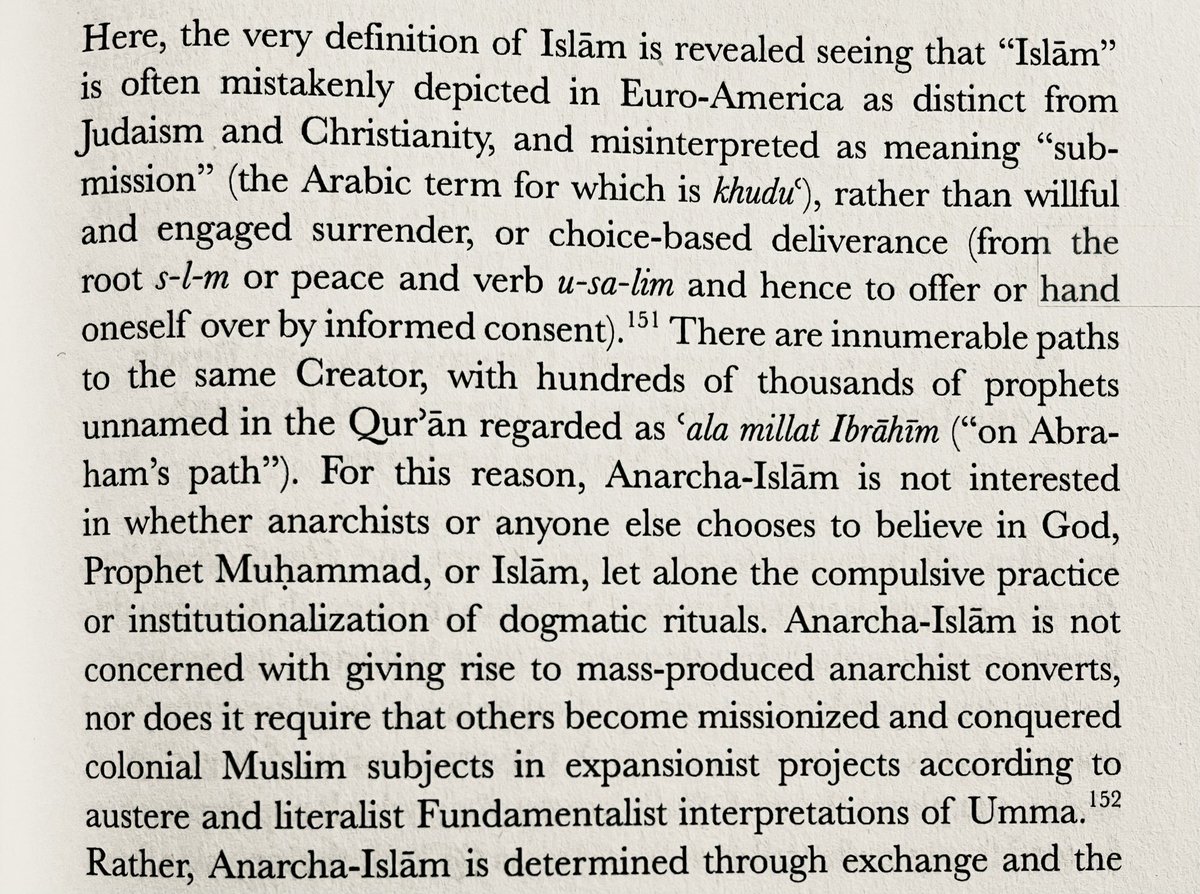
There were other instances that left me a bit disconcerted with the way his argument is constructed, such as relying on the widely quoted but also recognised falsely attributed narration of the greater jihad.
Finally, I also felt at times that Abdou was looking at the world he is living in, and working backwards to the Qur’an from a set of ethics he is personally invested in, whether it is to do with the economy, environment or gender rights.
While I agree with the importance of revitalising Islamic ethics, I am more conservative in my approach in not doing away entirely with how this din has been conveyed to us. Anarcha-Islam (as Abdou describes his project) isn’t for me, even if I agree with many of its critiques.
Loading suggestions...