
There's a lot of writing advice online.
But here's some of the best you'll ever find, given by one of the greatest writers of all.
First published in 1946 and still razor sharp, these are George Orwell's Six Rules for Writing:
But here's some of the best you'll ever find, given by one of the greatest writers of all.
First published in 1946 and still razor sharp, these are George Orwell's Six Rules for Writing:

Although he's most famous for 1984, George Orwell was much more than just a novelist.
He was also the greatest English essayist of the 20th century.
Animal Farm and 1984 are good - great, even - but it's his journalism where Orwell truly comes alive.
He was also the greatest English essayist of the 20th century.
Animal Farm and 1984 are good - great, even - but it's his journalism where Orwell truly comes alive.
He wrote with a profound clarity of voice which has stood the test of time. Nearly eighty years after his death, Orwell's words still ring true.
Here's what he considered to be the problem with writing in his own time: using the words of *other people*.
Has anything changed?
Here's what he considered to be the problem with writing in his own time: using the words of *other people*.
Has anything changed?

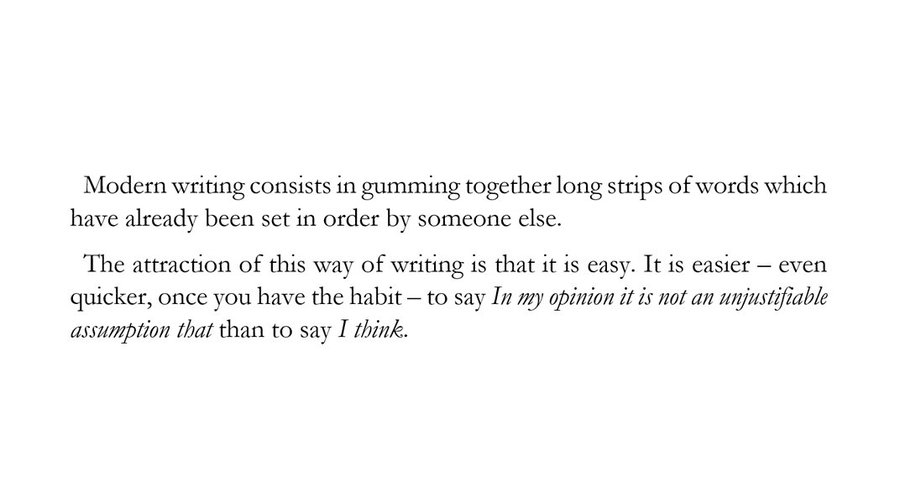
In "Politics and the English Language", published in 1946, Orwell laid down six rules for writing.
Here's a general point from that essay, one which summaries Orwell's position: that good writing requires you to think about your words.
Some of the best advice you'll ever read:
Here's a general point from that essay, one which summaries Orwell's position: that good writing requires you to think about your words.
Some of the best advice you'll ever read:

Rule #1. Never use a metaphor, simile, or other figure of speech which you are used to seeing in print.
Orwell is talking about *dying* metaphors here, not ones which have already lost their original meaning.
Orwell is talking about *dying* metaphors here, not ones which have already lost their original meaning.
An example of that is "deadline", which originally referred to the physical line around a prison which, if a prisoner crossed it, would result in that prisoner being shot.
Deadline has lost such imagery. It's no longer a metaphor. It has a literal meaning. That's fine.
Deadline has lost such imagery. It's no longer a metaphor. It has a literal meaning. That's fine.
The problem with *dying* metaphors is that they haven't become literal yet.
But by being overused their imagery turns stale. They lose all "evocative power", as Orwell says.
An example is something like "Achilles' heel".
But by being overused their imagery turns stale. They lose all "evocative power", as Orwell says.
An example is something like "Achilles' heel".
Using these dying metaphors is lazy. It shows that the writer neither cares about the vividness of their language nor the accuracy of what they are actually saying.
Why use somebody else's fading imagery when you can invent your own & stimulate your reader's imagination?
Why use somebody else's fading imagery when you can invent your own & stimulate your reader's imagination?
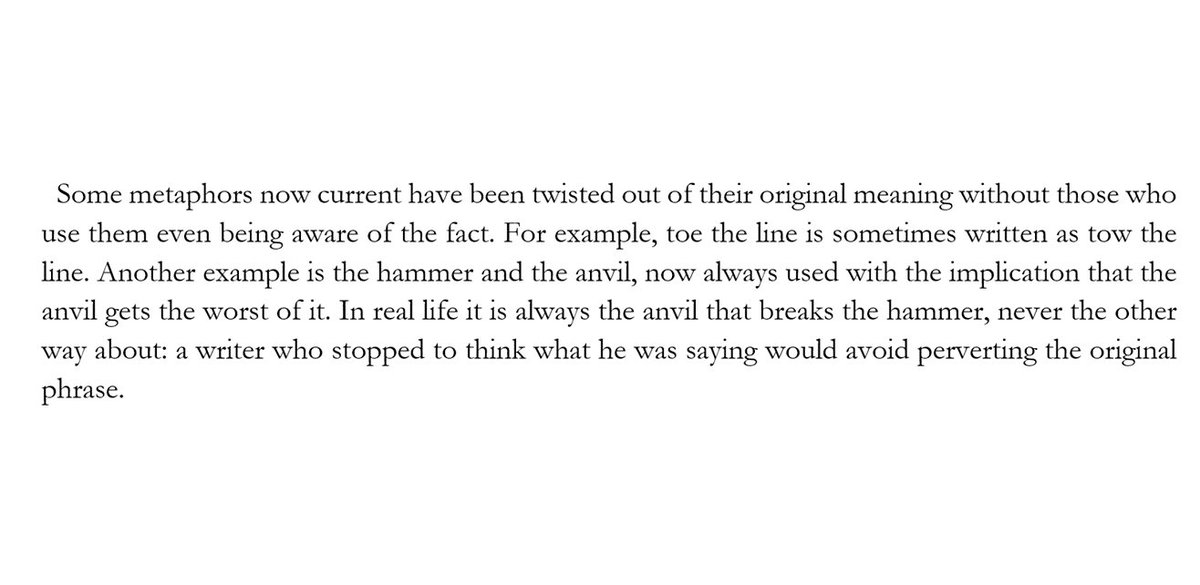
This is a constant theme in Orwell's advice: that using phrases created by *other people* is one of the worst things a writer can do.
That, by so doing, a writer (or speaker) becomes a mere machine of regurgitation, hardly even conscious of what they actually think.
That, by so doing, a writer (or speaker) becomes a mere machine of regurgitation, hardly even conscious of what they actually think.

Rule #2. Never use a long word where a short one will do.
A wonderfully Hemingway-esque bit of advice, one which needs little explanation; it all goes back to clarity.
However, Orwell offers some additional, less obvious advice which falls under this rule.
A wonderfully Hemingway-esque bit of advice, one which needs little explanation; it all goes back to clarity.
However, Orwell offers some additional, less obvious advice which falls under this rule.
Because this goes beyond the difference between short and long words; it's about whether words actually mean anything.
He explains the problem here, using the example of art criticism, where abstract words - which are conceputal & lack concrete meaning - are frightfully common:
He explains the problem here, using the example of art criticism, where abstract words - which are conceputal & lack concrete meaning - are frightfully common:

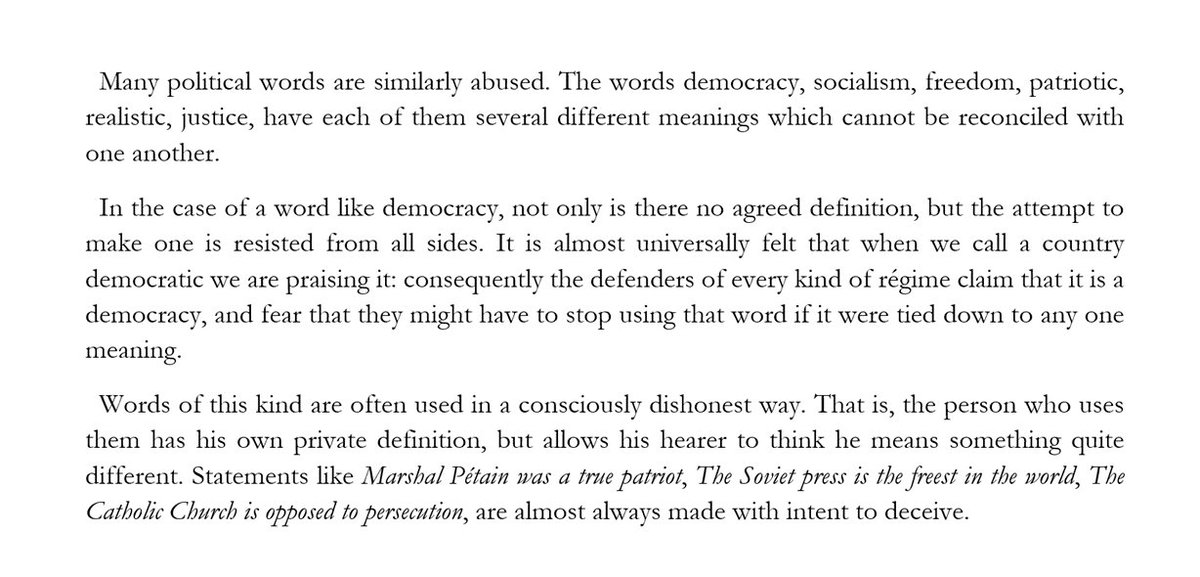
Orwell was passionate about the proper use of language; he was concerned about the way politicians abused words to the point that they became meaningless.
This passage feels like it could have been written in 2022. But what is Orwell's point? Use words that have a clear meaning.
This passage feels like it could have been written in 2022. But what is Orwell's point? Use words that have a clear meaning.
Rule #3. If it is possible to cut a word out, always cut it out.
You see this writing tip all the time online. And it's sound advice. But Orwell's point is a little more perceptive.
He gives some great examples of *how* to cut unnecessary words out.
You see this writing tip all the time online. And it's sound advice. But Orwell's point is a little more perceptive.
He gives some great examples of *how* to cut unnecessary words out.
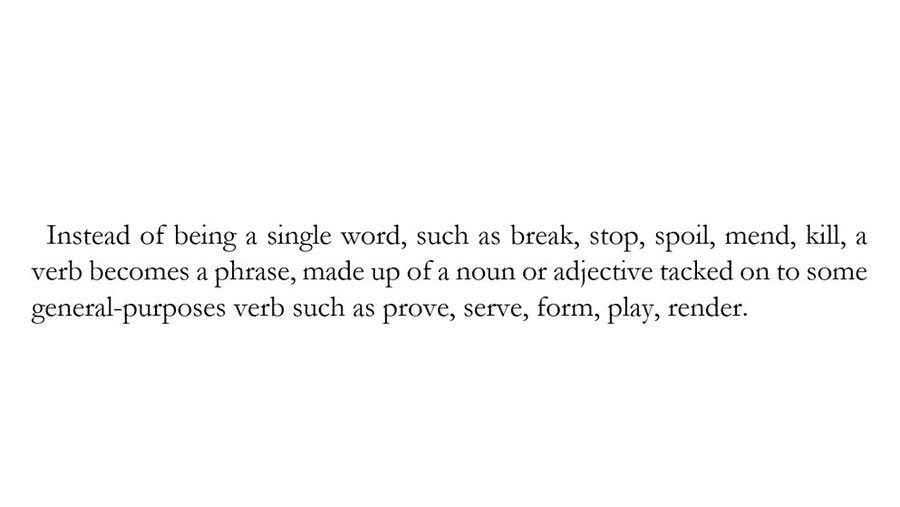
Orwell calls them "false verbal limbs."
They're temping because it's easier than reducing your meaning to the fewest words possible, and because it can make your sentences look prettier or sound nicer.
They're temping because it's easier than reducing your meaning to the fewest words possible, and because it can make your sentences look prettier or sound nicer.

But you can - and should - cut them out. Then replace them with a short, simple word.
It requires effort, but if you do it, your meaning will immediately become clearer. And your audience will thank you.
Don't turn a verb into a whole phrase.
It requires effort, but if you do it, your meaning will immediately become clearer. And your audience will thank you.
Don't turn a verb into a whole phrase.
Rule #4. Never use the passive where you can use the active.
The active voice is:
a) more direct - and therefore clearer
b) requires fewer words - and therefore clearer
The window was broken by me. (passive)
or
I broke the window. (active)
Easy choice.
The active voice is:
a) more direct - and therefore clearer
b) requires fewer words - and therefore clearer
The window was broken by me. (passive)
or
I broke the window. (active)
Easy choice.
Rule #5. Never use a foreign phrase, a scientific word, or a jargon word if you can think of an everyday English equivalent.
(Some of the examples Orwell gives have now entered everyday language, but his broader point still stands.)
(Some of the examples Orwell gives have now entered everyday language, but his broader point still stands.)

Why would you *ever* use a word your reader might not understand, unless it is absolutely necessary?
That's the first point Orwell is making.
And the second is that these "pretentious" words disguise your actual intended meaning beneath a heap of verbal nonsense.
That's the first point Orwell is making.
And the second is that these "pretentious" words disguise your actual intended meaning beneath a heap of verbal nonsense.
Not only will your reader fail to understand your point, but you as a writer probably won't know what you're trying to say, either.
And so you'll reach for ready-made phrases, abstract words, and images which aren't *yours* - the result will be using other people's ideas, too.
And so you'll reach for ready-made phrases, abstract words, and images which aren't *yours* - the result will be using other people's ideas, too.
Rule #6. Break any of these rules sooner than say anything outright barbarous.
This is by far the most interesting rule, and speaks to the integrity of Orwell's character.
It's an appeal to morality over effectiveness. If you only remember one rule, make it this one.
This is by far the most interesting rule, and speaks to the integrity of Orwell's character.
It's an appeal to morality over effectiveness. If you only remember one rule, make it this one.
So they're the six rules.
And here is an example Orwell gives of how *not* to write. Something he read in a newspaper.
You have to read it three times to understand just half of what the writer is trying to say.
And here is an example Orwell gives of how *not* to write. Something he read in a newspaper.
You have to read it three times to understand just half of what the writer is trying to say.

And here Orwell "translates" something into bad writing.
He picks a famous verse from the Book of Ecclesiastes.
He picks a famous verse from the Book of Ecclesiastes.

What's the real problem with bad writing?
It goes back to Orwell's central gripe.
You'll end up using other people's language, and the consequence is that you'll end up using their thoughts too. What could be worse than that?
It goes back to Orwell's central gripe.
You'll end up using other people's language, and the consequence is that you'll end up using their thoughts too. What could be worse than that?
Orwell's brilliance stemmed from his clarity.
Few writers have ever achieved such a vivid, direct, memorable, and effective style.
And that's why he is so well regarded. Orwell's words speak directly to us, despite being nearly a century old, because of his precision.
Few writers have ever achieved such a vivid, direct, memorable, and effective style.
And that's why he is so well regarded. Orwell's words speak directly to us, despite being nearly a century old, because of his precision.
Politics and the the English Language is one of the all-time great essays about writing; it's worth reading in full.
Of course, Orwell wasn't correct about everything, and there's no single way to write well. But his advice isn't a bad place to start...
Of course, Orwell wasn't correct about everything, and there's no single way to write well. But his advice isn't a bad place to start...

Loading suggestions...