
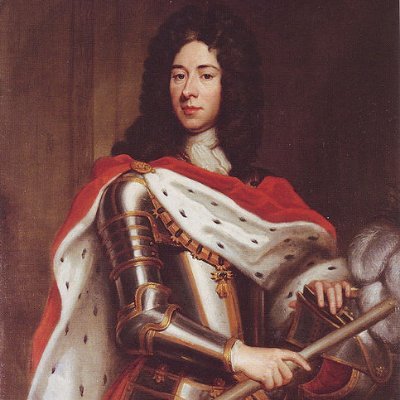
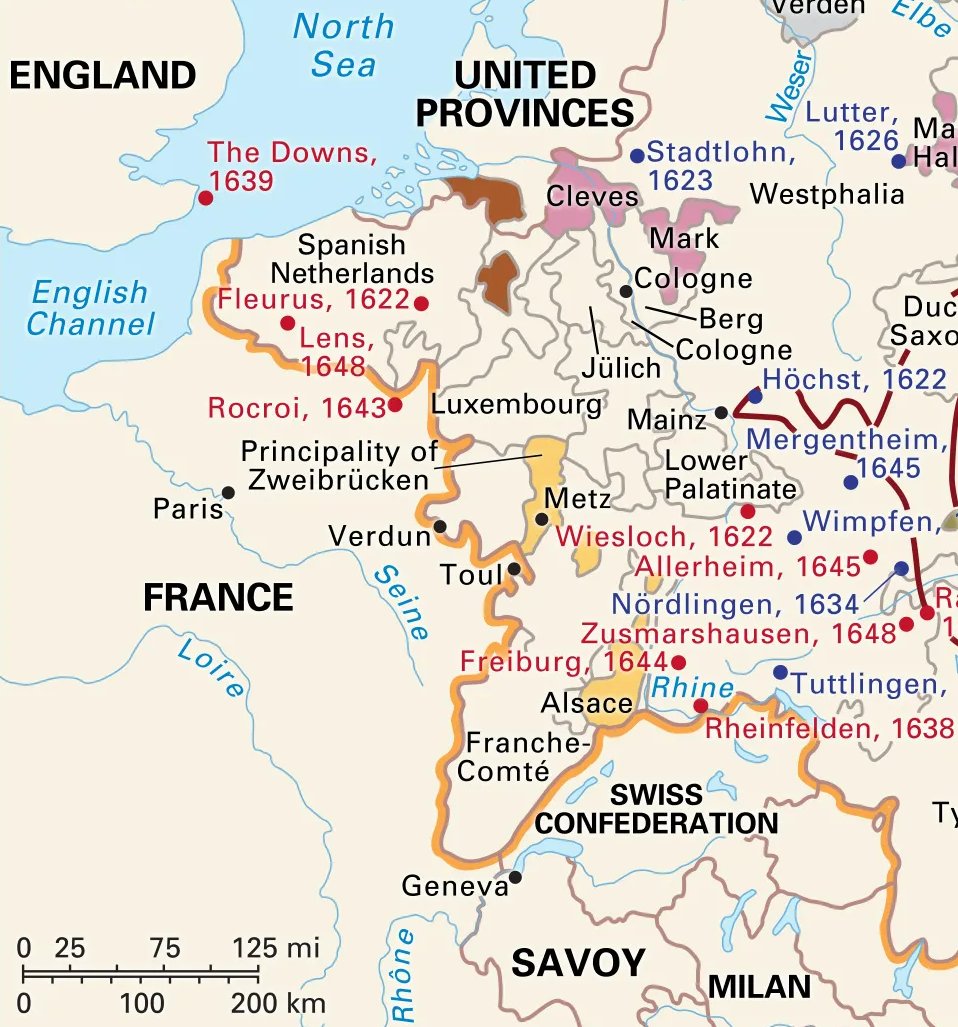
The battle of Lens in 1648 was one of the greatest victories of the famed French commander Louis de Bourbon, Prince of Condé.
Fought in the final stages of the Thirty Years' War, the French defeated the Spanish army.
"The Great Condé" won using superior cavalry tactics! 🧵
Fought in the final stages of the Thirty Years' War, the French defeated the Spanish army.
"The Great Condé" won using superior cavalry tactics! 🧵
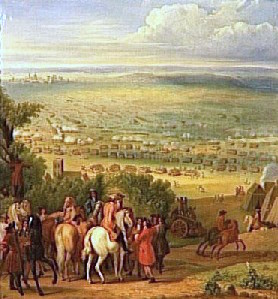
The battle of Lens was a result of the Spanish counteroffensive in Flanders following the Peace of Münster on 30 January 1648 which ended the Eighty Years' War between Spain and Dutch provinces.
This freed up Spanish forces to attack the French with whom they were also at war.
This freed up Spanish forces to attack the French with whom they were also at war.
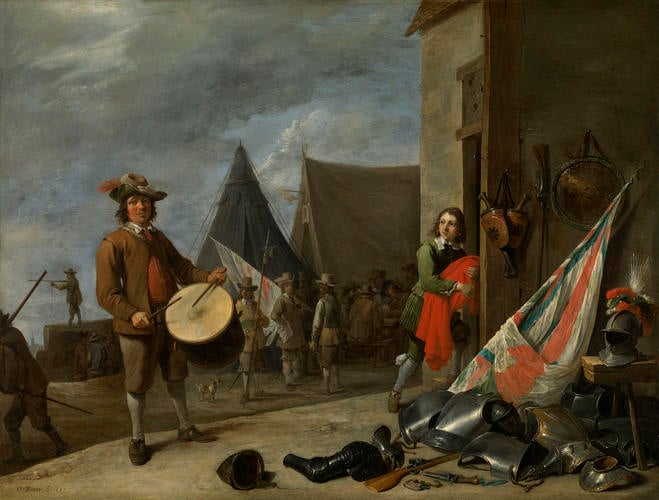
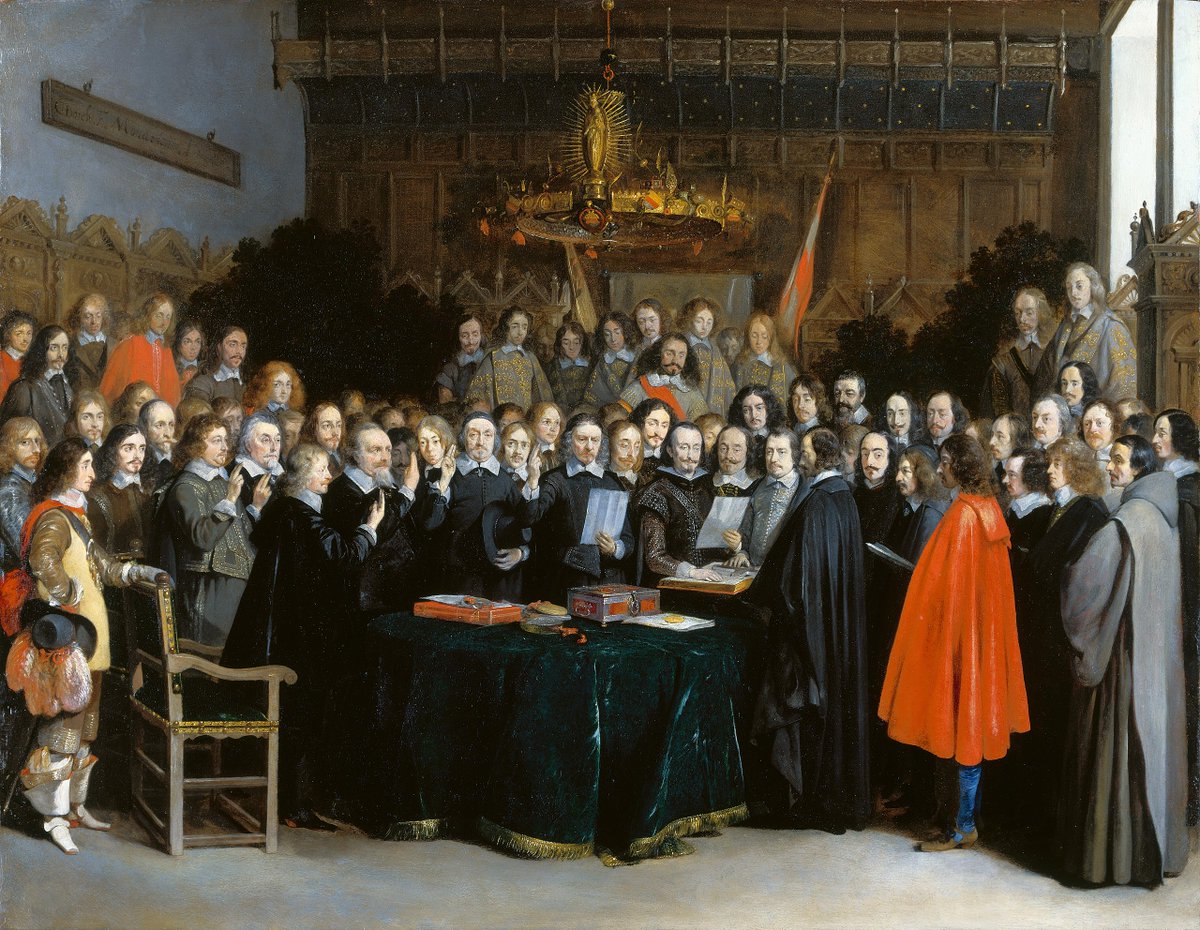
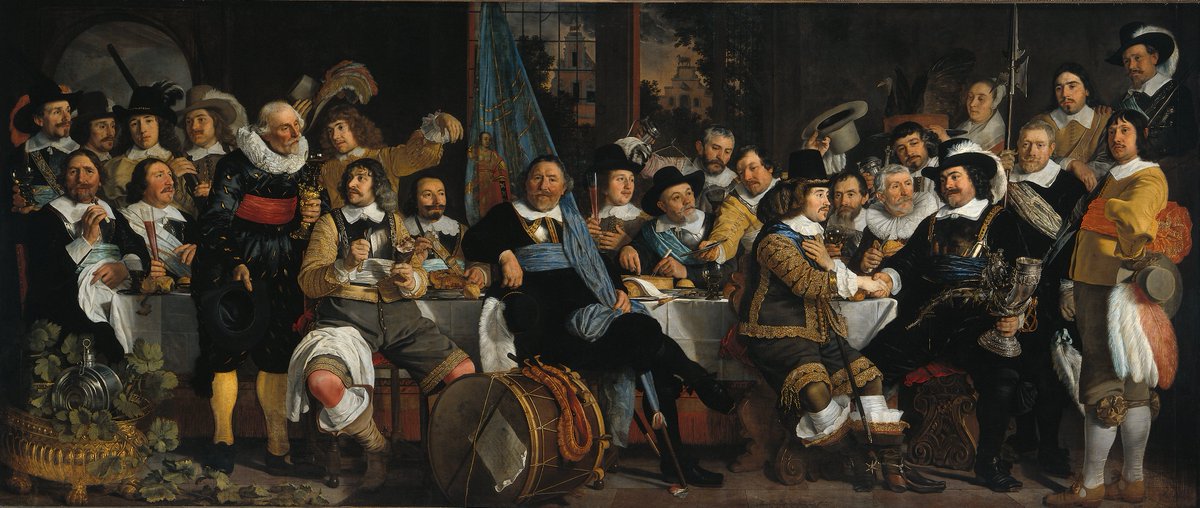
The Franco-Spanish War had begun in 1635 and was related to the other major conflict of the time, The Thirty Years' War 1618-48, in which the French intervened on the anti-Imperial side and ended up in war with Spanish and Austrian branches of the Habsburgs.
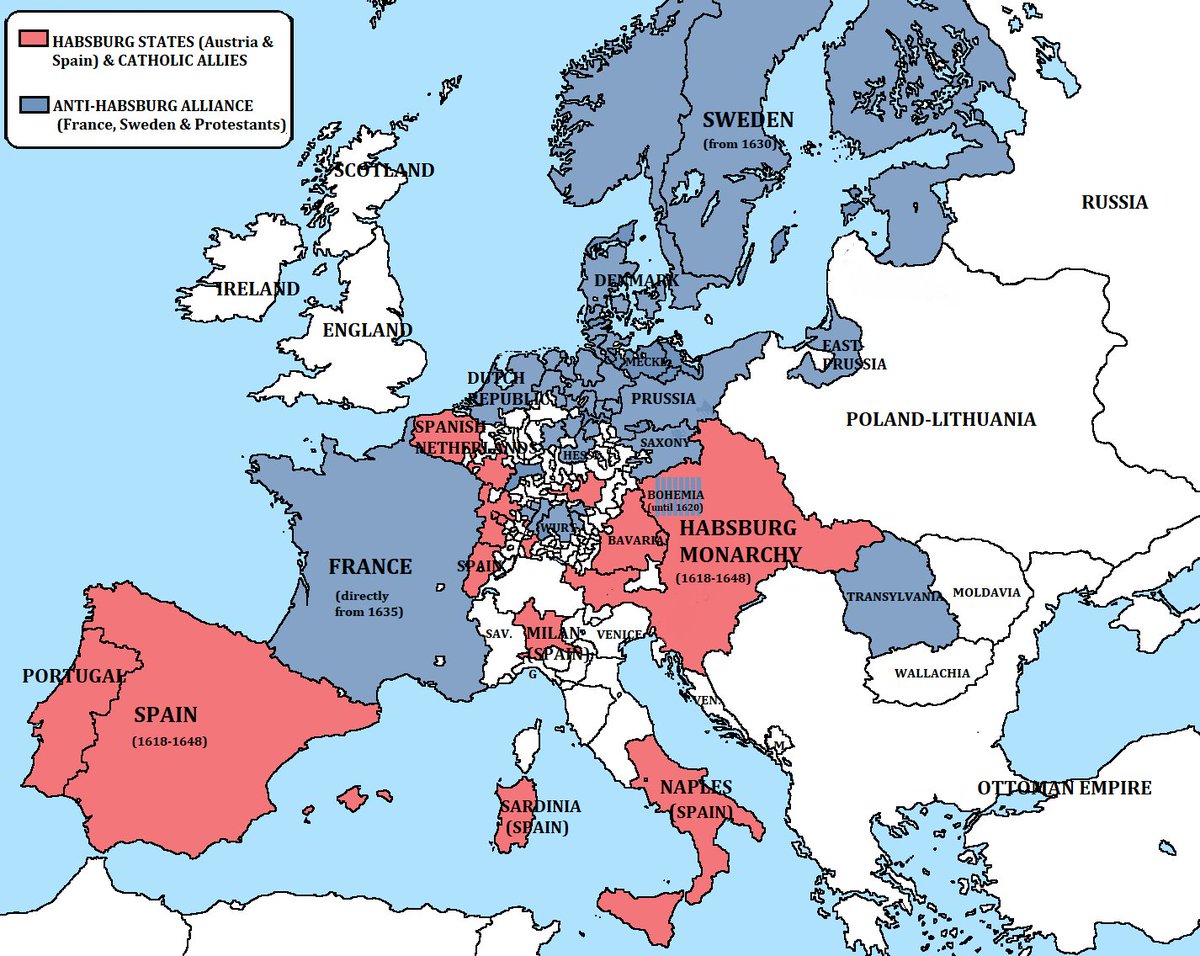
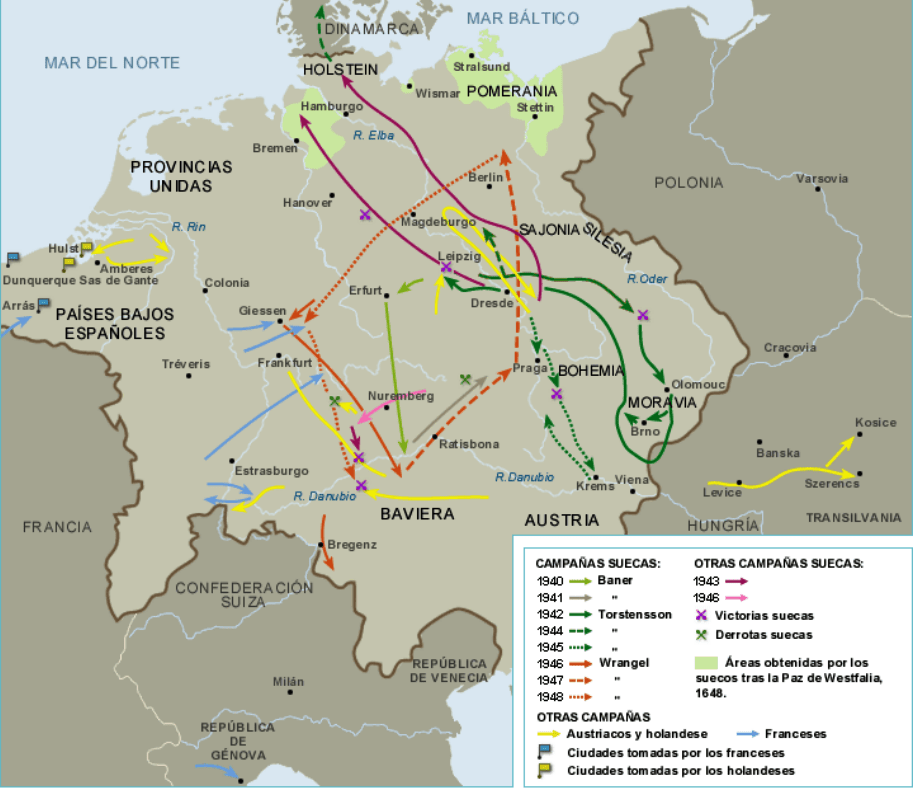
In the late stages of Thirty Years' War, the Habsburg Imperial and Spanish forces were fighting against the French and the Swedes who had invaded the exhausted war-torn Germany.
But the fighting also took place in Flanders where the French conquered some border towns in 1647.
But the fighting also took place in Flanders where the French conquered some border towns in 1647.
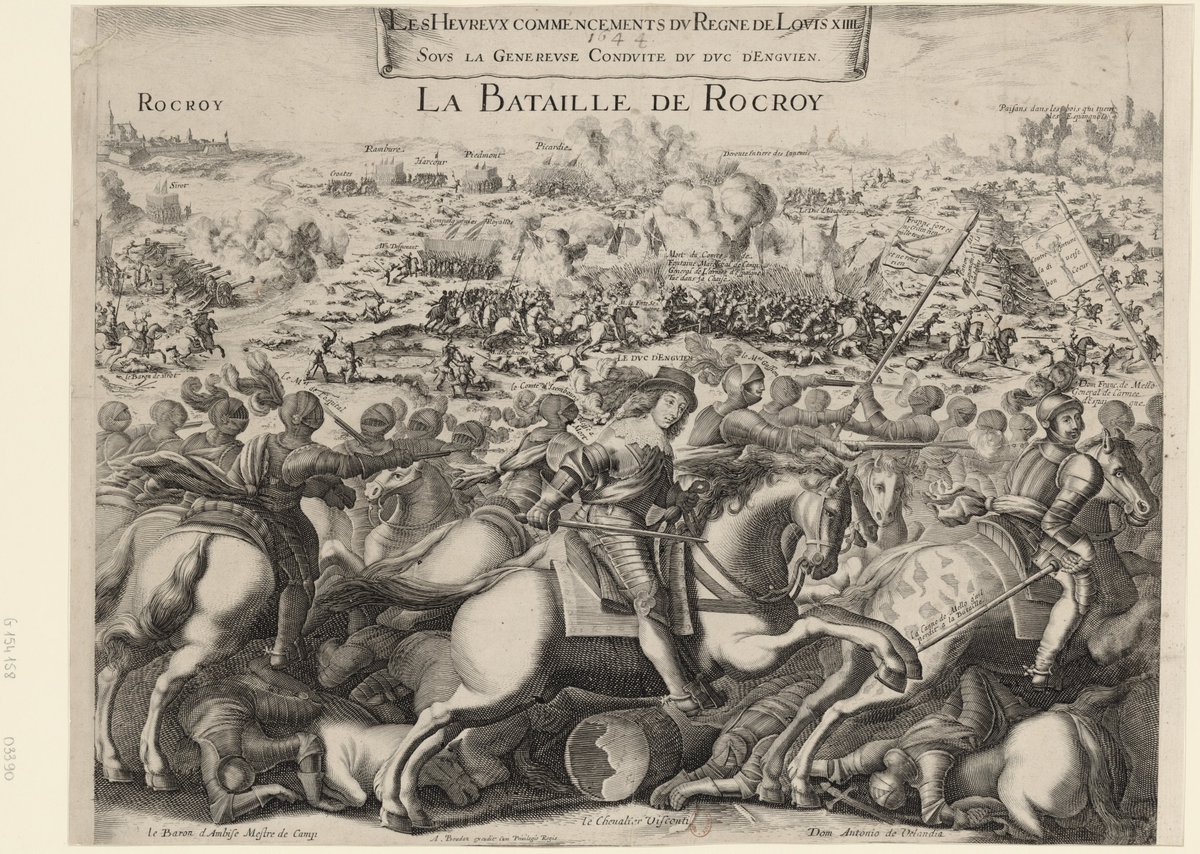
The French had defeated the Spanish at the famous battle of Rocroi in 1643. It was at that battle that Prince of Condé first distinguished himself as a great commander at only 21 years of age.
The battle also showed that Spanish military power was slowly declining.
The battle also showed that Spanish military power was slowly declining.
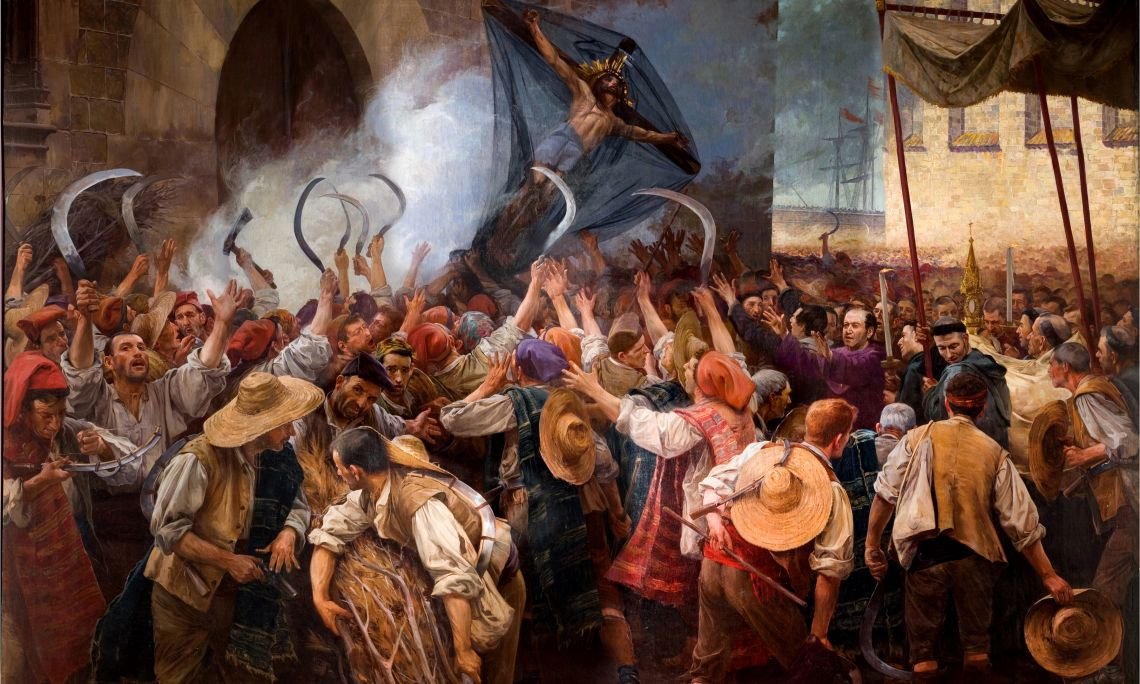
Condé also fought the Spanish in Catalonia where the French supported the Catalan anti-Habsburg rebels in the so-called Reapers' War.
The conflict began in 1640 and by 1648 there was a bitter stalemate. It was yet another war which strained Spain's resources.
The conflict began in 1640 and by 1648 there was a bitter stalemate. It was yet another war which strained Spain's resources.
But Spain was still the most powerful force. France was not strong enough to exploit victories such as Rocroi, or to truly cripple Spain.
Instead, the Spanish took the initiative and started a counter-offensive in Flanders.
Instead, the Spanish took the initiative and started a counter-offensive in Flanders.
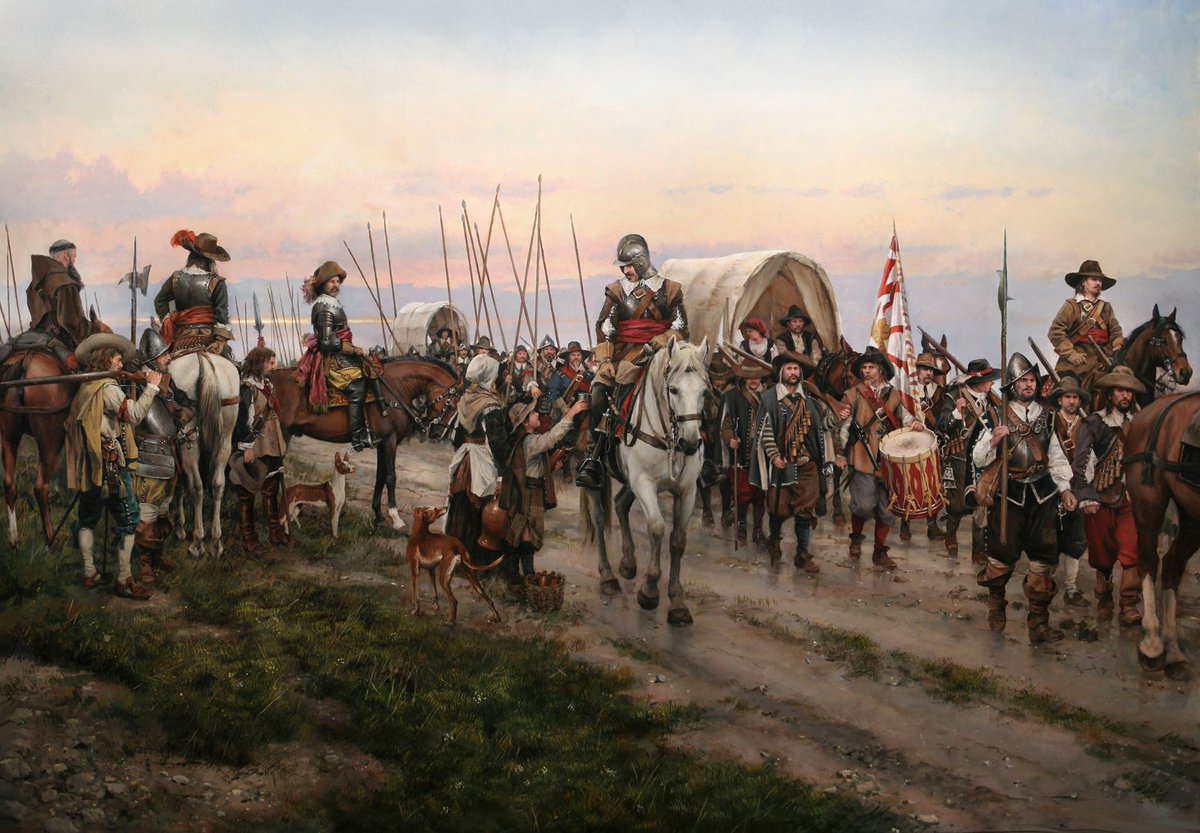
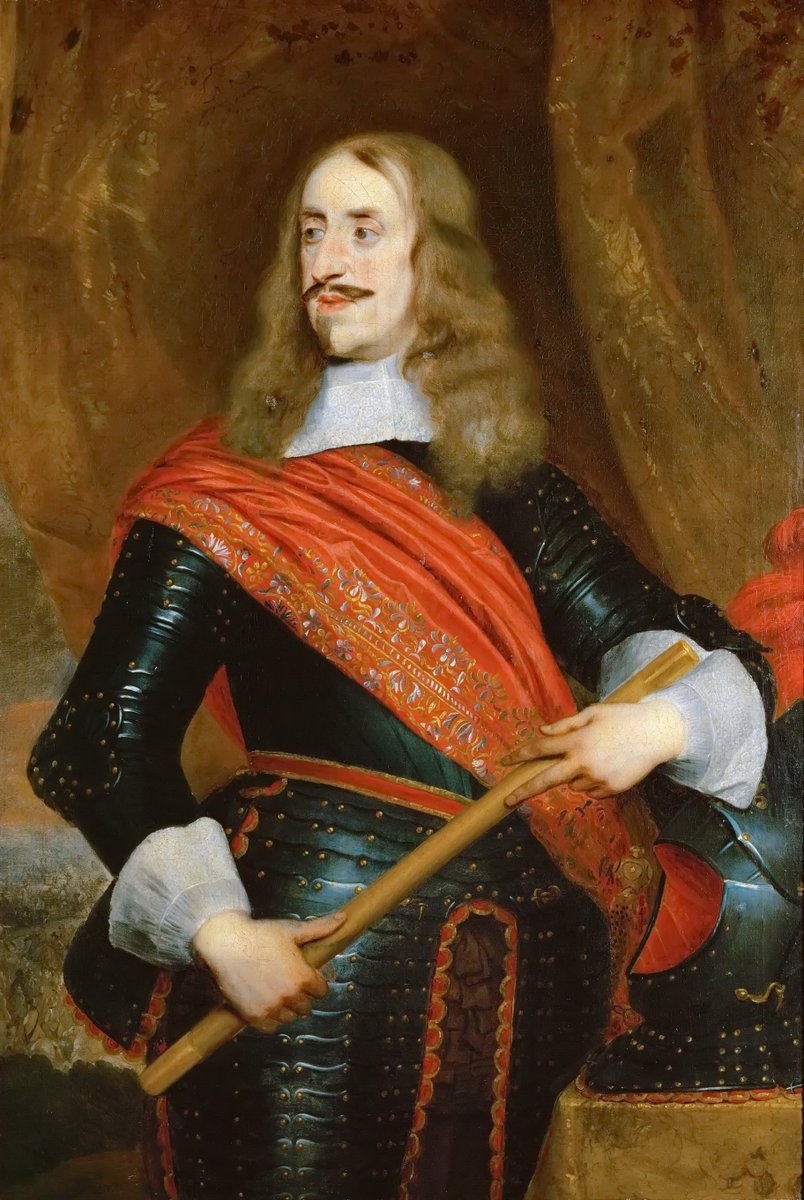
In 1647, Archduke Leopold Wilhelm of Austria was appointed governor of Spanish Netherlands.
The peace talk with the Dutch were already ongoing, giving Spanish Army of Flanders the opportunity to fully concentrate on fighting the French.
The peace talk with the Dutch were already ongoing, giving Spanish Army of Flanders the opportunity to fully concentrate on fighting the French.
Facing the powerful Spanish army assembling, the French sent Condé from Catalonia.
He led a 16,000 strong French force which would end up facing a 18,000 strong Spanish army at Lens in 1648, as the Spanish were besieging this small city which was recently conquered by French.
He led a 16,000 strong French force which would end up facing a 18,000 strong Spanish army at Lens in 1648, as the Spanish were besieging this small city which was recently conquered by French.
The French actually had more cavalry than infantry, with 9000 horsemen and 7000 footmen. In the Spanish army, the numbers of both were about equal.
Cavalry was of crucial importance during the Thirty Years' War and the French used it more effectively than the Spanish.
Cavalry was of crucial importance during the Thirty Years' War and the French used it more effectively than the Spanish.
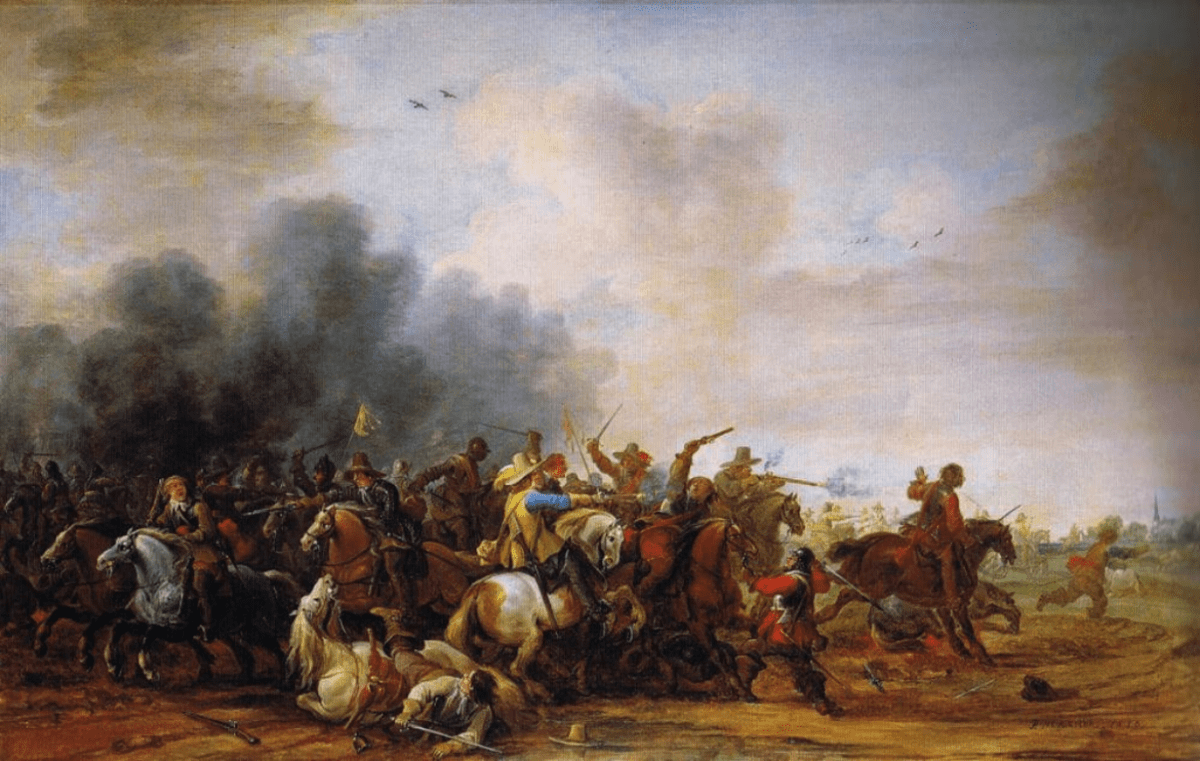
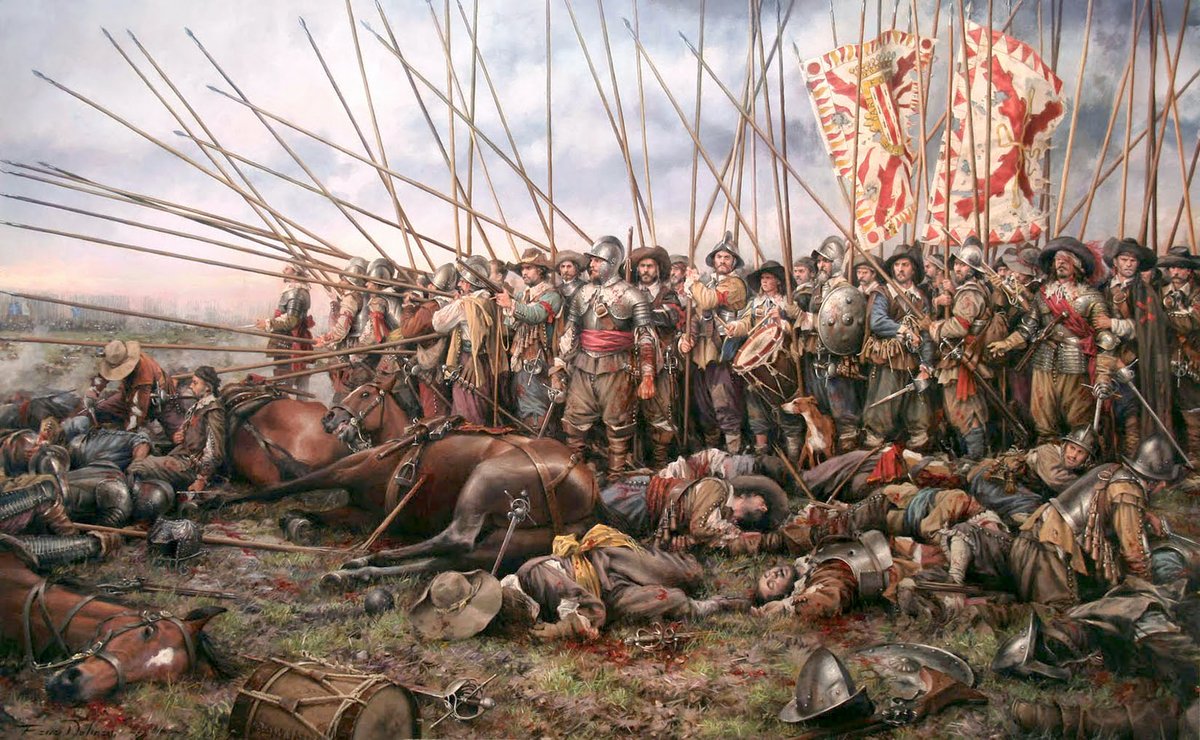
The Spanish still relied on the tercio infantry. But the military developments were slowly leaving them behind.
The French under Condé were using cavalry charges with a devastating effect against the enemy. This was suited to the kind of style of brave combat Condé preferred.
The French under Condé were using cavalry charges with a devastating effect against the enemy. This was suited to the kind of style of brave combat Condé preferred.
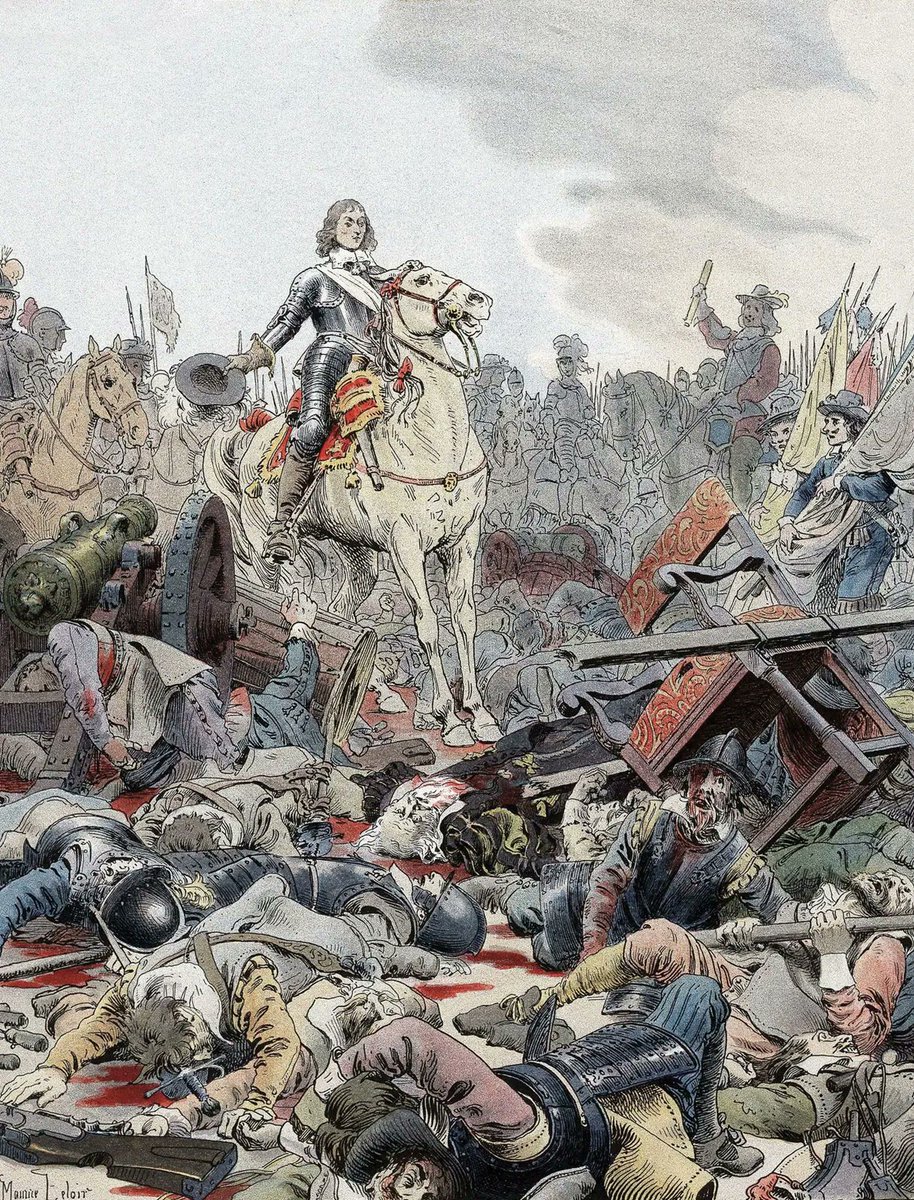
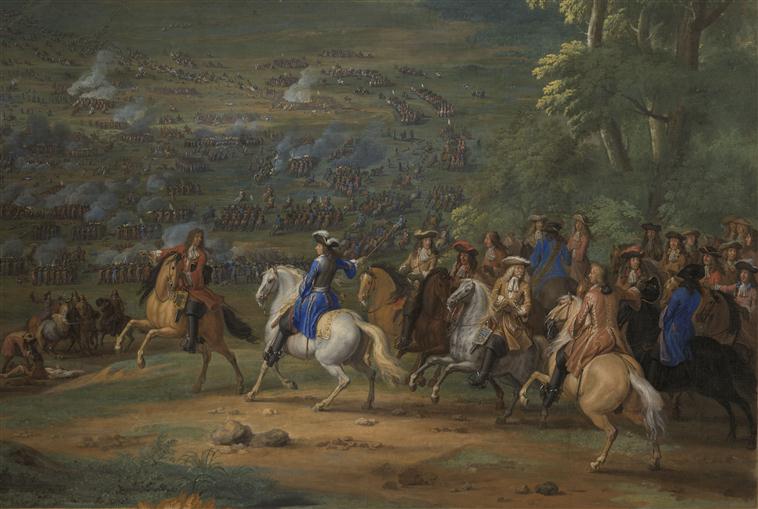
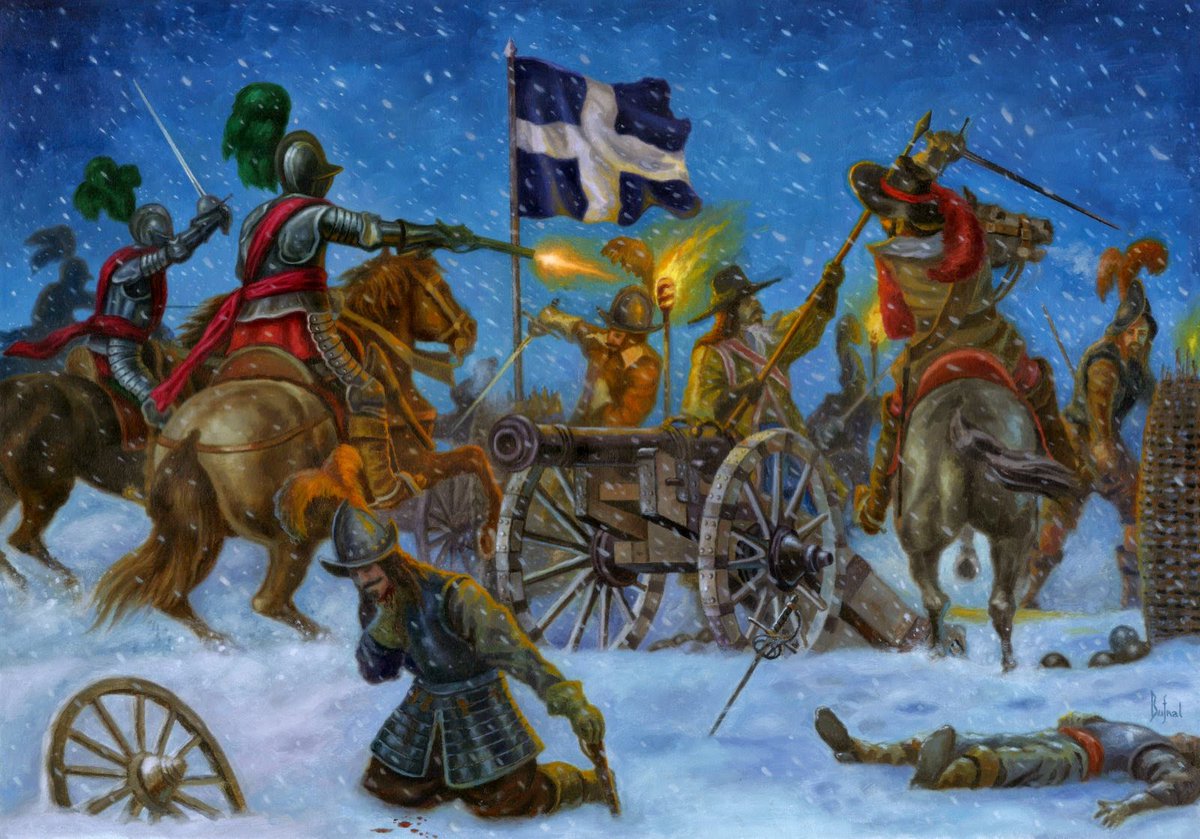
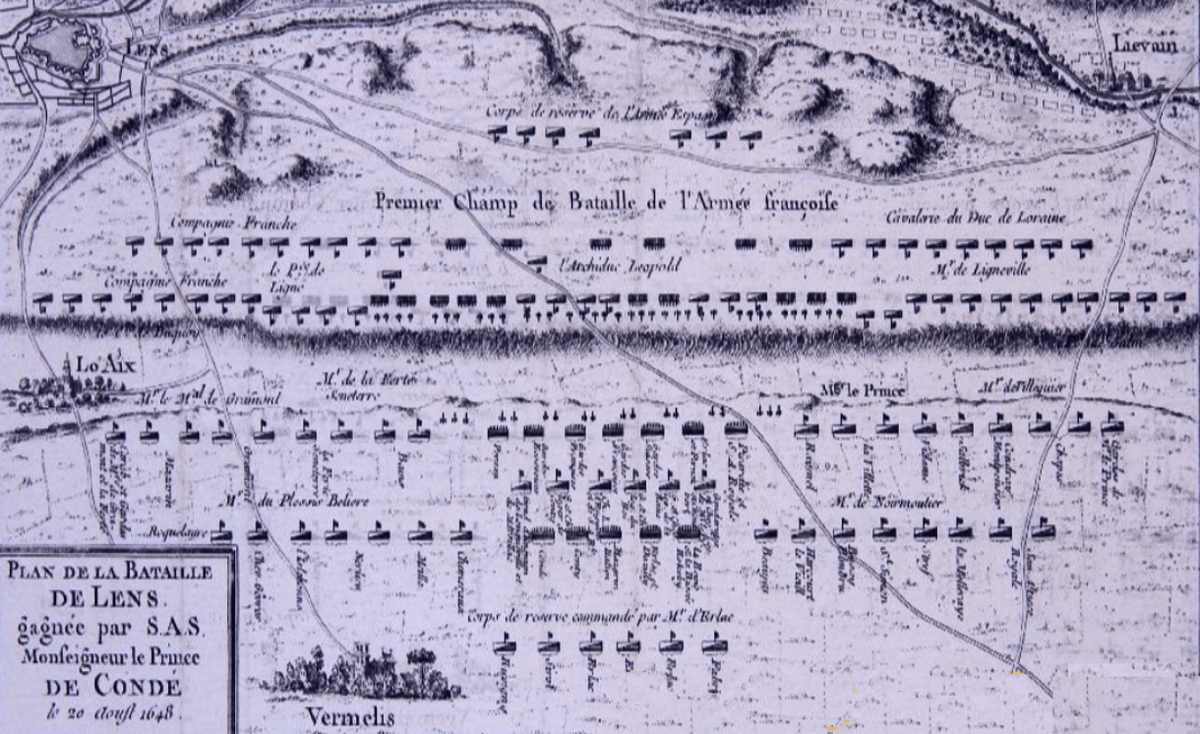
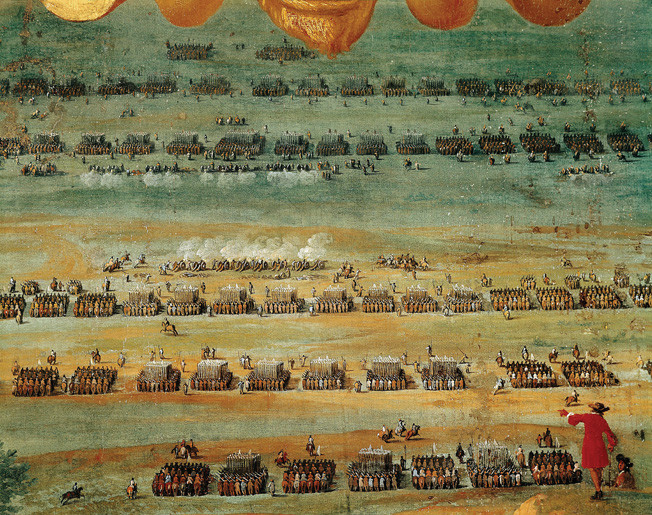
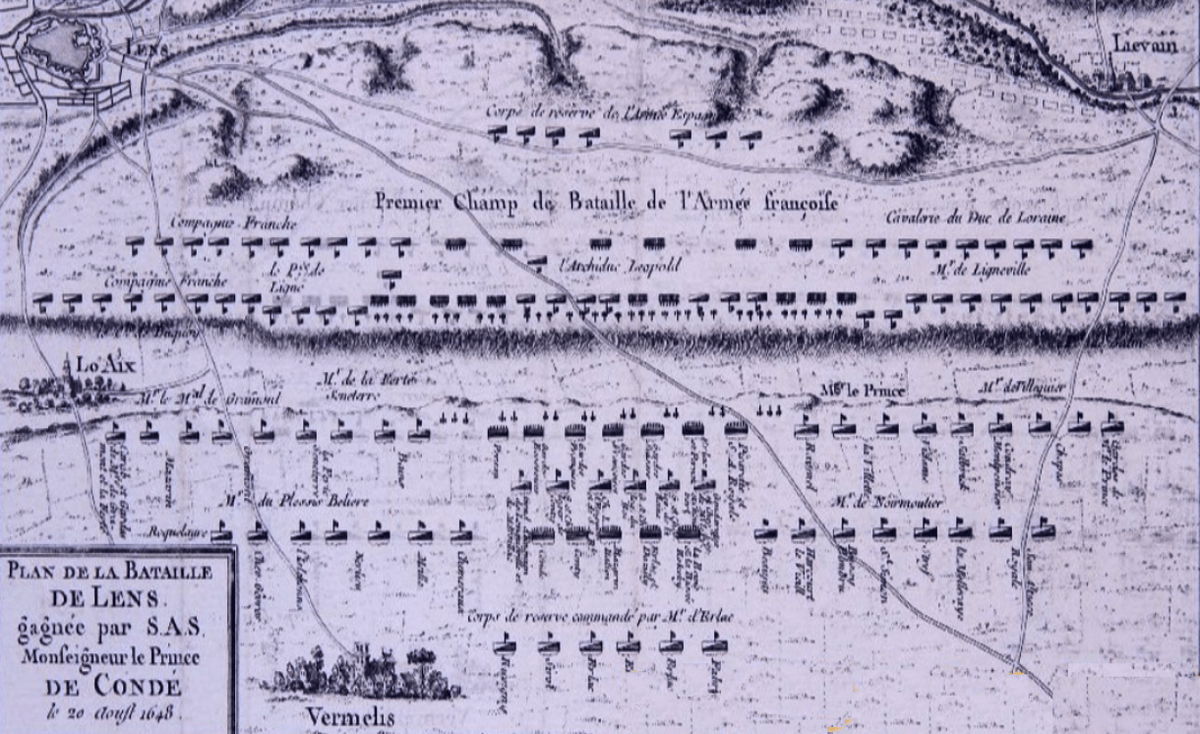
At Lens, both armies put their infantry at the center and cavalry on both wings.
But the Spanish commander Jean de Beck also put cavalry in the center to back up infantry charges. This would prove to be a mistake as it depleted cavalry forces on the wings.
But the Spanish commander Jean de Beck also put cavalry in the center to back up infantry charges. This would prove to be a mistake as it depleted cavalry forces on the wings.
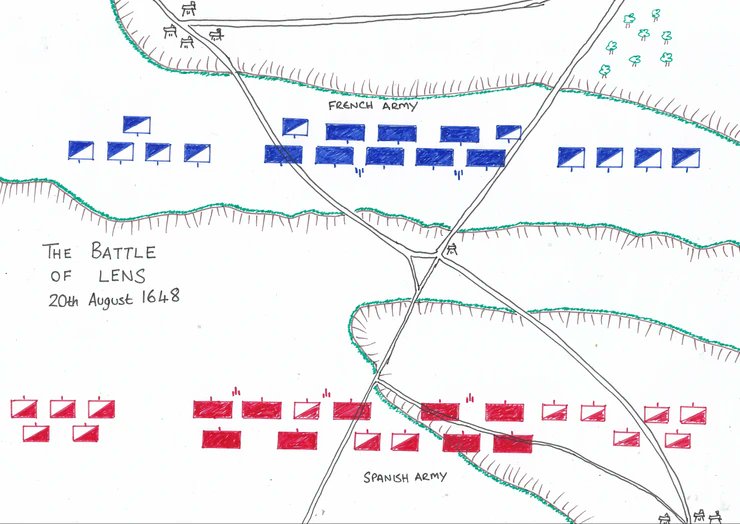
Condé saw the size of the Spanish army and decided not to attack. Instead he ordered the exhausted and hungry French army to retreat to village of Neus some two hours march away.
The retreating French were attacked by Spanish scouts who managed to almost capture Condé himself.
The retreating French were attacked by Spanish scouts who managed to almost capture Condé himself.
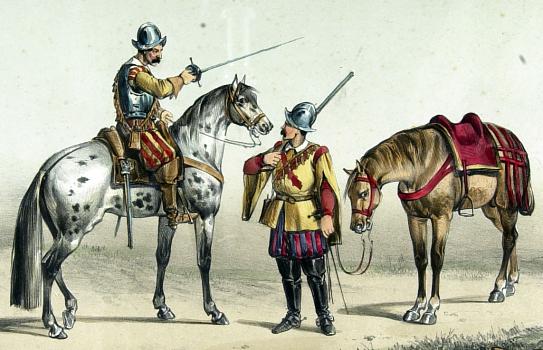
The emboldened Jean de Beck persuaded the risk-averse Archduke Leopold Wilhelm to seek battle with the French.
Beck was no doubt haunted by the memories of Rocroi years earlier where he failed to arrive with reinforcements. He was eager to revenge that Spanish loss.
Beck was no doubt haunted by the memories of Rocroi years earlier where he failed to arrive with reinforcements. He was eager to revenge that Spanish loss.
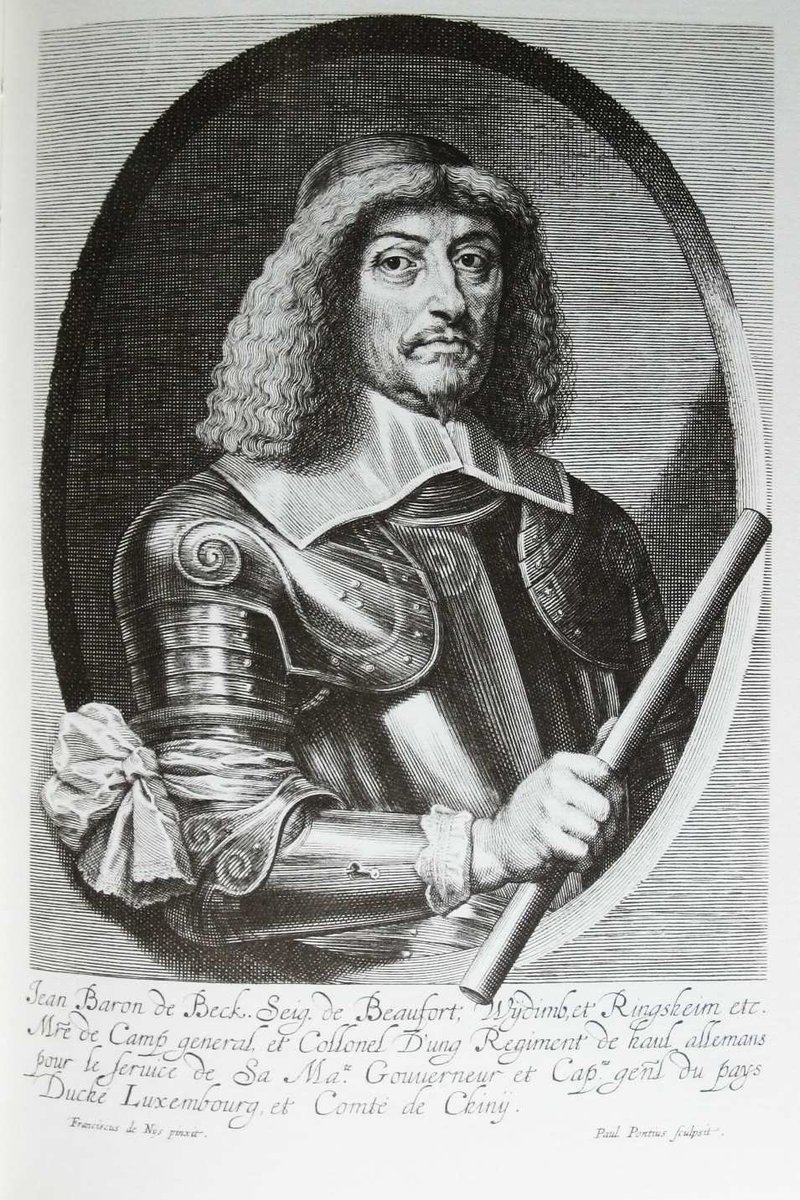
The Spanish thus made a fatal mistake of abandoning their superior position, advancing down the slope.
Condé's retreating army turned around and formed in battle formation. They started firing on the Spanish with their cannons.
The battle of Lens began.
Condé's retreating army turned around and formed in battle formation. They started firing on the Spanish with their cannons.
The battle of Lens began.
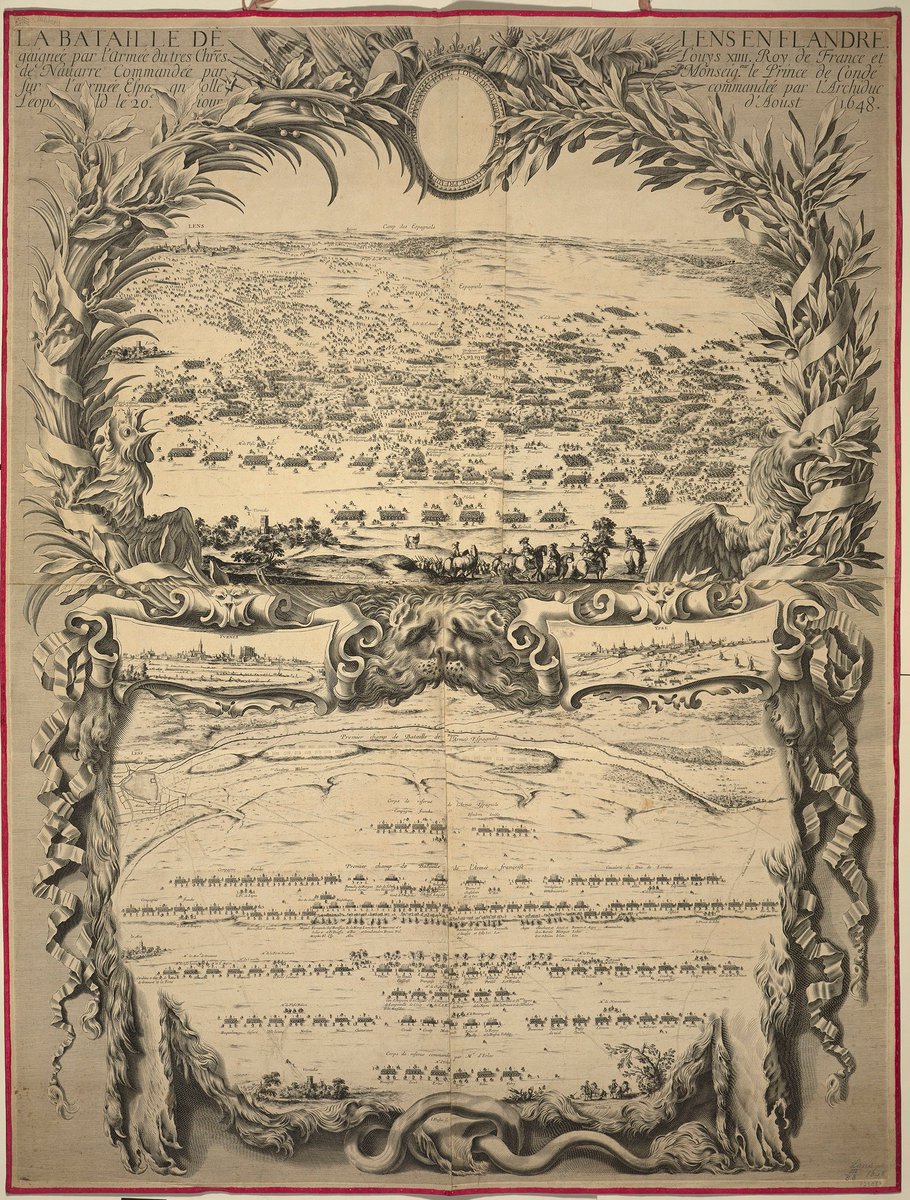
As the French infantry was advancing in disciplined formation, Condé roused them with a powerful speech.
"Friends, remember Rocroi, Fribourg, and Nordlingen!" he shouted, referring to his earlier battles with the Spanish and Imperial forces.
"Friends, remember Rocroi, Fribourg, and Nordlingen!" he shouted, referring to his earlier battles with the Spanish and Imperial forces.

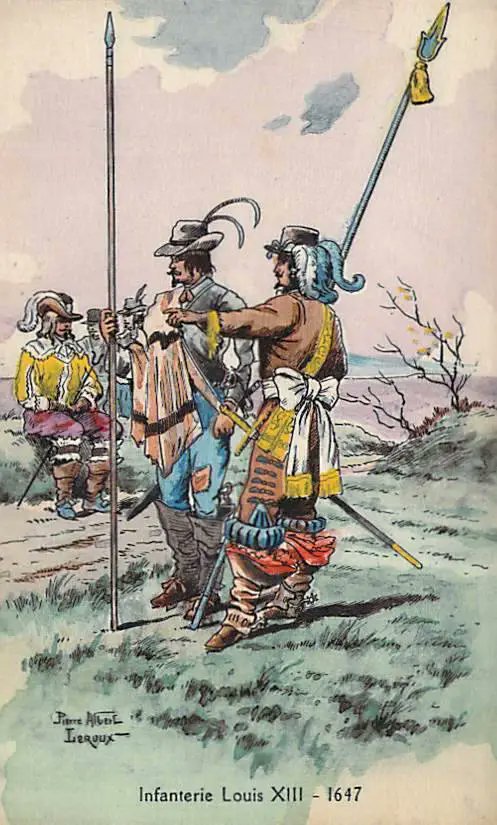
But the battle would be decided by cavalry engagements on both wings.
On the Spanish right wing, Walloon cavalry led by Bucquoy faced French led by Gramont. They shot at the French with their carbines but the French cavalry still managed to charge through and routed them.
On the Spanish right wing, Walloon cavalry led by Bucquoy faced French led by Gramont. They shot at the French with their carbines but the French cavalry still managed to charge through and routed them.
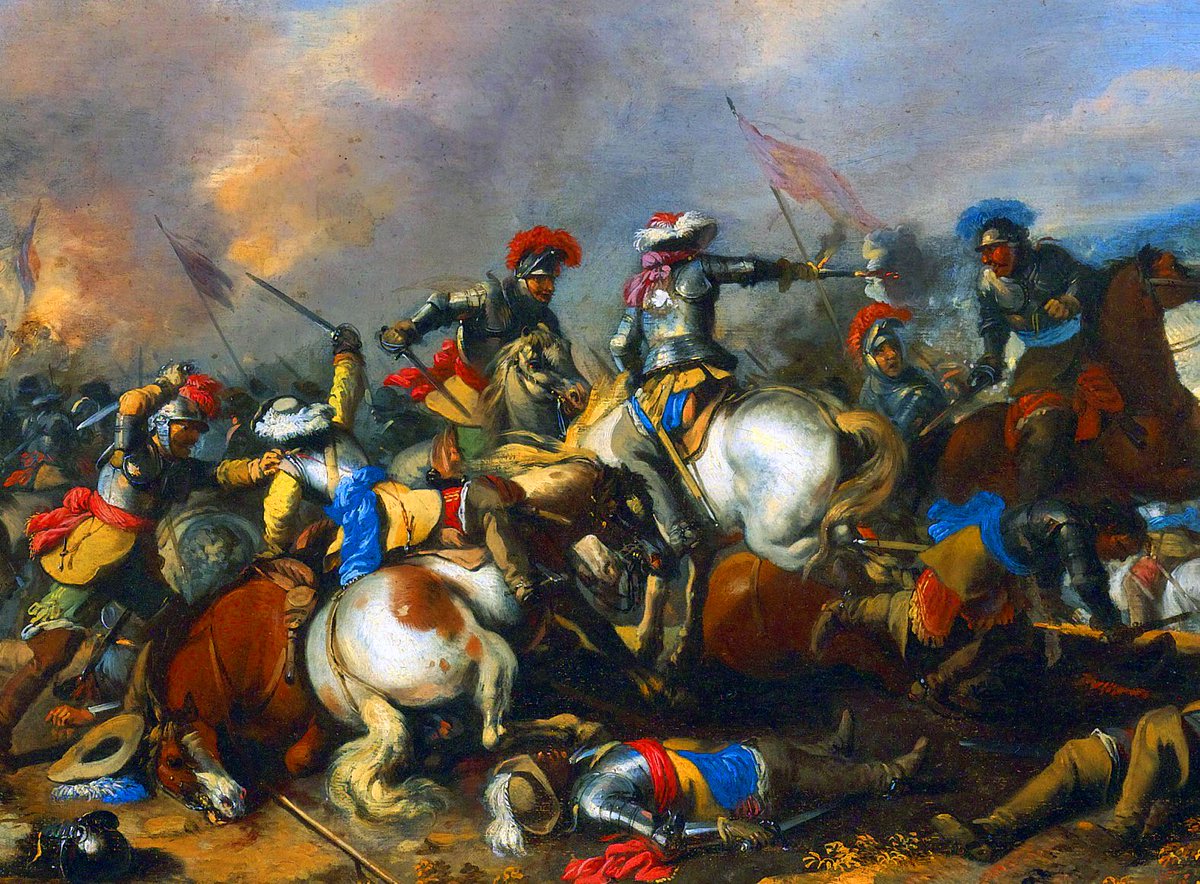
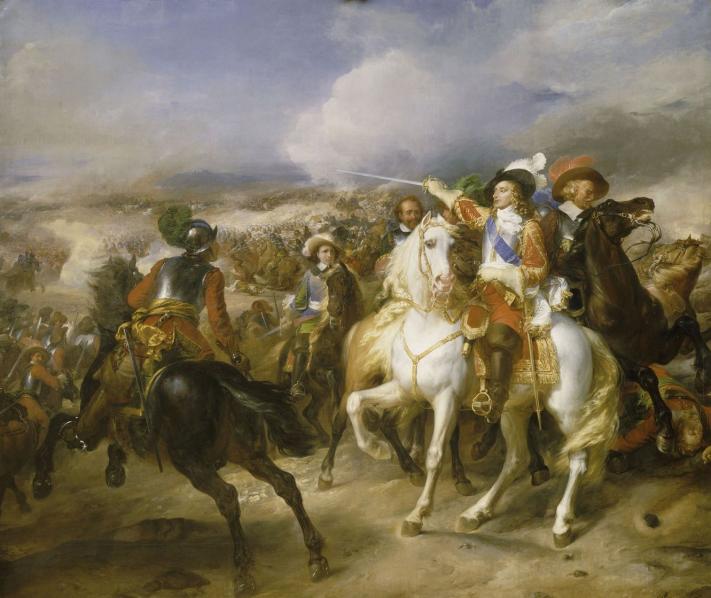
On the Spanish left wing, the German Lorraine cavalry led by Ligniville was attacked by the French cavalry personally commanded by Condé.
But instead of charging at them right away, Condé stopped. He wanted to wait until the enemy cavalry fired their guns first before attacking.
But instead of charging at them right away, Condé stopped. He wanted to wait until the enemy cavalry fired their guns first before attacking.
This was because Condé's plan was to counter-attack the enemies while they were busy reloading. It was a common tactic at the time.
The Lorraine cavalrymen finally fired and cut down the French first lines, but the French were now ready to counterattack with full force.
The Lorraine cavalrymen finally fired and cut down the French first lines, but the French were now ready to counterattack with full force.
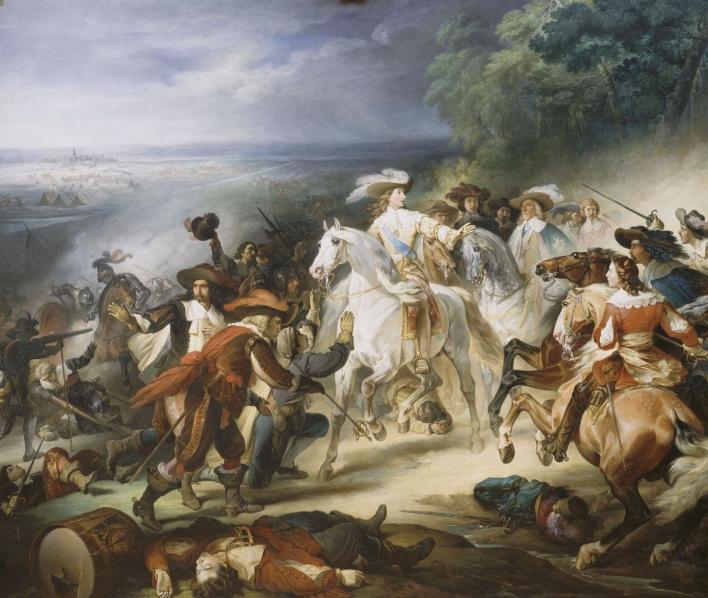
Prince of Condé personally leads the cavalry charge!
The Lorraine cavalry in Spanish service routes in front the Great Condé.
The Spanish lost both of their cavalry wings. The infantry in the center is in danger of being encircled! They're in big trouble!
The Lorraine cavalry in Spanish service routes in front the Great Condé.
The Spanish lost both of their cavalry wings. The infantry in the center is in danger of being encircled! They're in big trouble!

But the Spanish infantry in the center performed much better.
Their infantry assault broke 4 of the 12 French infantry battalions.
The elite French Guards and Scots Guard regiments were surrounded and overwhelmed by the Bonifaz and Bentivoglio infantry battalions.
Their infantry assault broke 4 of the 12 French infantry battalions.
The elite French Guards and Scots Guard regiments were surrounded and overwhelmed by the Bonifaz and Bentivoglio infantry battalions.
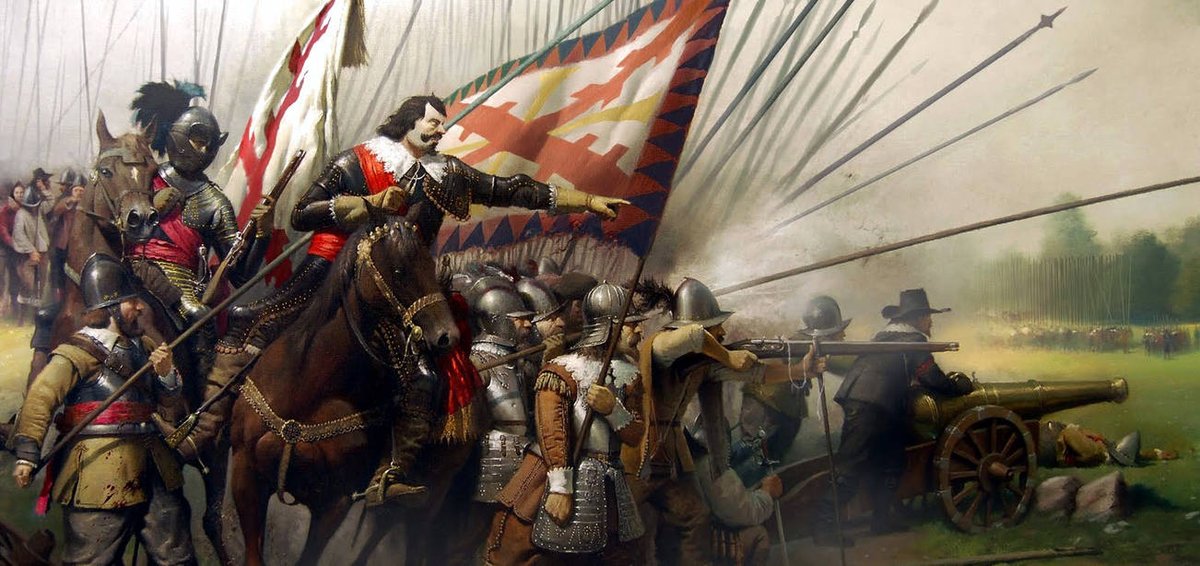
However this did not really matter as the Spanish infantry was now encircled by the French cavalry from behind.
They had no hope of victory and eventually decided to surrender. Around 3000 Spanish and 1500 French died.
The French won the battle and took 6000 Spanish prisoners.
They had no hope of victory and eventually decided to surrender. Around 3000 Spanish and 1500 French died.
The French won the battle and took 6000 Spanish prisoners.
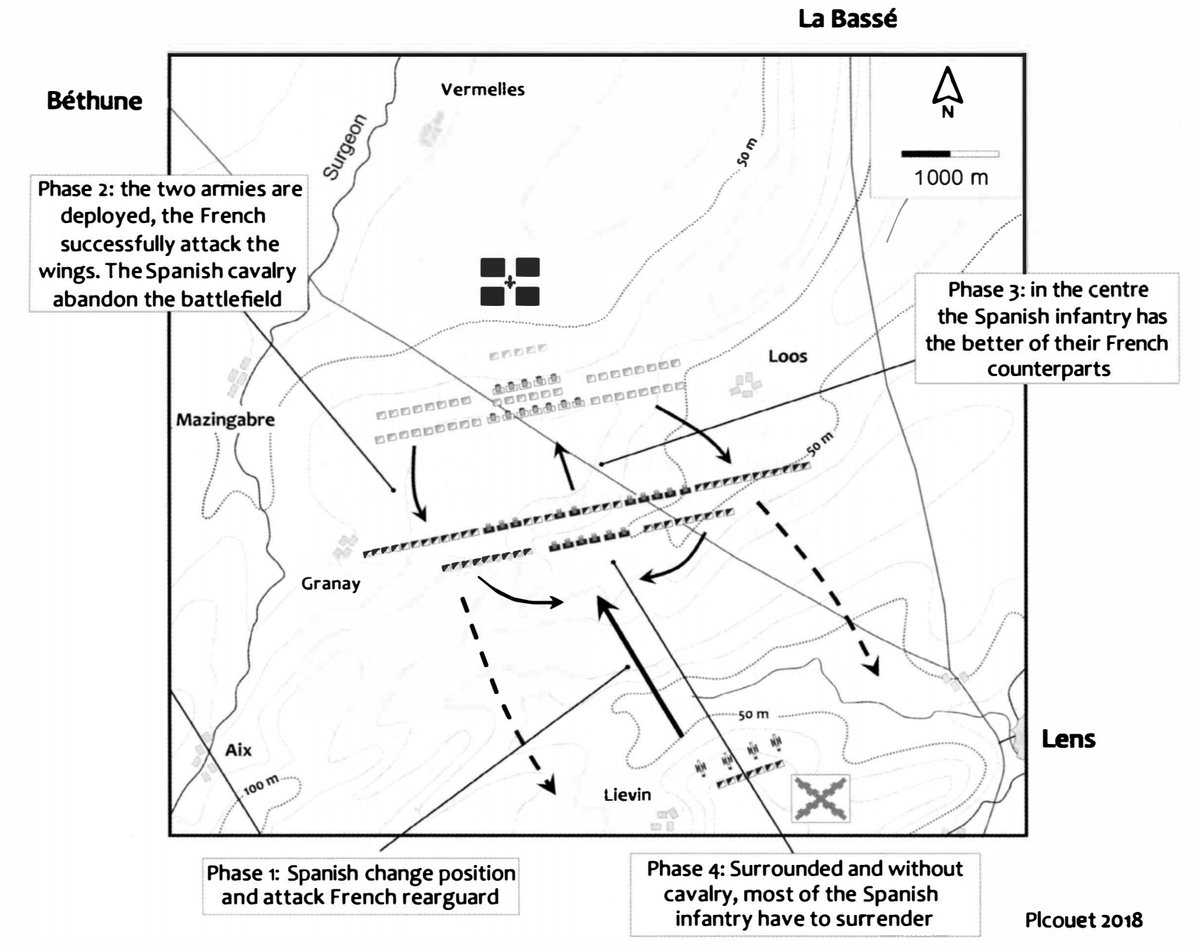
Among the prisoners was also Jean de Beck. But he was wounded in battle and died soon afterwards.
It was a devastating defeat for the Spanish but one that the French were not able to fully exploit.
Troubles were brewing in France with the so-called Fronde revolt.
It was a devastating defeat for the Spanish but one that the French were not able to fully exploit.
Troubles were brewing in France with the so-called Fronde revolt.
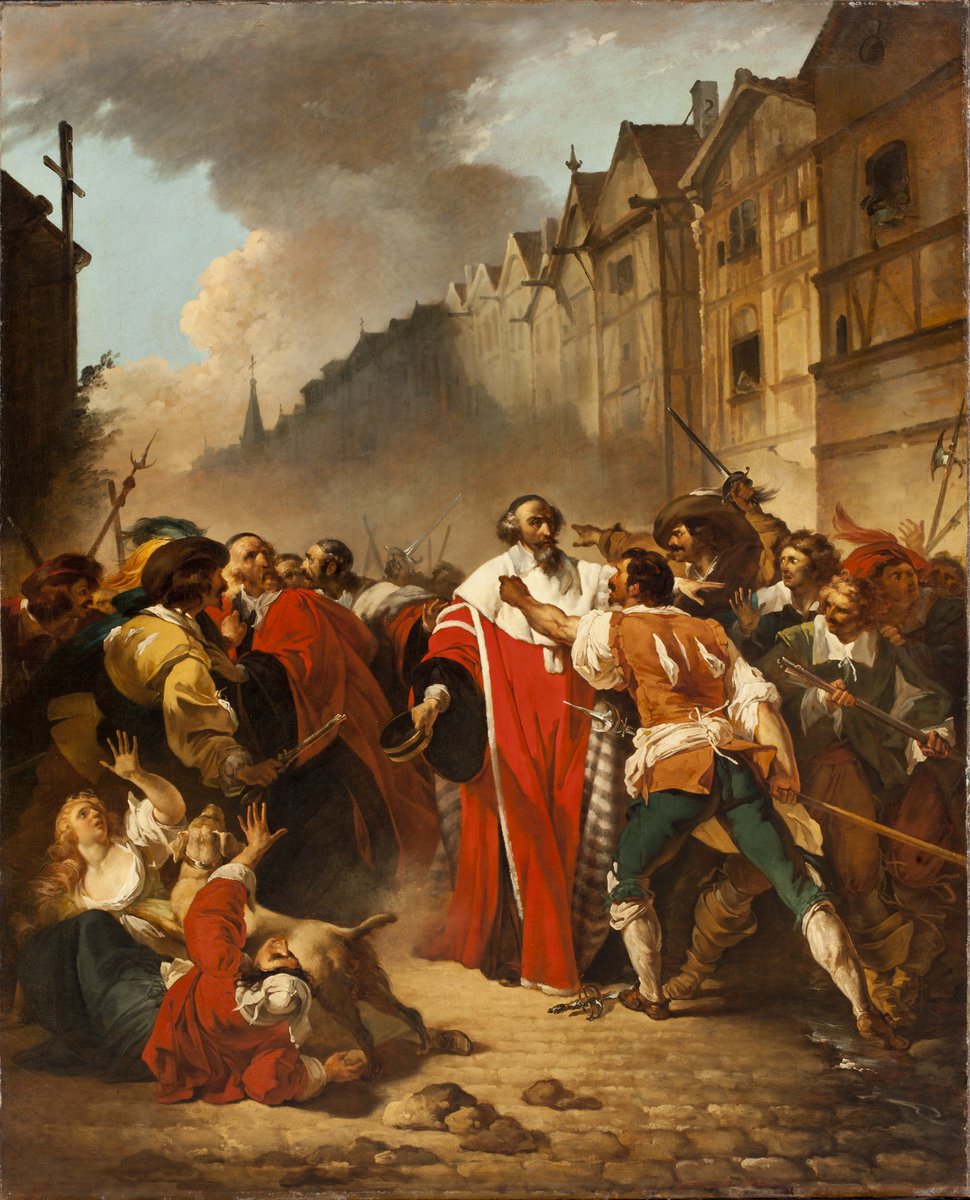
Between 1648 and 1653, a series of civil wars would erupt in France as both the nobility and parlement courts were unhappy with increasing taxes and centralization.
The Franco-Spanish war would last until 1659 when both sides were exhausted and agreed to a peace.
The Franco-Spanish war would last until 1659 when both sides were exhausted and agreed to a peace.
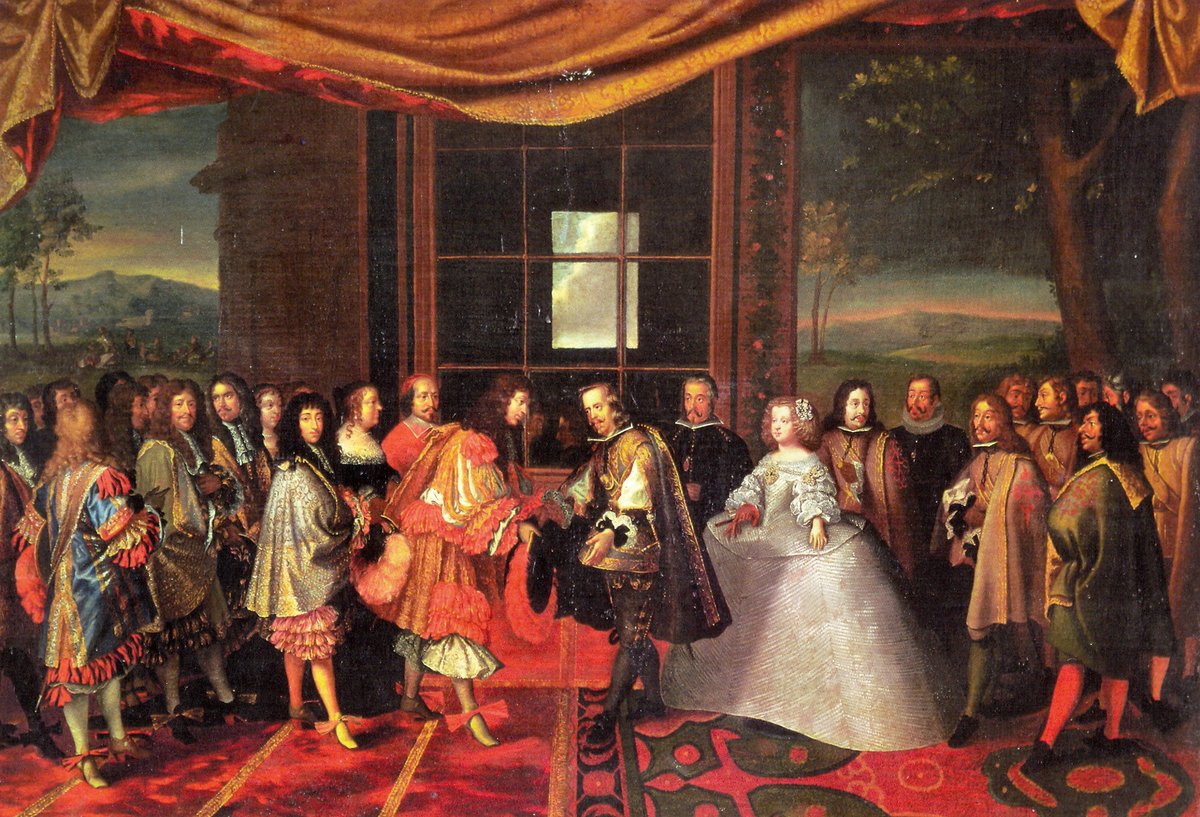
The biggest irony was that Condé would end up fighting for the Spanish against the French as he became one of the rebellious nobles and defected in 1652, winning at Valenciennes in 1656 and losing at Dunes in 1658.
But he was pardoned by Louis XIV after the war in 1659.
But he was pardoned by Louis XIV after the war in 1659.
Loading suggestions...