
Historically China holds calligraphy in high esteem, like in the Islamic tradition. It is seen as one of the highest forms of Chinese art, with a cultural value that is unmatched. The way one wrote was as important as what one wrote
A thread on Sini Chinese Arabic calligraphy…
A thread on Sini Chinese Arabic calligraphy…

1/ The history of Chinese calligraphy is as long as that of China. With various papers, inks and tools for a calligrapher to choose from the art is ever evolving with infinite varieties of styles & aesthetic
Haji Noor Deen
Haji Noor Deen
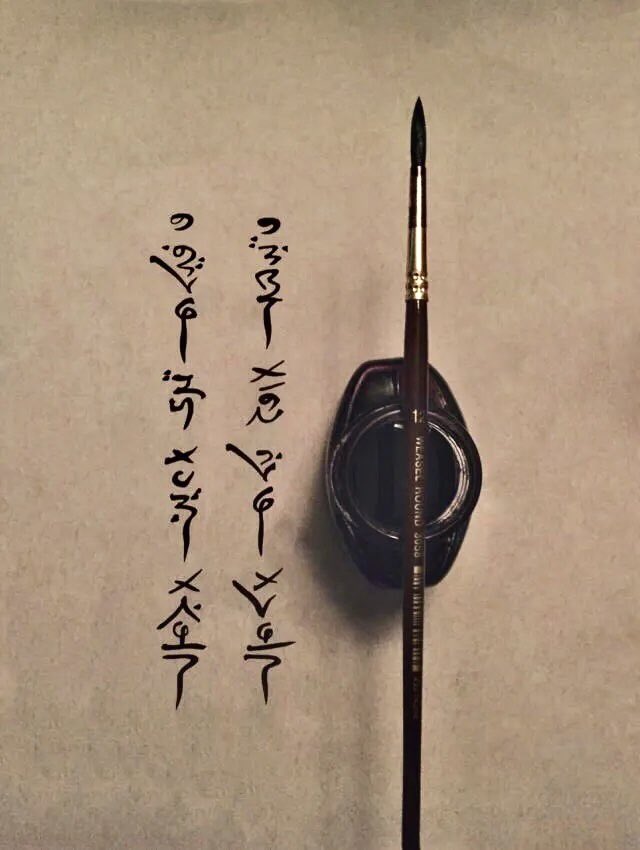
2/ China, an empire in itself was also effected by the spread of Islam. As early as 651 AD, around 19 years after the death of Prophet Muhammad ﷺ a channel had already existed between the Middle East and China
Ayat Al Kursi, Haji Noor Deen
Ayat Al Kursi, Haji Noor Deen
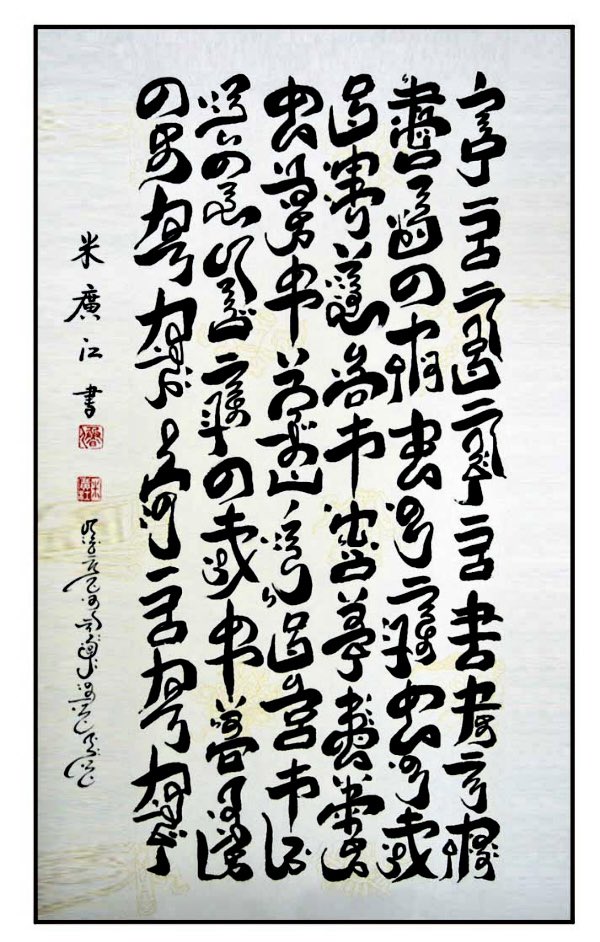
3/ The famous Silk Road brought trade to Europe from and through these regions. Chinese speaking Muslims such as merchants and soldiers with Arab and Persian ancestry would marry into the Han Chinese, thus forming their own unique identity
Haji Noor Deen
Haji Noor Deen
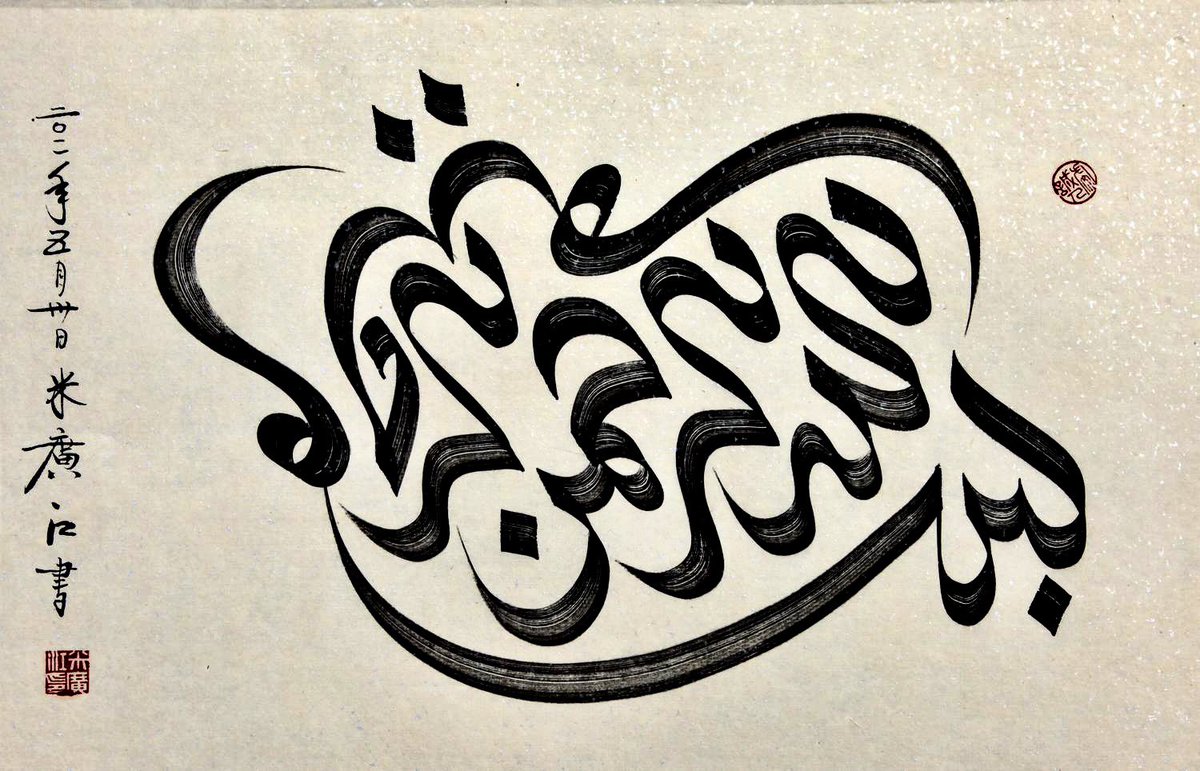
4/ During the Yuan Dynasty, towards the end of the 14th century Chinese Muslims incorporated their own designs into Chinese items, simultaneously evolving a new style of Arabic script called ‘Sini’
Peace, Haji Noor deen Mi Guangjiang, 2004
Peace, Haji Noor deen Mi Guangjiang, 2004

5/ Sini literally translates from Arabic to 'China' & so began the intermingling of Chinese artisan craftsmanship & Islamic design…
19th-century Quran, accompanied by Chinese translation between the lines. Page opens with Surah 36—Yasin.
(BL IO Islamic 3440, f.13v-14r)
19th-century Quran, accompanied by Chinese translation between the lines. Page opens with Surah 36—Yasin.
(BL IO Islamic 3440, f.13v-14r)
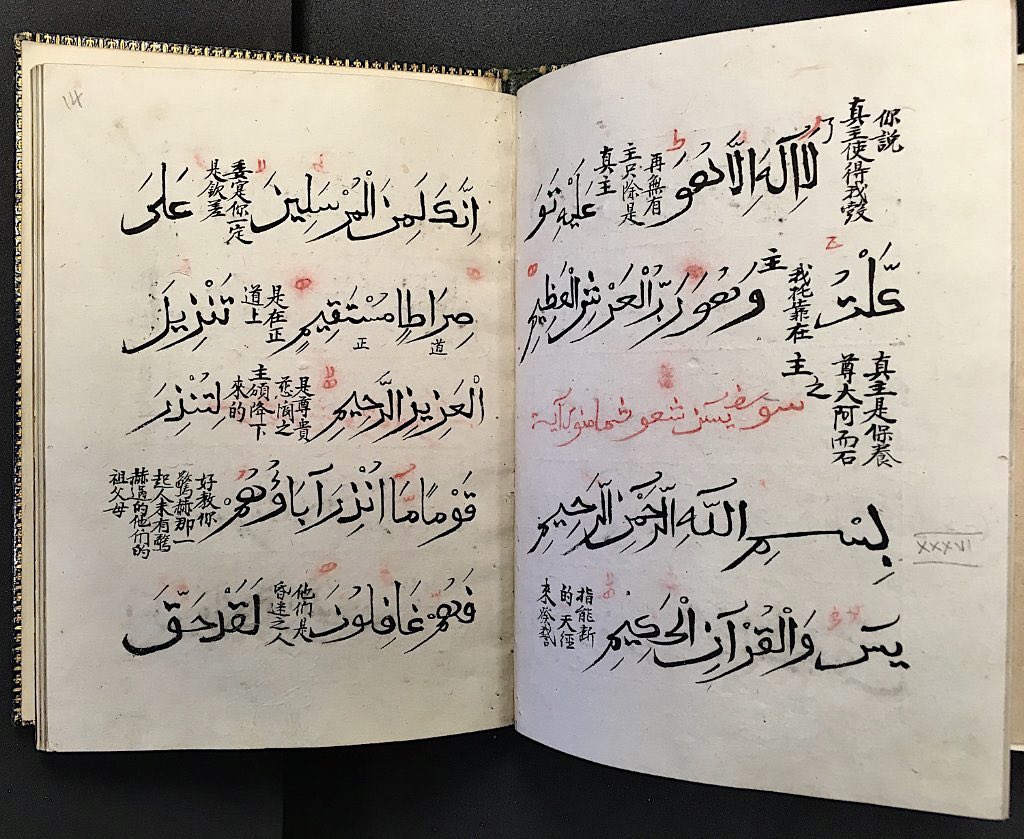
6/ The Sini script is not constrained to the rules of Arabic calligraphy thus allowing the calligrapher much more freedom of expression. The words can be written from top to bottom, bottom to top, right to left and from the middle outwards
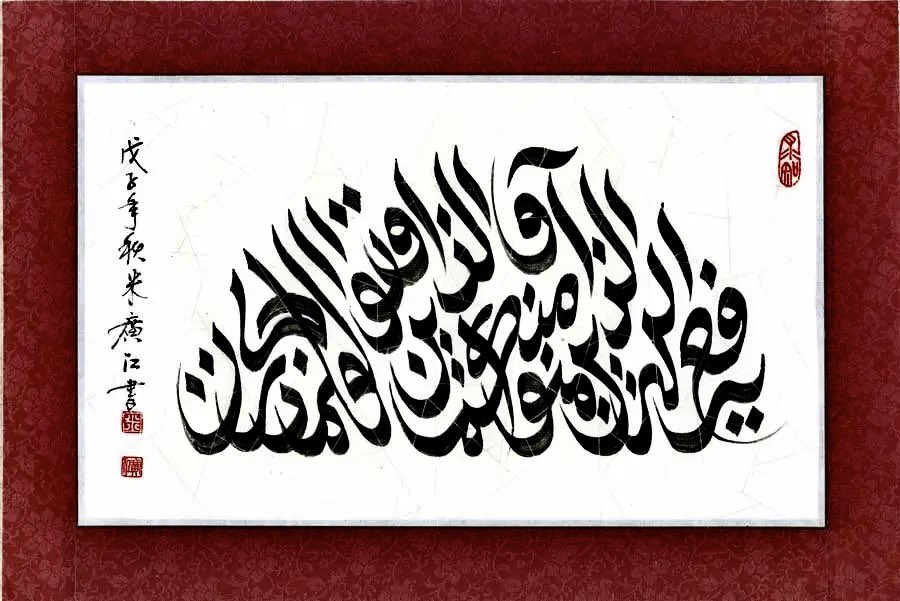
7/ Sini frequently adopts diamond forms to structure Arabic words, presumably influenced by the square, modular arrangement of characters in Chinese texts

8/ When single Arabic words are written in Sini, letters are often wrapped around an elongated central vertical stroke, reminiscent of the strong verticals and balanced composition of individual characters in Chinese calligraphy

9/ Haji Noor Deen (Chinese name Mi Guang Jiang) is a master calligrapher fluent in both his native Chinese and in Arabic. Born in 1963 in the Shandong Province, China, his interest in calligraphy began as a teenager
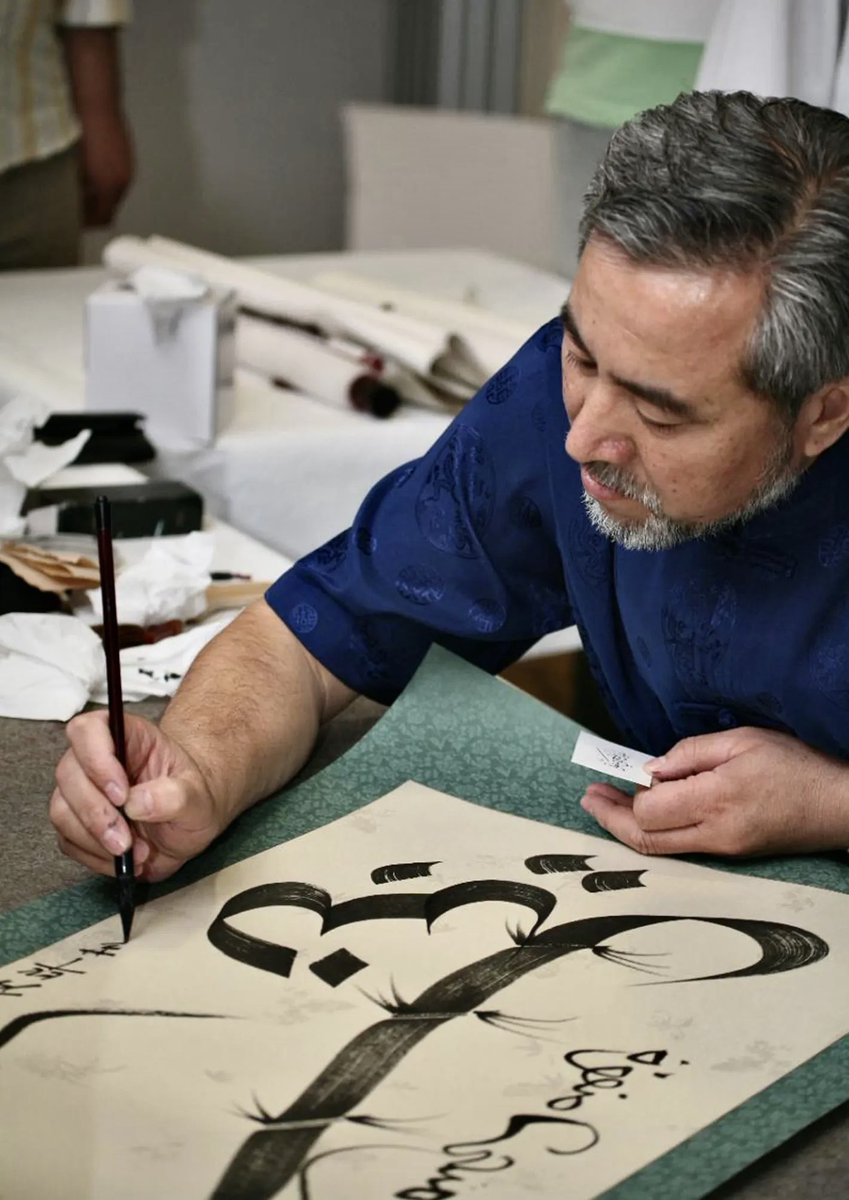
10/ Haji Noor Deen’s efforts & skill have rewarded him the honour of being the first Chinese Muslim to receive the Egyptian Certificate of Arabic Calligraphy and induction as a member of the Association of Egyptian Calligraphy

11/ ‘Imagine Arabic calligraphy shaped into a Chinese character, or Chinese characters shaped into Arabic Quranic verses, and you will get some idea of the intricacy and the brilliance of the Sini calligraphic style.'
Haji Noor Deen
Haji Noor Deen
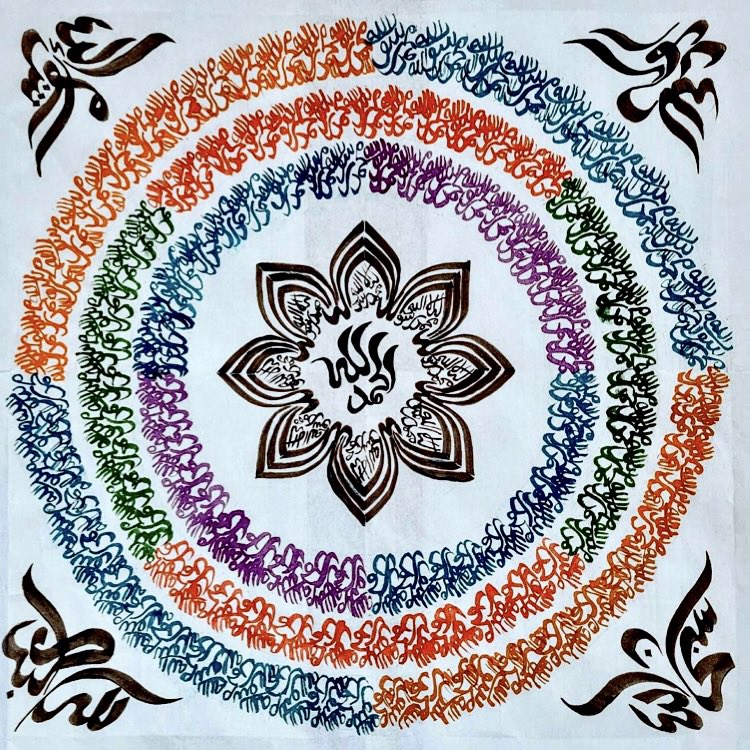
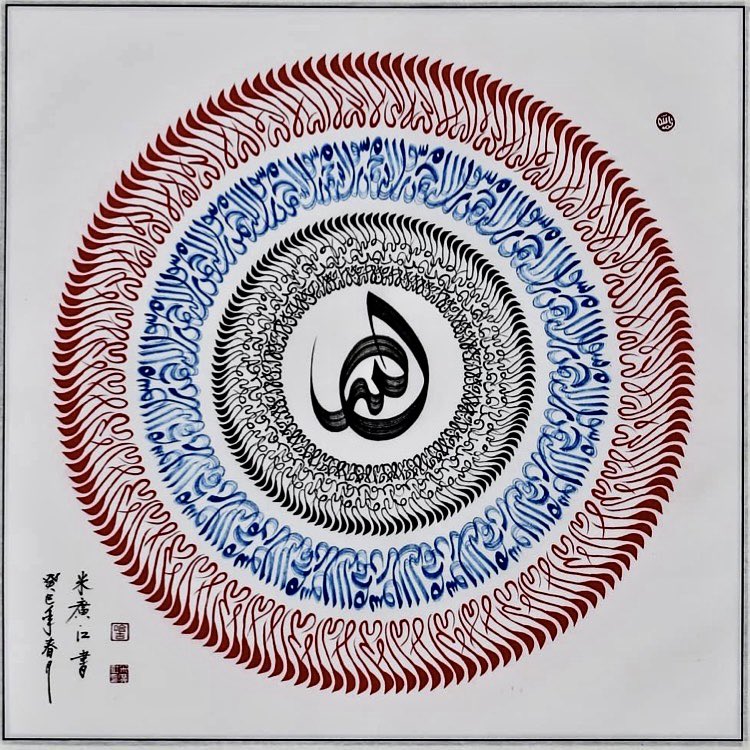
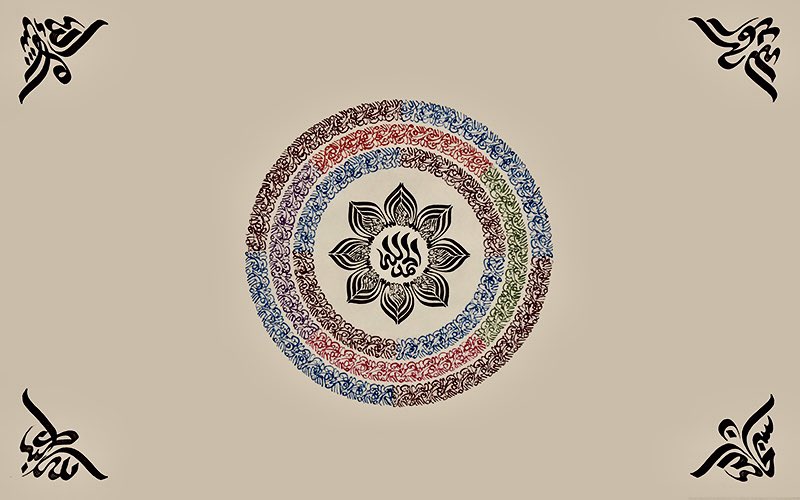
12/ The middle text reads 'Allah', followed by the phrase 'All Thanks Belongs to Allah'. The blue & red texts read 'There is no God but Allah & Prophet Muhammad is the Messenger'. The artist's personal seal in traditional Chinese style completes this masterpiece
Haji Noor Deen
Haji Noor Deen
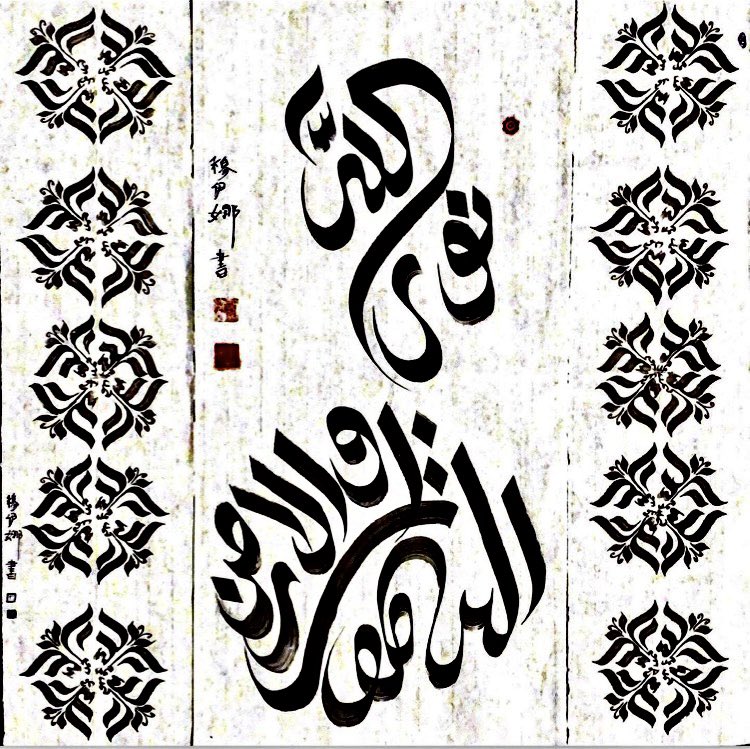
13/ “God is the light of the heavens and the earth”
Haji Noor Deen
Haji Noor Deen
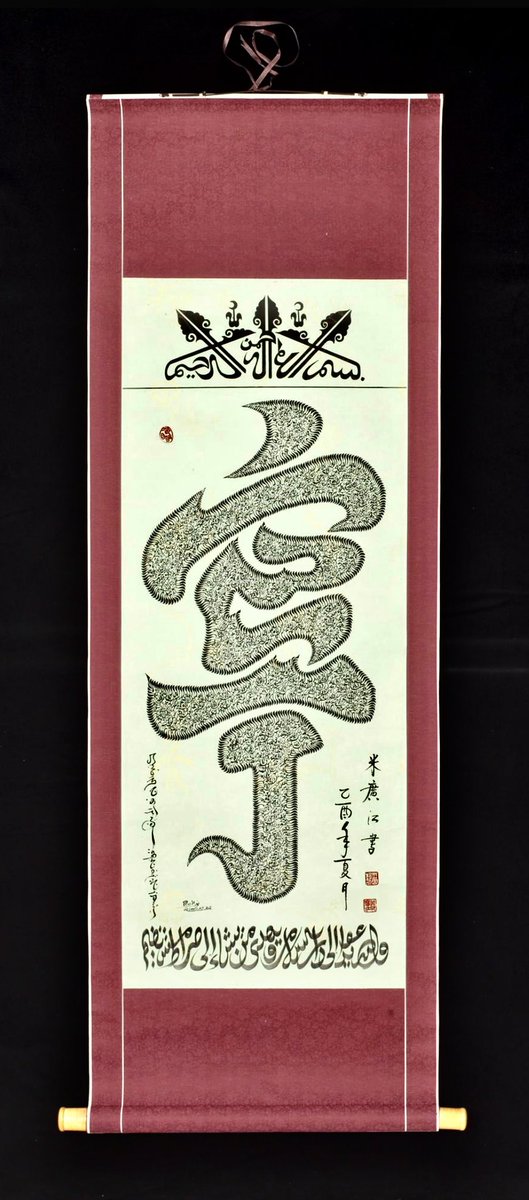
14/ Calligraphy scroll, displaying the Chinese character 寧 (Ning, peace) composed of Arabic calligraphy giving the Islamic Shahada (profession of faith) in the centre with 'b'ism Allah al-Rhaman al-Rahmeem‘above: China, by Haji Noor Deen Mi Guangjiang, c. 2005
@NtlMuseumsScot
@NtlMuseumsScot
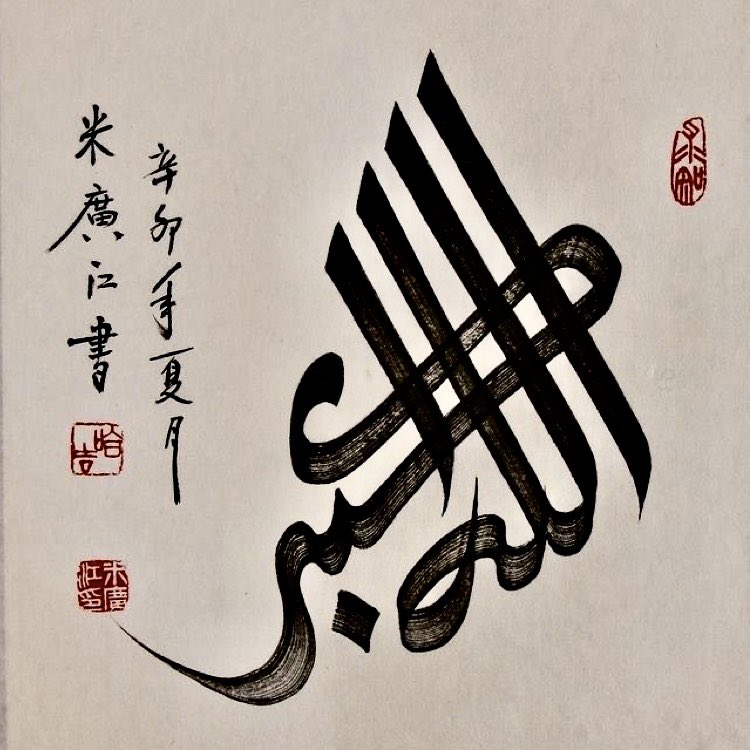
15/ Allahu Akbar — God is the Greatest⠀⠀⠀⠀⠀⠀⠀⠀⠀
⠀⠀⠀⠀⠀⠀⠀⠀⠀
Haji Noor Deen
⠀⠀⠀⠀⠀⠀⠀⠀⠀
Haji Noor Deen
16/ Haji Noor's mastery of Arabic calligraphy and his unique style has given him a reputation of great renown. He has lectured in Harvard, & Cambridge University among many others and has a permanent piece, ‘The 99 Beautiful Names of God' exhibited in the British Museum, London.
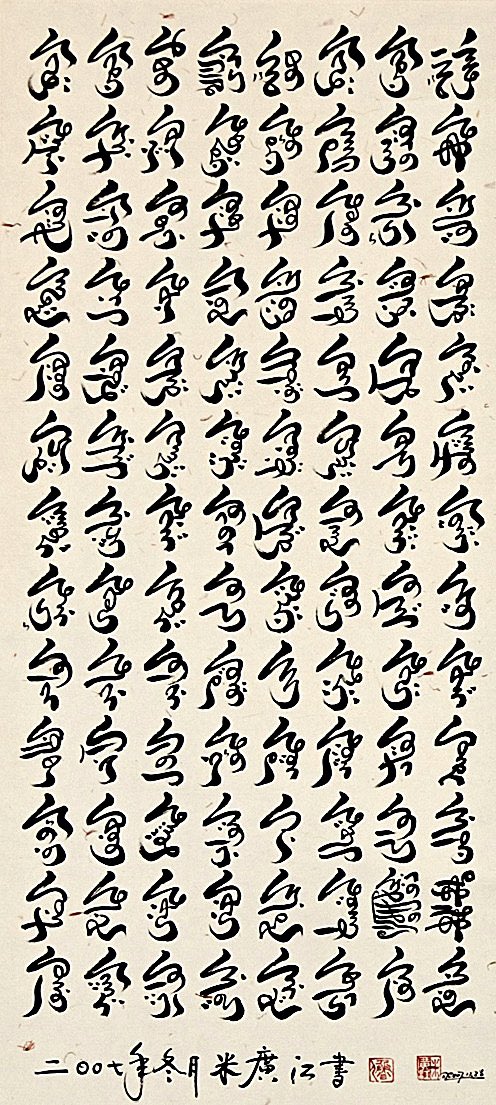
17/ ‘Calligraphy can increase the faith, patience, and also can cultivate one's morality.'
Haji Noor Deen
Haji Noor Deen
The content of this thread is taken from and inspired by this article on @bahathmag thank you to them for their amazing work - please read the full article here bahath.co
Loading suggestions...