

I do not know what happened that night. All we know is that there is no confirmation of Agni V test from DRDO or MOD. Since then a lot of theories have come up. Let me say a few things about these theories. But most importantly hope some young minds start to love rocketry.
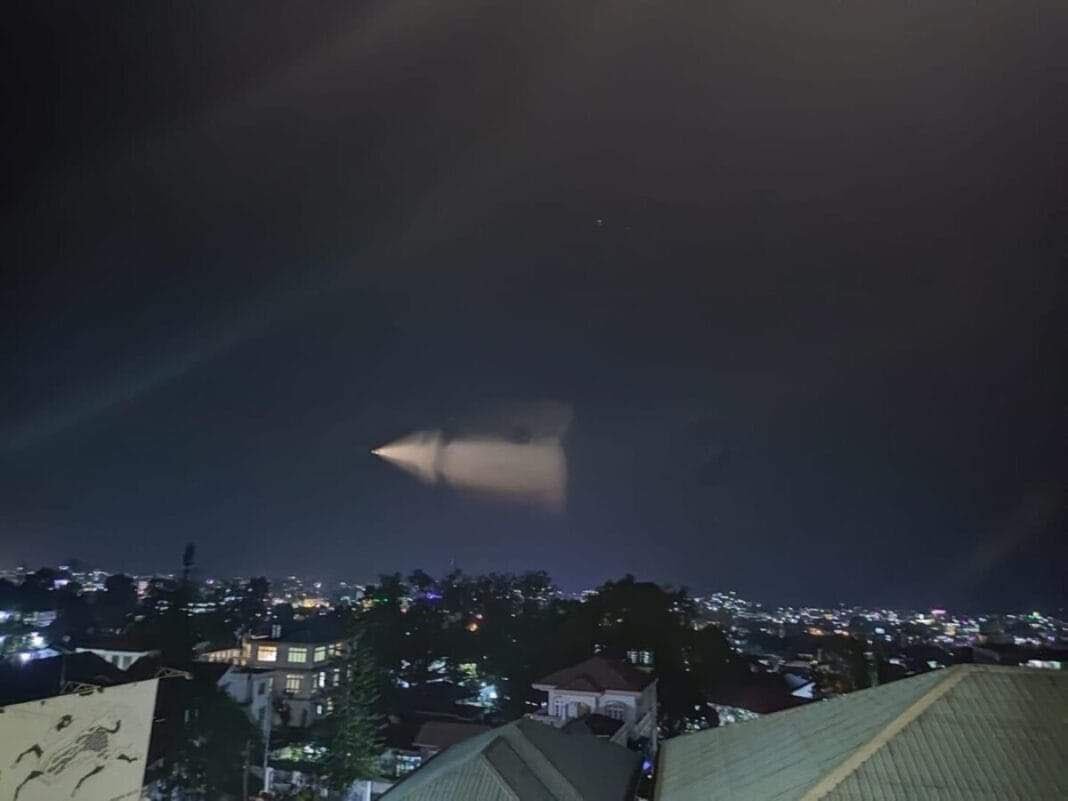
1. The space jellyfish from the evening test of Agni V was witnessed by the lot of people from East and North East India and South east Asia. The phenomenon is simple. en.wikipedia.org
2. One thing is for sure that the missile was tested to 5400 kms. The NOTAM for that evening explains that. So the missile has a range of at least 5400 kms.
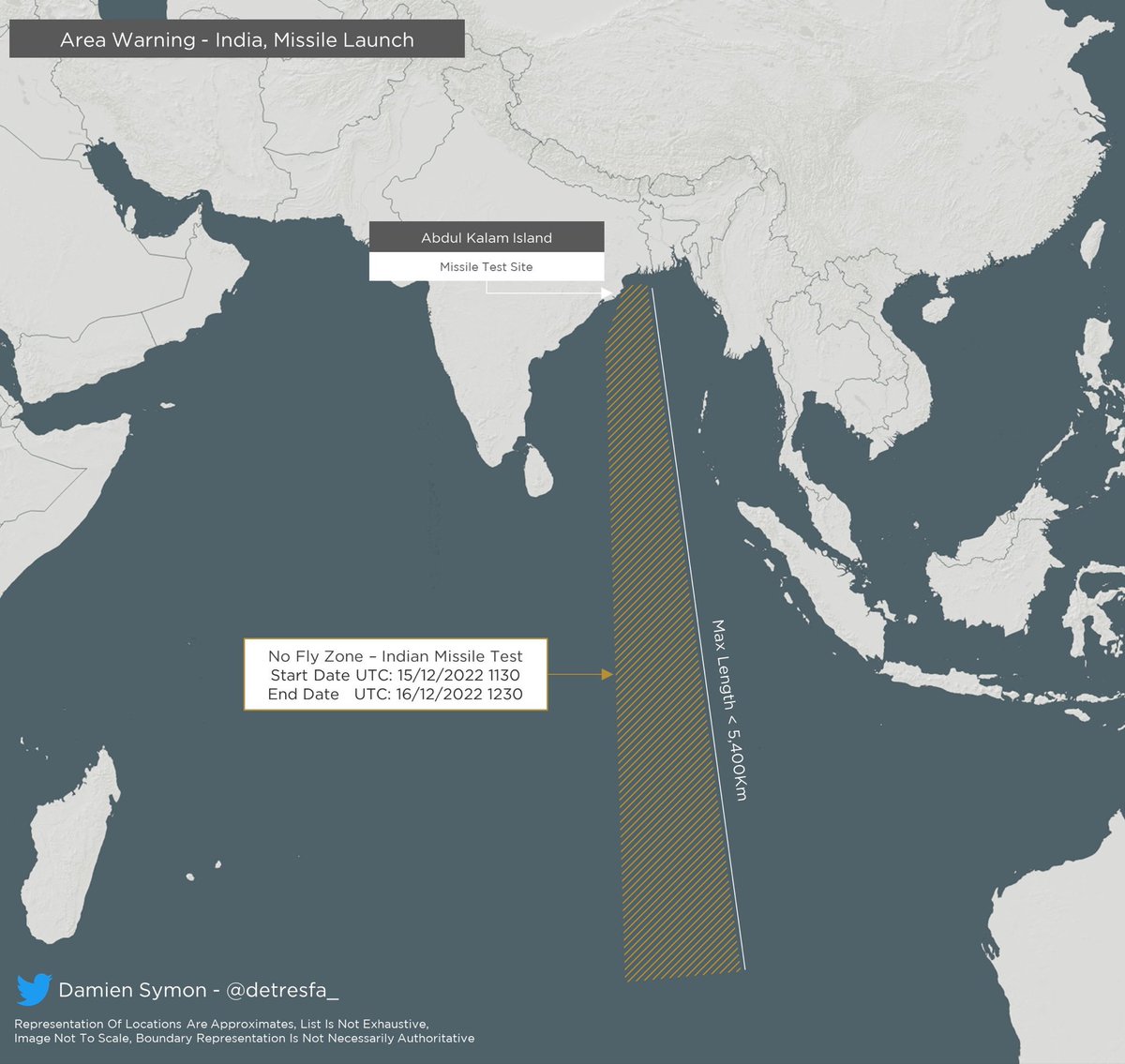
3. Was this a response to skirmishes on NE border. I would guess no. These tests take months to plan. The missile has to be shipped to ITR. All the people related to the test assemble there. Ships are sent out along the route and to the target point. This takes weeks.
4. Now let's look at the plume. This video seems to be recorded from Odisha (commentary is in Bengali). We can say that the rocket is still in the atmosphere at this point.
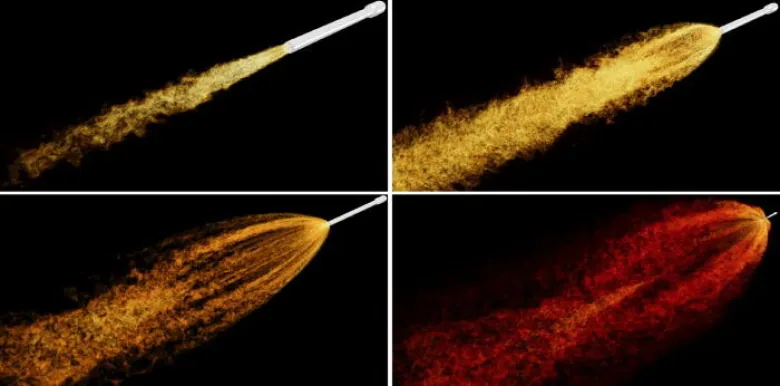
5. The ideal condition for a rocket exhaust is where the exit pressure (from the nozzle) is the same as ambient pressure. So if you look at the plume of the rocket. It starts to fan out more as the rocket climbs through the atmosphere.
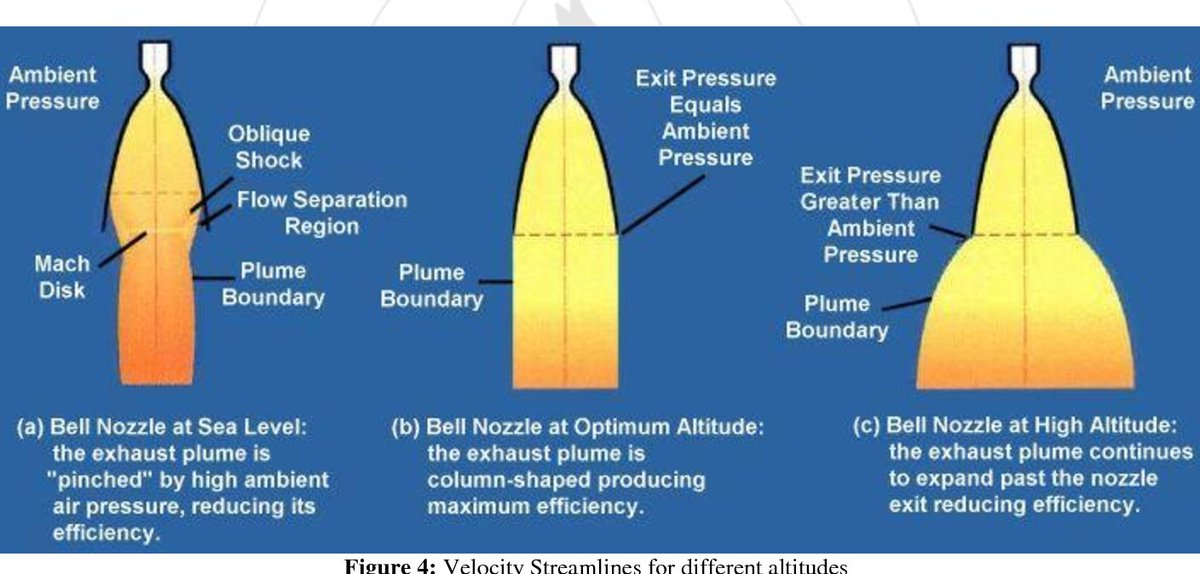
6. The above phenomenon can be seen more clearly in the collage below
7. As the rocket reaches the exo atmosphere and space, the ambient pressure in vacuum becomes zero. And the expansion is immediate and there might be some back flow.
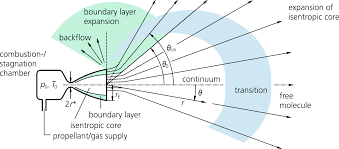
8. There are many pictures like below which seem to be from near vacuum to vacuum. There are no distortions from the jetstreams and expansion is quite large The break in the plume most probably is from a staging.
9. Another thing which might be a good estimate is that these are solid motors from the amount of particulate matters in the plume. So, all we can say is that it was rocket with at least 2 solid stages with a range of at least 5400 kms.
10. There are some speculations that I feel are wrong. E.g. There is nothing that can say that this test is of a hypersonic glide missile. One does n't need this class of rockets to launch a 1 ton payload to 20 kms at >5 Mach.
11. The "maneuvering" that we see is very common for large ballistic missiles. Right after the launch such missiles typically rise straight up. This gives them lowest drag, structural load and time to evaluate if all systems are working nominally after launch.
12. After a few seconds of a near straight climb the rocket starts orienting itself towards the target.
We cannot judge from pictures from Myanmar/Mizoram that the rocket was on a depressed trajectory.
We cannot judge from pictures from Myanmar/Mizoram that the rocket was on a depressed trajectory.
13. This is because the local horizon may not match the curvature of the earth along the flight path.
Also there is no way to say whether this was launched from land or sea. But knowing it was launched from Balasore a land launch is most likely.
Also there is no way to say whether this was launched from land or sea. But knowing it was launched from Balasore a land launch is most likely.
Loading suggestions...