

14 SEO tips for more traffic in 2023 🤩
Our blog ranks on the first page of Google for >13,600 keywords—and using these tips helped us get there.
Let's dive in 🏊♂️
Our blog ranks on the first page of Google for >13,600 keywords—and using these tips helped us get there.
Let's dive in 🏊♂️
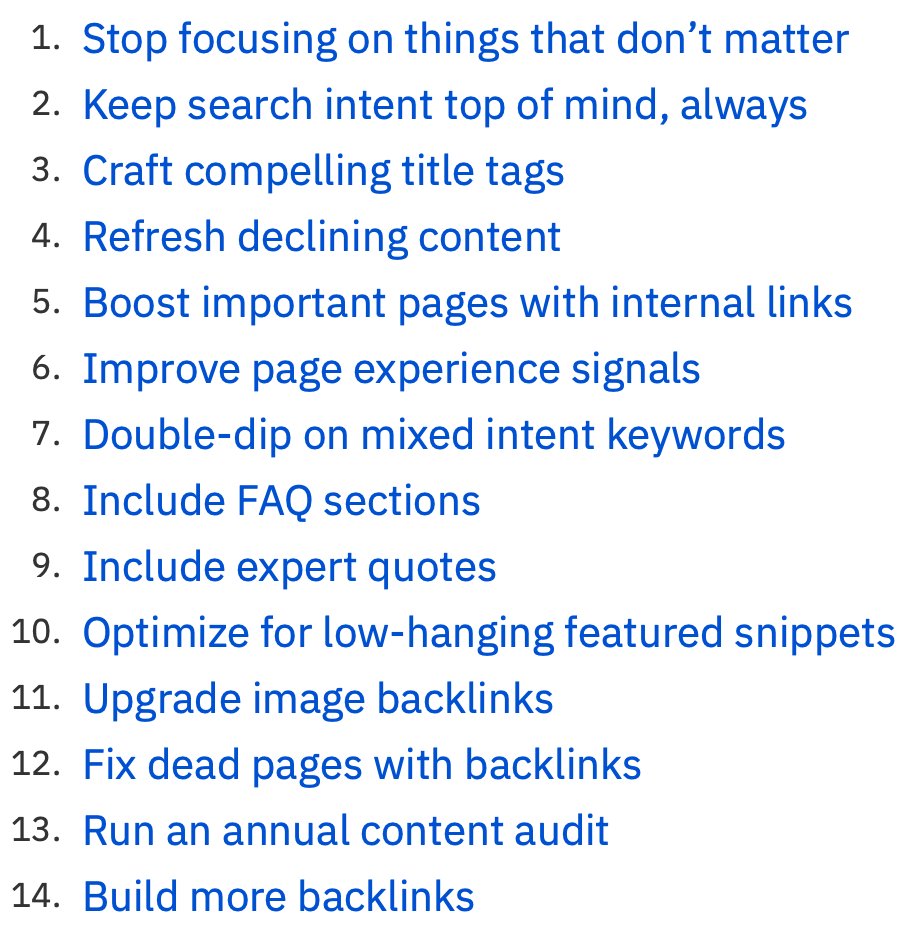
1. Stop focusing on things that don’t matter
Here's the painful truth: Half of what's written online about SEO is false.
To save you time, we've busted some SEO myths and outdated advice:
Here's the painful truth: Half of what's written online about SEO is false.
To save you time, we've busted some SEO myths and outdated advice:

2. Keep search intent top of mind, always
Build your content around what searchers are searching for.
Plug a seed keyword in Google, then study the top-ranking pages to see the kinds of content that is ranking (e.g. product listings vs listicles vs videos).
Build your content around what searchers are searching for.
Plug a seed keyword in Google, then study the top-ranking pages to see the kinds of content that is ranking (e.g. product listings vs listicles vs videos).
3. Craft compelling title tags
We conducted a study and found that Google rewrites title tags only ~33.4% of the time.
This means Google still shows a webpage's title tag two-thirds of the time—so don't neglect your title tags.
We conducted a study and found that Google rewrites title tags only ~33.4% of the time.
This means Google still shows a webpage's title tag two-thirds of the time—so don't neglect your title tags.

4. Refresh declining content
You should refresh + republish content once it starts losing organic traffic.
To find declining content, open Google Search Console and follow these steps:
You should refresh + republish content once it starts losing organic traffic.
To find declining content, open Google Search Console and follow these steps:

4. Refresh declining content (cont'd)
Next, identify pages that are likely freshness-dependent—i.e. those that may have deteriorated in value or usefulness.
You can then check if those pages still align with search intent in Ahrefs:
Next, identify pages that are likely freshness-dependent—i.e. those that may have deteriorated in value or usefulness.
You can then check if those pages still align with search intent in Ahrefs:

5. Boost important pages with internal links
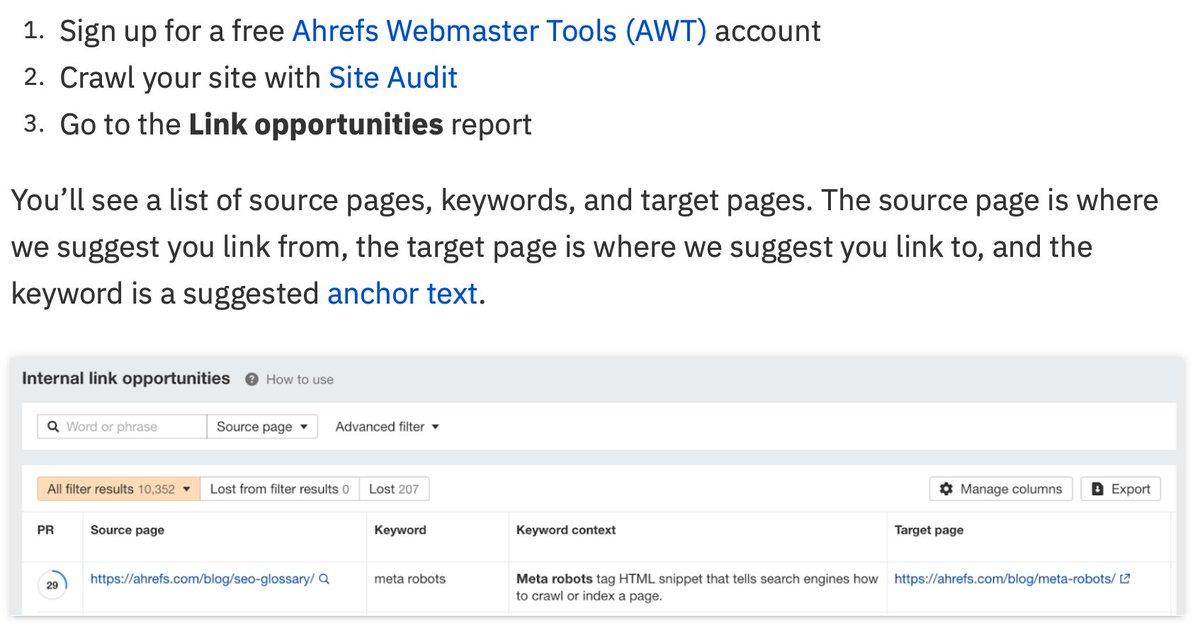
Internal links can help to distribute PageRank across your site, help visitors to navigate better, and help Google to better understand your content.
Find relevant internal linking opportunities with Ahrefs' Site Audit:
Internal links can help to distribute PageRank across your site, help visitors to navigate better, and help Google to better understand your content.
Find relevant internal linking opportunities with Ahrefs' Site Audit:

6. Improve page experience signals
Google rolled out its page experience update on mobile in 2021—and in Feb 2022 for desktop.
These are the factors it considers for desktop:
- Core Web Vitals (CWV)
- HTTPS
- Absence of intrusive interstitials
👇
Google rolled out its page experience update on mobile in 2021—and in Feb 2022 for desktop.
These are the factors it considers for desktop:
- Core Web Vitals (CWV)
- HTTPS
- Absence of intrusive interstitials
👇
6. Improve page experience signals (cont'd)
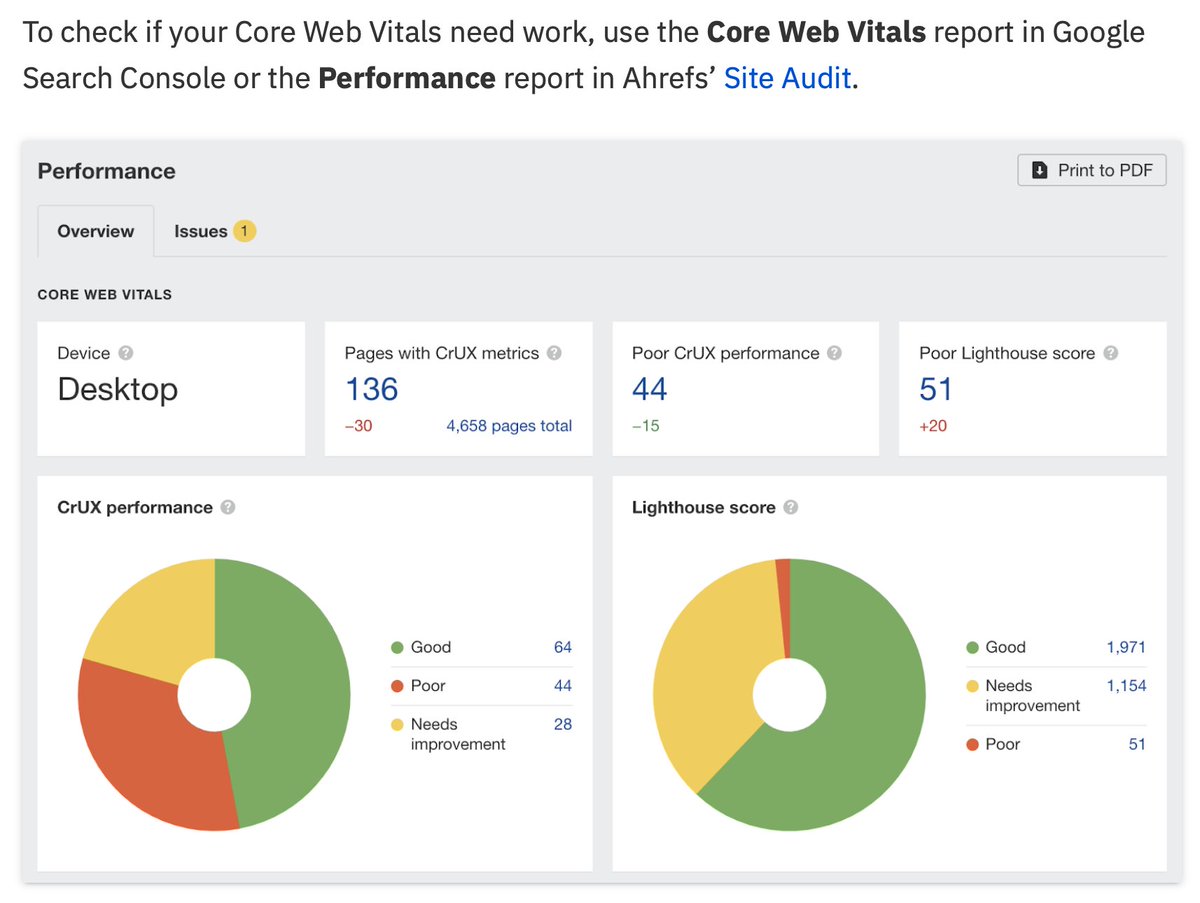
Let's hone in on CWV—speed metrics that measure the user experience based on visual load, visual stability + interactivity.
Here's how to check on yours:
(Note: CWV is one of >200 ranking factors, but is still worth looking into.)
Let's hone in on CWV—speed metrics that measure the user experience based on visual load, visual stability + interactivity.
Here's how to check on yours:
(Note: CWV is one of >200 ranking factors, but is still worth looking into.)
7. Double-dip on mixed intent keywords
Sometimes, people look for different things when doing a Google search.
For example the search results for "on page SEO" is a mix of guides, definitions + lists—with the guide ranking highest.
This is known as a mixed-intent keyword.
👇
Sometimes, people look for different things when doing a Google search.
For example the search results for "on page SEO" is a mix of guides, definitions + lists—with the guide ranking highest.
This is known as a mixed-intent keyword.
👇

7. Double-dip on mixed intent keywords (cont'd)
Our advice for mixed intent keywords is to create content for the *dominant* intent.
Already ranking for a mixed intent keyword? There may be an opportunity to "double dip" and win multiple first-page rankings.
Here's how:
Our advice for mixed intent keywords is to create content for the *dominant* intent.
Already ranking for a mixed intent keyword? There may be an opportunity to "double dip" and win multiple first-page rankings.
Here's how:

8. Include FAQ sections
When researching a topic, you’ll often find related questions people are searching for.
An example is when we plug "H1 tag" into Ahrefs' Keywords Explorer > Questions report:
When researching a topic, you’ll often find related questions people are searching for.
An example is when we plug "H1 tag" into Ahrefs' Keywords Explorer > Questions report:

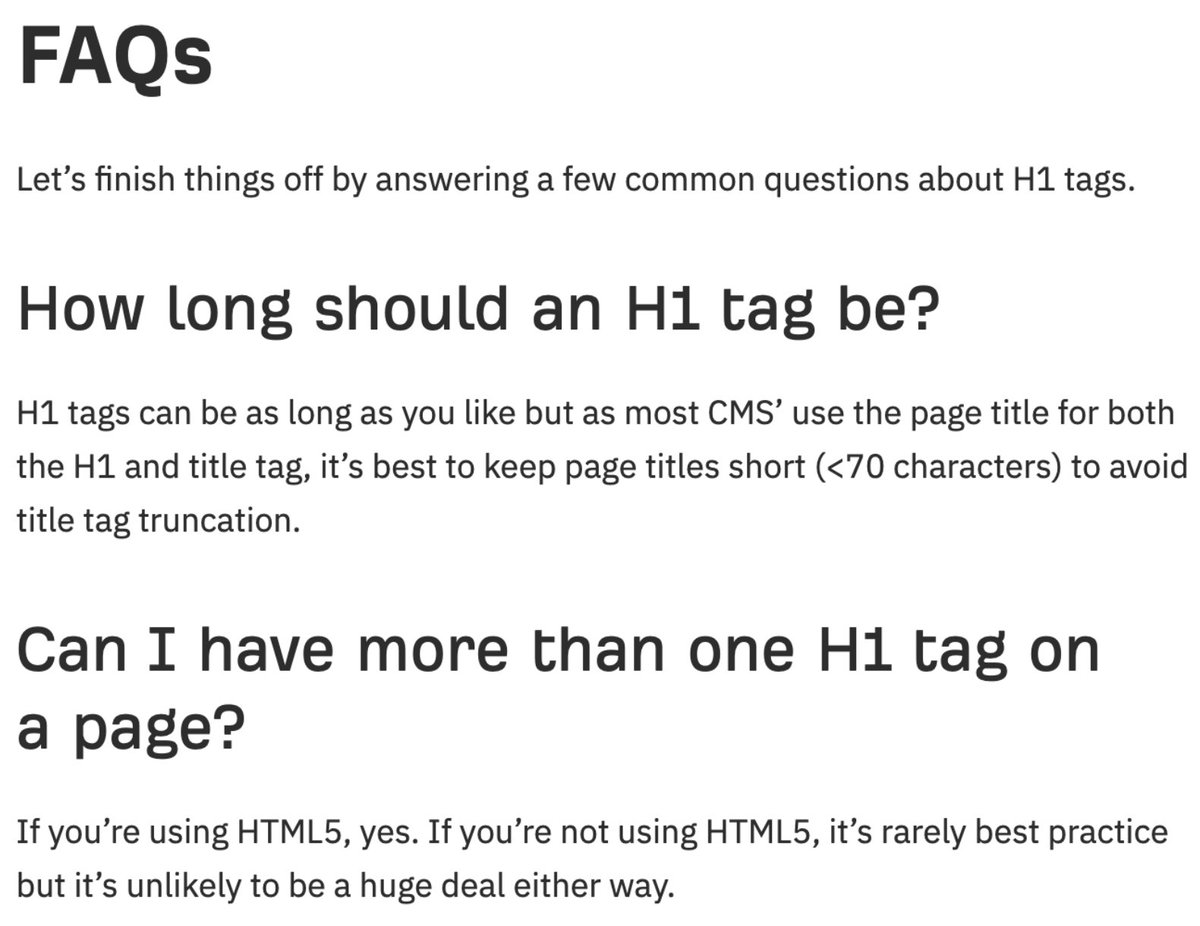
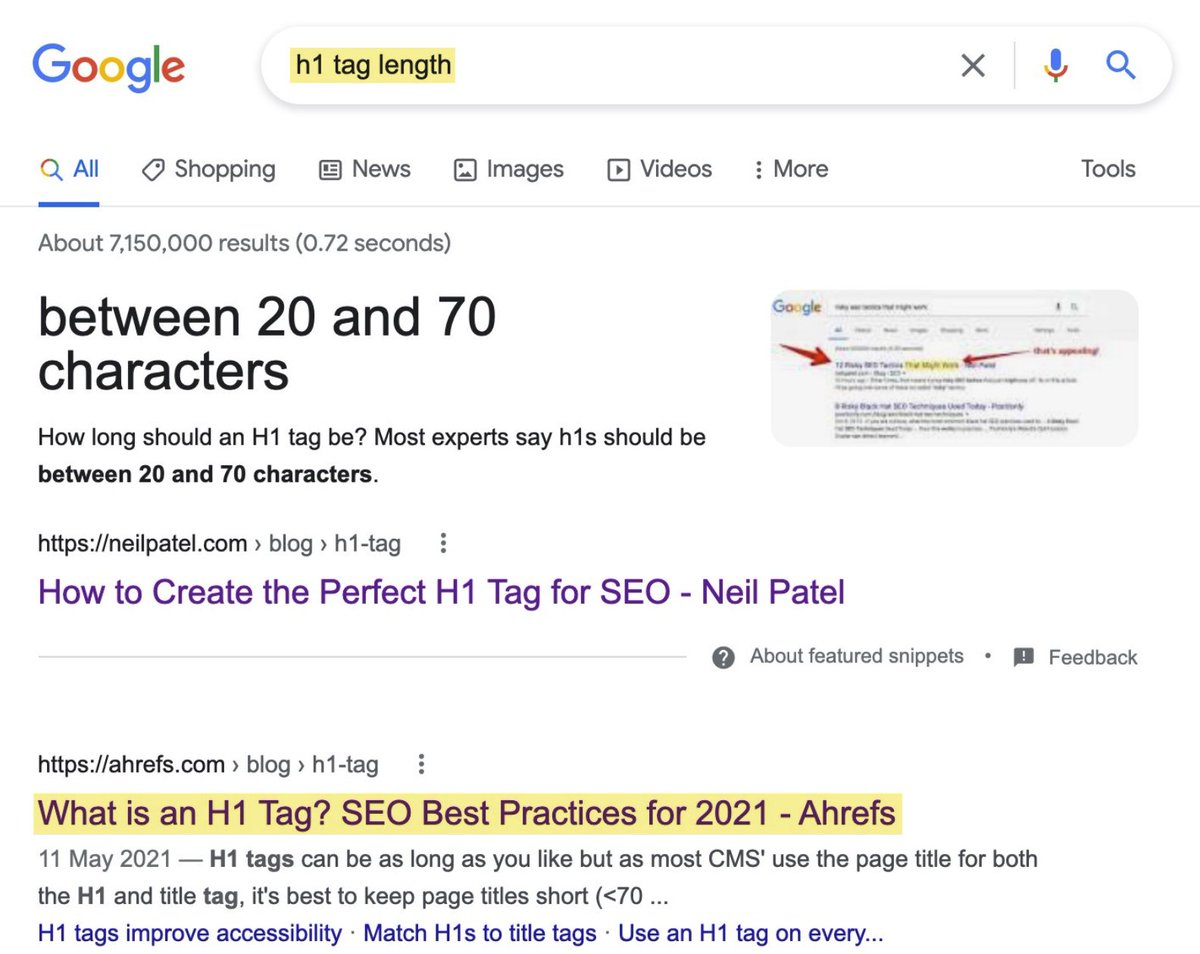
Since it'd be unnatural to seamlessly fit all these questions into our blog post, we added an FAQ section to the end—allowing us to capture more long-tail traffic for related keywords.
We now rank for the below search query, based on a question in our FAQs:
We now rank for the below search query, based on a question in our FAQs:
9. Include expert quotes
This adds credibility to your content, and could encourage your sources to share your blog post on their social media pages.
This adds credibility to your content, and could encourage your sources to share your blog post on their social media pages.

10. Optimize for low-hanging featured snippets
Featured snippets are excerpts from top-ranking pages that show up in the search results.
Winning a featured snippet for a high-volume term can help boost your page ranking + dramatically increase organic traffic to the page.
👇
Featured snippets are excerpts from top-ranking pages that show up in the search results.
Winning a featured snippet for a high-volume term can help boost your page ranking + dramatically increase organic traffic to the page.
👇

10. Optimize for low-hanging featured snippets (cont'd)
Some featured snippets are easier to win—so consider prioritizing low-hanging opportunities.
This means keywords with decent monthly search volumes and that you're for ranking in the top 10.
Follow these steps:
Some featured snippets are easier to win—so consider prioritizing low-hanging opportunities.
This means keywords with decent monthly search volumes and that you're for ranking in the top 10.
Follow these steps:

11. Upgrade image backlinks
If you create custom illustrations for your site, others may embed them in their own content—and credit you by linking back to the image file instead of the source page.
As a result, any "authority" from that link wouldn't go anywhere useful.
👇
If you create custom illustrations for your site, others may embed them in their own content—and credit you by linking back to the image file instead of the source page.
As a result, any "authority" from that link wouldn't go anywhere useful.
👇
11. Upgrade image backlinks (cont'd)
In such cases, it's worth reaching out to the post author and asking them to swap out the link.
Find such issues using these steps:
In such cases, it's worth reaching out to the post author and asking them to swap out the link.
Find such issues using these steps:

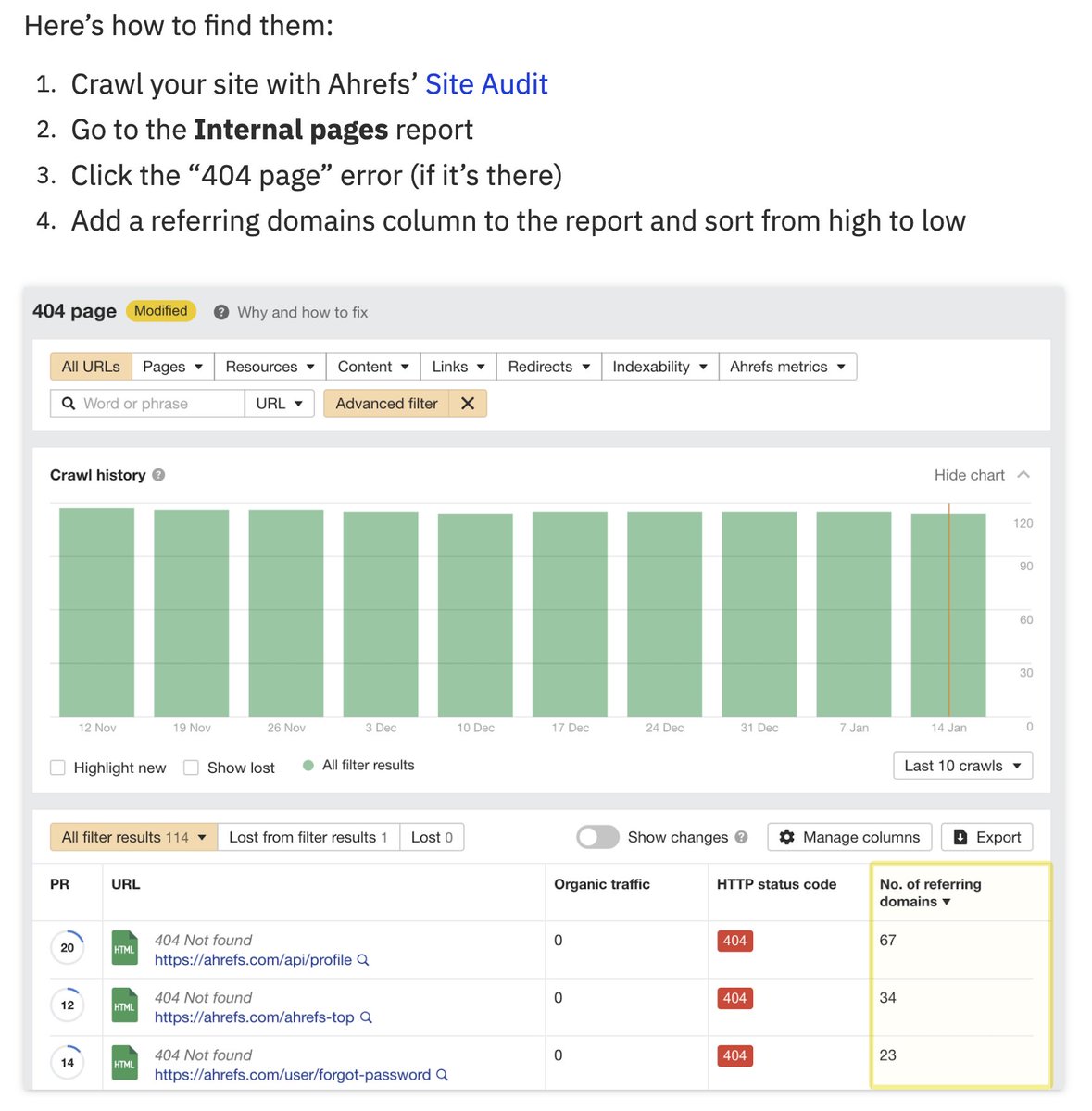
12. Fix dead pages with backlinks
Backlinks to dead pages are wasted opportunities, so check for + fix them periodically. 👇
Remember to also redirect the dead page to somewhere that makes sense! Otherwise, Google might see the redirect as a soft 404, and its links won't count.
Backlinks to dead pages are wasted opportunities, so check for + fix them periodically. 👇
Remember to also redirect the dead page to somewhere that makes sense! Otherwise, Google might see the redirect as a soft 404, and its links won't count.

13. Run an annual content audit
This involves analyzing your website's pages to see if they're performing as intended. You can then decide whether to update/consolidate/delete underperforming pages.
Learn how to conduct a comprehensive content audit here:ahrefs.com
This involves analyzing your website's pages to see if they're performing as intended. You can then decide whether to update/consolidate/delete underperforming pages.
Learn how to conduct a comprehensive content audit here:ahrefs.com
14. Build more backlinks
Backlinks are one of Google's top three ranking factors—and whether you have a chance at ranking depends on how competitive the topic is.
Still, securing a few high-quality backlinks can often help you rank better in Google + boost your organic traffic.
Backlinks are one of Google's top three ranking factors—and whether you have a chance at ranking depends on how competitive the topic is.
Still, securing a few high-quality backlinks can often help you rank better in Google + boost your organic traffic.
Found this useful, or have feedback on what could have been better? We'd love to hear it. 👀
Loading suggestions...