

A few days ago, I provided some thoughts on @CSIS’s wargaming of a PRC invasion of Taiwan. My assessment covered the game’s setup, assumptions, and key takeaways, and at the end I said that I would follow-up with some more on the game’s recommendations. As promised, here we go…
First, as I’m sure folks can imagine would be dear to my heart, the team recommends MOAR SUBMARINES. 😁
As has been discussed in many times and many places, the USN has a distinct advantage in undersea warfare, and the US should continue to press that advantage.
As has been discussed in many times and many places, the USN has a distinct advantage in undersea warfare, and the US should continue to press that advantage.
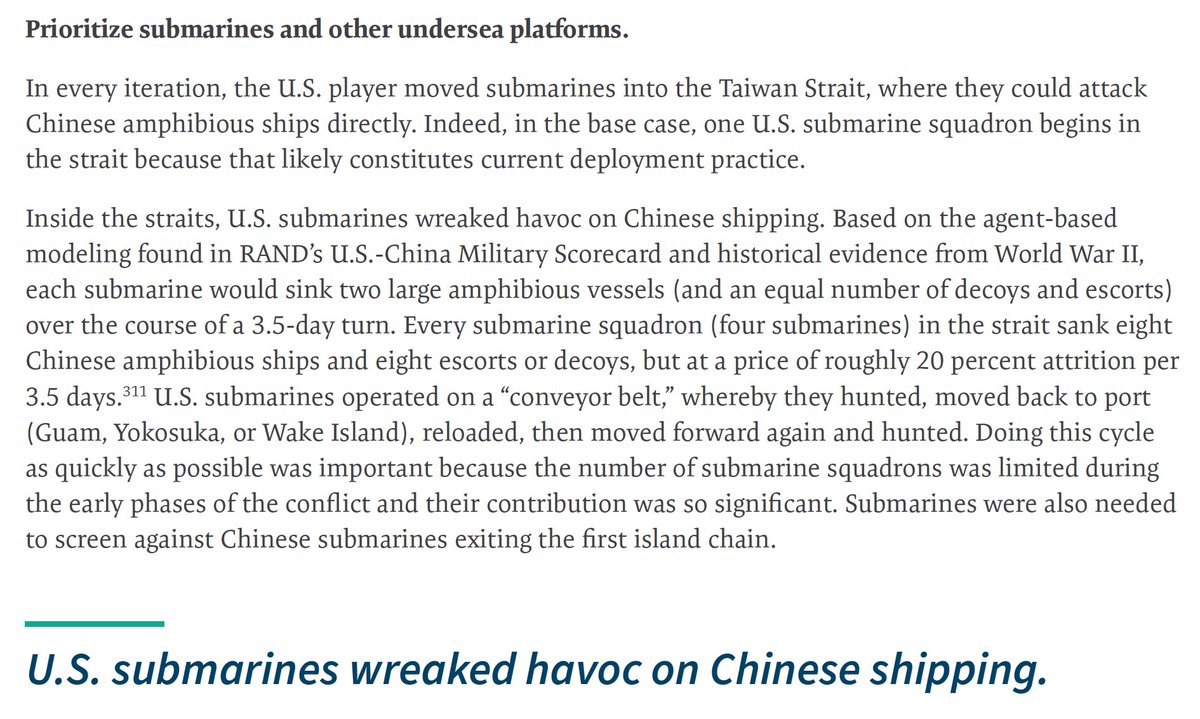
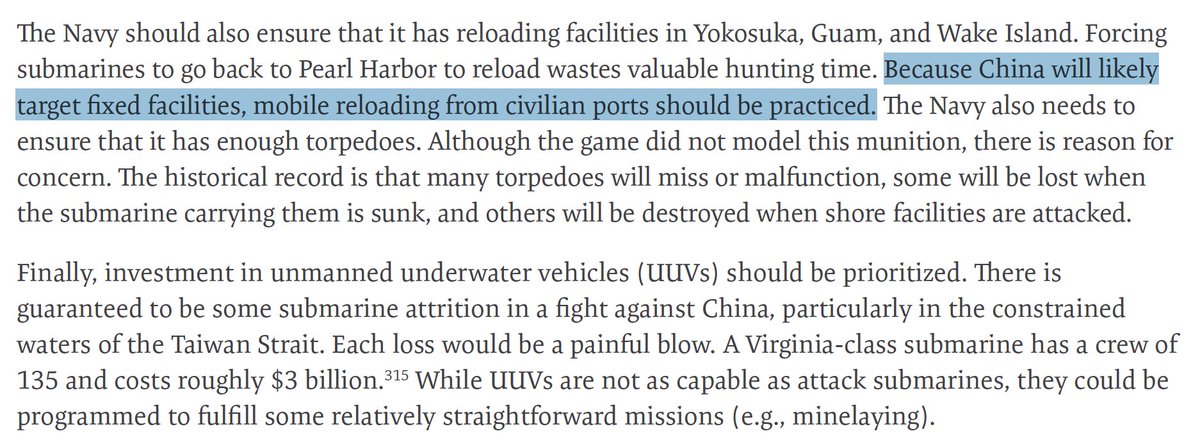
The team saw that US submarines can reliably inflict attrition on the PRC’s fleets. But their numbers are limited, & they’ll need to return to port to re-arm. Many of those ports will be under threat, which then drives the need to be able to quietly re-arm in a dispersed manner.
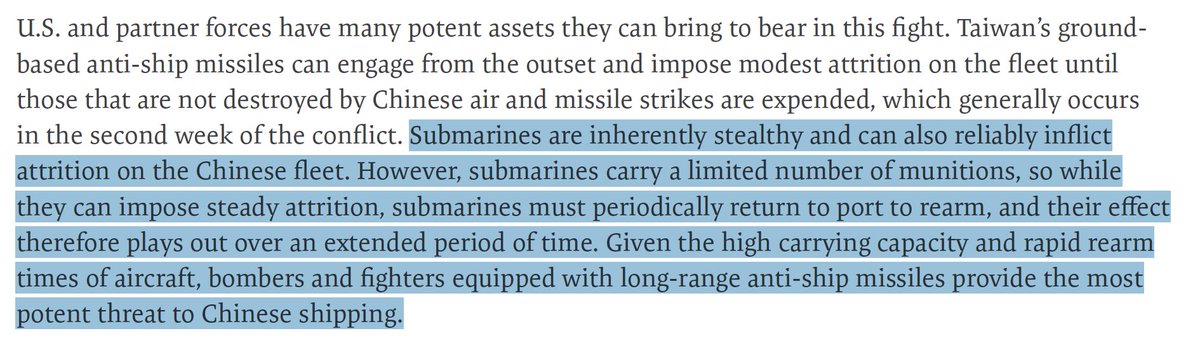
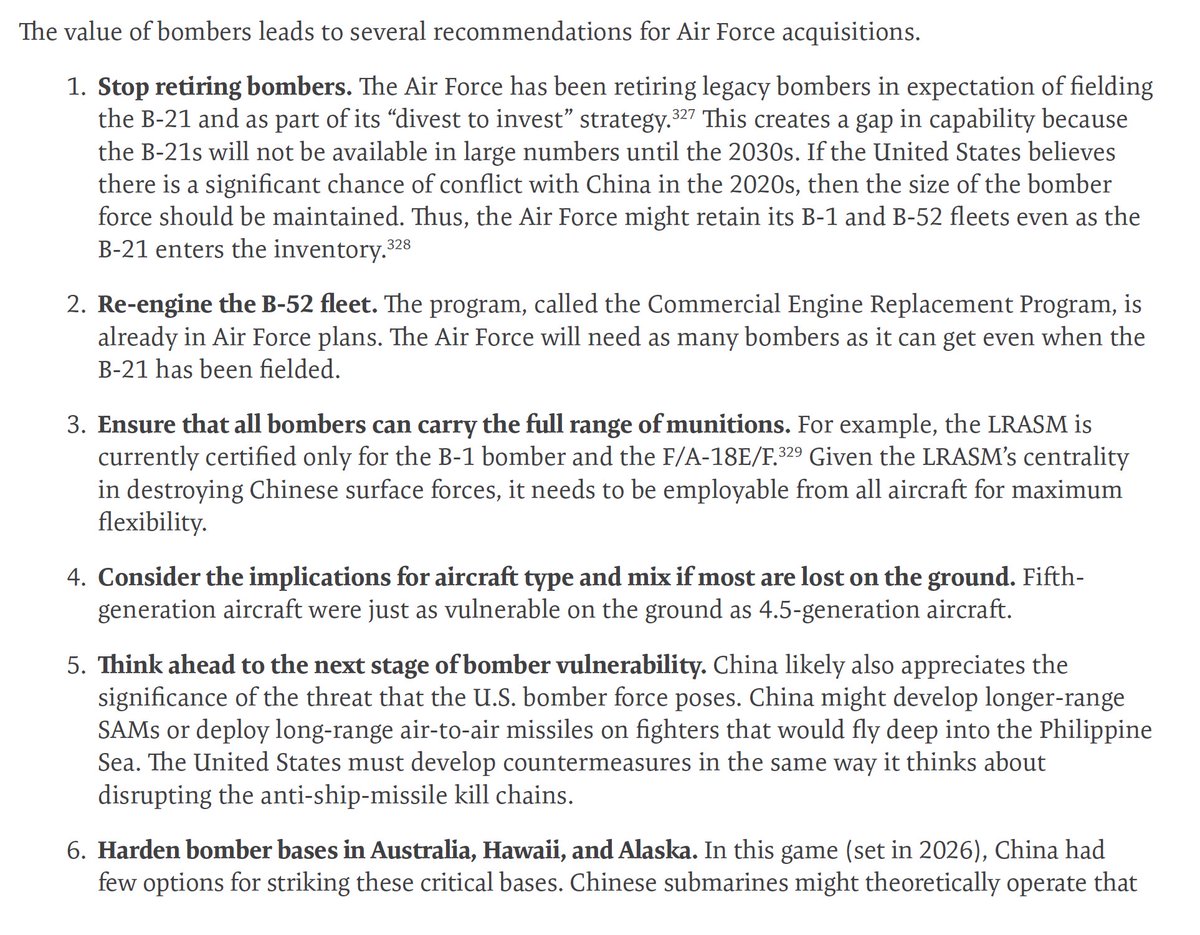
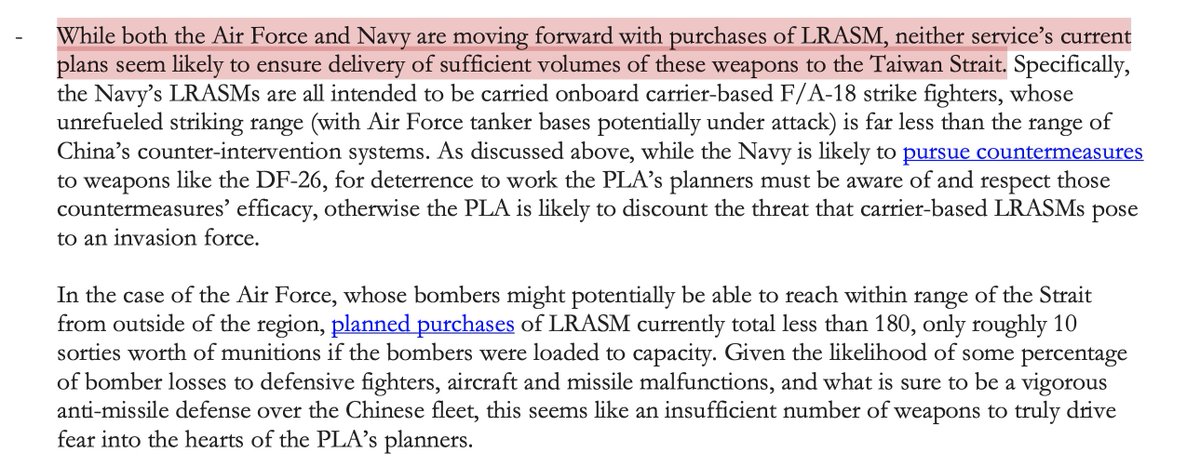
That limited number of submarines drives the next set of recommendations - the need to have plentiful quantities of long-range anti-ship missiles, and the fighters and bomber top deliver them. The team provides a strong set of recommendations for the Air Force bomber force:
Drilling down further on munitions, the points out the strong imbalance between JASSM (probably not maritime strike capable) and LRASM anti-ship missile planned purchases, and recommends shifting JASSM production to LRASM (or may build more of both!).

To support the strike needed to deliver anti-ship missiles, as well as the ISR, tanker, & fighter aircraft needed to assist them, the team makes the oft-stated but seemingly marginally-heeded recommendation to start pouring concrete and passively hardening bases in the region.
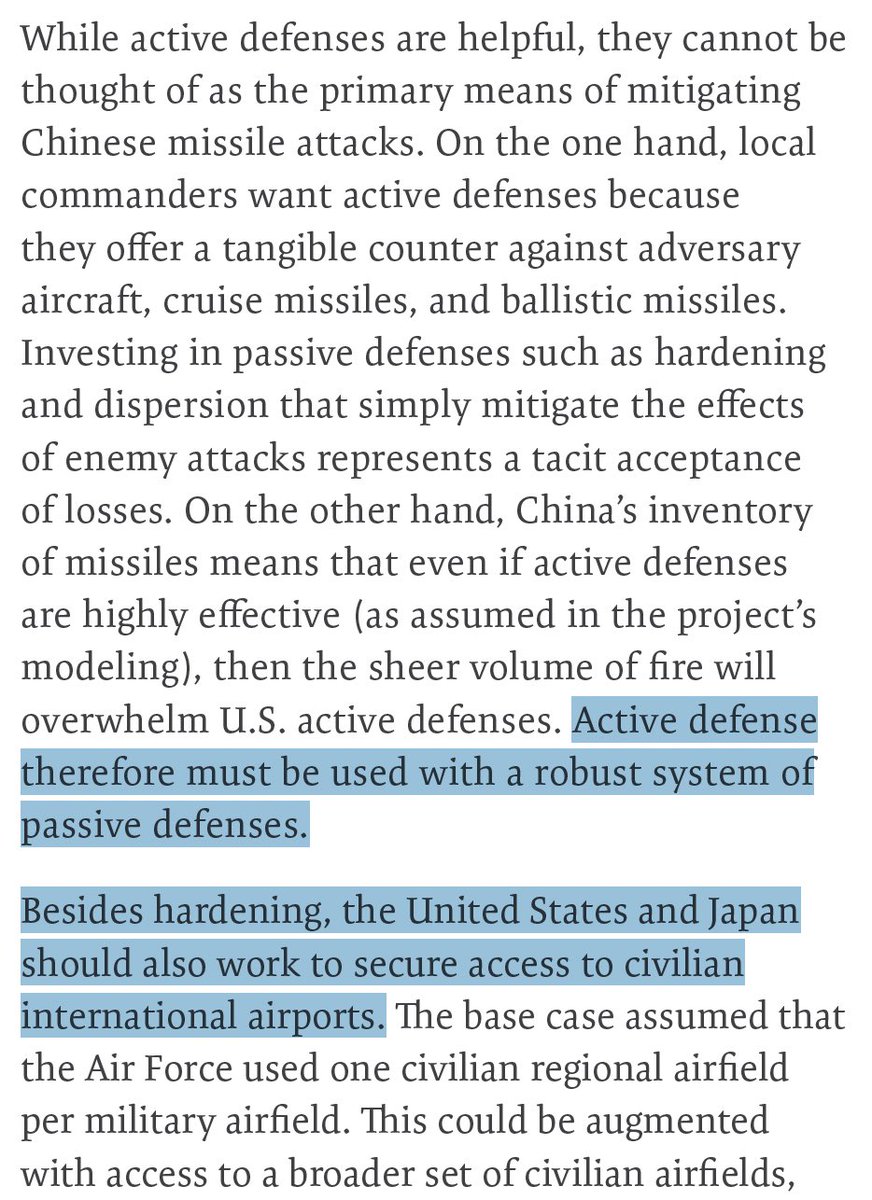
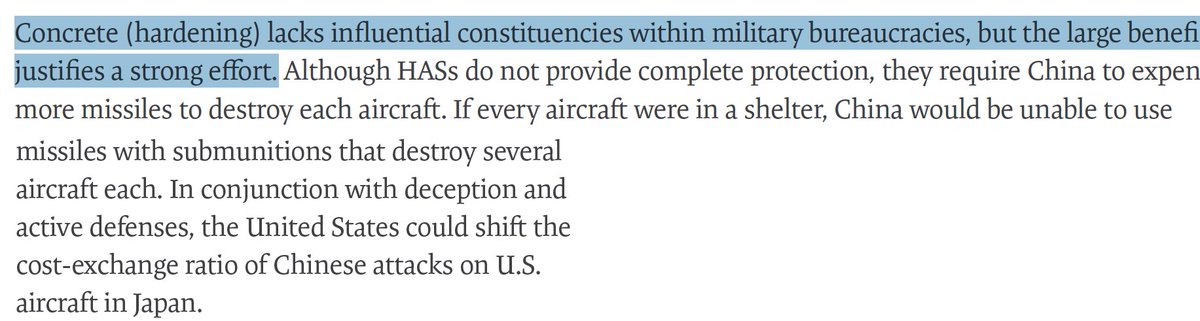
Of course, the team recognizes the relative lack of influential constituencies to support such passive hardening/dispersal efforts.
My @CNASdc colleague @StaciePettyjohn wrote about this exact problem—and the associated obstacles to fixing it—last year. warontherocks.com
My @CNASdc colleague @StaciePettyjohn wrote about this exact problem—and the associated obstacles to fixing it—last year. warontherocks.com
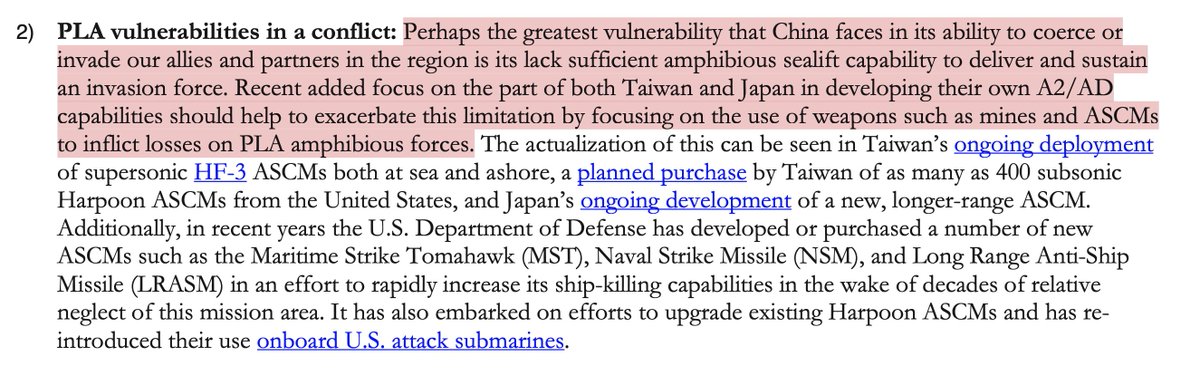
Recognizing that aircraft may have challenges operating from bases under the shadow of China’s long-range strike capabilities, the team also strongly recommends extensive use of such “porcupine” capabilities as ground-based anti-ship missiles and smart mines.


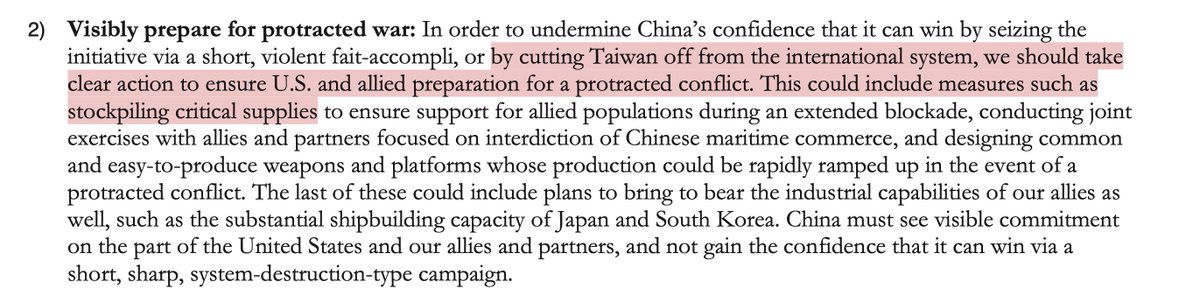
The team also recognized that these capabilities need to be in place BEFORE a crisis—one of the first steps of a PRC island landing campaign is to isolate the targeted island (Taiwan) via air & naval blockades. As the team recognized, there can be no “Ukraine model” of resupply.
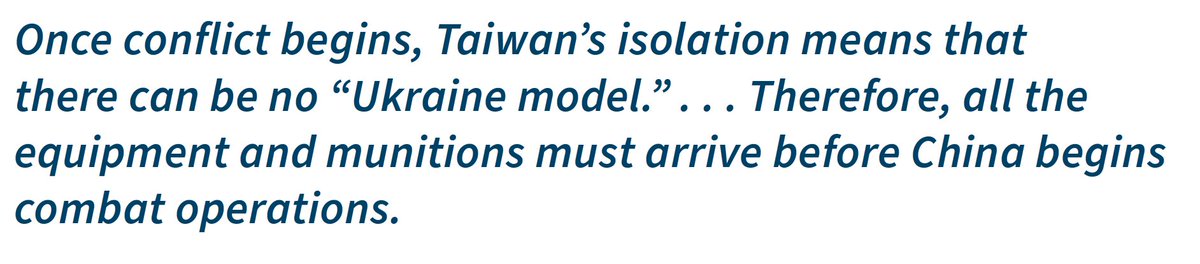
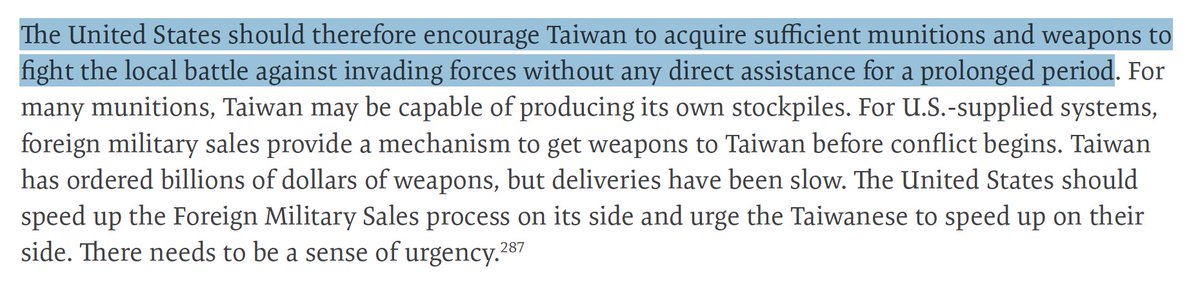
I literally couldn’t agree more with these recommendations, as it’s pretty much what I myself recommended in testimony to the Senate and @USCC_GOV in early 2021:

Would you like to know more? cnas.org
A few more detailed recommendations: that the USN develop rescue ships that can accompany USN task forces, to rescue sailors and tow ships. I also talked about this problem in 2021, and made a similar recommendation.
The team also recommends acquiring and amphibious patrol craft to rescue sailors and downed aircrew. Folks who follow me know I am on Team Seaplane, and agree this would be a great capability to have.
And what do you know - there’s a hot production line building just such a plane for one of our closest allies…shinmaywa.co.jp
While not an explicit recommendation, the team recognized the existential importance of keeping Taiwan’s ports and airfields out of the hands of the PLA, and thus the need to be ready to destroy them.
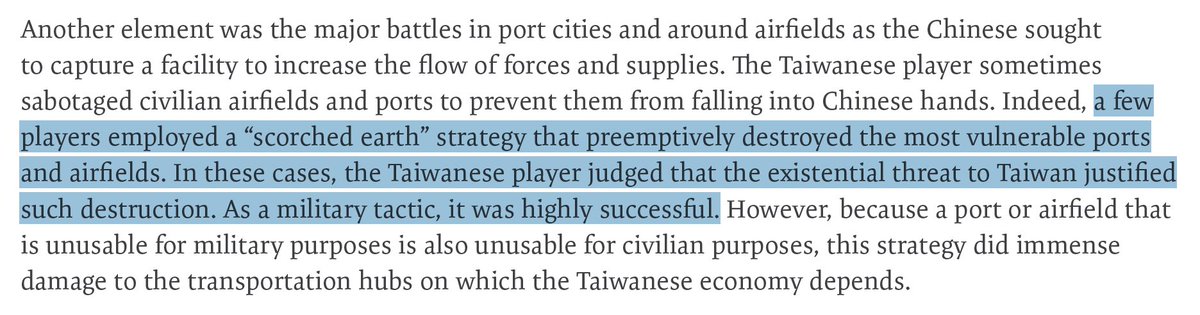
While I think this fact is widely recognized by analysts, I think some may not recognize the scale of this challenge. For example, in WWII, despite the utter destruction of the port of Cherbourg, the allies had thousands of tons per day coming through within weeks.
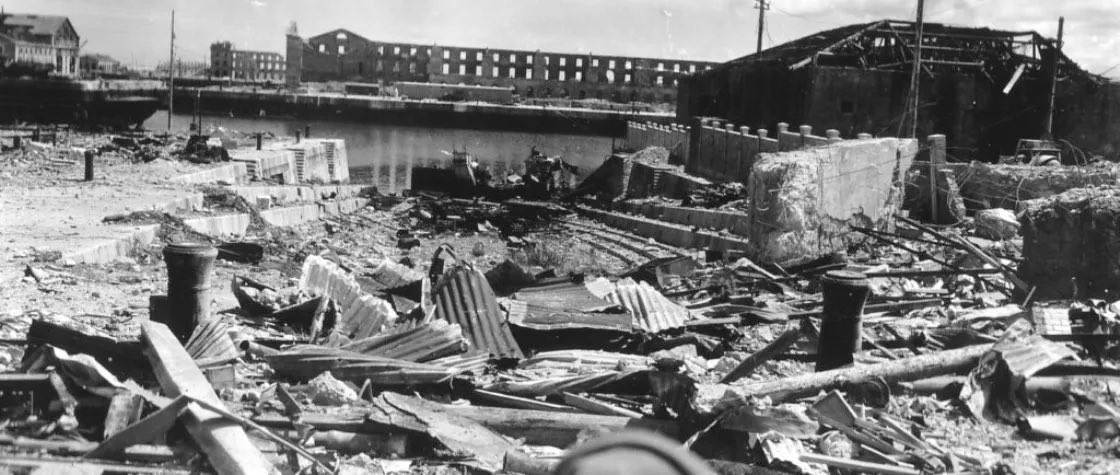
And this is where scale comes in. If you go measure the actual size of the quays at Taiwan’s ports, you can see most of them are much, much larger than Cherbourg was. For example, I measured about 3,000m of what look like deep draft quay walls at Cherbourg circa WWII.
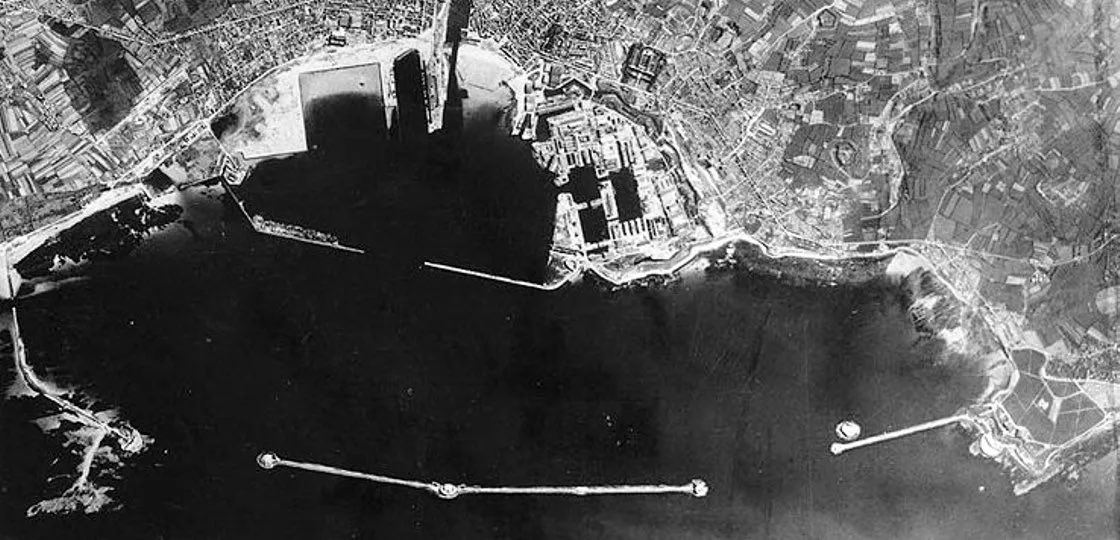
By comparison, at Taichung, Taiwan, I measure about 18,000 meters of quay wall. (See this comparison shot, for example, at similar scale, and this list of quay wall size estimates for key west coast Taiwanese ports compared to Cherbourg.)
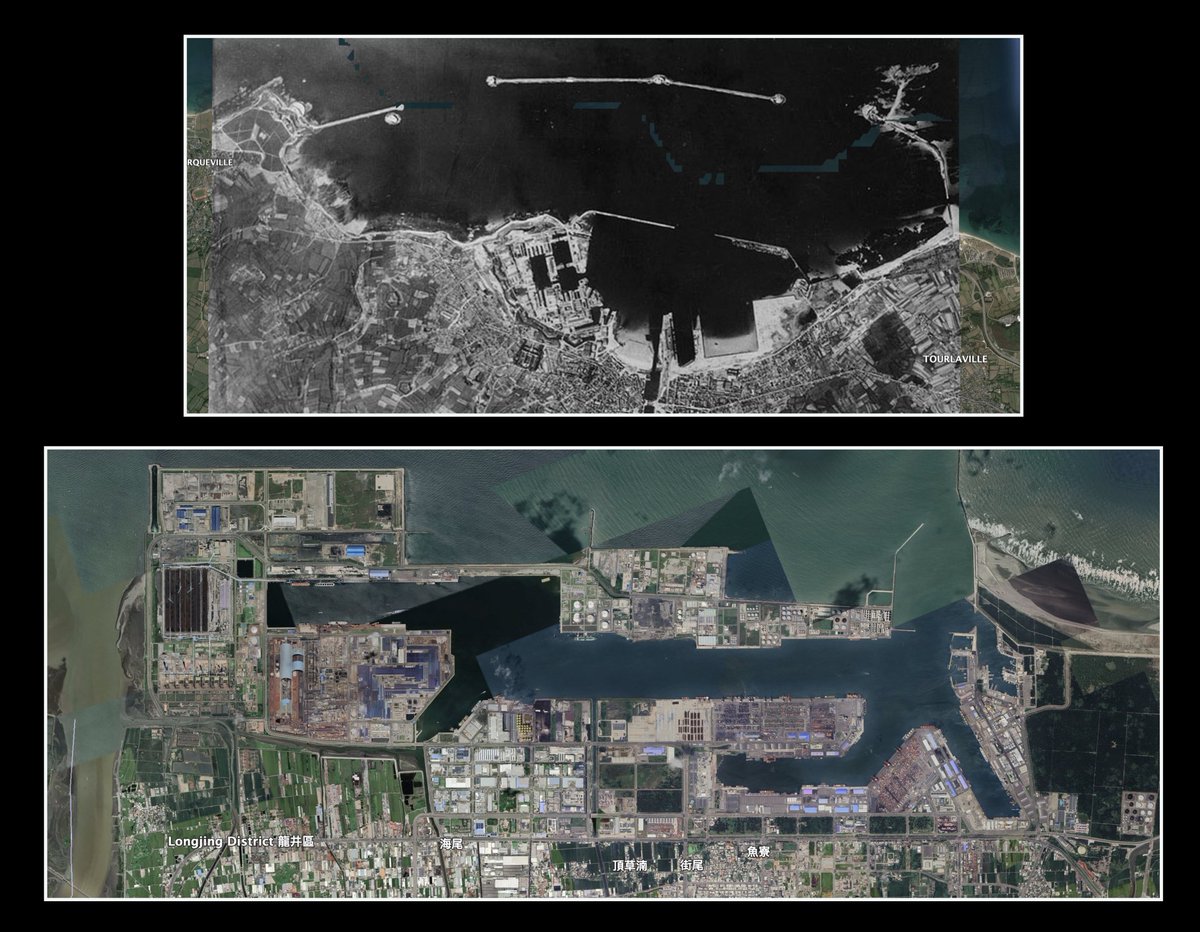
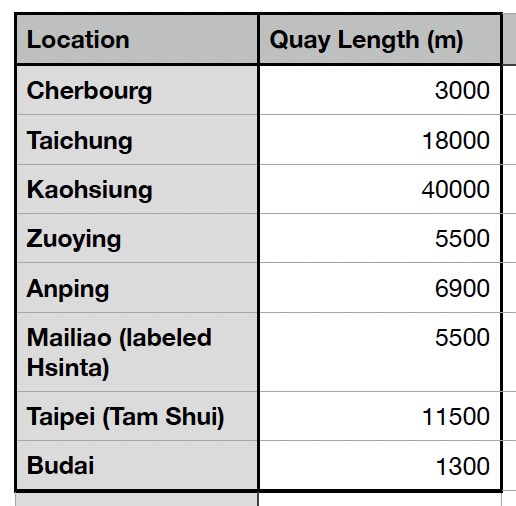
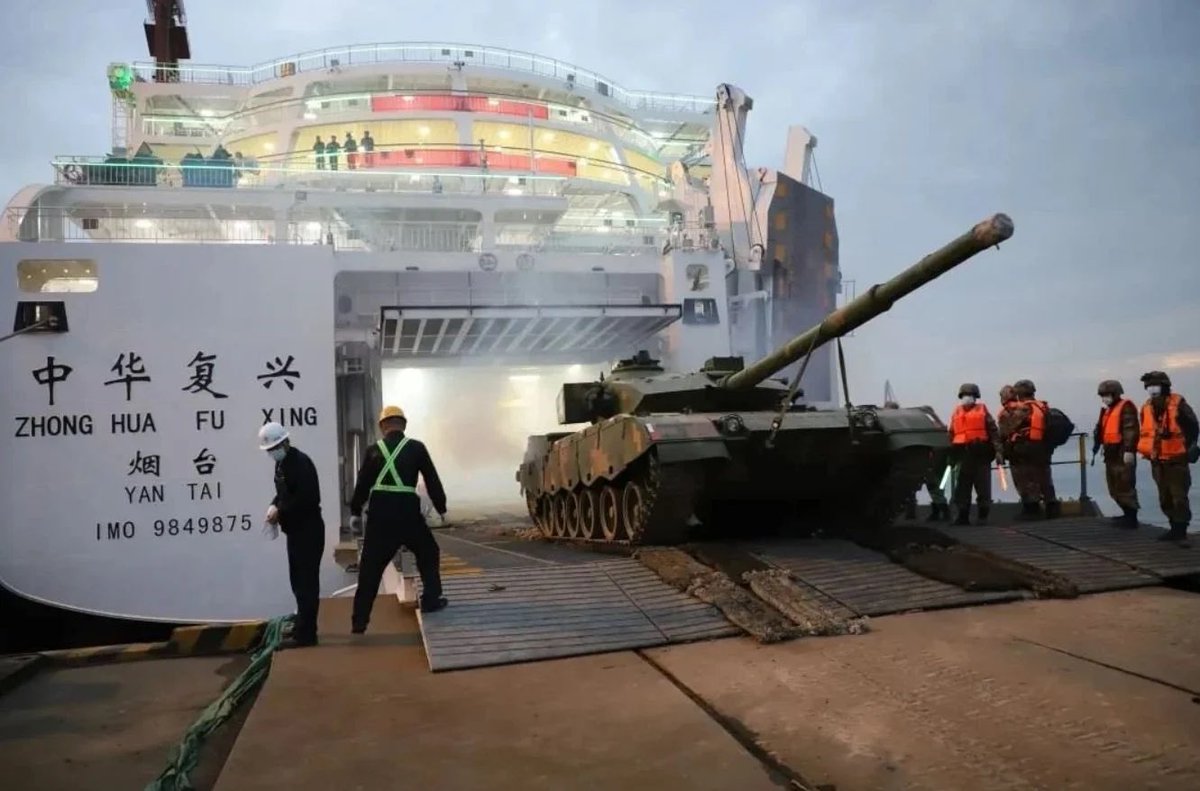
When you consider that the PRC only needs a minimal amount of intact quay wall to throw ramps over to unload civilian Ro-Ro ships (once blocked channels are cleared), you begin to appreciate the scale of this challenge. Not as simple/easy as it seems.
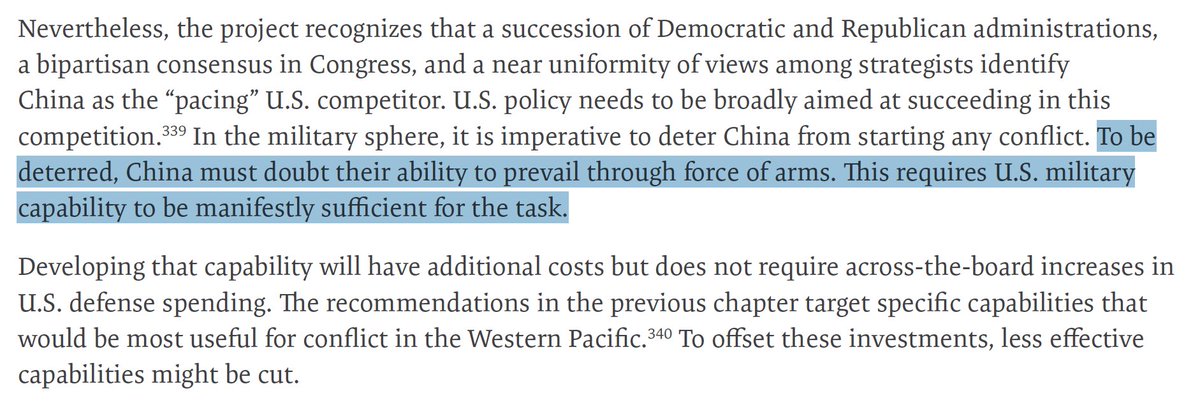
The team recognized ultimately that the key goal of US policy should be to encourage doubts in the minds of the PRC’s leaders that they can militarily prevail.
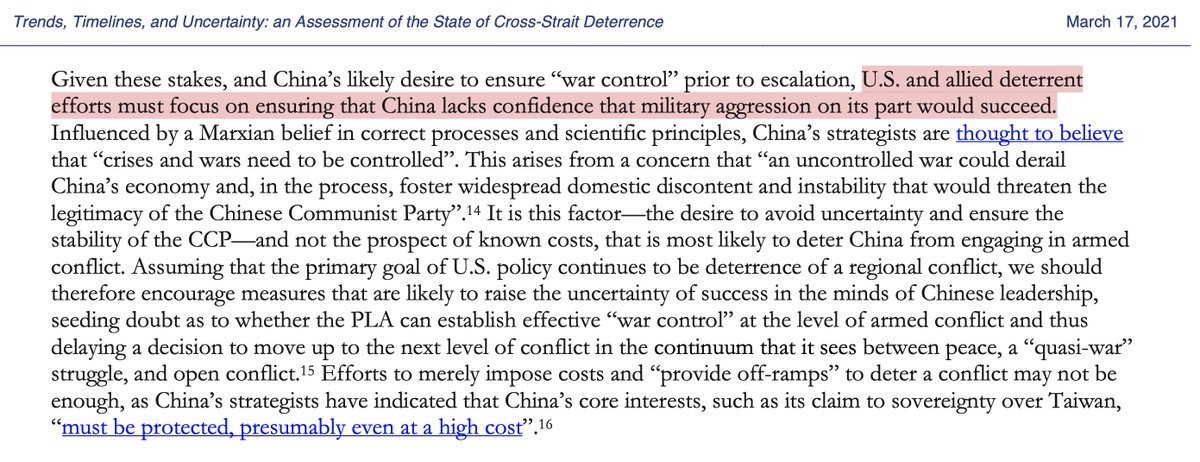
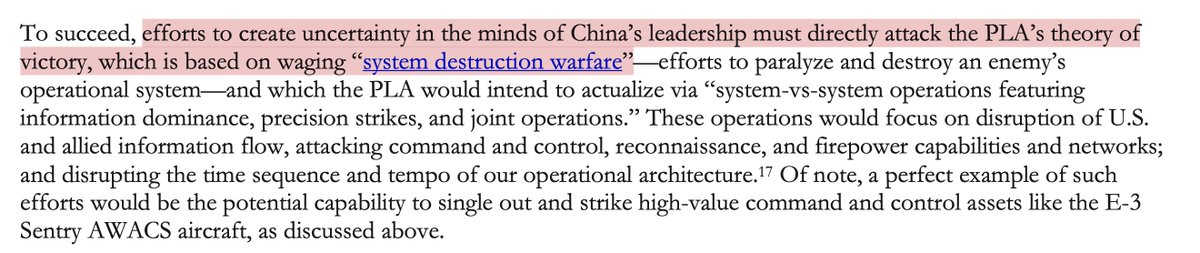
Again, I couldn’t agree more…
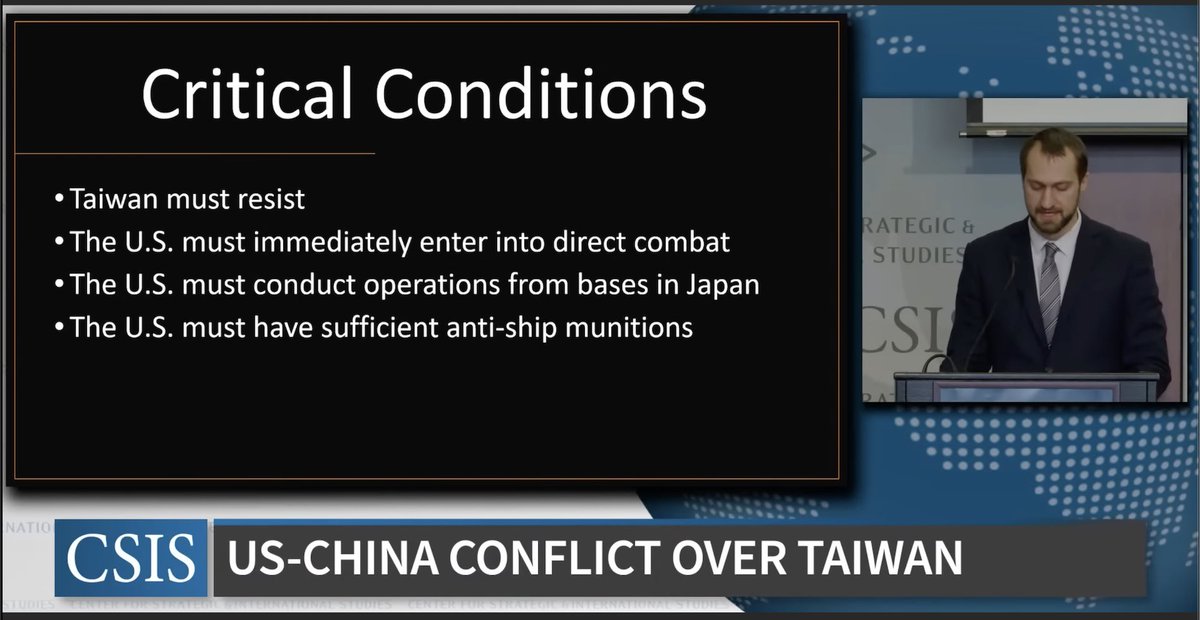
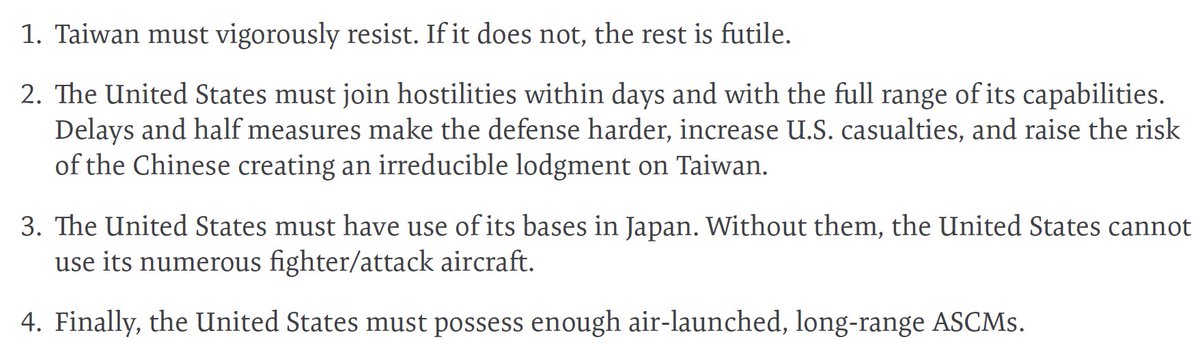
The team identifies 4 key critical conditions to prevent a successful PRC invasion, which I find to be quite sensible, and which we must take urgent action to ensure can be fulfilled:
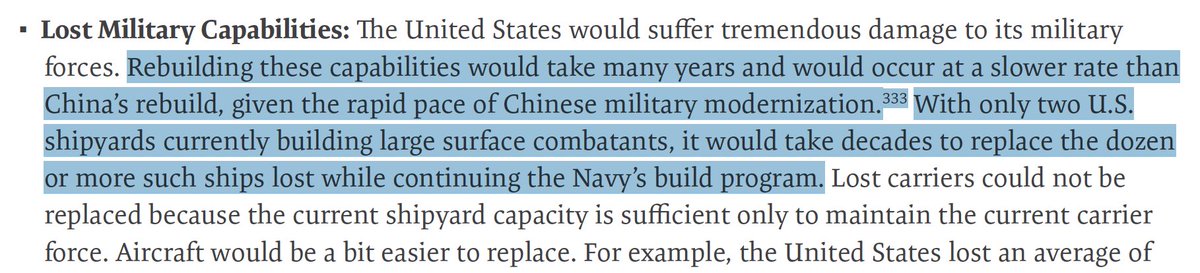
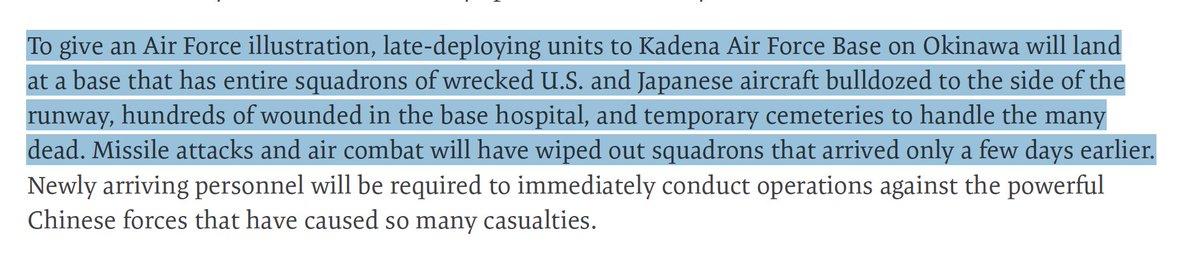
Certainly, the results of the games showed what the horrific consequences of a failure of deterrence could be for the U.S. military, with losses that would take decades to replace, and with which the US industrial base (and general public) would be sorely challenged to contend.


*maybe build more of both!
(no, I'm not paying for an edit button!)
(no, I'm not paying for an edit button!)
"*strike aircraft needed to deliver anti-ship missiles..." Argh!
Loading suggestions...