

I’ve written a lot about Positionism and Relationism in terms of systems and structures.
But this is only a macro-analysis.
At the micro level we need to understand the differences in terms of how the players on the ground are interpreting concepts like ‘ball progression’.
But this is only a macro-analysis.
At the micro level we need to understand the differences in terms of how the players on the ground are interpreting concepts like ‘ball progression’.

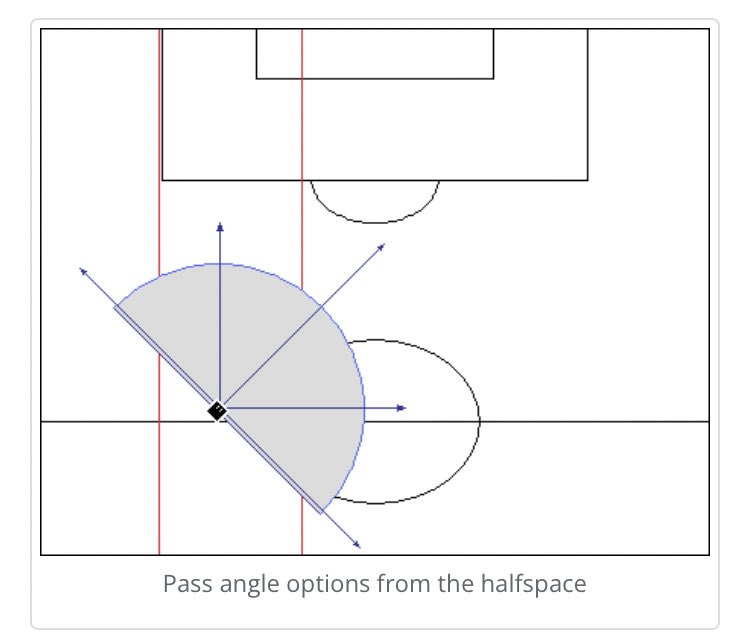
For example, a Positional coach like Xavi wants his advanced midfielders or ‘interiors’ to occupy the ‘squares’ between the opponent’s players/lines (the subtitles say ‘occupied by the ball’ but it’s a mis-translation).


The logic behind this is to afford situations where interiors receive in this space on the back foot with ‘open body shape’ (which also makes ‘scanning’ easier) so they can immediately turn and face the opponent’s defensive line from a strategically valuable zone.
Here we can see Guardiola emphasising these points to Sterling.

However, with players less schooled in Positionism, alternative approaches can be found.
Rather than ‘occupying the boxes’, Riquelme often received in front of opponent’s pressure, using ball manipulation to open opportunities to make a ‘tabela’ or ‘give-and-go’ with a teammate.
Rather than ‘occupying the boxes’, Riquelme often received in front of opponent’s pressure, using ball manipulation to open opportunities to make a ‘tabela’ or ‘give-and-go’ with a teammate.

This less Position oriented, Relationist style of associative play is common in potrero games popular in Argentina’s local communities.
In these small sided games, opportunities to receive with an ‘open body’ are rare so alternative methods of progression like Riquelme’s emerged.
In these small sided games, opportunities to receive with an ‘open body’ are rare so alternative methods of progression like Riquelme’s emerged.

This difference in ball progression method is a useful distinction to appreciate in the discussions around Positionism and Relationism.
Is it primarily the system that opens opportunities to turn and attack the defence or is it the associative qualities of the players?
Is it primarily the system that opens opportunities to turn and attack the defence or is it the associative qualities of the players?

Loading suggestions...