

Looking to indulge in some luxurious knowledge? For my 8th Sunday Deep Dive we're taking a plunge into the opulent world of LVMH. So put on your finest attire & grab a glass of champagne as we explore the ins & outs of one of the biggest names in the luxury goods industry.
🧵⬇️
🧵⬇️
1/ Intro:
$LVMH Moët Hennessy Louis Vuitton SE (LVMH) is a multinational luxury goods conglomerate headquartered in Paris, France. The company was formed in 1987 through the merger of fashion house Louis Vuitton with Moët Hennessy, a company that produces champagne and cognac.
$LVMH Moët Hennessy Louis Vuitton SE (LVMH) is a multinational luxury goods conglomerate headquartered in Paris, France. The company was formed in 1987 through the merger of fashion house Louis Vuitton with Moët Hennessy, a company that produces champagne and cognac.
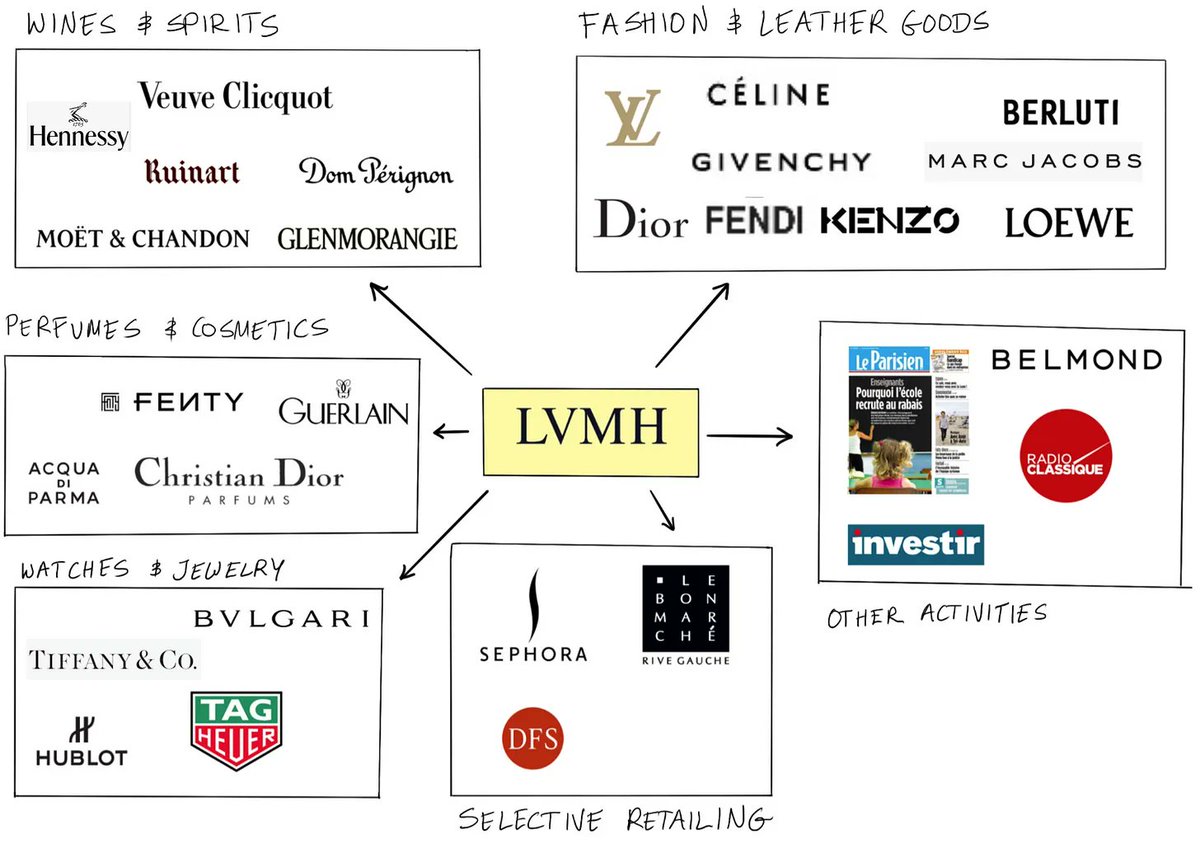
2/ $LVMH is the world's largest luxury goods company & owns 75 luxury brands across several categories, including fashion & leather, perfumes & cosmetics, watches & jewelry, wines & spirits. Some of its most famous brands include Louis Vuitton, Dior, Fendi, Givenchy and Bulgari .
3/ Early History:
LV was founded in 1854 by Louis Vuitton, who began his career as a trunk-maker, creating stylish & durable luggage for the affluent travelers of his time. Over the years, the LV brand expanded into other luxury goods like leather goods, clothing & accessories.
LV was founded in 1854 by Louis Vuitton, who began his career as a trunk-maker, creating stylish & durable luggage for the affluent travelers of his time. Over the years, the LV brand expanded into other luxury goods like leather goods, clothing & accessories.
4/ Moët Hennessy, meanwhile, was formed in 1971 through the merger of two large wine and spirits companies, Moët et Chandon and Hennessy.
Moët & Chandon was founded in 1743, and its champagne had become a favorite of European royalty and aristocrats by the early 19th century.
Moët & Chandon was founded in 1743, and its champagne had become a favorite of European royalty and aristocrats by the early 19th century.
5/ Hennessy was founded in 1765 and had become one of the largest & most prestigious cognac producers in the world by the 1970s. The merger of Moët Hennessy & Louis Vuitton created a powerful new entity that was capable of competing with other luxury companies on a global scale.
6/ Ownership:
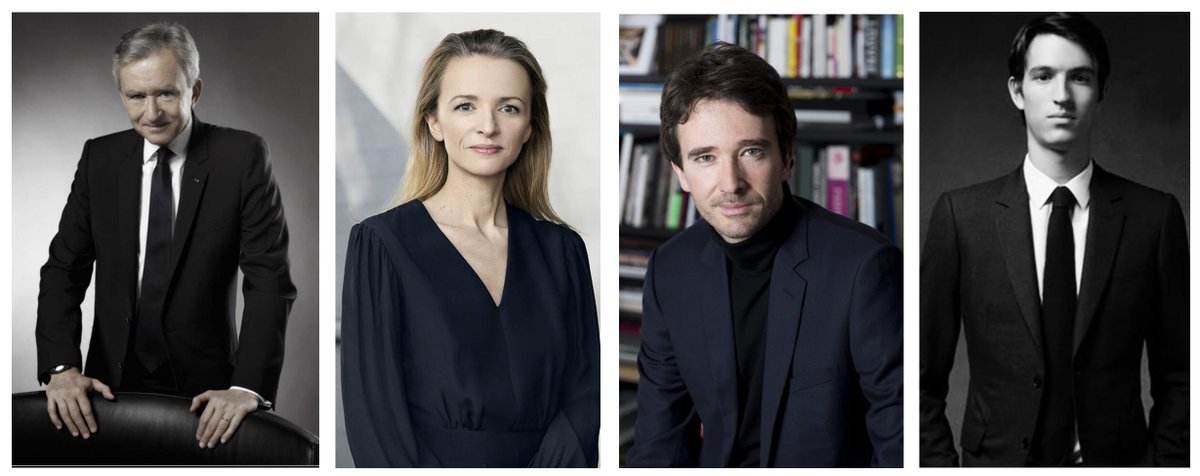
LVMH is a family run business. Bernard Arnault is Chairman & CEO of LVMH. His children are pictured below. Delphine Arnault is Executive VP of Louis Vuitton. Antoine Arnault is Chairman of Loro Piana, CEO of Berlutti & Alexandre Arnault is Executive VP of Tiffany.
LVMH is a family run business. Bernard Arnault is Chairman & CEO of LVMH. His children are pictured below. Delphine Arnault is Executive VP of Louis Vuitton. Antoine Arnault is Chairman of Loro Piana, CEO of Berlutti & Alexandre Arnault is Executive VP of Tiffany.
7/ Who is Bernard Arnault?
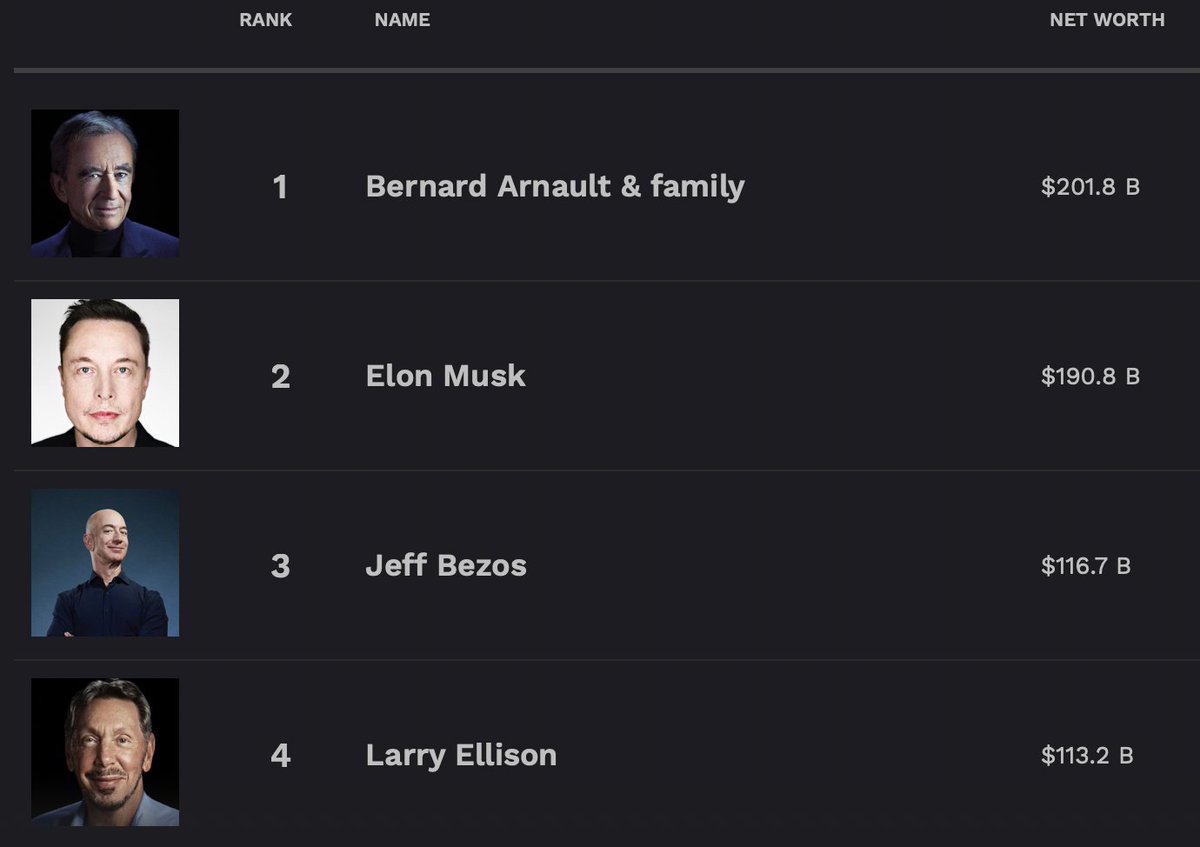
Bernard Arnault is the richest man in the world & CEO of $LVMH. His rise is a story of determination, strategic vision & talent for deal-making. Born in 1949, Arnault was the son of a construction magnate.
Bernard Arnault is the richest man in the world & CEO of $LVMH. His rise is a story of determination, strategic vision & talent for deal-making. Born in 1949, Arnault was the son of a construction magnate.
8/ After completing his studies, Arnault joined his father's construction company but quickly realized that his true passion lay in the luxury goods sector. In 1978, he convinced his father to invest in the fashion brand Christian Dior, which was struggling financially.
9/ Arnault's success at Dior caught the attention of the luxury goods conglomerate Boussac, which was also in financial trouble. In 1984, Arnault orchestrated a leveraged buyout of Boussac, which included a number of luxury brands like Louis Vuitton, Moët & Chandon, Hennessy.
10/ Growth by Acquisitions:
LVMH's growth has been fueled by a combination of acquisitions & organic growth. $LVMH acquired many iconic luxury brands, such as Fendi, Givenchy, Celine, Hublot, Marc Jacobs, Bvlgari & Tiffany & Co. to name just a few.
LVMH's growth has been fueled by a combination of acquisitions & organic growth. $LVMH acquired many iconic luxury brands, such as Fendi, Givenchy, Celine, Hublot, Marc Jacobs, Bvlgari & Tiffany & Co. to name just a few.
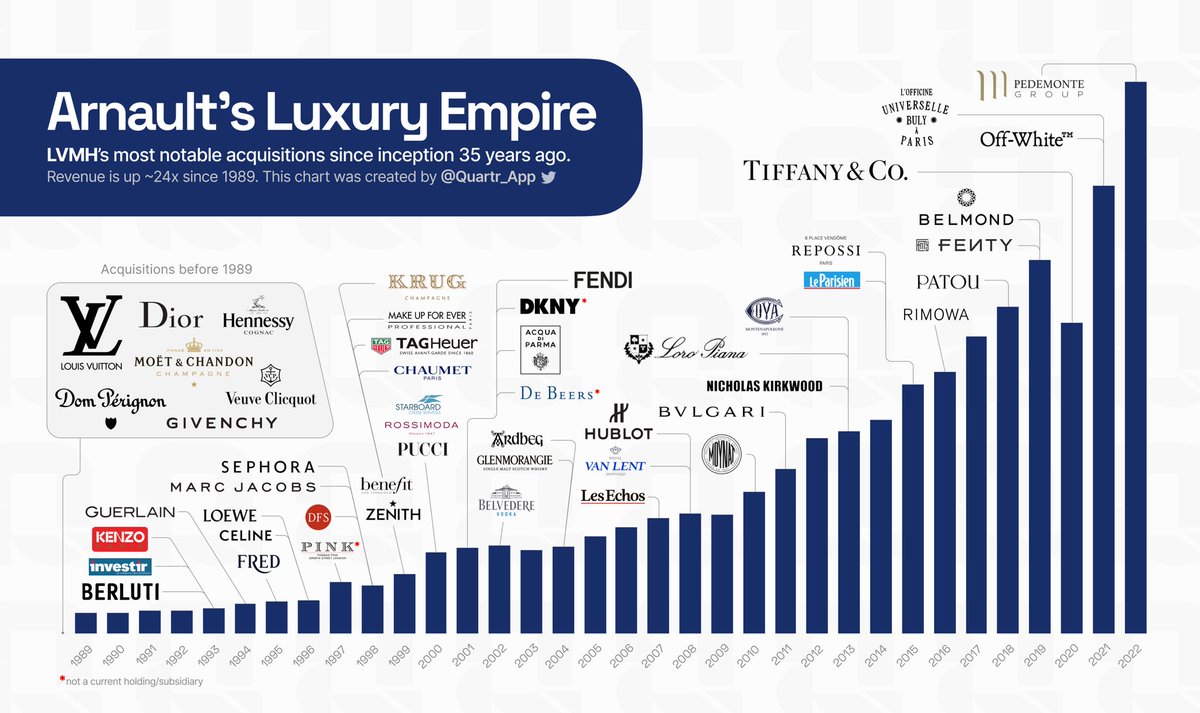
7/ Biggest acquisitions:
Here are some of $LVMH's biggest acquisitions since 1989:
▪️2020 - Tiffany & Co for $16.2B
▪️2017 - Christian Dior for $13.1B
▪️2011 - Bulgari for $6.01B
▪️2019 - Belmond for $3.2B
▪️2012 - Loro Piana for $2.6B
▪️1997 - Sephora for $2.6B
Here are some of $LVMH's biggest acquisitions since 1989:
▪️2020 - Tiffany & Co for $16.2B
▪️2017 - Christian Dior for $13.1B
▪️2011 - Bulgari for $6.01B
▪️2019 - Belmond for $3.2B
▪️2012 - Loro Piana for $2.6B
▪️1997 - Sephora for $2.6B
12/ Impact on the Fashion Industry:
🔸Iconic Brands: LVMH's portfolio includes some of the world's most iconic luxury brands recognizable around the world. $LVMH's products, including handbags, clothing, jewelry, and fragrance, have become symbols of wealth, status, and style.
🔸Iconic Brands: LVMH's portfolio includes some of the world's most iconic luxury brands recognizable around the world. $LVMH's products, including handbags, clothing, jewelry, and fragrance, have become symbols of wealth, status, and style.
13/
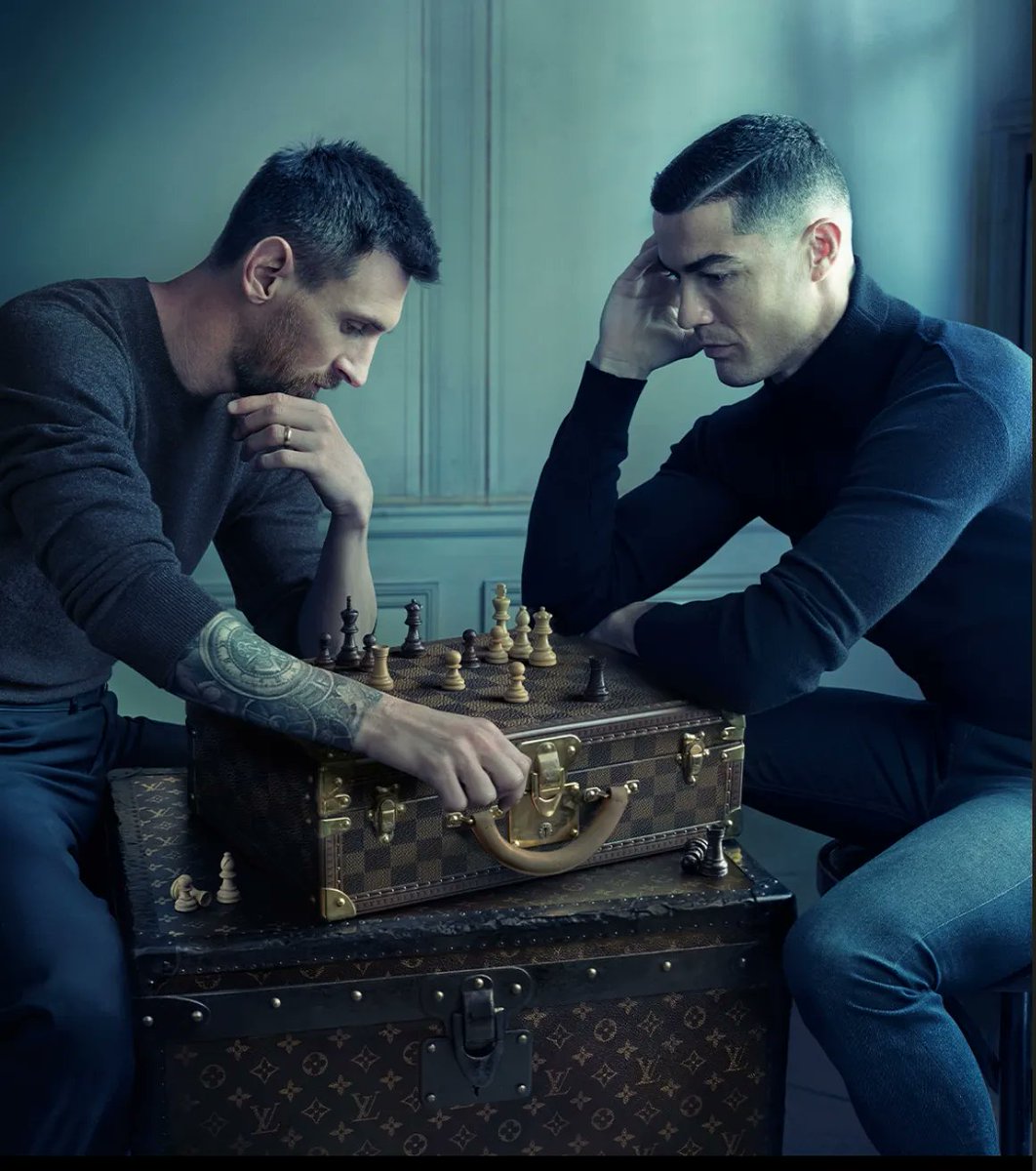
🔸Innovation in Marketing & Retail: LVMH has been at the forefront of innovation. $LVMH has invested heavily in creating luxurious & immersive retail spaces that showcase its brands and products in the most favorable light possible.
🔸Innovation in Marketing & Retail: LVMH has been at the forefront of innovation. $LVMH has invested heavily in creating luxurious & immersive retail spaces that showcase its brands and products in the most favorable light possible.
14/ $LVMH has also been an early adopter of social media and other digital channels to engage with consumers and build brand awareness. The company's innovative marketing campaigns have helped to reinforce the exclusivity and desirability of its brands.
15/
🔸Sustainable Practices: $LVMH has taken a leading role in promoting sustainable practices by setting ambitious goals for reducing its carbon footprint and has made significant investments in sustainable materials and manufacturing processes.
🔸Sustainable Practices: $LVMH has taken a leading role in promoting sustainable practices by setting ambitious goals for reducing its carbon footprint and has made significant investments in sustainable materials and manufacturing processes.
16/ $LVMH's success has had a significant impact on the fashion & luxury industry. LVMH has set the standard for luxury & has influenced the way that other brands approach product design, marketing, and retail. LVMH's influence has driven the growth of the industry overall.
17/ How does $LVMH make money?
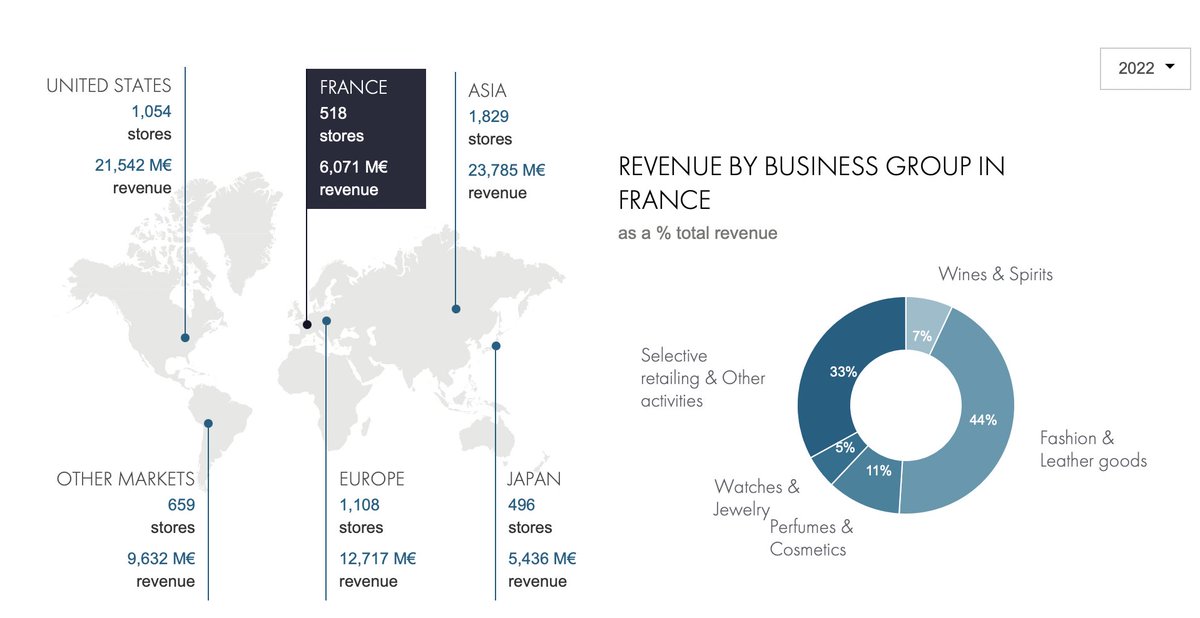
▶️ Sale of luxury goods: LVMH's primary source of revenue is the sale of luxury goods, including fashion and leather goods, perfumes and cosmetics, watches and jewelry, and wines and spirits.
▶️ Sale of luxury goods: LVMH's primary source of revenue is the sale of luxury goods, including fashion and leather goods, perfumes and cosmetics, watches and jewelry, and wines and spirits.
18/
▶️ Retail operations: $LVMH owns & operates a vast network of retail stores, which generate significant revenue. LVMH's retail operations include flagship stores for its various brands, as well as concept stores, department store concessions & duty-free outlets.
▶️ Retail operations: $LVMH owns & operates a vast network of retail stores, which generate significant revenue. LVMH's retail operations include flagship stores for its various brands, as well as concept stores, department store concessions & duty-free outlets.
19/
▶️ Licensing: $LVMH also generates revenue from licensing its brands and intellectual property to third-party companies. For example, the company licenses its fragrances and cosmetics to other companies, which pay LVMH a royalty on sales.
▶️ Licensing: $LVMH also generates revenue from licensing its brands and intellectual property to third-party companies. For example, the company licenses its fragrances and cosmetics to other companies, which pay LVMH a royalty on sales.
20/
▶️ Hospitality and experiential services: LVMH owns several luxury hospitality and experiential services, including hotels, restaurants, and cultural institutions. These businesses generate revenue from room rentals, food and beverage sales, and ticket sales.
▶️ Hospitality and experiential services: LVMH owns several luxury hospitality and experiential services, including hotels, restaurants, and cultural institutions. These businesses generate revenue from room rentals, food and beverage sales, and ticket sales.
21/ The Positives: $LVMH has a moat due to:
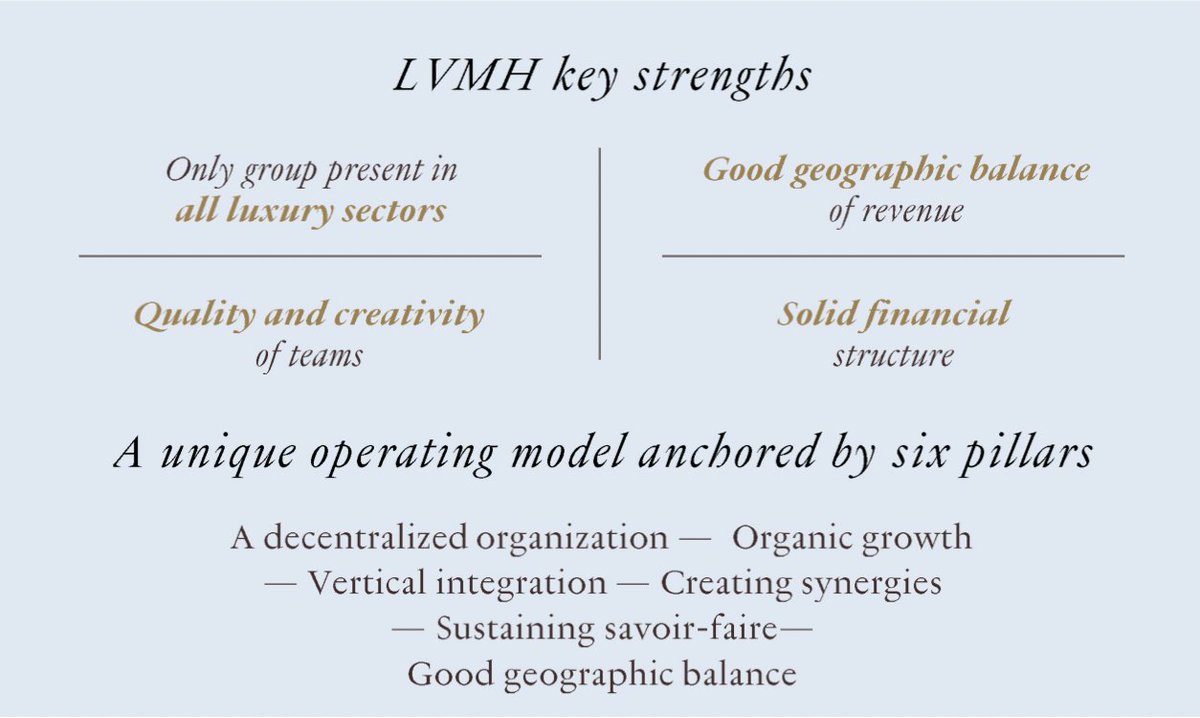
1⃣ Iconic Brands: LVMH owns some of the world's most iconic & recognizable luxury brands like LV, Dior, Fendi etc. These brands have strong brand equity & a loyal customer base, which helps to maintain market share and pricing power.
1⃣ Iconic Brands: LVMH owns some of the world's most iconic & recognizable luxury brands like LV, Dior, Fendi etc. These brands have strong brand equity & a loyal customer base, which helps to maintain market share and pricing power.
22/
2⃣ Vertical Integration: LVMH has a high degree of vertical integration, meaning it controls the entire supply chain for its products, from design & production to retail sales. This allows $LVMH to ensure consistent quality & maintain control over pricing & distribution.
2⃣ Vertical Integration: LVMH has a high degree of vertical integration, meaning it controls the entire supply chain for its products, from design & production to retail sales. This allows $LVMH to ensure consistent quality & maintain control over pricing & distribution.
23/
3⃣ Retail Network: $LVMH has an extensive global network of retail stores & boutiques, which allows it to maintain a direct relationship with customers & control the customer experience. This also helps to reduce the bargaining power of wholesalers & third-party retailers.
3⃣ Retail Network: $LVMH has an extensive global network of retail stores & boutiques, which allows it to maintain a direct relationship with customers & control the customer experience. This also helps to reduce the bargaining power of wholesalers & third-party retailers.
24/
4⃣ Scale: LVMH's size give it an advantage over smaller competitors as it can leverage its size to negotiate better deals with suppliers & reduce production costs. LVMH's dominant position in the luxury goods industry also make it more difficult for new entrants to compete.
4⃣ Scale: LVMH's size give it an advantage over smaller competitors as it can leverage its size to negotiate better deals with suppliers & reduce production costs. LVMH's dominant position in the luxury goods industry also make it more difficult for new entrants to compete.
25/ The Challenges:
1⃣ Economic Downturns: As a luxury goods company, LVMH is particularly vulnerable to economic downturns & consumer confidence shocks. During economic downturns, consumers may reduce their spending on luxury goods, which could negatively impact LVMH's sales.
1⃣ Economic Downturns: As a luxury goods company, LVMH is particularly vulnerable to economic downturns & consumer confidence shocks. During economic downturns, consumers may reduce their spending on luxury goods, which could negatively impact LVMH's sales.
26/
2⃣ Competition: LVMH operates in a highly competitive industry with a large number of well-established luxury brands & new entrants vying for market share. Competition could result in pressure on pricing and margins.
Some of LVMH's main competitors in the industry include:
2⃣ Competition: LVMH operates in a highly competitive industry with a large number of well-established luxury brands & new entrants vying for market share. Competition could result in pressure on pricing and margins.
Some of LVMH's main competitors in the industry include:
27/
▪️Kering: A French luxury group that owns Gucci, Saint Laurent, Bottega Veneta & Balenciaga.
▪️Richemont: A Swiss luxury group that owns Cartier, Van Cleef & Arpels & Dunhill.
▪️Chanel: A French luxury fashion house that specializes in clothing, fragrances & accessories.
▪️Kering: A French luxury group that owns Gucci, Saint Laurent, Bottega Veneta & Balenciaga.
▪️Richemont: A Swiss luxury group that owns Cartier, Van Cleef & Arpels & Dunhill.
▪️Chanel: A French luxury fashion house that specializes in clothing, fragrances & accessories.
28/
▪️Hermès International S.A.: A French luxury goods manufacturer that specializes in leather, lifestyle accessories, perfumes, and watches.
▪️Prada Group: An Italian luxury fashion house that produces leather handbags, shoes, and accessories.
▪️Hermès International S.A.: A French luxury goods manufacturer that specializes in leather, lifestyle accessories, perfumes, and watches.
▪️Prada Group: An Italian luxury fashion house that produces leather handbags, shoes, and accessories.
29/
3⃣ Brand Image: Maintaining the brand image and reputation of its various brands is crucial for LVMH. Negative publicity or quality issues could impact consumer confidence and sales, and the company must ensure that it maintains high quality standards across its brands.
3⃣ Brand Image: Maintaining the brand image and reputation of its various brands is crucial for LVMH. Negative publicity or quality issues could impact consumer confidence and sales, and the company must ensure that it maintains high quality standards across its brands.
30/
4⃣ Counterfeiting: LVMH is often the target of counterfeiting which can negatively impact their sales & reputation. LVMH must invest in anti-counterfeiting measures to protect its brands & ensure that consumers can differentiate between genuine & counterfeit products.
4⃣ Counterfeiting: LVMH is often the target of counterfeiting which can negatively impact their sales & reputation. LVMH must invest in anti-counterfeiting measures to protect its brands & ensure that consumers can differentiate between genuine & counterfeit products.
31/ What does the future hold for LVMH?
The future of LVMH is likely to be characterized by continued growth & innovation as it seeks to maintain its position as the world's largest & most influential luxury goods conglomerate.
Here are a few trends and areas to watch:
The future of LVMH is likely to be characterized by continued growth & innovation as it seeks to maintain its position as the world's largest & most influential luxury goods conglomerate.
Here are a few trends and areas to watch:
32/ Digital Transformation: Like many, the luxury goods sector has been disrupted by the rise of e-commerce & digital technologies. LVMH has invested heavily in its online & omnichannel capabilities & is likely to continue to prioritize digital innovation in the years ahead.
33/ Expansion: The Asia-Pacific region is a key growth area for luxury goods. LVMH has been expanding its presence. China, in particular represents a significant opportunity for growth. LVMH has been investing in brick-and-mortar stores & digital channels to capture this market.
34/ Sustainability: As consumers become increasingly aware of the environmental & social impact of the products they buy, sustainability is becoming a key consideration. LVMH has set ambitious commitment to achieve carbon neutrality across its operations by 2026.
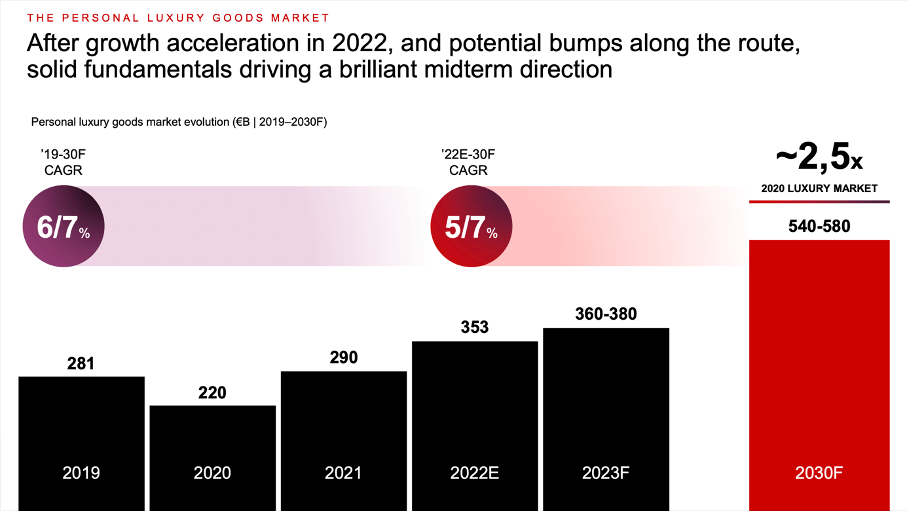
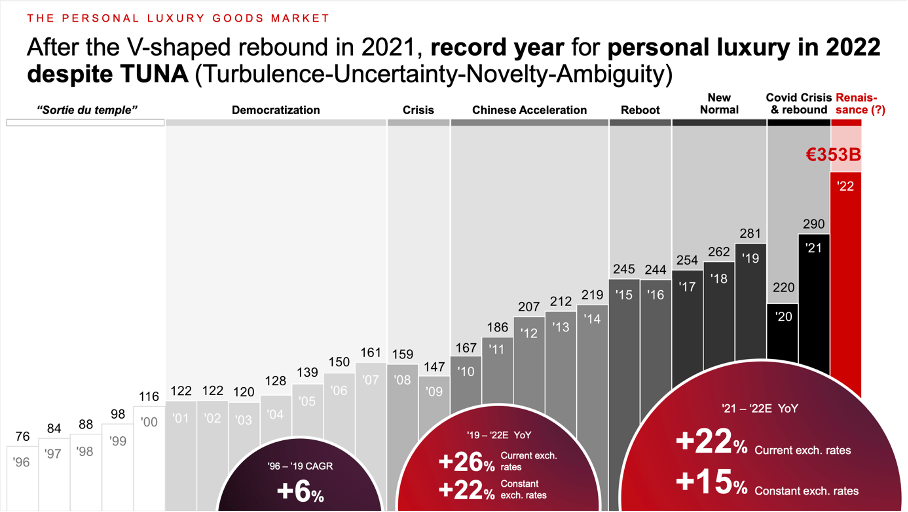
35/ The future of the luxury goods market is promising, as it continues to experience growth and evolving consumer preferences. The global luxury goods market is expected to continue to grow, driven by factors like rising disposable income and increasing consumer interest.
36/ Financials: Income Statement:
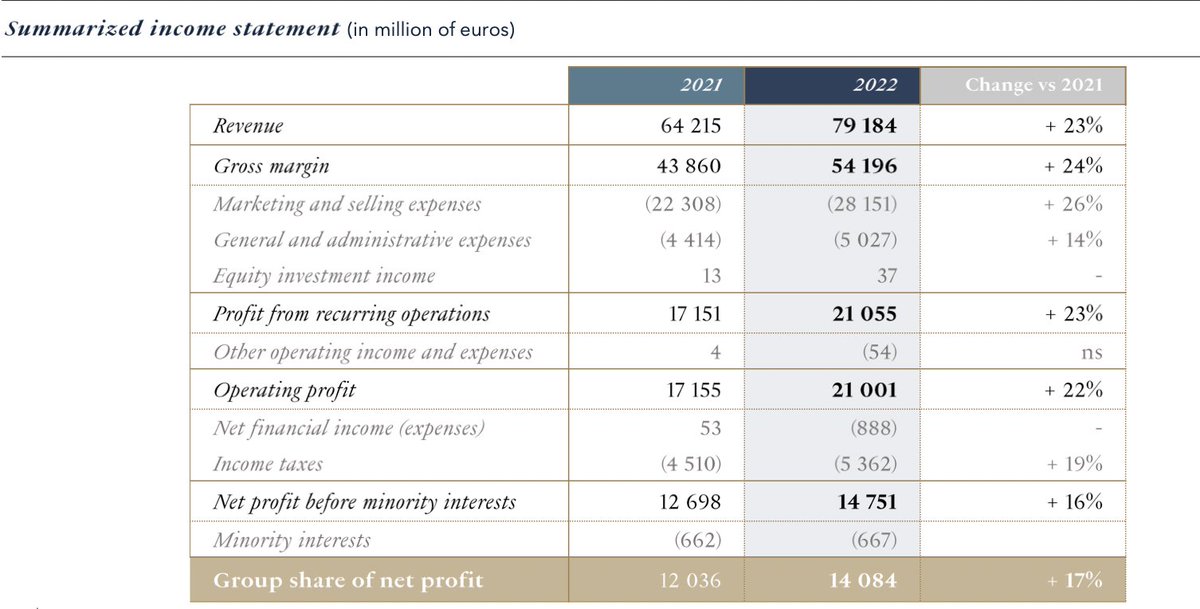
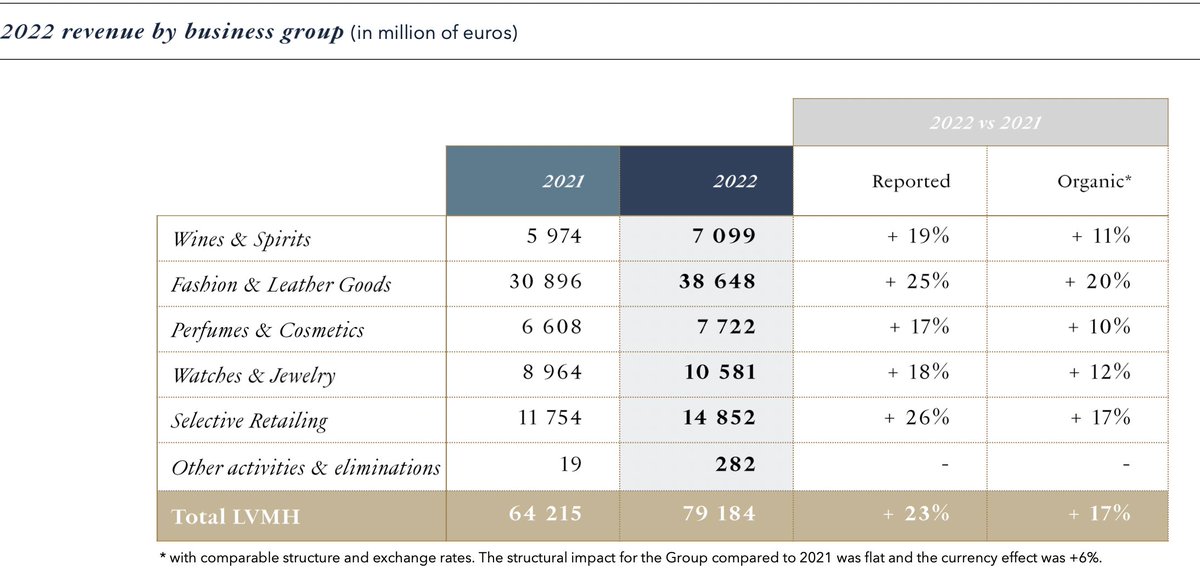
LVMH had their best year ever in terms of sales in 2022 with €79B earned, which is a 23% increase YoY from 2021.
2022: €79.18B
2021: €64.21B
2020: €44.65B
Thats a CAGR of 21.04%🔼
▪️Revenue📈
▪️Gross Margin📈
▪️Net Income📈
▪️Profitable☑️
LVMH had their best year ever in terms of sales in 2022 with €79B earned, which is a 23% increase YoY from 2021.
2022: €79.18B
2021: €64.21B
2020: €44.65B
Thats a CAGR of 21.04%🔼
▪️Revenue📈
▪️Gross Margin📈
▪️Net Income📈
▪️Profitable☑️
37/ Financials: Balance Sheet:
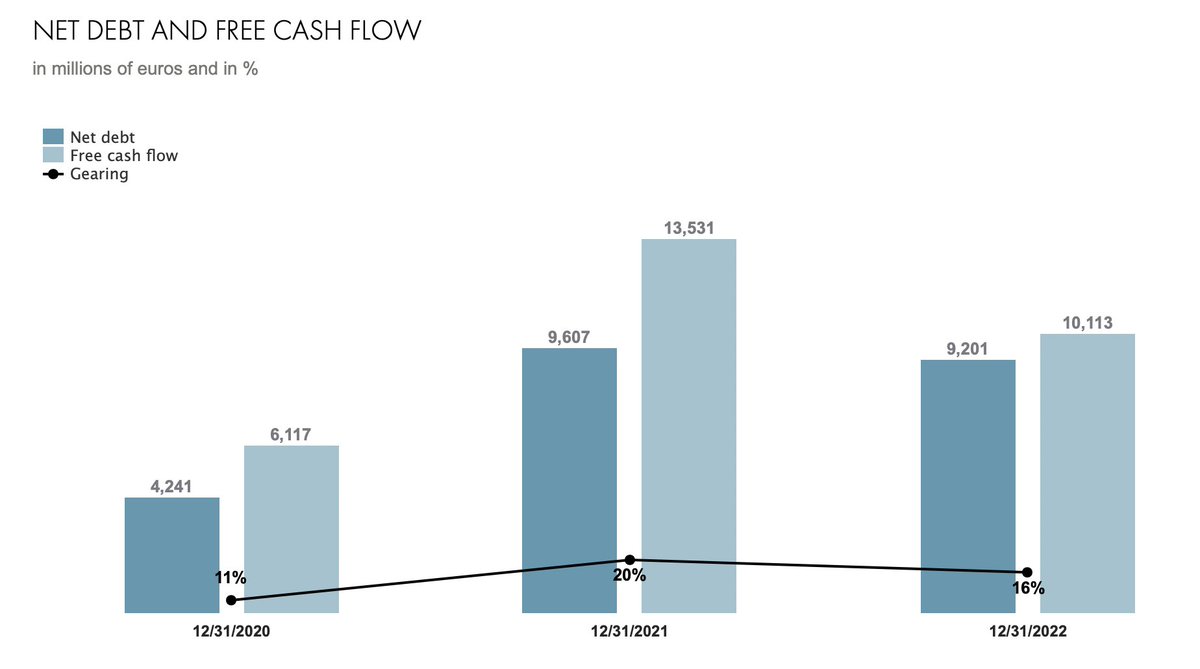
Even though Cash is only at €7.3B and total debt is around €20B, $LVMH is in a unique position with their brands & intangible assets. So we have to look at their assets in total, which is at a healthy €40B.
▪️Assets > Debt☑️
Even though Cash is only at €7.3B and total debt is around €20B, $LVMH is in a unique position with their brands & intangible assets. So we have to look at their assets in total, which is at a healthy €40B.
▪️Assets > Debt☑️
38/ Financials: Cash Flow:
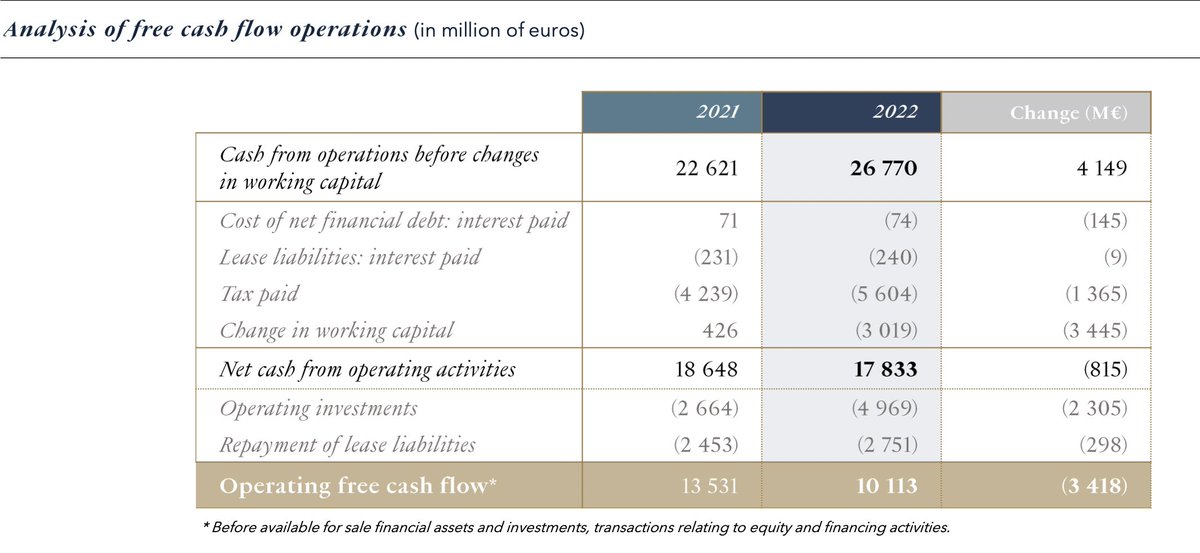
Bernard Arnault has invested heavily into the business and has a very LT mindset about the company. While FCF is down to €10B in 2022 from €13B in 2021, $LVMH is still FCF positive.
▪️FCF positive☑️
Bernard Arnault has invested heavily into the business and has a very LT mindset about the company. While FCF is down to €10B in 2022 from €13B in 2021, $LVMH is still FCF positive.
▪️FCF positive☑️
39 Financials: Dividend:
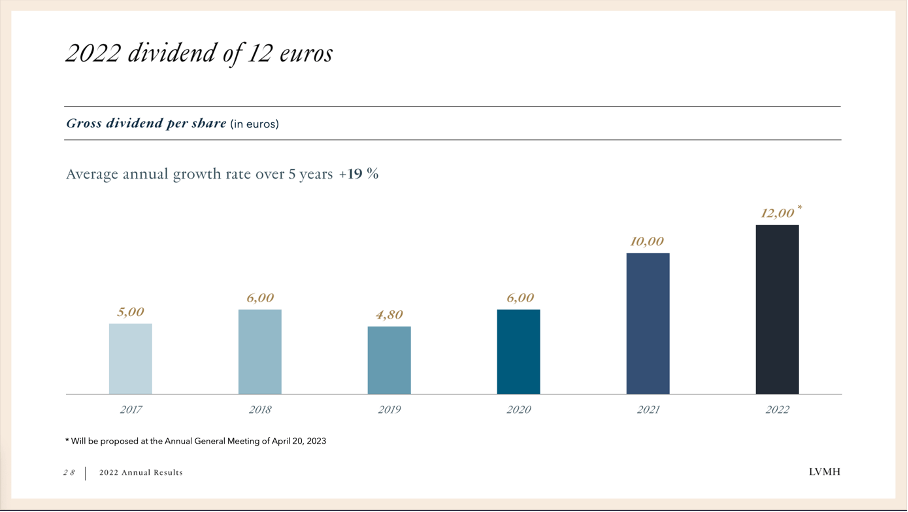
$LVMH also pays a healthy dividend of €12 per share which is up from €6 in 2018. Thats an annual growth rate of 19% over the past 5 years.
$LVMH also pays a healthy dividend of €12 per share which is up from €6 in 2018. Thats an annual growth rate of 19% over the past 5 years.
40/ Valuation:
Courtesy of @Quartr_App:
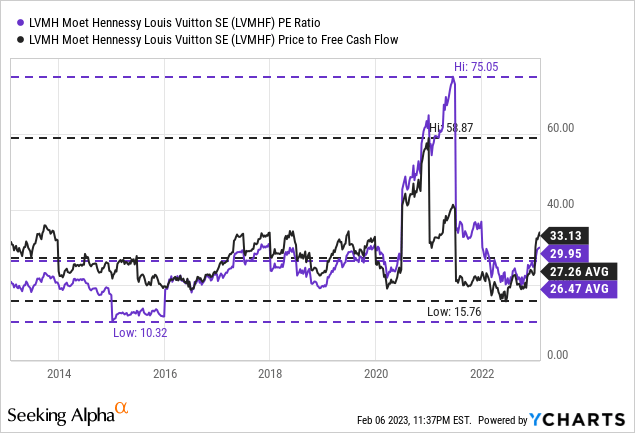
▶️ FY 23: 4.8x sales, 27x FCF, 24x earnings
▶️ FY 24: 4.5x sales, 24x FCF, 22x earnings
▶️ FY 25: 4.2x sales, 22x FCF, 20x earnings
Even though valuations are down, $LVMH is trading at one of the highest valuation multiples in 10 years.
Courtesy of @Quartr_App:
▶️ FY 23: 4.8x sales, 27x FCF, 24x earnings
▶️ FY 24: 4.5x sales, 24x FCF, 22x earnings
▶️ FY 25: 4.2x sales, 22x FCF, 20x earnings
Even though valuations are down, $LVMH is trading at one of the highest valuation multiples in 10 years.
41/ Analyst Estimates:
Ticker: $LVMUY | Today's price: $165.38
🥉Worst Case: is a $147.47 PT which presents a 10.83% downside.
🥈Normal Case: is a $190.40 PT which presents a 15.13% upside.
🥇Best Case: is a $216.81 PT which presents a 31.10% upside.
Ticker: $LVMUY | Today's price: $165.38
🥉Worst Case: is a $147.47 PT which presents a 10.83% downside.
🥈Normal Case: is a $190.40 PT which presents a 15.13% upside.
🥇Best Case: is a $216.81 PT which presents a 31.10% upside.
42/ And that, my fellow luxury aficionados, concludes our deep dive into the world of Parisian powerhouse, LVMH. So whether you're a fan of haute couture, stylish accessories, or top-shelf tipples: LVMH has got you covered. Until next time, keep it chic and keep it classy!
Loading suggestions...