

They say money makes the world go round & my 12th deep dive is all about one of the biggest players in the financial game - JP Morgan Chase $JPM. From its diverse business to its global reach & competitive advantages, lets explore what makes this financial institution tick.
🧵⬇️
🧵⬇️

1/ Intro:
JPM refers to JPMorgan Chase & Co., one of the largest and most prominent financial institutions in the world. $JPM is a multinational investment bank and financial services company with its headquarters in New York City. $JPM offers a wide range of services...
JPM refers to JPMorgan Chase & Co., one of the largest and most prominent financial institutions in the world. $JPM is a multinational investment bank and financial services company with its headquarters in New York City. $JPM offers a wide range of services...
2/...to its clients, including private, commercial & investment banking and asset management. With a history dating back over 200 years, $JPM has built a reputation for being a leader in the financial industry and a trusted partner to businesses and individuals around the globe.
3/ Early History:
$JPM origins can be traced to the founding of the Manhattan Company in 1799, which was created to provide New York City with clean drinking water, but it later became a bank. Over the years, $JPM grew through a series of mergers and acquisitions.
$JPM origins can be traced to the founding of the Manhattan Company in 1799, which was created to provide New York City with clean drinking water, but it later became a bank. Over the years, $JPM grew through a series of mergers and acquisitions.
4/ In 1877, it merged with the NY-based banking firm Drexel, Morgan & Co. In 1935, it merged with Guaranty Trust Co. to form the largest bank at the time. In the 1980s & 1990s, it expanded into investment banking & asset mgmt, becoming a one-stop-shop for clients' banking needs.
5/ In 2000, Chase Manhattan Corporation merged with J.P. Morgan & Co. The merged entity became known as JP Morgan Chase & Co., with HQs in NYC. In 2004, it acquired Bank One, a major credit card issuer, which helped to expand JPMorgan Chase's presence in the Midwest and South.
6/ In the wake of the 2008 financial crisis, $JPM emerged as one of the strongest banks, thanks in part to its conservative risk management practices & diverse business lines. They weathered the crisis better than many of its competitors and went on to acquire Bear Stearns.
7/ Mission:
"At JP Morgan Chase, we want to be the best financial services company in the world. Our mission is to enable more people to contribute to and share in the rewards of a growing economy."
"At JP Morgan Chase, we want to be the best financial services company in the world. Our mission is to enable more people to contribute to and share in the rewards of a growing economy."
8/ Glassdoor:
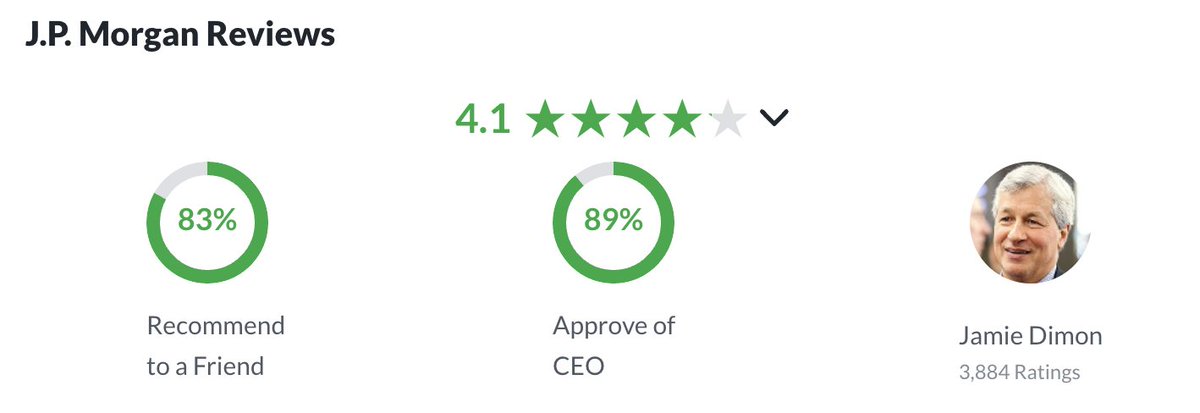
$JPM has a solid rating at Glassdoor with 4.1 Stars. 89% of employees approve the work of their CEO, Jamie Dimon and over 83% would recommend working at JPM to a friend.
$JPM has a solid rating at Glassdoor with 4.1 Stars. 89% of employees approve the work of their CEO, Jamie Dimon and over 83% would recommend working at JPM to a friend.
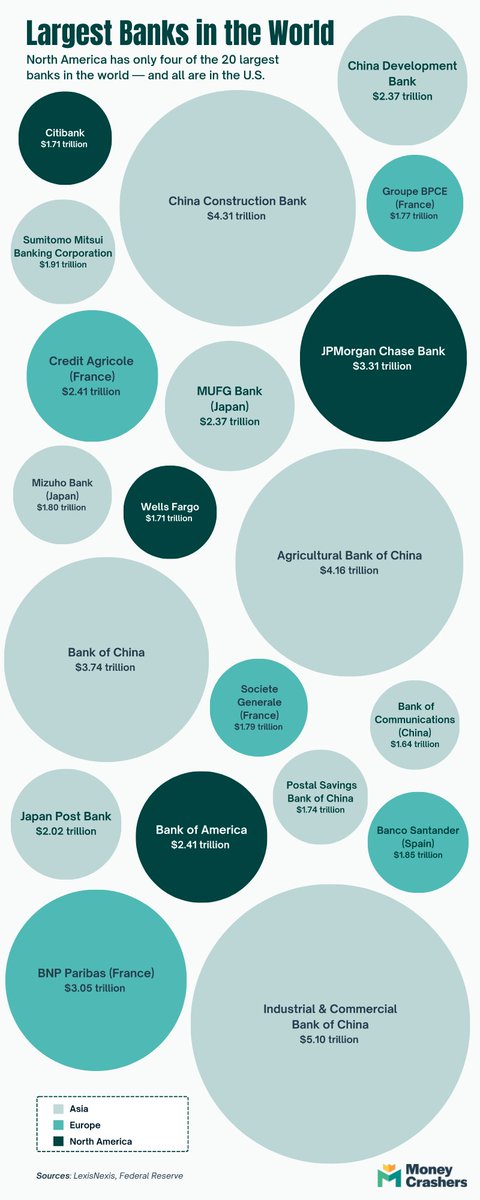
9/ Biggest Banks in the world:
By Market Cap:
1. JPM
2. Industrial & Comm. Bank of China (ICBC)
3. Bank of America
4. China Construction Bank
5. Agricultural Bank of China
By Assets:
1. ICBC
2. China Construction Bank
3. Agricultural Bank of China
4. Bank of China
5. JPM
By Market Cap:
1. JPM
2. Industrial & Comm. Bank of China (ICBC)
3. Bank of America
4. China Construction Bank
5. Agricultural Bank of China
By Assets:
1. ICBC
2. China Construction Bank
3. Agricultural Bank of China
4. Bank of China
5. JPM
10/ Business Segments:
$JPM is a diversified financial services firm that offers a range of services:
▪️ Treasury Services
▪️ Commercial Banking
▪️ Asset & Wealth Management
▪️ Corporate & Investment Banking
▪️ Consumer & Community Banking
▪️ Commercial Real Estate Financing
$JPM is a diversified financial services firm that offers a range of services:
▪️ Treasury Services
▪️ Commercial Banking
▪️ Asset & Wealth Management
▪️ Corporate & Investment Banking
▪️ Consumer & Community Banking
▪️ Commercial Real Estate Financing
11/ Since $JPM has several business segments, exploring each of these segments in detail can provide a better understanding of the company's operations. Here is a brief overview of each segment and some of the key services and offerings they provide:
12/
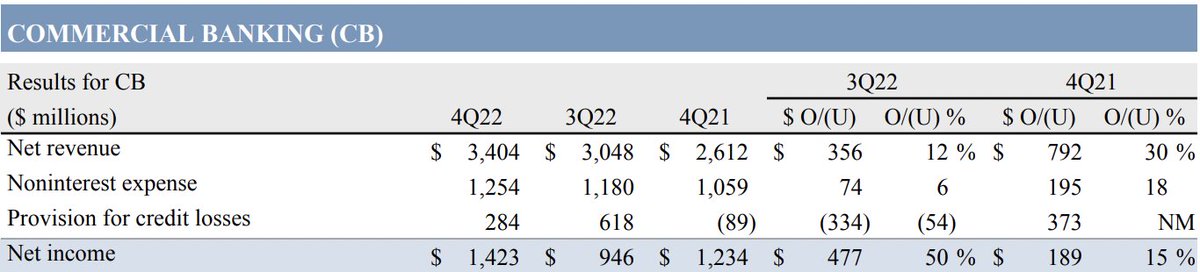
1⃣ Commercial Banking: This segment provides financial services to mid-sized & large corporations like loans, lines of credit, treasury services, trade finance & asset-based lending. They also provide industry-specific solutions for sectors like healthcare, tech & RE.
1⃣ Commercial Banking: This segment provides financial services to mid-sized & large corporations like loans, lines of credit, treasury services, trade finance & asset-based lending. They also provide industry-specific solutions for sectors like healthcare, tech & RE.
13/ $JPM's Commercial Banking segment generates revenue by focusing on:
▪️ Loans
▪️ Trade finance
▪️ Deposit products
▪️ Advisory services
▪️ Real estate lending
▪️ Loans
▪️ Trade finance
▪️ Deposit products
▪️ Advisory services
▪️ Real estate lending
14/
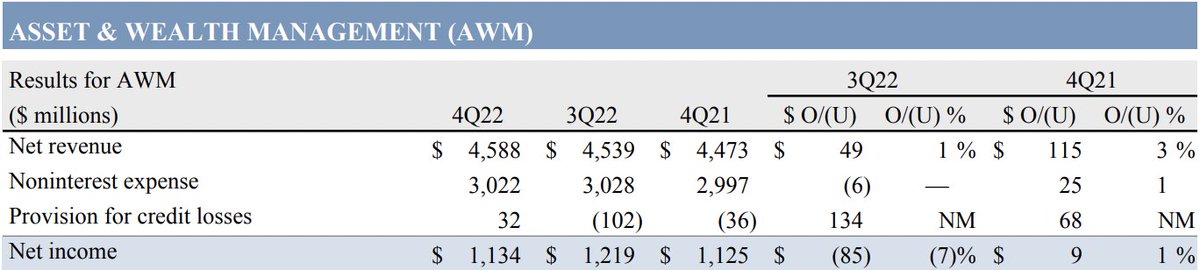
2⃣ Asset & Wealth Management: This segment provides investment management services to individuals & institutions, including mutual funds, exchange-traded funds, and separately managed accounts. They also provide private banking services to high-net-worth individuals...
2⃣ Asset & Wealth Management: This segment provides investment management services to individuals & institutions, including mutual funds, exchange-traded funds, and separately managed accounts. They also provide private banking services to high-net-worth individuals...
15/...and families, including trust and estate planning, philanthropic advisory, and family office services. This segment generates revenue by focusing on:
▪️ Performance fees
▪️ Management Fees
▪️ Trust & fiduciary fees
▪️ Brokerage commissions
▪️ Performance fees
▪️ Management Fees
▪️ Trust & fiduciary fees
▪️ Brokerage commissions
16/
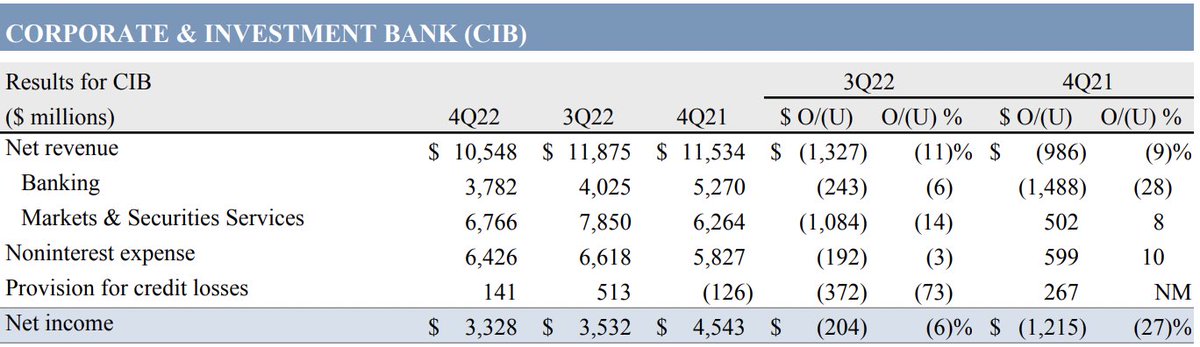
3⃣ Corporate & Investment Bank: This segment provides investment banking services to corporations, governments & institutional investors, including M&A advice, debt & equity underwriting, securities trading. They also offer treasury services to help companies...
3⃣ Corporate & Investment Bank: This segment provides investment banking services to corporations, governments & institutional investors, including M&A advice, debt & equity underwriting, securities trading. They also offer treasury services to help companies...
17/...manage their cash, liquidity & provide asset management services like custody, securities lending & fund administration. This segment generates revenue by:
▪️ Sales & trading
▪️ Treasury services
▪️ Securities services
▪️ Investment banking fees
▪️ Sales & trading
▪️ Treasury services
▪️ Securities services
▪️ Investment banking fees
18/
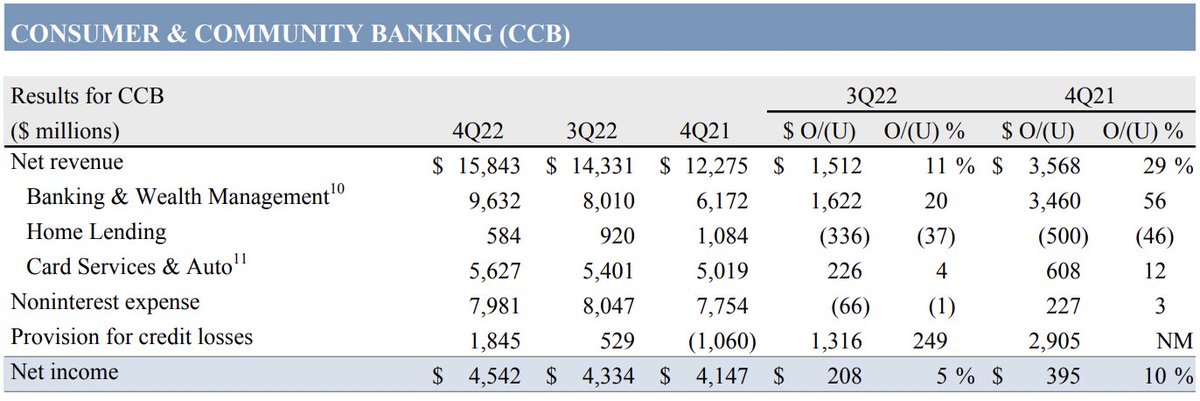
4⃣ Consumer & Community Banking: This segment provides various services to consumers like checking & savings A/c's, credit cards, mortgages, auto & small business loans. They also offer mobile/online banking services to make it easier for customers to manage their finances.
4⃣ Consumer & Community Banking: This segment provides various services to consumers like checking & savings A/c's, credit cards, mortgages, auto & small business loans. They also offer mobile/online banking services to make it easier for customers to manage their finances.
19/ $JPM's Consumer & Community Banking segment generates revenue by focusing on:
▪️ Cross-selling
▪️ Digital banking
▪️ Deposit growth
▪️ Interest income
▪️ Non-interest income
▪️ Community investments
▪️ Cross-selling
▪️ Digital banking
▪️ Deposit growth
▪️ Interest income
▪️ Non-interest income
▪️ Community investments
20/ The Positives: $JPM has a few competitive advantages:
1⃣ Brand: $JPM has a strong brand & reputation that is recognized globally. This helps them attract & retain clients, talent & provide a level of trust & credibility that can be difficult for competitors to match.
1⃣ Brand: $JPM has a strong brand & reputation that is recognized globally. This helps them attract & retain clients, talent & provide a level of trust & credibility that can be difficult for competitors to match.
21/
2⃣ Scale and Diversification: $JPM is the largest financial institution in the world by market cap & 5th largest in terms of assets held, with a wide range of business lines and a presence in over 100 countries.
2⃣ Scale and Diversification: $JPM is the largest financial institution in the world by market cap & 5th largest in terms of assets held, with a wide range of business lines and a presence in over 100 countries.
22/ This scale and diversification allows the company to serve a broad range of clients and generate revenue from multiple sources, providing a competitive advantage over smaller, less diversified financial institutions.
23/
3⃣ Technology & Innovation: $JPM has made significant investments in tech & innovation, helping them improve its operational efficiency, enhance customer experience & stay ahead of the competition by offering products like Chase Mobile App, Quickpay and QuickDeposit.
3⃣ Technology & Innovation: $JPM has made significant investments in tech & innovation, helping them improve its operational efficiency, enhance customer experience & stay ahead of the competition by offering products like Chase Mobile App, Quickpay and QuickDeposit.
24/
4⃣ Strong Risk Management: JPMorgan Chase has a strong RM framework & culture, helping them avoid some of the problems that have plagued other banks. $JPM has a dedicated risk management function that oversees all of its businesses & ensures it complies with regulations.
4⃣ Strong Risk Management: JPMorgan Chase has a strong RM framework & culture, helping them avoid some of the problems that have plagued other banks. $JPM has a dedicated risk management function that oversees all of its businesses & ensures it complies with regulations.
25/ JPMorgan Chase faces a variety of challenges, both internal and external:
1⃣ Cybersecurity: Like many other companies, JPMorgan Chase is vulnerable to cyber attacks and data breaches, which can result in significant financial losses and damage to its reputation.
1⃣ Cybersecurity: Like many other companies, JPMorgan Chase is vulnerable to cyber attacks and data breaches, which can result in significant financial losses and damage to its reputation.
26/
2⃣ Regulation: As a large financial institution, JPM is subject to intense regulatory scrutiny, resulting in significant costs & reputational risks. Compliance w/ regulatory requirements can be complex & time-consuming, diverting resources away from core business activities.
2⃣ Regulation: As a large financial institution, JPM is subject to intense regulatory scrutiny, resulting in significant costs & reputational risks. Compliance w/ regulatory requirements can be complex & time-consuming, diverting resources away from core business activities.
27/
3⃣ Economic Environment: $JPM business is highly correlated with the broader economy, which can be subject to cyclical ups & downs. Economic downturns can result in lower demand for credit & other financial products, which can impact the company's revenue and profitability.
3⃣ Economic Environment: $JPM business is highly correlated with the broader economy, which can be subject to cyclical ups & downs. Economic downturns can result in lower demand for credit & other financial products, which can impact the company's revenue and profitability.
28/
4⃣ Tech Disruption: The financial industry is rapidly evolving, with new techs & fintech startups disrupting traditional business models. $JPM needs to stay ahead of these trends to remain competitive, which requires significant investments in technology and innovation.
4⃣ Tech Disruption: The financial industry is rapidly evolving, with new techs & fintech startups disrupting traditional business models. $JPM needs to stay ahead of these trends to remain competitive, which requires significant investments in technology and innovation.
29/ Financials - Income Statement:
When looking at a bank's income statement to determine if it's a good business, there are several key metrics to consider:
▪️ Net Interest Income
▪️ Non-Interest Income
▪️ Provision for Credit Losses
▪️ Efficiency Ratio
▪️ Return on Equity
When looking at a bank's income statement to determine if it's a good business, there are several key metrics to consider:
▪️ Net Interest Income
▪️ Non-Interest Income
▪️ Provision for Credit Losses
▪️ Efficiency Ratio
▪️ Return on Equity
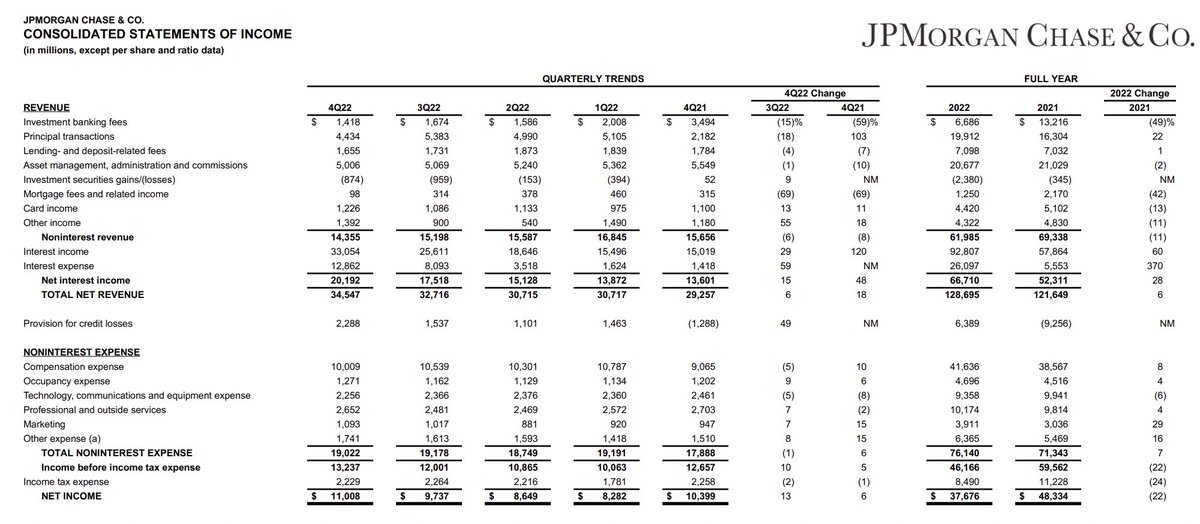
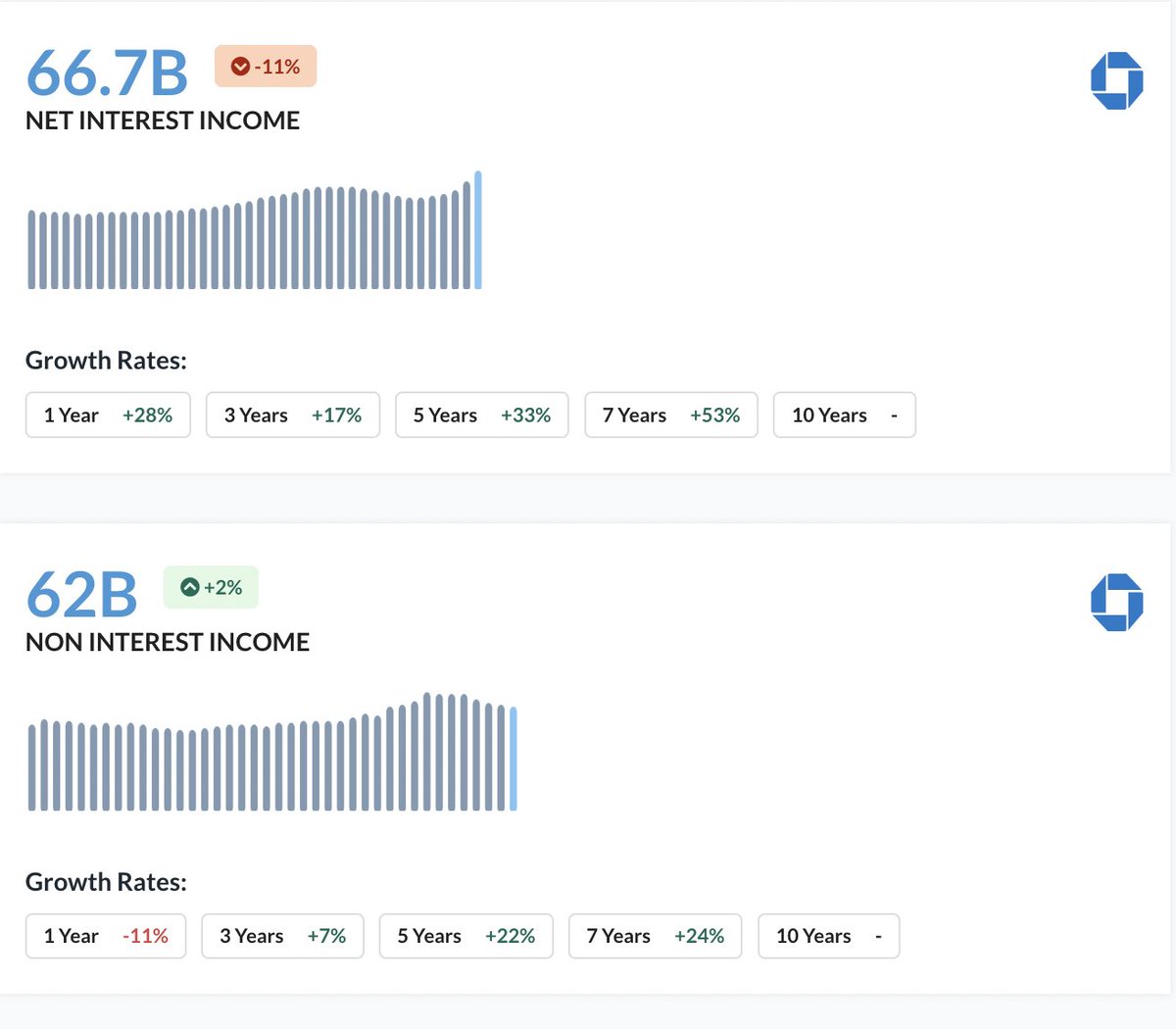
30/ Net Interest Income: income a bank earns between the interest it earns on loans and the interest it pays on deposits. Higher = better.
Non-Interest Income: income earned by the bank from sources such as fees for services like wealth management or investment banking.
Non-Interest Income: income earned by the bank from sources such as fees for services like wealth management or investment banking.
32/ Provision for Credit Losses: This is the amount a bank sets aside to cover potential loan losses. A lower provision for credit losses can indicate that the bank has strong credit risk management and is less likely to experience significant losses in the future.
33/ Efficiency Ratio: ratio of a bank's non-interest expenses to its total revenue. Lower = better.
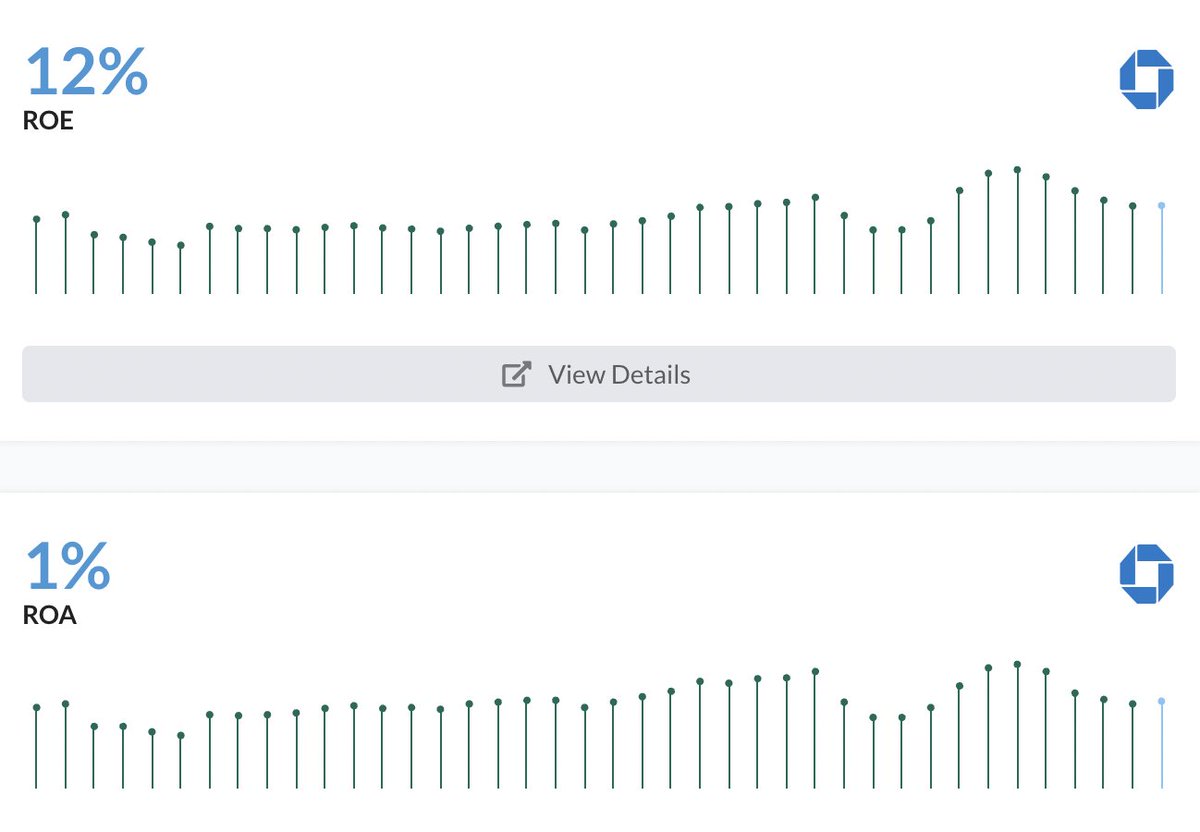
Return on Equity: amount of net income a bank generates as a percentage of its shareholders' equity. A higher ROE indicates that the bank is generating more profit.
Return on Equity: amount of net income a bank generates as a percentage of its shareholders' equity. A higher ROE indicates that the bank is generating more profit.
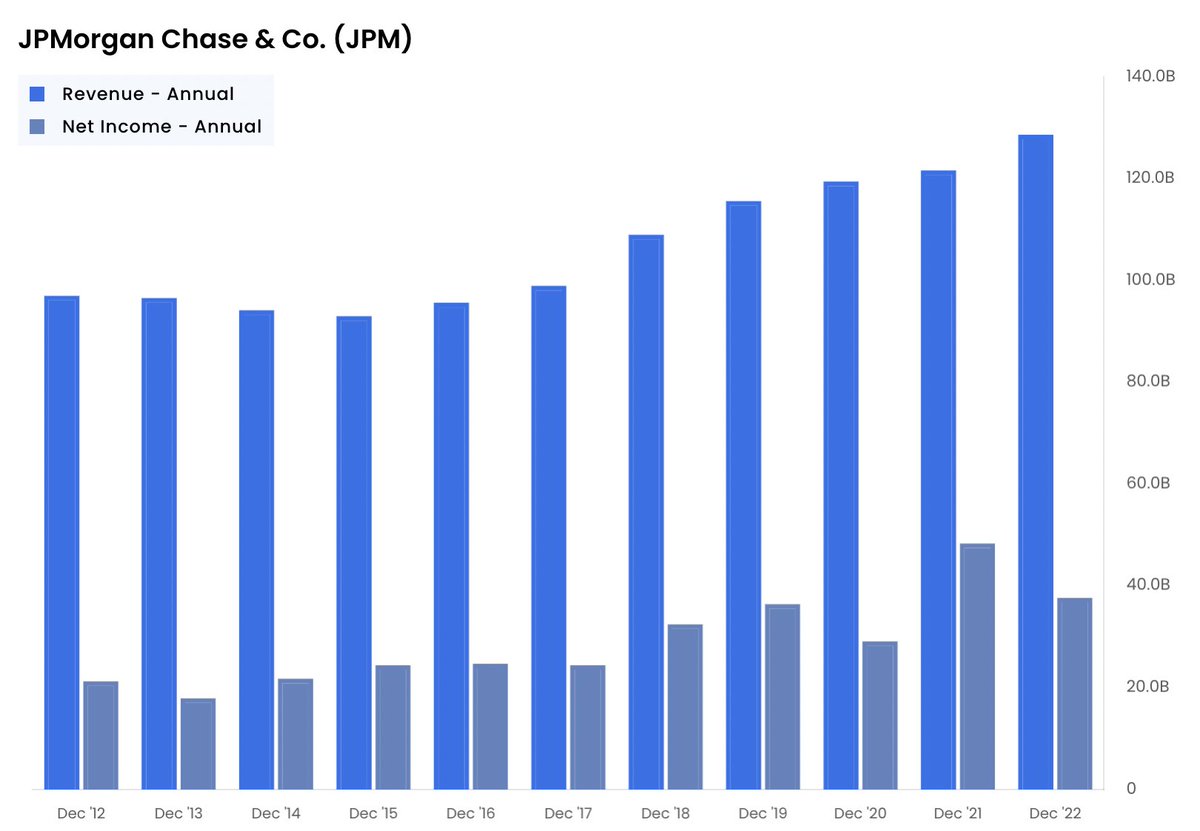
34/ Breakdown:
Revenue:
▪️ Q4 revenue grew 18% YoY from $29B to $34B
▪️ FY 22 revenue grew 6% YoY from $121B to $128B.
Net Income:
▪️ Q4 net income grew 6% YoY from $10.3B to $11B
▪️ FY 22 net income decreased 22% YoY from $48B to $37B.
Revenue:
▪️ Q4 revenue grew 18% YoY from $29B to $34B
▪️ FY 22 revenue grew 6% YoY from $121B to $128B.
Net Income:
▪️ Q4 net income grew 6% YoY from $10.3B to $11B
▪️ FY 22 net income decreased 22% YoY from $48B to $37B.
35/ Financials - Balance Sheet:
When looking at a bank's balance sheet, these are the key metrics to consider:
▪️ Deposits w/Banks (Asset)
▪️ AFM Securities (Unrealized loss)
▪️ HTM Securities (Unrealized loss)
▪️ Deposits (Liability)
When looking at a bank's balance sheet, these are the key metrics to consider:
▪️ Deposits w/Banks (Asset)
▪️ AFM Securities (Unrealized loss)
▪️ HTM Securities (Unrealized loss)
▪️ Deposits (Liability)
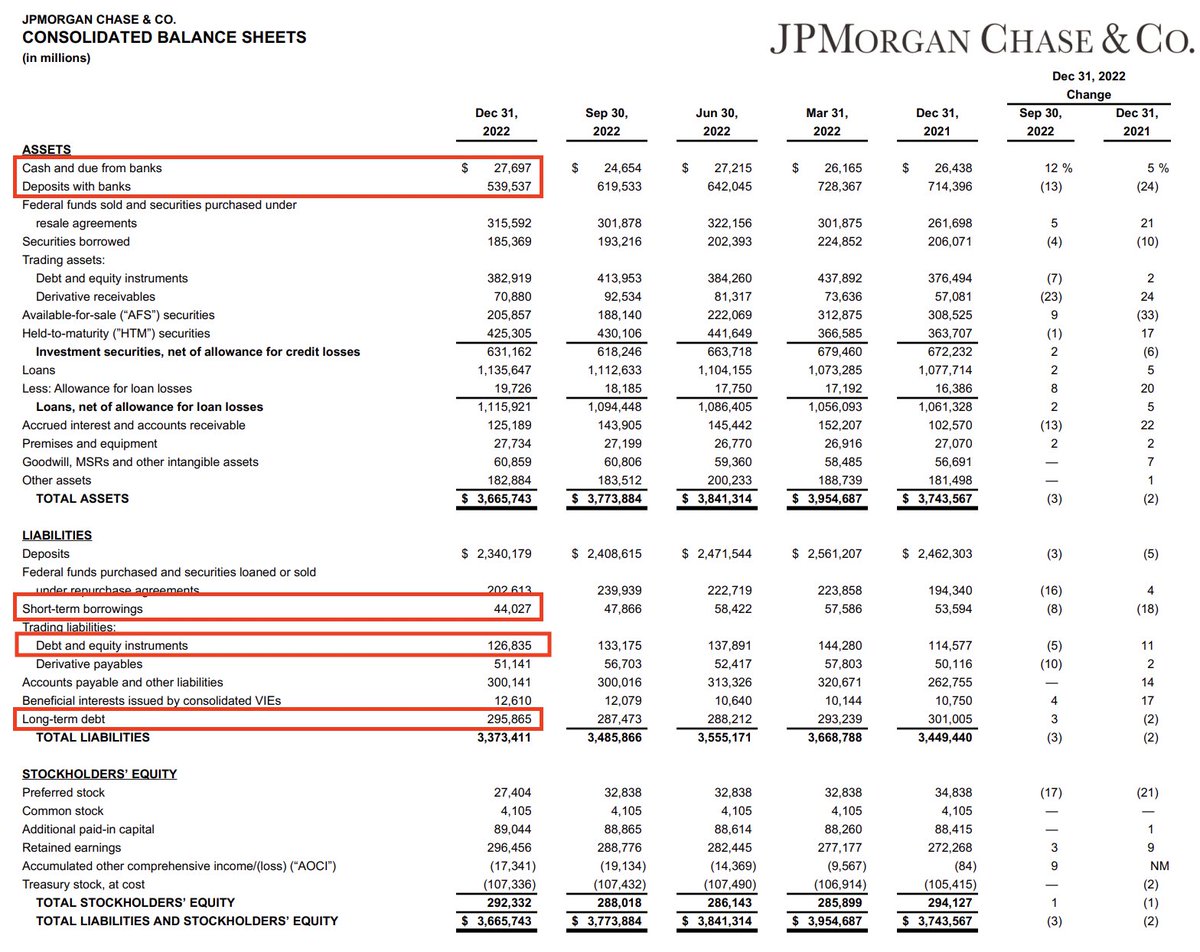
36/ Deposits w/ other banks refer to funds that a bank has deposited into other banks. This is to earn interest on excess reserves or due to regulation. Analysts typically look at the level of deposits w/ other banks to get an idea of a bank's liquidity position & risk exposure.
37/ A high level of deposits with other banks may indicate that the bank has excess cash that it cannot lend out or invest profitably, while a low level may indicate that the bank is lending out as much as possible and taking on more risk to generate returns.
38/ $JPM has $539B in deposits w/ central banks, which is the safest form of liquidity. Although it decreased YoY from $714B, it was to take advantage of higher REPO lending rates, due to an increase in federal funds sold and securities purchased under resale agreements.

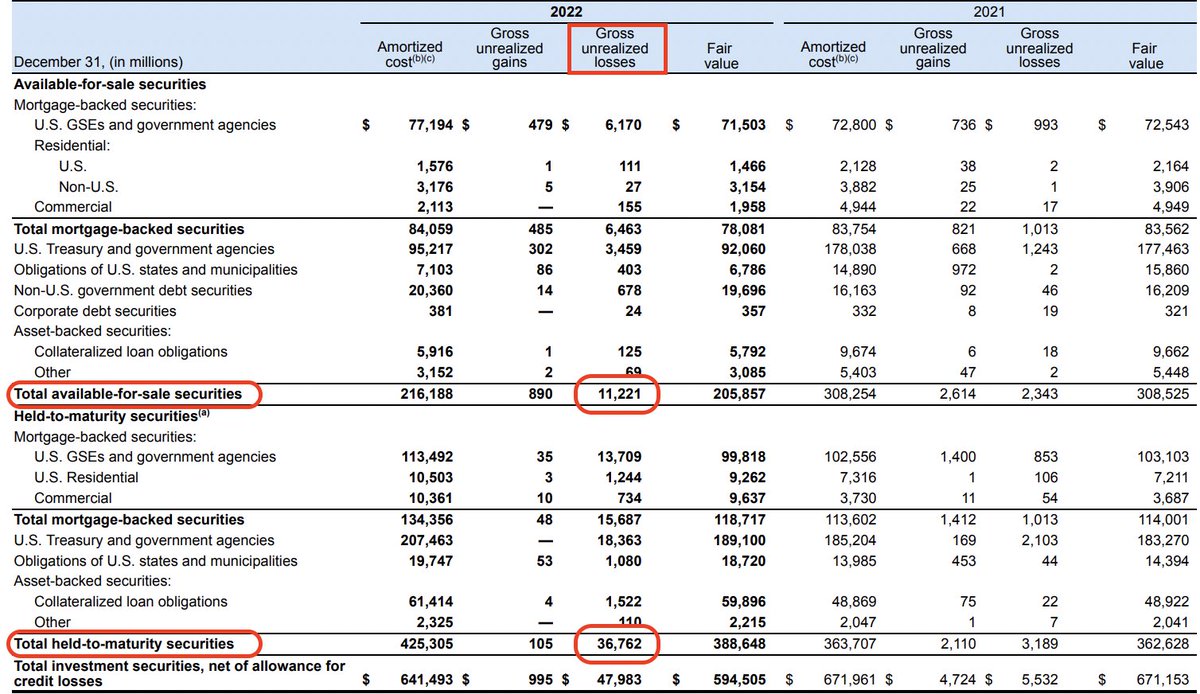
39/ AFS securities - bank holds with the intention of selling them in the future, but not necessarily immediately. HTM securities - bank intends to hold until maturity. Having a higher level of AFS and HTM securities may provide a diverse & stable source of income for the bank.
40/ JPMs AFS+HTM portfolio is worth $629B with an average credit rating of AA+. JPM's unrealized losses for 2022 were $47B billion, increased from $5B in 2021. The $36B losses in HTM may not materialize as these are mostly fixed income securities that can be held to maturity.
41/ Customer deposits are different from deposits w/banks mentioned above. Deposits are considered a liability on a bank's balance sheet because the bank has an obligation to repay the amount of the deposit to the customer upon request.
42/ $JPM's deposit growth from 2019 to 2022 was ~ 50%, reaching $2.3 trillion, in contrast to $SVB's over 200% deposit growth during the same period. This indicates that JPMs deposit expansion was more measured & less likely to lead to over-investment in securities.
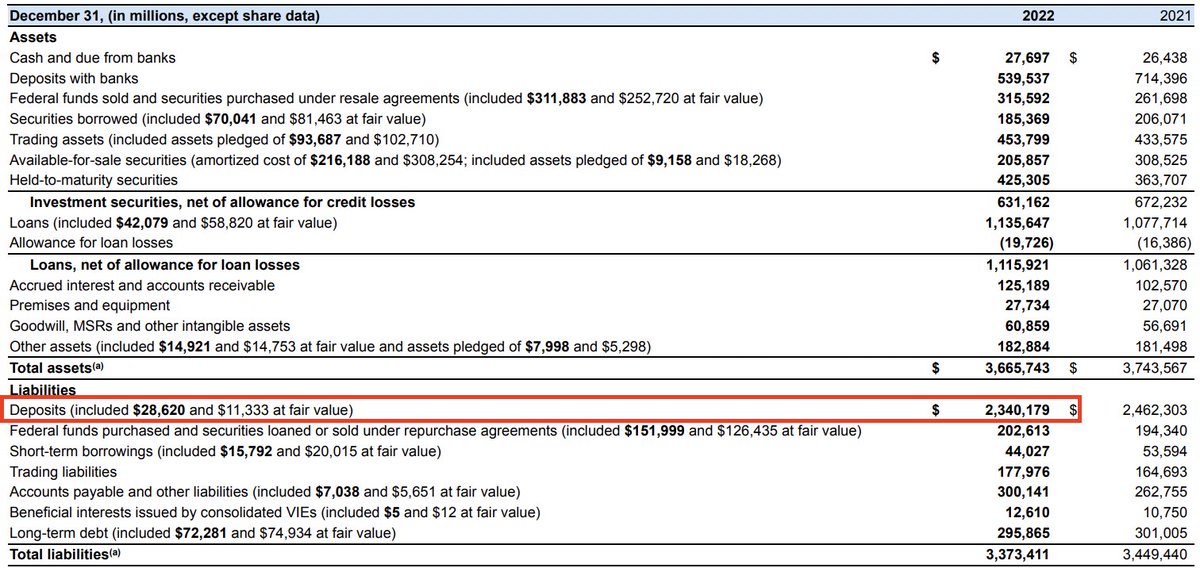
43/ Balance Sheet Summary:
For FY 22, total assets was $3.7T while total liabilities was $3.4T. The important metric to consider is Cash & Equivalents totaled $567B while total debt totaled $466B. Even though "Cash" decreased YoY, so did the total debt.
For FY 22, total assets was $3.7T while total liabilities was $3.4T. The important metric to consider is Cash & Equivalents totaled $567B while total debt totaled $466B. Even though "Cash" decreased YoY, so did the total debt.
44/ Financials - Dividend Payout
$JPM pays a total yearly dividend of $4.00 with a forward dividend yield of ~3%. Dividend has a CAGR of 13.54% over the past 5 years.
$JPM pays a total yearly dividend of $4.00 with a forward dividend yield of ~3%. Dividend has a CAGR of 13.54% over the past 5 years.

45/ Analyst Estimates:
As of today, 3.26.23, the price of the $JPM stock is $124.91 and the market cap is ~$368B. Below are the estimates from Wall St. analysts:
As of today, 3.26.23, the price of the $JPM stock is $124.91 and the market cap is ~$368B. Below are the estimates from Wall St. analysts:
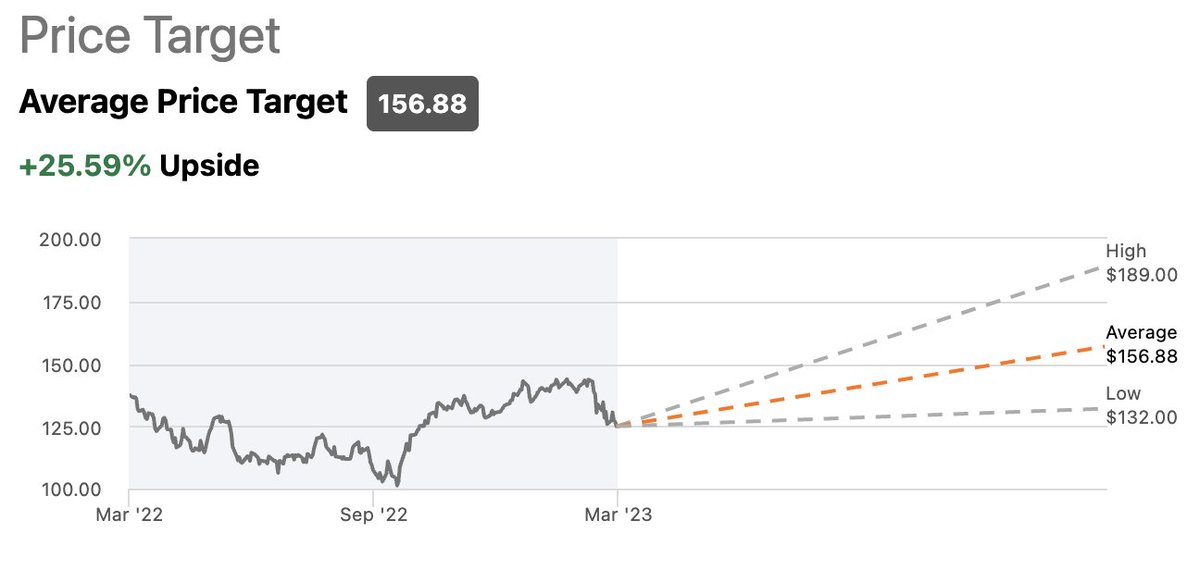
46/ Based on the chart above:
🥉Worst Case: is a $132 PT which presents a 5.06% upside from today's price.
🥈Normal Case: is a $156.88 PT which presents a 25.59% upside from today's price.
🥇Best Case: is a $189 PT which presents a 51.31% upside from today's price.
🥉Worst Case: is a $132 PT which presents a 5.06% upside from today's price.
🥈Normal Case: is a $156.88 PT which presents a 25.59% upside from today's price.
🥇Best Case: is a $189 PT which presents a 51.31% upside from today's price.
47/ As we wrap up our deep dive into $JPM, one thing is clear: this financial institution has a long and storied history, but they're not resting on their laurels. With innovative services and a commitment to their clients, JPM is always looking ahead to the future of finance.
I dont claim to be an expert on reading a bank's financial statement. If you notice any discrepancies, please let me know and i can learn from it as well. This article in particular helped me better understand the financial situation at $JPM: seekingalpha.com
Loading suggestions...