

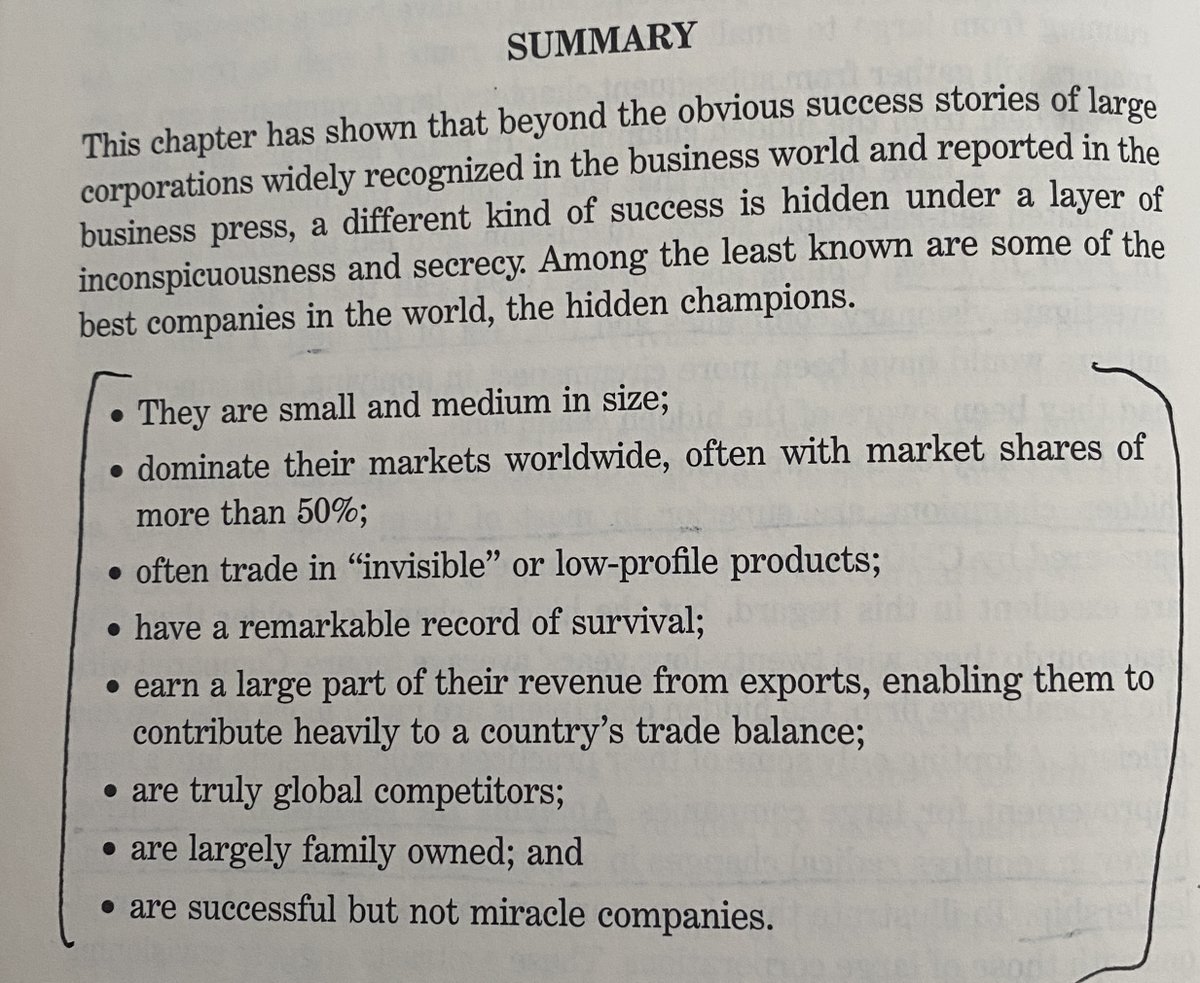
Hidden Champions is the best business book you haven't read.
It dissects the lessons from 500 of the world's best yet unknown companies.
These quiet businesses dominate their industries w/ 70%+ market share!
Here's a thread on the 7 most important lessons from the book ... 🧵
It dissects the lessons from 500 of the world's best yet unknown companies.
These quiet businesses dominate their industries w/ 70%+ market share!
Here's a thread on the 7 most important lessons from the book ... 🧵

Background: Criteria For Hidden Champions
The book's 500 Hidden Champions met the following criteria:
• Occupied 1 or 2 market position
• Generated <$1B in sales
• Low public visibility
Average annual revenue was $130. Yep, we're talking micro-caps.
Onto the lessons!
The book's 500 Hidden Champions met the following criteria:
• Occupied 1 or 2 market position
• Generated <$1B in sales
• Low public visibility
Average annual revenue was $130. Yep, we're talking micro-caps.
Onto the lessons!

Lesson 1: Be A True Market Leader
Hidden Champions had on average 56% greater market share than their strongest competitors.
25% of companies had 2.5x greater share.
Market leadership included:
• Innovation
• Technology
• Core competencies
• Trend setting
Here's how.
Hidden Champions had on average 56% greater market share than their strongest competitors.
25% of companies had 2.5x greater share.
Market leadership included:
• Innovation
• Technology
• Core competencies
• Trend setting
Here's how.

Hidden Champions often relied on "Psychological Market Leadership"
Here's how Dr. Hans-Michael Muller of Eppendorf-Netheler-Hinz, the world leader in PIPETTES, put it:
"Nobody can ignore us. When it comes to comparisons we are always a benchmark. We set the standard."
Love it!
Here's how Dr. Hans-Michael Muller of Eppendorf-Netheler-Hinz, the world leader in PIPETTES, put it:
"Nobody can ignore us. When it comes to comparisons we are always a benchmark. We set the standard."
Love it!
Market Leadership Starts Early
Hidden Champions ALWAYS believed that they were leaders.
Viktor Dulger, founder of the world's leader in METERING PUMPS, used to say that he wanted to "be big in small markets."
This happens by sticking to niches (i.e., core competencies) for LT!
Hidden Champions ALWAYS believed that they were leaders.
Viktor Dulger, founder of the world's leader in METERING PUMPS, used to say that he wanted to "be big in small markets."
This happens by sticking to niches (i.e., core competencies) for LT!
Lesson 2: Narrowly Define Your Market
Hidden Champions dominate small markets.
44% of companies operated in markets <$350M in size.
Small markets allowed these companies to become the dominant expert.
Importantly, they didn't change target markets once they decided on one.
Hidden Champions dominate small markets.
44% of companies operated in markets <$350M in size.
Small markets allowed these companies to become the dominant expert.
Importantly, they didn't change target markets once they decided on one.
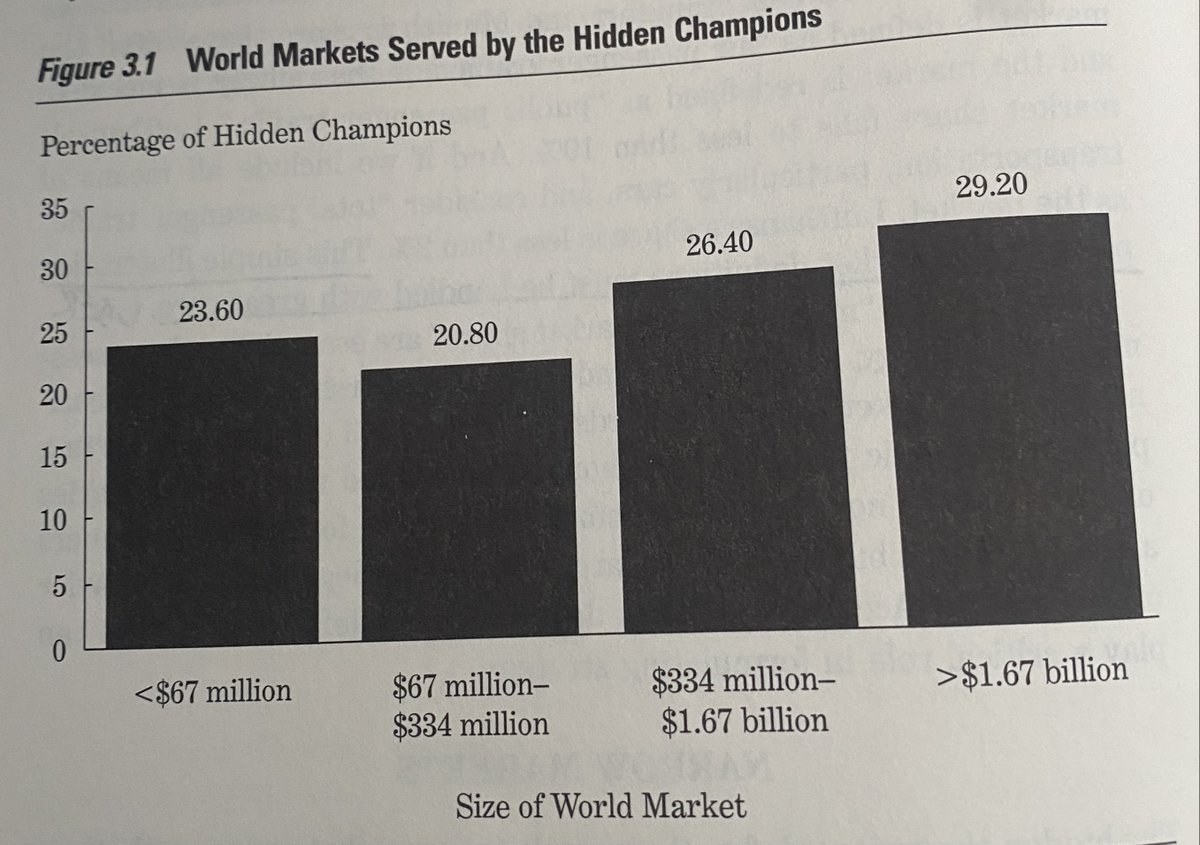
Hidden Champions were "Super Nichists" hyper-focused on their core markets.
These company CEOs would often make comments like:
• "We are highly specialized."
• "We concentrate on what we can."
• "We are deep, not wide."
• "No diversification."
I just love this!
These company CEOs would often make comments like:
• "We are highly specialized."
• "We concentrate on what we can."
• "We are deep, not wide."
• "No diversification."
I just love this!
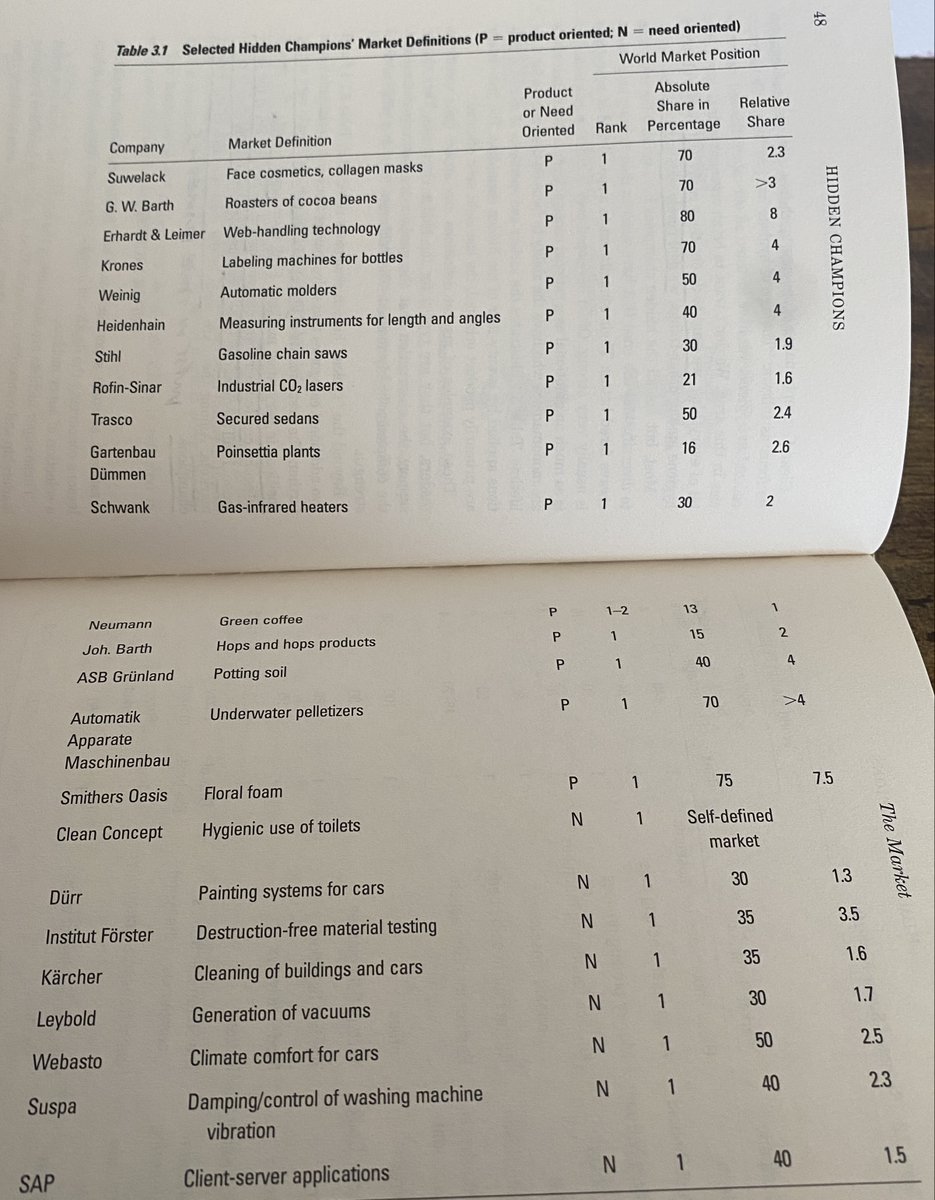
Lesson 3: Meet Customers Where They Are
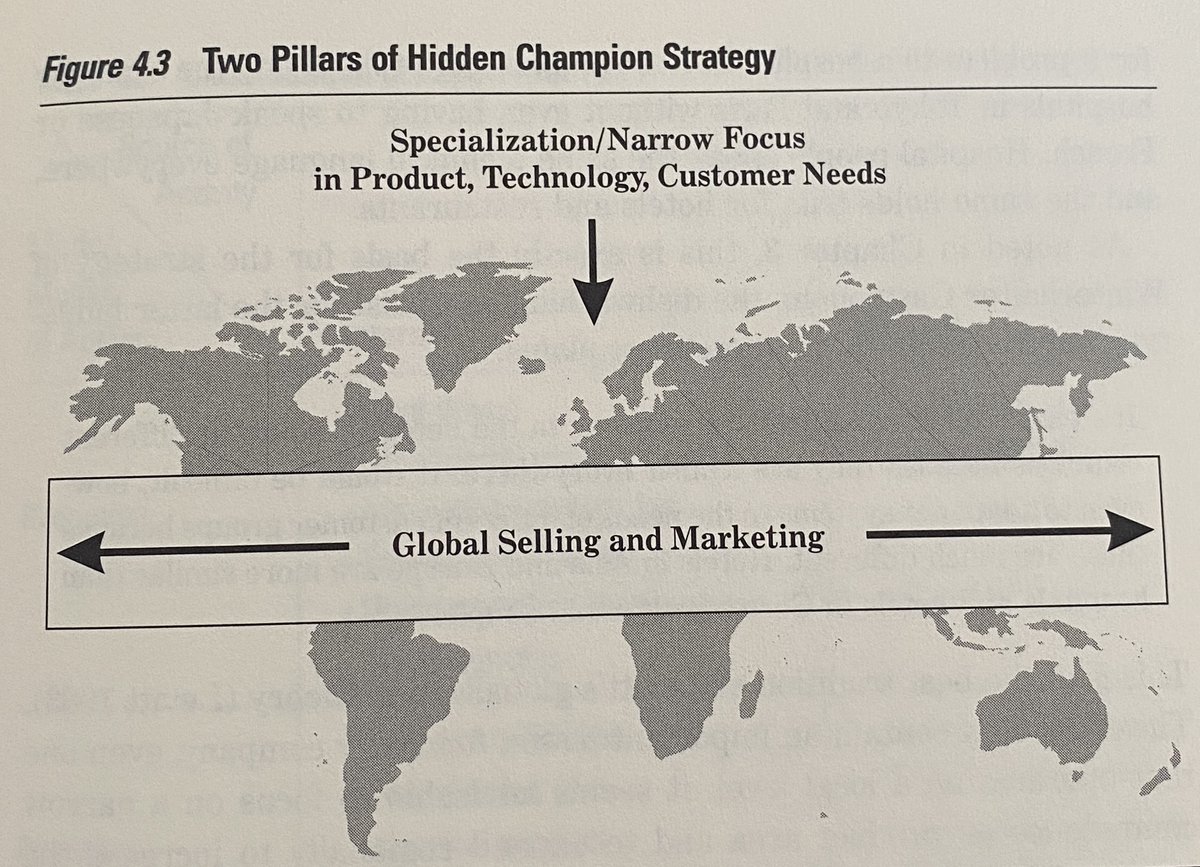
Hidden Champions generated half their sales outside their home country.
These companies thrived on a contradiction:
• Narrow, niche market
• Wide, global customer base
This contradiction created cognitive reference & customers 4 life
Hidden Champions generated half their sales outside their home country.
These companies thrived on a contradiction:
• Narrow, niche market
• Wide, global customer base
This contradiction created cognitive reference & customers 4 life
Lesson 4: Deeply Know Your Customer
Most Hidden Champions sold complex products to complex customers.
This dynamic created high transaction/switching costs and high uncertainty.
Companies didn't want to switch customers.
And customers didn't want to switch providers.
Most Hidden Champions sold complex products to complex customers.
This dynamic created high transaction/switching costs and high uncertainty.
Companies didn't want to switch customers.
And customers didn't want to switch providers.
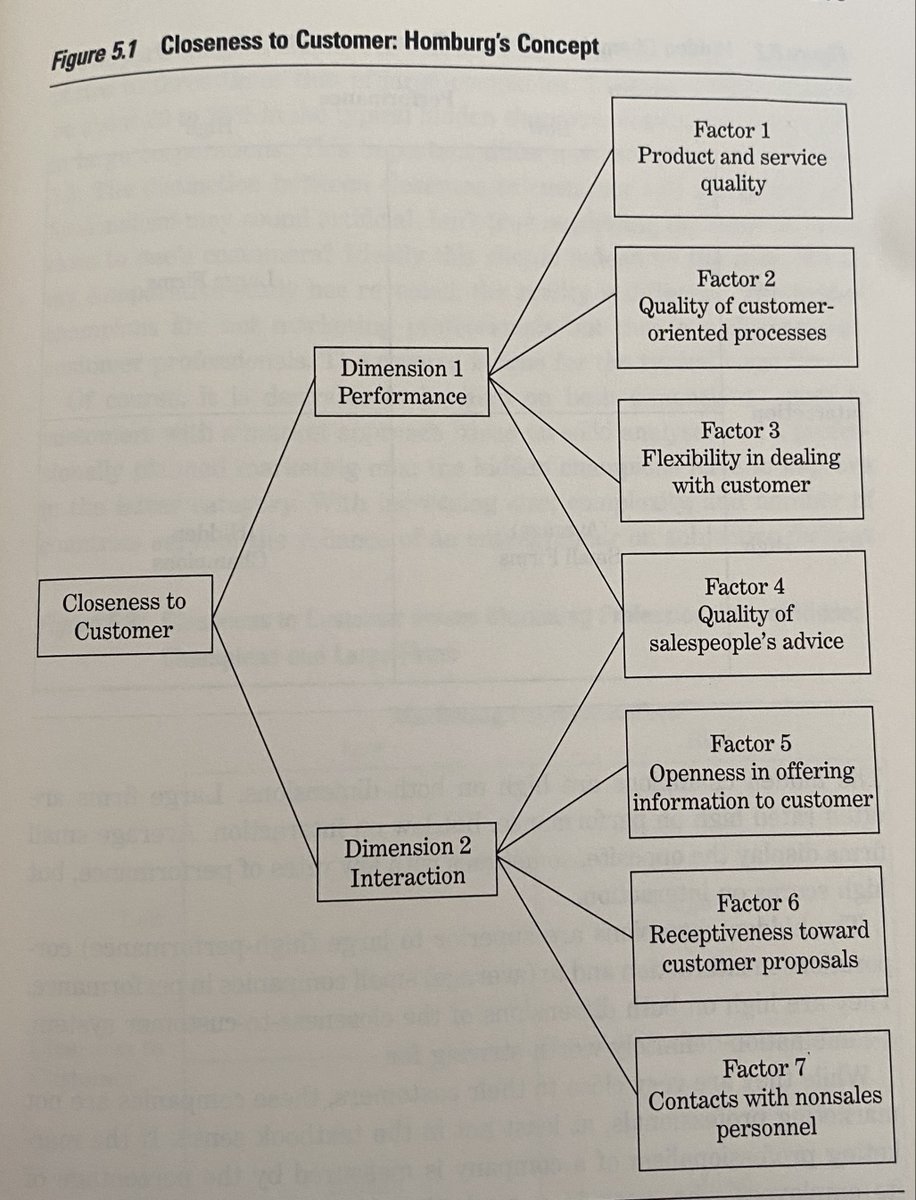
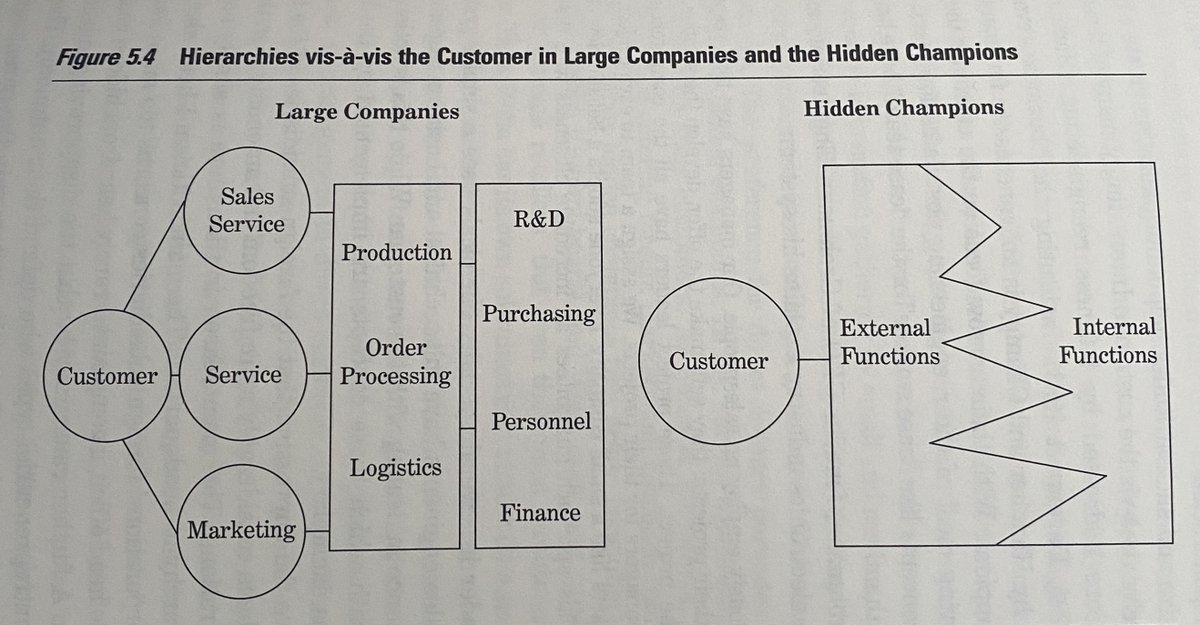
Closeness is the secret to Hidden Champion customer success.
Relationships are more informal. Less red tape.
Hidden Champions don't NEED fancy marketing or advertising.
Instead, they focus on engaging with and solving customer problems.
Informal > Formal.
Relationships are more informal. Less red tape.
Hidden Champions don't NEED fancy marketing or advertising.
Instead, they focus on engaging with and solving customer problems.
Informal > Formal.
Lesson 5: Never Stop Innovating
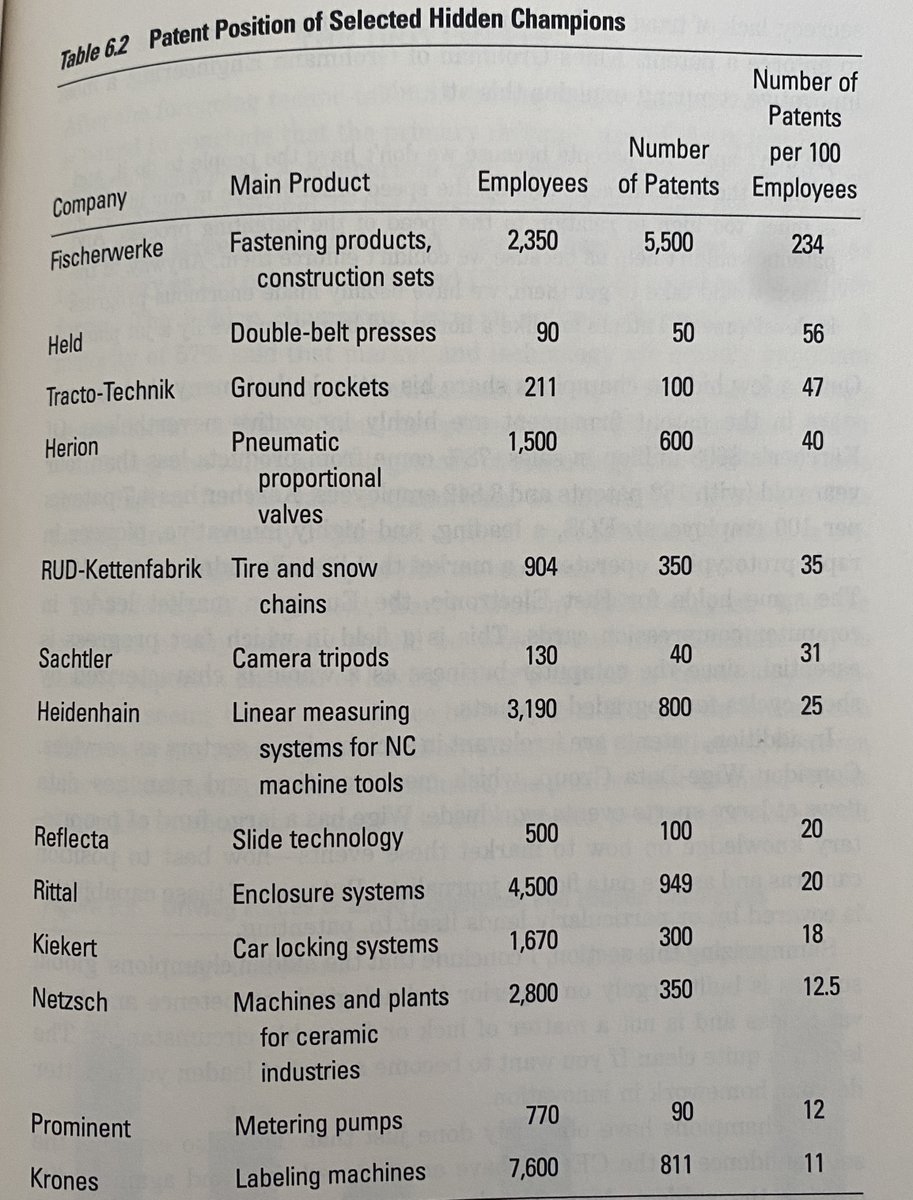
Hidden Champions are the most innovative companies in the world.
They might not have the largest markets, but they're constantly innovating.
This means spending more $ on R&D than peers.
And more patents per employee than their competition.
Hidden Champions are the most innovative companies in the world.
They might not have the largest markets, but they're constantly innovating.
This means spending more $ on R&D than peers.
And more patents per employee than their competition.
Lesson 6: Create The Highest Quality Products
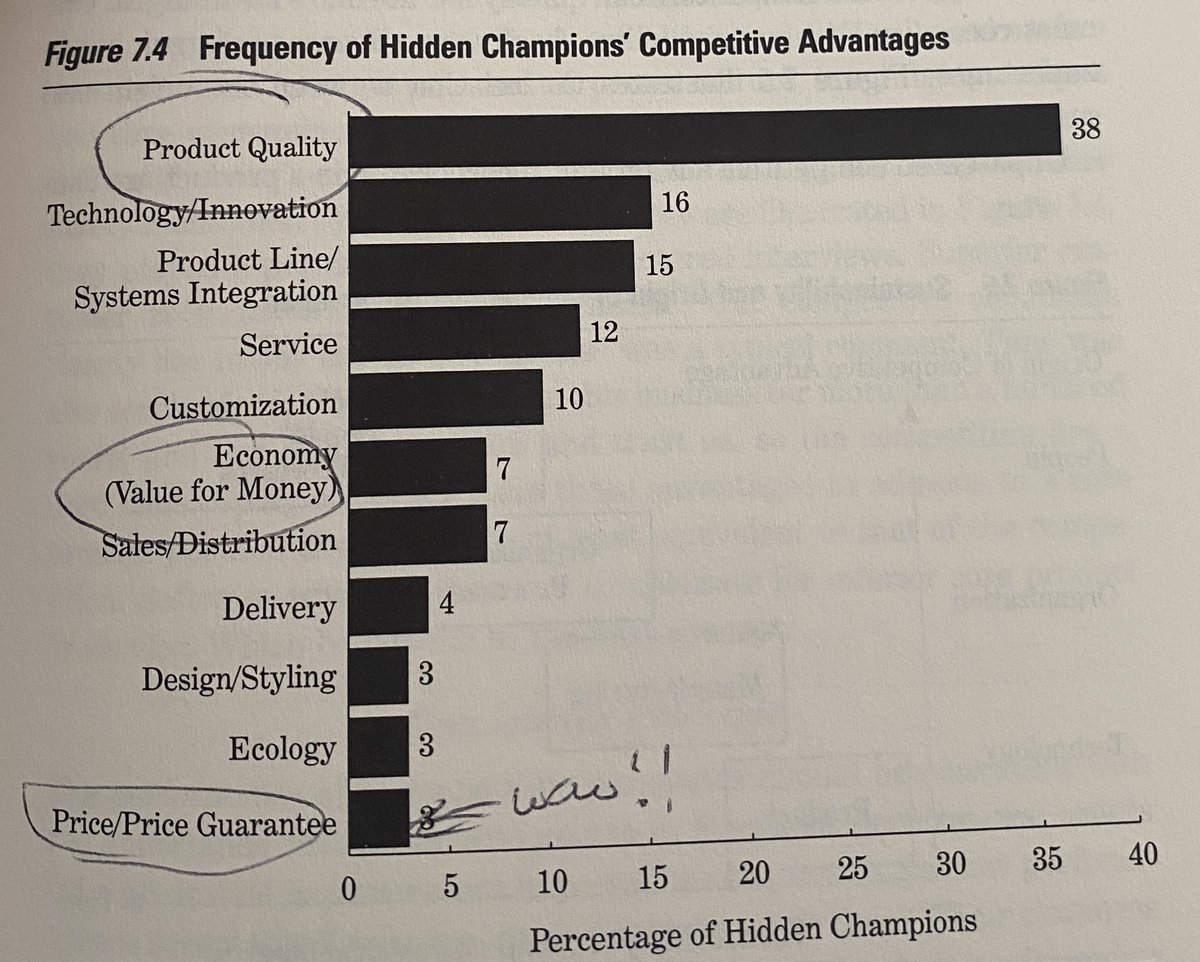
Hidden Champions's largest competitive advantage is Product Quality.
This makes sense for a few reasons:
• Hyper-focused on small markets
• Intimate relationship w/ customers
• Constant innovation
Focus on QUALITY product.
Hidden Champions's largest competitive advantage is Product Quality.
This makes sense for a few reasons:
• Hyper-focused on small markets
• Intimate relationship w/ customers
• Constant innovation
Focus on QUALITY product.
Lesson 7: CEOs Are Fanatical Leaders
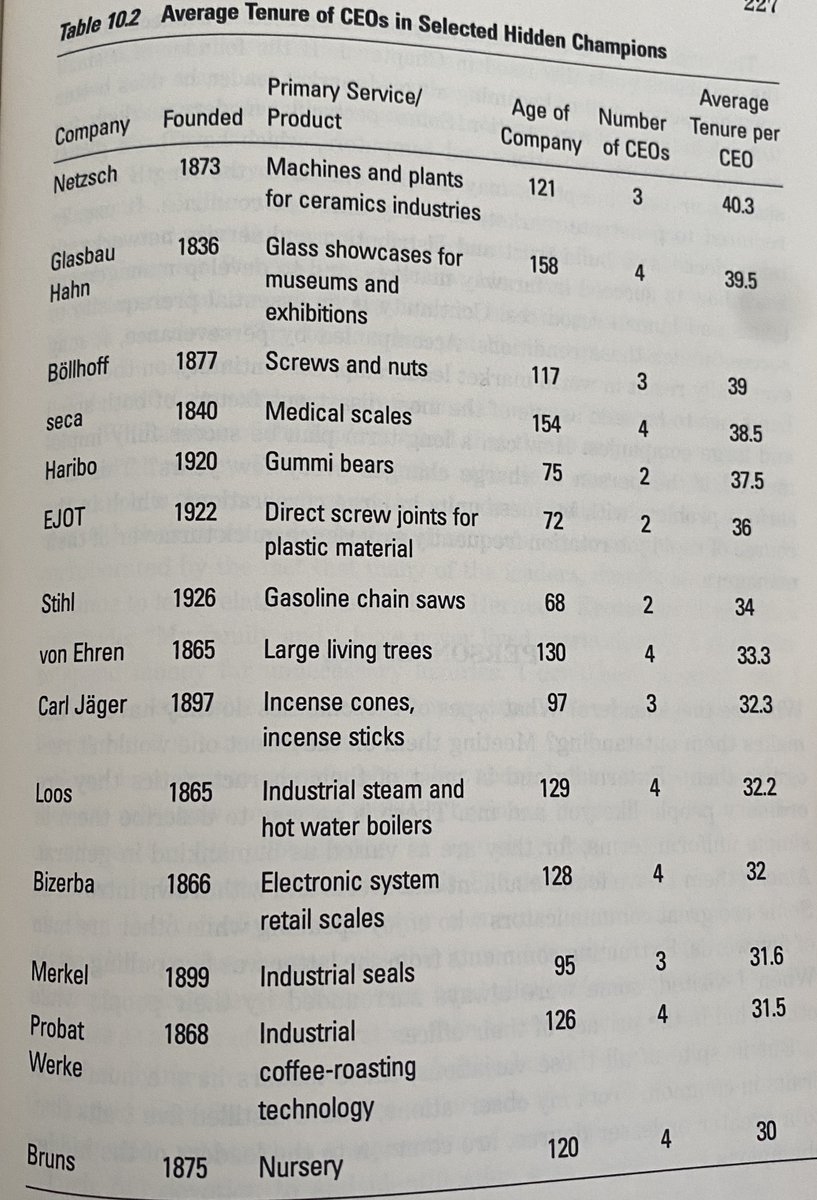
Hidden Champion CEOs all had an "incessant drive and energy."
They were fanatics.
77% of Hidden Champions are family-owned.
Only 2.4% are publicly-held.
Many CEOs had little-to-no academic training.
Average tenure of CEO was 21 yrs.
Hidden Champion CEOs all had an "incessant drive and energy."
They were fanatics.
77% of Hidden Champions are family-owned.
Only 2.4% are publicly-held.
Many CEOs had little-to-no academic training.
Average tenure of CEO was 21 yrs.
Final Recap: The Seven Lessons From "Hidden Champions"
• Be A True Market Leader
• Narrowly Define Your Market
• Meet Customers Where They Are
• Deeply Know Your Customer
• Never Stop Innovating
• Create Highest Quality Products
• CEOs Are Fanatical Leaders
• Be A True Market Leader
• Narrowly Define Your Market
• Meet Customers Where They Are
• Deeply Know Your Customer
• Never Stop Innovating
• Create Highest Quality Products
• CEOs Are Fanatical Leaders
/ End
I hope you guys enjoyed this thread!
Please like, RT, and give me a follow if you did.
Look forward to the next book review :)
I hope you guys enjoyed this thread!
Please like, RT, and give me a follow if you did.
Look forward to the next book review :)
Loading suggestions...