How exactly do they work?
Unlock the power of higher-order functions in JavaScript to write faster and more efficient code.
One common use case for higher-order functions is to pass a function as an argument to another function. This allows the caller to customize the behavior of the function being called.
1/2
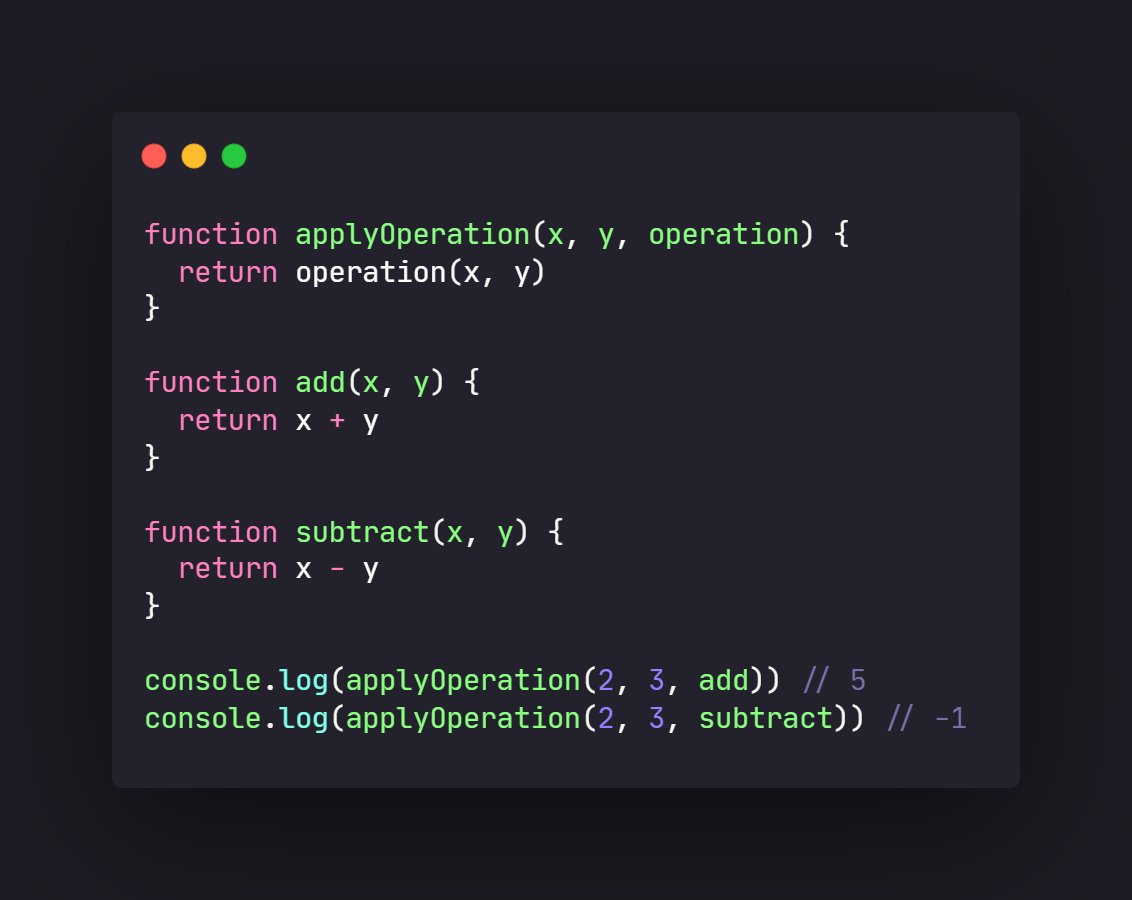
2/2
Another use case for higher-order functions is to return a function as its result. This allows the caller to create a new function with a customized behavior.
1/2
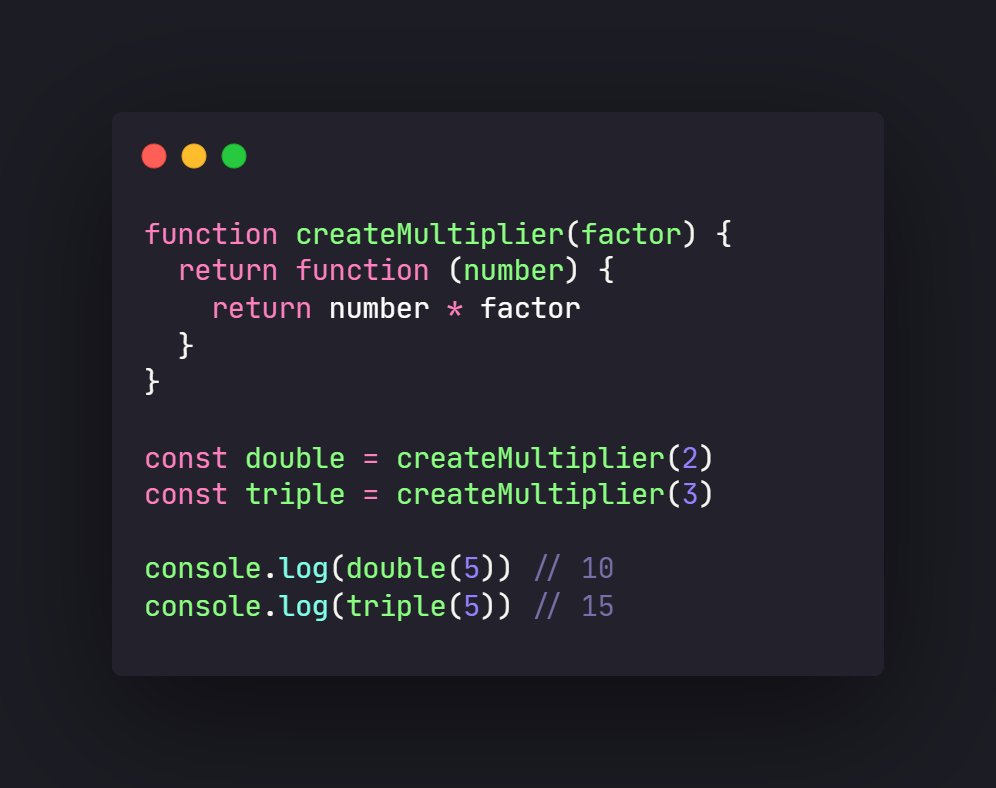
The `double()` and `triple()` functions are created using `createMultiplier()` with factors of 2 and 3 respectively.
2/2
Higher-order functions can also be used to filter arrays based on a condition. The `Array.prototype.filter()` method is a built-in higher-order function that filters an array based on a callback function that returns a boolean value.
1/2
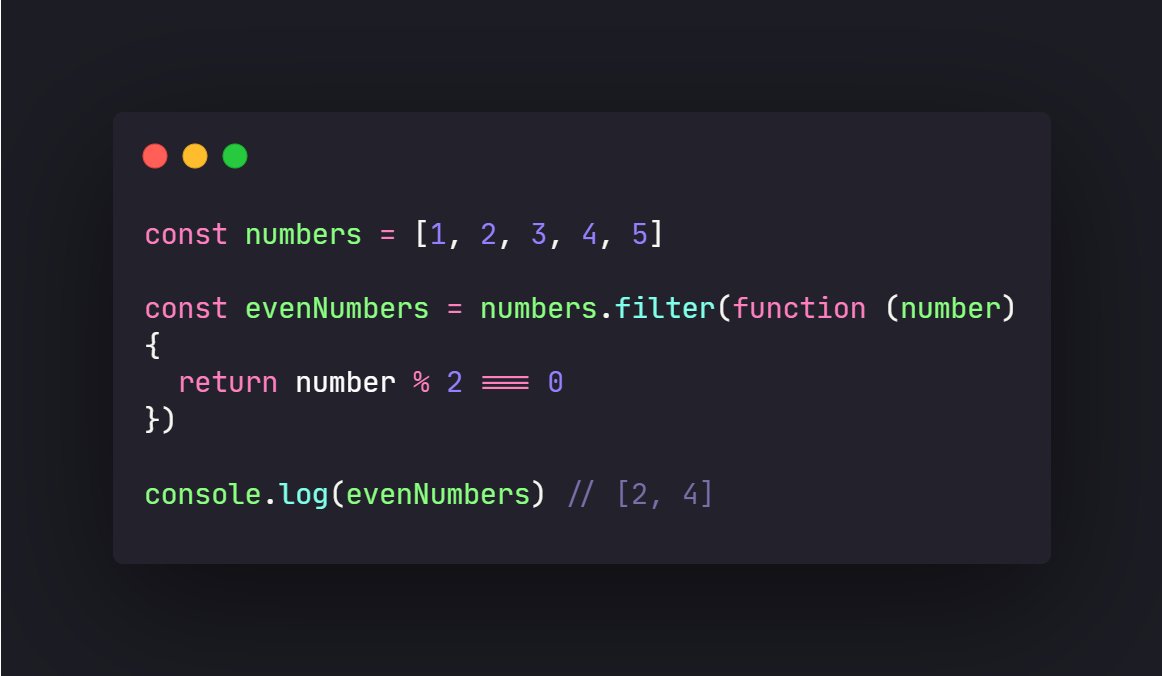
2/2
Another built-in higher-order function is the `Array.prototype.map()` method, which transforms an array by applying a function to each element and returning a new array with the transformed elements.

🔗 pooools.com
🔗 haiderkh1.gumroad.com
If you enjoyed this thread:
1. Follow me @slow_developer for more of these
2. RT the tweet below to share this thread with your audience
More from this author
MidJourney costs $60/m. Try LensGo AI, it's FREE & powerful. Here's how it works:
JavaScript BOM (Browser Object Model) cheat sheet 🚀 https://t.co/hICag8MuWK
Launch your AI business in 5 minutes. No code required. Easily make $2500+ per month with Dante AI. (Yes, really!) Here's how:
The days of relying on degrees are over. Now it’s all about high-demand skills. These free resources will help you master the most in-demand skills...
Recent Threads
I’ve recently seen a lot of people criticizing smaller indie projects for releasing merchandise or doing kickstarter funding to fund their projects. T...

I compiled all the specific references I noticed in May's moveset! #イニブ #g_bd #g_bdr #GBDR https://t.co/PvNHzH6yj6

taekook taguan ng anak au wherein jk received a surprising gift from their xmas party… [ christmas special 🎄] https://t.co/WY3C450KpV

@HitWithAHeart I hear him before I see him. The weight of his steps on the stairs. Slower than usual. Measured. Like he’s already bracing for whatev...

(1/7) I'm not going to do a full trailer breakdown for Zach Cregger's Resident Evil film, since we have an early form of the script you can place a lo...

Nikola Jokic is 0-6 against 50+ win teams in the playoffs. https://t.co/l5hCeVCoUj

Popular Threads
Top-40 Footballers with Most Goal Contributions (Goals + Assists) in history. [ A MEGA THREAD ] https://t.co/gAb3QcqdYQ

The ICT Mentorship Core Content Month 1 Summarized: https://t.co/6tXJxPMDhm

Ware County, Ga has broken the Dominion algorithm: Using sequestered Dominion Equipment, Ware County ran a equal number of Trump votes and Biden vote...

ICT’s 2022 Mentorship Summarized: https://t.co/zFJCgIfDAR
Please retweet and share if you support my and others' vaccine injury recoveries. https://t.co/y8xNWwRUOO

DON'T ARGUE WITH DONKEYS (Fable) The donkey said to the tiger: - "The grass is blue". The tiger replied: - "No, the grass is green." The discussion...