
1/ CONQUERING CRIMEA: PART 4
In this fourth of a short series of threads on the military history of Crimea, I'll be looking at the German-Romanian invasion of Crimea during World War II, between September 1941 and July 1942. It had some analogies with Ukraine's current position.
In this fourth of a short series of threads on the military history of Crimea, I'll be looking at the German-Romanian invasion of Crimea during World War II, between September 1941 and July 1942. It had some analogies with Ukraine's current position.

2/ In the first part, I looked at Crimea's military significance, its unique geography and the difficulties it presents for invaders – as well as the defensive advantages it holds for its occupiers.
3/ In the second part, I reviewed Crimea's history of invasions from the 17th to the 19th centuries, including the initial Russian conquest of Crimea in the 18th century.
4/ In part 3, I looked at the battles for Crimea in 1918 and 1920 during the Russian Civil War, when Bolsheviks, the anti-Bolshevik White movement, the short-lived Ukrainian People's Republic and Imperial Germany competed to control the peninsula.
5/ Nazi Germany's 1941-42 invasion of Crimea began three years of extreme bloodshed, even by the standards of the Eastern Front. Both sides suffered hundreds of thousands of military casualties and both carried out acts of genocide against Crimea's civilian population.
6/ The very high number of military casualties reflected the value that Hitler and Stalin placed on victory and their willingness to expend as many lives as needed to achieve victory. Unlike in previous invasions, fighting took place across the peninsula and lasted for months.
7/ One of the key goals of Germany's invasion of the Soviet Union was to reach the Caucasus and Azerbaijan's oilfields, which were seen as a vital source of oil for the German war effort. A similar strategy had been pursued in 1918 when Germany briefly controlled Crimea.
8/ Crimea was seen as an essential stepping-stone to reach the Caucasus via the Kerch Strait and the Russian Black Sea coast. The Germans also wanted to stop Crimea-based Soviet bombers raiding Romania's oilfields and to suppress the Soviet Black Sea Fleet at Sevastopol.
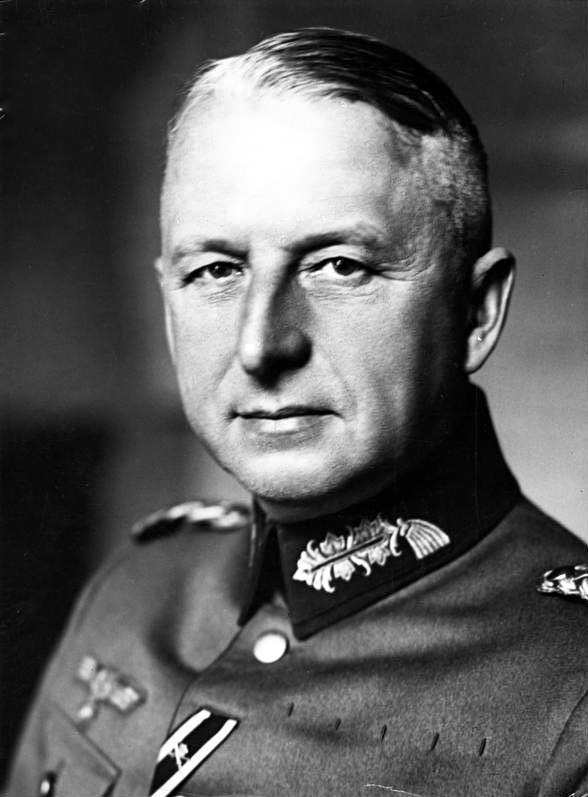
9/ By the end of August 1941, the Germans had already crossed the Dnipro and headed for Crimea, led by General Erich von Manstein, one of WW2's most brilliant commanders. He realised that the only viable invasion route was via the Perekop isthmus in Crimea's northwest.
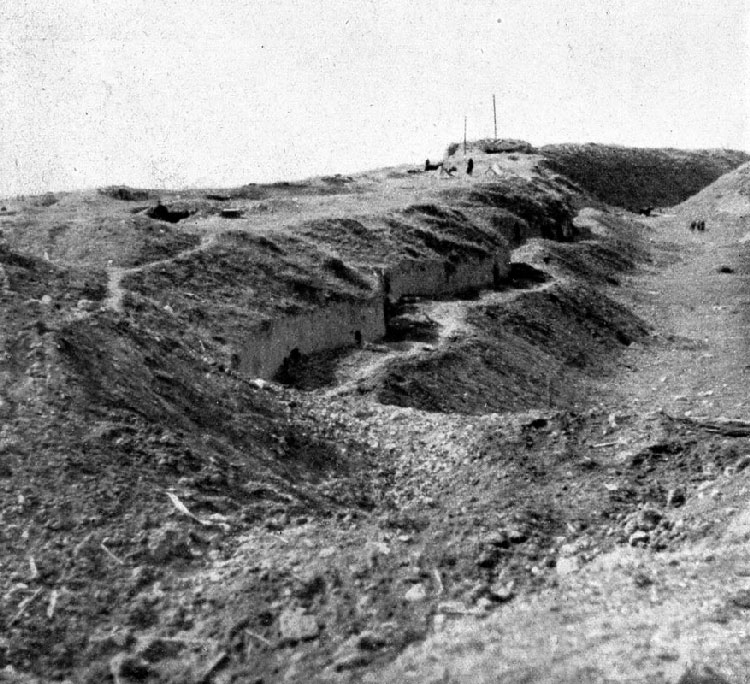
10/ The isthmus has always been a difficult place to assault – only 9 km (5.6 mi) wide, completely flat and treeless with no natural cover. It had been fortified over centuries with ditches and earthworks that the Soviets had expanded with the aid of 30,000 civilian labourers.
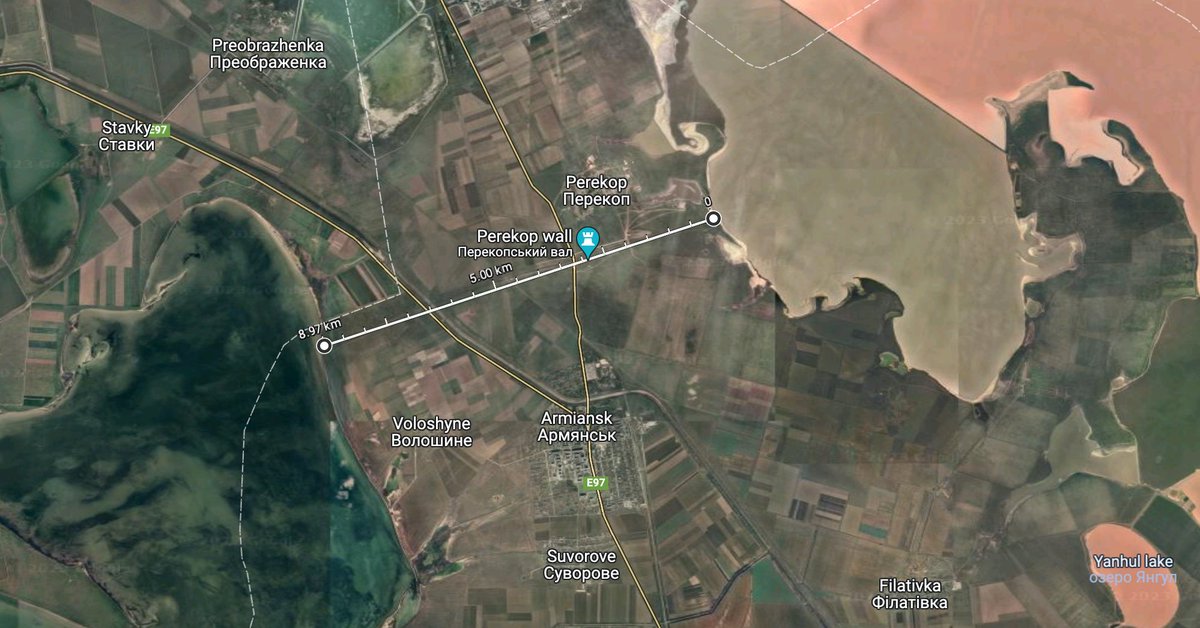
11/ The Perekop isthmus was now covered by a fortified system 15 km (9.3 mi) deep, incorporating bunkers, pillboxes, trenches, barbed wire, anti-tank ditches and minefields. The anti-tank defences included the ancient Tatar Ditch, 5 m (15 ft) deep and up to 50 ft (15.2 m) wide.
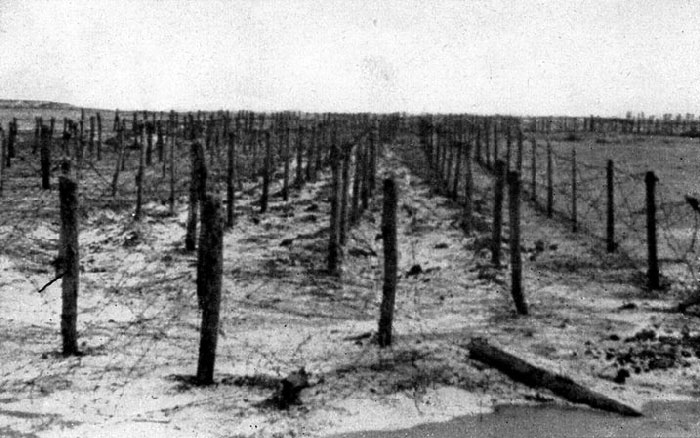
12/ The defences also included minefields incorporating thousands of anti-personnel mines, 50 kg (100 lb) aerial bombs, naval mines, tripwired buried flamethrowers and even some mines filled with mustard gas. The Germans had little experience of penetrating defences of this kind.
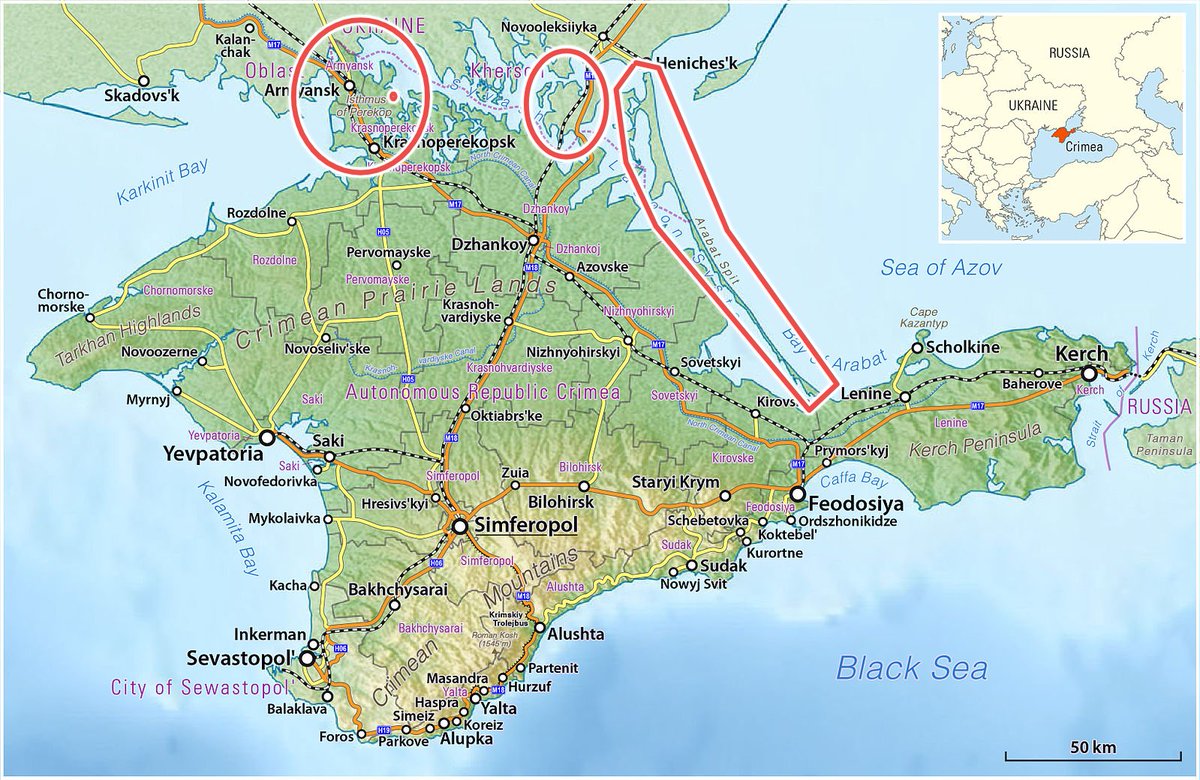
13/ Three Soviet infantry divisions held the peninsula, equipped with around 125 tanks – some dug in to serve as pillboxes – and 150 artillery pieces, as well as anti-aircraft guns and supplies stored in underground bunkers.
14/ As difficult as this route was, none of the other invasion routes were usable. The conditions at the time did not permit fording of the Syvash lagoons to the north of Crimea, the Soviets had blockaded the Chonhar Peninsula, and Azov Sea Fleet ships controlled the Arabat Spit.
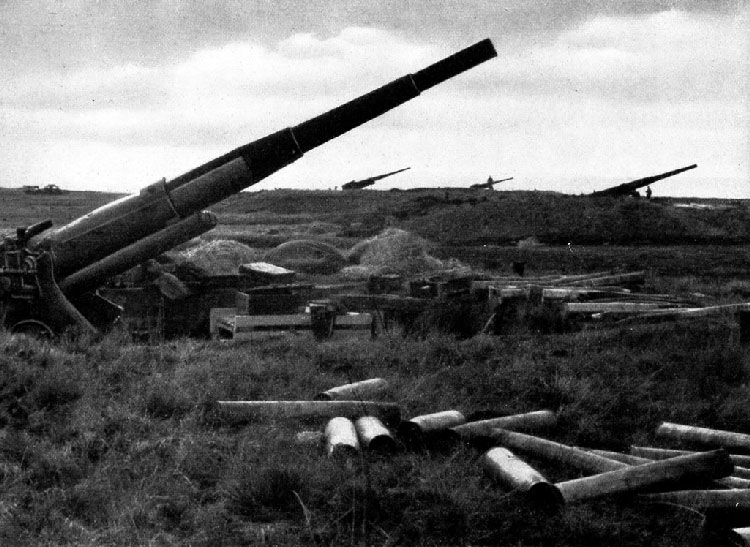
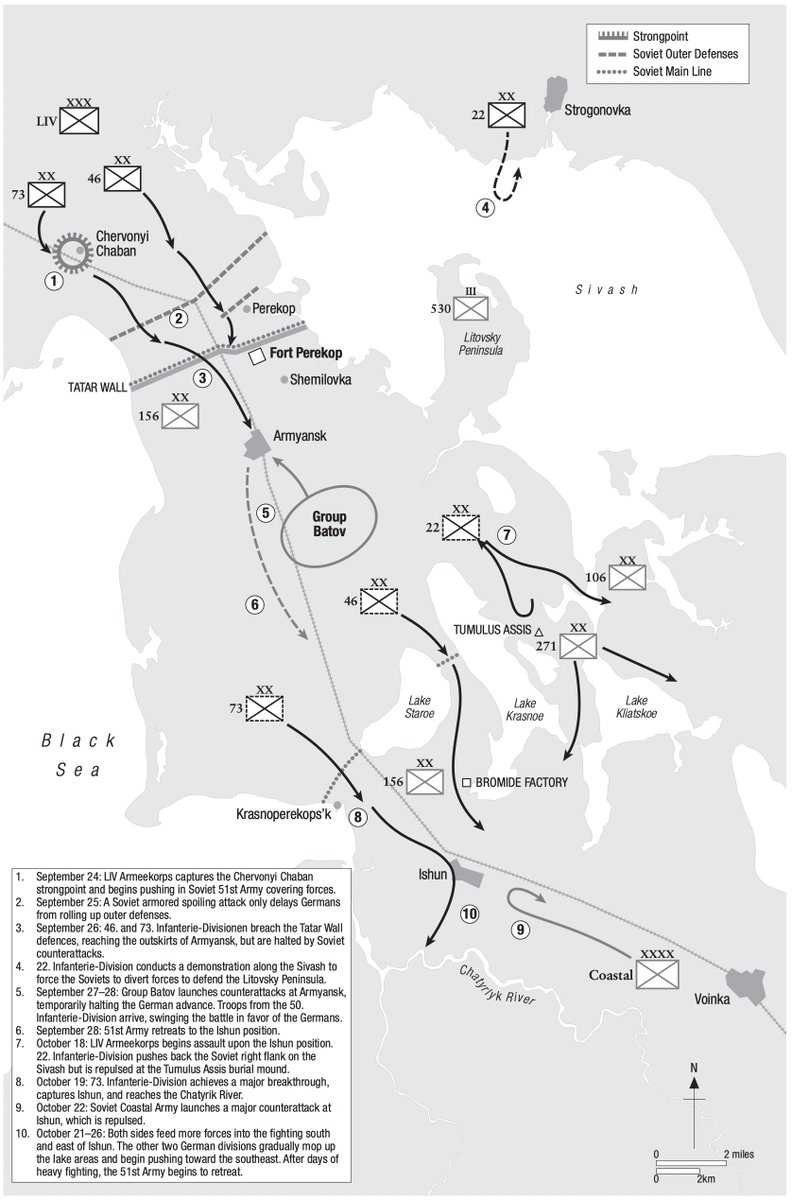
15/ The battle began on 24 September 1941 with an artillery bombardment and an assault by the German 46th and 73rd Infantry Divisions. The Germans had no tanks, which were of little use anyway in the isthmus' minefields and ditches and the limited available room for manoeuvre.
16/ The Germans relied on SdKfz 142 self-propelled assault guns armed with a 75 mm high-velocity gun, and heavy Czech-made 149 mm howitzers and 305 mm mortars. Engineering, air and artillery support was critical to reducing the obstacles by blasting, bombing and shelling.

17/ The Germans made only modest progress in the first day of fighting, suffering over 1,800 casualties A Soviet counter-attack the following day was defeated with heavy casualties and the loss of a third of the Soviet infantry force as well as eight tanks.
18/ The Germans reached the Tatar Ditch on 26 September. Stormtrooper units climbed the ditch wall on wooden boards. Once again the Germans suffered heavy casualties but by 10:30, they were able to punch through the Soviet defences.
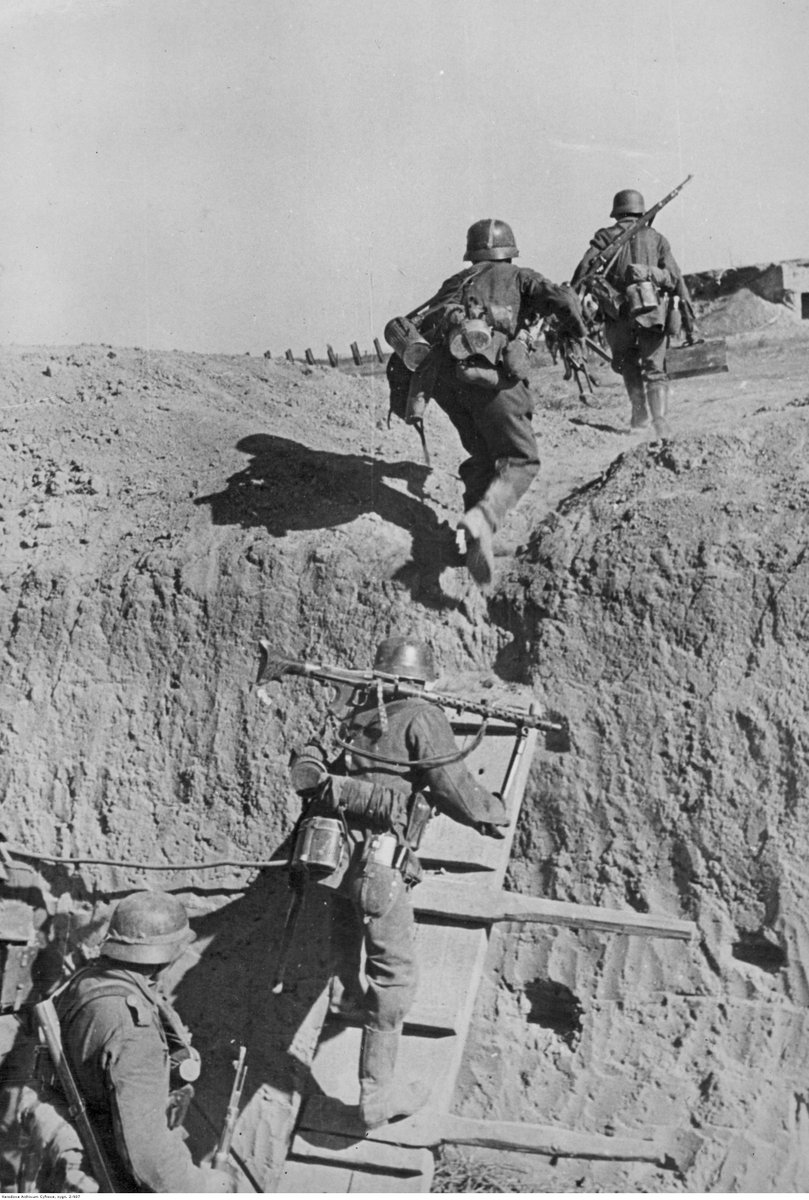
19/ The Germans advanced to Armyansk by nightfall, with the Soviets still in control of part of the Tatar Ditch. The attack had cost Germany over 600 casualties. Armyansk changed hands again on 27 and 28 September, but the Germans were eventually able to drive out the Soviets.
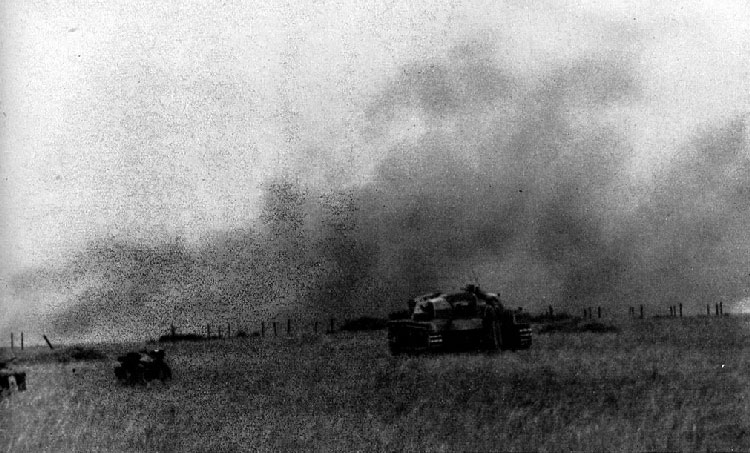
20/ Soviet forces withdrew to a second line of defence at Ishun, about 20 km southeast of Perekop. The Germans had suffered 2,641 casualties up to this point and at least 10,000 Red Army soldiers were reported to have been captured, along with great quantities of equipment.

21/ Another 15-20,000 Soviet troops held the line at Ishun. Although the Red Army had over 50,000 men in Crimea, the rest were engaged in guarding other possible invasion routes and possible amphibious invasion sites, although the Germans had no such capability at the time.
22/ The Germans attacked at Ishun on 18 October, again launching an artillery bombardment before stormtroopers advanced along narrow isthmuses between parallel lakes. This was extremely difficult, as they were channeled down narrow strips only 1.5 km (1 mi) wide with no cover.
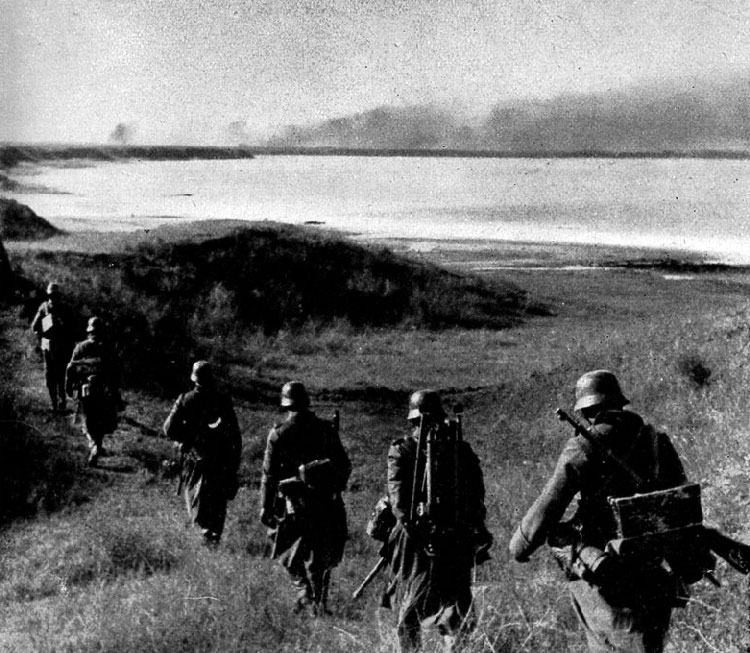
23/ Not surprisingly, Soviet machine gunners and artillery killed many of the attackers. By the day's end the Germans had suffered over 1,300 casualties. Assault guns, artillery and small assault squads had better luck the following day and successfully dislodged the Soviets.
24/ By the end of 19 October, the Soviet 51st Army was virtually broken and the Germans had punched 8 km (5 miles) deep into their defences. Over the following days the Luftwaffe shot down numerous Soviet aircraft while German ground forces repelled Soviet counterattacks.
25/ The battle continued until 26 February, when the shattered Soviets began to withdraw to Simferopol. The Germans had won the battle, but at a very high cost of over 12,000 casualties – equivalent to an entire division. The Soviets lost at least 44,000 men.
26/ The battle had been a lot closer than the casualty counts might have suggested. The German victory came from the combination of a number of advantages: effective combined-arms tactics, superior leadership, better training and the presence of skilled, experienced soldiers.
27/ This was not the end of the fight for Crimea. Unlike in previous conflicts, fighting continued for months – notably the siege of Sevastopol and the winter battles for control of the Kerch Peninsula. They were enormously bloody affairs for both sides.
28/ The battle for Sevastopol took 8 months (30 October 1941 – 4 July 1942). It resulted in 35,866 German and Romanian casualties, and over 318,000 Soviet casualties – dead, wounded, missing and prisoners of war (most of whom perished in German captivity).
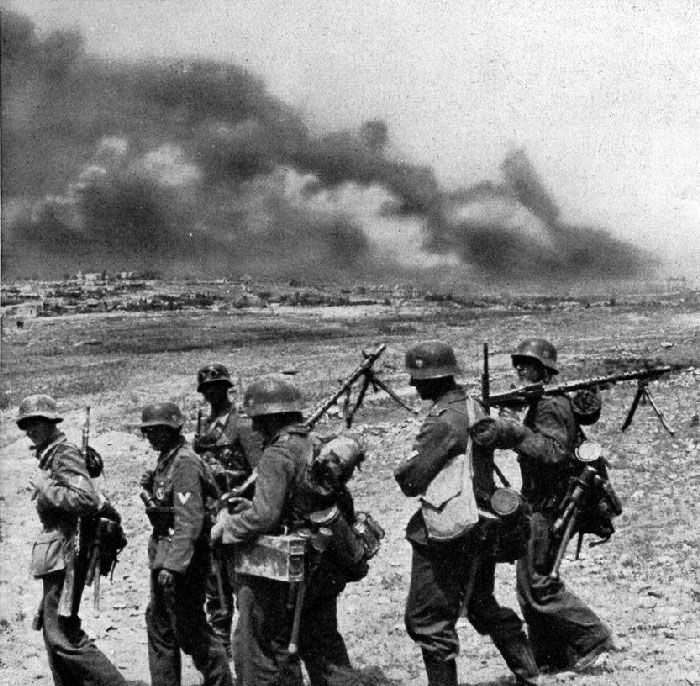
29/ The Soviets counter-attacked in December 1941 around Kerch at the eastern end of the Kerch Peninsula and the port of Feodosiya at the western end. Successful Soviet amphibious attacks retook a large amount of territory and demonstrated Crimea's vulnerability from the east.
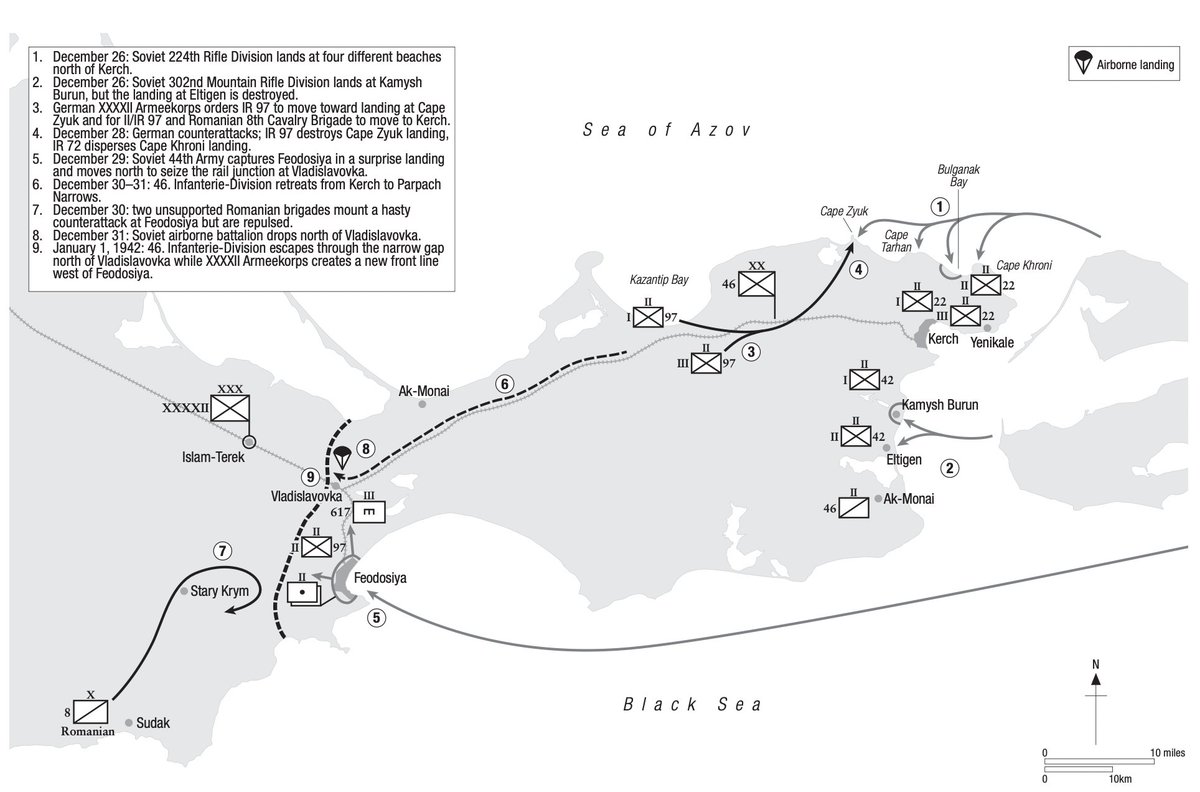
30/ The Soviets established a defensive line at the neck of the peninsula, running roughly from the base of the Arabat Spit to the Black Sea south of Parpach. This position – sometimes known as the Ak-Monai line – is only about 7.5 km (5.5 mi) wide by 9 km (6 mi) deep.
31/ The Ak-Monai line crosses a flat, grassy steppe which provides little cover or concealment other than a few villages. Any movement in the area is highly vulnerable to being spotted and targeted by aircraft and artillery, which the Germans proved very effective at doing.
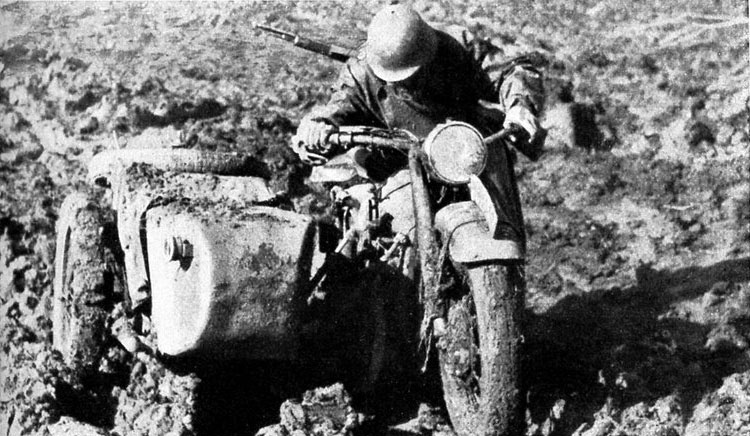
32/ General-Lieutenant Dmitri Kozlov's 51st Army sought to attack across the line to retake the rest of Crimea in February 1942. He was hampered by his own amateurish leadership, a lack of ammunition and heavy artillery, and appalling weather which had reduced roads to mud.
33/ After it began on 27 February, the Soviet offensive became a disaster, with the ground so waterlogged that their troops could not even lie down on it. The Red Army lost over 130 tanks in one week and another 157 tanks in a second offensive launched in a snowstorm on 13 March.
34/ The offensives resulted in 352,000 Soviet casualties against 'only' 24,120 Germans – a ratio of 14 to 1. Worse was to come in May, when the Germans launched Operation Trappenjagd – 'Bustard Hunt' – which was intended to defeat the Russians in Kerch in a single stroke.
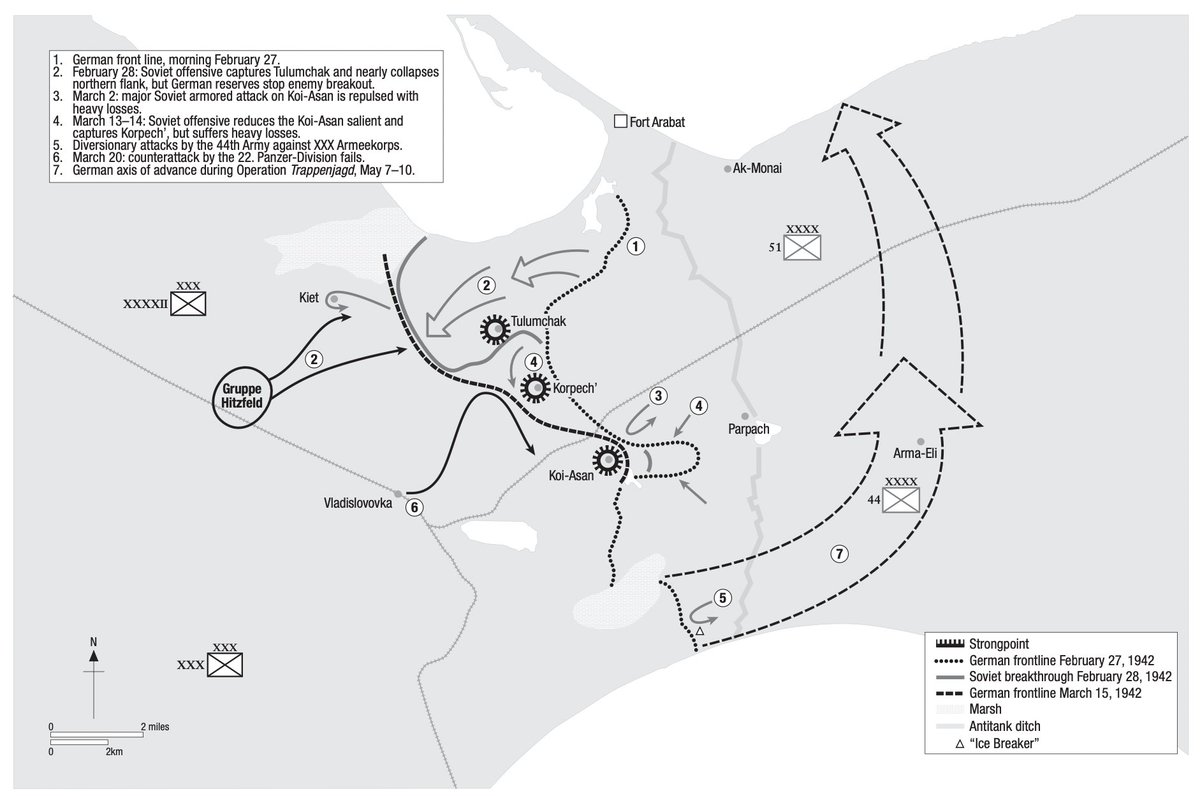
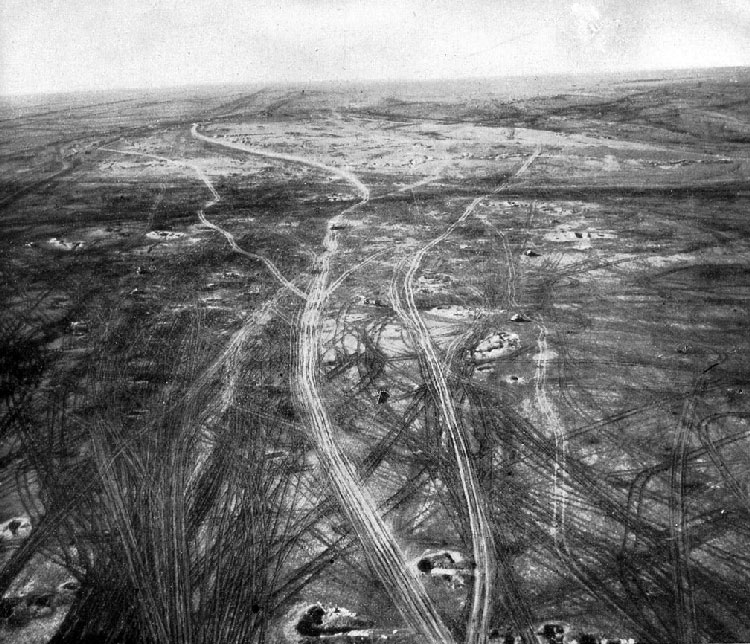
35/ The Germans used their air power, artillery and captured Soviet tanks to blast a path through the Soviet defences in the swampy southern end of the front line on 7 May. They overran the Soviet front line while a simultaneous amphibious attack was launched against the rear.
36/ German assault troops bypassed the Soviet defences and rapidly overwhelmed the rear echelons. A Soviet counter-attack was smashed by the Luftwaffe in the isthmus's open steppe. Soviet resistance subsequently collapsed and the Germans reached Kerch by 14 May.
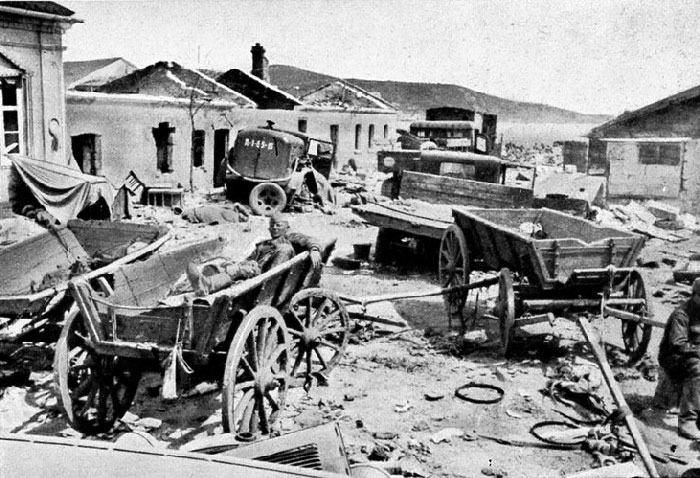
37/ Out of the 250,000-strong Soviet force, 28,000 were killed and 147,000 more were captured within only two weeks. The victorious Germans were able to switch their attention back to Sevastopol and concluded the grinding siege within another 2 months.
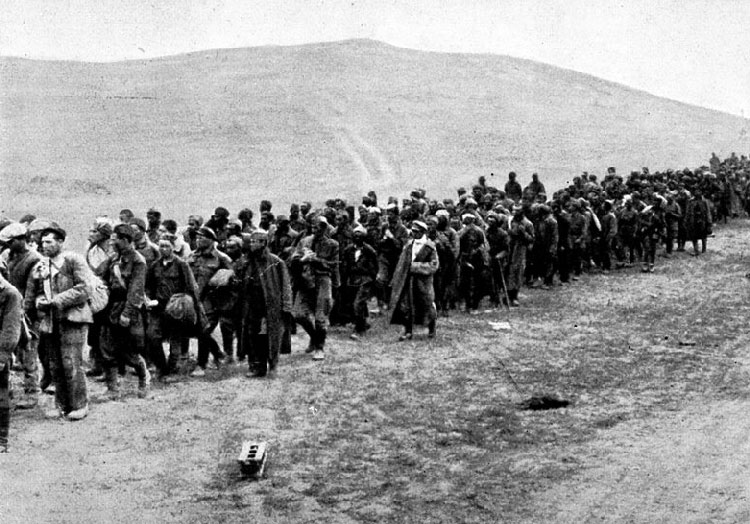
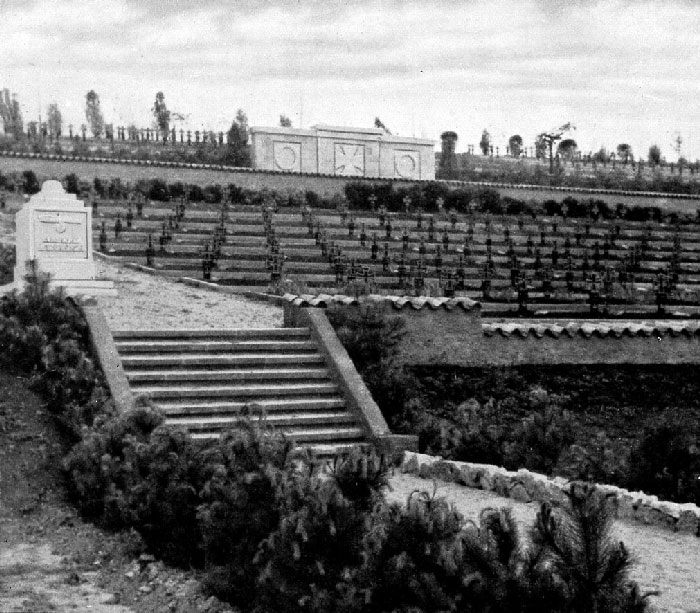
38/ This concluded the 1941-42 invasion of Crimea, which had been achieved at a staggering cost – over 500,000 Soviet casualties and at least 115,000 Axis casualties, including 21,600 dead or missing. However, this turned out to be a bigger loss for the Axis than for the Soviets.
39/ Germany ruled the peninsula for the next 2 years, exterminating its Jews and persecuting the local population. They also faced regular partisan attacks which caused them many more casualties, tied down tens thousands of Axis troops and caused severe logistical difficulties.
40/ In the next and penultimate thread, I'll cover how the Soviets retook the peninsula in 1943-44. This will be followed by a concluding thread, highlighting the key points that Crimea's military history may hold for Ukrainian ambitions to overturn Russia's 2014 annexation.
41/ (Note: Battle maps in this thread are from Robert Forczyk’s excellent book, “Where the Iron Crosses Grow: The Crimea 1941-44” – it's well worth a read.) /end
Loading suggestions...