

Clonal hematopoiesis is an expansion of blood stem cell clones caused by mutations in a recurrent set of genes. Our paper on factors mediating expansion of these mutant clones is published today.
nature.com
Thread below...
nature.com
Thread below...
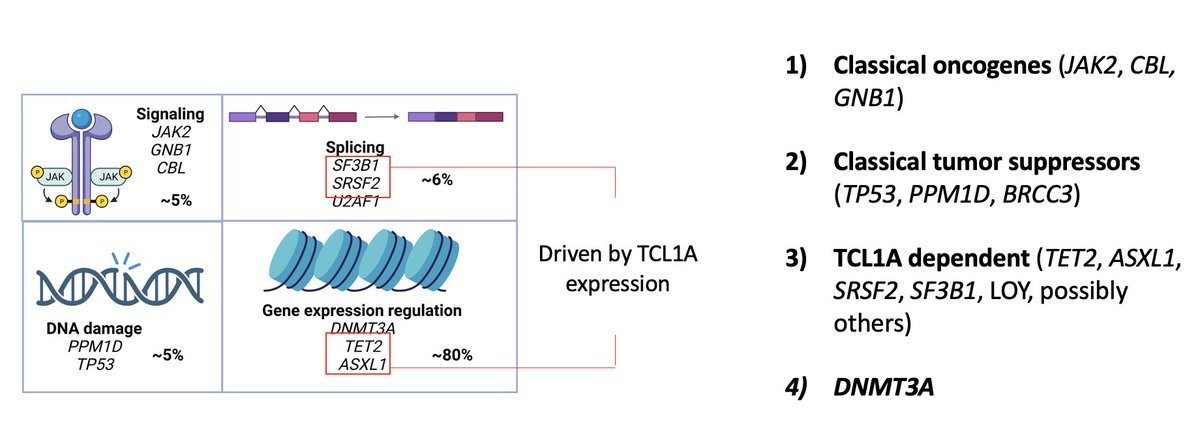
One of the biggest surprises in studies of clonal hematopoiesis has been how few mutations are in classical oncogenes and tumor suppressors. Instead, the majority of mutations are in "epigenetic" factors. Why? This is a mystery that has perplexed me for >10 years.

While there are elegant studies in model systems, the factors influencing the growth of these clones in humans has been difficult to study, in part due to a lack of large cohorts with serially sampled blood which could enable systematic studies on correlates of expansion.
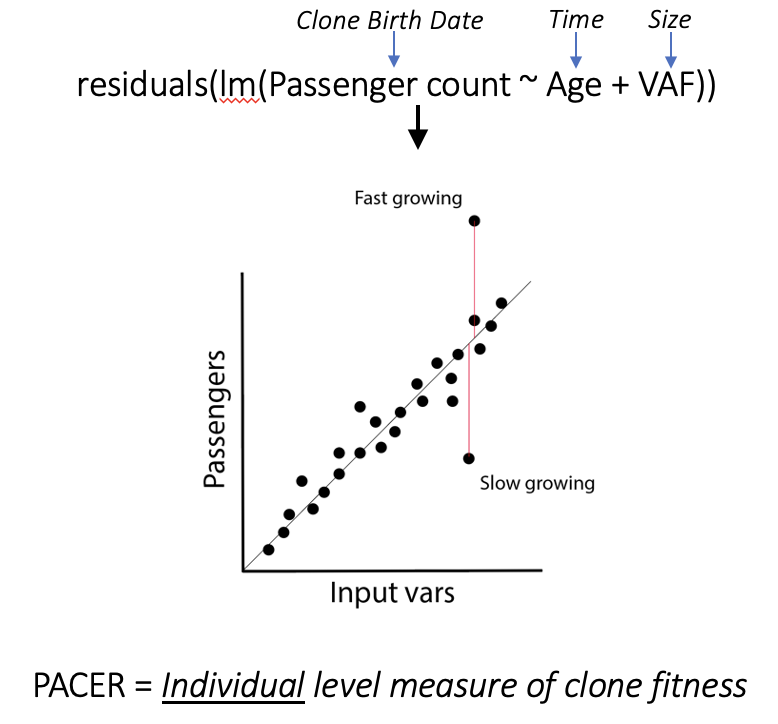
To overcome this limitation, @J__Stock @AlexBickMDPhD and I developed PACER, which uses passenger mutation burden to estimate expansion rate from a SINGLE time point. We were able to determine expansion rate in ~5000 people with CH, >10X the size of prior longitudinal datasets.
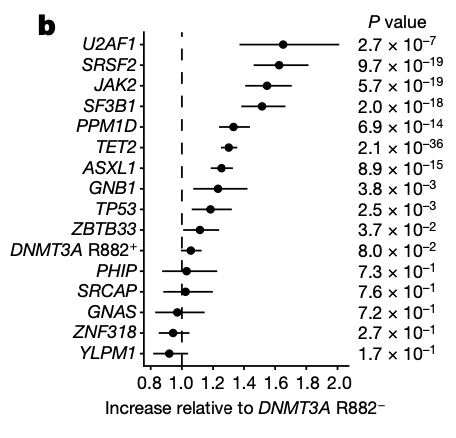
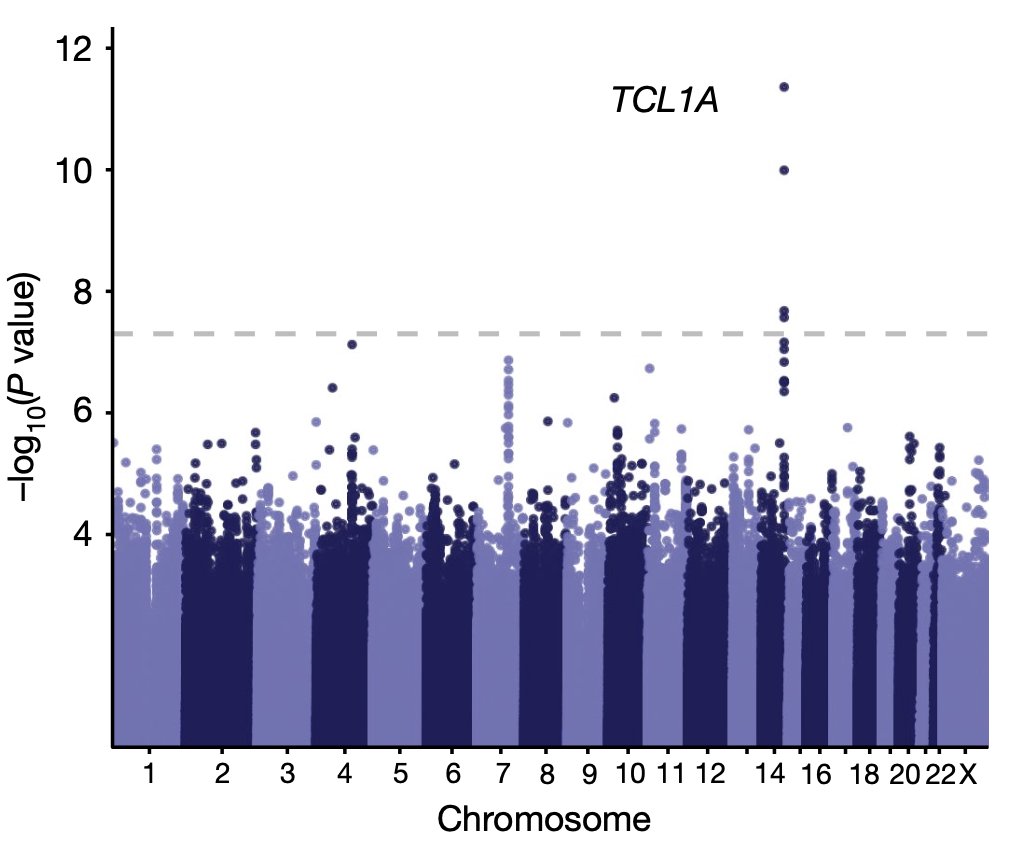
We hypothesized that heritable genetic variation could tell us about genes important for clonal expansion. Indeed it did, as a genome-wide association study found a variant (rs2887399 T-allele) in the promoter of the TCL1A gene strongly associated with slower expansion rate..
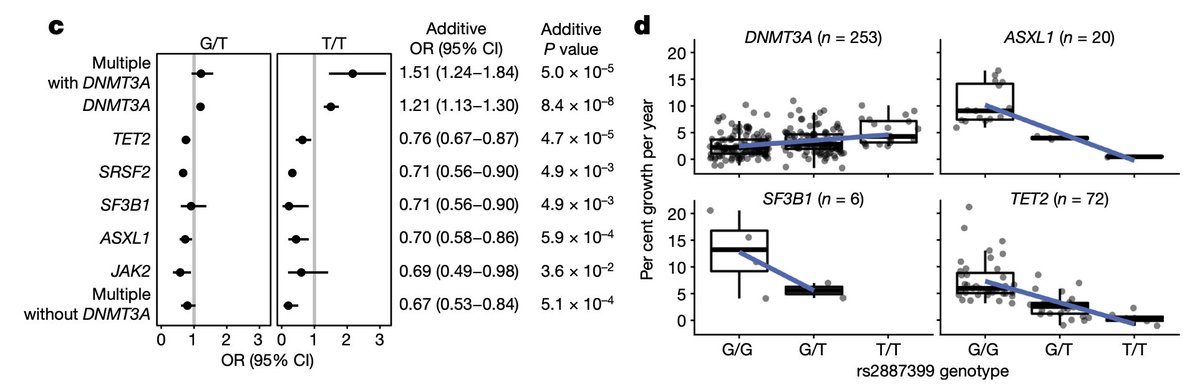
...but predominantly in clones without DNMT3A mutations. Specifically, the variant protected against mutations in TET2, ASXL1, SF3B1, and SRSF2, all commonly found in myeloid cancers. Previous work from @mitchiela showed the variant also protected against CH due to loss of Y.
How does this work? @Jk_Gopakumar did some fantastic detective work and found that normal HSCs do not express TCL1A, but it gets turned on in the setting of certain mutations, like TET2 or ASXL1 truncations (but not DNMT3A). TCL1A expression is blocked by the protective SNP.
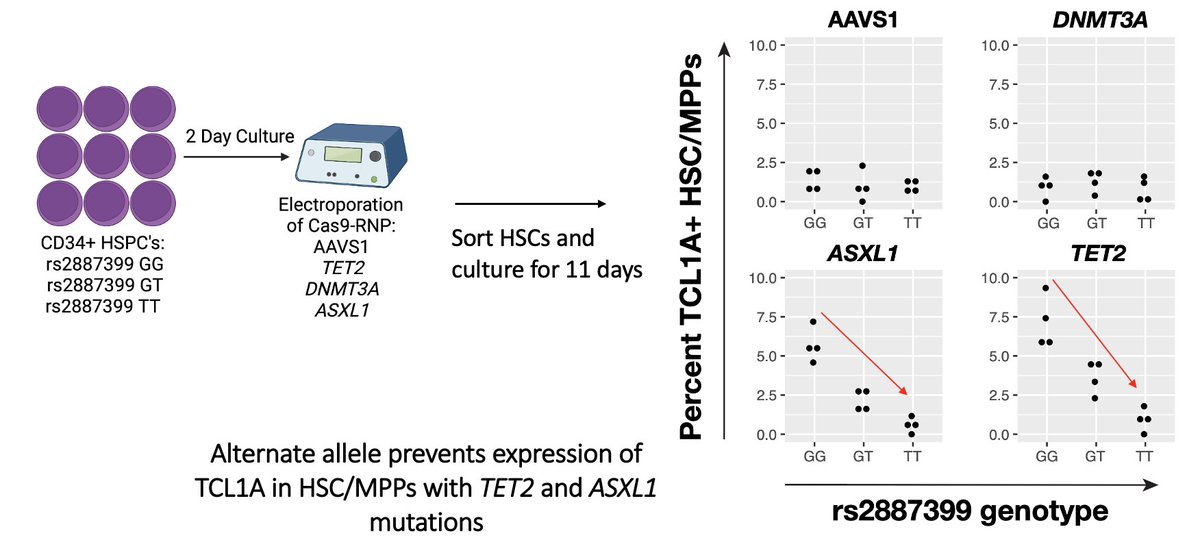
This suggests a simple model: mutations in TET2/ASXL1/SF3B1/SRSF2/LOY promote clonal expansion by increasing TCL1A expression in HSCs. The protective variant blocks expression of the gene, explaining the decreased expansion rate in those carrying this variant.
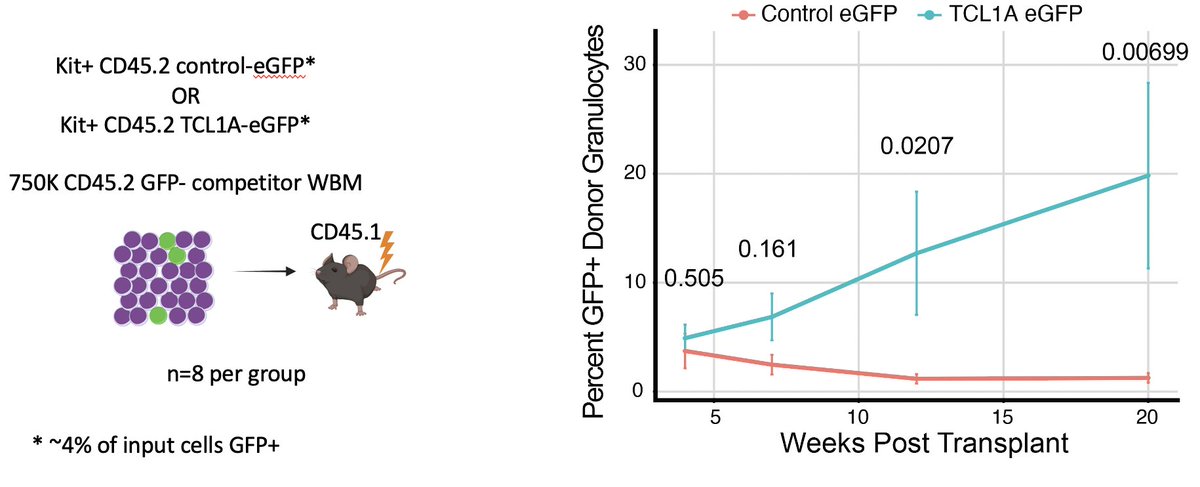
One prediction from this model is that simply expressing TCL1A in HSCs should be sufficient to cause expansion in model systems. Indeed, this was the case, as we saw robust expansion of both human HSCs in vitro and mouse HSCs in vivo with forced expression of TCL1A!
So we think we solved at least part of the mystery of why these mutations promote fitness of HSCs. We propose classifying common driver genes implicated in clonal hematopoiesis into 4 groups:
This work would not have been possible without the efforts of stellar trainees @J__Stock and @Jk_Gopakumar, as well as long-time collaborator, @AlexBickMDPhD . The reviewers and @MT_Genetics provided excellent feedback which greatly improved the manuscript from the preprint.
Last, but not least, I thank @NIH_CommonFund @nih_nhlbi for funding the crazy idea for PACER, originally proposed in a New Innovator Award grant proposal. And @LLSResearch for supporting further work on TCL1A.
Loading suggestions...