

NEW: we need to talk about NHS staff retention.
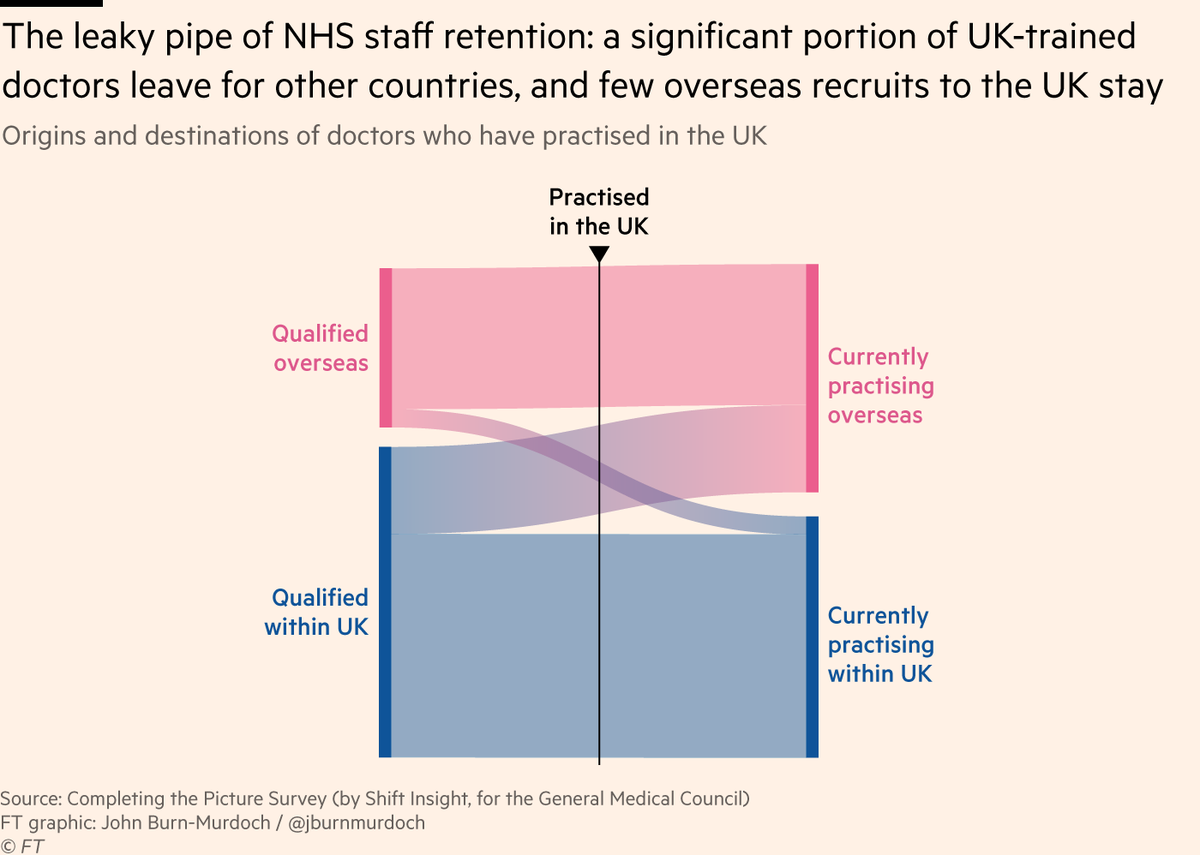
At a time when Britain’s healthcare system is acutely short of workers, *1 in 7* UK-trained doctors are practising overseas. No other developed country is like this, which immediately tells you there’s a problem.
Let’s dig deeper:
At a time when Britain’s healthcare system is acutely short of workers, *1 in 7* UK-trained doctors are practising overseas. No other developed country is like this, which immediately tells you there’s a problem.
Let’s dig deeper:

First, let’s address some common pushback.
Some argue that there can’t really be a staffing crisis if the NHS can consistently recruit from overseas to make up for these departures. But there are two problems with this view.
Some argue that there can’t really be a staffing crisis if the NHS can consistently recruit from overseas to make up for these departures. But there are two problems with this view.
The first is that international flows of staff are imbalanced.
Most staff recruited from overseas return to work in their origin countries (or leave for a third country), and a significant portion of UK-trained staff leave.
Outflows exceed inflows: it’s a leaky pipe.
Most staff recruited from overseas return to work in their origin countries (or leave for a third country), and a significant portion of UK-trained staff leave.
Outflows exceed inflows: it’s a leaky pipe.
The second is that even if recruitment keeps pace with departures, the churn rate itself is a problem.
As of last December, one in eight NHS staff had been in their current role for less than a year, the highest figure since this series was first recorded in 2009.
As of last December, one in eight NHS staff had been in their current role for less than a year, the highest figure since this series was first recorded in 2009.
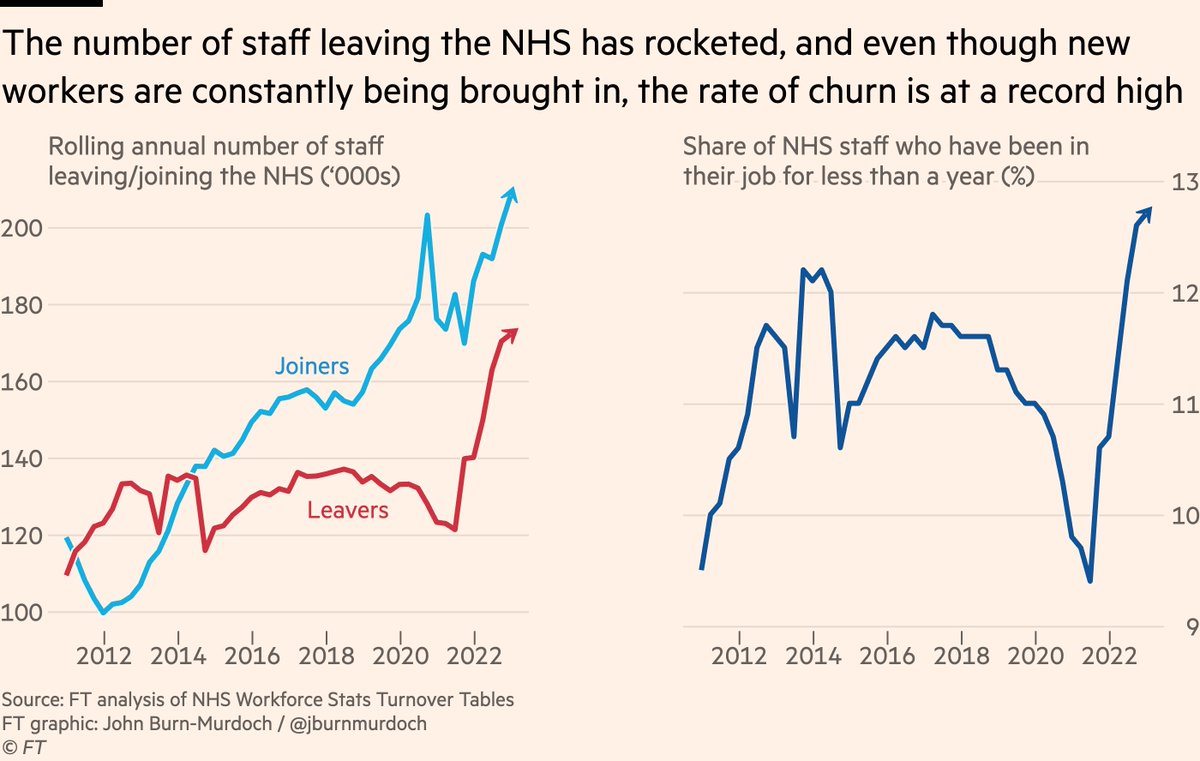
This means more work is carried out by agency staff or less experienced team members, which has been shown by @BenZaranko and co to increase the risk of harm to patients qualitysafety.bmj.com

So what can be done to plug the leak? As nurses prepare for another strike on Sunday and talks between the government and junior doctors remain stalled, the most obvious and frequently mentioned solution is pay.
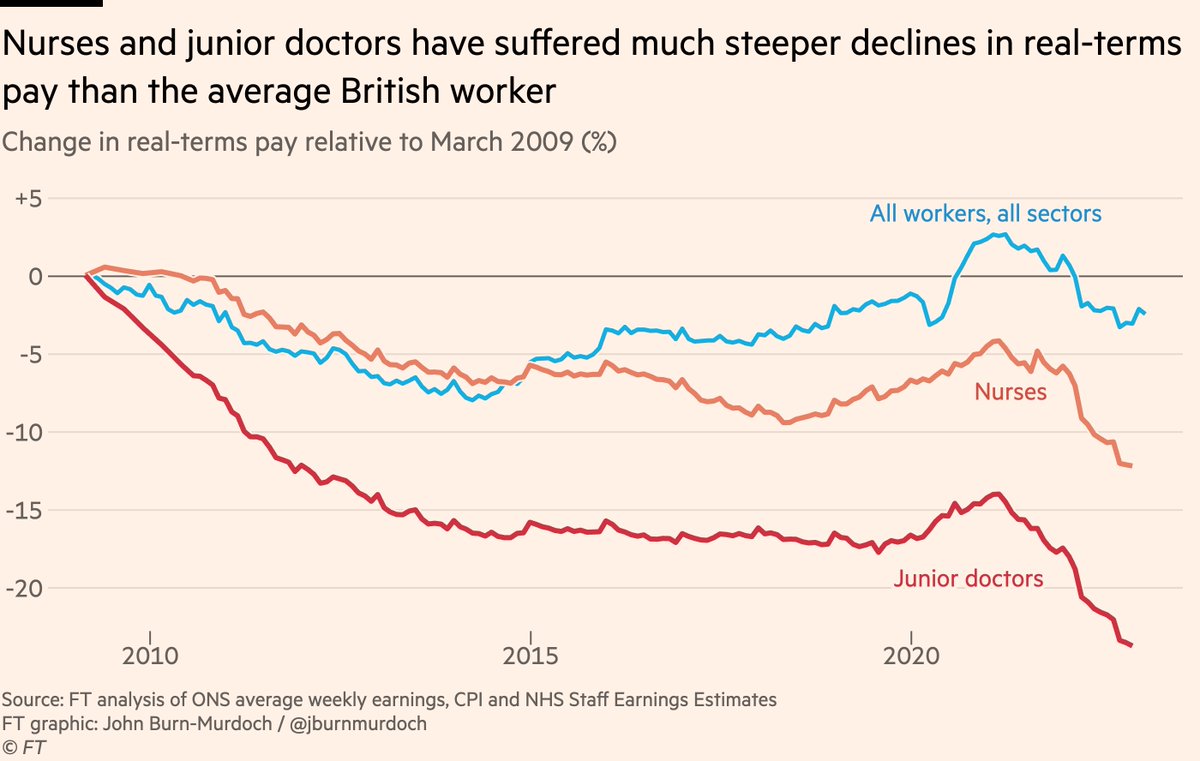
Critics of striking medics argue that everyone is suffering at the moment. But doctors & nurses have had it worse.
Recent inflation has taken the average UK worker’s real wages 2.5% below their 2009 level, but earnings are down 13% for nurses and 24% (!) for junior doctors.
Recent inflation has taken the average UK worker’s real wages 2.5% below their 2009 level, but earnings are down 13% for nurses and 24% (!) for junior doctors.
For some groups in particular, the numbers are eye-watering.
Specialty registrars — junior doctors about 5-10 years into their professional career — would be earning *£20,000* more per year today if pay had kept up with inflation.
Specialty registrars — junior doctors about 5-10 years into their professional career — would be earning *£20,000* more per year today if pay had kept up with inflation.

The result is that highly skilled and expensively trained medical professionals are slipping down the UK’s income distribution, while the list of countries where they could earn more grows by the year.
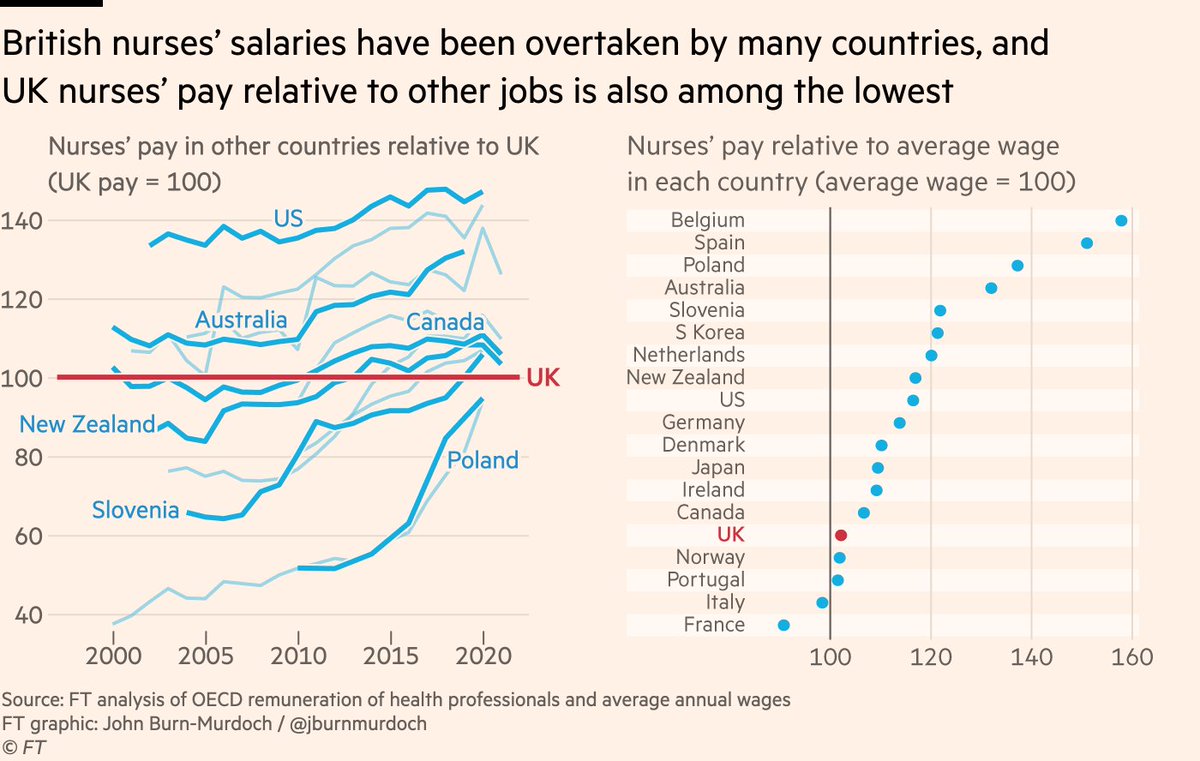
As the pay-off for a gruelling decade of training and an intensely stressful job diminishes, it is not surprising that they look elsewhere.
BUT: while better pay will help, its role in the NHS’s retention problem is often overstated.
When a cohort of doctors who recently left the UK were asked what prompted them to go, they were ~2x as likely to point to workplace culture, burnout and stress as to financial reasons.
When a cohort of doctors who recently left the UK were asked what prompted them to go, they were ~2x as likely to point to workplace culture, burnout and stress as to financial reasons.

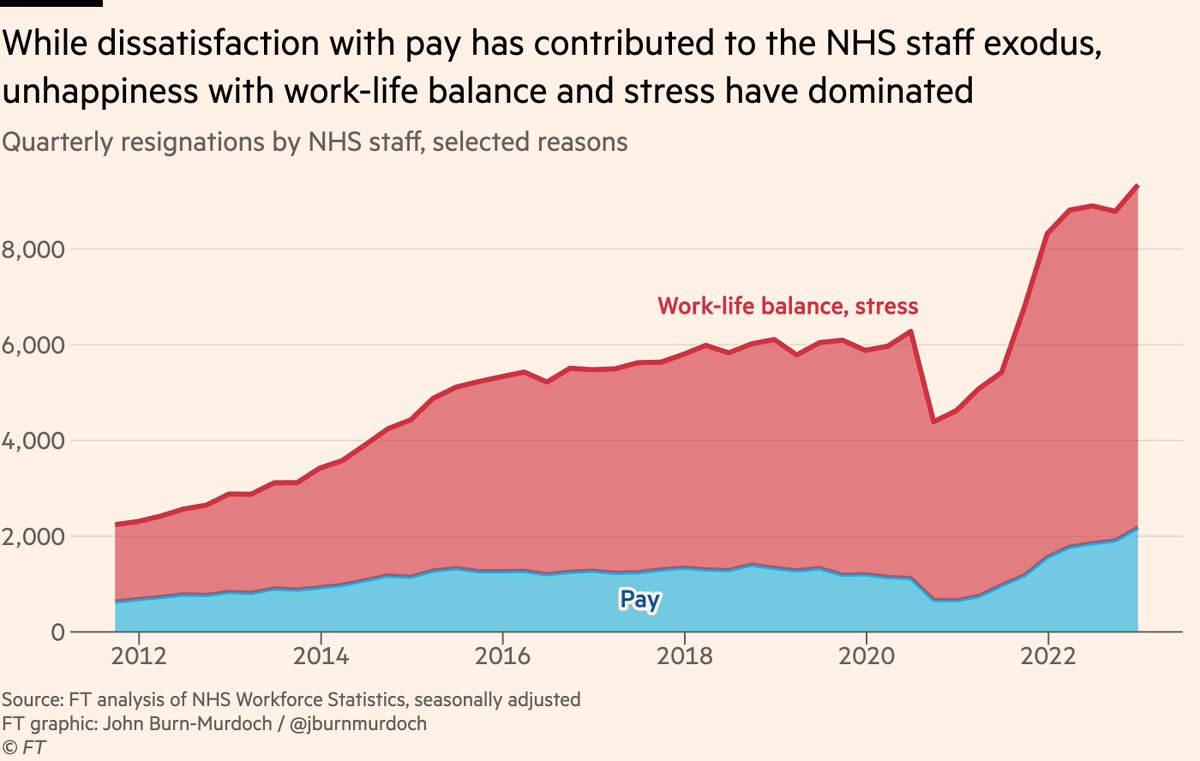
This is corroborated by NHS data, which shows that the huge increase in voluntary resignations over the past two years has been driven by people citing problems with their work-life balance.
For the most damning assessments, we can turn to comments made in another series of interviews with UK-trained doctors who have gone overseas.
While pay was mentioned by some, qualitative factors dominated, and they paint a dim picture of NHS working conditions by comparison
While pay was mentioned by some, qualitative factors dominated, and they paint a dim picture of NHS working conditions by comparison

The government’s hardball stance on pay only serves to confirm British healthcare workers’ growing sense of being under appreciated.
But the data here make clear that even once a deal is reached, broader and deeper changes are needed if an NHS career is to regain its allure.
But the data here make clear that even once a deal is reached, broader and deeper changes are needed if an NHS career is to regain its allure.
So, what should be done?
One thing that would help would be to increase the anaemic numbers of managers in the NHS to free up nurses and doctors to do what they were trained for.
(the NHS being over-managed is a complete myth kingsfund.org.uk)
One thing that would help would be to increase the anaemic numbers of managers in the NHS to free up nurses and doctors to do what they were trained for.
(the NHS being over-managed is a complete myth kingsfund.org.uk)

Investing in better equipment and technology to improve the experience of working on the wards would be another good step, as would more staff-specific policies such as making the process of requesting leave more streamlined and transparent.
Ultimately, many of the same things that will help alleviate pressure on the NHS as a whole in the long run will also make it less difficult to work there right now.
And here’s my column in full: enterprise-sharing.ft.com
And here’s my column in full: enterprise-sharing.ft.com
Loading suggestions...