

1/7
SPLENOMEGALY
Q: What is it?
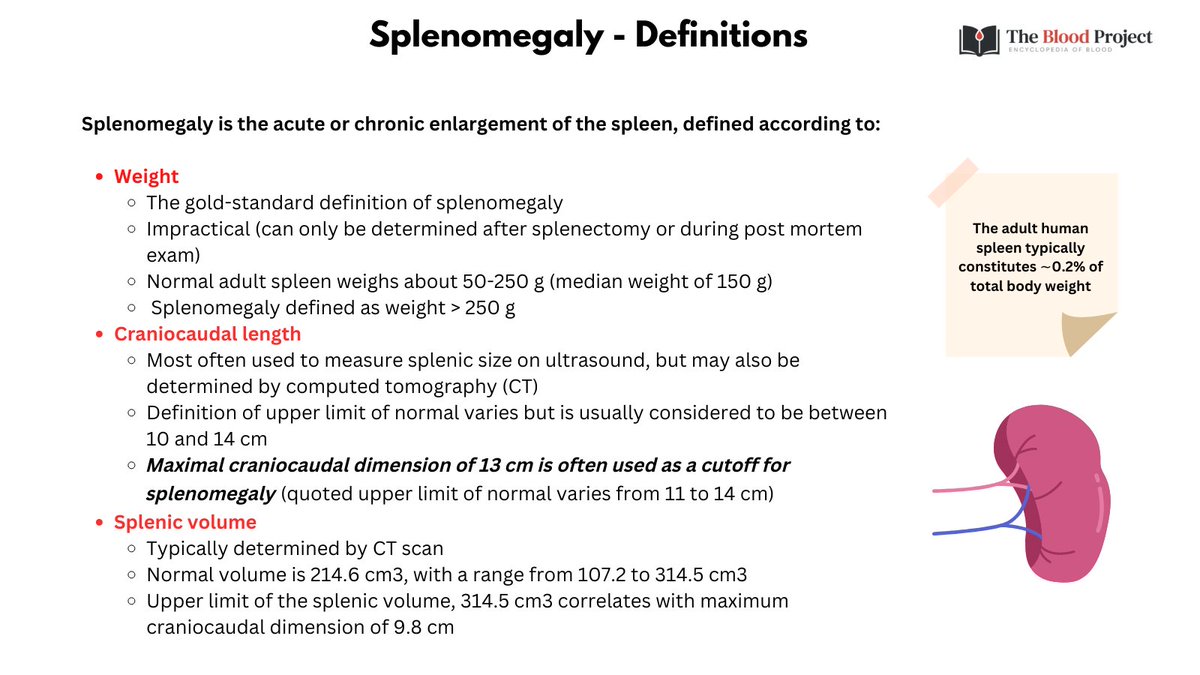
A: An abnormal enlargement of the spleen
Q: How is it defined?
A: Typically by a craniocaudal dimension of >13 cm
Q: How common is it?
A: Reported in 2%-5.6% of unselected medical outpatients
SPLENOMEGALY
Q: What is it?
A: An abnormal enlargement of the spleen
Q: How is it defined?
A: Typically by a craniocaudal dimension of >13 cm
Q: How common is it?
A: Reported in 2%-5.6% of unselected medical outpatients
2/7
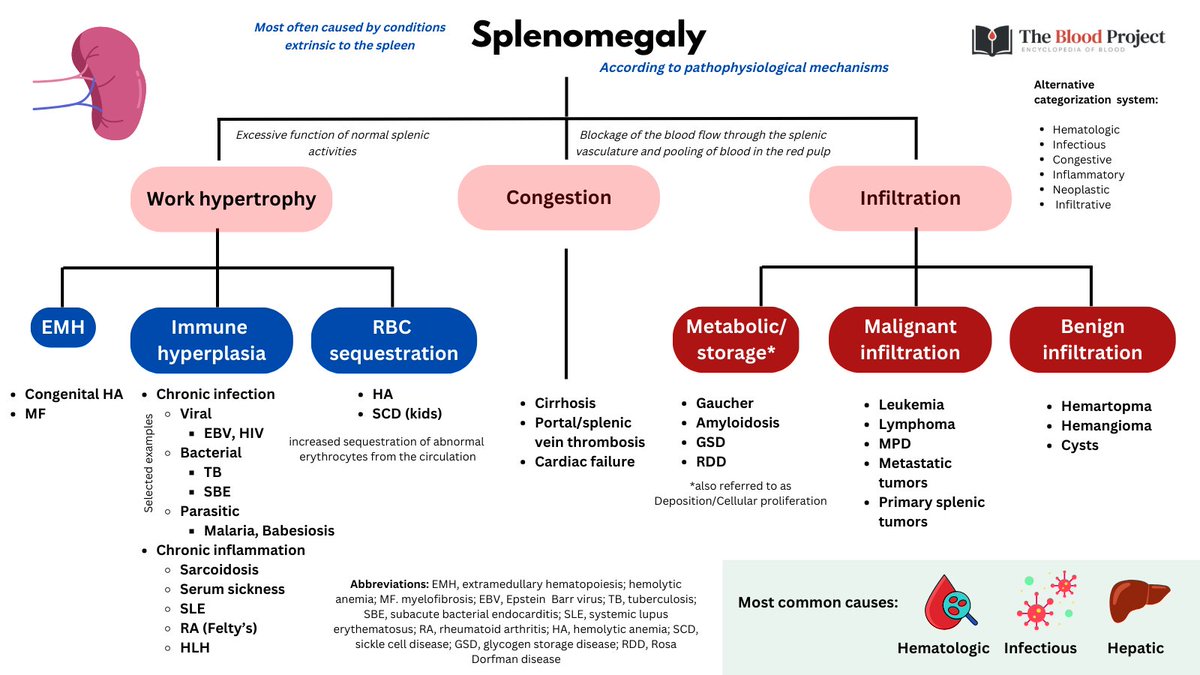
Q: How is splenomegaly classified
A: Mechanistically, according to:
1. Work hypertrophy
2. Congestion
3. Infiltration
Q: How is splenomegaly classified
A: Mechanistically, according to:
1. Work hypertrophy
2. Congestion
3. Infiltration
3/7
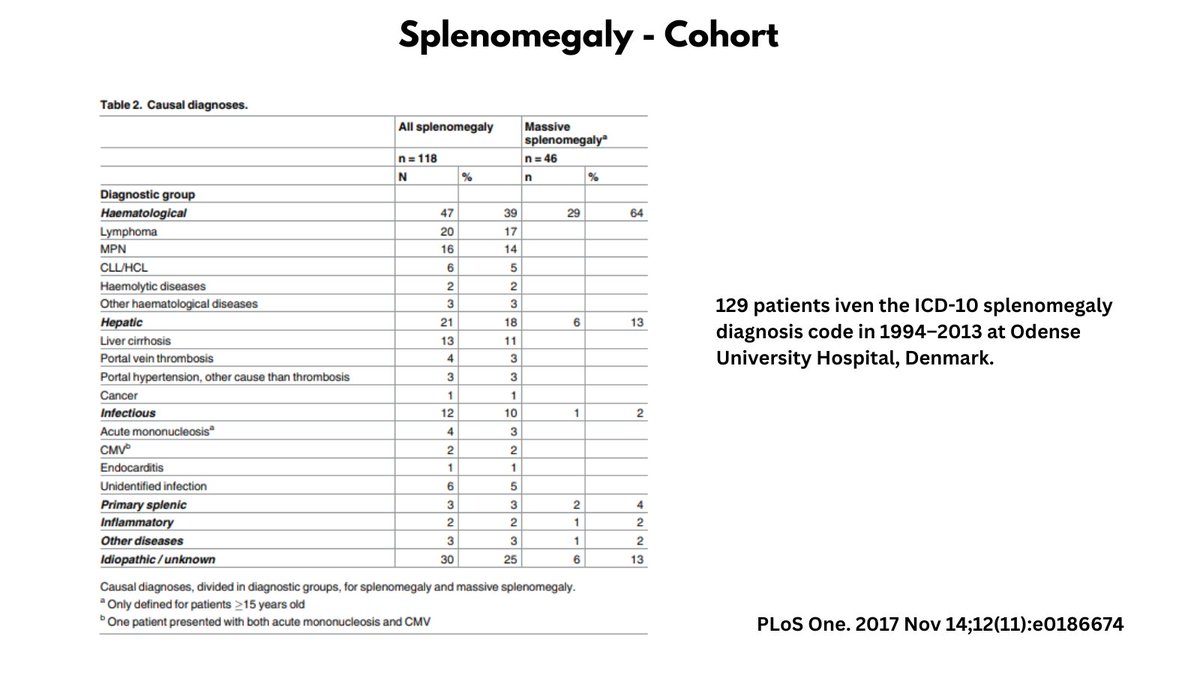
Causes of splenomegaly from a representative cohort of patients is shown in the graphic below.
Causes of splenomegaly from a representative cohort of patients is shown in the graphic below.
4/7
Q: What is the clinical presentation of a patient with splenomegaly?
A: Highly varied! Consider symptoms and signs shown in the graphic.
Q: What is the clinical presentation of a patient with splenomegaly?
A: Highly varied! Consider symptoms and signs shown in the graphic.

5/7
Q: How sensitive/specific is the physical exam for diagnosing splenomegaly?
A: Sensitivity of percussion/palpation 55-70%; specificity about 90%
Q: What is the preferred test for securing a diagnosis of splenomegaly?
A: Ultrasound
Q: How sensitive/specific is the physical exam for diagnosing splenomegaly?
A: Sensitivity of percussion/palpation 55-70%; specificity about 90%
Q: What is the preferred test for securing a diagnosis of splenomegaly?
A: Ultrasound
6/7
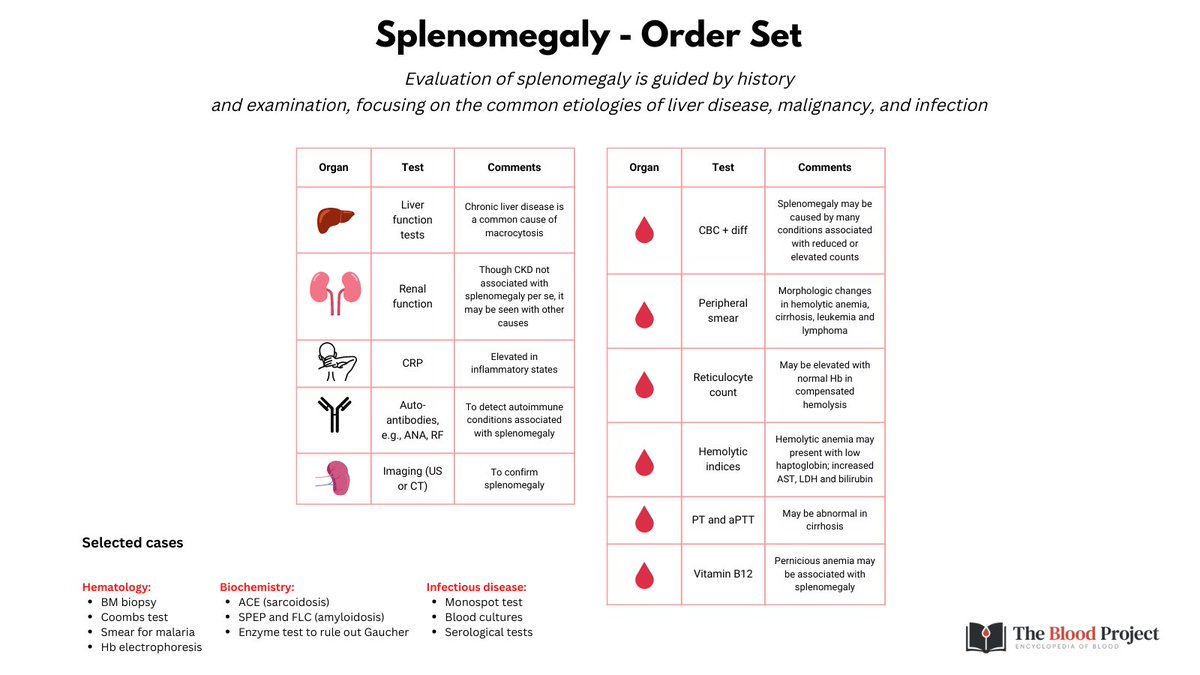
Q: What work up should I do in a patient with splenomegaly?
A. Context-dependent but a typical work up is shown in the graphic
Q: What work up should I do in a patient with splenomegaly?
A. Context-dependent but a typical work up is shown in the graphic
7/7
P.S.
The spleen contains 2 major compartments:
1. The white pulp (T and B cells) supports adaptive immune responses
2. The red pulp contains macrophages and RBCs and plays a major role in surveillance of blood-borne pathogens, elimination of old RBCs, and iron recycling
P.S.
The spleen contains 2 major compartments:
1. The white pulp (T and B cells) supports adaptive immune responses
2. The red pulp contains macrophages and RBCs and plays a major role in surveillance of blood-borne pathogens, elimination of old RBCs, and iron recycling

Loading suggestions...