

This is how i take profits⬇️
This tweet will be a bit more comprehensive since this topic, requires a bit more in depth explanation and visualisation than stop-losses does.
This will not be one singular way of taking profits, but a multitude of "Take profit strategies" that i utilise to get out of partial and full positions, to secure profits.
Profit taking is a very useful risk management tool, which most traders don't even think about. I will dive deeper into this.
With that said. This will be a thread containing all of the "Take profit" methods that i use in my trading.
I hope this sparks your interest into exploring some "profit taking methods" on your own.
Happy Reading!🧵⬇️
1/6
This tweet will be a bit more comprehensive since this topic, requires a bit more in depth explanation and visualisation than stop-losses does.
This will not be one singular way of taking profits, but a multitude of "Take profit strategies" that i utilise to get out of partial and full positions, to secure profits.
Profit taking is a very useful risk management tool, which most traders don't even think about. I will dive deeper into this.
With that said. This will be a thread containing all of the "Take profit" methods that i use in my trading.
I hope this sparks your interest into exploring some "profit taking methods" on your own.
Happy Reading!🧵⬇️
1/6
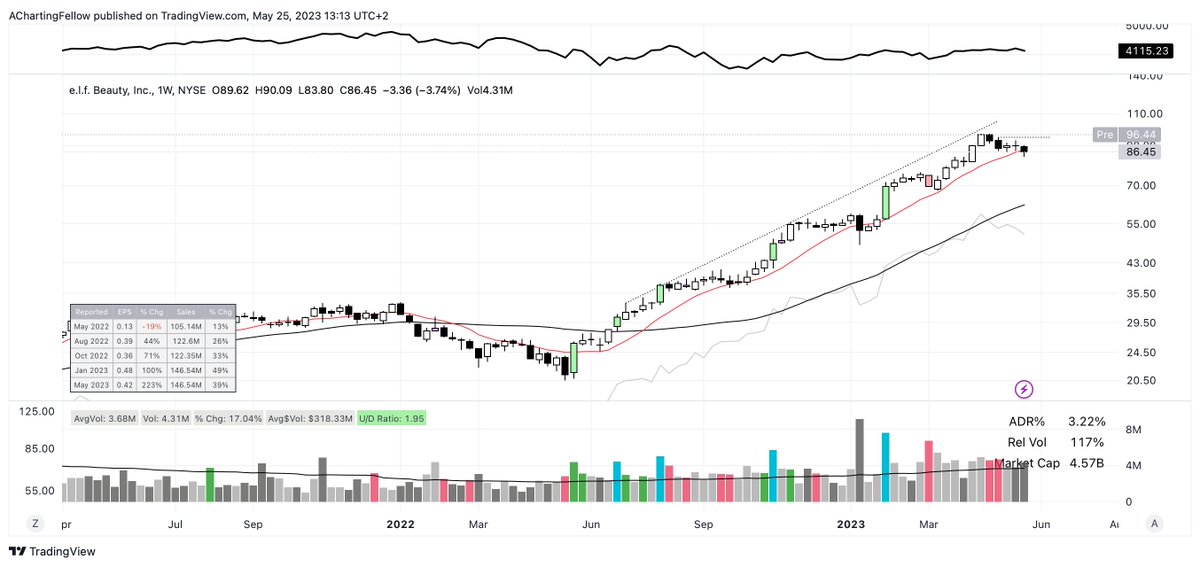
Taking profit as a 'Risk Management Tool':
Taking profit does not always have to be used to solely lock in profits. It is also a very efficient risk management tool.
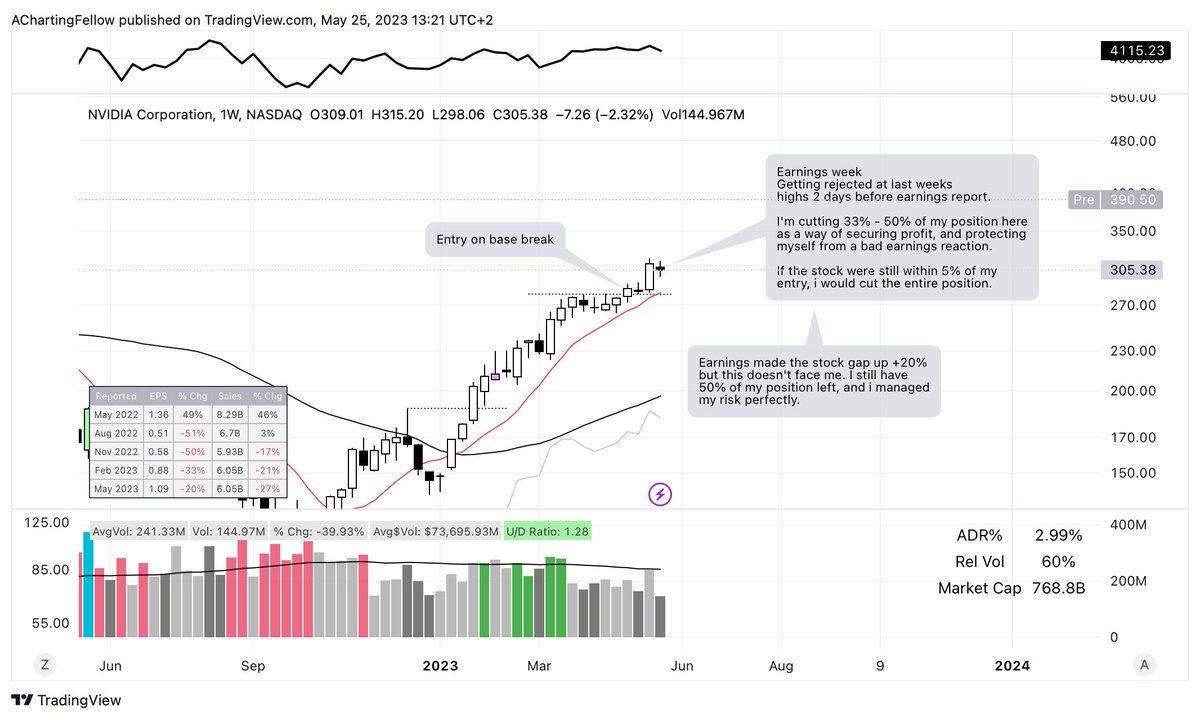
My most recent example of this profit taking method / risk management tool is my position in $NVDA.
The profit-taking strategy depicted on the chart revolves around the concept of taking partial profits, typically ranging from 33% to 50% of the position. This approach involves selling a portion of the position one to two days before the earnings date, aiming to safeguard against potential negative reactions to the company's earnings report. By only liquidating a portion of the position rather than the entire holding, this strategy allows for the possibility of capturing further upside while simultaneously mitigating downside risk.
In most cases, this will protect you from having a green position turn red.
2/6
Taking profit does not always have to be used to solely lock in profits. It is also a very efficient risk management tool.
My most recent example of this profit taking method / risk management tool is my position in $NVDA.
The profit-taking strategy depicted on the chart revolves around the concept of taking partial profits, typically ranging from 33% to 50% of the position. This approach involves selling a portion of the position one to two days before the earnings date, aiming to safeguard against potential negative reactions to the company's earnings report. By only liquidating a portion of the position rather than the entire holding, this strategy allows for the possibility of capturing further upside while simultaneously mitigating downside risk.
In most cases, this will protect you from having a green position turn red.
2/6
Taking profit based on fixed profit targets:
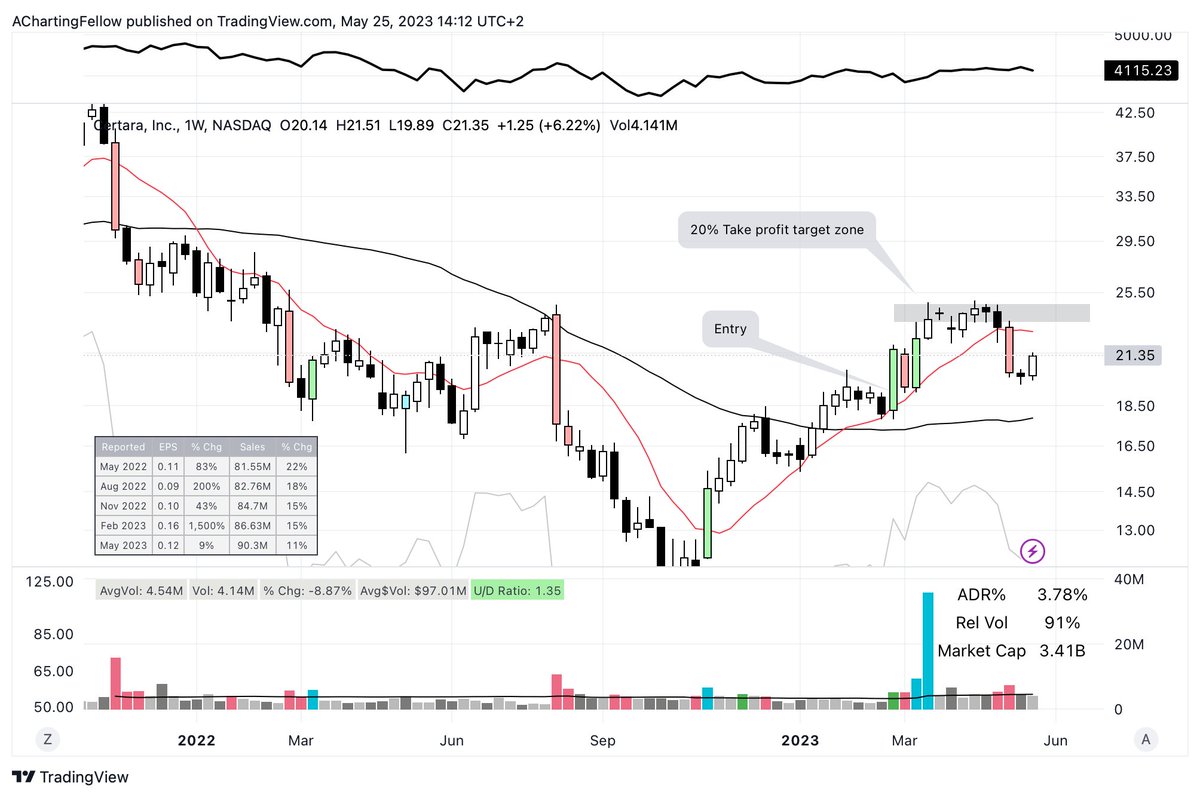
Taking profits based on fixed profit targets is no stranger to most. This is probably the most common way of taking profits. I also do this.
I always take off a piece of my position at 20% from entry in strong markets, and 8-10% in worse markets.
Based on my personal experience, I have noticed a pattern in my trades. In strong markets, I often observe that my trades tend to move around 20-25% from the entry point before experiencing a pullback or entering a period of consolidation. However, in bear markets or more challenging conditions, the trades typically reach a profit of approximately 8-10% before undergoing a similar adjustment. Hence, it is important to adjust the profit targets based on the prevailing market environment.
The chart below illustrates the observed pattern where the trade experienced an approximate 25% increase from the entry point before entering a phase of consolidation and pullback. This consolidation phase serves as a visual representation of the mentioned phenomenon.
3/6
Taking profits based on fixed profit targets is no stranger to most. This is probably the most common way of taking profits. I also do this.
I always take off a piece of my position at 20% from entry in strong markets, and 8-10% in worse markets.
Based on my personal experience, I have noticed a pattern in my trades. In strong markets, I often observe that my trades tend to move around 20-25% from the entry point before experiencing a pullback or entering a period of consolidation. However, in bear markets or more challenging conditions, the trades typically reach a profit of approximately 8-10% before undergoing a similar adjustment. Hence, it is important to adjust the profit targets based on the prevailing market environment.
The chart below illustrates the observed pattern where the trade experienced an approximate 25% increase from the entry point before entering a phase of consolidation and pullback. This consolidation phase serves as a visual representation of the mentioned phenomenon.
3/6
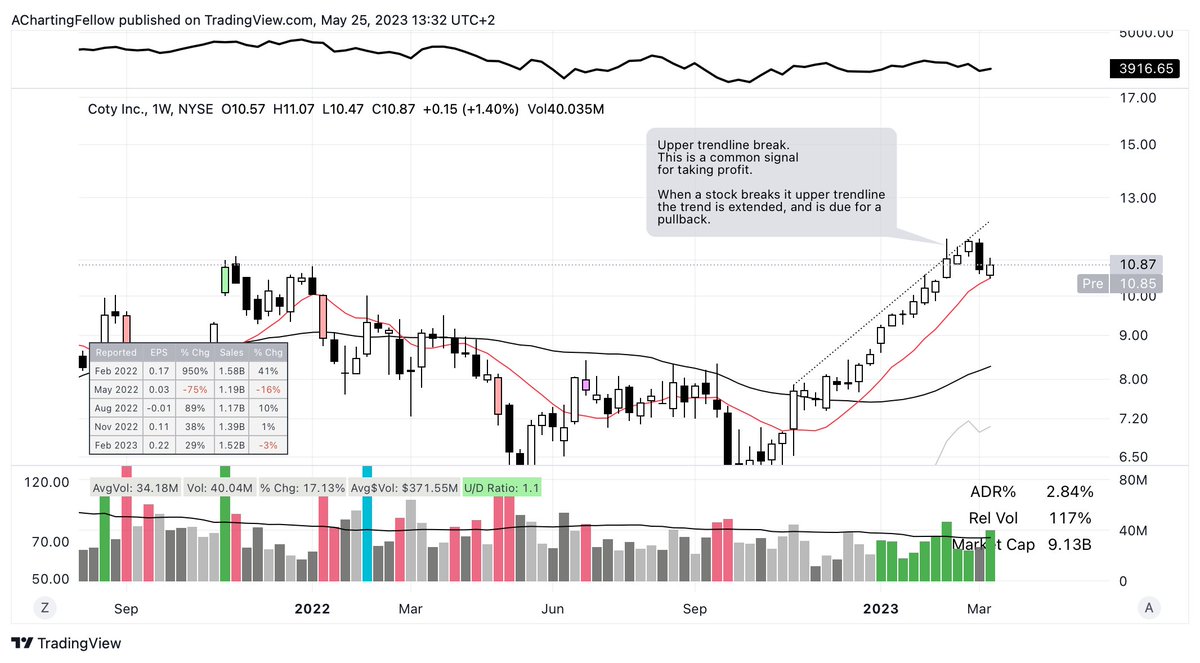
Taking profit at upper trendline breaks:
Taking profit when the price breaks the upper trendline is a strategy taught in "How to Make Money in Stocks." It suggests that when the price surpasses the upper trendline, it indicates the stock may be overextended and could experience a pullback towards its 10-week moving average before resuming its upward movement.
This was a brief summary of this method, I would highly recommend you to do further research into upper trendline breaks on your own.
4/6
Taking profit when the price breaks the upper trendline is a strategy taught in "How to Make Money in Stocks." It suggests that when the price surpasses the upper trendline, it indicates the stock may be overextended and could experience a pullback towards its 10-week moving average before resuming its upward movement.
This was a brief summary of this method, I would highly recommend you to do further research into upper trendline breaks on your own.
4/6
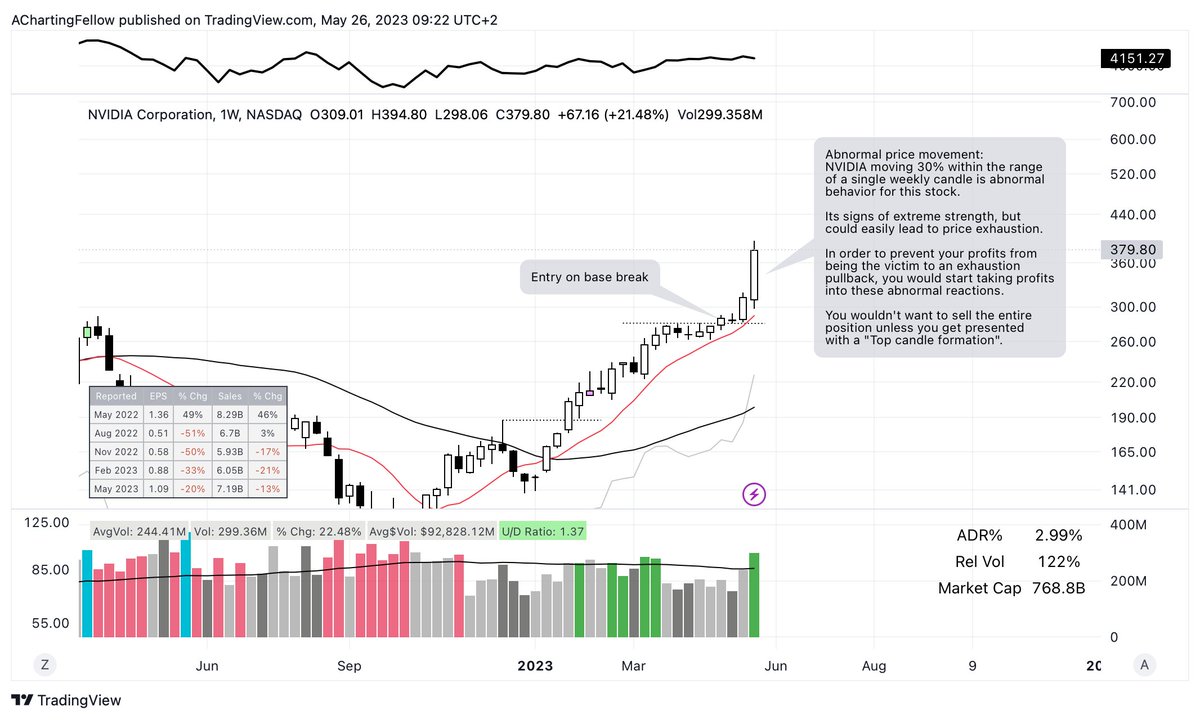
Taking profit into abnormal reactions:
Abnormal price reactions in the market often signal price exhaustion, which can result in a pullback or a period of consolidation. To safeguard your profits from being eroded by such exhaustion, a strategy is to take partial profits during these price movements. This approach is commonly referred to as "selling into extreme strength" and is a popular method to secure gains and manage risk.
Surprisingly, many traders hesitate to take profit during these movements due to the fear of missing out (FOMO). They worry that by reducing their positions, they might miss out on significant profit as the stock seemingly gains momentum. Unfortunately, this fear often results in traders holding onto their positions, only to see their profits vanish. They adopt the mindset of "If the price can just return to its previous level, then I will take my profits."
In reality, selling into strength is not synonymous with missing out on profits; rather, it is a prudent approach to securing gains while they are still attainable. There is no shame in protecting your profits and minimizing risk. By selling into strength, you are safeguarding the gains you have already achieved, acknowledging that market conditions may change, and making a proactive decision to secure your profits.
5/6
Abnormal price reactions in the market often signal price exhaustion, which can result in a pullback or a period of consolidation. To safeguard your profits from being eroded by such exhaustion, a strategy is to take partial profits during these price movements. This approach is commonly referred to as "selling into extreme strength" and is a popular method to secure gains and manage risk.
Surprisingly, many traders hesitate to take profit during these movements due to the fear of missing out (FOMO). They worry that by reducing their positions, they might miss out on significant profit as the stock seemingly gains momentum. Unfortunately, this fear often results in traders holding onto their positions, only to see their profits vanish. They adopt the mindset of "If the price can just return to its previous level, then I will take my profits."
In reality, selling into strength is not synonymous with missing out on profits; rather, it is a prudent approach to securing gains while they are still attainable. There is no shame in protecting your profits and minimizing risk. By selling into strength, you are safeguarding the gains you have already achieved, acknowledging that market conditions may change, and making a proactive decision to secure your profits.
5/6
Taking profit into top formations:
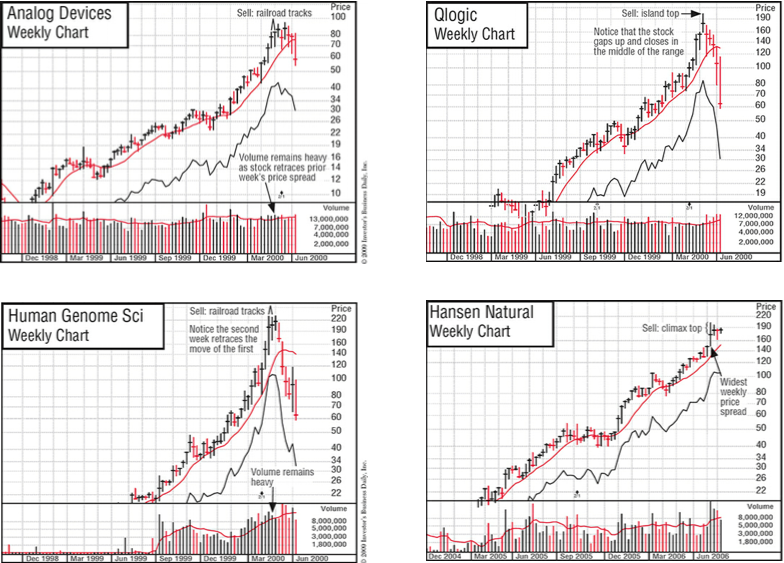
This would typically be a “Sell the entire position” signal. William O’ Neil has plenty of examples on some of these bar formations in his book “How to make money in stocks”. Below I’ve picked out a piece of the book, which illustrates a few of these formations.
I’ll keep this one short, as the book goes into depth on this topic.
6/6
This would typically be a “Sell the entire position” signal. William O’ Neil has plenty of examples on some of these bar formations in his book “How to make money in stocks”. Below I’ve picked out a piece of the book, which illustrates a few of these formations.
I’ll keep this one short, as the book goes into depth on this topic.
6/6
Loading suggestions...