

Operation Cactus Lily: 1971 by Maj Gen KS Pannu, MVC (Retd)
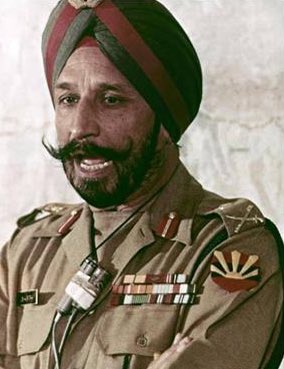
My good old friend Gen Afsir Karim asked me to write a piece for our part in the Bangladesh Operations in 1971. Those were very hectic days in Calcutta and thereafter, in Bangladesh.+
My good old friend Gen Afsir Karim asked me to write a piece for our part in the Bangladesh Operations in 1971. Those were very hectic days in Calcutta and thereafter, in Bangladesh.+
There comes a time in one's lifetime, perhaps only once, when one is lucky to lead one's regiment for the first ever airborne operation after Independence.+
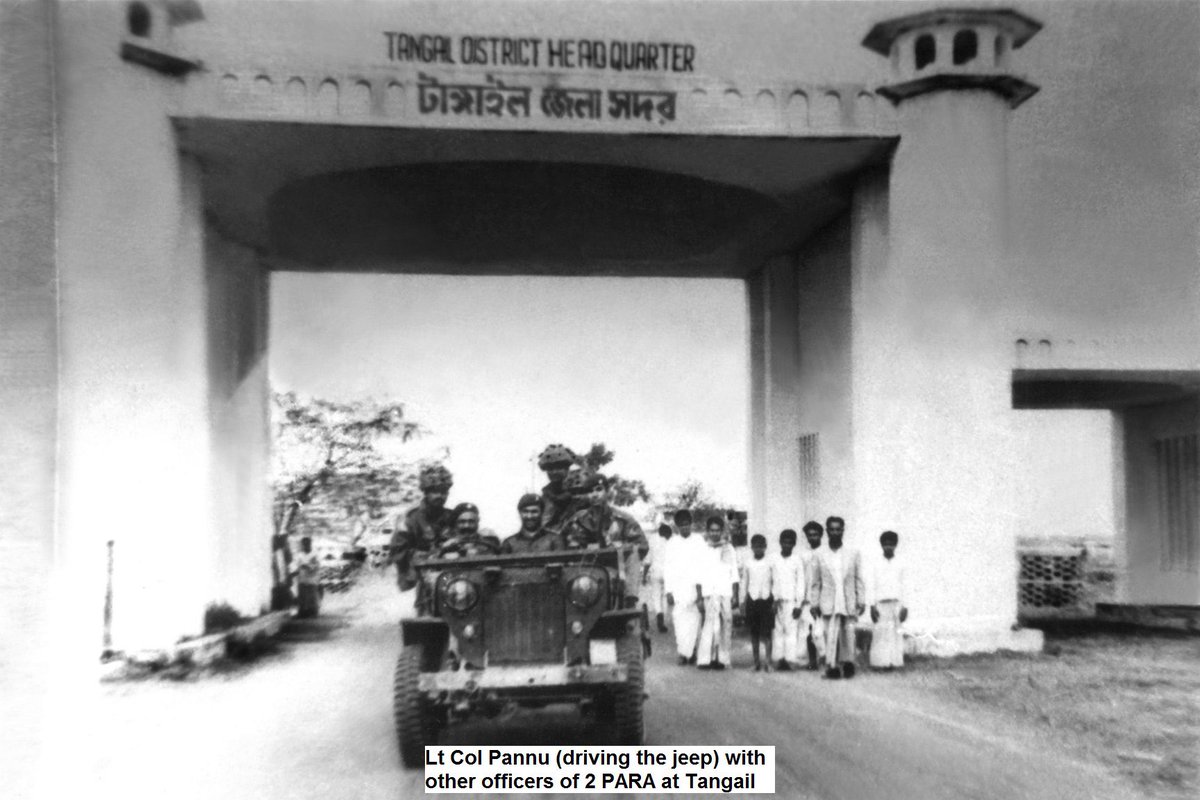
I was lucky to have a fine bunch of officers—-my Audy Murphy-type second-in-command, Jumboo Bhada with the killer looks, go-getting company commanders: "Jaggu" Mahalwar, Jasbir Sethi, Vinod Sharda and Kapoor, all very solid and very competent.+
My very thorough adjutant, Nirbhaya Sharma, dashing youngster Shiv Kunzroo as my IO, and a bunch of fearless youngsters: "Lali" Gill, "Radha" Nair, "Chotu" Bhardwaj, Kishan Singh, Surjit Singh, SP Singh, "Tews" Tiwari and VD Verma;+
along with a very professional young RMO, Capt Dayal and the Surgical Team of Majs Mukherjee and Tambe; and young Tejinder Padda commanding the platoon ex 411 Field Engineers. 49 Para Field Battery was led by Maj Asish Dubey who trained his gunners very hard.+
Everyone was raring to go into Bangladesh. As General Paramasiva Prabhakar Kumaramangalam was to write to us after his visit to Calcutta: “I didn't quite know that 2 Para was to jump into Bangladesh in anger”. +
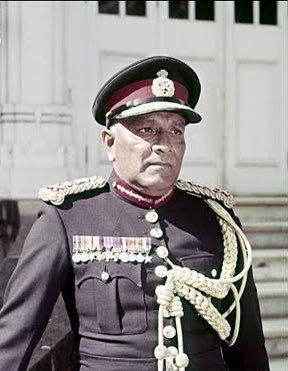
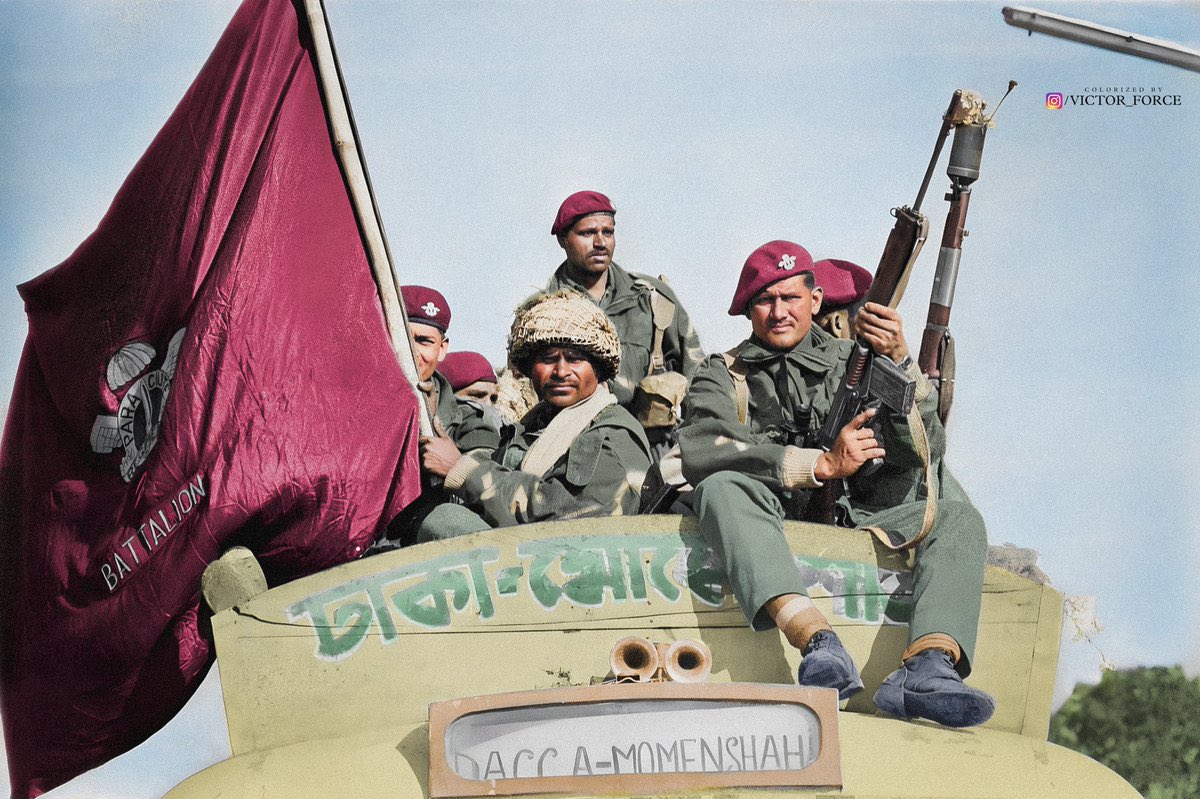
With such fine officers and men,we did make history for all paratroopers to be proud of. It was a combined effort, a truly professional task,well planned and conducted with precision and dedication. 2 Para Group made history when they entered Dacca on Dec 16, 1971,at 1043 hours.+
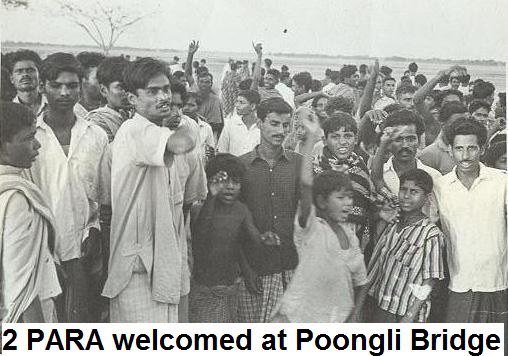
The rest is history; when we came under the command of the famous 4 Corps, I sent a personal messenger to the GOC, Lt Gen Sagat Singh, my old commander and comrade in arms from Goa days: “Happy to come under your command. Much water has flown in Mandovi and now Meghna after all+
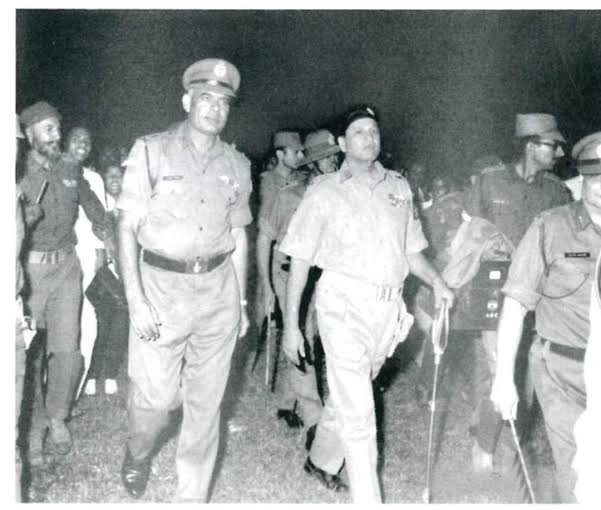
these years. Proud to be under your command”.
2 Para's Airborne Operation in Bangladesh War-
Thinking of the 1971 Operations in Bangladesh, a kaleidoscope of images flits through my mind. From the mosaic emerges a picture of Meegan, my Australian girlfriend—soon to be my wife+
2 Para's Airborne Operation in Bangladesh War-
Thinking of the 1971 Operations in Bangladesh, a kaleidoscope of images flits through my mind. From the mosaic emerges a picture of Meegan, my Australian girlfriend—soon to be my wife+
the impassive face of 'Panditji' our unit priest, as he jumped clutching his Ganesh to conquer Tangail with his talisman; a tent pitched on the outskirts of Santiniketan, the bastion of the revered Tagore; the revelry in Park Street, downtown Calcutta, before our departure on+
our mission; my last thoughts, arms akimbo, with the enemy literally breathing down my neck and much more.
It was February 10, 1971. We were on an exercise at Dholpur, 40 mile out of Agra. Brig TS Oberoi, VrC, Commander 50 Independent Parachute Brigade, told us at a briefing+
It was February 10, 1971. We were on an exercise at Dholpur, 40 mile out of Agra. Brig TS Oberoi, VrC, Commander 50 Independent Parachute Brigade, told us at a briefing+
that we had to move shortly to the Eastern Command for “internal security duties”; we were to be prepared to move at short notice whenever the call came. The move was to be by air.+
This conference was held in the afternoon and is memorable since the commanding officer of 7 Para, the late Lt Col RP Singh, downed six bottles of beer, ensuring that never again should a conference of such important be held in the afternoon!+
A few days later, engrossed in the melodrama of Pati, Paini aur Woh at the Regimental Cinema Hall at Agra, we were startled by the lights coming on; and soon we were given our marching orders. Precisely, at dawn on February 15, 1971, I set foot in Calcutta- a city which drew me+
to her heart and numerous visits thereafter carving a special niche in my soul, for the much written and controversial “City of Joy”.
The next part of the narrative can be broadly divided into three segments:
•The operations against Naxalites during February to June 1971+
The next part of the narrative can be broadly divided into three segments:
•The operations against Naxalites during February to June 1971+
•The preparations for the operations in Bangladesh
•The actual operations in Bangladesh
From Calcutta, we (2 Para) moved to Uluberia on the outskirts of Calcutta, and here we pitched our tents in a palm grove located besides the national highway from Calcutta to Jamshedpur.+
•The actual operations in Bangladesh
From Calcutta, we (2 Para) moved to Uluberia on the outskirts of Calcutta, and here we pitched our tents in a palm grove located besides the national highway from Calcutta to Jamshedpur.+
The first task ahead was to deal with the Naxalites. We conducted a raid on the Naxalite hideout in Uttarpara near the Hindustan Motors factory in Howrah district. In this operation, three Naxalites were killed in the encounter and ten were apprehended firmly establishing our+
intentions of bringing this problem to an end. To give you a little background on the Naxalite movement, let me elaborate on the origin of this uprising. The movement was started in Naxalbari near Siliguri, north Bengal. Their self-proclaimed leader, Charu Mazumdar, was+
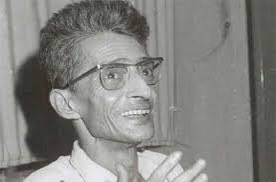
imprisoned by the Government. Their demands sprung from a Marxist desire for fair and equal distribution of land to peasants in Bengal and Bihar, eliminating the landowners - 'atedars' - appointed by the zamidars. The cause was taken up by the well educated Bengali youth, from+
affluent homes who brought this fight into every home in Bengal, in their zeal to set matters right in their own way. Many a level-headed youngster was swept away by the call of socialism and the fervour for this cause. Many young and promising careers came to a grinding halt;+
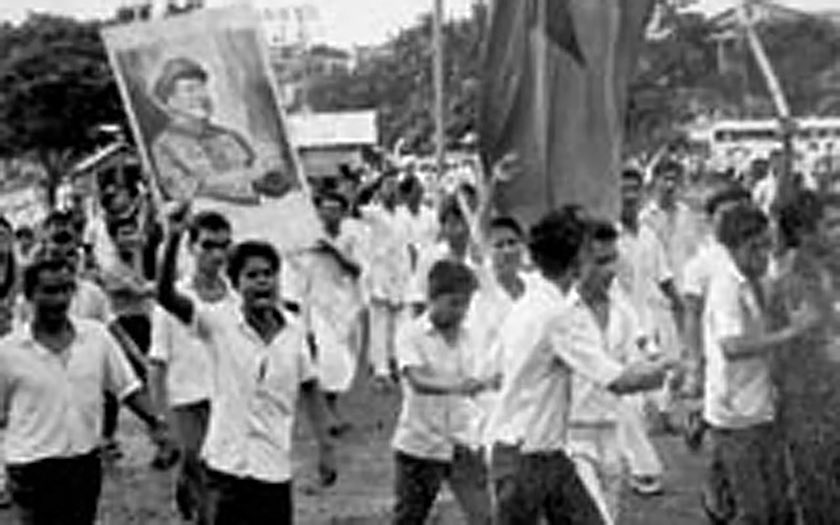
tears were shed; appeals were made; many were lost forever amidst the hordes of humanity; one could not but feel sad for so many young lives gone astray.+
Next, we moved to Chinsurah in the Hoogly district-to the Burnpur Iron and Steel Company, to be exact. Our mission--to protect the steel plant and the railway city of Chittaranjan, where equipment worth hundreds of crores of rupees was lying unprotected.+
Here I received a telephonic order from the Army Commander, Lt-Gen JS Aurora:
Despatch a company immediately to Santiniketan to protect the Vishva Bharti University the legacy of the immortal Bangla poet, Rabindranath Tagore.+
Despatch a company immediately to Santiniketan to protect the Vishva Bharti University the legacy of the immortal Bangla poet, Rabindranath Tagore.+
Here I came to know about the exploits of the hard-core Naxalites-the infamous Chatterjee brothers who had listed the names of the landlords on a scroll which they displayed, ticking-off in human blood the names of those who were eliminated.+
Here too, I, a humble Jat, was introduced to the writings of the great Nobel laureate-I read his poetry, his Geetanjali and was fired by the zeal to protect his memory. We moved to Suri, the district headquarters of Birbhum, leaving one company in Santiniketan.+
I was stationed in Baherghat where Lt Col RP Singh was training the Bangladesh guerrilla warriors—the Mukti Bahini—for the Bangladesh operations.
Here, to digress a little, a telephone call changed my much-envied state of blissful bachelorhood.+
Here, to digress a little, a telephone call changed my much-envied state of blissful bachelorhood.+
It was in the month of June 1971 that I got a call from Agra informing me that a lady from Australia had arrived in the city, and was looking for me. I asked her to join me at Suri. My official permission to marry a foreigner had also come through by then.+
So Meegan and I drove down to Calcutta, pitched our tent under the ramparts of Fort William, corralled the Australian Deputy High Commissioner in Calcutta as a witness to the nuptials and got married. Brig Mathew Thomas made all the arrangements.+
He had just taken over from Brig Oberoi, and threw himself with zeal into the wedding preparations. On the fateful day, of August 24, 1971, we were married and Brig Thomas had arranged for a cocktail reception at the Officers' Institute.+
As a wedding gift, the Parachute Brigade had given us a night's stay at the Oberoi Grand Hotel in Calcutta. The venerable Aussie diplomat had generously contributed a case of champagne. So I changed my status to one of the blissfully married. I was 39 and Meegan 27.+
To return to the Naxalites operations, the apprehension of the Chatterjee brothers more or less closed the Naxalite chapter. The entire area was declared a ‘war zone’ because of the prevailing political situation in East Bengal.+
We moved our camp to Shilpur Botanical Gardens and my wife, just three days after marriage, had to return to Agra-her first encouter with army regimentation--which eventually sounded the death-knell five years later, of my state of marital bliss.+
I was not in the best of spirits, to say the least, and I recall a particularly nasty argument with the Deputy Director of the Gardens, Dr AK Mitra, about one of my army trucks destroying a precious tree planted during the reign of Queen Victoria 150 years ago. +
A great loss--true, but waiting in the wings for the signal to go into battle, I was in no mood to see his point of view. That night, it rained so heavily that the sea tide swept into the mainland, and we were submerged in five feet of water. +
This helped to cool down tempers all around, to say the least.
I settled down to preparing myself and my men earnestly for war. We carried out a very intensive training programme, most of it airborne, in Agra. This was for reasons of secrecy so that we could keep our+
I settled down to preparing myself and my men earnestly for war. We carried out a very intensive training programme, most of it airborne, in Agra. This was for reasons of secrecy so that we could keep our+
preparations reasonably secret.
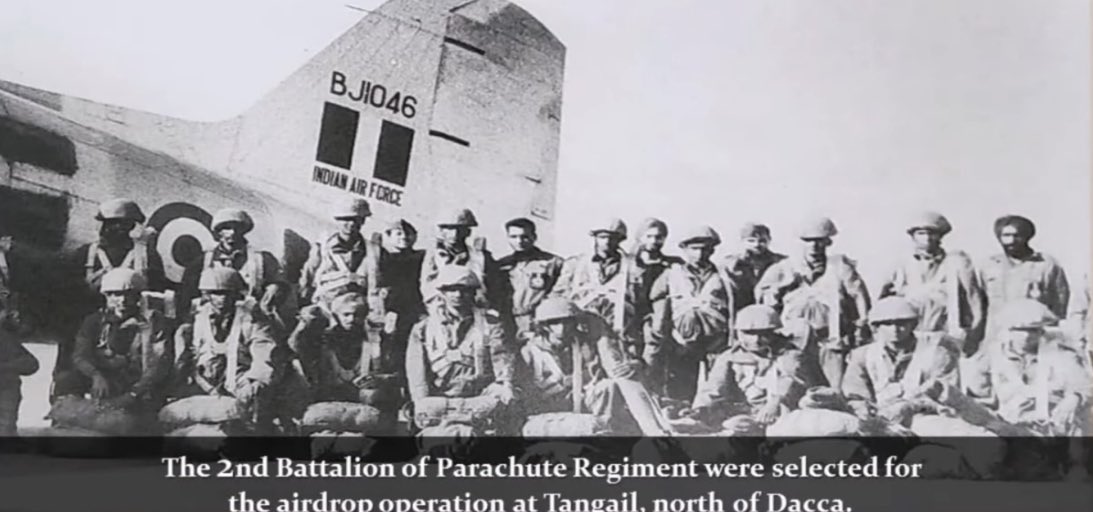
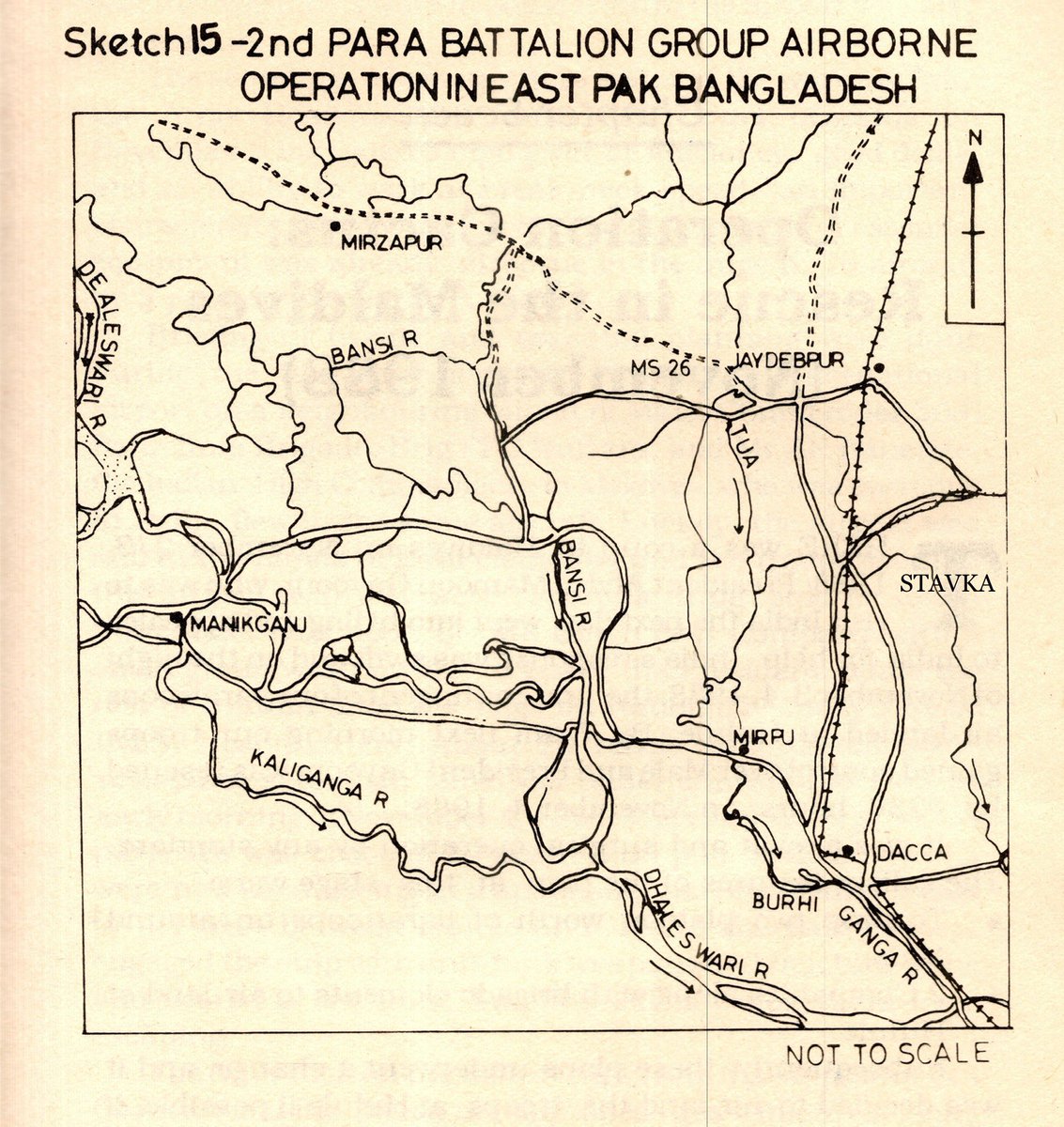
During this period, I got my briefing about my operational tasks. There were five of them, of which only one materialised, i.e., a para-drop in Tangail, affected on December 11, 1971.+
During this period, I got my briefing about my operational tasks. There were five of them, of which only one materialised, i.e., a para-drop in Tangail, affected on December 11, 1971.+
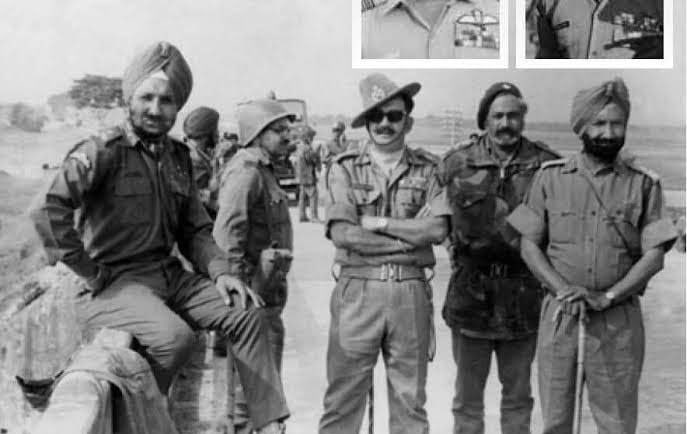
That night (on the 8th of December) I told the boys-33 officers -to take a jeep each and go out on the town. Park Street was never the same again.
On December 9, 1971, at 7 p.m., we moved to Kalaikonda. Actually, half the group with the heavy load of jeeps, guns and ammunition+
On December 9, 1971, at 7 p.m., we moved to Kalaikonda. Actually, half the group with the heavy load of jeeps, guns and ammunition+
moved to Dum Dum and the other half to Kalaikonda. Thereafter, we were quarantined till December 11. We went to a mandir to offer our prayers, some read, others reflected on their lives, but each man performed a silent prayer to one individual God+
to protect him and bring him back safely. On that fateful night_ of December 11 -we took off at 2:30 p.m. Our Panditji jumped with me, clutching a "murti" of Ganesh. We had our first casualty of the Parachute Brigade who died charging the enemy in Bangladesh, his last words+
imprinted in my mind to this day: “You don't live forever”. I recalled with a grin Meegan's last words to me on the 8th— "Go and fight the bastards. but be back for Christmas.” Now we were in the thick of it, and thoughts of Christmas couldn't be further in my mind.+
But perhaps, I have glossed over the crucial details of the Bangladesh phase of the operations, and I owe it to my readers to explain in a little more detail. We enplaned at Kalaikonda and the doors were closed at 2:15 p.m. for a takeoff at 2:30.+

We were going into battle, not knowing what the outcome would be. It was my job to lead these 1,000 men and officers, and as per tradition, the Commanding Officer is always the first one to jump.+
The only thought that came to my mind as I took ‘the plunge’, so to speak, was that should this mission fail, I would never be able to show my face to all the men around the world who wear the red beret. It would be a mission failed due to lack of leadership: Now that was+
quite a burden to be carrying on my shoulders.
At exactly 4 p.m. on the afternoon of December 11, 1971. I jumped over the skies of East Pakistan, and landed smack in the middle of a pond. My first reaction was to light a well-deserved and long-awaited cigarette, which one of+
At exactly 4 p.m. on the afternoon of December 11, 1971. I jumped over the skies of East Pakistan, and landed smack in the middle of a pond. My first reaction was to light a well-deserved and long-awaited cigarette, which one of+
my company commanders managed to produce for me. Within half an hour, the battalion was ready to go into action and we were able to achieve all our objectives by 7 p.m. we encountered three attacks at night from the withdrawing+
Pakistani Brigade from Mymen Singh and Tura, Jamalpur and Tangail. We were able to knock out an enemy column of seven vehicles rushing full speed ahead to Dacca with headlights ablaze.+
En route, we captured two vehicles belonging to the Pakistani Army, taking one officer and 30 men prisoners. My Intelligence Officer, Lt Shiv Kunzru brought the captured Pakistani officer to me and asked me about the Geneva Conventions.+
I told him, “Remove his boots and treat him humanely.” By the morning at about 5:30 a.m., we saw 247 Pakistanis dead and a host of destroyed vehicles and tanks in front our positions.+
At 1 p.m. the 1st Marathas, led by Lt Col “Bulbul” Brar (later a Lt-Gen and the Eastern Army Commander) effectively carried out a linkup with us. Subsequently,the advance to Dacca continued by the 95 Infantry Brigade and we reorganised and regrouped ourselves for further action.+
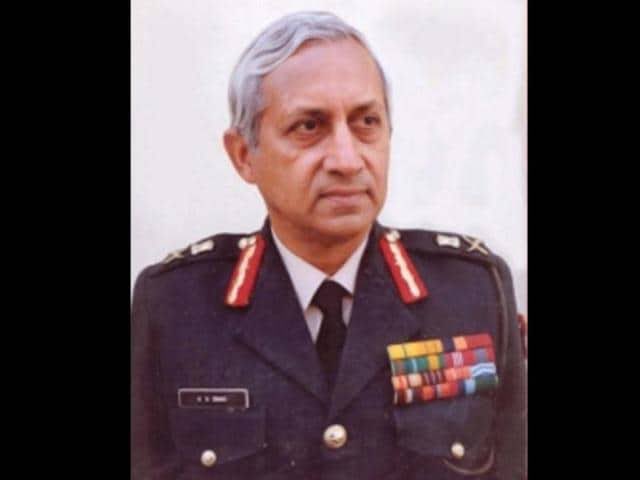
On the 12th, I gave instructions to the men under my command who had carried out their airborne job splendidly that they could now proudly wear their maroon berets. I also allowed them to consume the small bottles of rum carried by each man.+
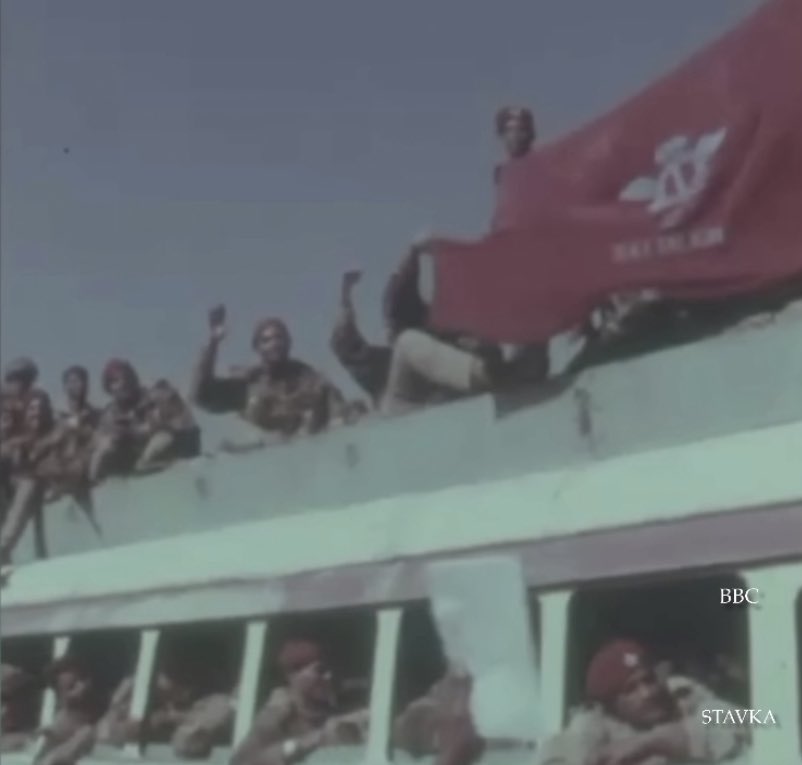
We cremated our six dead soldiers at Tangail, consigning their mortal remains to flames in an alien land. We also sent a wireless message to Headquarters Eastern Command that all our tasks had been completed and Tangail had been captured.+
This done, I breathed a sigh of relief, as I hadn't been able to contact them on the radio for the past 24 hours.
We advanced to Dacca on December 15, 1971. I was asked to lead the advance as 91 Infantry Brigade had been heldup on the main axis to Dacca.+
We advanced to Dacca on December 15, 1971. I was asked to lead the advance as 91 Infantry Brigade had been heldup on the main axis to Dacca.+
We encountered stiff opposition which was swiftly dealt with, and by the morning of 16th December, we were on the outskirts of Dacca. The GOC, Maj Gen Nagra, landed by helicopter at 9 a.m. and informed me that a unilateral cease fire had been declared and that the+
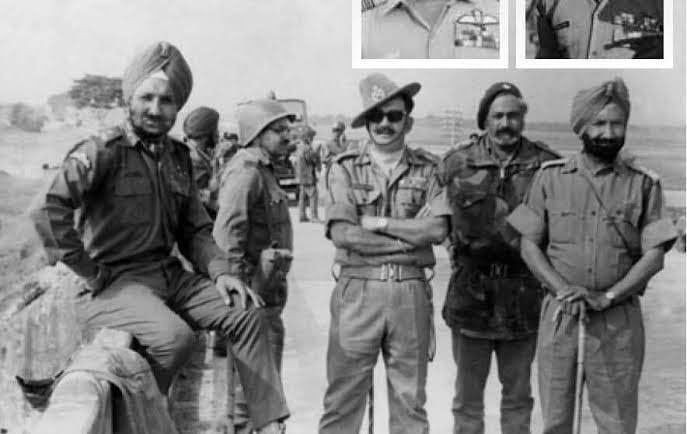
Pakistani troops would surrender unconditionally. He, therefore, sent a personal note through my adjutant to Gen Niazi saying: “The game is up.” I suggest you give up, or words to that effect.+
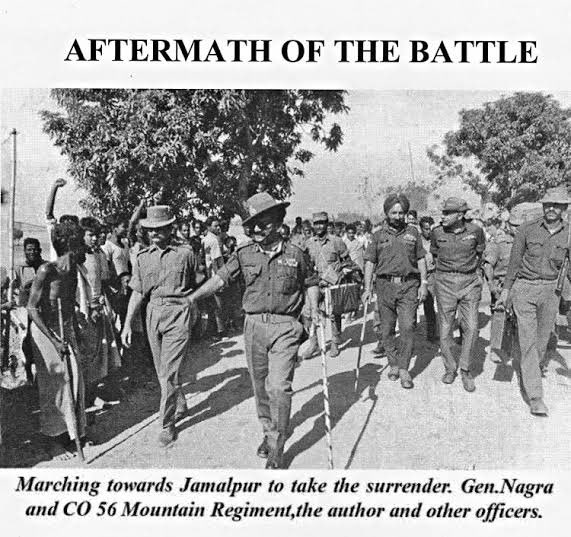
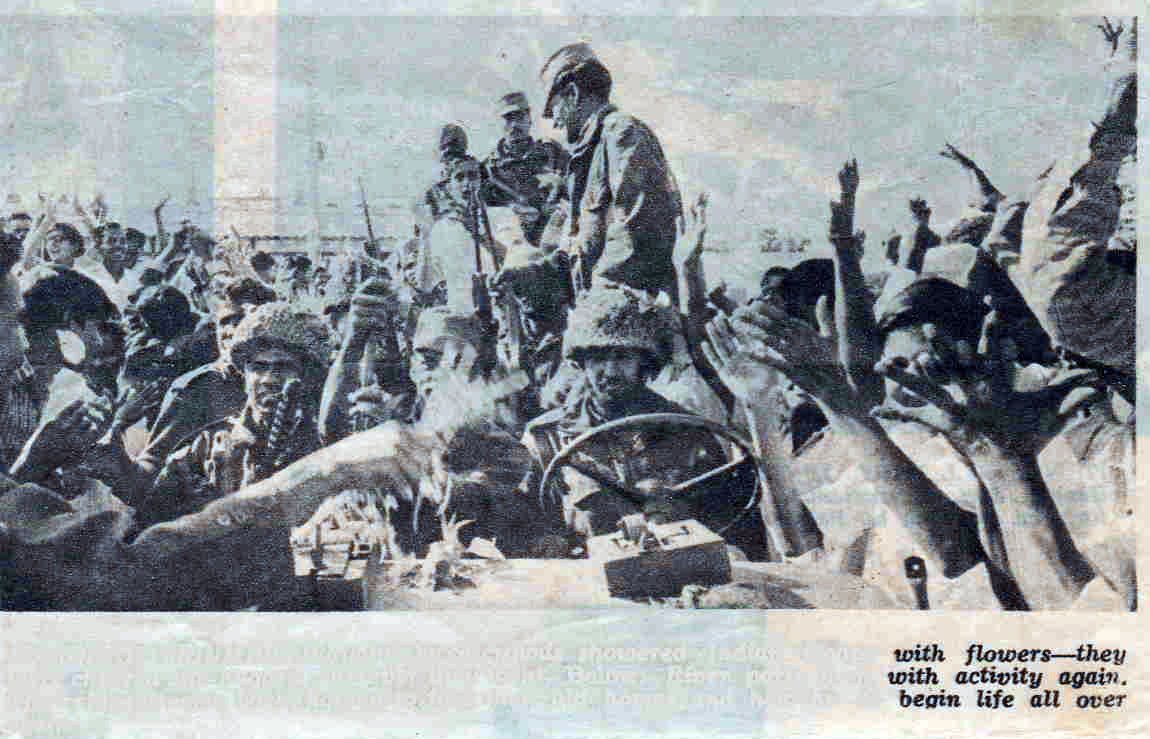
At 11:43 a.m. on December 16, 1971, we entered Dacca and proceeded straight to the Golf Course where I met Gen Niazi and shook hands with him. I remember complimenting him on the beautiful Golf Course. In retrospect, I could have said a million things, but talking about the+

Golf Course was such an anti climax to the war which had just been fought.
I had five columns moved out into positions in Dacca taking control of the capital city. By 11 a.m. Lt-Gen JFR Jacob, Chief of Staff Eastern Command, flew into Dacca from Calcutta with the surrender+
I had five columns moved out into positions in Dacca taking control of the capital city. By 11 a.m. Lt-Gen JFR Jacob, Chief of Staff Eastern Command, flew into Dacca from Calcutta with the surrender+

documents; and by 4:30 p.m. we had organised the surrender ceremony in the Parade Ground in Dacca. The rest is history.... I proceeded, disarmed,to the Inter-Continental Hotel to inform all the reporters that the surrender had been effected & that there should be no more firing.+
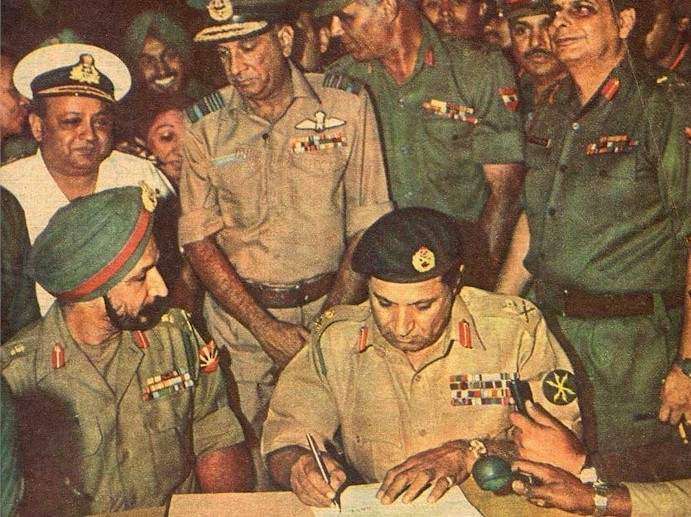
I needed a drink badly, partly from exhaustion, partly relief that it was finally all over, but all I could find was a coke as all the stocks of hard liquor had been depleted by the press who had been holed up in the hotel for the past two weeks.+
I got into my jeep and proceeded to the Headquarters Eastern Command, when suddenly to my utter surprise there was a hail of bullets. Before I could collect my wits together, I realised that I had been shot at— a direct violation of the surrender accord agreed upon a volte face+
by the withdrawing Pakistani Army. In a matter of seconds I had my hands up in the air—my back was turned to the enemy and bayonets were pointed at me. My reaction, I am glad now, was level-headed.+
I looked my assailant right in the eye, soldier to soldier and enquired, “Who is your commander?” A major appeared on the scene. I wanted to shake his hand and proferred mine. He said tersely, “Keep your hands up”.+

“A surrender has been signed,” I persisted. He took a few minutes to check up and finally, we did shake hands. That was a close one; I muttered “Inshahallah, may we meet again in better circumstances.”+
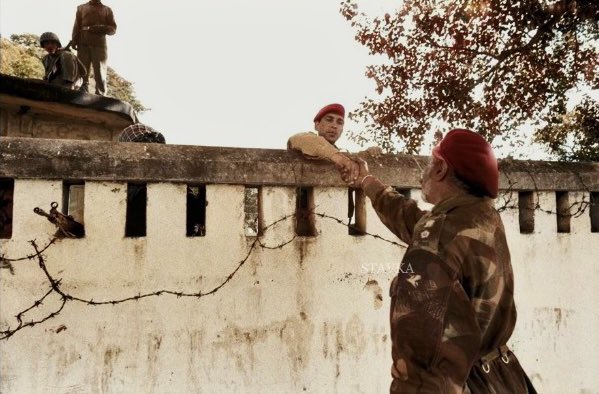
Strangely enough, at that point. I realised that a freelance journalist from an agency in Paris had recorded the entire event on film. He was an Iranian named Abbas who had an automatic camera clipped to his waist. He was also to be the last correspondent who shot pictures of+
Americans pulling out of Vietnam, which appeared in an issue of Time magazine. Months passed- I had long forgotten about my chance encounter with Abbas until an envelope arrived at my residence.+
Inside was a note:“I was too frightened but somehow I managed to click my camera! These pictures represent your close encounter with death.Thank heavens that my professional reflexes came to my rescue. I thought you might like to have these photographs-a belated Christmas gift.”+
These pictures are in the album of the unit and I wrote to him for another set of copies which he mailed to me from Saigon.+
On December 17 we moved out of Tangail; on the 18th I was in Calcutta, and on December 20, 1971, I flew back to Agra, well in time for Christmas with my own little Christmas story imprinted deeply in my heart.
(Shared First Person Account by Maj Gen KS Pannu, can have errors.)
(Shared First Person Account by Maj Gen KS Pannu, can have errors.)
Loading suggestions...