

Something I've thought of doing for a while, but as the summer heats up and Ukraine prepares to go on the attack, I'd like to to talk about some of the more unique features of the primary Ukrainian MBT, the oft-misunderstood T-64. Today, it will be the engine cooling system.

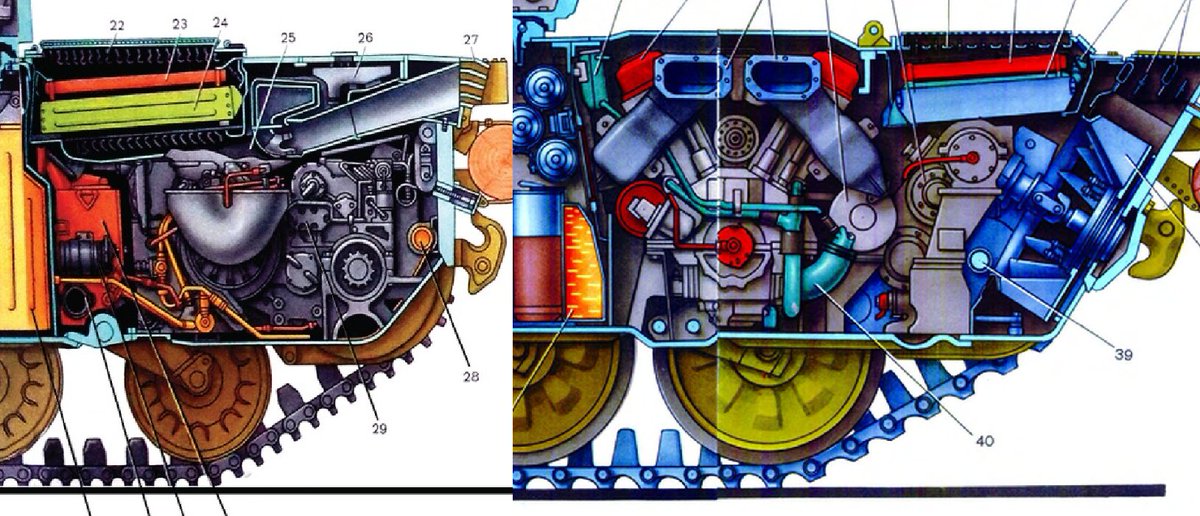
Like any internal combustion engine, the T-64's 5TDF 5-cylinder multifuel opposed-piston engine needs cooling, provided by a liquid coolant that circulates around the engine, which is then cooled by radiators. This is built into the upper deck of the engine compartment.


However, unlike most tanks, including its eternal rival, the T-72 (left), and the older T-54/55 and T-62, the T-64's cooling system (right) doesn't use a cooling fan.


Instead, it has what is known as an эжекционной системой охлажде ('ejection cooling system'), whereby the suction created by ejecting exhaust gases from the engine exhaust system (left) is used to draw in air for the cooling system's radiators (right).
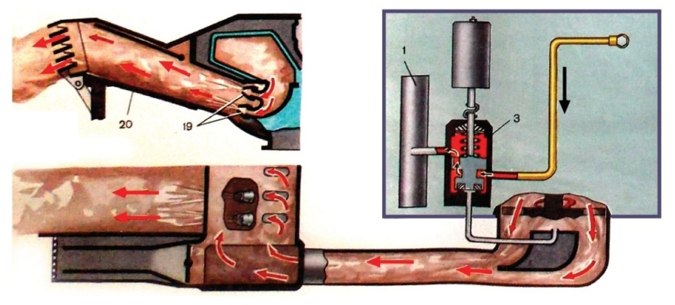
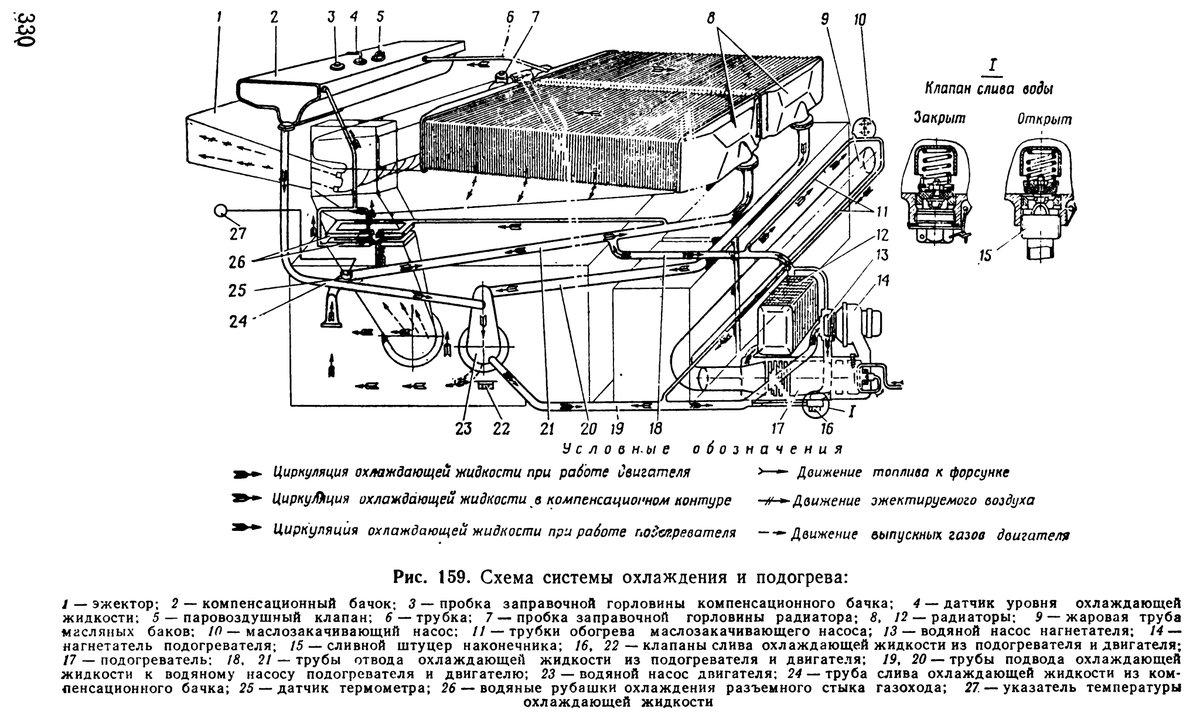
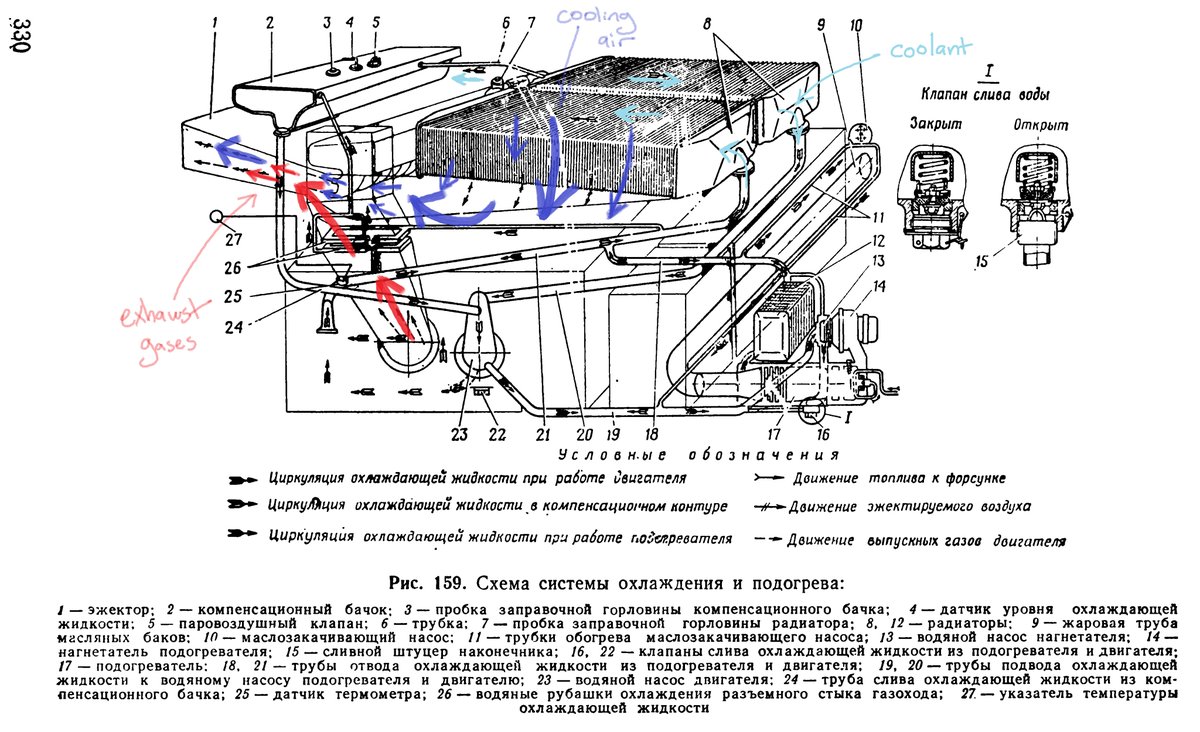
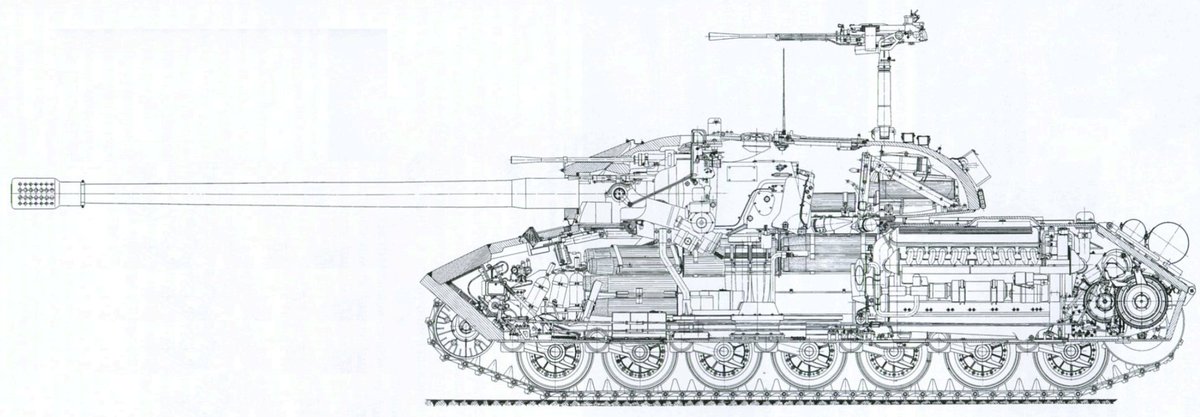
This system is not completely unique to the T-64. It was first tested on the IS-7 heavy tank (left), and was subsequently adopted by the T-10 heavy tank (right)...
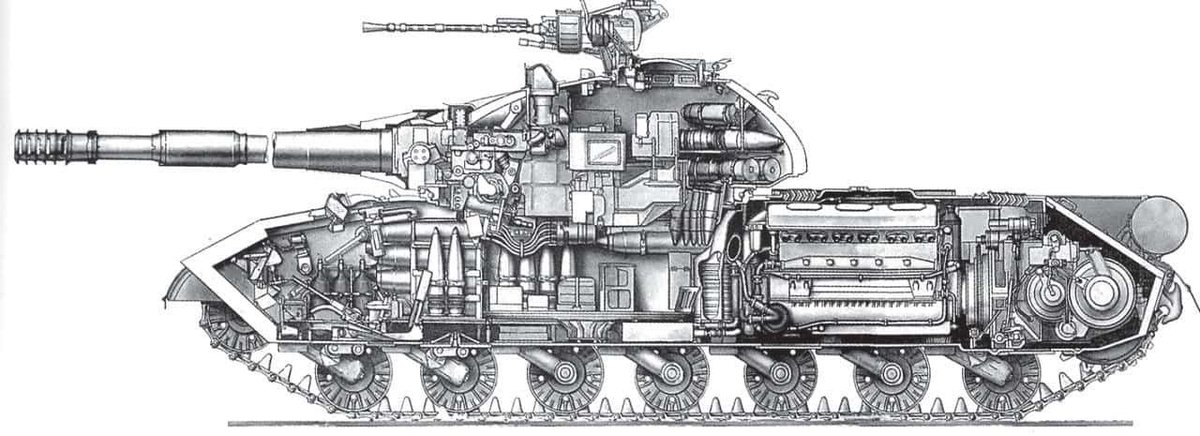
...as well as the PT-76 amphibious tank (left) and the BMP-1 (upper right), 2, and 3 (lower right) IFVs.
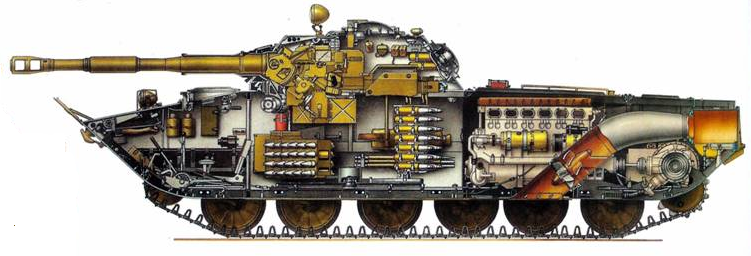
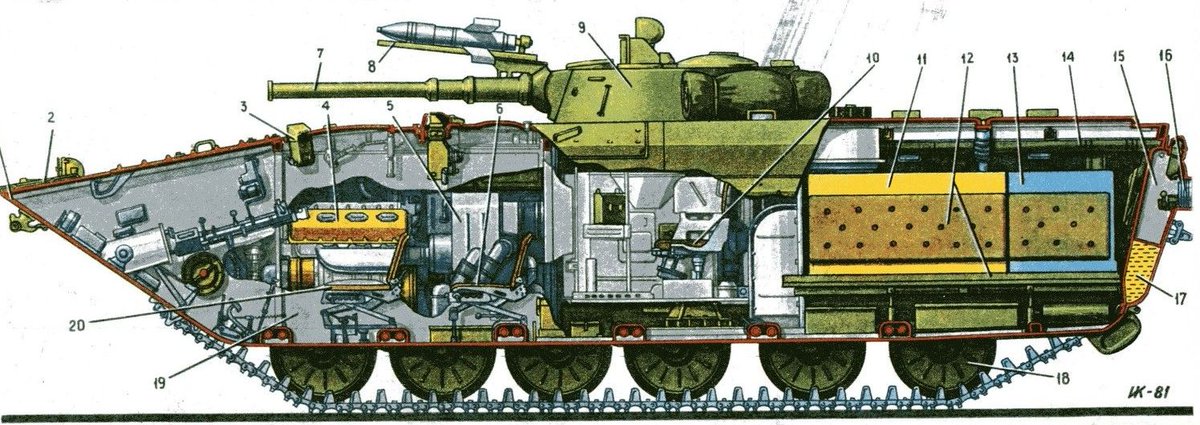
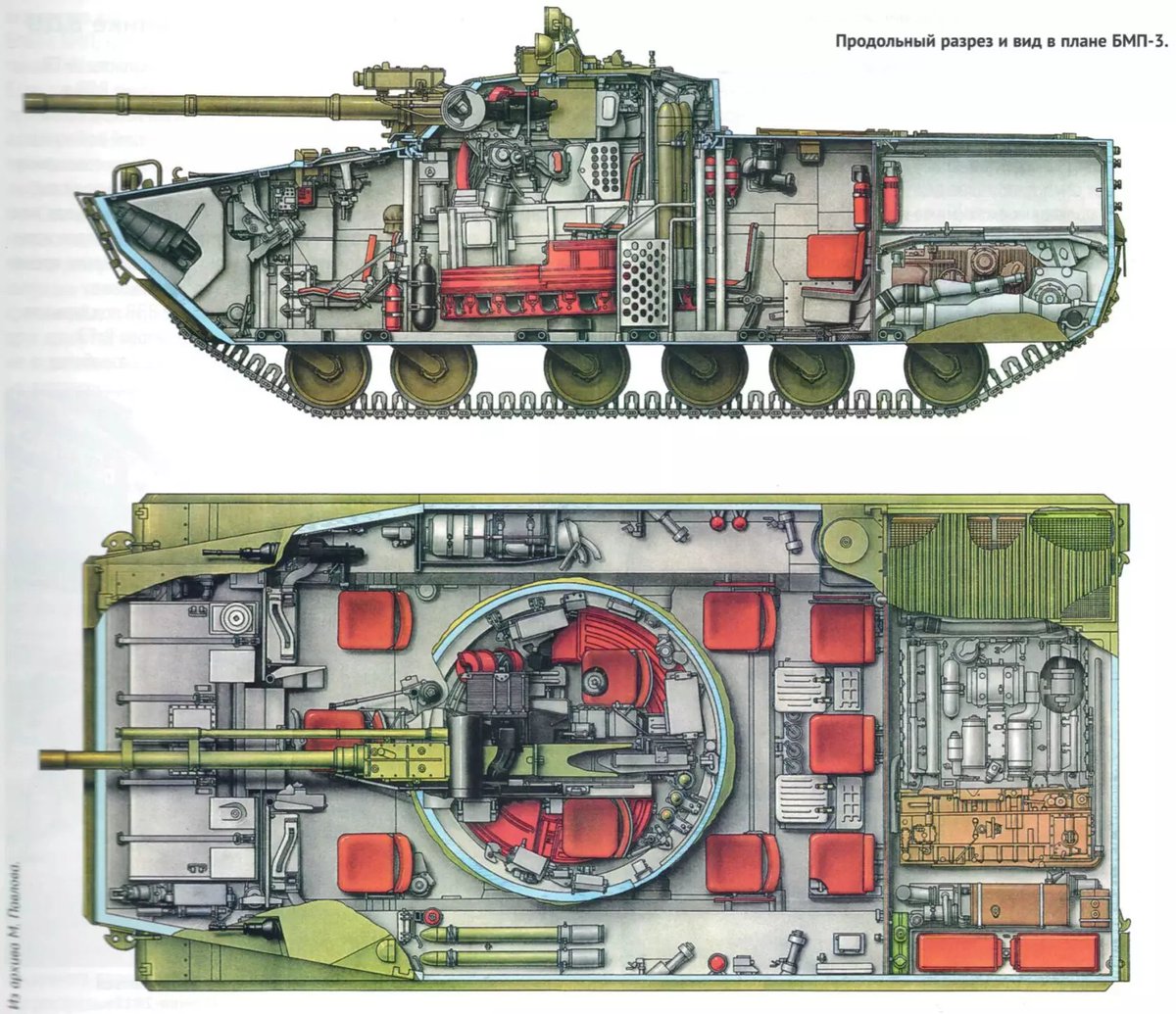
So why was this system used on T-64 but not on the later T-72, you might ask? Well, the #1 reason was to save space and thus weight. The T-64 was designed to meet a very strict weight requirement (originally 34 tonnes for the Object 432, later loosened to 36 tonnes).
Adding a cooling fan takes a significant amount of space in the engine compartment, which then has to be made bigger...and thus more armour to protect it. It's a major reason why the T-72 (right) is significantly longer than a T-64 (left), and has the sloped rear.
Other benefits include:
- No wasted engine power driving a fan.
- No moving parts necessary for the ejection cooling system itself, essentially just nozzles connected to the exhaust.
- Exhaust itself is cooled enough to touch (see video).
youtu.be
- No wasted engine power driving a fan.
- No moving parts necessary for the ejection cooling system itself, essentially just nozzles connected to the exhaust.
- Exhaust itself is cooled enough to touch (see video).
youtu.be
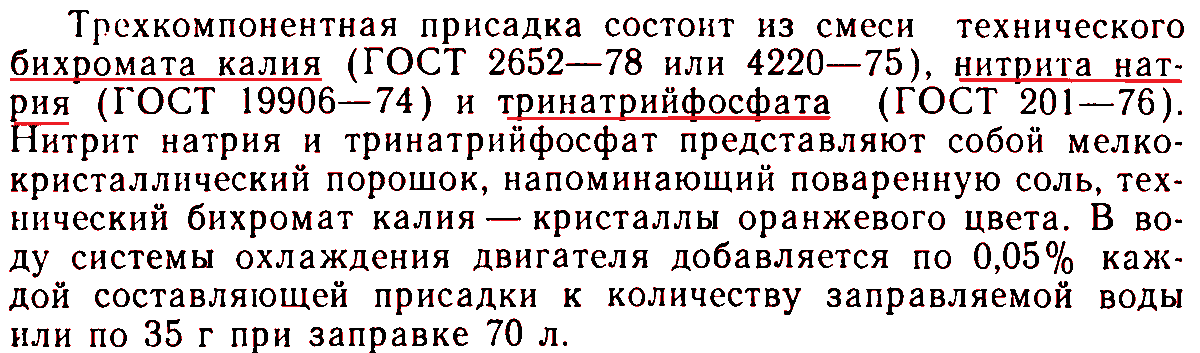
The coolant itself is a mixture of filtered water and a three-component anti-corrosion mixture of potassium bichromate, sodium nitrite, and trisodium phosphate. The water must be filtered using a special filter issued on a basis of one per company.
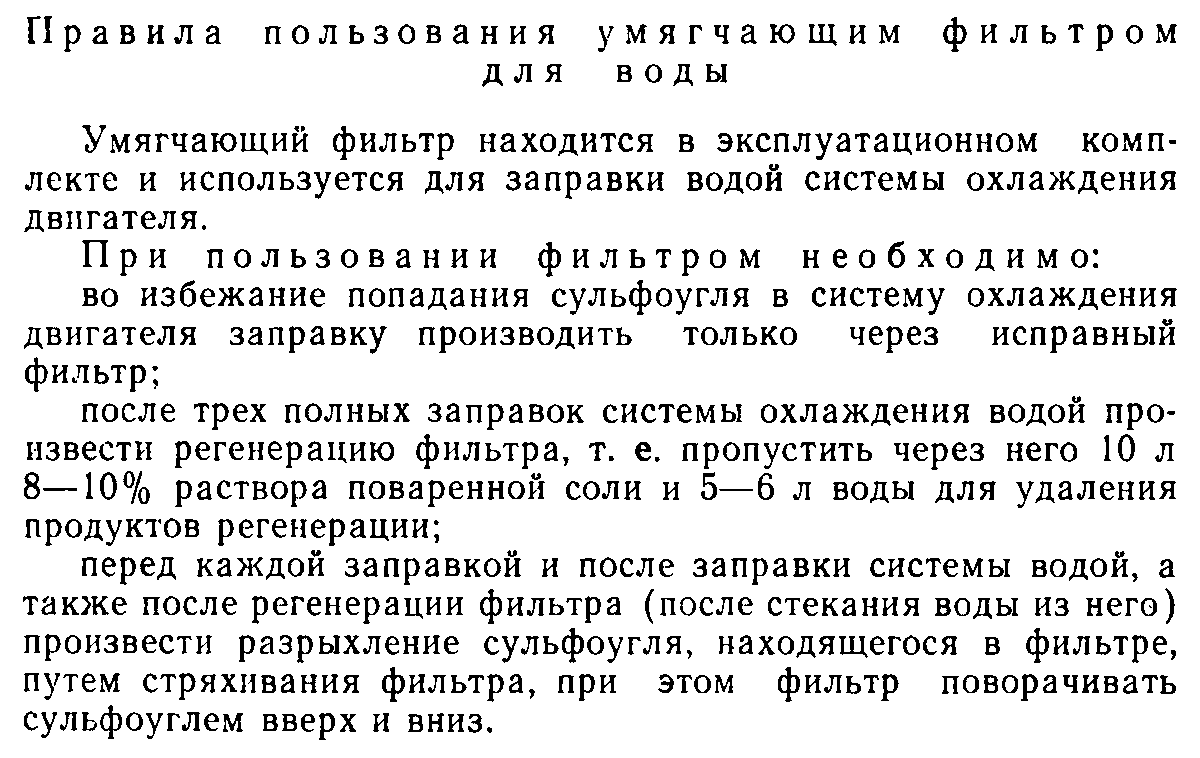
It's been claimed that the T-64's cooling system is vulnerable to clogging if unfiltered water is used, but I'd like to see any tank (or vehicle) that can run on unfiltered water for long without problems. Try using tap water sometime in your car and let me know how it goes.
Sergey Suvorov, a former T-64 company commander, noted that overheating did happen with the T-64, but he attributes this to user error. Particularly, crews would often not bother filtering the water and put it in straight from the tap.
btvt.narod.ru
btvt.narod.ru


He even mentions an incident where a driver poured a whole pack of mustard into the coolant system to fix a small leak in the radiator, with predictable results.

One can only speculate as to why the T-72 doesn't use such a system. Likely because the Ural designers were a lot more conservative about the T-72 and didn't have to meet the same weight limits. They were also not very keen on adopting things from the T-64A unless necessary.
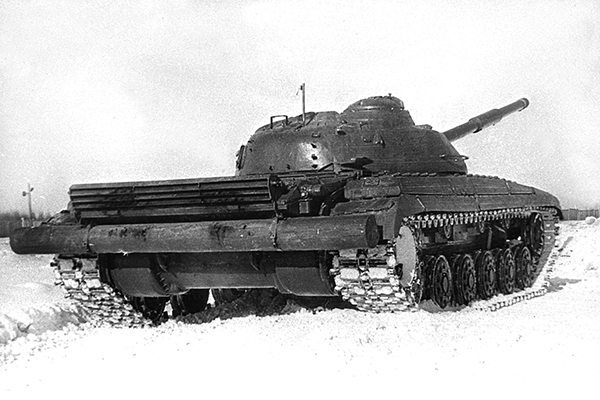
In fact, an ejection cooling system was successfully tested in experimental T-64As fitted with the V-46 V-12 engine of the T-72 (Object 436), so it is not impossible to do.
btvt.info
btvt.info

Loading suggestions...