

A technology quietly maturing over the last 10 years that few people talk about.
But it's at the bottleneck of current limitations on GPU performance and compute.
A 🧵 on how Silicon Photonics will enable the next computing hardware revolution, starting with interconnect
But it's at the bottleneck of current limitations on GPU performance and compute.
A 🧵 on how Silicon Photonics will enable the next computing hardware revolution, starting with interconnect

2/
Mega-scale data centers and cloud computing business models have demanded computing architectures become disaggregated.
Specialized resources for video acceleration, AI/ML training and inference, HPC, and data storage are connected by petabytes-per-second bandwidth
Mega-scale data centers and cloud computing business models have demanded computing architectures become disaggregated.
Specialized resources for video acceleration, AI/ML training and inference, HPC, and data storage are connected by petabytes-per-second bandwidth

2/
In the last 10 years, GPU power has grown by 8x, but interconnect power - how things talk to each other - has grown 25x. This heat is a major limitation on data center scale
Interconnect now consumes almost 25% of total system power in many state of the art systems.
In the last 10 years, GPU power has grown by 8x, but interconnect power - how things talk to each other - has grown 25x. This heat is a major limitation on data center scale
Interconnect now consumes almost 25% of total system power in many state of the art systems.

3/
For decades long-distance data transmission has been via multi-mode optical fiber. Optical fiber is low-loss and high bandwidth, but conversion takes energy
As this drops from 1000's of pJ/bit to <1pJ/bit, optical data links make sense at shorter and shorter lengths
For decades long-distance data transmission has been via multi-mode optical fiber. Optical fiber is low-loss and high bandwidth, but conversion takes energy
As this drops from 1000's of pJ/bit to <1pJ/bit, optical data links make sense at shorter and shorter lengths
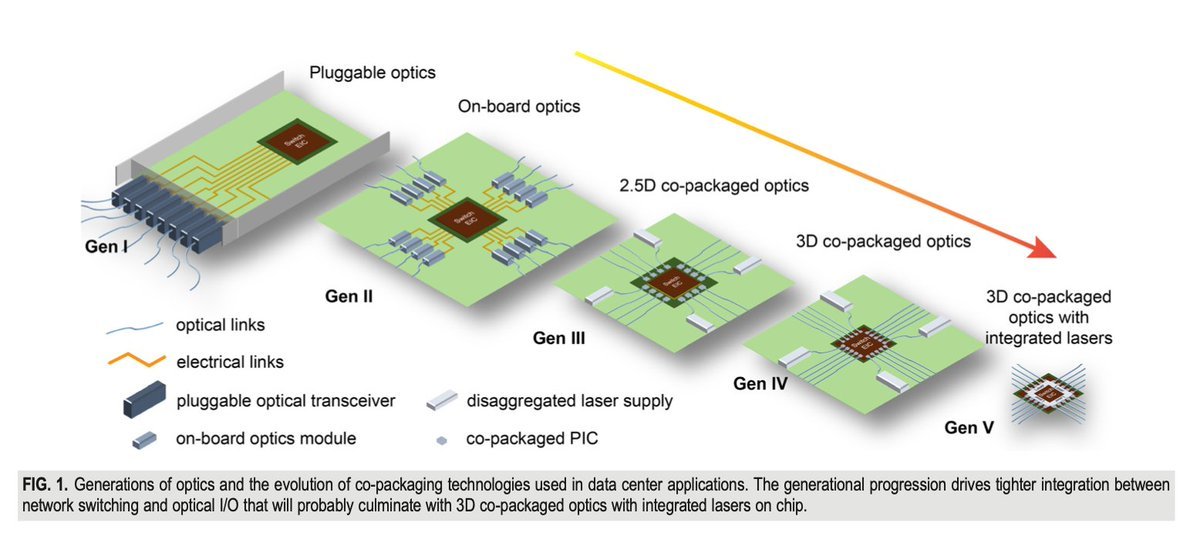
4/
Silicon photonics takes optical comms technology and places it on the same manufacturing basis as the rest of CMOS-based 300mm wafer technology, the de-facto standard for modern chip production.
This has opened the floodgates on the market for optical interconnect
Silicon photonics takes optical comms technology and places it on the same manufacturing basis as the rest of CMOS-based 300mm wafer technology, the de-facto standard for modern chip production.
This has opened the floodgates on the market for optical interconnect
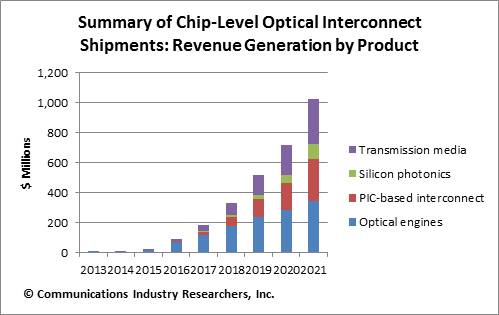
5/
The true goal of silicon photonics is to place photonic components, like laser diodes, modulators, and splitters, directly on application-specific integrated circuits (ASICs) to enable semiconductor optical I/O directly from the silicon chip itself.
The true goal of silicon photonics is to place photonic components, like laser diodes, modulators, and splitters, directly on application-specific integrated circuits (ASICs) to enable semiconductor optical I/O directly from the silicon chip itself.
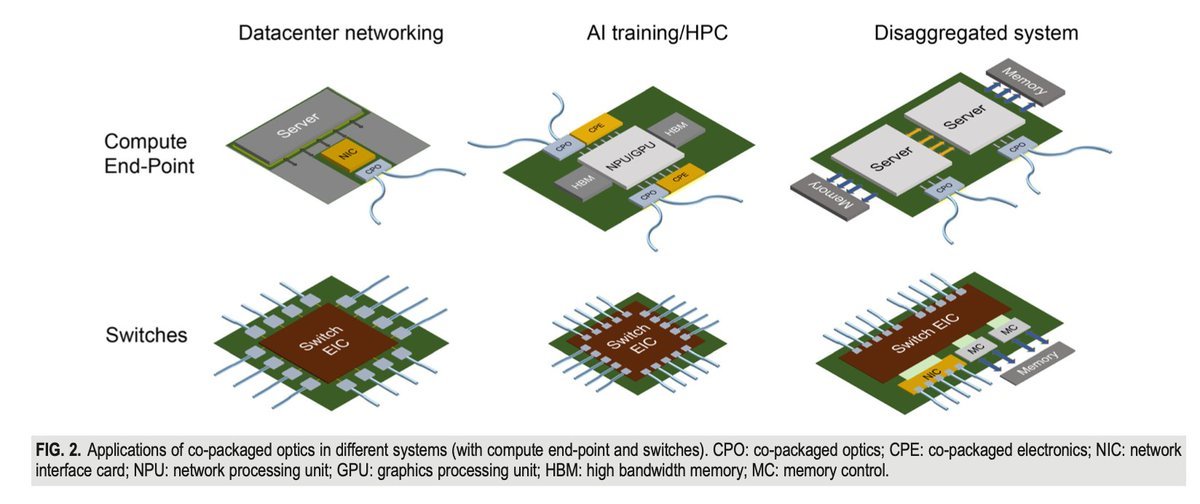
6/
Replacing high-heat electrical interconnects with optical components is a huge advantage, but there is still a ways to go before integrated on-chip silicon photonics, mostly in size of components.
But we're getting there, and where we're going next is optical computing
Replacing high-heat electrical interconnects with optical components is a huge advantage, but there is still a ways to go before integrated on-chip silicon photonics, mostly in size of components.
But we're getting there, and where we're going next is optical computing

7/
The physics of optical computing is compelling:
- Speed: photons move faster than electrical signals
- Energy: optical components produce far less heat, enabling higher density compute
- Noise: photonic systems are not as susceptible to EMI noise common to PCBs
The physics of optical computing is compelling:
- Speed: photons move faster than electrical signals
- Energy: optical components produce far less heat, enabling higher density compute
- Noise: photonic systems are not as susceptible to EMI noise common to PCBs
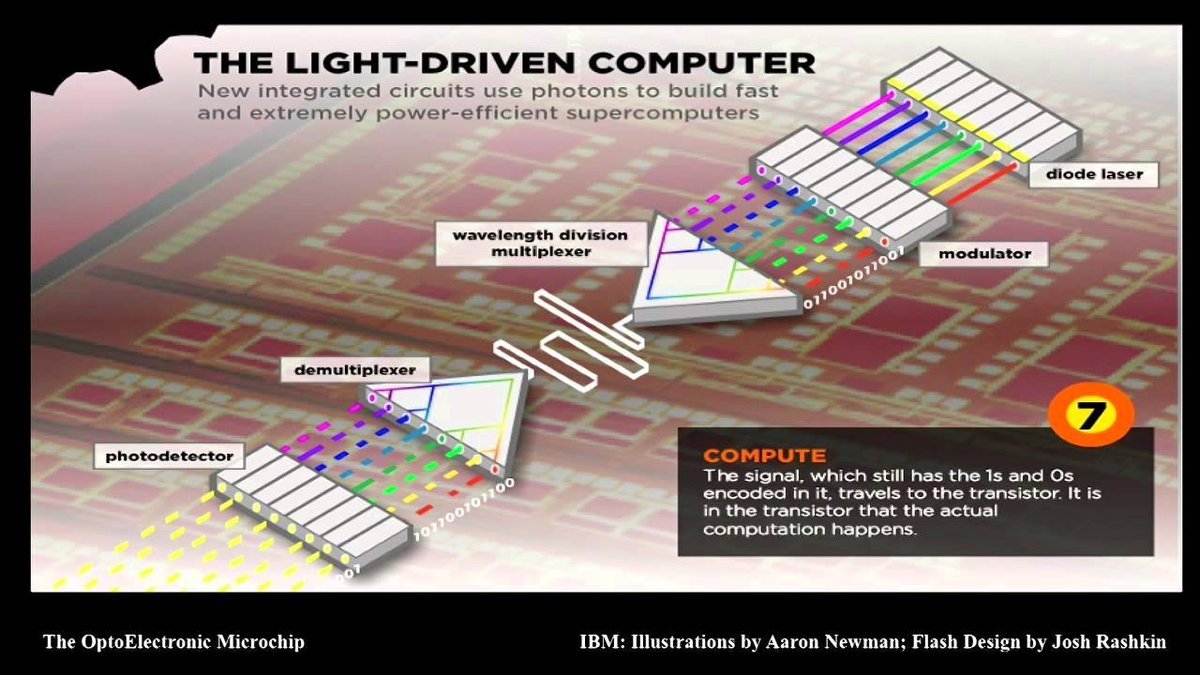
8/
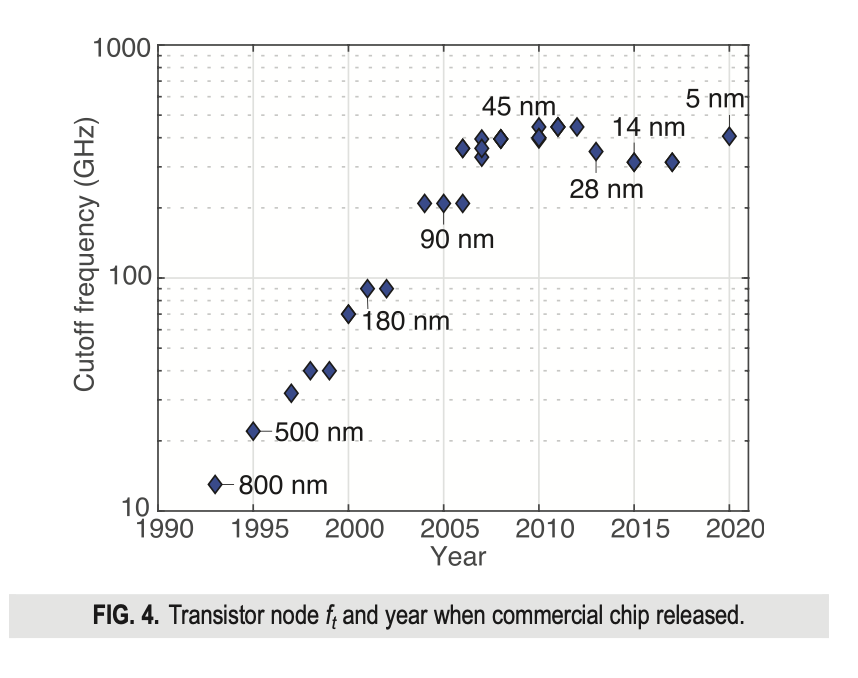
Silicon transistors have fundamental limitations.
The transit time, or maximum speed of operation for transistors as defined by unity current gain, hasn't improved since 2010. Each operation generates heat, limiting the maximum density and speed achievable.
Silicon transistors have fundamental limitations.
The transit time, or maximum speed of operation for transistors as defined by unity current gain, hasn't improved since 2010. Each operation generates heat, limiting the maximum density and speed achievable.
9/
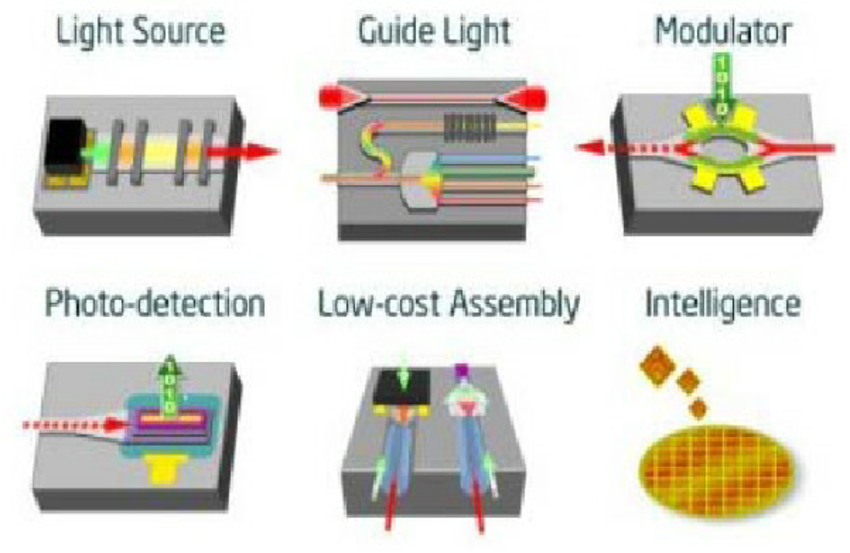
The frontier of silicon photonics is the first step in optical computing. Currently, industries are learning to mass-produce photonic components - like sources, splitters, modulators, etc - on the CMOS 300mm wafer manufacturing process.
The frontier of silicon photonics is the first step in optical computing. Currently, industries are learning to mass-produce photonic components - like sources, splitters, modulators, etc - on the CMOS 300mm wafer manufacturing process.
10/
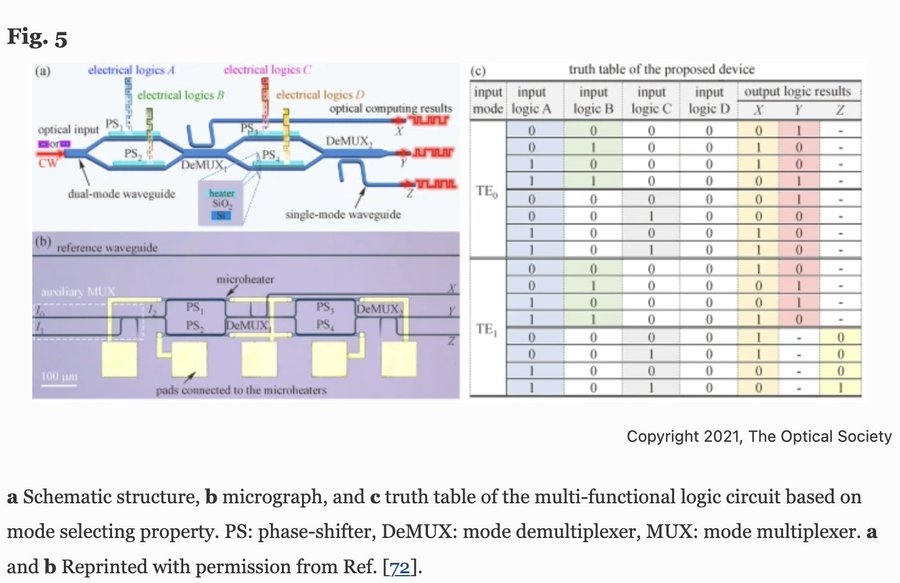
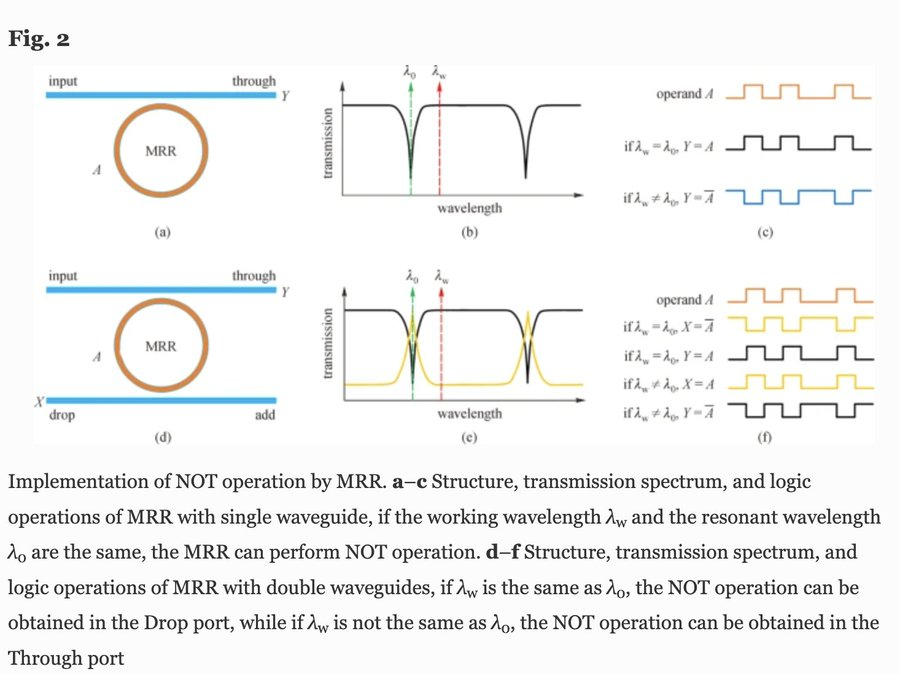
This enables the creation of optical logical gates, that can reproduce traditional gate logic but also enables completely new modes of operation due to the fundamental difference between how photons and electrons propagate.
This enables the creation of optical logical gates, that can reproduce traditional gate logic but also enables completely new modes of operation due to the fundamental difference between how photons and electrons propagate.
11/
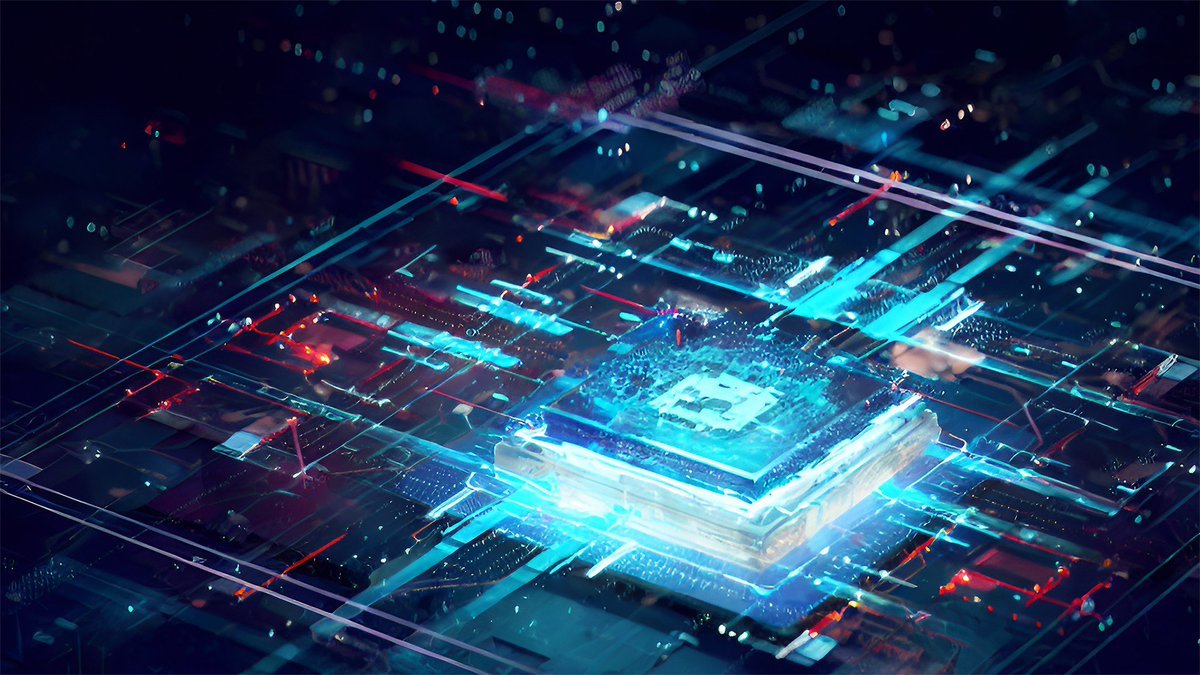
Optical computing is the inevitable next-step in computing hardware with the potential to be a million times faster than current semiconductor transistor technology.
There are startups racing to capitalize on this technological frontier with civilization-scale impact
Optical computing is the inevitable next-step in computing hardware with the potential to be a million times faster than current semiconductor transistor technology.
There are startups racing to capitalize on this technological frontier with civilization-scale impact
12/
@LightmatterCo raised $154m a month ago, to build the next generation of optical computers for large scale computing, bringing their total to $270m, with current products in market.
They also have a great retro-style website.
@LightmatterCo raised $154m a month ago, to build the next generation of optical computers for large scale computing, bringing their total to $270m, with current products in market.
They also have a great retro-style website.

13/
@saliencelabs spun out of Oxford last year with a $11.5m seed round, proposes exascale compute will be enabled by their ‘on-memory compute’ architecture which combines the ultra-fast speed of photonics, the flexibility of electronics and the manufacturability of CMOS.
@saliencelabs spun out of Oxford last year with a $11.5m seed round, proposes exascale compute will be enabled by their ‘on-memory compute’ architecture which combines the ultra-fast speed of photonics, the flexibility of electronics and the manufacturability of CMOS.

12/
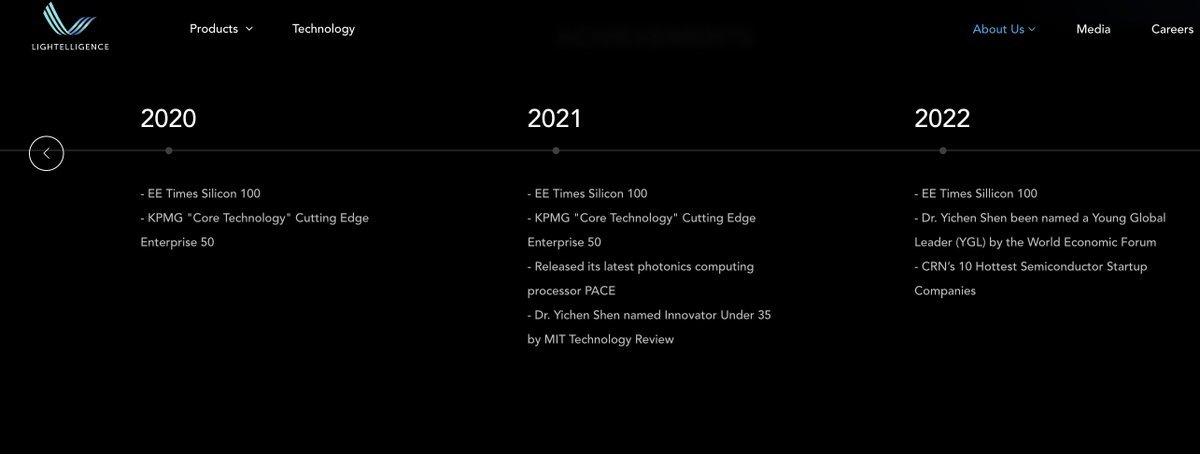
@lightelligence has raised $36m and spun technology out of MIT to develop optical computing. Just last month they announced Hummingbird, an integrated photonic chip to be used as communications infra in data centers for high performance applications, first demo: late August
@lightelligence has raised $36m and spun technology out of MIT to develop optical computing. Just last month they announced Hummingbird, an integrated photonic chip to be used as communications infra in data centers for high performance applications, first demo: late August
On-chip silicon photonics developed to solve the problem of interconnect in modern at-scale compute will enable the next frontier in computer hardware
It will also enable similarly dramatic revolutions in sensor design, bio-engineering, BCI, and telecoms
The future's bright
It will also enable similarly dramatic revolutions in sensor design, bio-engineering, BCI, and telecoms
The future's bright

RT if you think silicon photonics are lit
Loading suggestions...