

1/16
CASE OF THROMBOCYTOPENIA IN PREGNANCY
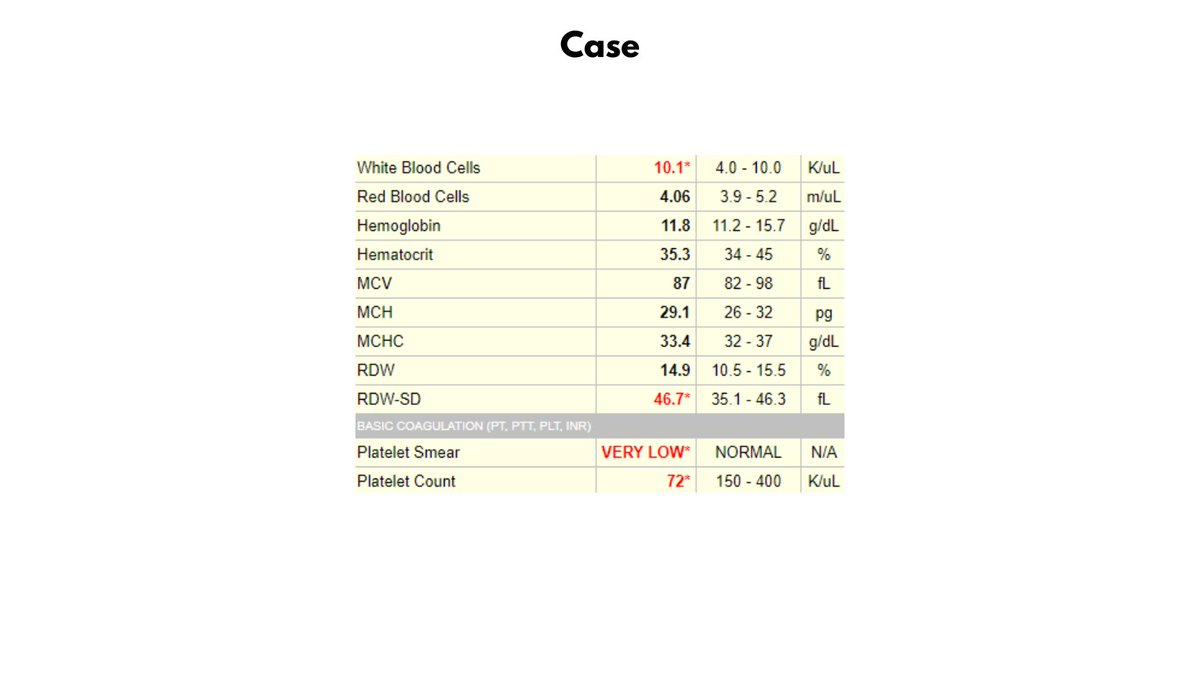
32 yo G1 F at 27 weeks gestation presented to the ED with the CBC in the graphic.
Q1: Describe the CBC in the fewest words possible.
CASE OF THROMBOCYTOPENIA IN PREGNANCY
32 yo G1 F at 27 weeks gestation presented to the ED with the CBC in the graphic.
Q1: Describe the CBC in the fewest words possible.
2/16
A1. Thrombocytopenia (technically anisocytosis since RDW-SD > 46 fL, but we will ignore that)
Q2. Not knowing anything else about the patient what is your differential diagnosis?
A1. Thrombocytopenia (technically anisocytosis since RDW-SD > 46 fL, but we will ignore that)
Q2. Not knowing anything else about the patient what is your differential diagnosis?
3/16
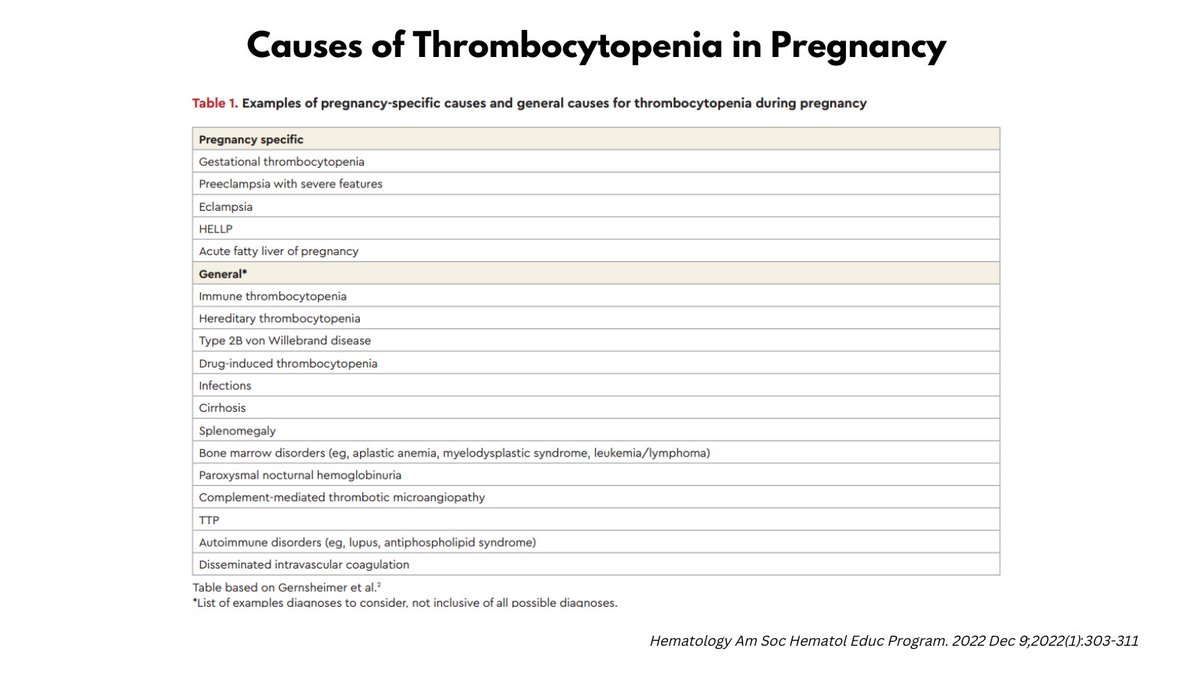
A2. There is broad ddx for thrombocytopenia (TP) in pregnancy. They can be grouped into pregnancy-specific and general causes (see graphic).
The fact that she presented to the ED is a clue that this is more serious than simply gestational TP or ITP.
A2. There is broad ddx for thrombocytopenia (TP) in pregnancy. They can be grouped into pregnancy-specific and general causes (see graphic).
The fact that she presented to the ED is a clue that this is more serious than simply gestational TP or ITP.
4/16
Among the more important causes to rule out are those conditions associated with thrombotic microangiopathy, including:
1. HELLP
2. Acute fatty liver of pregnancy (AFLP)
3. TTP
4. HUS
Among the more important causes to rule out are those conditions associated with thrombotic microangiopathy, including:
1. HELLP
2. Acute fatty liver of pregnancy (AFLP)
3. TTP
4. HUS
5/16
Q3. What argues against a diagnosis of TTP?
Q3. What argues against a diagnosis of TTP?
6/16
A3: The platelet count in TTP is usually < 20-30,000
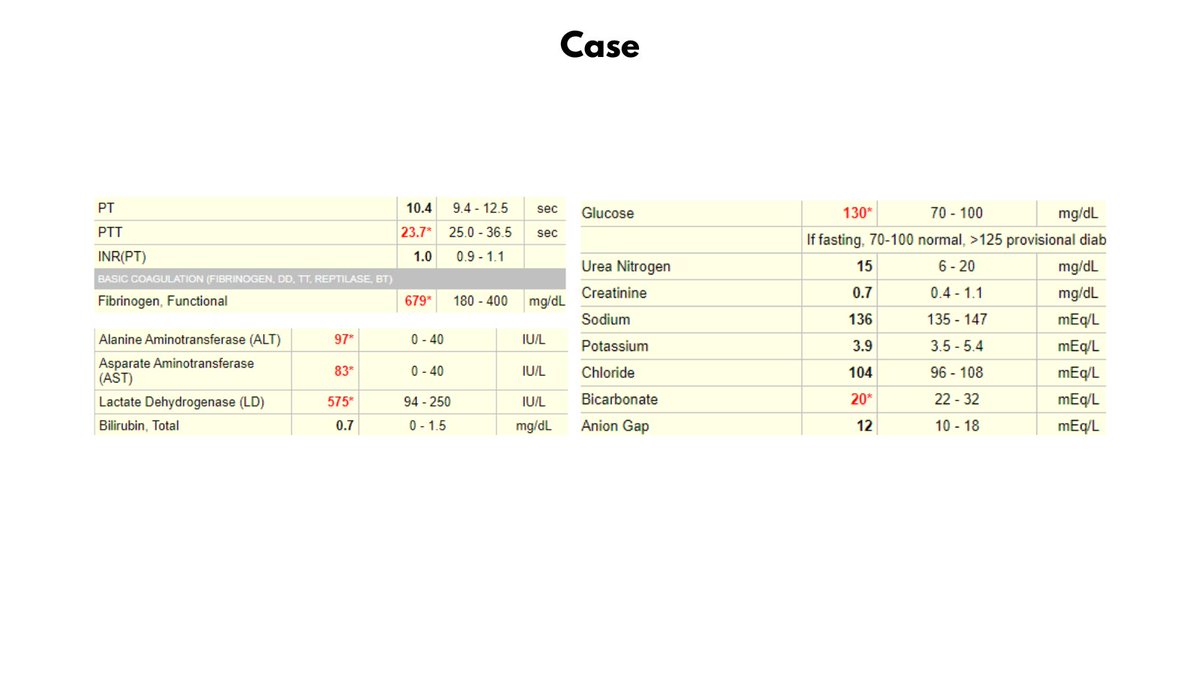
Other labs at the time of presentation are shown in the graphic.
Q4: What causes of TMA are less of more likely based on these data?
A3: The platelet count in TTP is usually < 20-30,000
Other labs at the time of presentation are shown in the graphic.
Q4: What causes of TMA are less of more likely based on these data?
7/16
A4: Elevated transaminases and LDH support a diagnosis of HELLP and AFLD; normal renal function argues against HUS; normal PT/bilirubin and absence of hypoglycemia argue against AFLD.
Q5: Can we rule out a diagnosis of TMA in the absence of anemia?
A4: Elevated transaminases and LDH support a diagnosis of HELLP and AFLD; normal renal function argues against HUS; normal PT/bilirubin and absence of hypoglycemia argue against AFLD.
Q5: Can we rule out a diagnosis of TMA in the absence of anemia?
8/16
A5: No. The patient may have appropriate reticulocyte response with compensated hemolysis. Her retic count was in fact elevated.
Q6: What other tests would you order to support a diagnosis of TMA-associated hemolysis (MAHA)?
A5: No. The patient may have appropriate reticulocyte response with compensated hemolysis. Her retic count was in fact elevated.
Q6: What other tests would you order to support a diagnosis of TMA-associated hemolysis (MAHA)?
9/16
A6: Haptoglobin, which was <10 in this case, and a peripheral smear, which showed 1-2 schistocytes PHF.
A6: Haptoglobin, which was <10 in this case, and a peripheral smear, which showed 1-2 schistocytes PHF.
10/16
Q7: So, we are suspicious about a diagnosis of HELLP, which is defined by Hemolysis, Elevated Liver enzymes and Low Platelets. HELLP is a variant of severe preeclampsia. Would you expect this patient to have hypertension and proteinuria?
Q7: So, we are suspicious about a diagnosis of HELLP, which is defined by Hemolysis, Elevated Liver enzymes and Low Platelets. HELLP is a variant of severe preeclampsia. Would you expect this patient to have hypertension and proteinuria?
11/16
A7: Most likely, though hypertension and proteinuria are absent in 10-15% of cases of HELLP. This patient did in fact have new hypertension and proteinuria.
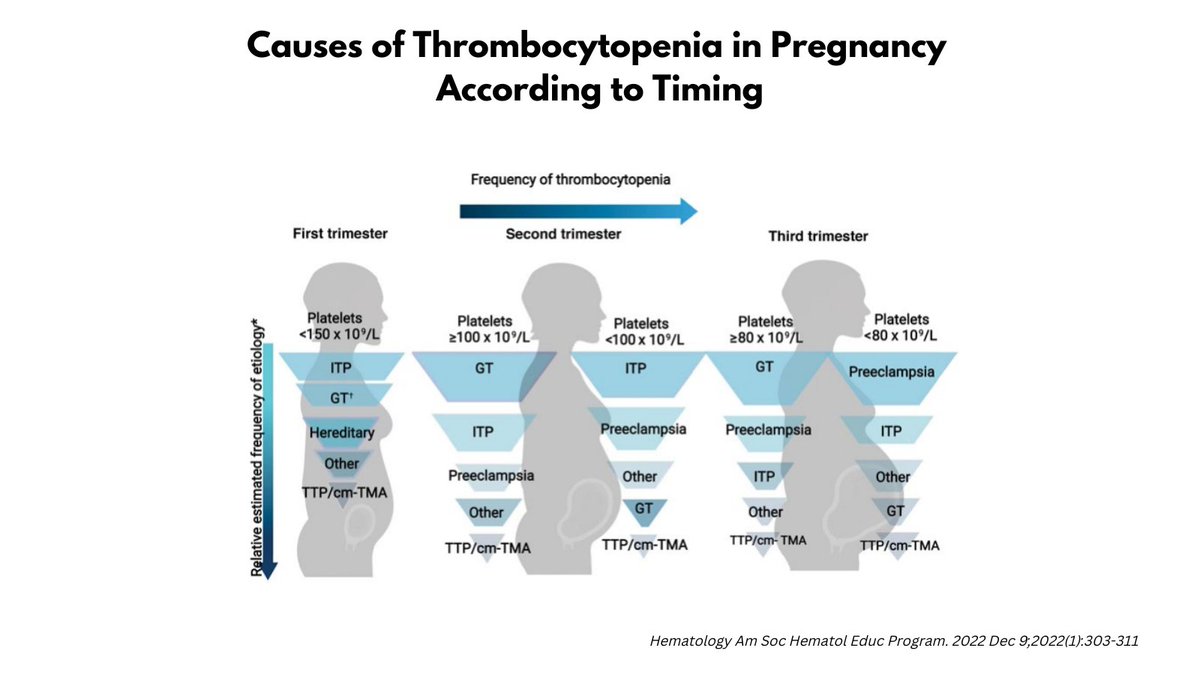
Q8: Does the timing of her presentation help distinguish between causes of TMA-associated thrombocytopenia?
A7: Most likely, though hypertension and proteinuria are absent in 10-15% of cases of HELLP. This patient did in fact have new hypertension and proteinuria.
Q8: Does the timing of her presentation help distinguish between causes of TMA-associated thrombocytopenia?
12/16
A8: Not really, they can all occur throughout pregnancy.
A8: Not really, they can all occur throughout pregnancy.
13/16
This patient was indeed diagnosed with HELLP. She received antihypertensive treatment, magnesium, steroids and underwent an urgent C-section. Both mom and baby ended up doing well.
This patient was indeed diagnosed with HELLP. She received antihypertensive treatment, magnesium, steroids and underwent an urgent C-section. Both mom and baby ended up doing well.
14/16
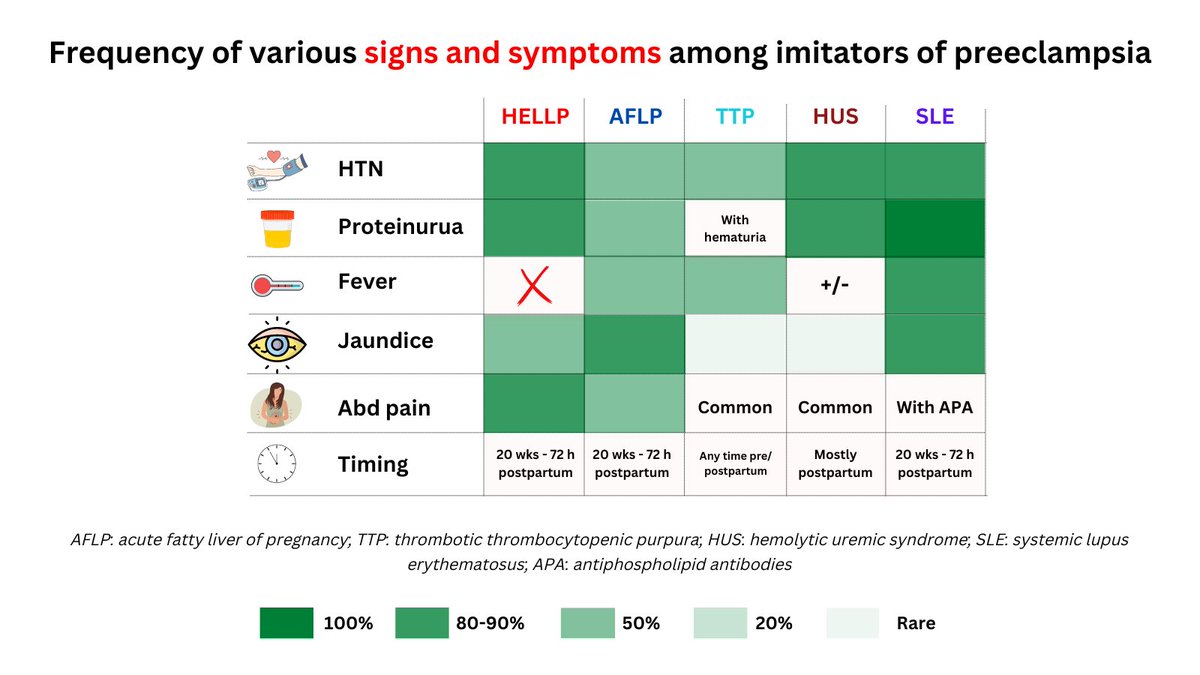
Shown in the graphic is a comparison of signs and symptoms among imitators of preeclampsia, which include HELLP, AFLP, TTP and HUS.
Shown in the graphic is a comparison of signs and symptoms among imitators of preeclampsia, which include HELLP, AFLP, TTP and HUS.
15/16
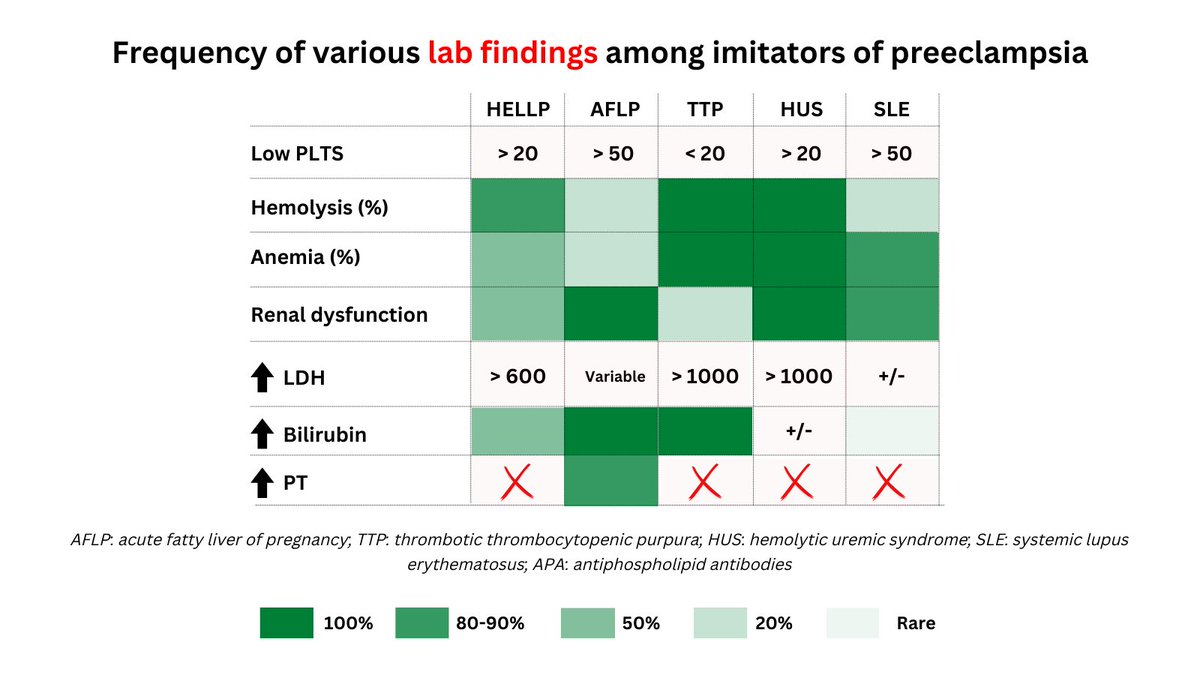
Shown in the graphic is a comparison of lab values among imitators of preeclampsia, which include HELLP, AFLP, TTP and HUS.
Shown in the graphic is a comparison of lab values among imitators of preeclampsia, which include HELLP, AFLP, TTP and HUS.
16/16
For more information about this case, the condition (HELLP), and to try your hand at a quiz, see:
thebloodproject.com
For more information about this case, the condition (HELLP), and to try your hand at a quiz, see:
thebloodproject.com

Loading suggestions...