

I don't think most people are aware of how possible it is to stop and reverse the current demographic changes occurring. A lot appear to have given up and accepted it as fate. There is, in fact, a multitude of policy changes that can and should be done:

Essentially they can be categorised into three areas.
1. Moratorium on all immigration.
2. Disenfranchise anyone whose ancestors arrived in the country after 1945.
3. End social housing and other assorted benefits.
1. Moratorium on all immigration.
2. Disenfranchise anyone whose ancestors arrived in the country after 1945.
3. End social housing and other assorted benefits.
A policy of net zero immigration would stabilise the current demographic situation overnight. A lot of population projections by ethnicity use outdated assumptions on TFR and assume immigration running at, say, 100k per annum.
30+ years ago British Pakistani TFR was over 4 and now it has almost halved even though the majority of mothers are still born in Pakistan. The population pyramid for this cohort has stabilised and it will keep falling, especially among second generations.
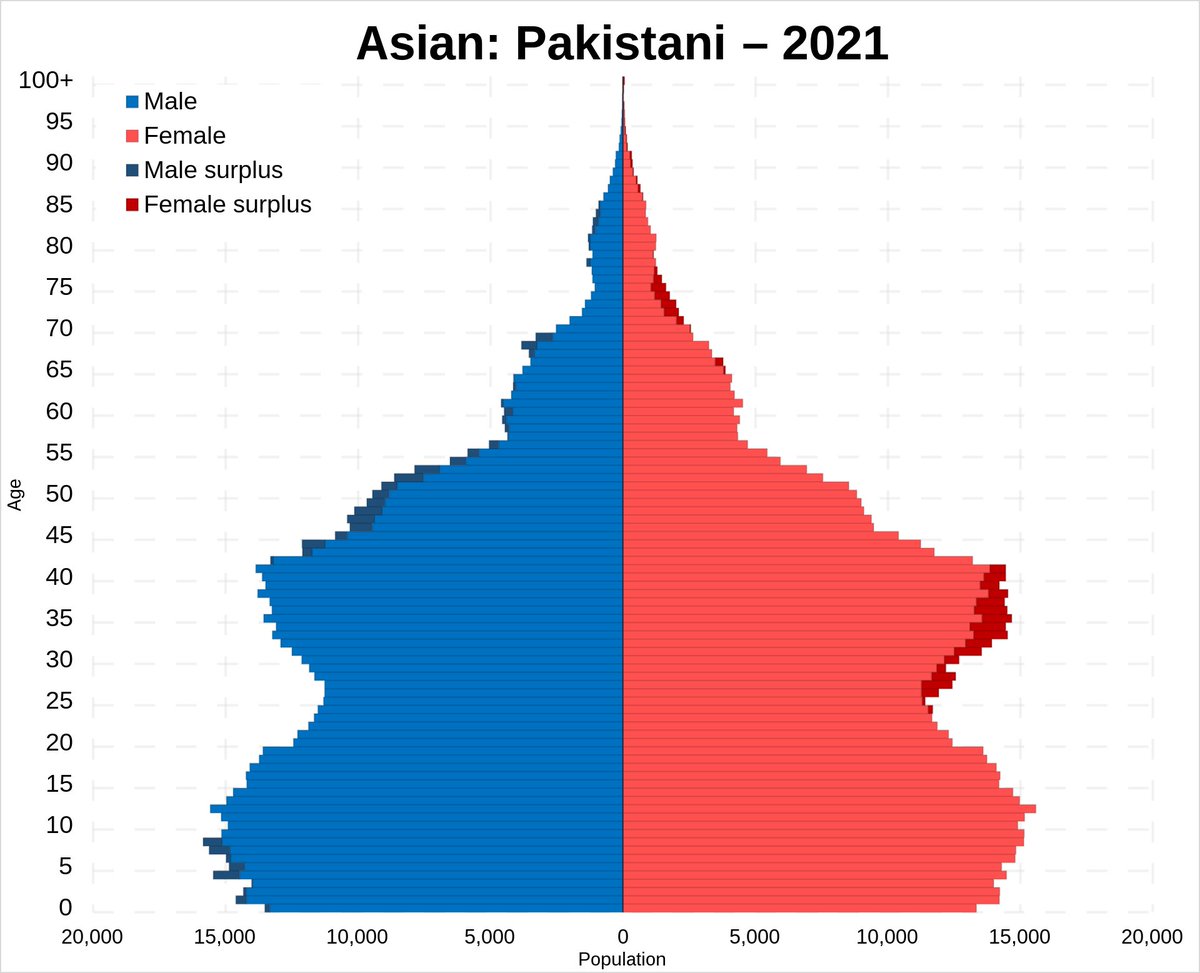
As a mutual once said: "It’s conceivable that we’re shifting into a period where having children is increasingly the preserve of people with low time preference (which would probably rule out the products of six hundred years of Mirpuri cousin marriages)."
You'll also get a decent share who intermarry, leading to an increase in the mixed percentage (they get bleached over time). Some ethnic cohorts are already relatively decreasing - Black British: Caribbean in London has gone from 344k (4.79%) in 2001 to 345k (3.90%) in 2021.
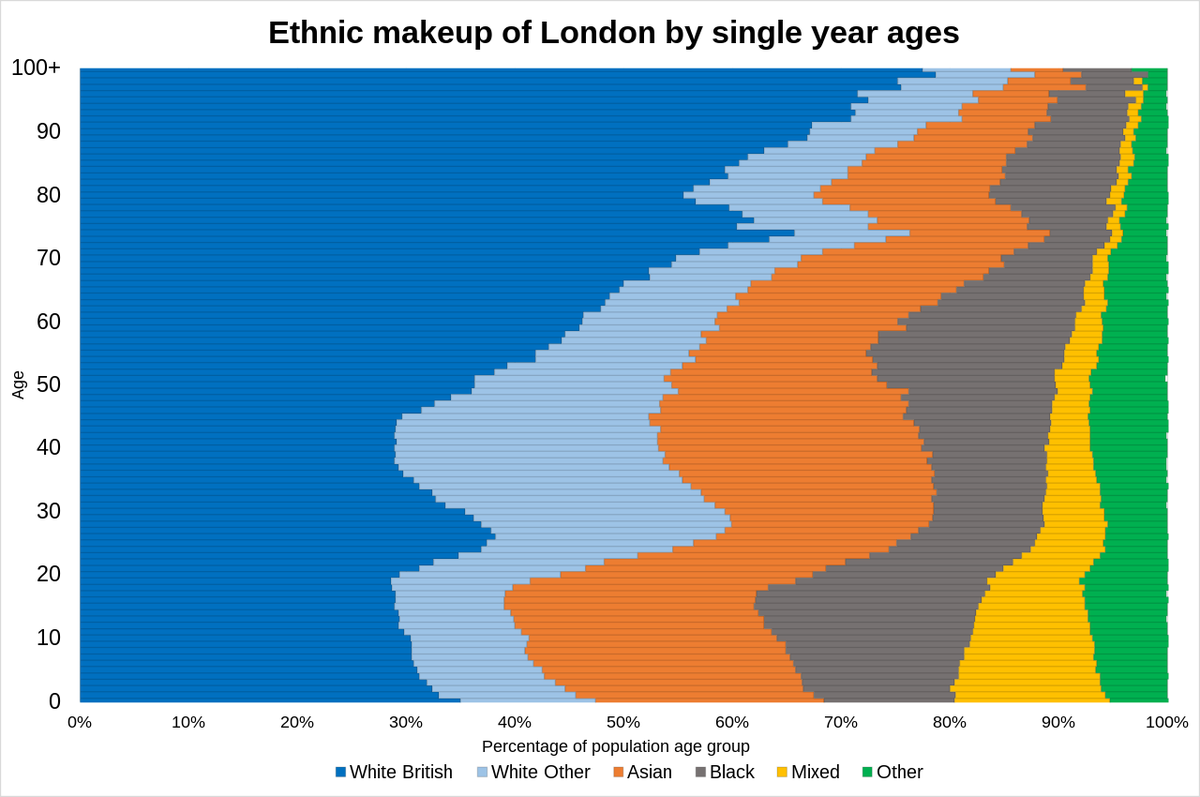
It is also the case that ~2% of ethnic minorities migrate out of the country every year. With immigration stopped overnight, the ethnic minority population would decay away over several decades. It is mostly just artificially sustained by mass immigration.
Equally, if you ran a policy of just allowing immigration from Aus, Canada, NZ, and SA (perhaps stipulate they must have an ancestor born here) trends could be quite rapidly reversed. That's 'extreme' on paper, but it's an example.
But on the topic of what is and isn't extreme, it's worth looking at a) cases of this happening now, and b) cases of it happening in the past. 120k ethnic Armenians are moving to Armenia from Nagorno-Karabakh for fear of ethnic cleansing and almost no one appears to care.
If the UK were to remove certain ethnic cohorts from the country for certain reasons, absolutely nobody apart from domestic white middle class liberals would actually care. Again, I am talking in hypotheticals of course.
There's many recent historical examples of foreign settlers returning to their homelands: India and Pakistan (1947), Indonesia (1949), Vietnam (1954), Morocco (1956), Congo (1960), Algeria (1962), Kenya (1963), Mozambique (1975), Rhodesia (1980), etc.
The French population in Morocco since the 1950s has decreased from 400k to 40k, meanwhile the entire population has increased from 8 million to 38 million. La valise ou le cercueil! Reconquête!
There are of course a number of policy measures that you could introduce to further disenfranchise people which would revolve around abolishing ILR, removing benefits for non-citizens such as social housing, and other targeted measures.
Examples would be:
- ban capital exports for non-citizens ("remittances")
- ban anyone convicted of benefits fraud from claiming welfare
- criminal record leading to eviction from social housing
- joint HMRC-immigration enforcement on every 'shop'
- ban capital exports for non-citizens ("remittances")
- ban anyone convicted of benefits fraud from claiming welfare
- criminal record leading to eviction from social housing
- joint HMRC-immigration enforcement on every 'shop'
More extreme (hypothetical) examples would be committed citizens enforcing a genuinely hostile environment, the death penalty for grooming gang involvement, a new Act of Proscription, proving cash to leave, and so on.
Social housing is the obvious pull factor. 4.2 million arrivals since 2010. Why is the state providing for unproductive Somalians who arrived 10 years ago to live in central London? It is reasonable to assume that up to 72% of the Somalians living here would leave overnight.
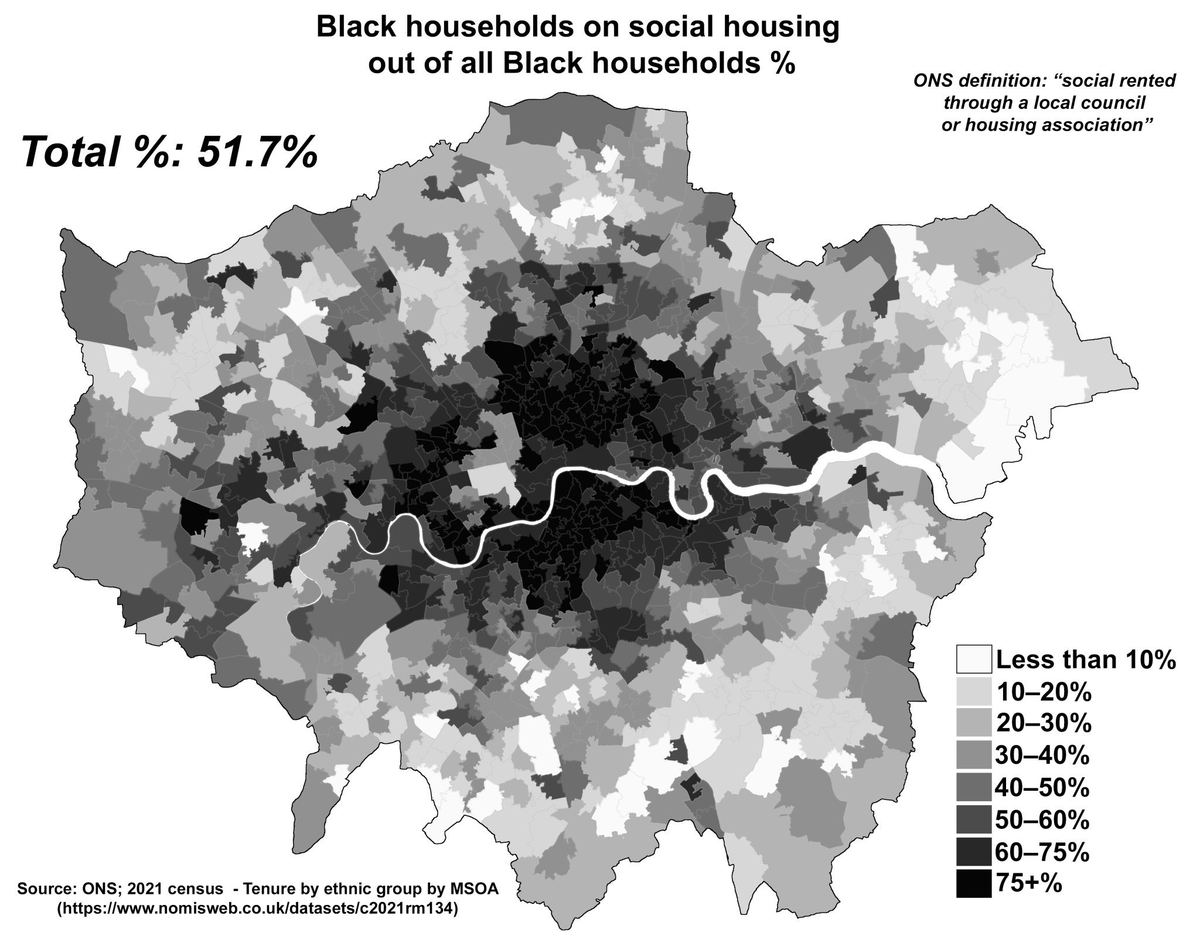
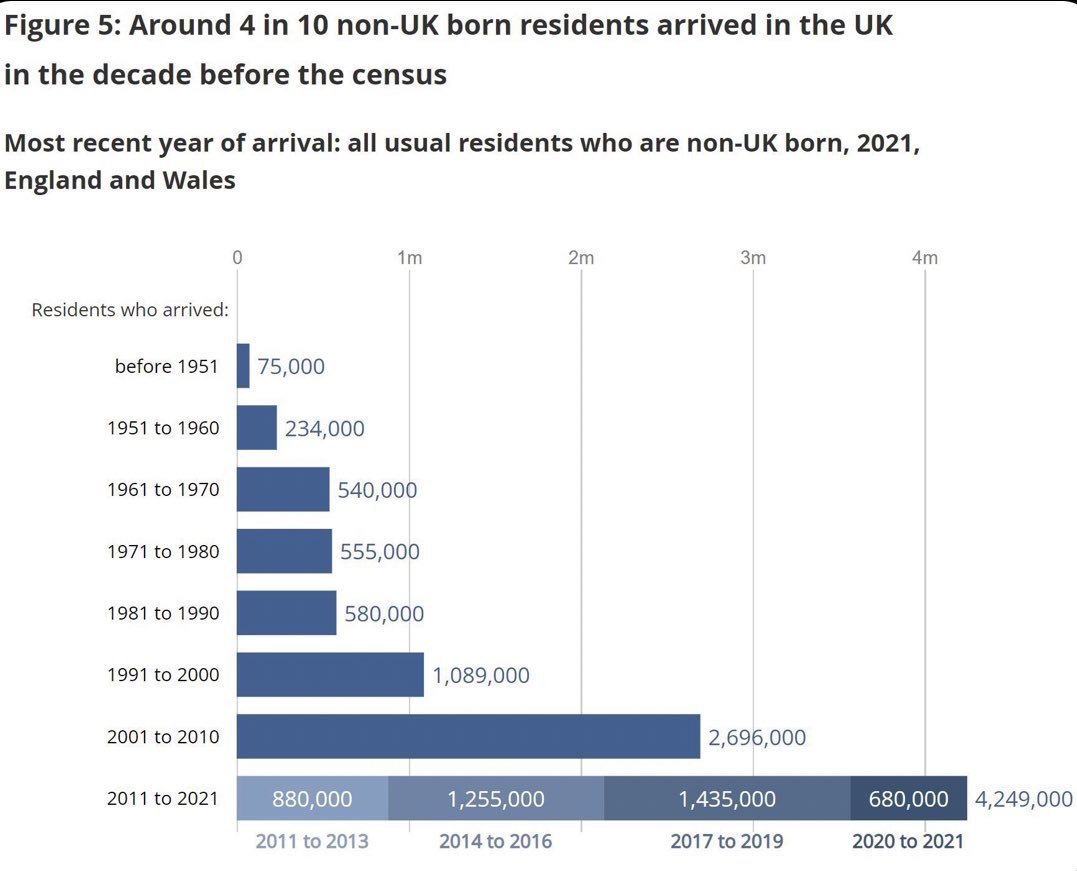
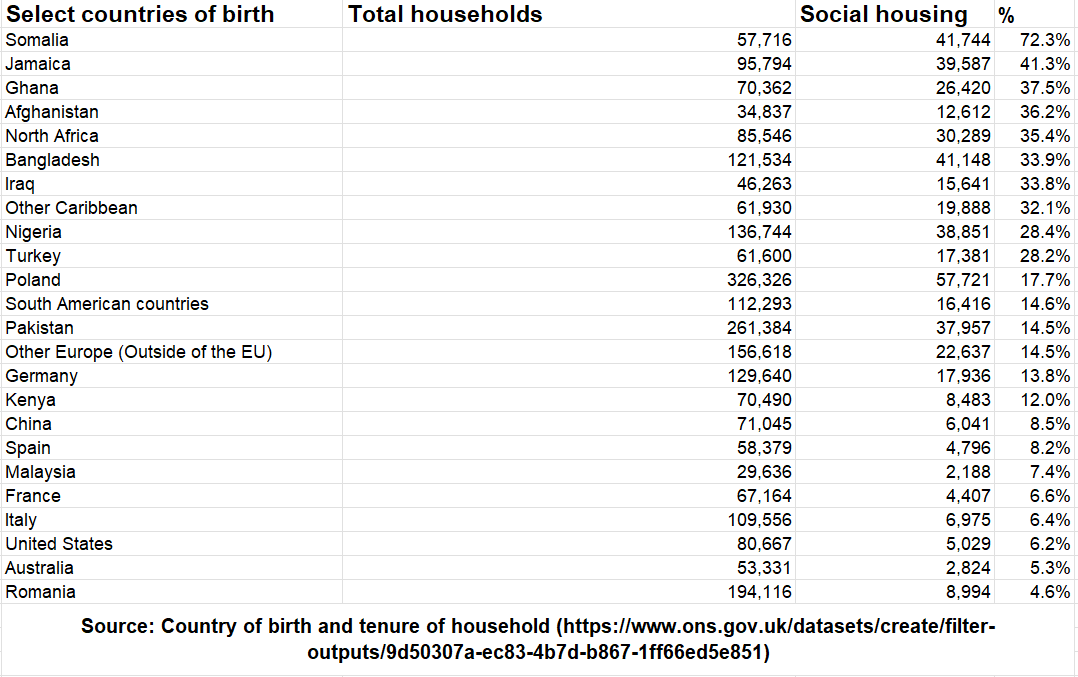
This is the case for many ethnic groups who can't financially support themselves. 80% of people of Pakistani descent in the UK have visited relatives in Pakistan in the last five years. Most have no special connection to the UK. If the pull benefits were removed they would leave.
Domestic TFR is a very tricky issue but there's certainly a world in which it can be rapidly increased, provided the environment and policies are right. 1850s Dudley had a TFR of 6.4 and an average age of 23!
Admittedly it was a woeful place to live and there were huge cholera outbreaks a few years earlier, but it's an example that British people can and do have large families. No doubt a renewed Britain with far better access to housing would lead to a baby boom.
I hope this thread can serve as a small whitepill for the doomers. I've not really seen much discussion on the issue from a proposals point of view, rather, most seem aware of the changes but have surrendered to them. The hour is quite late but we can act.

Loading suggestions...