

1/Hate it when one radiologist called the stenosis mild, the next one said moderate--but it was unchanged?!
How do you grade it? Do you estimate? Measure? Guess???
Let this thread take the load off your back w/a lumbar grading system that’s easy, reproducible & evidence-based!
How do you grade it? Do you estimate? Measure? Guess???
Let this thread take the load off your back w/a lumbar grading system that’s easy, reproducible & evidence-based!

2/Lumbar stenosis has always been controversial.
In 2012, they tried to survey spine experts to come to a consensus as to what are the most important criteria for canal & foraminal stenosis.
And the consensus was…that there was no consensus.
So what should you use to call it?
In 2012, they tried to survey spine experts to come to a consensus as to what are the most important criteria for canal & foraminal stenosis.
And the consensus was…that there was no consensus.
So what should you use to call it?

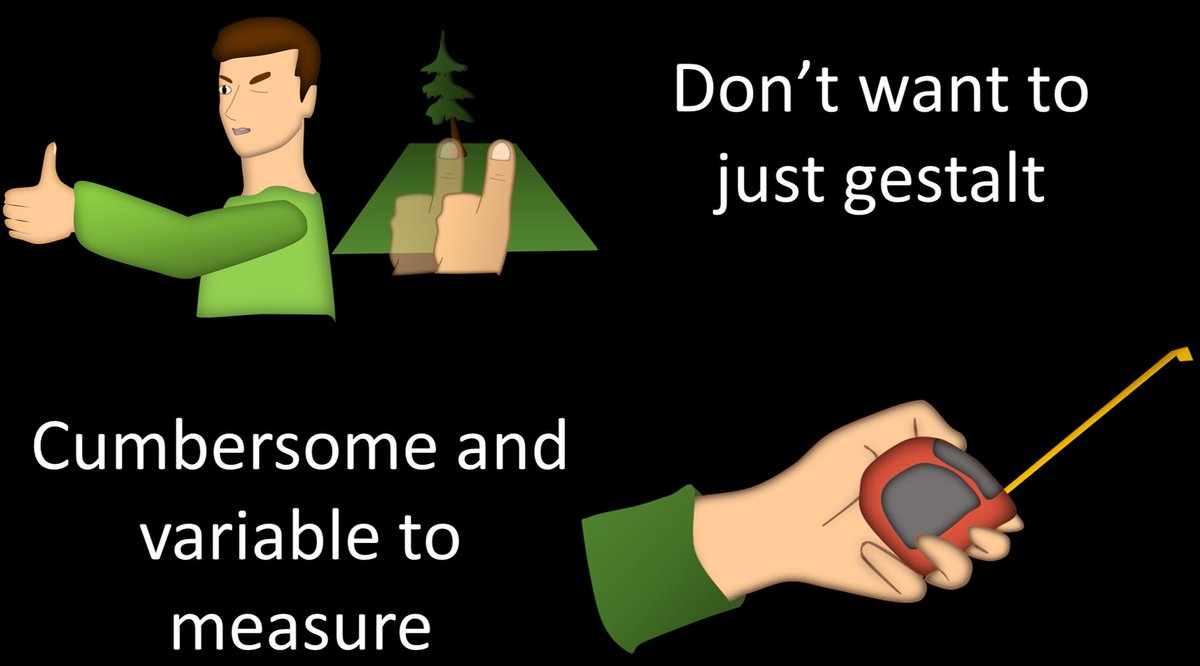
3/Well, you don’t want just gestalt it—that is a recipe for inconsistency & disagreement.
But you don’t want to measure everything either—measurements are not only cumbersome, they introduce reader variability & absolute measurements don’t mean the same thing in every patient.
But you don’t want to measure everything either—measurements are not only cumbersome, they introduce reader variability & absolute measurements don’t mean the same thing in every patient.
4/Think of it functionally
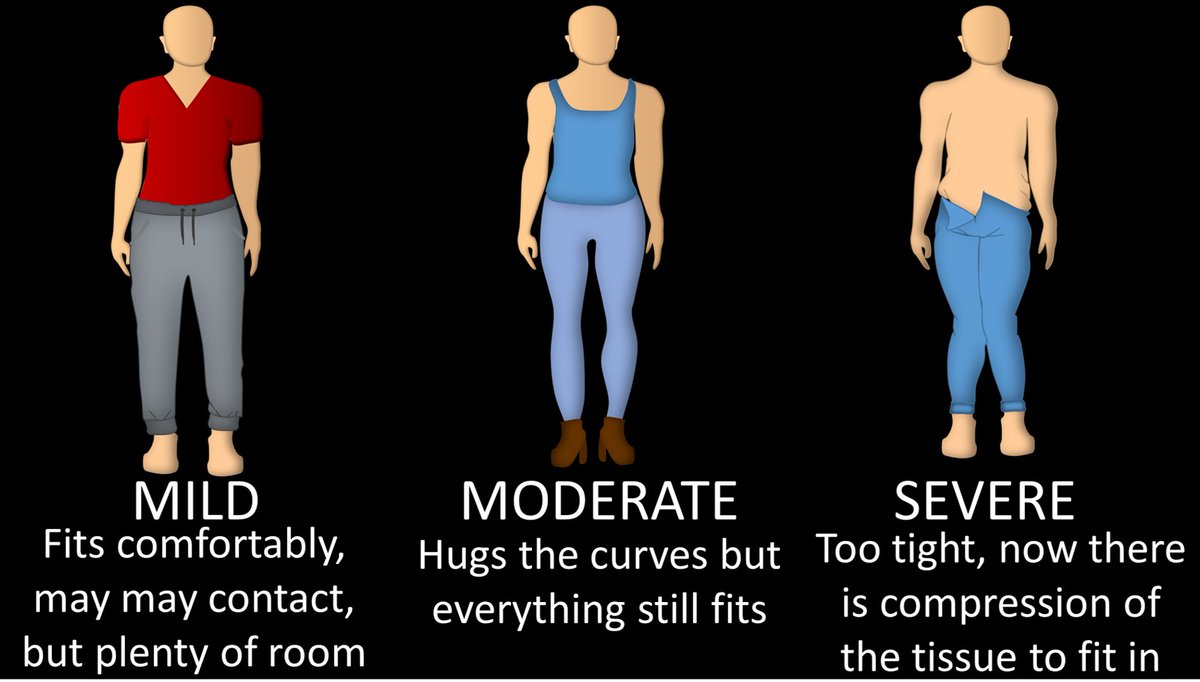
Nerves need to fit in their space, like you fit in clothing
Mild stenosis is like comfy clothes—no squeezing
Moderate stenosis clothing isn’t loose, but there isn’t extra room either
Severe stenosis is like too tight jeans, your body gets compressed
Nerves need to fit in their space, like you fit in clothing
Mild stenosis is like comfy clothes—no squeezing
Moderate stenosis clothing isn’t loose, but there isn’t extra room either
Severe stenosis is like too tight jeans, your body gets compressed
5/How do we tell if the nerves have enough room—if the clothing fits loosely, tight, or too tightly?
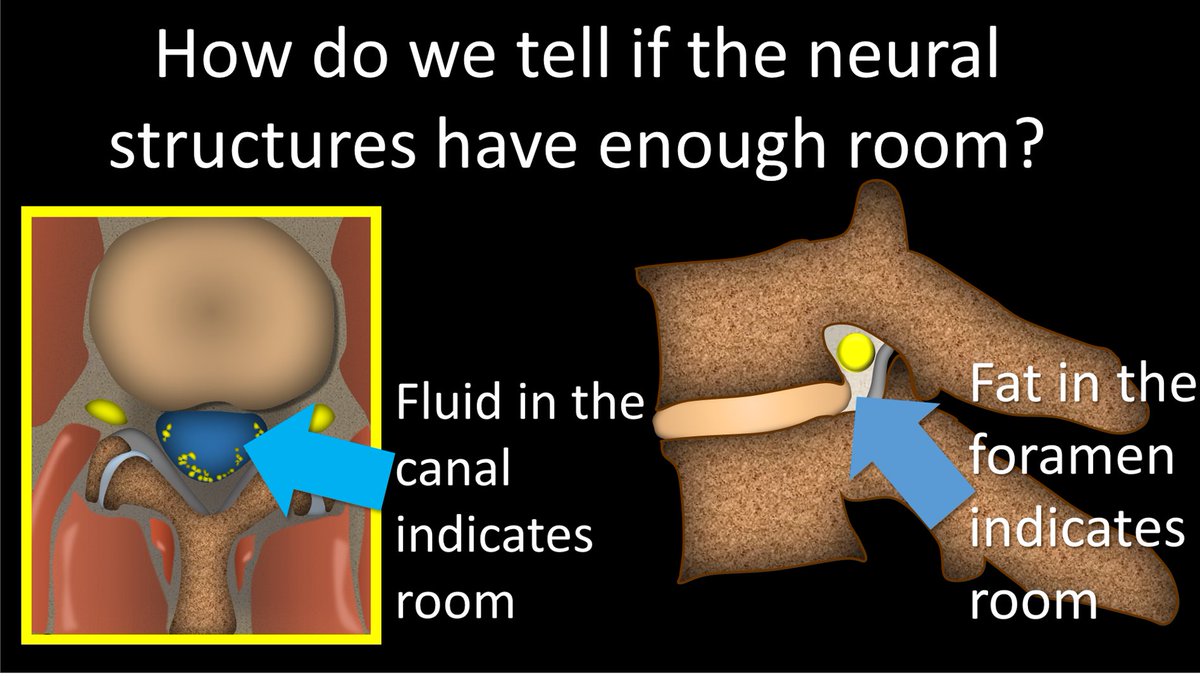
We look at the space around them
For the canal, it's CSF—if there's enough room, the extra space is filled by CSF
For foramina, it's fat—extra room is filled by foraminal fat
We look at the space around them
For the canal, it's CSF—if there's enough room, the extra space is filled by CSF
For foramina, it's fat—extra room is filled by foraminal fat
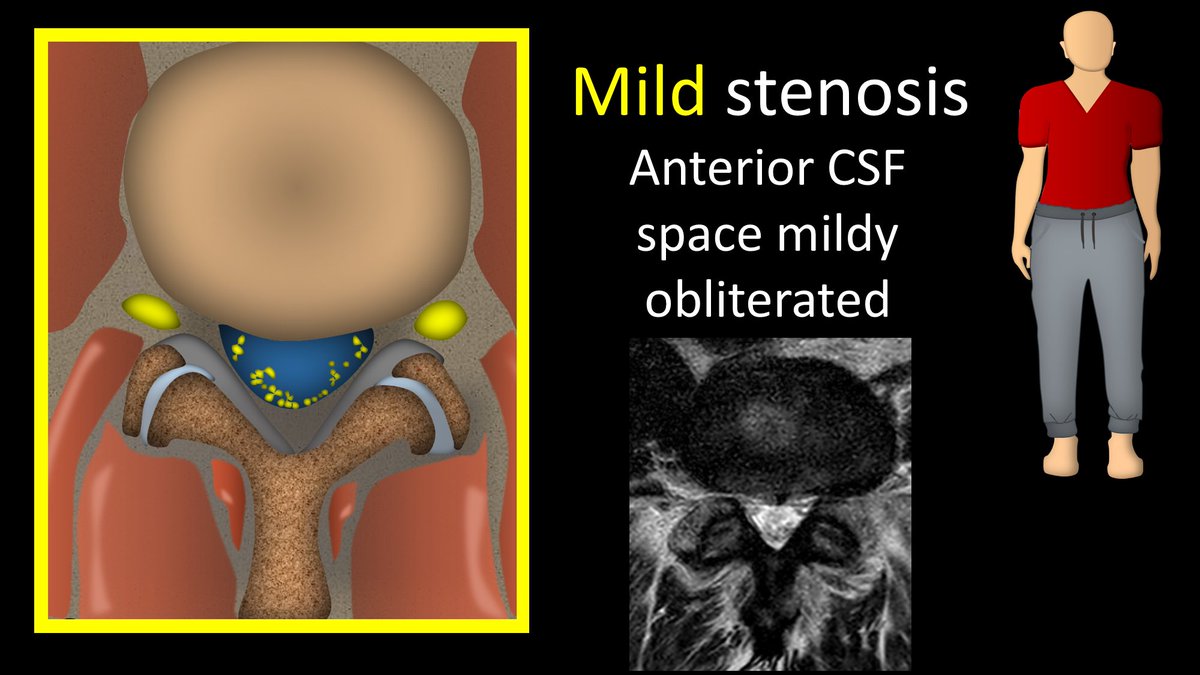
6/For mild canal stenosis, there is mild attenuation of the CSF space, but there is still plenty of CSF around, just like there is plenty of room in your comfy sweat pants
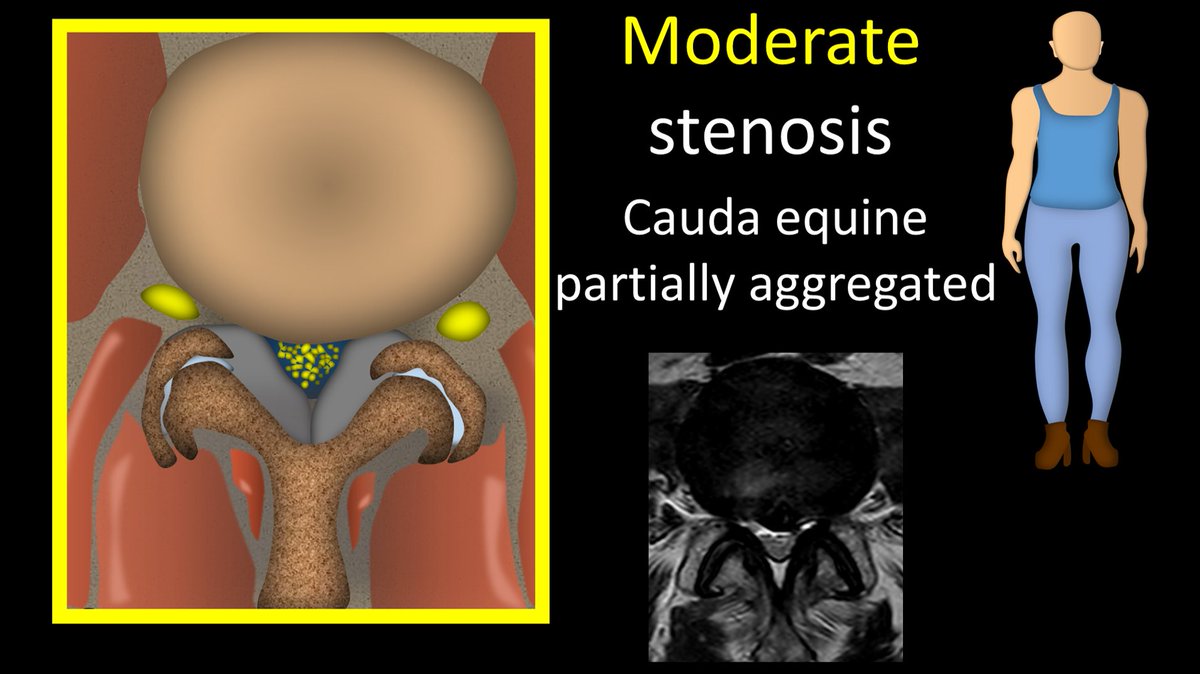
7/For moderate canal stenosis, the canal starts closing in, so there is less CSF around and the nerve roots appear aggregated.
It’s like the clothes you wear to the club, there isn’t much room between your skin & the clothing, but you can still fit into them (hopefully)
It’s like the clothes you wear to the club, there isn’t much room between your skin & the clothing, but you can still fit into them (hopefully)
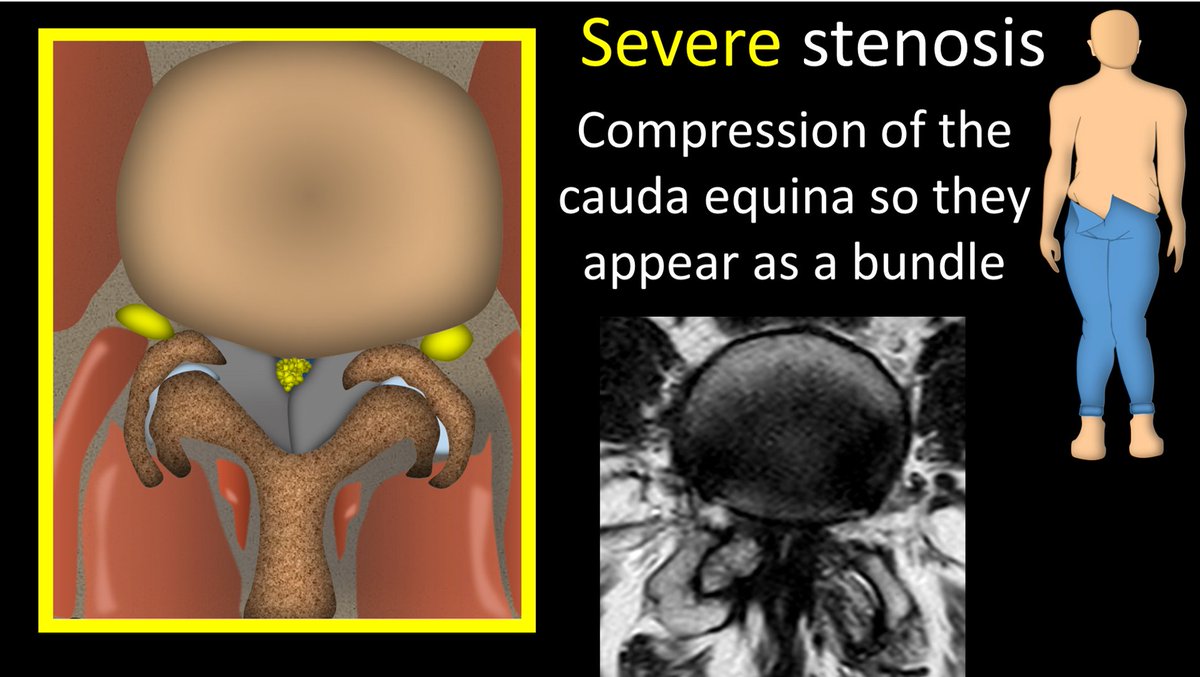
8/Severe canal stenosis is the too tight jeans.
The canal doesn’t just hug up to the nerve roots, it compresses them.
Like your belly after a big meal trying to get into tight jeans, they get squished and deformed in order to fit, so they can’t be separated from each other
The canal doesn’t just hug up to the nerve roots, it compresses them.
Like your belly after a big meal trying to get into tight jeans, they get squished and deformed in order to fit, so they can’t be separated from each other
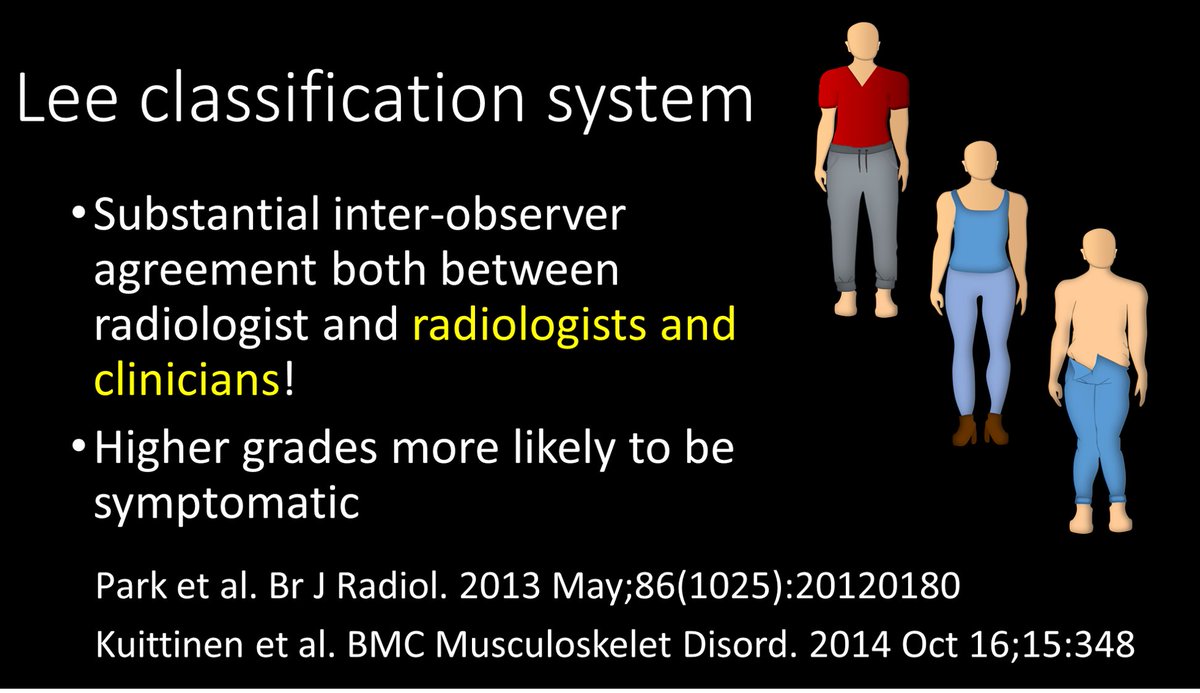
9/This classification isn’t just easy to remember, it’s also evidence based.
This is the Lee classification that has excellent reproducibility not just among radiologists, but among everyone.
And it does correlate w/increasing symptoms.
This is the Lee classification that has excellent reproducibility not just among radiologists, but among everyone.
And it does correlate w/increasing symptoms.
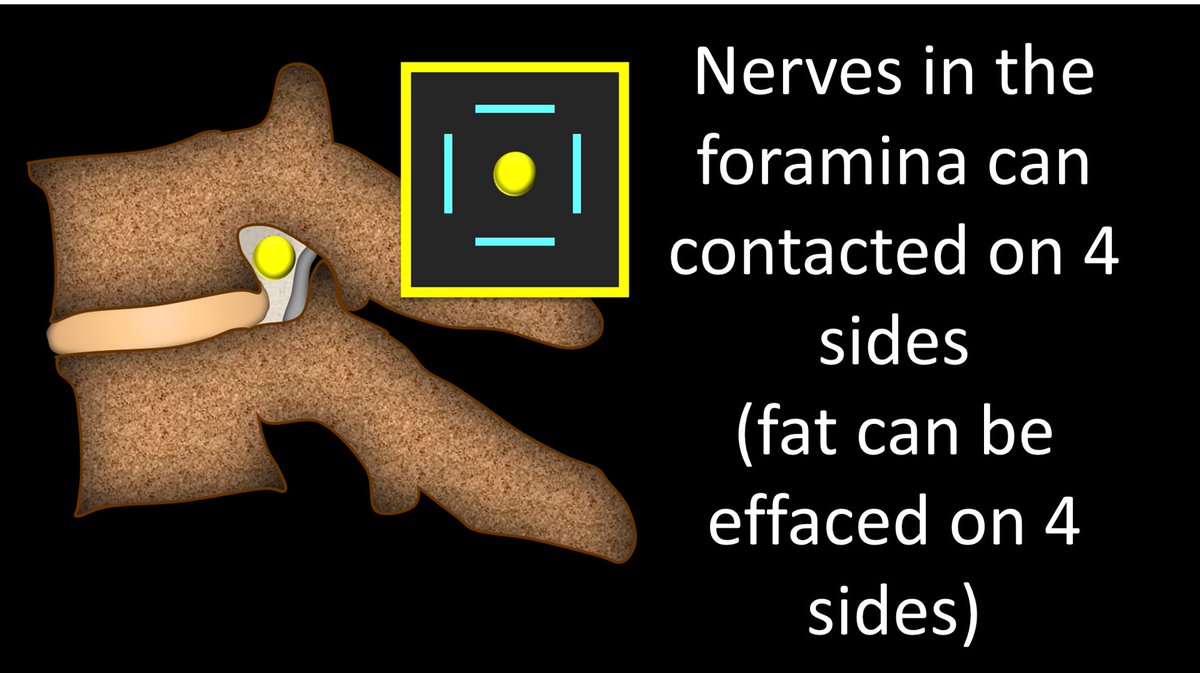
10/For foraminal narrowing, the nerve inside the foramen has fat around it on four sides that gets attenuated as the space gets tighter.
How many sides have attenuated fat determines how severe the stenosis is.
How many sides have attenuated fat determines how severe the stenosis is.
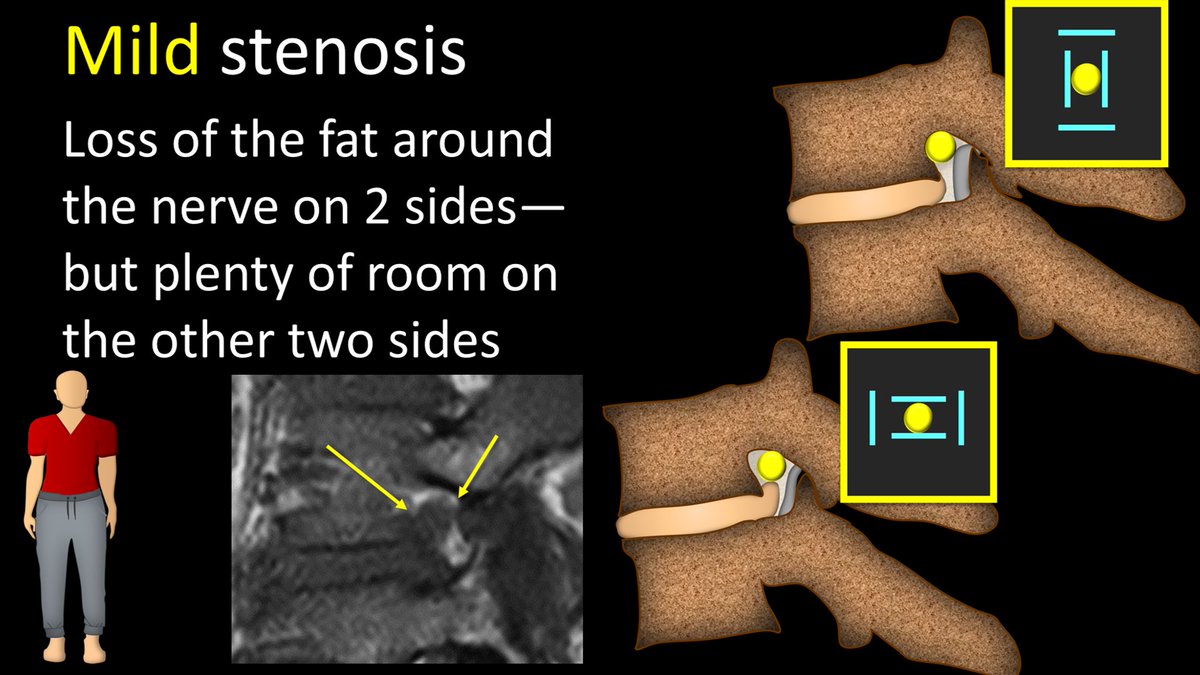
11/Mild stenosis is where you have loss of the fat on 2 sides.
So it is still comfy clothing bc the fat is preserved on the other two sides, so you have lots of space.
So it is still comfy clothing bc the fat is preserved on the other two sides, so you have lots of space.
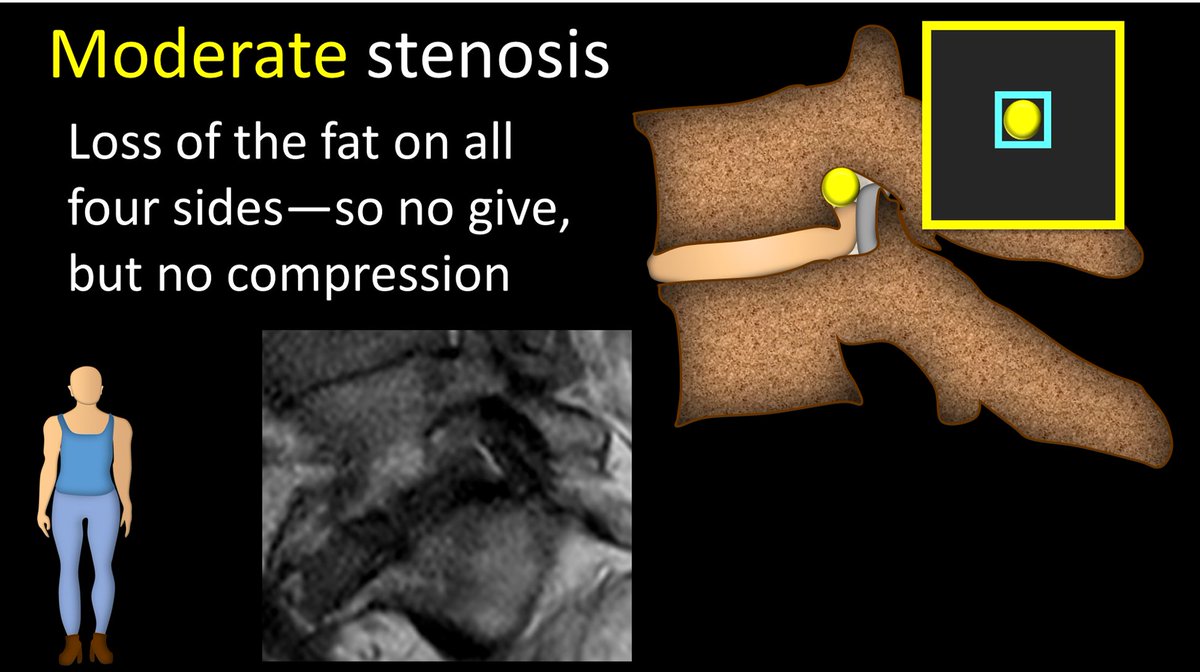
12/For moderate stenosis, you lose the space on all four side, but the nerve itself is not compressed or deformed.
Like a sleek outfit, it shows your curves, but doesn’t deform them. It’s not a comfy outfit, per se.
I wouldn’t eat a lot while wearing it, but it still fits
Like a sleek outfit, it shows your curves, but doesn’t deform them. It’s not a comfy outfit, per se.
I wouldn’t eat a lot while wearing it, but it still fits
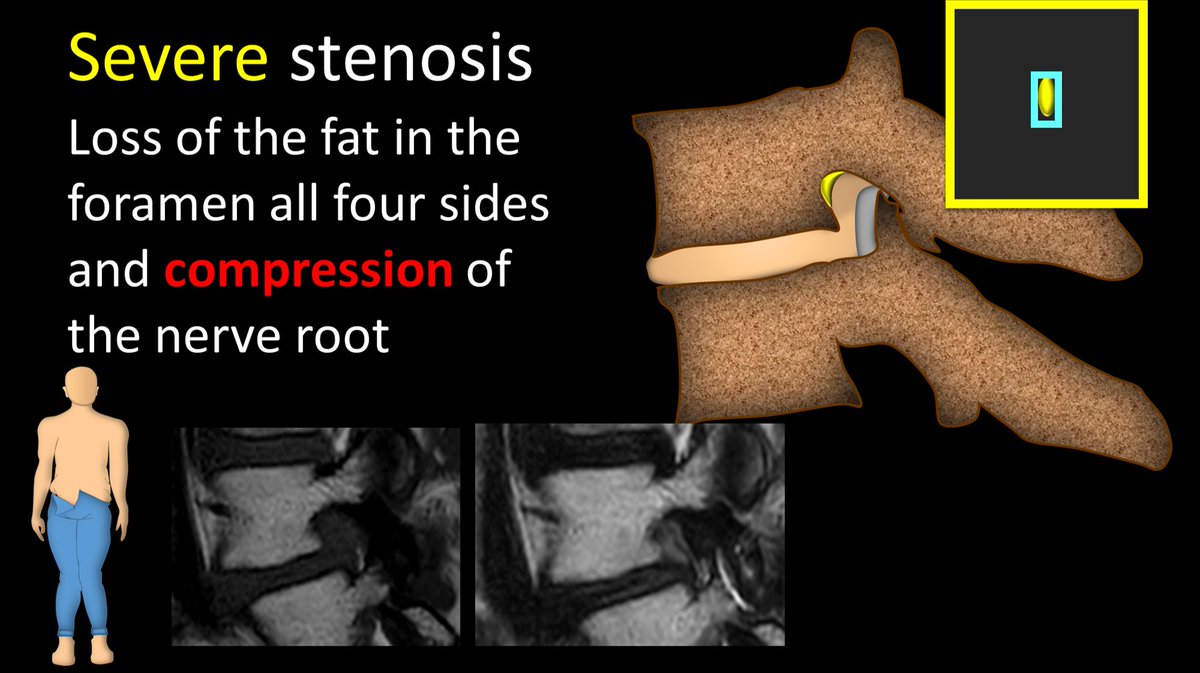
13/For severe stenosis, we are trying to fit into those jeans from high school and it isn’t going well.
You are squishing in everything you can to get it to fit.
Same with the foramen—the fat isn’t just gone, the nerve is compressed and deformed.
You are squishing in everything you can to get it to fit.
Same with the foramen—the fat isn’t just gone, the nerve is compressed and deformed.
14/This is also named the Lee system. It fits well with the Lee classification for canal stenosis.
It also is extremely reproducible and correlates with findings at surgery.
So you don’t have to remember a complicated system—just ask yourself, how does the clothing fit?
It also is extremely reproducible and correlates with findings at surgery.
So you don’t have to remember a complicated system—just ask yourself, how does the clothing fit?

15/So put away your measuring calipers!
You can end the inter-observer variability!
These systems are easy to remember, make sense, and are based in evidence.
As they say, if it fits—wear it!
You can end the inter-observer variability!
These systems are easy to remember, make sense, and are based in evidence.
As they say, if it fits—wear it!
Loading suggestions...