
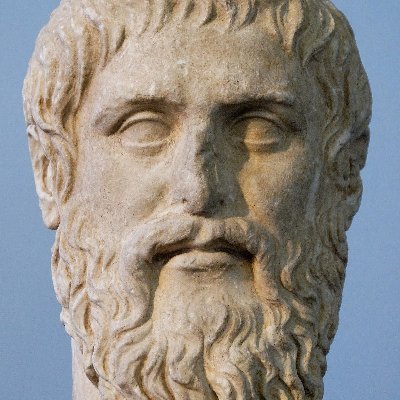
How did they tell apart the thousands of different saints in Medieval and Renaissance art?
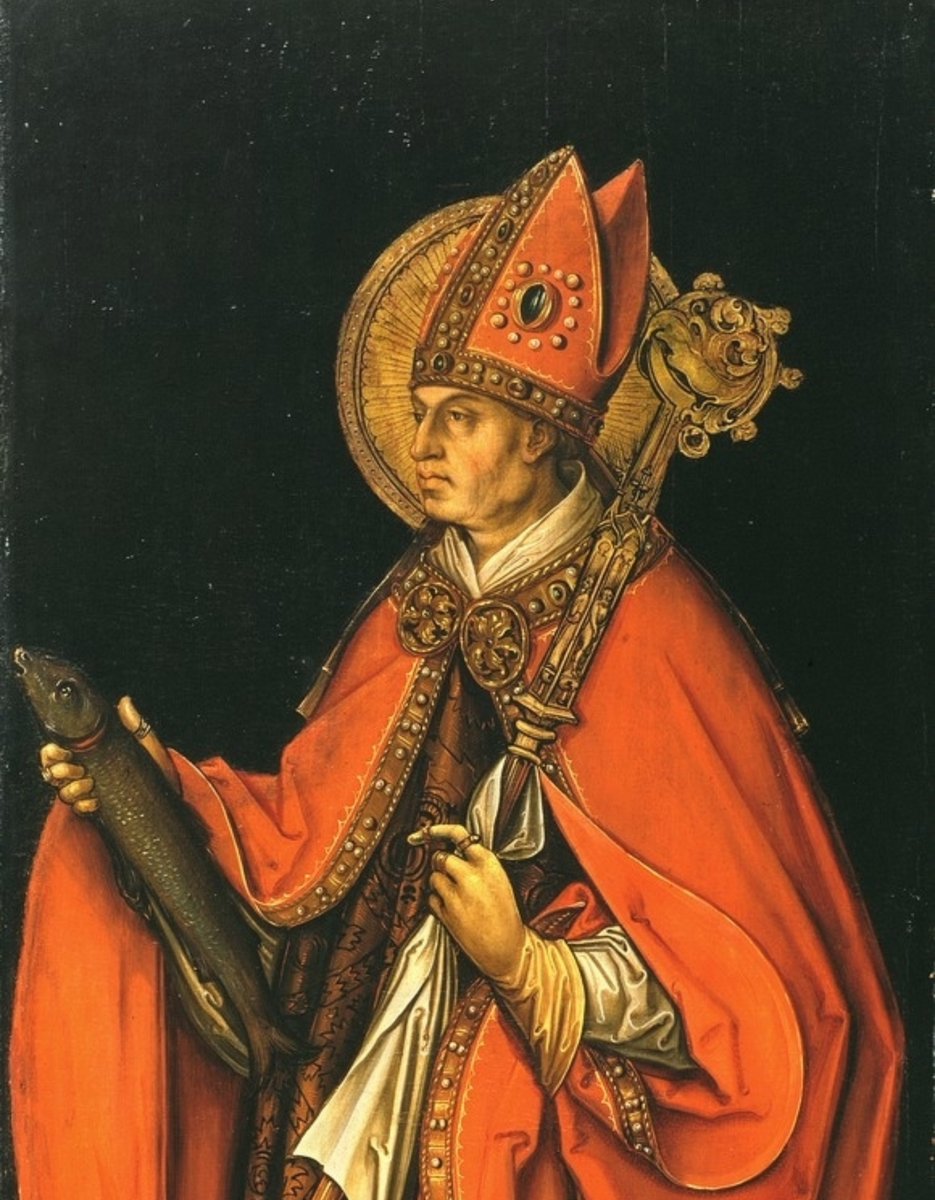
Each saint had their own stories and symbols. Like St Ulrich, who's always holding a fish, or St Peter of Verona, with a knife in his head.
And these aren't even the strangest...
Each saint had their own stories and symbols. Like St Ulrich, who's always holding a fish, or St Peter of Verona, with a knife in his head.
And these aren't even the strangest...


A "hagiography" is the name for a biography of a saint.
Hagiographies included the facts of their life, the miracles they performed, how they died, and information about their feast days and festivals.
It was from these hagiographies that artists drew their visual symbology.
Hagiographies included the facts of their life, the miracles they performed, how they died, and information about their feast days and festivals.
It was from these hagiographies that artists drew their visual symbology.

Collections of hagiographies were wildly popular.
Not only because saints were seen as models to be emulated, but also because their stories could be rather fantastical and entertaining.
And, now, they are a useful guide to identifying saints in Medieval and Renaissance art...
Not only because saints were seen as models to be emulated, but also because their stories could be rather fantastical and entertaining.
And, now, they are a useful guide to identifying saints in Medieval and Renaissance art...

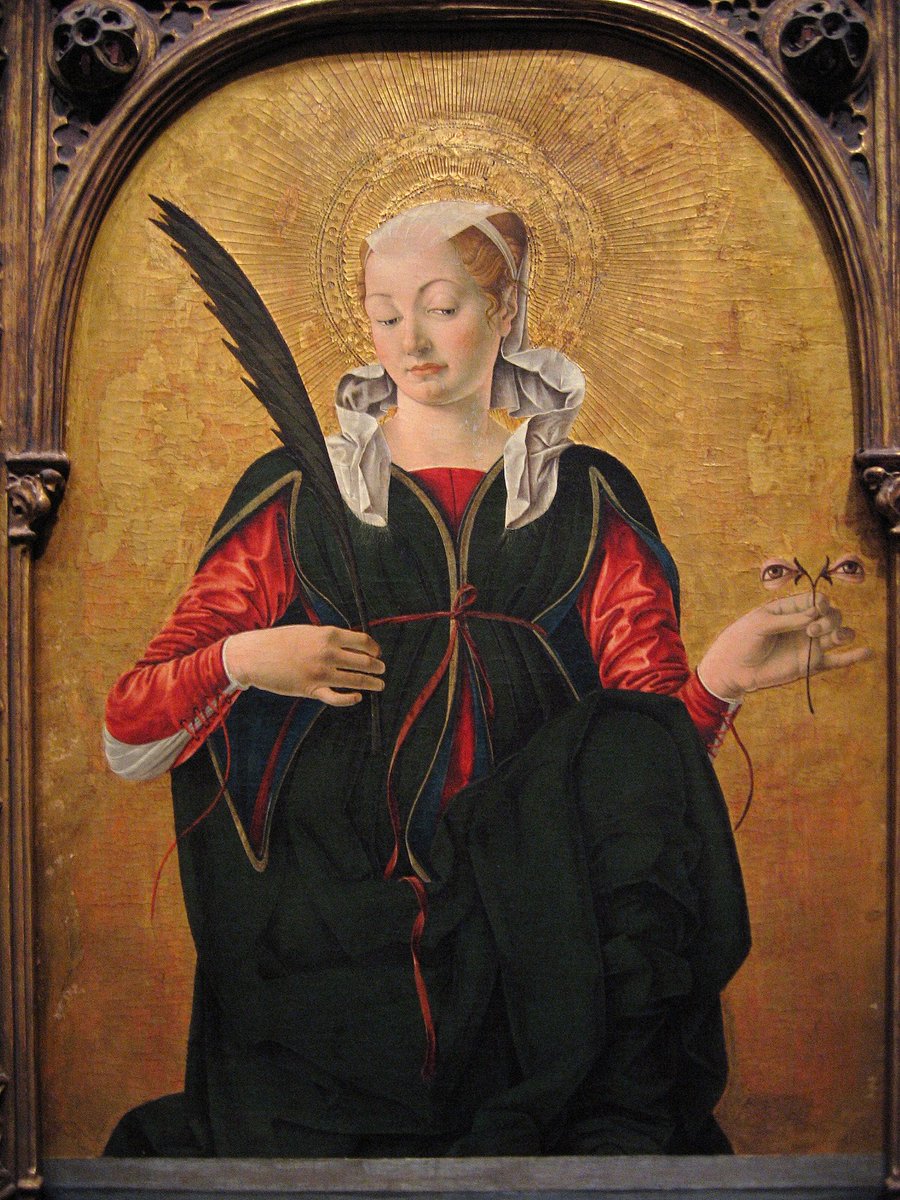
St Lucy of Syracuse died in the early 4th century AD during the persecutions of Christians carried out under the emperor Diocletian.
Legend says she tore out her own eyes to dissuade a man attempting to seduce her; hence Lucy is depicted holding her own eyes in her hands.
Legend says she tore out her own eyes to dissuade a man attempting to seduce her; hence Lucy is depicted holding her own eyes in her hands.
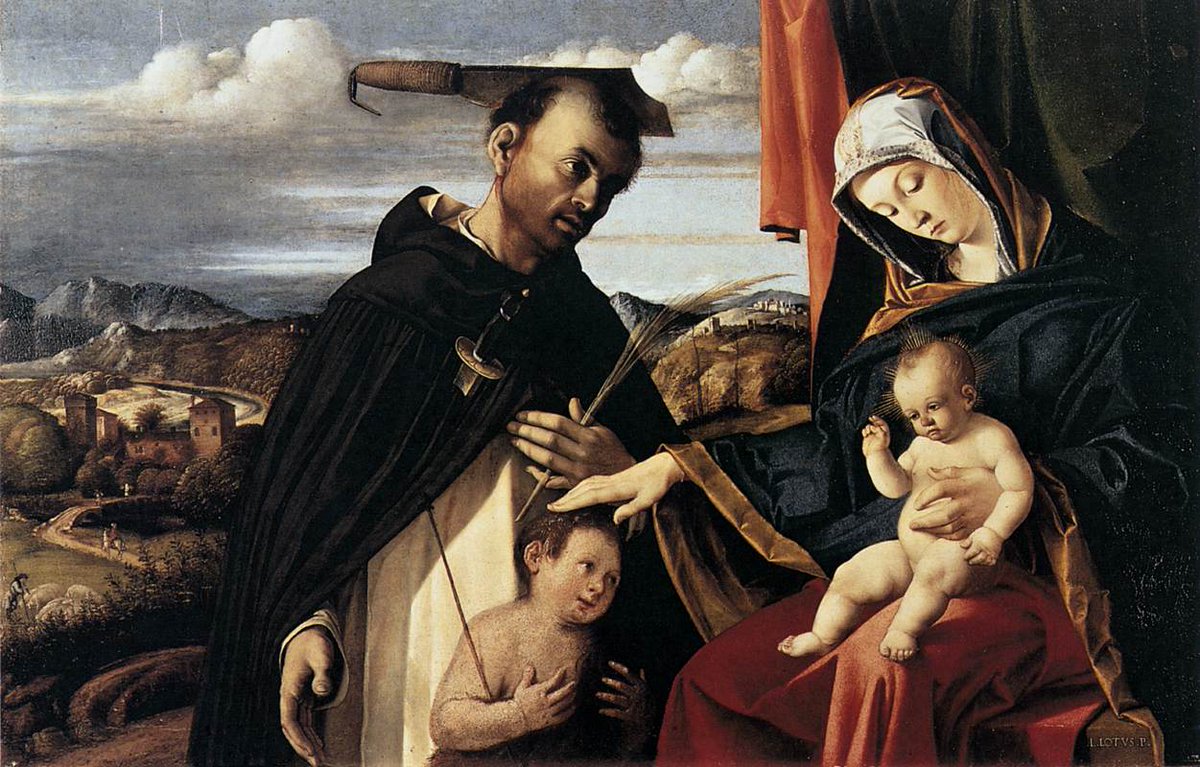
St Peter of Verona was a 13th century priest who denounced heresy so boldly that a group of heretics hired an assassin to kill him. Thus Peter has an axe in his head and sword through his heart.
The assassin, Carino of Balsamo, later repented and is now venerated himself.
The assassin, Carino of Balsamo, later repented and is now venerated himself.
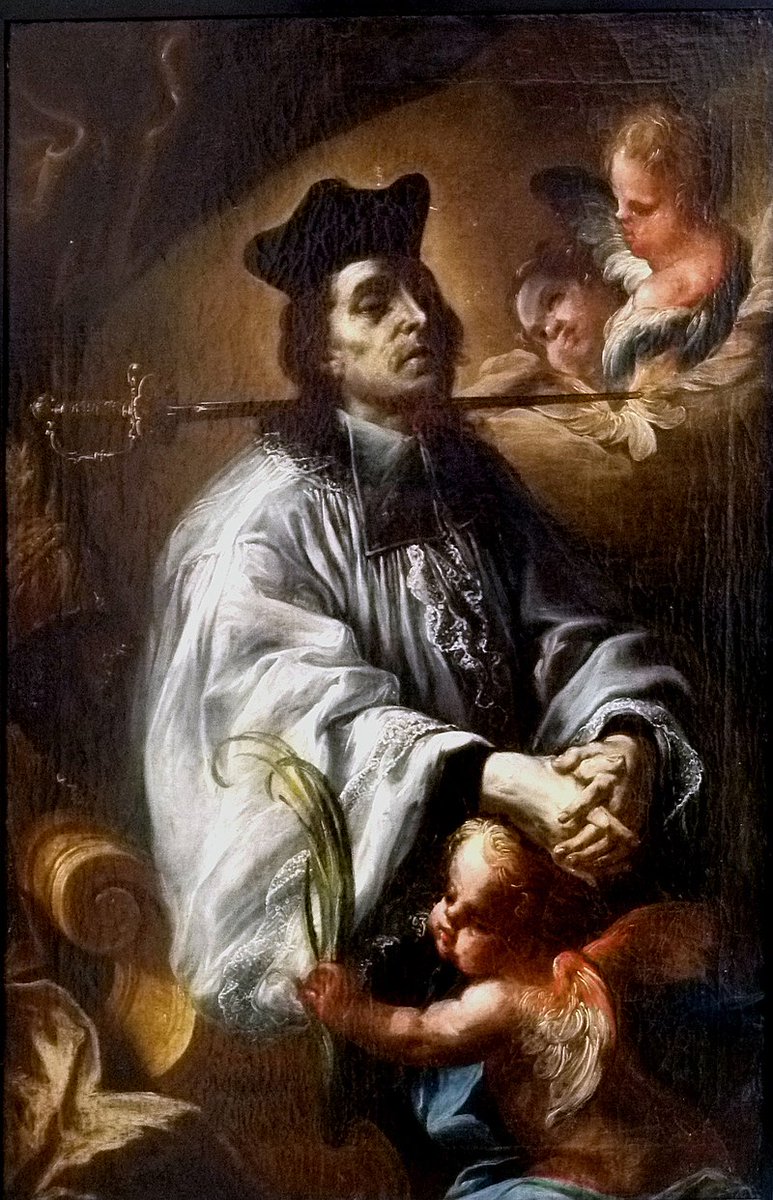
Saint Aquilinus of Milan is another one who, similar to Peter of Verona and the famous Saint Sebastian, was depicted looking rather peaceful despite having a sword through his neck.
Like Peter, he had preached against heresy in the 11th century and was subsequently assassinated.
Like Peter, he had preached against heresy in the 11th century and was subsequently assassinated.
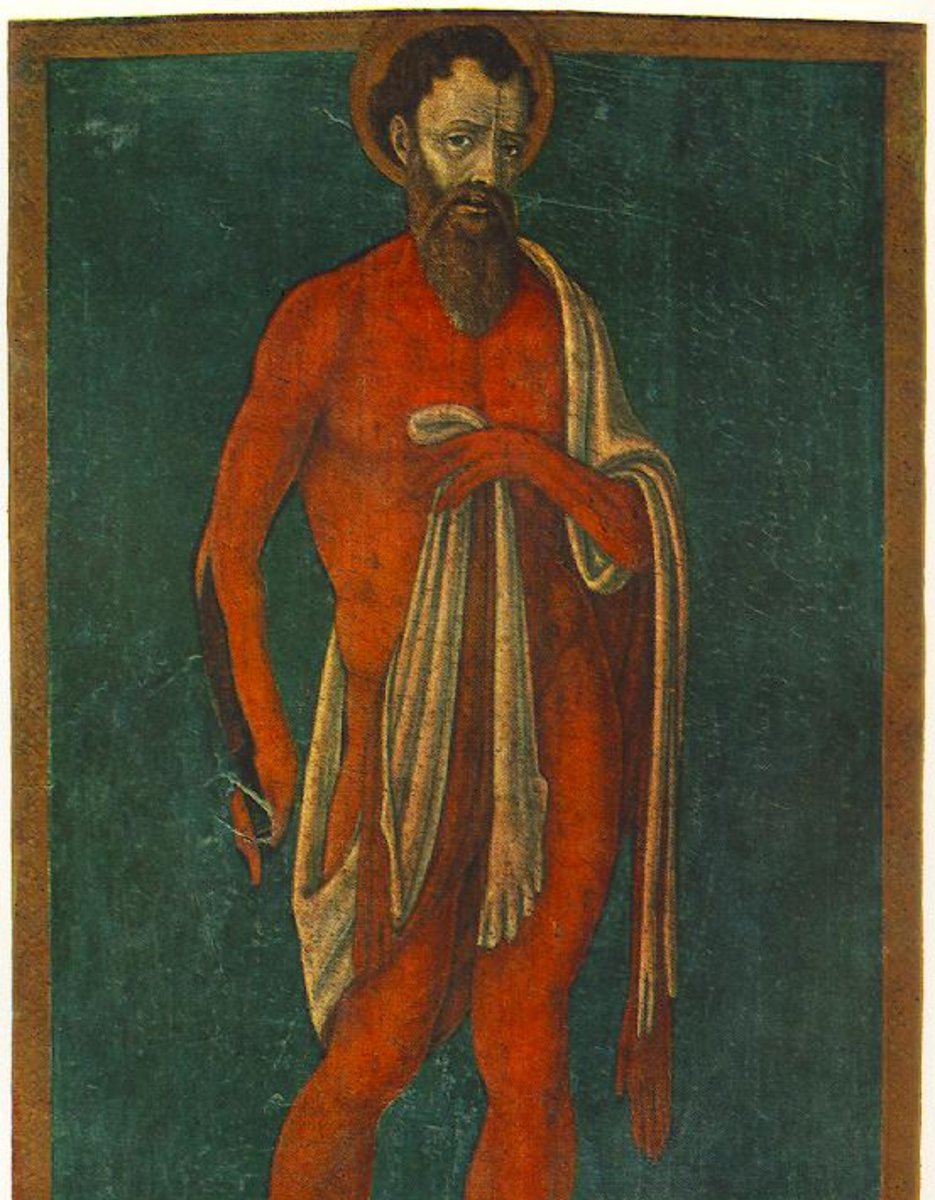
And then there's Saint Bartholomew, one of the Twelve Apostles of Jesus, who was skinned alive.
Thus he was usually depicted, rather gruesomely, holding his own flayed skin in his arms.
Thus he was usually depicted, rather gruesomely, holding his own flayed skin in his arms.

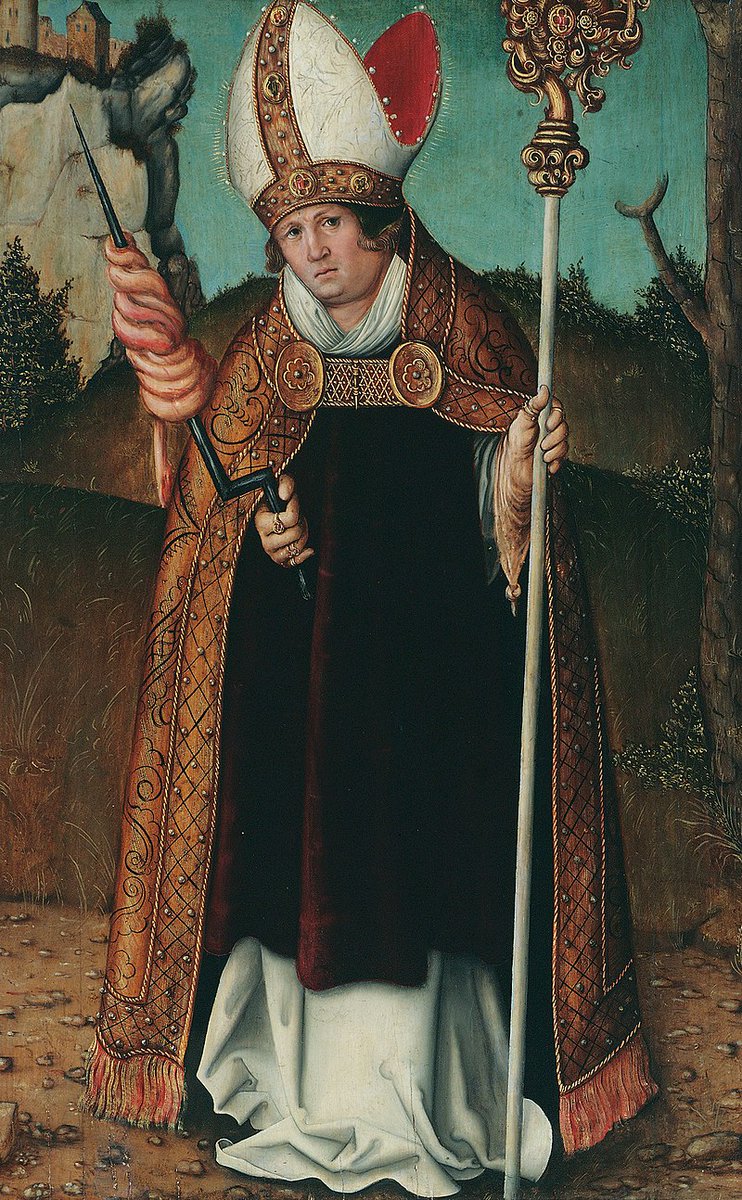
Saint Elmo, the patron saint of sailors, has another particularly gory story.
He was tortured and killed by the Roman Emperor Maximian, and is generally seen with his own entrails wrapped around a windlass.
He was tortured and killed by the Roman Emperor Maximian, and is generally seen with his own entrails wrapped around a windlass.
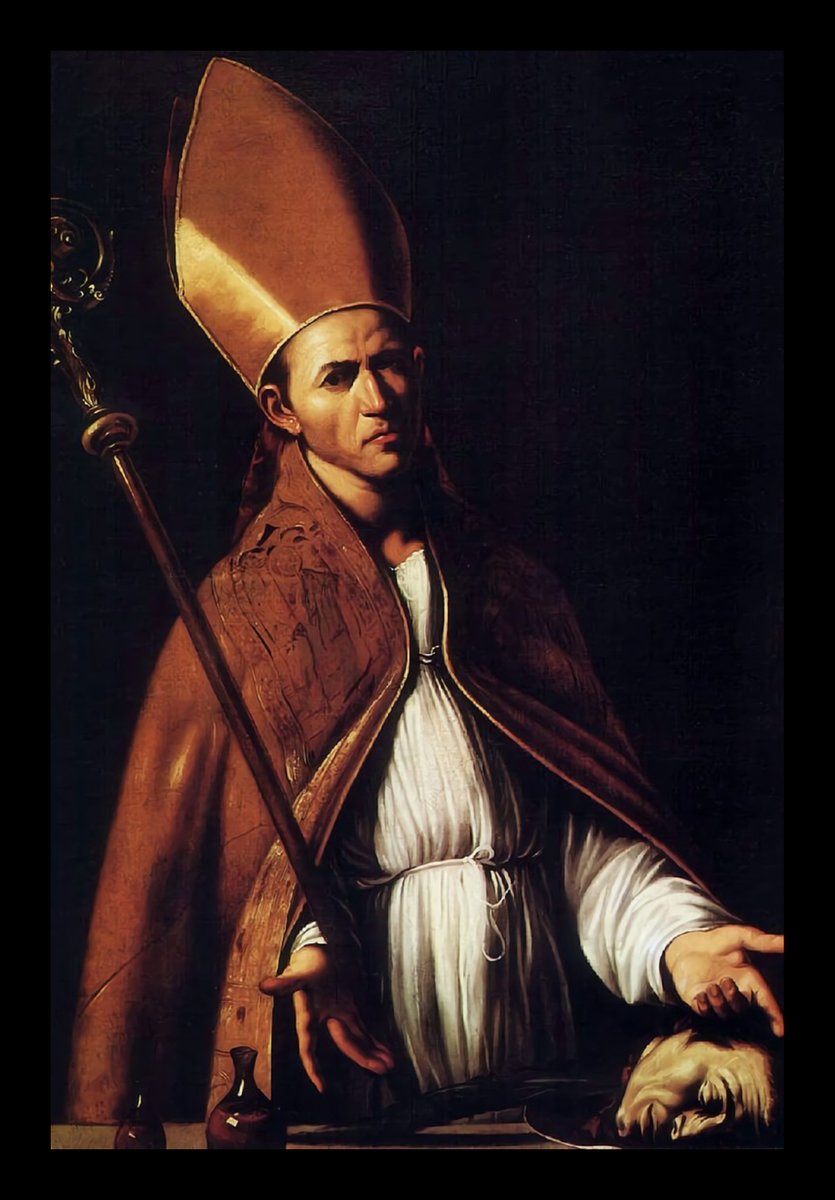
Saint Januarius, the Bishop of Benevento, was another victim of the Diocletian persecutions.
A vial of his blood survived, however, and is still venerated in Naples to this day, where he is patron saint.
Here Januarius show us the vials of his blood... and his own severed head.
A vial of his blood survived, however, and is still venerated in Naples to this day, where he is patron saint.
Here Januarius show us the vials of his blood... and his own severed head.
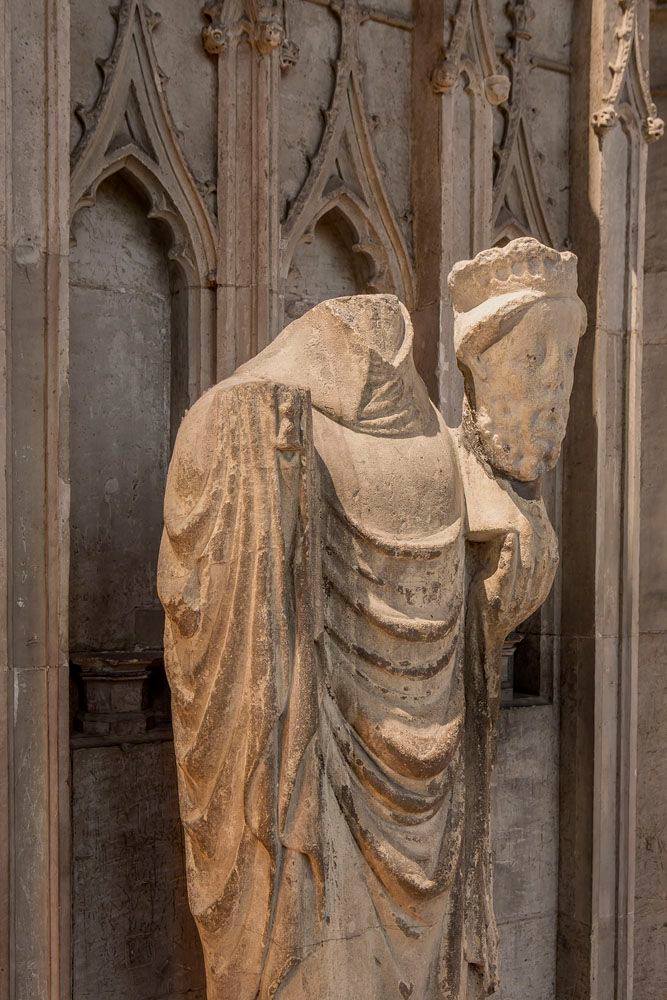
St Cuthbert of Lindisfarne, who lived in northern Britain in the 7th century AD, is often seen holding the severed head of another saint called Oswald.
Oswald, the King of Northumbria, had been decapitated in battle. His head was recovered and eventually buried with Cuthbert.
Oswald, the King of Northumbria, had been decapitated in battle. His head was recovered and eventually buried with Cuthbert.
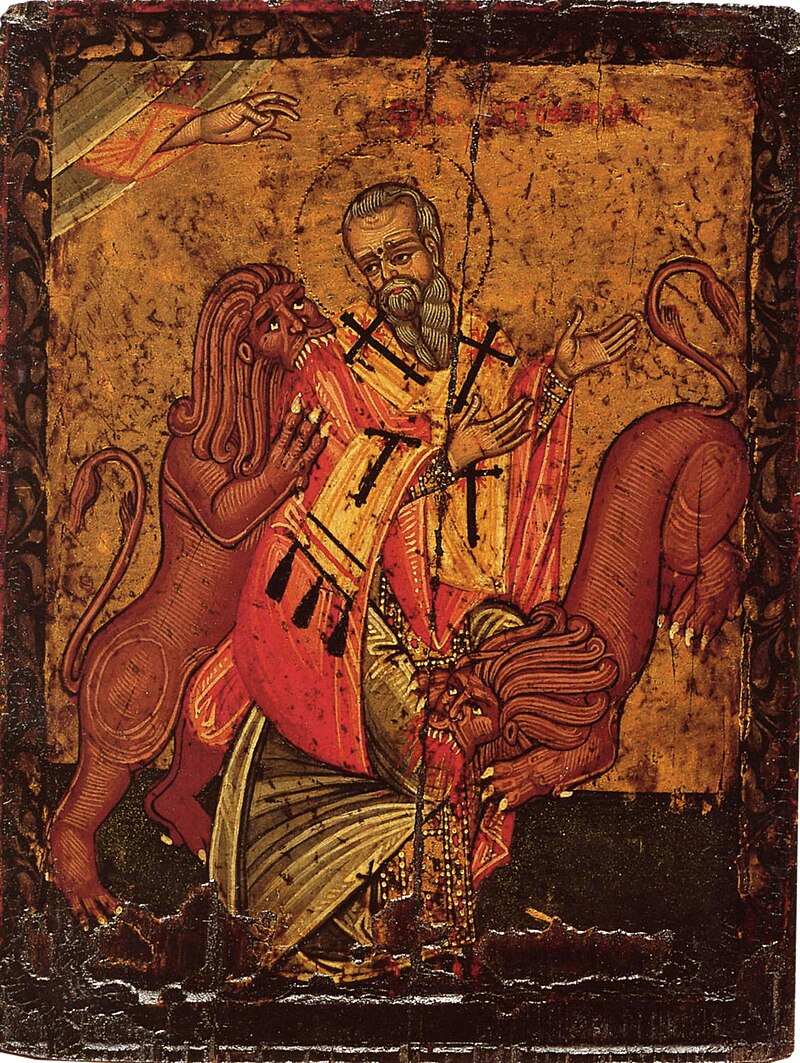
Ignatius of Antioch was a Christian theologian of the 2nd century AD.
He travelled to Rome and was there, as he had predicted, thrown into the Colosseum to be devoured by lions.
He travelled to Rome and was there, as he had predicted, thrown into the Colosseum to be devoured by lions.
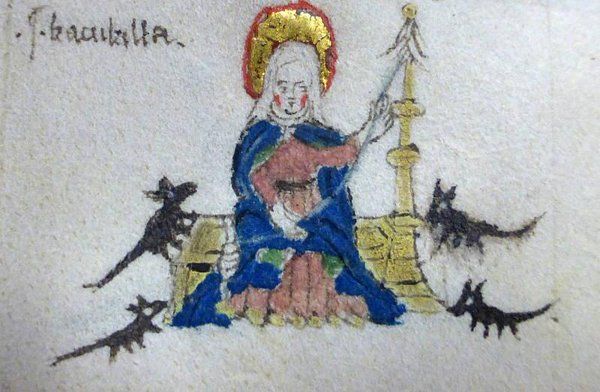
Most saints were locally rather than internationally venerated.
Like Kakwkylla, whose legend arose in Sweden. She was imprisoned and then eaten alive by rats and mice; no prizes for guessing how they depicted her.
People later prayed to her for protection against rats and mice.
Like Kakwkylla, whose legend arose in Sweden. She was imprisoned and then eaten alive by rats and mice; no prizes for guessing how they depicted her.
People later prayed to her for protection against rats and mice.
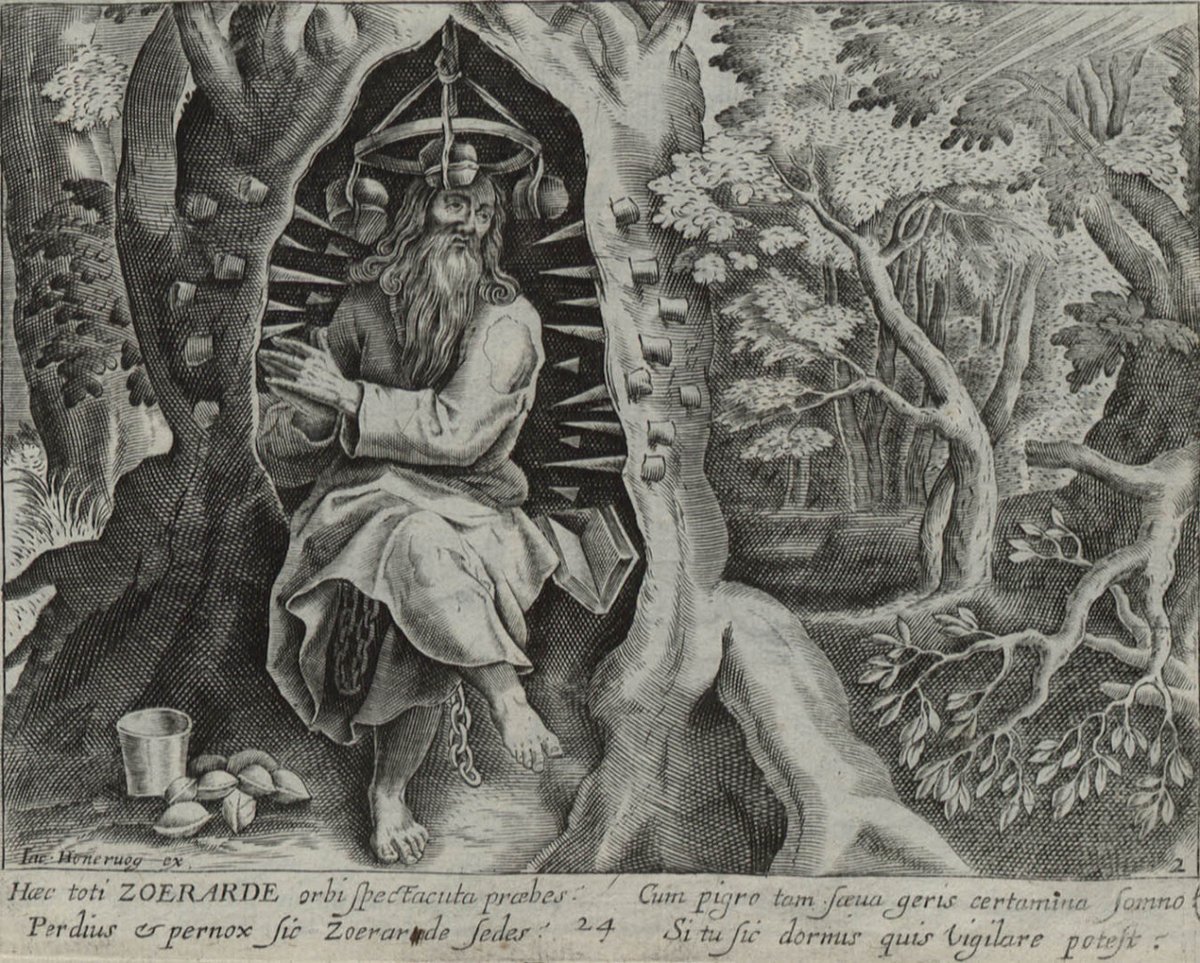
St Andrew Zorard was an 11th century Polish monk-hermit who only ate one walnut per day, had an iron chain permanently tied around his waist, and lived in a tree filled with spikes to stop him from sleeping too much.
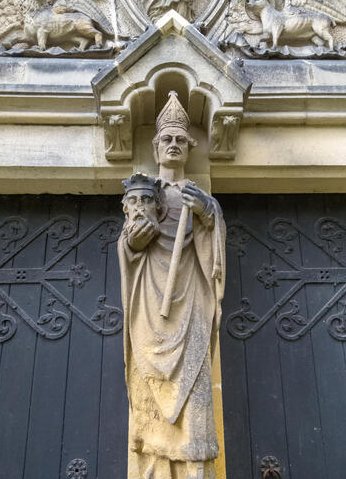
St Hubert was an 8th century French nobleman who cared little for church and preferred hunting. One day, in the Forest of Ardennes, he was pursuing a stag which suddenly turned to him, with a glowing crucifix between its antlers, and spoke.
Hubert later became a bishop.
Hubert later became a bishop.

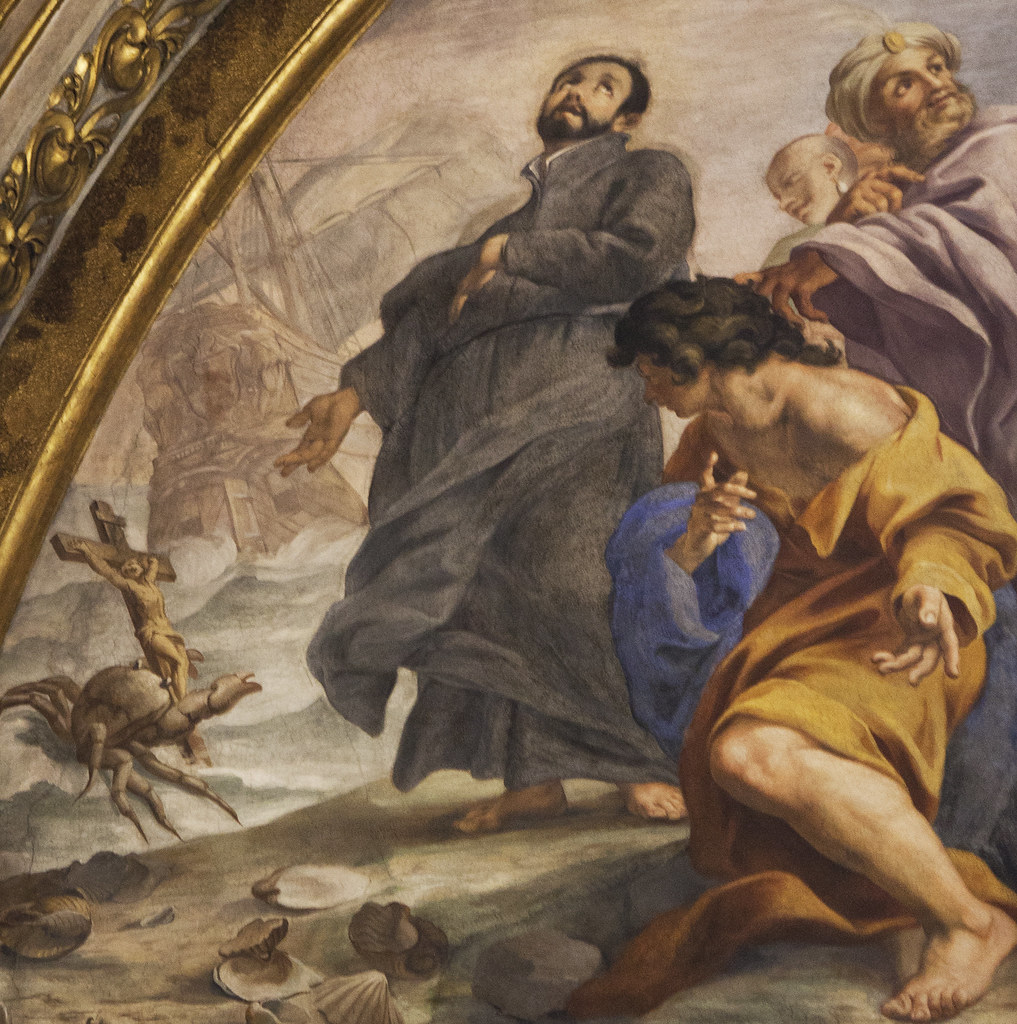
St Francis Xavier was a 16th century priest and missionary who travelled to India, China, and Japan.
One of the stories about his life involves a sea voyage during which Francis drops his crucifix into the sea, only for a crab to later bring it back to him.
One of the stories about his life involves a sea voyage during which Francis drops his crucifix into the sea, only for a crab to later bring it back to him.
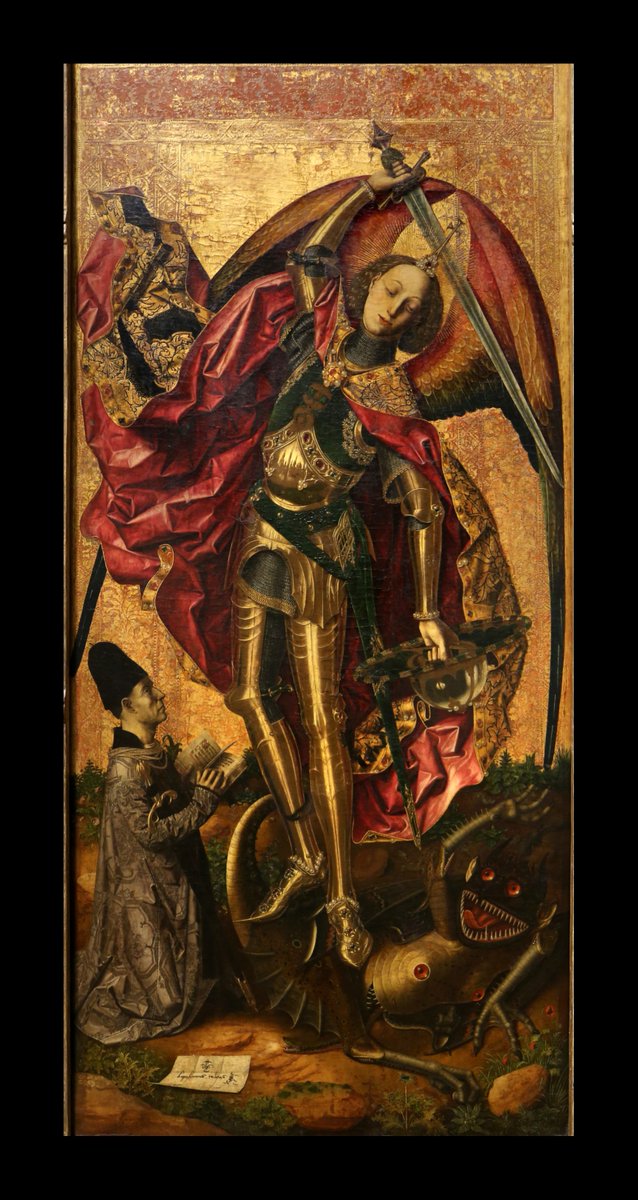
Certain angels were also venerated as saints, including Saint Michael the Archangel. According to the Book of Revelations he will fight with and triumph over Satan.
Hence paintings like this one by Bermejo, wherein Michael duels with some peculiar beast representing the devil.
Hence paintings like this one by Bermejo, wherein Michael duels with some peculiar beast representing the devil.
This goes on and on; there are literally thousands of saints, all with their own strange, harrowing, and fascinating tales.
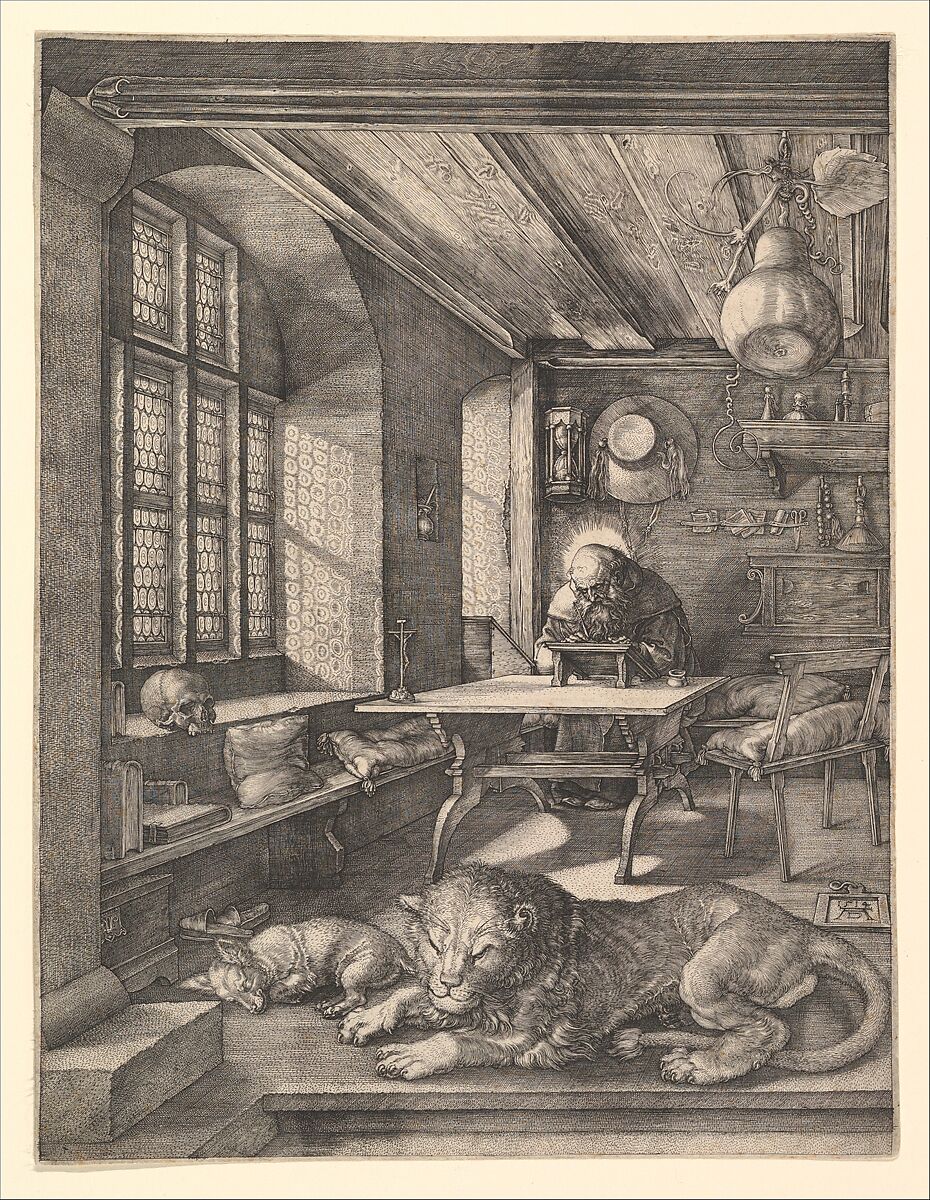
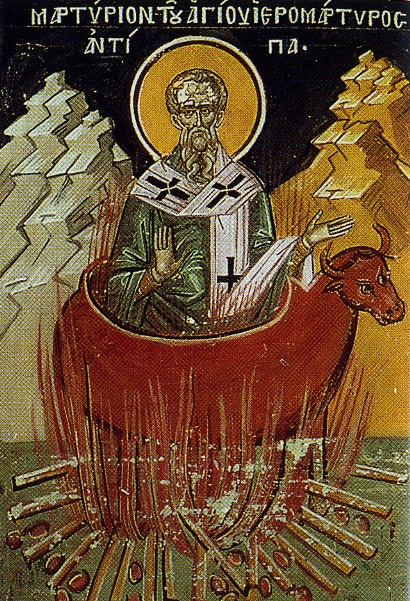
From St Jerome at work translating the Bible (with a lion in his study), to Saint Antipas of Pergamum being burned alive inside a bronze bull.
From St Jerome at work translating the Bible (with a lion in his study), to Saint Antipas of Pergamum being burned alive inside a bronze bull.
During the Middle Ages the likes of Saint Romedius riding his bear or Saint Romanus holding his own tongue were almost like the superheroes of modern cinema; everybody knew who they were, each had their own favourites, and they dominated what you might call popular culture.
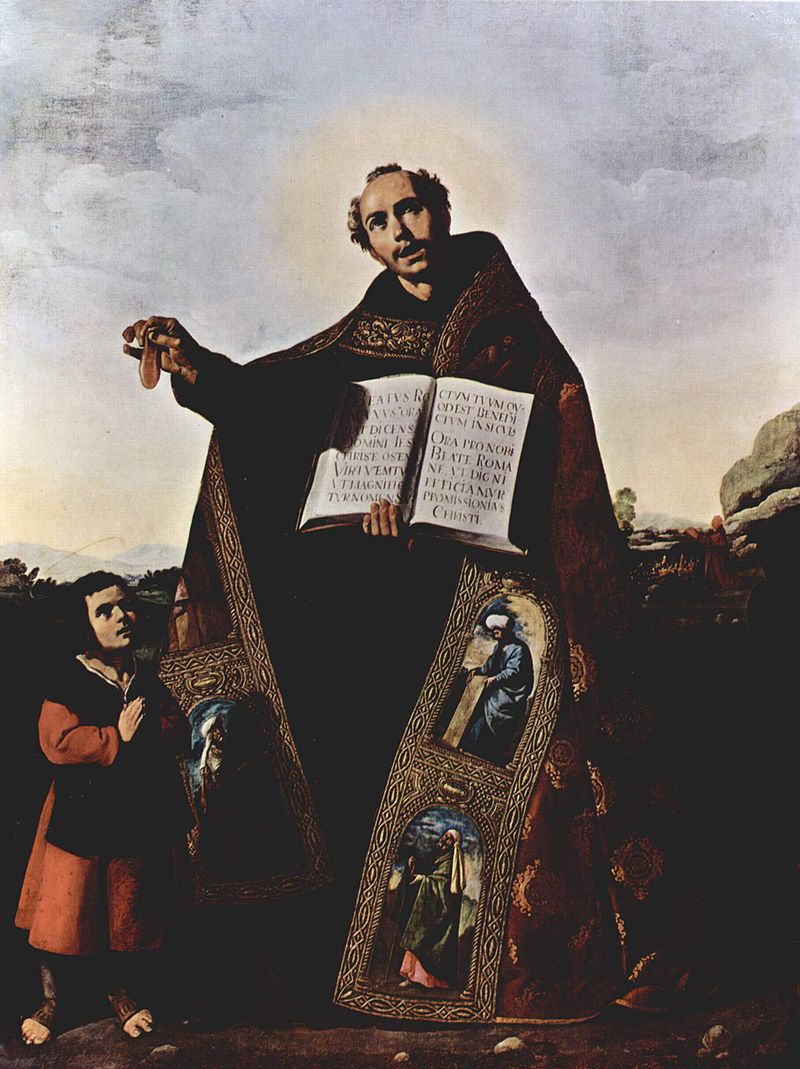

And thus these obscure symbols — of crabs carrying crucifixes, vials of blood, walnuts, entrails, and everything from doves to balls of gold — were immediately recognisable to people who saw such images in churches or books.
The world of saints in art never fails to fascinate...
The world of saints in art never fails to fascinate...
Loading suggestions...