

Thread 🧵 Congo 🇨🇩:
What are the causes of the ongoing conflict in the eastern Democratic Republic of the Congo today, and how did it begin? Where has it reached, and how far has its impact been in fueling a regional conflict in the Great Lakes region of Africa? What role do regional and international parties play in fueling the conflict and benefiting from its continuation?
The media coverage of current events in the "Congo" these days bears a special character. It focuses on groups of "Blacks" killing other groups of "Blacks" without discussing the reason for this infighting, who contributes to making it a daily event for the locals there, or even who supplies them with the weapons that fan the flames of conflict among them.
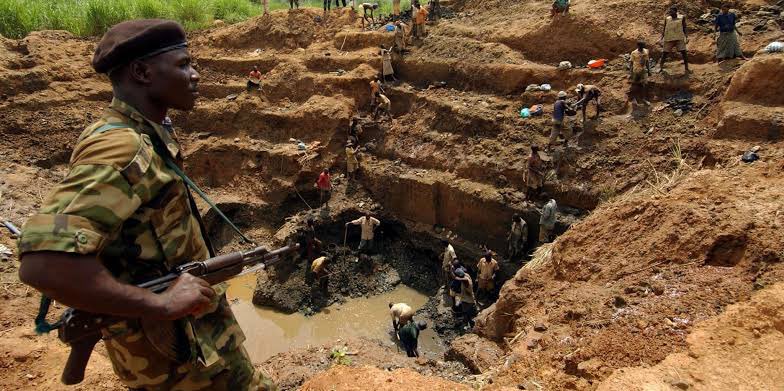
These ethnic groups have become fuel for these conflicts due to the concentration of mineral wealth in certain areas, including regions rich in gold, oil, tin, and cobalt. The immense mineral wealth has not addressed the country's poverty, ranked among the world's poorest, in addition to political instability and rampant corruption.
Rebel groups and networks closely linked to the Congolese army are active in the trade and smuggling of these resources abroad.
In 2012, former soldiers of the National Congress for the Defense of the People rebelled against the government of the Democratic Republic of the Congo. The rebels formed a group called the March 23 Movement, sponsored by the neighboring states' governments, Rwanda, and Uganda.
This conflict provided all regional and international parties (Burundi-Rwanda-Uganda) & (the United States of America- the European Union - Israel) with a means for the economic exploitation of Congo's resources, taking advantage of the Congolese authorities' lack of control over the mines in the east.
Regrettably, the Congolese state has not provided radical solutions to this conflict because the army suffers from low wages and neglect of junior recruits. In contrast, generals earn the vast majority of their income through lucrative economic privileges, bribery, and informal security contracts in eastern DRC, which means there is little incentive and interest in ending this conflict.
The "M23" movement formed from the "Union of Congolese Nationalists," a political group with an affiliated militia that controlled the eastern Congo region, founded by Thomas Lubanga in 2001, then led by Bosco Ntaganda from 2002 to 2005. After signing a peace agreement on March 23, 2009, the movement took the agreement's date as its name, stipulating the movement's integration into the Congolese army. However, the movement concentrated its presence in oil and gold regions, and conflicts with the army arose, accusing the Congolese government of not respecting the agreement regarding the demobilization and reintegration of its fighters.
This pushed the movement to lead a coup supported by Rwanda, launching several attacks against the army from border areas with Uganda in June 2012.
On November 20, 2012, the M23 Movement took control of Goma, the capital of North Kivu province. The conflict displaced over 500,000 people. On February 24, 2013, eleven African countries signed an agreement aiming to bring peace to eastern Congo.
In October 2013, the Congolese government announced that the March 23 Movement rebellion had effectively ended after the movement was confined to a small area near Rwanda. On November 7, 2013, the M23 Movement forces crossed into Uganda and surrendered.
After the 2013 peace agreement, many of the movement's fighters were integrated into the army. However, in March 2022, the "M23" movement organized itself again and managed to invade and seize major parts of the Rutshuru region adjacent to Uganda and Rwanda.
In May 2022, the movement invaded the "Rumangabo" base, the largest military facility for the Armed Forces of the Democratic Republic of the Congo in the northeast, then the movement's forces moved south towards the regional capital "Goma."
What are the causes of the ongoing conflict in the eastern Democratic Republic of the Congo today, and how did it begin? Where has it reached, and how far has its impact been in fueling a regional conflict in the Great Lakes region of Africa? What role do regional and international parties play in fueling the conflict and benefiting from its continuation?
The media coverage of current events in the "Congo" these days bears a special character. It focuses on groups of "Blacks" killing other groups of "Blacks" without discussing the reason for this infighting, who contributes to making it a daily event for the locals there, or even who supplies them with the weapons that fan the flames of conflict among them.
These ethnic groups have become fuel for these conflicts due to the concentration of mineral wealth in certain areas, including regions rich in gold, oil, tin, and cobalt. The immense mineral wealth has not addressed the country's poverty, ranked among the world's poorest, in addition to political instability and rampant corruption.
Rebel groups and networks closely linked to the Congolese army are active in the trade and smuggling of these resources abroad.
In 2012, former soldiers of the National Congress for the Defense of the People rebelled against the government of the Democratic Republic of the Congo. The rebels formed a group called the March 23 Movement, sponsored by the neighboring states' governments, Rwanda, and Uganda.
This conflict provided all regional and international parties (Burundi-Rwanda-Uganda) & (the United States of America- the European Union - Israel) with a means for the economic exploitation of Congo's resources, taking advantage of the Congolese authorities' lack of control over the mines in the east.
Regrettably, the Congolese state has not provided radical solutions to this conflict because the army suffers from low wages and neglect of junior recruits. In contrast, generals earn the vast majority of their income through lucrative economic privileges, bribery, and informal security contracts in eastern DRC, which means there is little incentive and interest in ending this conflict.
The "M23" movement formed from the "Union of Congolese Nationalists," a political group with an affiliated militia that controlled the eastern Congo region, founded by Thomas Lubanga in 2001, then led by Bosco Ntaganda from 2002 to 2005. After signing a peace agreement on March 23, 2009, the movement took the agreement's date as its name, stipulating the movement's integration into the Congolese army. However, the movement concentrated its presence in oil and gold regions, and conflicts with the army arose, accusing the Congolese government of not respecting the agreement regarding the demobilization and reintegration of its fighters.
This pushed the movement to lead a coup supported by Rwanda, launching several attacks against the army from border areas with Uganda in June 2012.
On November 20, 2012, the M23 Movement took control of Goma, the capital of North Kivu province. The conflict displaced over 500,000 people. On February 24, 2013, eleven African countries signed an agreement aiming to bring peace to eastern Congo.
In October 2013, the Congolese government announced that the March 23 Movement rebellion had effectively ended after the movement was confined to a small area near Rwanda. On November 7, 2013, the M23 Movement forces crossed into Uganda and surrendered.
After the 2013 peace agreement, many of the movement's fighters were integrated into the army. However, in March 2022, the "M23" movement organized itself again and managed to invade and seize major parts of the Rutshuru region adjacent to Uganda and Rwanda.
In May 2022, the movement invaded the "Rumangabo" base, the largest military facility for the Armed Forces of the Democratic Republic of the Congo in the northeast, then the movement's forces moved south towards the regional capital "Goma."
Then, Congolese President Felix Tshisekedi accused Rwanda of supporting this rebellion, saying, "Paul Kagame has set his sights on 'confiscating our minerals'." He expelled the Rwandan ambassador, and diplomatic relations between the two countries were severed, accusing Rwanda of executing expansionist ambitions under the sponsorship of powers such as the United States and Britain.
The insistence of the "M23" movement on its presence in eastern Congo, centered around mineral resources and strengthened by the Tutsi ethnicity, and with the Congolese government's call for rebel movements against the Rwandan government belonging to the Hutus, is likely to reinforce political military movements causing bloody conflicts in the region.
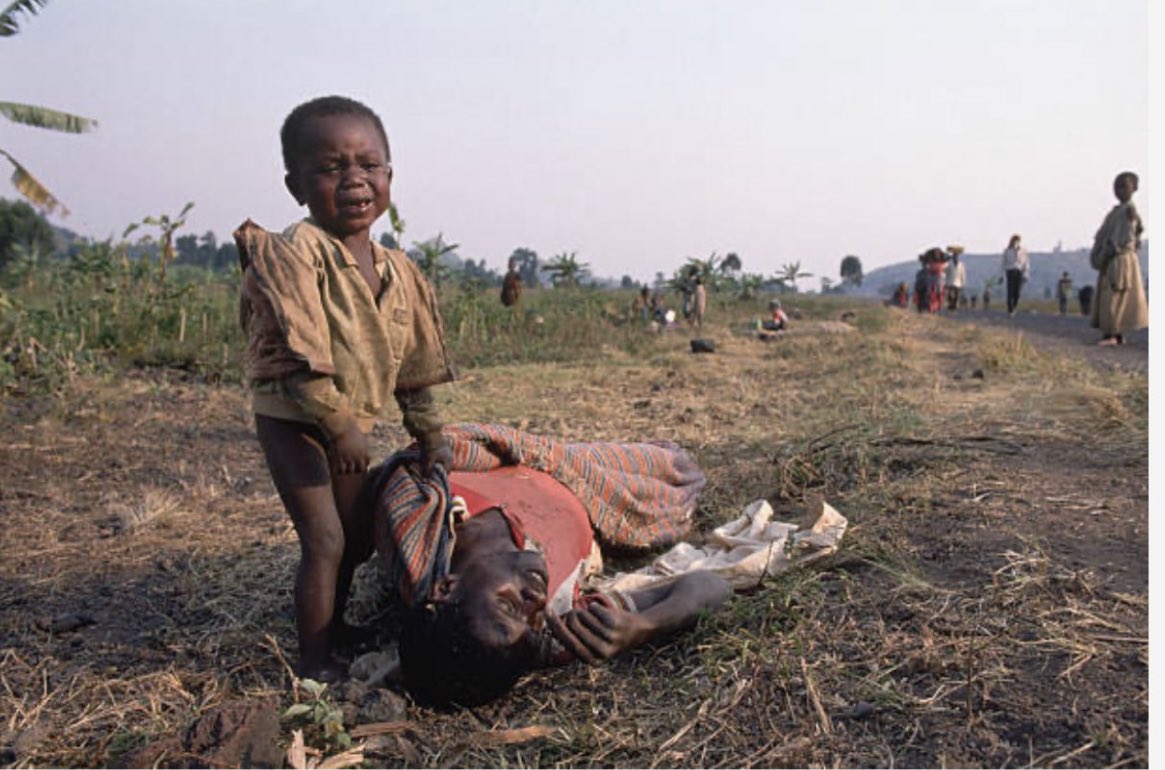
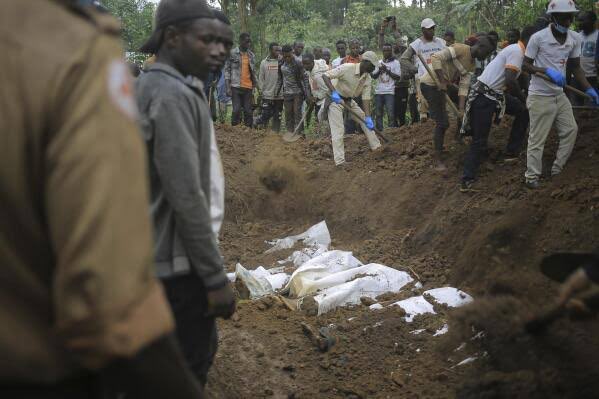
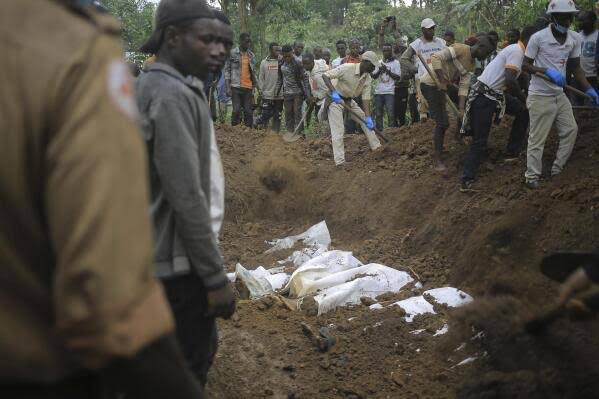
Since the beginning of the conflict between the rebels and the army, hundreds of victims, including children and the elderly, have fallen into mass graves, killed by shooting, slaughtering, mutilation by amputation, and bleeding to death. Some people were burned alive. Amidst all these cleansing and extermination campaigns, the United Nations, the government, or even the rebels have not taken all necessary measures to fulfill their fundamental commitment to protect people of all ethnic origin s in the armed and supported conflict areas by local traditional leaders and security officials, including from the army and police.
The United Nations High Commissioner for Refugees has reported the displacement of more than 150,000 people from Goma due to the fighting, exacerbating the Congo's neglected refugee crisis, due to lack of funding, media attention, and international political and diplomatic initiatives.
Millions of Congolese still face food insecurity in the Democratic Republic of the Congo.
The current conflict in eastern DRC is like a powder keg, leading to a fire in the Great Lakes region that swallows Rwanda, Uganda, and Burundi. Ignoring the conflict could lead to immense instability in Central and East Africa in the future.
This provides a means for "ISIS" to expand and penetrate Congolese territory to bolster its presence in Central Africa to merge with its forces in the Sahel region, compensating for losses after its defeat in other areas, and prolonging its survival by exhausting more resources, impeding efforts to combat terrorism.
Congolese women and girls fall victims to sexual assault, including gang rape, sexual exploitation, and are forced to witness sexual violations against other women and girls. Beatings, inhumane and degrading treatment, arbitrary arrests, and deprivation of proper judicial procedures were common practices during arrests by rebels.
The Congo's major crisis, which has led it to the brink of the abyss and made it vulnerable to exploitation, lies in the problem of national integration due to the division of the country on ethnic and regional lines, which has made some ethnic groups and regions far from the capital Kinshasa and the major cities, a symbol of political, economic, and social marginalization.
With the public's growing dissatisfaction with the ruling regime due to poor economic conditions, this fuels citizens' anger, presenting them with two options: either to migrate to other regions or to respond to joining the rebel movement, especially as it tempts unemployed youth with money.
While civil wars and ethnic and tribal cleansing campaigns continue, the global media sporadically shows timid footage of this forgotten country, not many know that most of those millions were killed because they are the perfect fuel for the savage imperialist machine.
Western industrial companies have flocked to its mines to extract cobalt and coltan, the Congo's most famous natural resources, used in the manufacture of weapons and electronic devices. Beyond tribal fighting and bloodshed.
Despite all that has been mentioned, do not be deceived; this is not a civil war as mainstream media tries to convince us.
The insistence of the "M23" movement on its presence in eastern Congo, centered around mineral resources and strengthened by the Tutsi ethnicity, and with the Congolese government's call for rebel movements against the Rwandan government belonging to the Hutus, is likely to reinforce political military movements causing bloody conflicts in the region.
Since the beginning of the conflict between the rebels and the army, hundreds of victims, including children and the elderly, have fallen into mass graves, killed by shooting, slaughtering, mutilation by amputation, and bleeding to death. Some people were burned alive. Amidst all these cleansing and extermination campaigns, the United Nations, the government, or even the rebels have not taken all necessary measures to fulfill their fundamental commitment to protect people of all ethnic origin s in the armed and supported conflict areas by local traditional leaders and security officials, including from the army and police.
The United Nations High Commissioner for Refugees has reported the displacement of more than 150,000 people from Goma due to the fighting, exacerbating the Congo's neglected refugee crisis, due to lack of funding, media attention, and international political and diplomatic initiatives.
Millions of Congolese still face food insecurity in the Democratic Republic of the Congo.
The current conflict in eastern DRC is like a powder keg, leading to a fire in the Great Lakes region that swallows Rwanda, Uganda, and Burundi. Ignoring the conflict could lead to immense instability in Central and East Africa in the future.
This provides a means for "ISIS" to expand and penetrate Congolese territory to bolster its presence in Central Africa to merge with its forces in the Sahel region, compensating for losses after its defeat in other areas, and prolonging its survival by exhausting more resources, impeding efforts to combat terrorism.
Congolese women and girls fall victims to sexual assault, including gang rape, sexual exploitation, and are forced to witness sexual violations against other women and girls. Beatings, inhumane and degrading treatment, arbitrary arrests, and deprivation of proper judicial procedures were common practices during arrests by rebels.
The Congo's major crisis, which has led it to the brink of the abyss and made it vulnerable to exploitation, lies in the problem of national integration due to the division of the country on ethnic and regional lines, which has made some ethnic groups and regions far from the capital Kinshasa and the major cities, a symbol of political, economic, and social marginalization.
With the public's growing dissatisfaction with the ruling regime due to poor economic conditions, this fuels citizens' anger, presenting them with two options: either to migrate to other regions or to respond to joining the rebel movement, especially as it tempts unemployed youth with money.
While civil wars and ethnic and tribal cleansing campaigns continue, the global media sporadically shows timid footage of this forgotten country, not many know that most of those millions were killed because they are the perfect fuel for the savage imperialist machine.
Western industrial companies have flocked to its mines to extract cobalt and coltan, the Congo's most famous natural resources, used in the manufacture of weapons and electronic devices. Beyond tribal fighting and bloodshed.
Despite all that has been mentioned, do not be deceived; this is not a civil war as mainstream media tries to convince us.
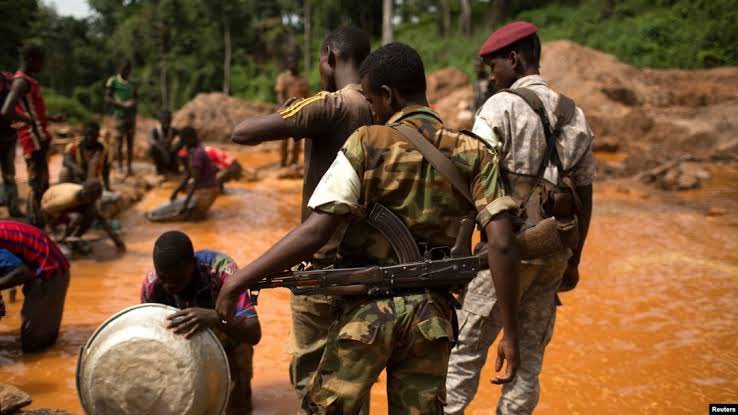
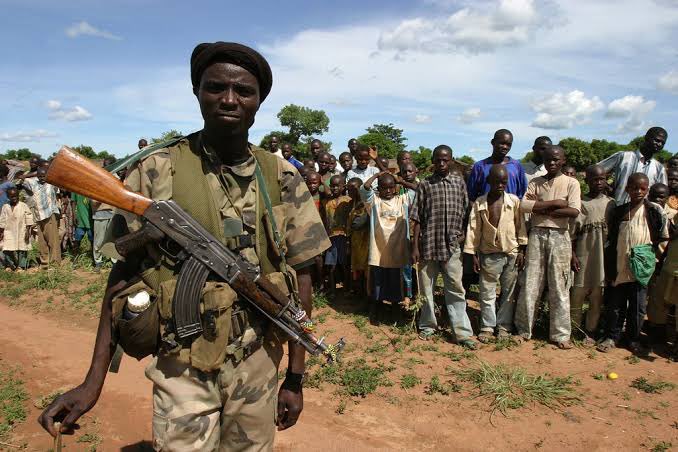
A significant part of the armed conflict in the Congo stems from the sale of cobalt to major technology companies like Apple, Samsung, Tesla, and some other Chinese companies. Inhumane mining operations are supervised by soldiers of the armed forces or the aforementioned militia elements, with these militias being paid by these companies.
About 80% of the world's cobalt is extracted from the Democratic Republic of the Congo.
The world's demand for cobalt is not just due to its volume; this rare material is a critical component of all rechargeable lithium-ion batteries necessary for the electric vehicle industry.
These militias employ children (child labor) in cobalt mines, where children toil for up to 18 hours crouched in narrow tunnels with no space to sit upright, inhaling toxic particles and living in fear of a tunnel collapse at any moment. These tunnels often collapse, burying alive everyone inside.
Cobalt is toxic upon contact or inhalation and may be found alongside radioactive uranium residues. Thus, those working in mining without protective gear and clothing develop cancer, respiratory diseases, and painful skin conditions. Children of miners suffer from congenital deformities and developmental problems.
In summary, cobalt supply chains tainted with slavery, oppression, persecution, and child labor fuel this conflict. Although multinational companies boast on their websites of their commitment to human rights, not employing children, and securing clean (non-polluting) supply chains, along with their financial disclosures and ethical practices, the reality completely denies this. Reports confirm that they turn a blind eye to massacres to ensure their share of precious and strategic minerals.
The conflict that erupted two weeks ago is a continuation of this dynamic we've described above. Therefore, I urge you to be the voices for those voiceless in the Congo, as it's evident that multinational companies will not let a genocide affect their profits. Profit has always come at the expense of humanity for them.
About 80% of the world's cobalt is extracted from the Democratic Republic of the Congo.
The world's demand for cobalt is not just due to its volume; this rare material is a critical component of all rechargeable lithium-ion batteries necessary for the electric vehicle industry.
These militias employ children (child labor) in cobalt mines, where children toil for up to 18 hours crouched in narrow tunnels with no space to sit upright, inhaling toxic particles and living in fear of a tunnel collapse at any moment. These tunnels often collapse, burying alive everyone inside.
Cobalt is toxic upon contact or inhalation and may be found alongside radioactive uranium residues. Thus, those working in mining without protective gear and clothing develop cancer, respiratory diseases, and painful skin conditions. Children of miners suffer from congenital deformities and developmental problems.
In summary, cobalt supply chains tainted with slavery, oppression, persecution, and child labor fuel this conflict. Although multinational companies boast on their websites of their commitment to human rights, not employing children, and securing clean (non-polluting) supply chains, along with their financial disclosures and ethical practices, the reality completely denies this. Reports confirm that they turn a blind eye to massacres to ensure their share of precious and strategic minerals.
The conflict that erupted two weeks ago is a continuation of this dynamic we've described above. Therefore, I urge you to be the voices for those voiceless in the Congo, as it's evident that multinational companies will not let a genocide affect their profits. Profit has always come at the expense of humanity for them.
Loading suggestions...