


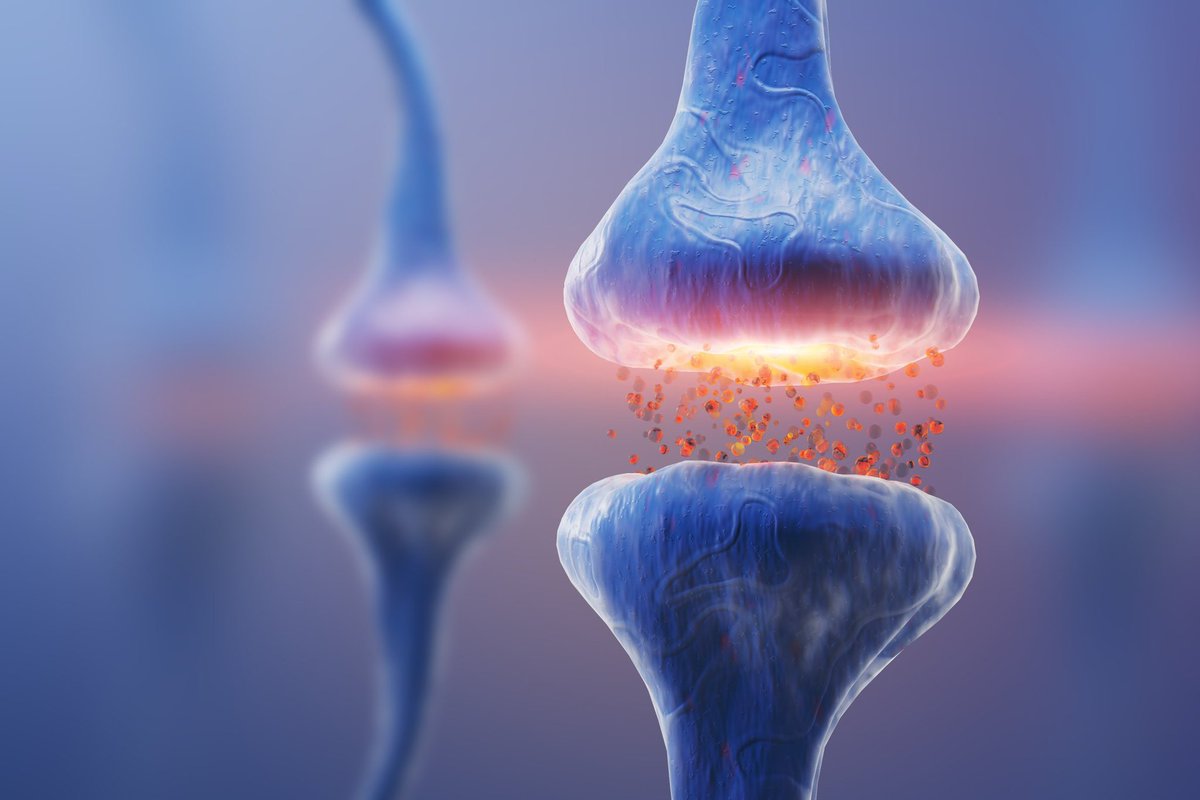
The scientist Eccles initially believed, in simplicity, that commands were transmitted solely through electrical signals. However, how was it discovered that nerves release chemical substances, neurotransmitters? Follow the fascinating story
1903 when Otto Loewi, in Marburg, was discussing with the British scientist W.M. Fletcher about the mechanism of action of certain drugs resembling the effects of some nerves. The idea that nerves might actually be capable of releasing chemical substances crossed his mind.
After 17 years, he woke up wrote and drew on a paper,The next night, again at 3 a.m., he woke up, wrote. Upon waking, he saw what he had written. It was the draft for an experiment to test the nature of chemical nerve transmission. He dreamed the experiment. But what was it .
two frog hearts in two containers filled with water that connected them together. He stimulated one heart through the Vagus nerve, the second heart wasn‘t connected to the nerve. But the nerve affected both hearts in the same way,but second heart wasn’t connected to the nerve.

He concluded that the nerve released chemical substances responsible for the nerve's effect on the heart, and these substances were abundant enough to transfer through the fluid to the second heart, producing the same effect. They were unknown, so he called them Vagus substances
in 1921 Loewi published a study, he discussed Insulin and Glykämin as possible substances responsible for the nerve's effect.he had to withdraw the research in 1929 because the studies weren’t reproducible with the same results.
But how was it confirmed to be Acetylcholine??
But how was it confirmed to be Acetylcholine??
He published 14 studies on the effect of the nerve on the heart. In the 11th study, he described the effects of Physostigmine and Ergotamine on the nerve's impact on the heart and concluded the presence of Acetylcholine. But how? What are these substances?
Physostigmine inhibit the breakdown of Acetylcholine. When testing the substance, the nerve get a stronger impact, indicating that Acetylcholine has a potent effect on the nerve. The nerve utilizes this substance, and the non-breakdown of Acetylcholine prolongs the nerve's effect
In study number 12 in 1936, it was discovered that the Sympathetic nerves contain the substances Adrenaline and Noradrenaline. Thus, the main substances used by the nervous system in the human body to influence various organs were revealed.
Loading suggestions...