

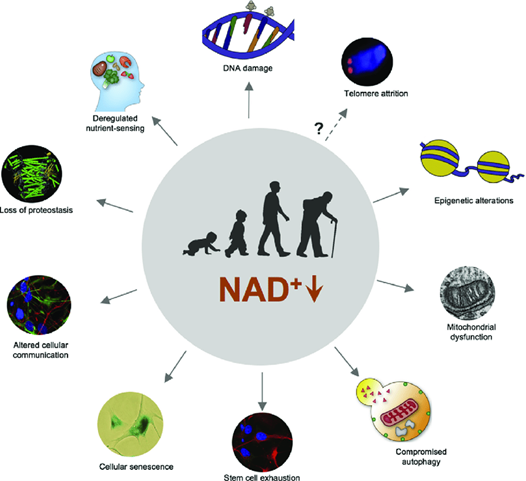
Low NAD is at the core of all the hallmarks of aging
NAD levels appear to decline with age and this promotes all the other hallmarks of aging
However, there's one critical mistake almost everyone makes when boosting NAD
(PMID: 32097708; DOI:10.1016/j.tma.2018.08.003)
NAD levels appear to decline with age and this promotes all the other hallmarks of aging
However, there's one critical mistake almost everyone makes when boosting NAD
(PMID: 32097708; DOI:10.1016/j.tma.2018.08.003)
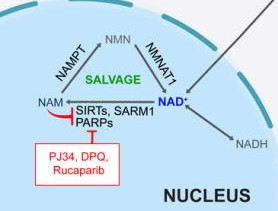
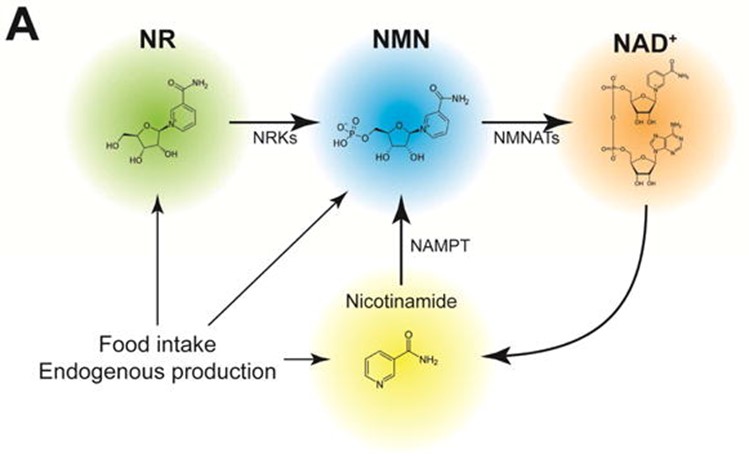
The salvage pathway is the main source of your body’s NAD and it recycles NAD and its precursors
NAMPT is the rate-limiting step of the salvage pathway
NAMPT creates NMN from nicotinamide, which then gets converted into NAD
(PMID: 29514064)
NAMPT is the rate-limiting step of the salvage pathway
NAMPT creates NMN from nicotinamide, which then gets converted into NAD
(PMID: 29514064)

Taking NAD boosters isn't a long-term solution if your NAD salvage pathway isn't working properly
Because all the NAD you increase with NMN or NR gets converted back into the salvage pathway to create NAM
There the rate-limiting enzyme NAMPT determines if NAM becomes NAD again
Because all the NAD you increase with NMN or NR gets converted back into the salvage pathway to create NAM
There the rate-limiting enzyme NAMPT determines if NAM becomes NAD again
With age you see a decrease in NAMPT activity and extracellular NAMPT (PMID: 31204283; PMID: 29905535)
Degenerative and inflammatory conditions decrease NAMPT as well
Degenerative and inflammatory conditions decrease NAMPT as well
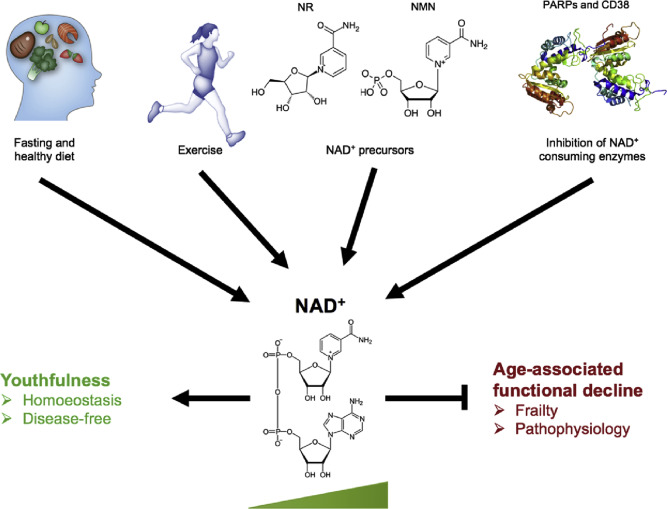
How do you activate NAMPT?
Through AMPK - the fuel sensor that gets activated under physiological stress, such as exercise, calorie restriction, or fasting
PMID: 23918774
Through AMPK - the fuel sensor that gets activated under physiological stress, such as exercise, calorie restriction, or fasting
PMID: 23918774
However, there's a condition for NAMPT as well
NAMPT is SIRT1 dependent, which means that it's dependent on circadian rhythm regulation
PMID: 24003918
PMID: 19286518
NAMPT is SIRT1 dependent, which means that it's dependent on circadian rhythm regulation
PMID: 24003918
PMID: 19286518
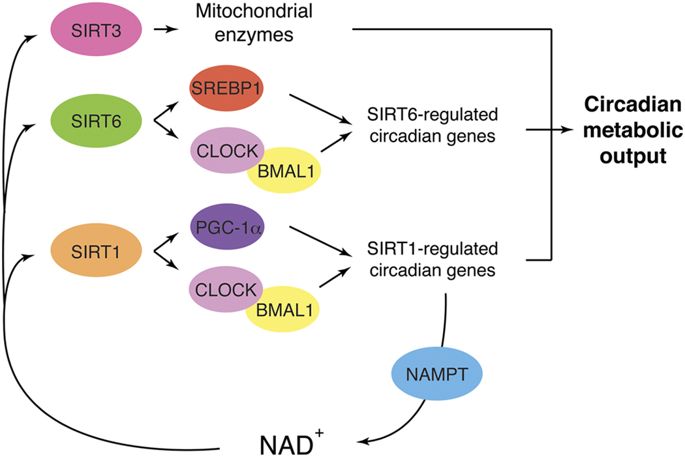
Disrupting circadian rhythms suppresses the NAD+ dependent SIRT1 gene which then lowers the availability of NAD+
Circadian rhythms of NAD+ are driven by the circadian clock called CLOCK:BMAL1 which regulates the circadian expression of NAMPT
PMID: 18662547
Circadian rhythms of NAD+ are driven by the circadian clock called CLOCK:BMAL1 which regulates the circadian expression of NAMPT
PMID: 18662547
Unfortunately, aging disrupts the circadian clock system, leading to what I call 'chronic jet lag syndrome'
This dampens the amplitude in circadian hormones and ultimately lowers NAD
PMID: 28145903
This dampens the amplitude in circadian hormones and ultimately lowers NAD
PMID: 28145903
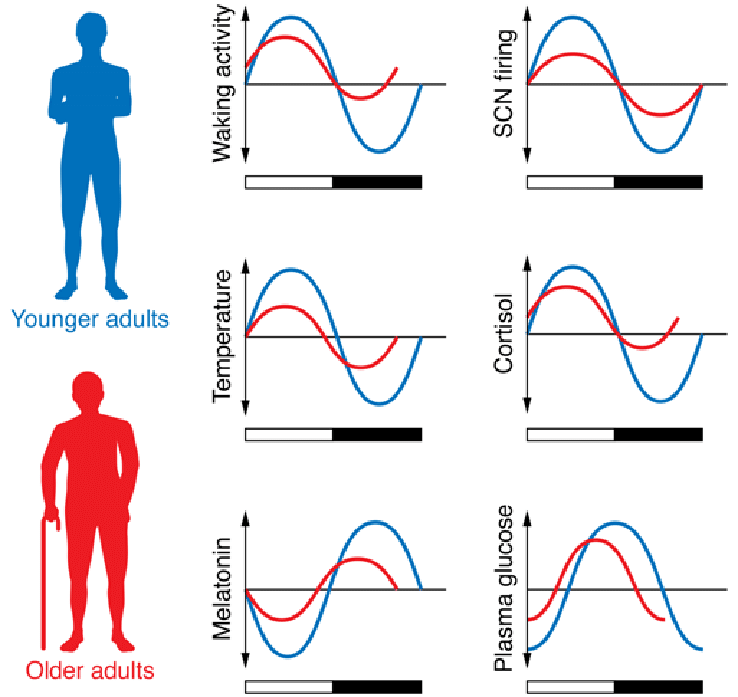
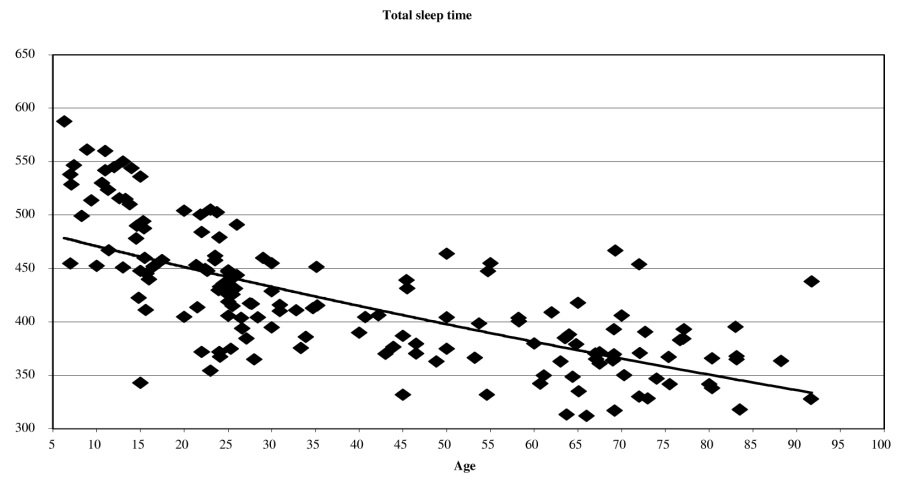
As a result, older people sleep less than younger ones
Not that they need less sleep but because their bodies become less capable to do so because of damage to the circadian system with age
PMID: 15586779
Not that they need less sleep but because their bodies become less capable to do so because of damage to the circadian system with age
PMID: 15586779
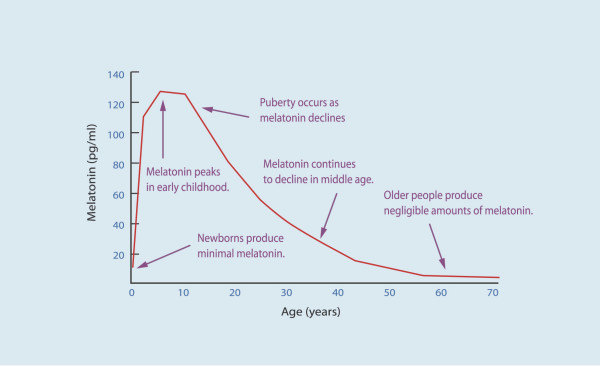
Melatonin levels decrease with age and older people produce significantly less melatonin
That shortens their sleep but melatonin is also a massive antioxidant and anti-aging hormone
Lower melatonin = less repair and faster aging
PMID: 17408483
That shortens their sleep but melatonin is also a massive antioxidant and anti-aging hormone
Lower melatonin = less repair and faster aging
PMID: 17408483
All of this because of changes in the circadian clock system that happen with age
Thus, the age-related decline in circadian function clogs up the entire NAD production because NAMPT is the rate-limiting enzyme in the NAD salvage pathway.
Thus, the age-related decline in circadian function clogs up the entire NAD production because NAMPT is the rate-limiting enzyme in the NAD salvage pathway.
Fortunately, it's observed that NAD resynthesis helps to reverse some of the deterioration of the circadian clock system that happens with aging
The key metabolite for that is NAD+ itself through things like exercise, calorie restriction, circadian alignment
PMID: 28880862
The key metabolite for that is NAD+ itself through things like exercise, calorie restriction, circadian alignment
PMID: 28880862
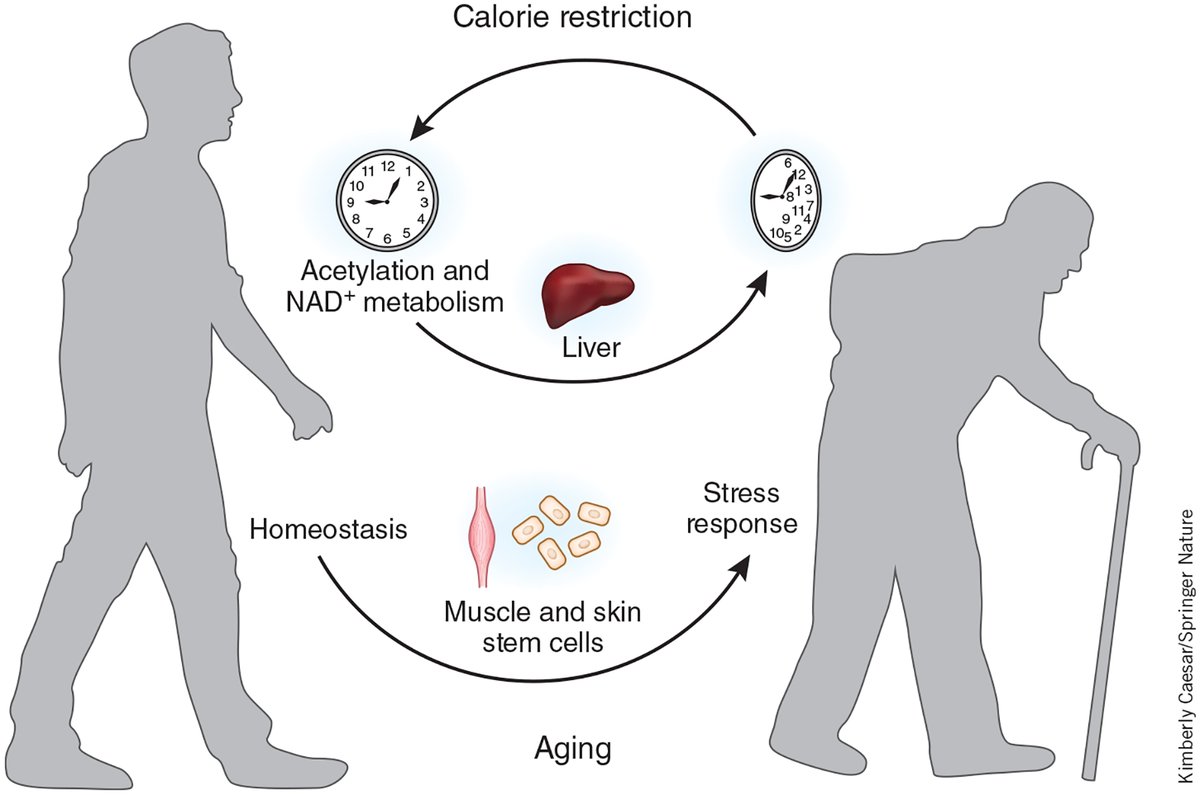
Thus, NAD maintains functioning of the circadian system and the circadian rhythm system maintains NAD production
It's a bidirectional relationship
Check out my full thread about NAD:
It's a bidirectional relationship
Check out my full thread about NAD:

The only way to bypass the NAMPT enzyme is with direct NR and NMN supplementation
The thing is that the NAD made from NR and NMN will go back into the salvage pathway for recycling
Thus, for long-term effects, you still need the salvage pathway to work properly
PMID: 29249689
The thing is that the NAD made from NR and NMN will go back into the salvage pathway for recycling
Thus, for long-term effects, you still need the salvage pathway to work properly
PMID: 29249689
Part 2 about reducing NAD loss:
Loading suggestions...