
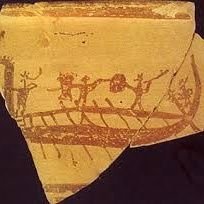
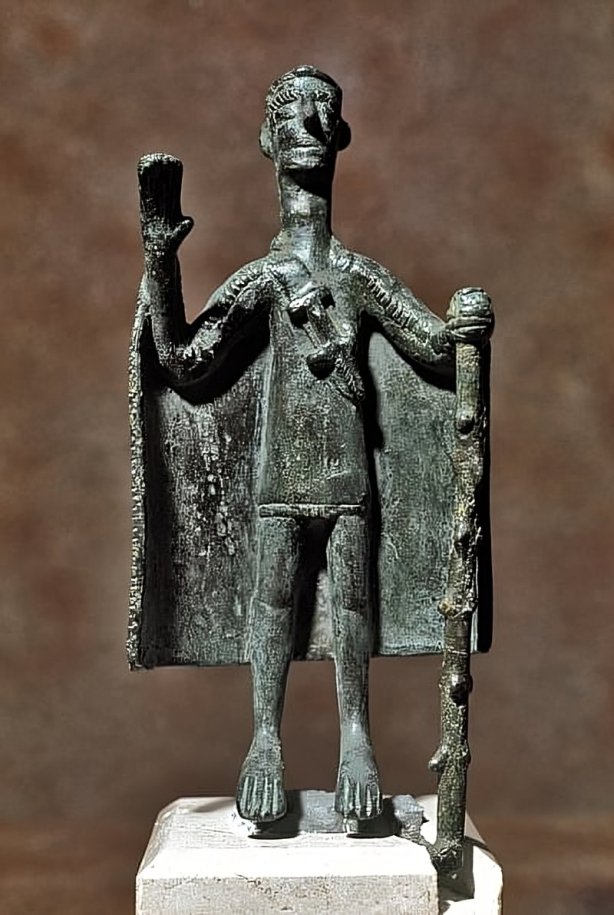
2/ In the 14th cent BC the Mycs were turned intensively to the West in search of ores and new markets for their refined products. The result of this movement was the development of important trade relations between the Myc Aegean and coastal sites of Southern Italy and Sicily.
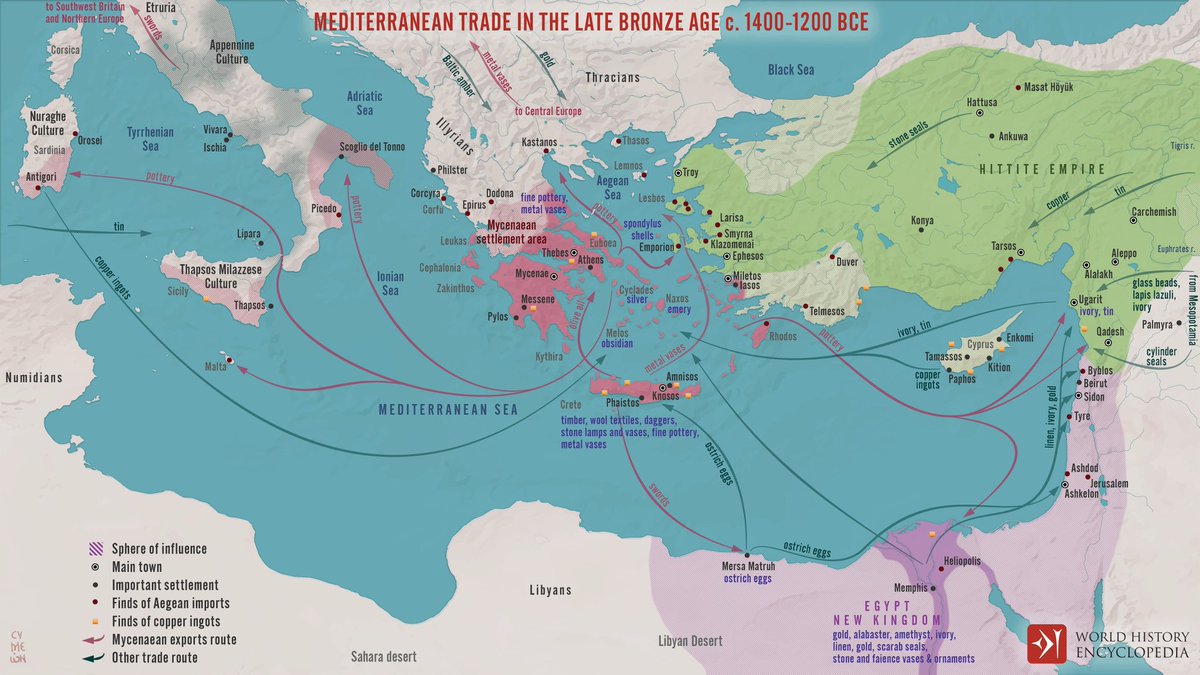
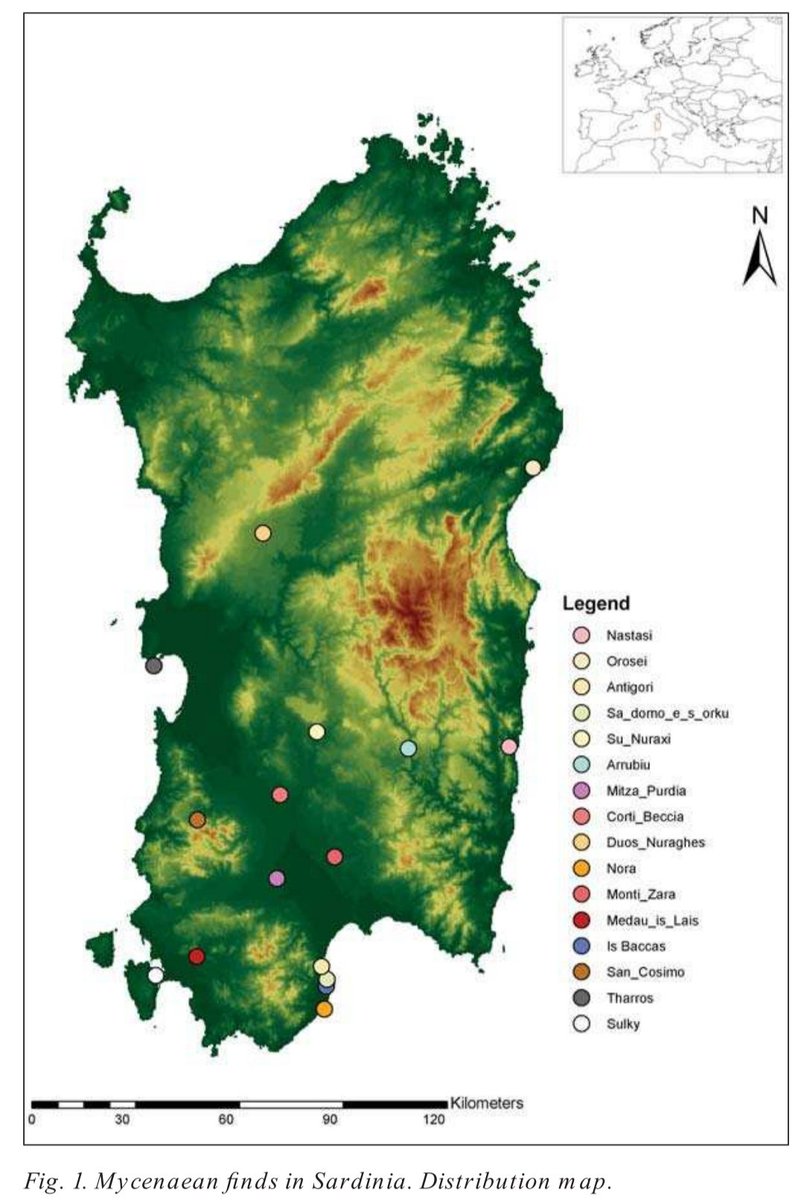
3/ Sardinia is influenced by the Myc trade presence in the Central Mediterranean with the Nuraghe communities directly or indirectly coming into contact with high quality Myc luxury goods, useful for social differentiation and the consolidation of forms of power of local elites.
4/ Cypriot (as well as Levantine) merchants also participate in these contacts, who prove to be much more active than the Mycenaeans. Their target seems to have been the rich deposits of tin and argentiferous lead, which were in demand both in Cyprus and in the Near East.
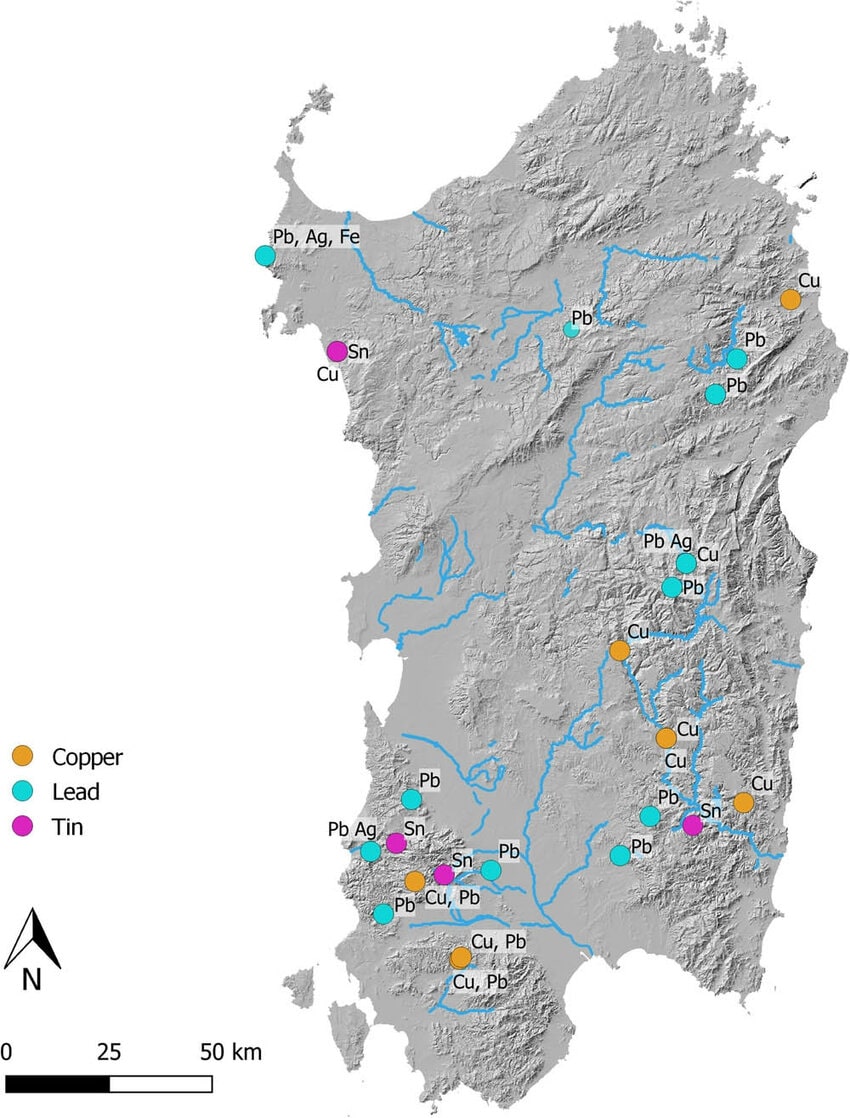
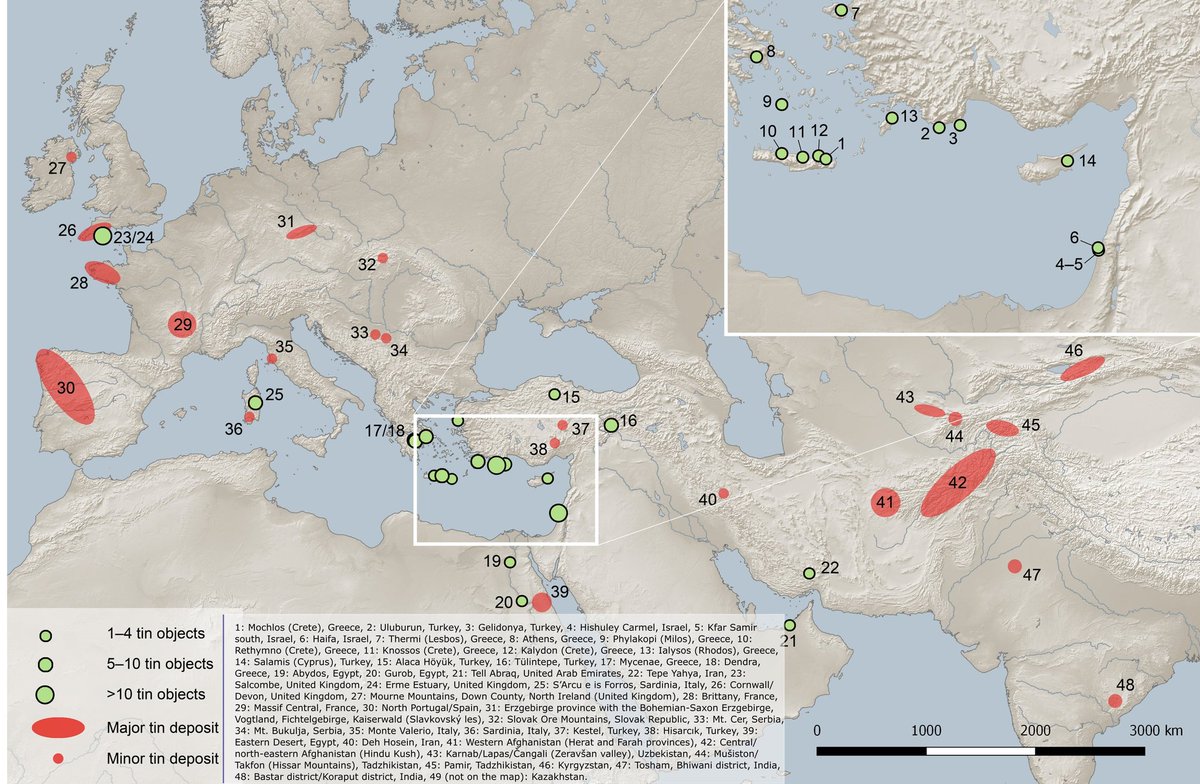
5/ The Cypriot merchants desired the supply of tin necessary for the production of bronze, as they obtained it from distant Afghanistan through various Near Eastern intermediaries, while the self-sufficiency in silver helped the kingdom of Alashiya in its payments. 👉
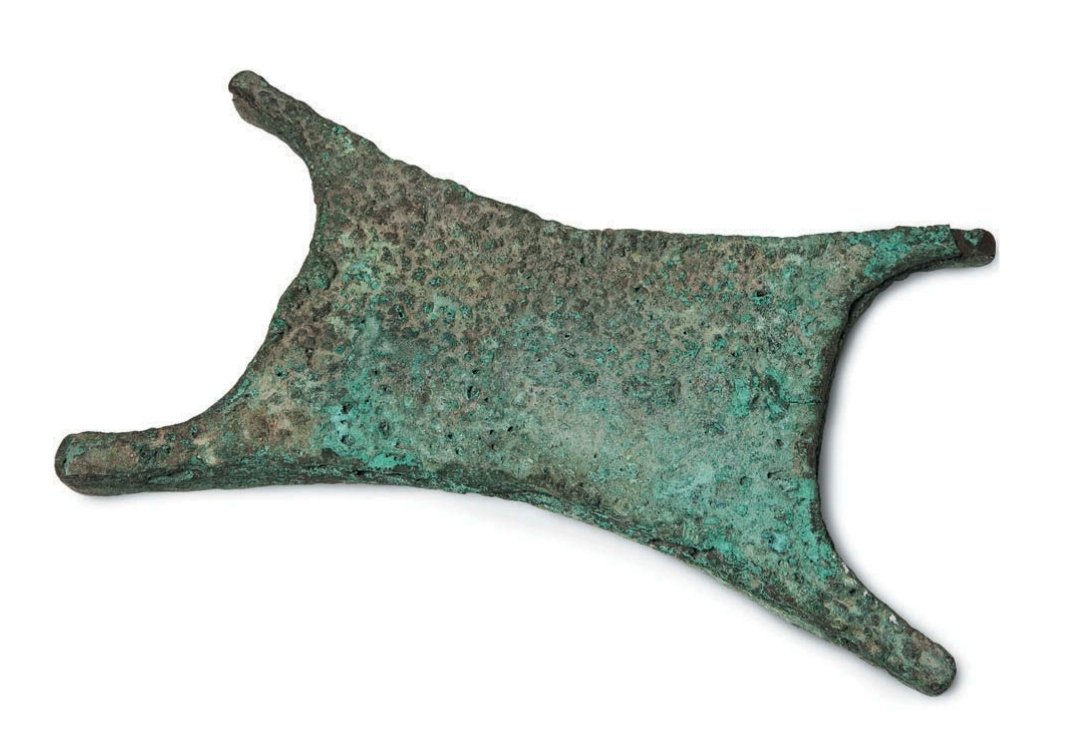
👉 In return the Cypriots offered, in addition to luxury objects, high quality copper ingots, taking advantage of the fact that the local copper deposits yielded poor quality ore.
Within the context of these trade relations, 👉
Within the context of these trade relations, 👉
👉 Sardinia probably became a transit hub for Cyprus for Iberian silver and tin from Cornwall, while on the other hand Cyprus brought the Sardinians into contact with Levantine merchants and officials, bringing them into contact with sophisticated societies of the Near East.
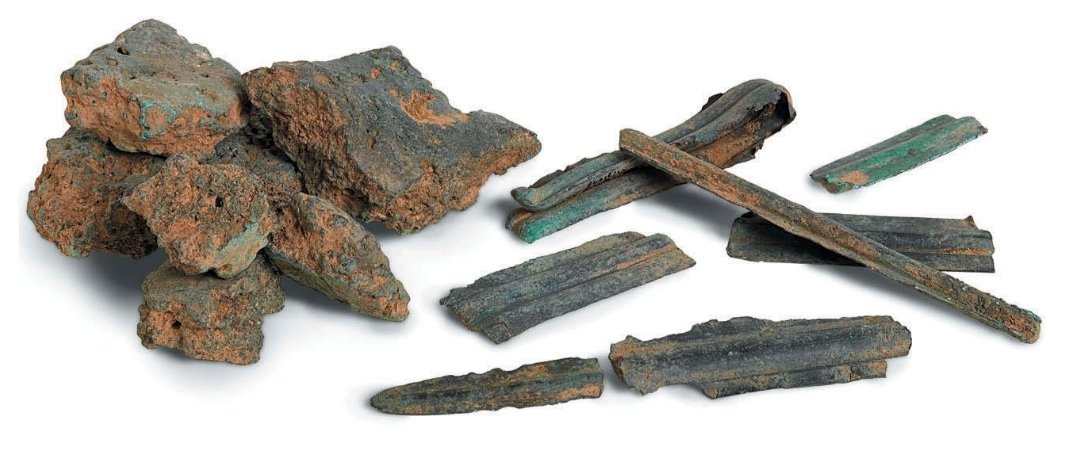
6/The finding of Sardinian pottery together with copper ingots at the coastal sites of Cannatello in Sicily, Lipari in the Aeolian Islands, Kommos in Crete and Hala Sultan Tekke and Pyla-Kokkinokremos in Cyprus, defines the main maritime route that connected Sardinia with Cyprus.
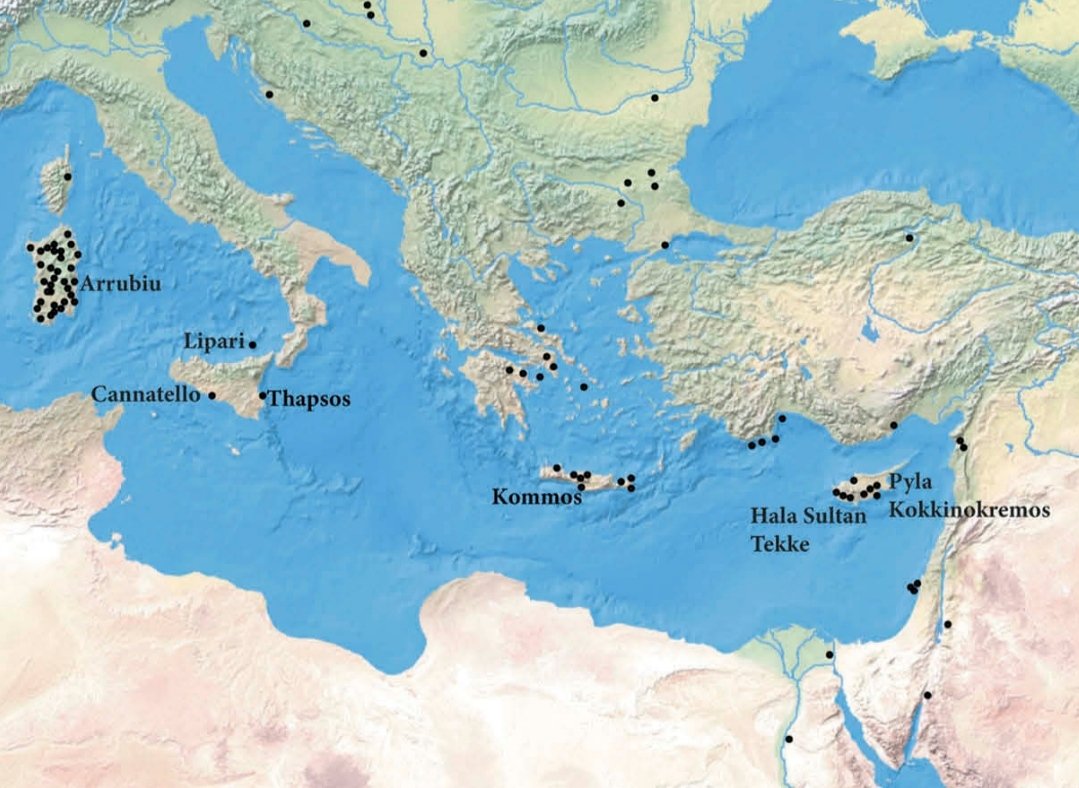
7/The presence of Nuraghe pottery in both Kommos and Hala Sultan Tekke is not surprising since these were two cosmopolitan ports of the time. In fact, Hala Sultan Tekke presents an impressive metallurgical craft industry that was a magnet for Sardinian ores and for metallurgists.
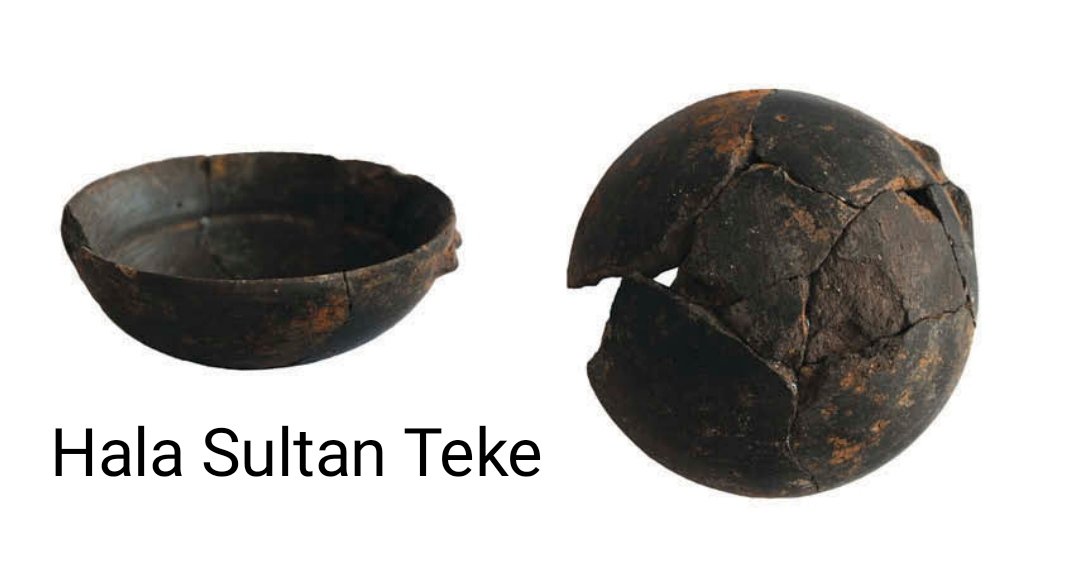
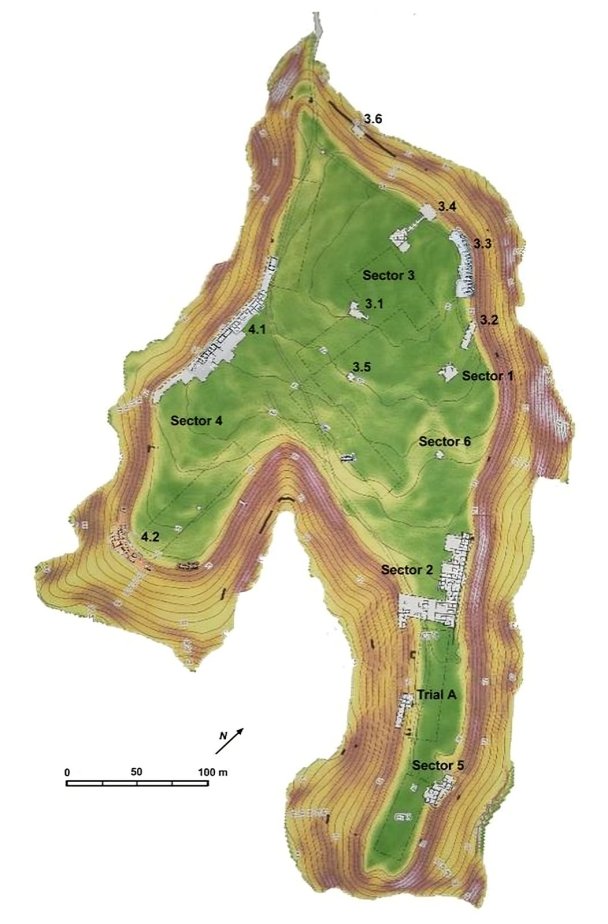
8/ However, the case of Pyla-Kokkinokremos with the discovery of Nuraghe ceramics, including a jar with an "upside-down elbow" handle, presents a different perspective, which escapes from close trade relations and circulation of ores. 👉
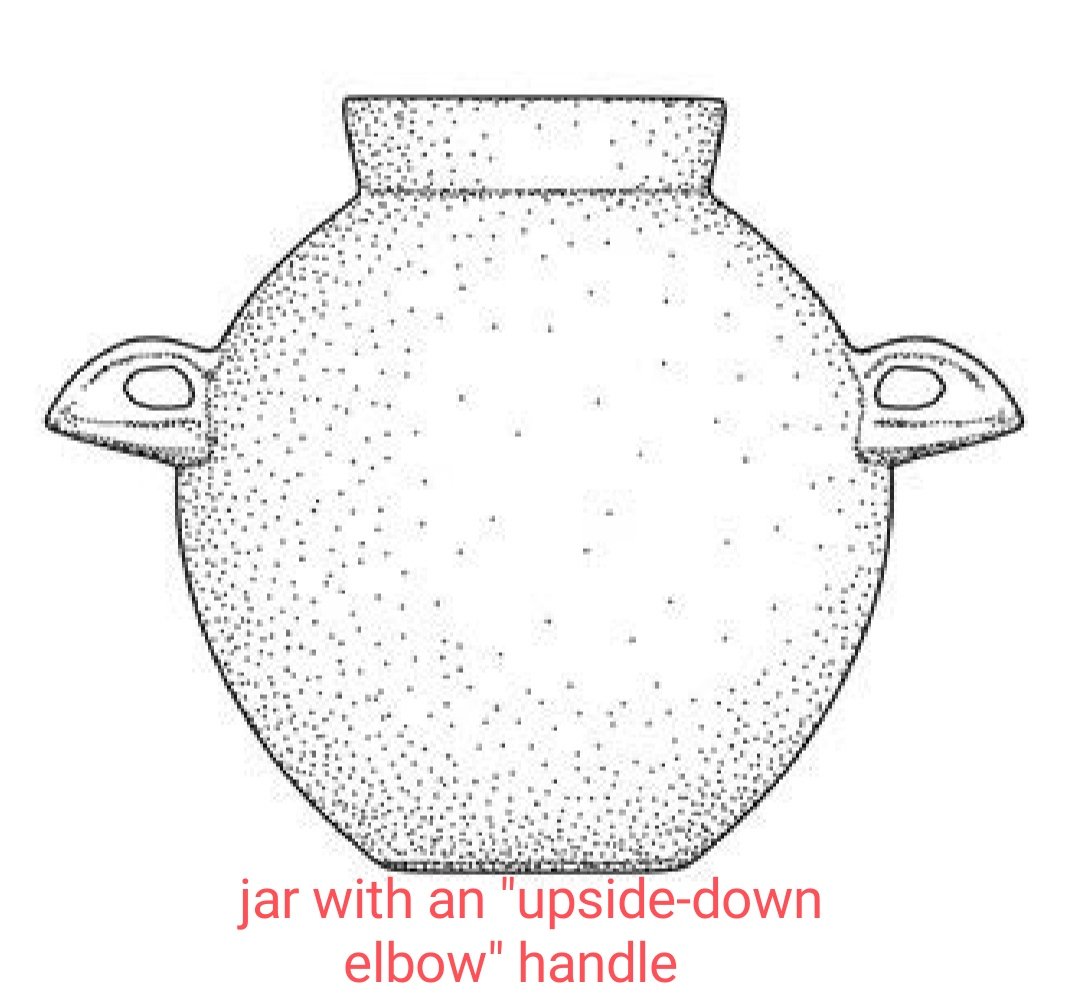
👉 This short-lived fortified settlement (1230–1170 BC) is a typical example of a LBA Collapse multicultural community of newcomers, in which imported Mycenaean, Minoan, Nuraghe, Hittite and Canaanite pottery has been found along with local Cypriot pottery.
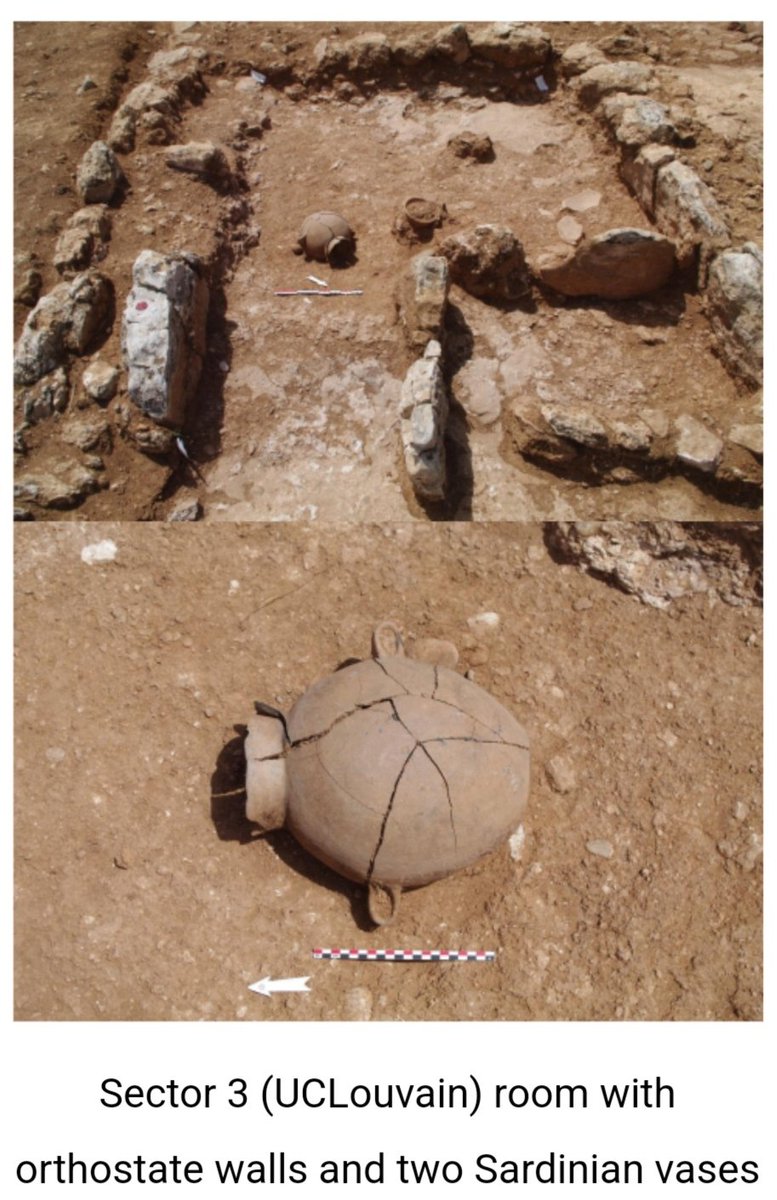
9/ So we have an indication of the presence of Sardinians in a settlement related to the Sea Peoples, which becomes even stronger if we consider that the jar with the "upside-down elbow" handle was broken in Sardinia, where it was repaired and despite its poor condition, 👉
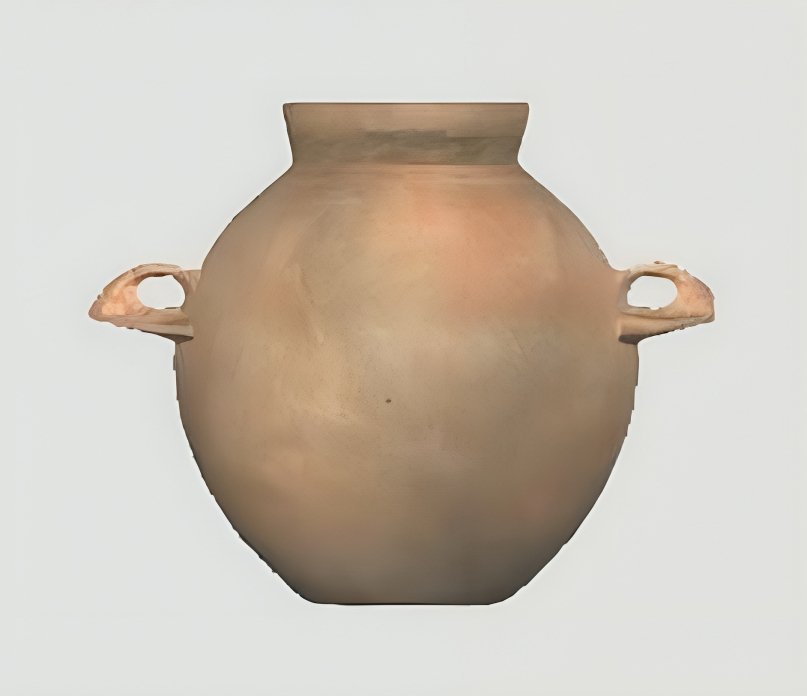
👉it was transferred and kept at Pyla-Kokkinokremos, suggesting that it had special sentimental value to its owner.
Parallelly,a Cypriot clay bathtub was repaired with two lead plaques, according to the Sardinian way, which testifies to the presence of craftsmen from Sardinia,👉
Parallelly,a Cypriot clay bathtub was repaired with two lead plaques, according to the Sardinian way, which testifies to the presence of craftsmen from Sardinia,👉
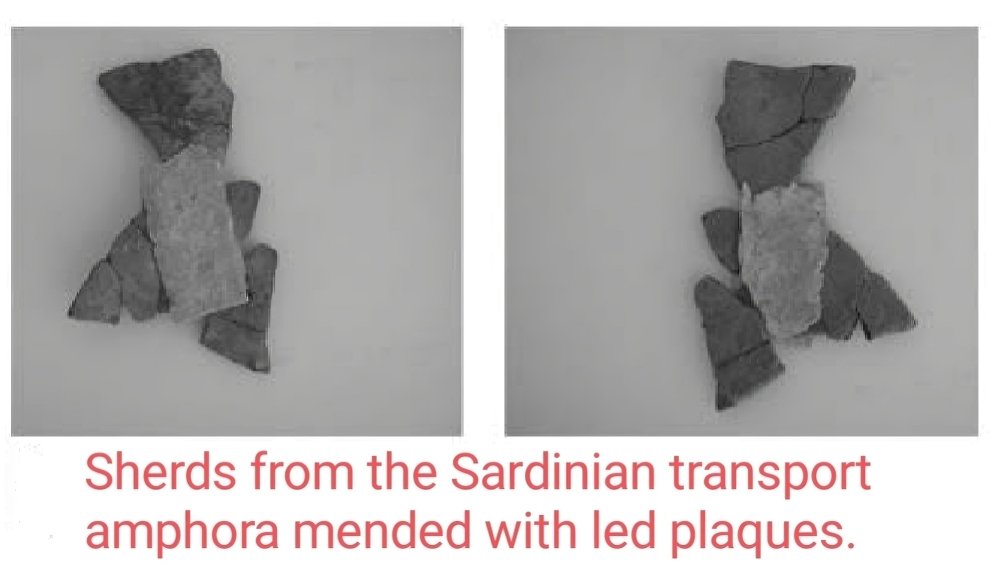
👉 as well as the Aegean, as indicated by corresponding repairs according to the Aegean way (with lead clumps).
However, no architectural (or burial) remains at Pyla-Kokkinokremos are related to the Sardinians.
However, no architectural (or burial) remains at Pyla-Kokkinokremos are related to the Sardinians.
10/ In conclusion we could say that the close trade relations between Sardinia and Cyprus during the Recent Bronze Age, led small groups of Sardinians to settle in coastal Cypriot sites looking for a better future. Although Cyprus was a key location of action 👉
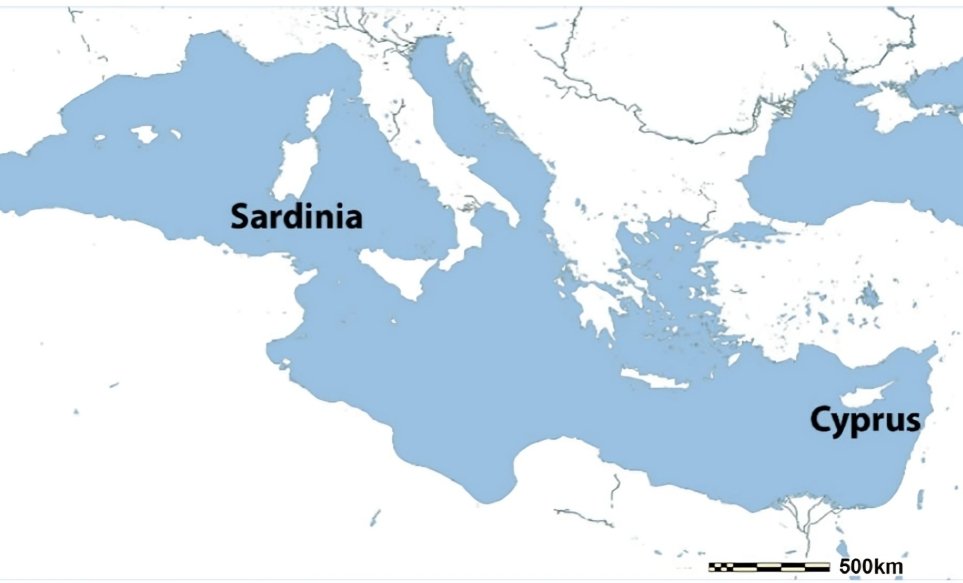
👉 for the maritime raiders in Eastern Mediterranean, the archaeological findings don't identify the movement of numerous warlike groups from Nuraghe Sardinia toward this region. The identification of Sherden / Šardana with Sardinia is a long way off.
Loading suggestions...