

You have a patient who is fluid overloaded. What is more effective at correcting the overload, removing a liter of fluid with dialysis or removing a liter of fluid with loop diuretics? #AskRenal
Wow, this generated great discussion. 4,615 votes in the first 18 hours is bonkers. Currently at 17 votes on Threads (I'm JTopf there, please follow me). But the breakdown of the answers is about the same
1/10
1/10
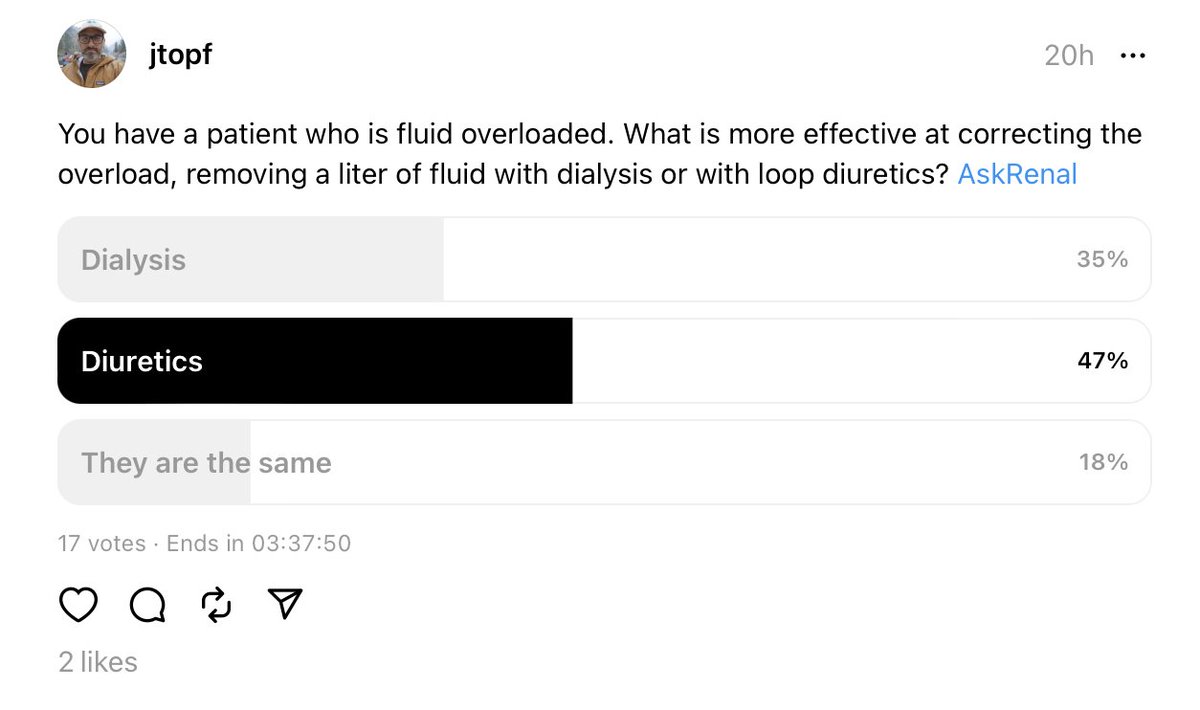
So, while many discussed the specific clinical benefits and pointed out the failed experiment of using isolated ultrafiltration for the treatment of acute decompensated heart failure, I was trying to get to the core of what is the effect on fluid balance.
2/10
2/10
And in that realm, dialysis is the clear winner over loop, or any other type of, diuretics. This is due to the nature of the ultrafiltration with loop diuretics.
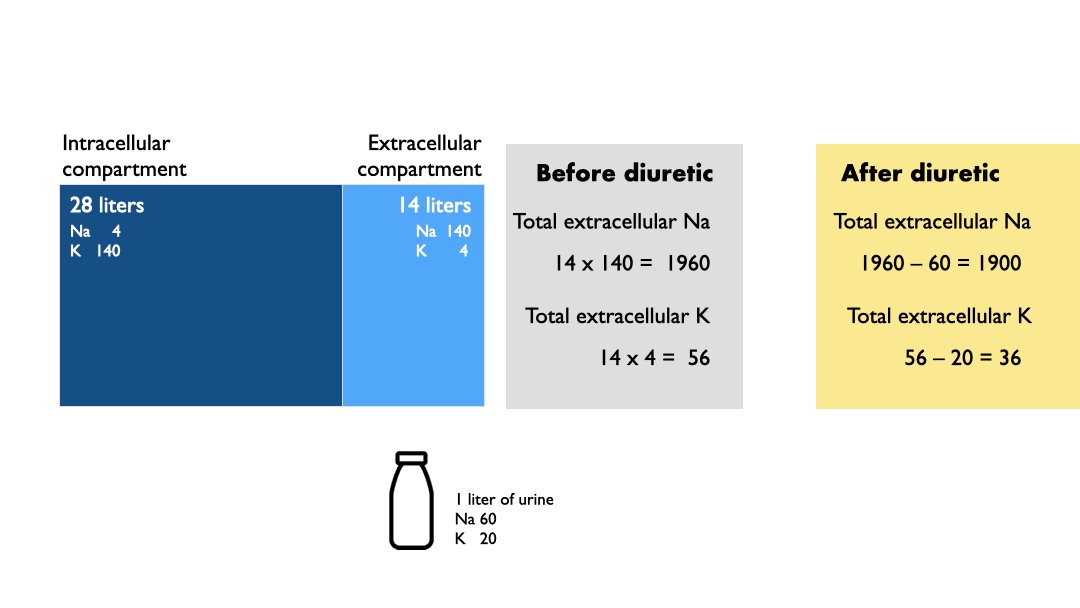
The urine Na content will vary, but 60 mmol/L of Na is pretty typical.
3/10
The urine Na content will vary, but 60 mmol/L of Na is pretty typical.
3/10

Producing this hypotonic urine will increase the tonicity of the extracellular compartment. And the hypertonic intracellular compartment will draw water from the intracellular compartment, reducing the effectiveness of the diuresis
4/10
4/10
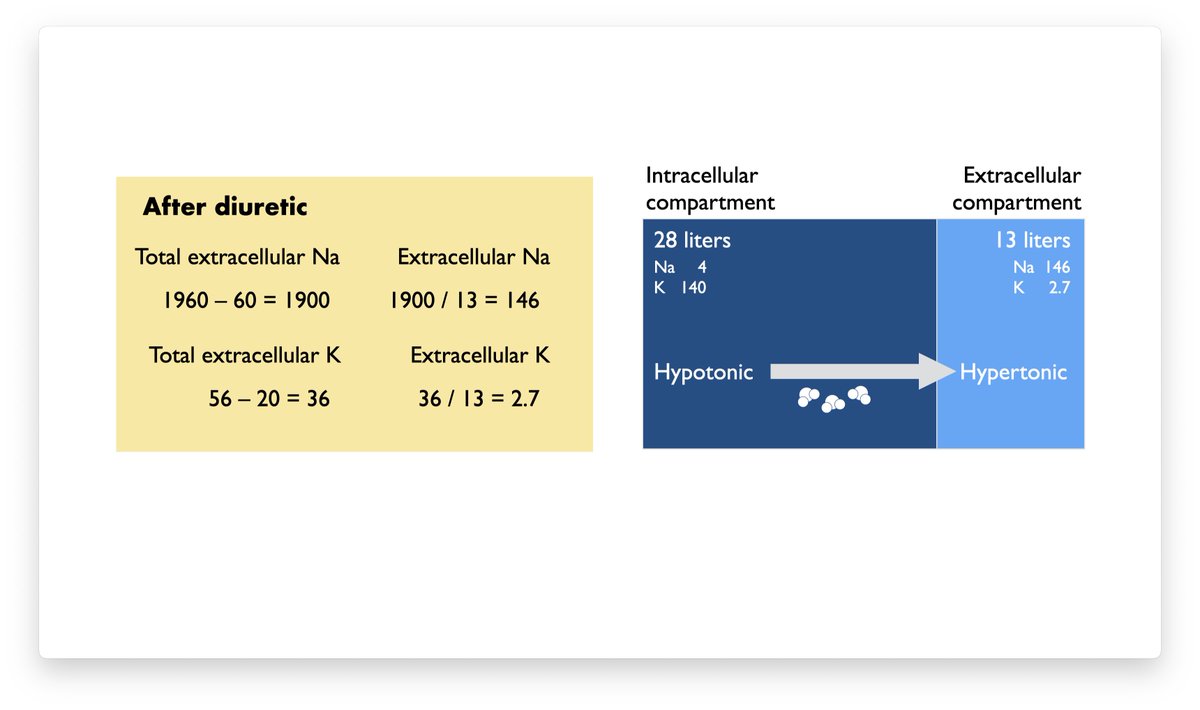
How much fluid will be added to the ECC? Well, that requires some algebra.
Tonicity of the ICC must equal the tonicity of the ECC and tonicity can be calculated by adding the total amount of Na and K and dividing by the compartment's water content.
5/10
Tonicity of the ICC must equal the tonicity of the ECC and tonicity can be calculated by adding the total amount of Na and K and dividing by the compartment's water content.
5/10
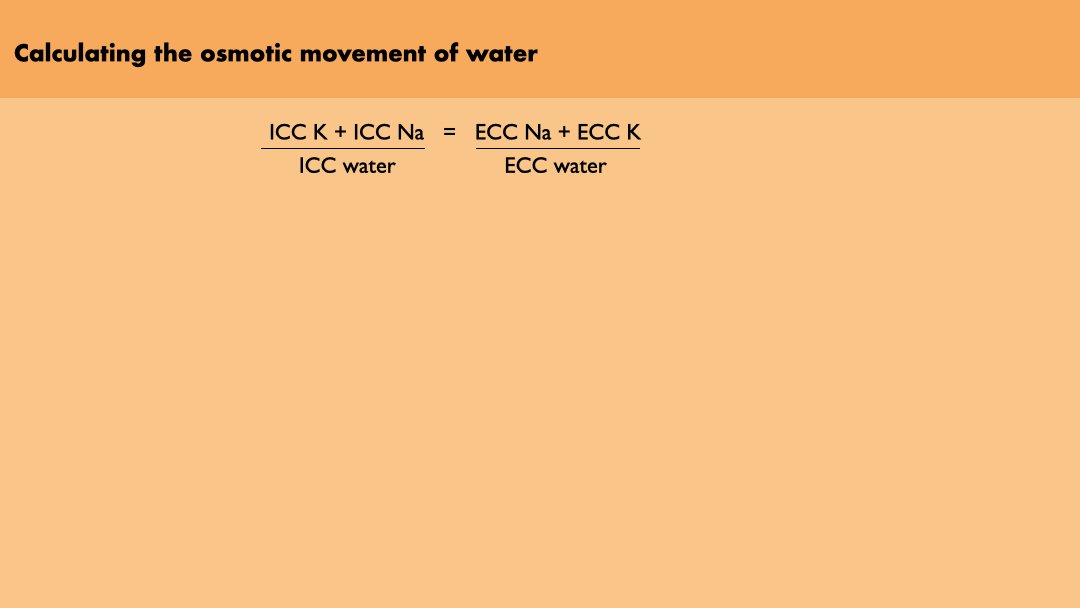
X is the amount of water that moves from the ICC to the ECC.
X is 0.3 L, so the increased [Na] from diuretics producing hypotonic urine results in 300 mL of water moving back into the ECC. This represents 30% of the diuresis!
6/10
X is 0.3 L, so the increased [Na] from diuretics producing hypotonic urine results in 300 mL of water moving back into the ECC. This represents 30% of the diuresis!
6/10
![X is the amount of water that moves from the ICC to the ECC.
X is 0.3 L, so the increased [Na] fro...](https://pbs.twimg.com/media/GDvWJqsXcAAgj3n.jpg)
With dialysis, a liter of UF removes 140 mEq of sodium and doesn't affect the serum tonicity so you don't get the secondary movement of water from the ICC.
(Yes I know it is a little bit more complex than this, especially in regards to potassium, but I don't think this will ultimately change the numbers that much)
7/10
(Yes I know it is a little bit more complex than this, especially in regards to potassium, but I don't think this will ultimately change the numbers that much)
7/10
This math lead us to experiment with using dialysis as initial therapy in acute decompensated heart failure. The results were not great.
"We found that the use of a stepped pharmacologic-therapy algorithm was superior to a strategy of ultrafiltration for the preservation of renal function, with the amount of weight loss at 96 hours similar with the two approaches. Ultrafiltration was associated with higher rates of adverse events."
pubmed.ncbi.nlm.nih.gov
8/10
"We found that the use of a stepped pharmacologic-therapy algorithm was superior to a strategy of ultrafiltration for the preservation of renal function, with the amount of weight loss at 96 hours similar with the two approaches. Ultrafiltration was associated with higher rates of adverse events."
pubmed.ncbi.nlm.nih.gov
8/10
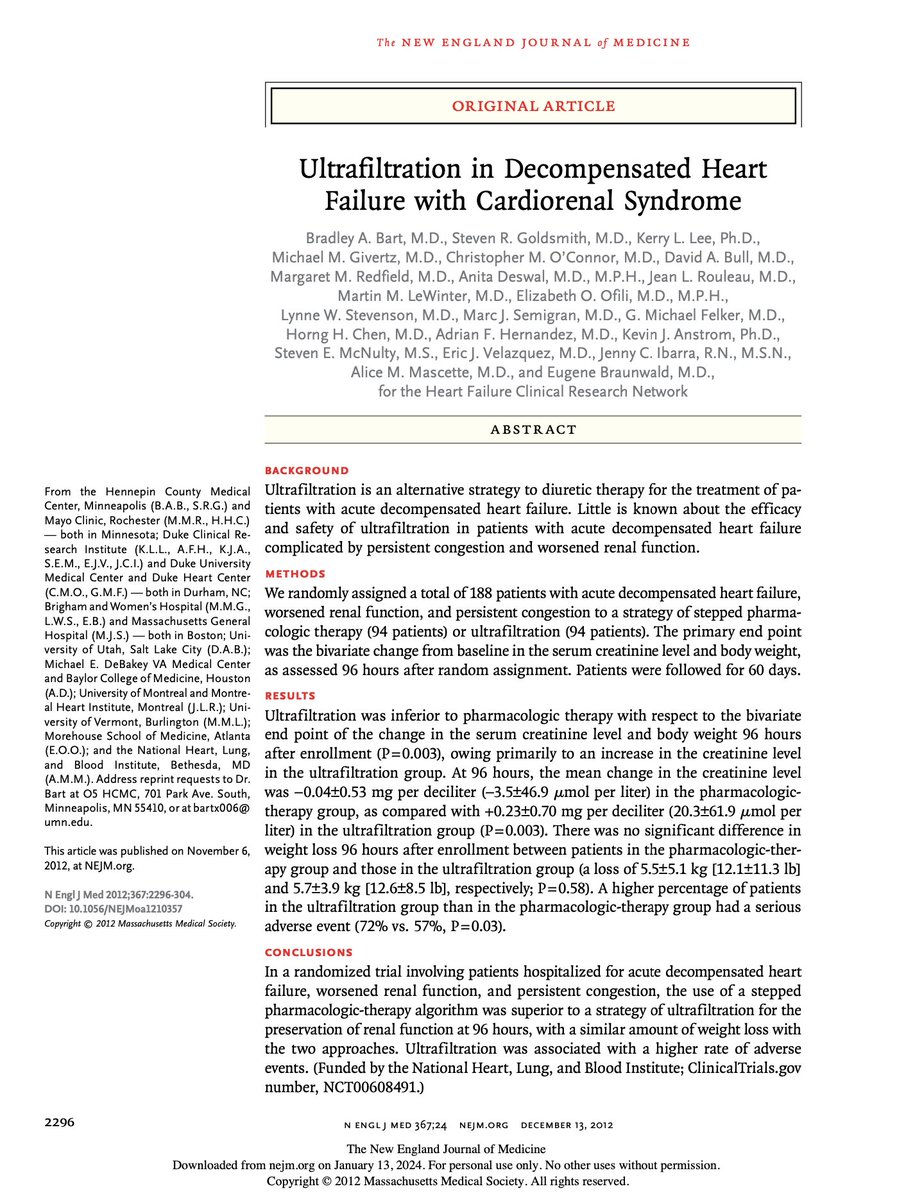
Here is a nice review (PDF | free) that points out some of the problems with CARESS and why this strategy should probably still be considered in acute decompensated heart failure.
ncbi.nlm.nih.gov
9/10
ncbi.nlm.nih.gov
9/10
The slides as animated gif!
10/10
10/10
Loading suggestions...