

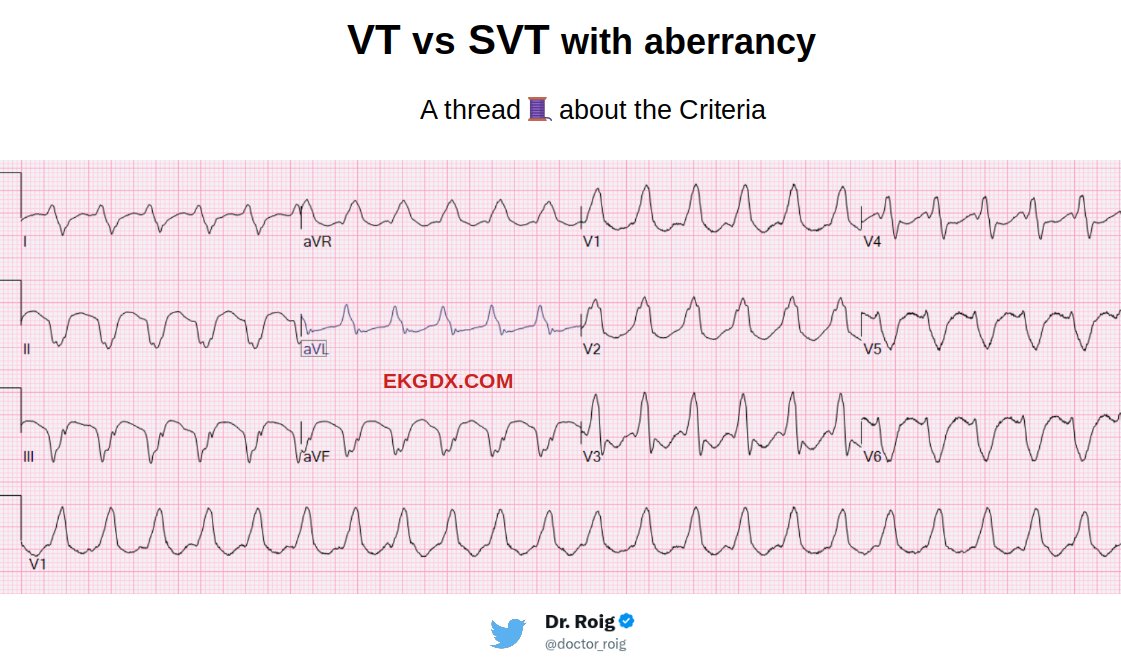
1/ Today's 🧵is about "VT" versus "SVT with aberrancy".
The aim of this thread is to provide basic tips on how to apply some of the most used criteria that might be helpful in diagnosing VT. #CardioTwitter
Note that the following features are suggestive of VT, but their absence does not exclude VT.
@ekgdx
The aim of this thread is to provide basic tips on how to apply some of the most used criteria that might be helpful in diagnosing VT. #CardioTwitter
Note that the following features are suggestive of VT, but their absence does not exclude VT.
@ekgdx
2/ History
In 1960 Dr. Alfred Pick and Richard Langendorf published, “Differentiation of supraventricular and ventricular tachycardia.” Sixty years later, differential diagnosis of wide QRS tachycardia on the electrocardiogram remains a challenging exercise.
Article: sciencedirect.com
@ekgdx
In 1960 Dr. Alfred Pick and Richard Langendorf published, “Differentiation of supraventricular and ventricular tachycardia.” Sixty years later, differential diagnosis of wide QRS tachycardia on the electrocardiogram remains a challenging exercise.
Article: sciencedirect.com
@ekgdx

3/ In the past 40 years, several algorithms or criteria have been developed to differentiate VT from SVT. Here I show you some of them:
Kindwall Criteria
Article: pubmed.ncbi.nlm.nih.gov
Courtesy of ekgdx.com
Kindwall Criteria
Article: pubmed.ncbi.nlm.nih.gov
Courtesy of ekgdx.com

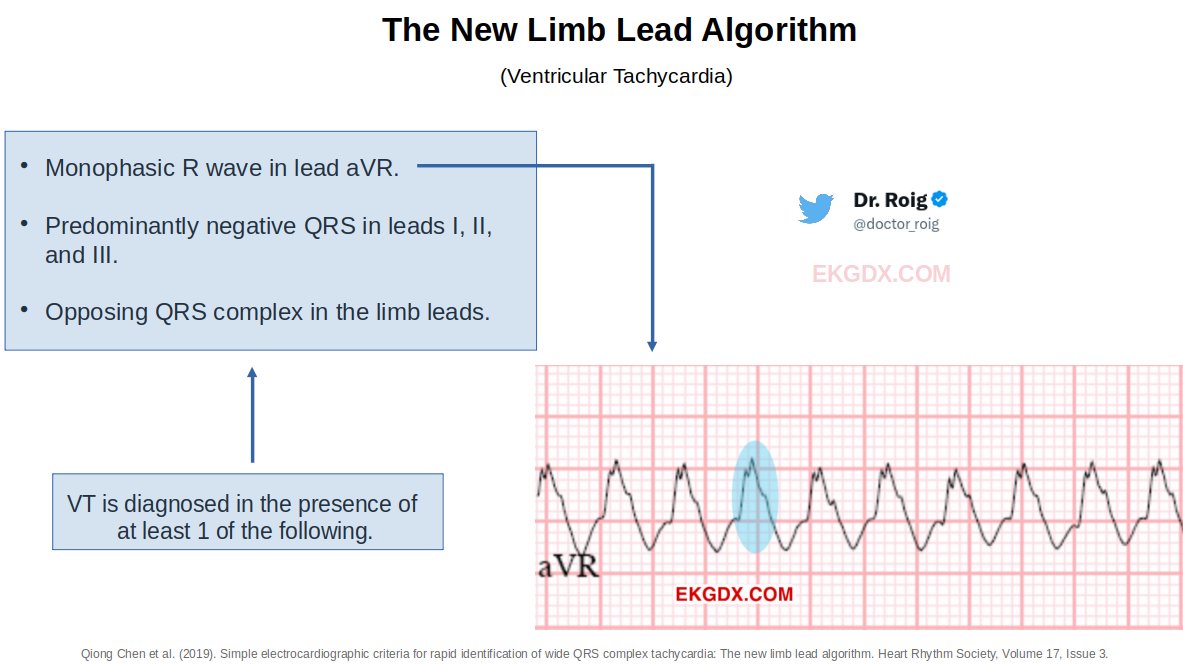

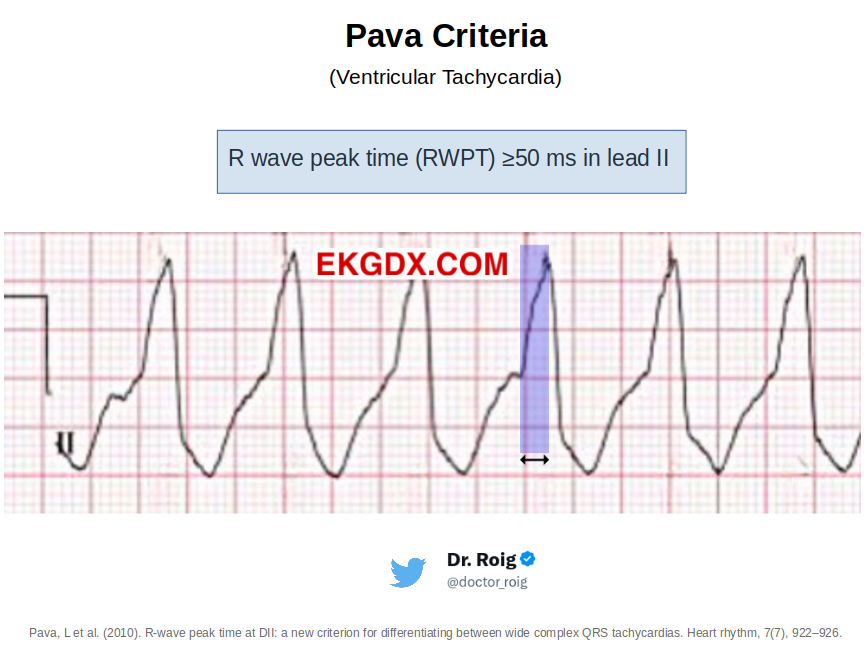
7/ After having analyzed some criteria, let's look at some electrocardiographic characteristics that suggest VT.
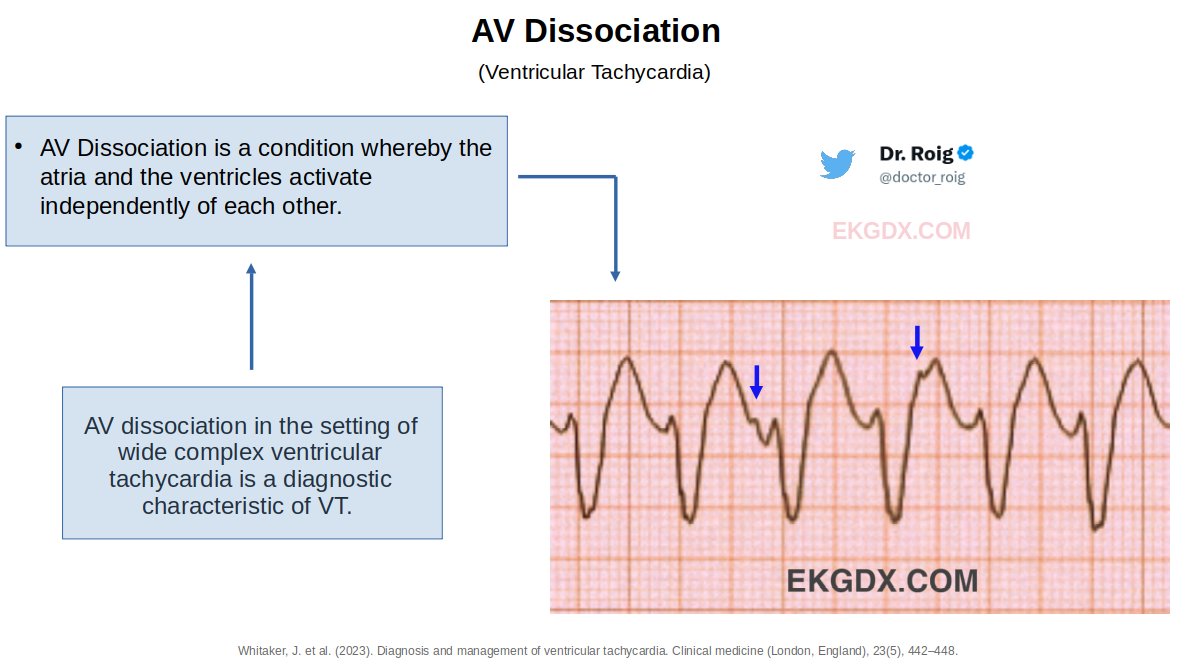
AV dissociation: Although the presence of AV dissociation is highly suggestive of VT, its absence does not exclude VT. A single dissociated P wave at the onset of WQRST could be a reflection of AV dissociation and thus suggestive of VT.
ekgdx.com
AV dissociation: Although the presence of AV dissociation is highly suggestive of VT, its absence does not exclude VT. A single dissociated P wave at the onset of WQRST could be a reflection of AV dissociation and thus suggestive of VT.
ekgdx.com
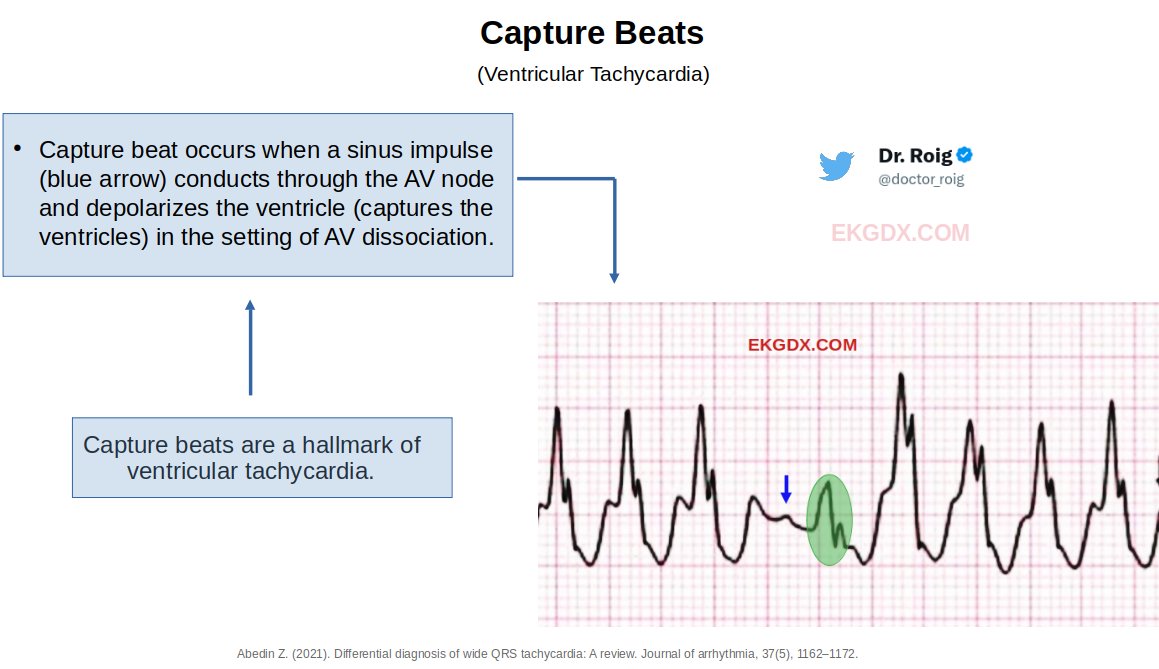
8/ Capture Beats
@ekgdx
@ekgdx
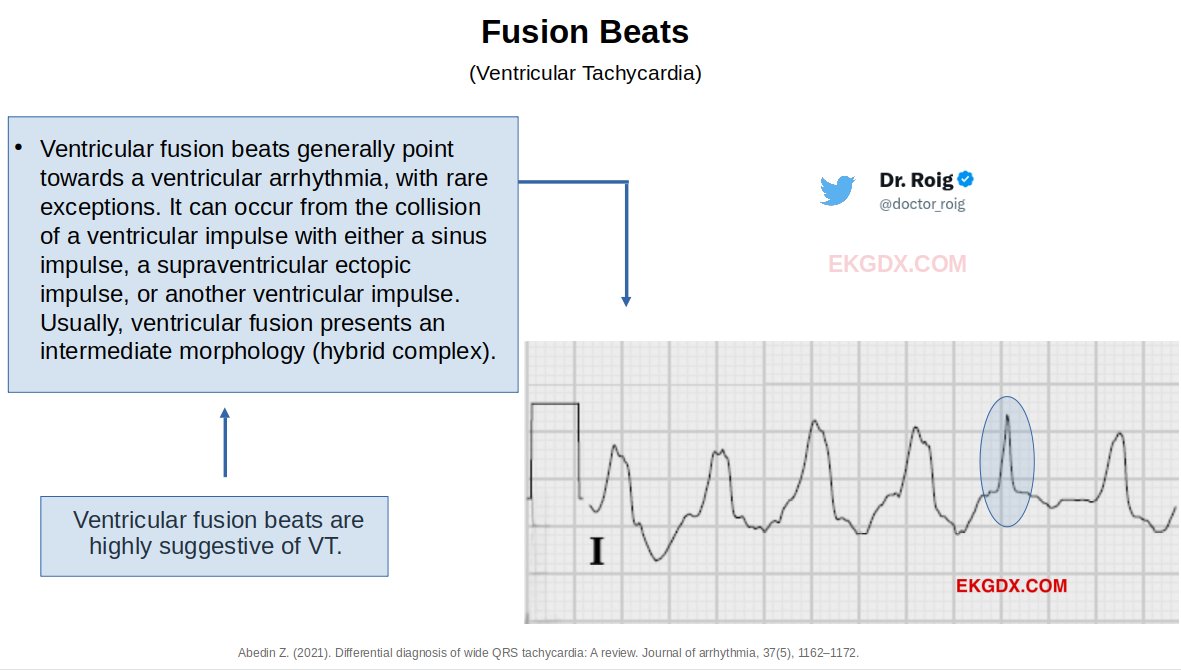
9/ Fusion Beats
@ekgdx
@ekgdx
10/ Precordial Concordance
During precordial concordance, there is no R/S transition and is suggestive of VT (PPV 90%–100%, sensitivity 88% [Miller JM. et al 2006]). Although precordial concordance is highly suggestive of VT, its absence does not exclude the diagnosis.
-Positive concordance (A): All the QRS complexes from V1 to V6 have positive polarity.
-Negative concordance (B): All the QRS complexes from V1 to V6 have negative polarity.
@ekgdx
During precordial concordance, there is no R/S transition and is suggestive of VT (PPV 90%–100%, sensitivity 88% [Miller JM. et al 2006]). Although precordial concordance is highly suggestive of VT, its absence does not exclude the diagnosis.
-Positive concordance (A): All the QRS complexes from V1 to V6 have positive polarity.
-Negative concordance (B): All the QRS complexes from V1 to V6 have negative polarity.
@ekgdx

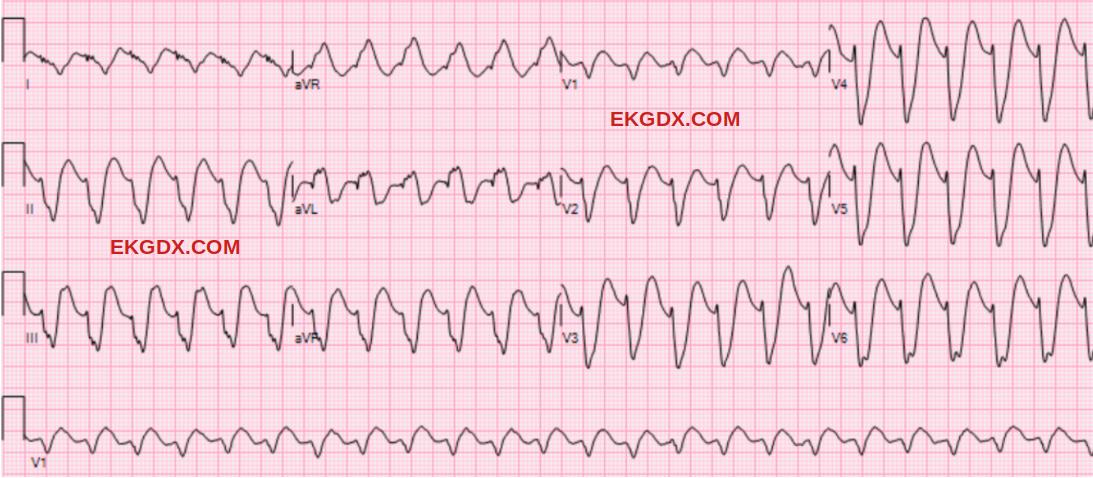
11/ I think it's time to apply what we've learned:
1: What criteria are present in this EKG?
2: This is VT?
3: SVT with aberrancy?
ekgdx.com
1: What criteria are present in this EKG?
2: This is VT?
3: SVT with aberrancy?
ekgdx.com
12/ VT Mimics
It is important to clarify that on many occasions we will face ECGs that may look like VT but are not, and are the so-called "VT Mimics". Let's look at some examples:
Flecainide overdose. Courtesy of @SergioPinski
It is important to clarify that on many occasions we will face ECGs that may look like VT but are not, and are the so-called "VT Mimics". Let's look at some examples:
Flecainide overdose. Courtesy of @SergioPinski
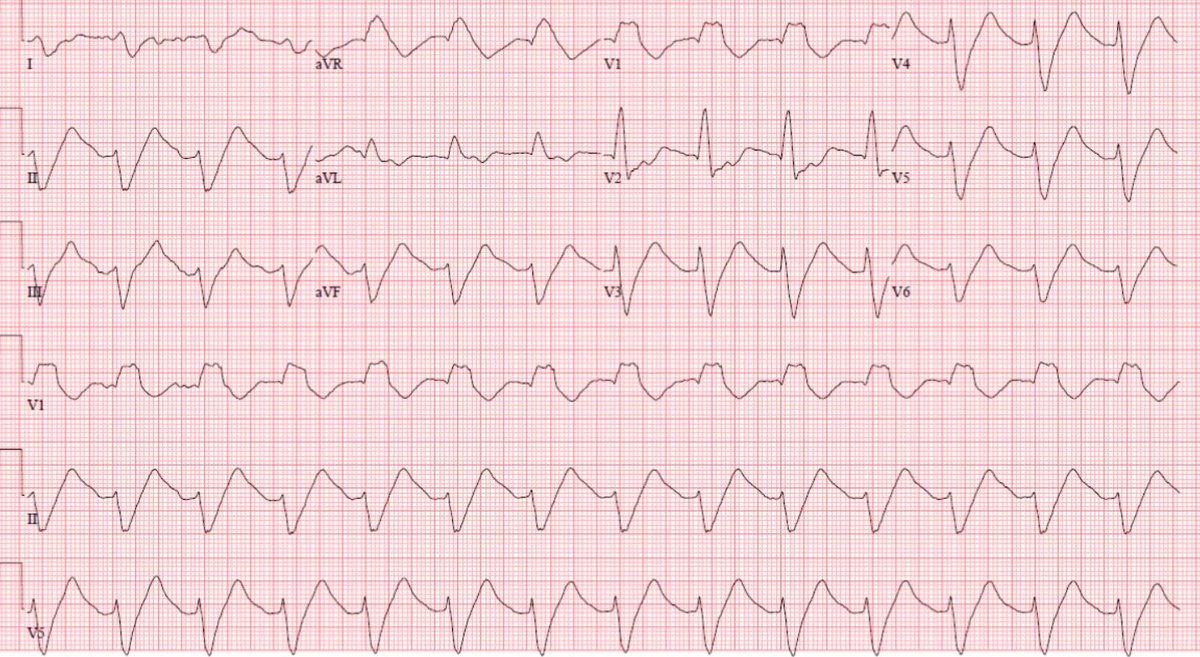
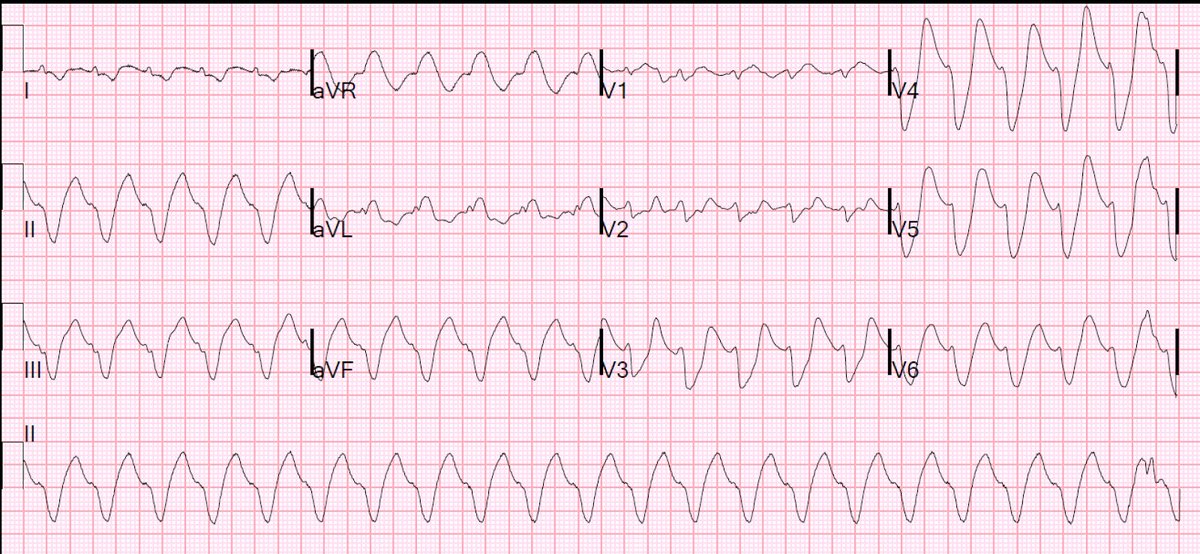
13/ Severe hyperkalemia. Courtesy of @smithECGBlog
The patient had a K of 8.1 mEq/L and a very low ionized Calcium.
The patient had a K of 8.1 mEq/L and a very low ionized Calcium.
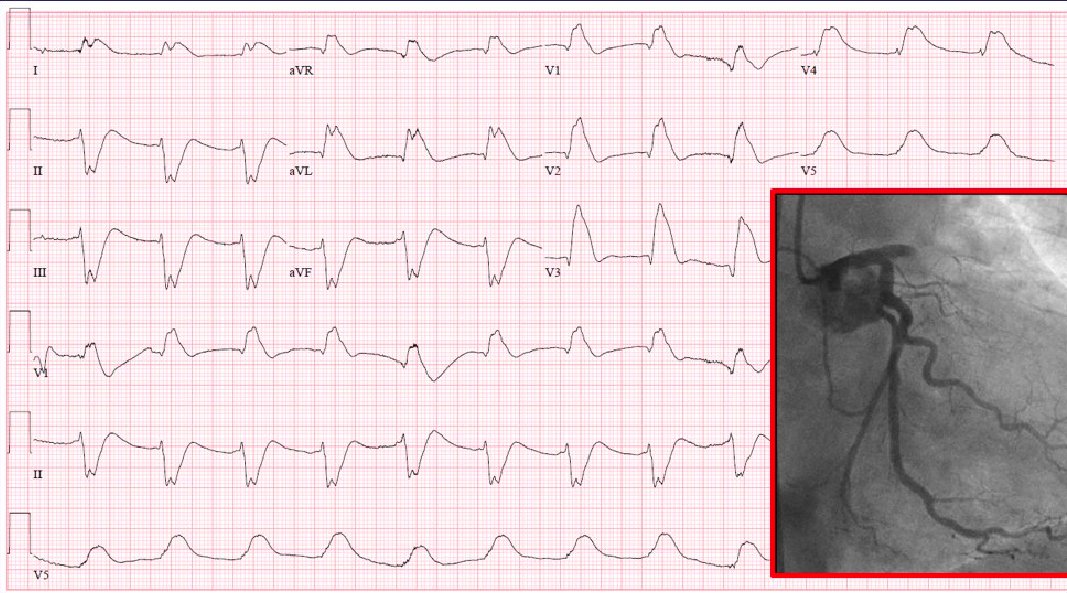
14/ Wide QRS Mimic
Here is a sample of "Wide QRS Mimic" due to severe ST elevation in the setting of pLAD occlusion.
Courtesy of @narrowQRS
Here is a sample of "Wide QRS Mimic" due to severe ST elevation in the setting of pLAD occlusion.
Courtesy of @narrowQRS
15/ If you want to practice with EKG Challenges, check this out
x.com
x.com
16/ END
Thanks for reading this 🧵.
If you find this content helpful, please:
1- Follow @doctor_roig and @ekgdx for more.
2- Re-post the first tweet for support.
3- Activate my bell and don't miss my next thread.
Thanks for reading this 🧵.
If you find this content helpful, please:
1- Follow @doctor_roig and @ekgdx for more.
2- Re-post the first tweet for support.
3- Activate my bell and don't miss my next thread.
Loading suggestions...