

Sector Rotation Part 2
In my previous thread, I covered the importance of focusing on specific sector to fully capitalize on strong moves. In today's thread, we will delve into how to select stocks from a particular sector and which patterns deserve our attention. 🧵
(1/21)
In my previous thread, I covered the importance of focusing on specific sector to fully capitalize on strong moves. In today's thread, we will delve into how to select stocks from a particular sector and which patterns deserve our attention. 🧵
(1/21)
I regularly write threads here and share insights on my Telegram channel. Please feel free to join and follow me.
telegram.me
(2/21)
telegram.me
(2/21)

We have a lot of textbook patterns, and you'll notice many forming on charts, such as the Cup & Handle, Inv. Head and Shoulders, Parallel Channels. However, I will discuss a few that are most effective and are my favorite setups for buying, with a few examples. (3/21)
1. Falling Channels Breakout - Classic Trend Reversal Pattern
2. Descending Trendline or Upward Sloping Trendline Breakout
3. Weekly/Monthly Resistance Breakouts, All-Time High (ATH) Breakouts, or Multi-Year Resistance Breakouts
4. Double Bottom Breakouts
(4/21)
2. Descending Trendline or Upward Sloping Trendline Breakout
3. Weekly/Monthly Resistance Breakouts, All-Time High (ATH) Breakouts, or Multi-Year Resistance Breakouts
4. Double Bottom Breakouts
(4/21)
5. Range/Rectangle Pattern Breakout or Breakout After Significant Accumulation
6. Breakout Retest Setup
I have written a thread specifically about the falling channel and sloping trendline breakout, which you can review. (5/
x.com
6. Breakout Retest Setup
I have written a thread specifically about the falling channel and sloping trendline breakout, which you can review. (5/
x.com
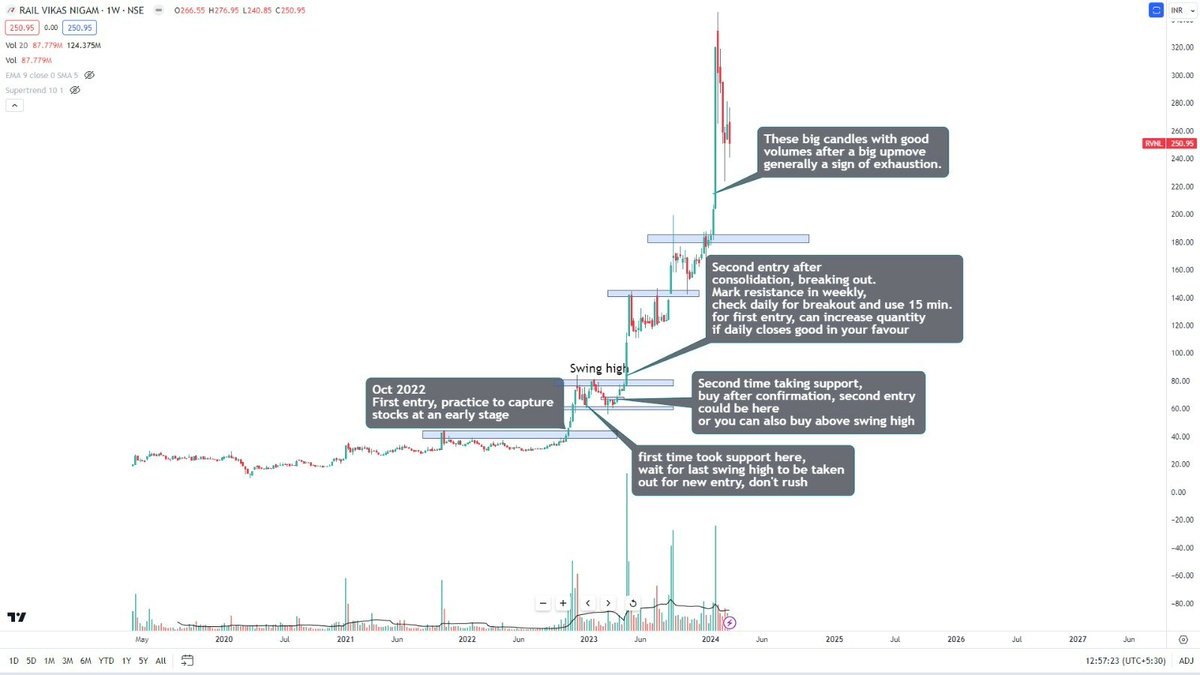
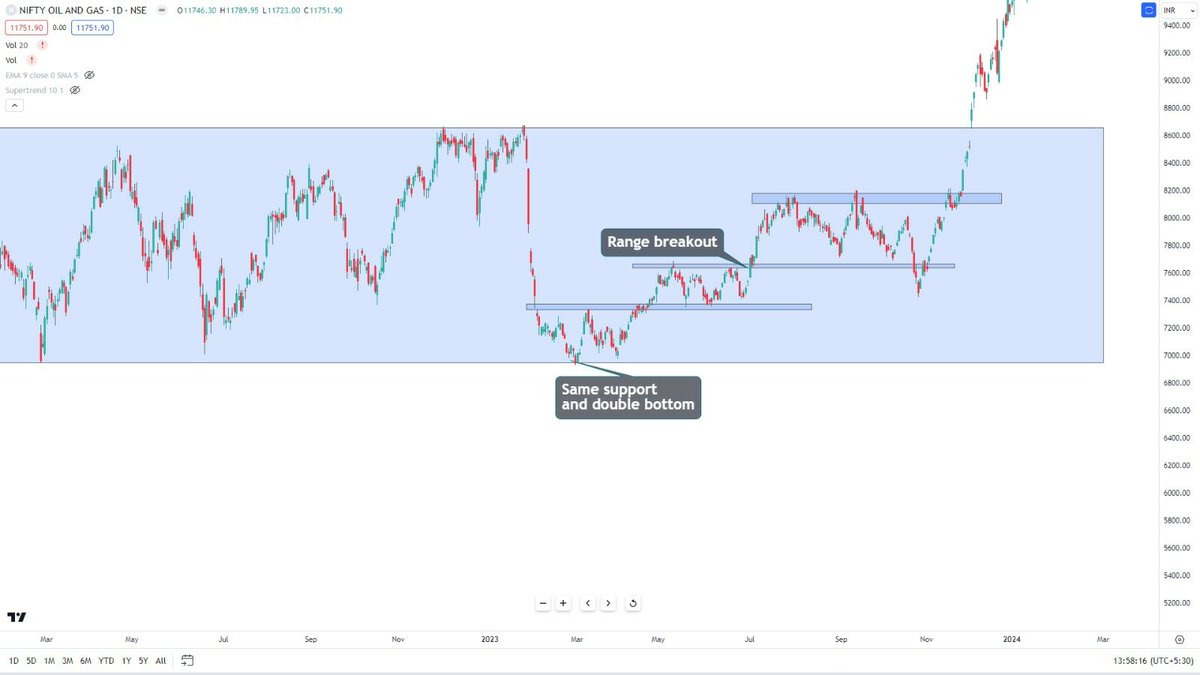
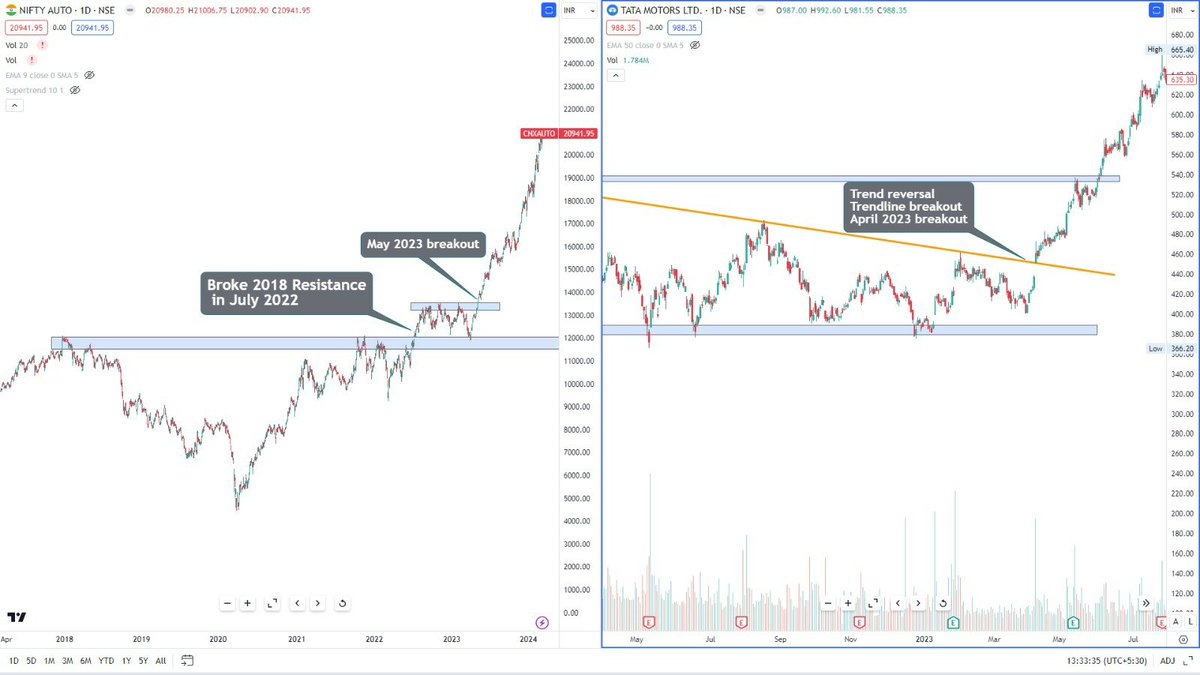
Resistance breakouts and all-time high breakouts are very common and widely traded, performs exceptionally well in bullish markets. However, if you trade in stock cash, it's better to identify and pick stocks at an earlier stage to achieve favorable risk-reward ratios. (6/

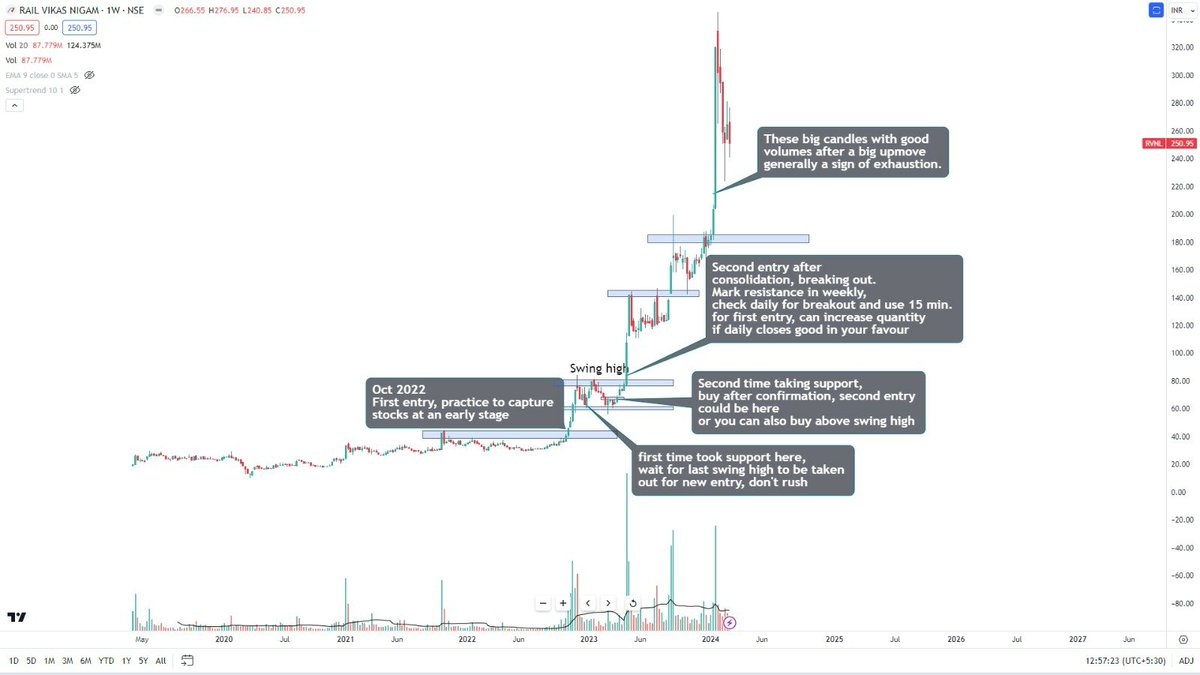
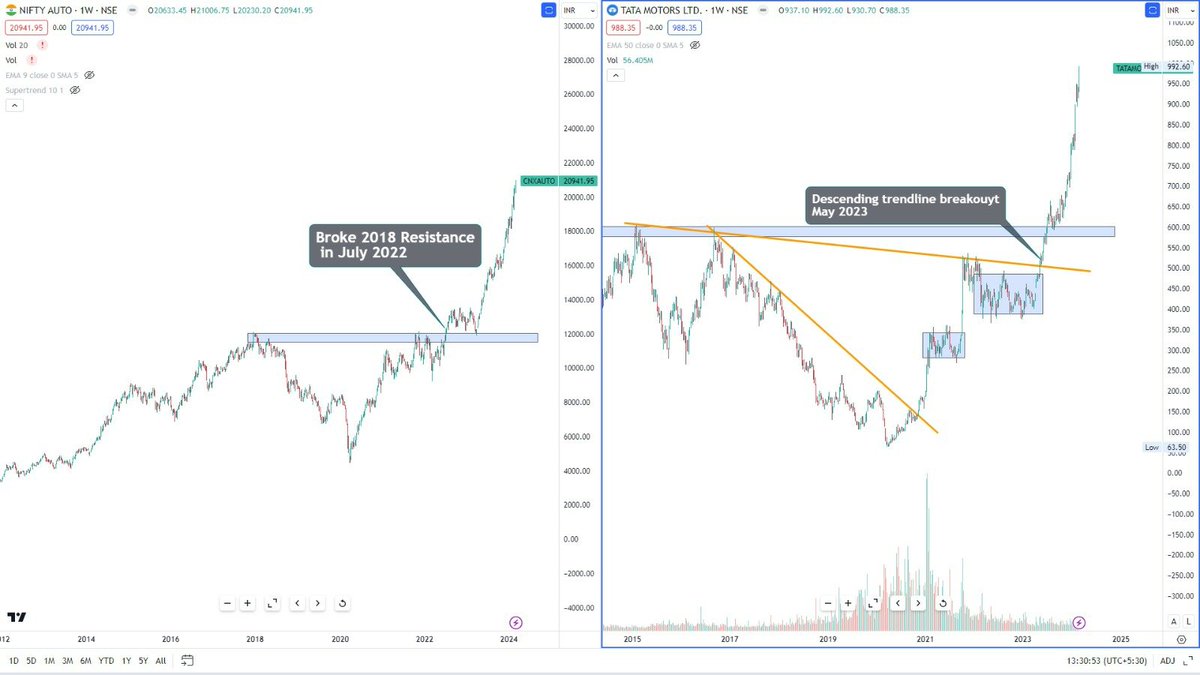
Sometimes, entering a trade post-breakout can require setting a large SL, especially since small-cap and mid-cap stocks can easily move 5-6% in a single day. Look at a few examples.
I will also write separate threads on individual patterns later. (7/
I will also write separate threads on individual patterns later. (7/
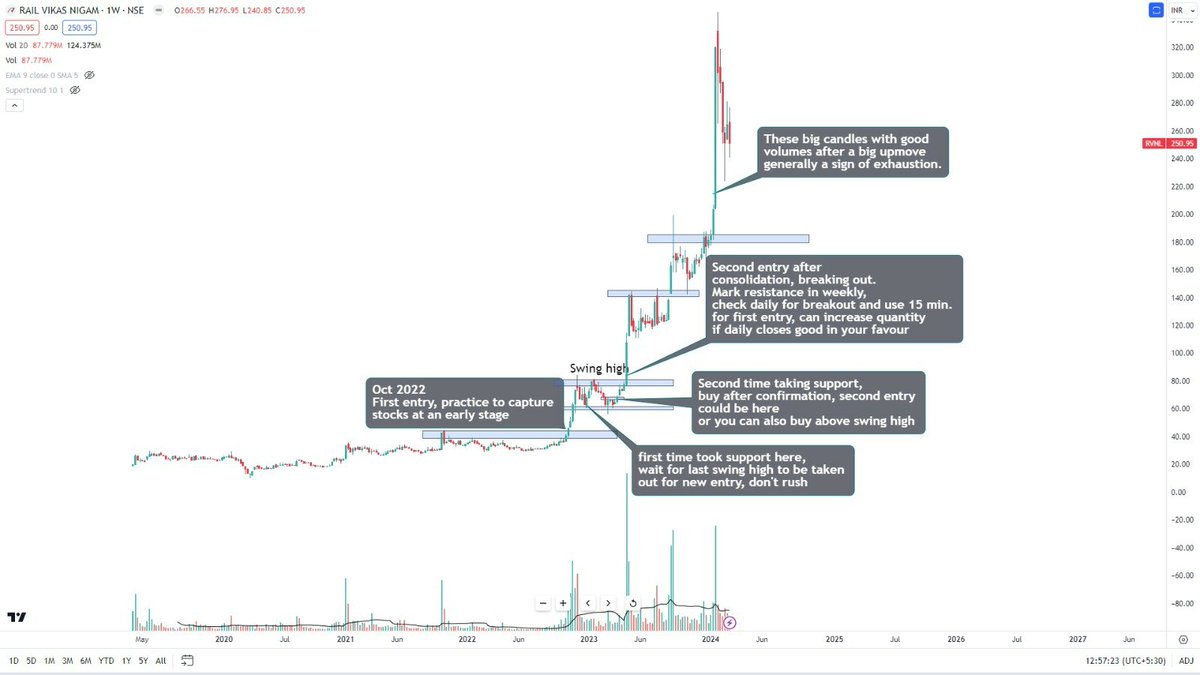
Once you have determined which Index is likely to perform well based on the pattern, the next step is to select the specific stocks. Considering the vast number of available stocks, it is not feasible to check each one. Create a watchlist comprising fundamentally sound stocks, 8/
as they typically perform well, including both mid-cap and small-cap stocks. Then, categorize the watchlist according to sectors. If you're unable to assess the fundamentals, at a minimum organize a sector-wise list of stocks. I'll explain the significance of this approach later.
There are certain stocks that begin to perform well before the index does, aiding the index's move, which in turn helps other stocks to perform. When any index is beginning to set up, we need to identify the outperformers and start analyzing the stock charts from that sector.10/
Identify which stocks are outperforming the index. You need to search for the same patterns or setups we've discussed earlier, as quite often, the index and stocks form similar patterns. When the index begins to breaks through any multi-year resistance or ATH. (11/
..you can also turn your attention to underperforming stocks. This is because when an index breaks its ATH, the performance of nearly all associated stocks tends to improve. When the Nifty Small Cap and Midcap indices are breaking ATH, it's an even more favorable situation. (12/
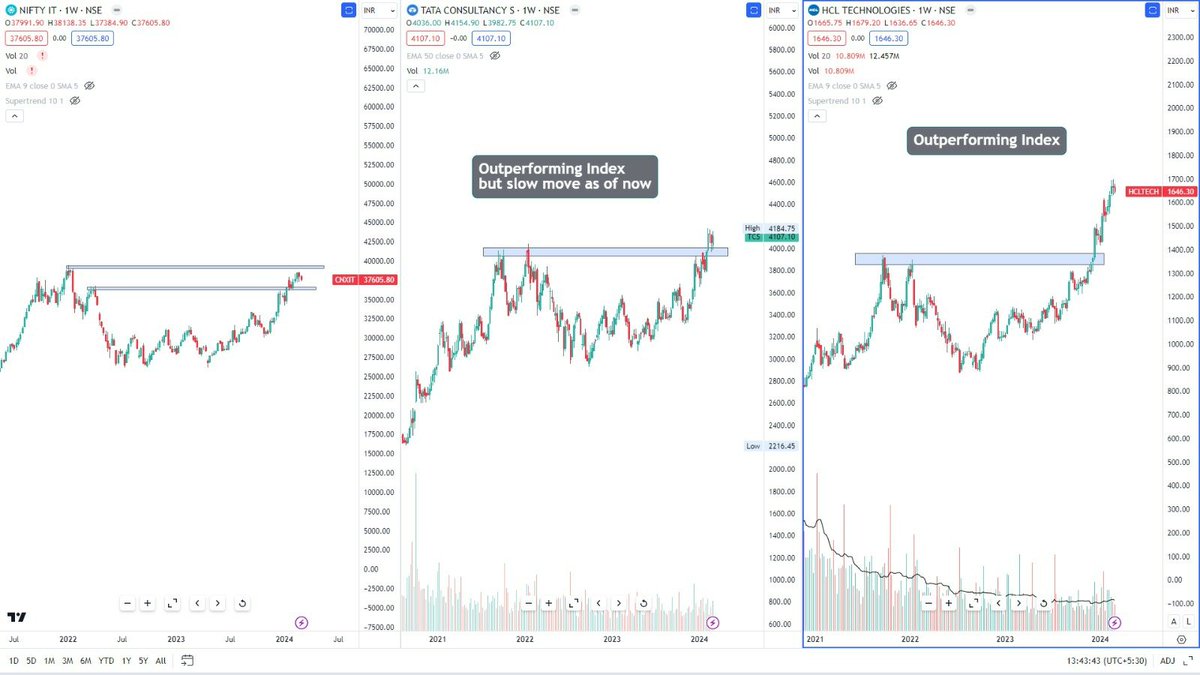
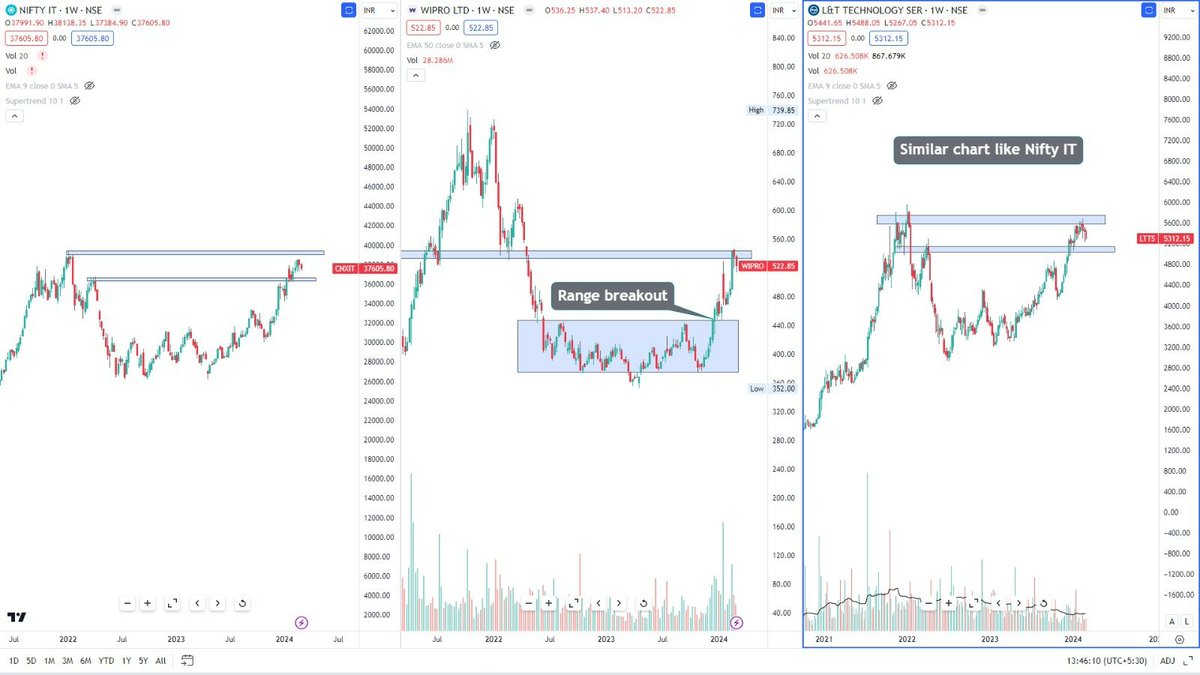

In the extreme bull market that we've witnessed in 2023, almost all strategies tend to work. However, when the market is sluggish and not at an ATH, it becomes crucial to focus on relative strength that is, to identify the outperformers and steer clear of underperformers. (13/21)
Focus on the stocks that are breaching their 52-week highs, as well as monthly and weekly resistances, or reaching new ATH. Currently, several market themes don't have indices..Chemicals, Textiles, Railway stocks. Therefore, it's imp. to compile a sector-specific watchlist. (14/
By doing so, you will be able to find out whether these stocks begin to perform together or exhibit similar patterns. Leveraging relevant news to your advantage can be beneficial, as well. Another strategy is to pay attention to stocks that have been recently added to the market.
Recently, you might have noticed that all railway stocks were making moves simultaneously.. stocks like IRFC, TWL, Texrail, and RVNL surged together and later fell in unison. Concentrating on a specific theme or sector can consistently prove beneficial. (16/21)
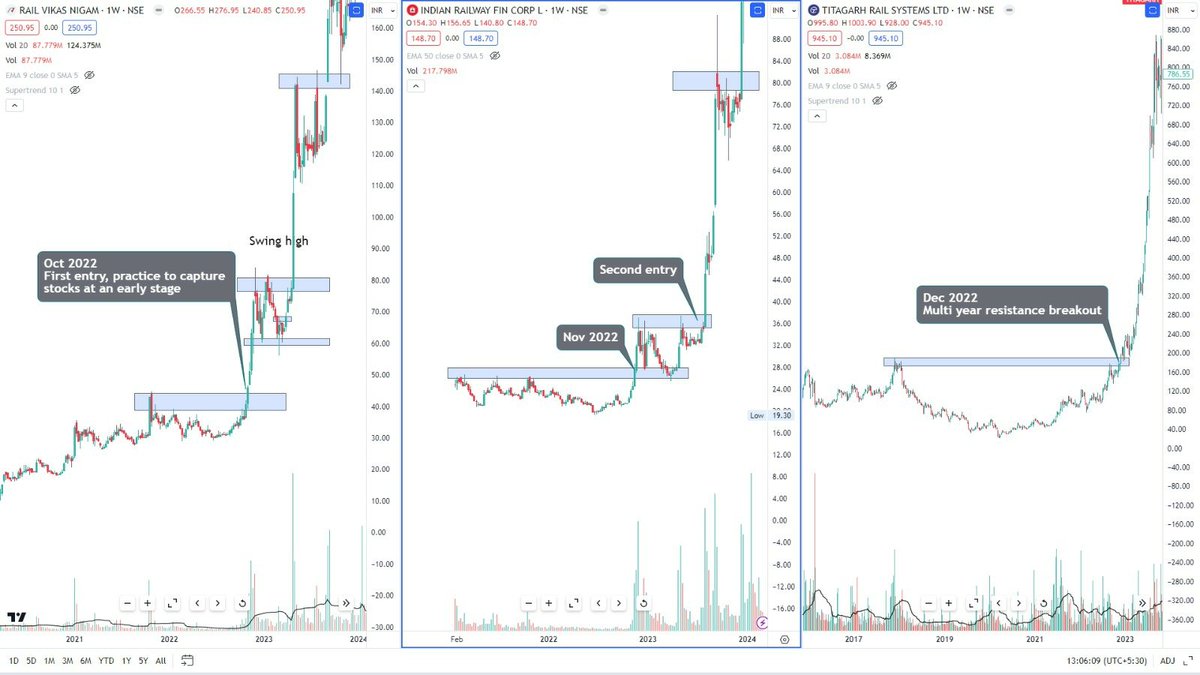
If you happen to miss a favorable entry for one stock within that theme, you have the opportunity to select another from the same sector. In every sector, you will find at least three to four really good stocks. Remember that not every time do the same stocks outperform. (17/21)
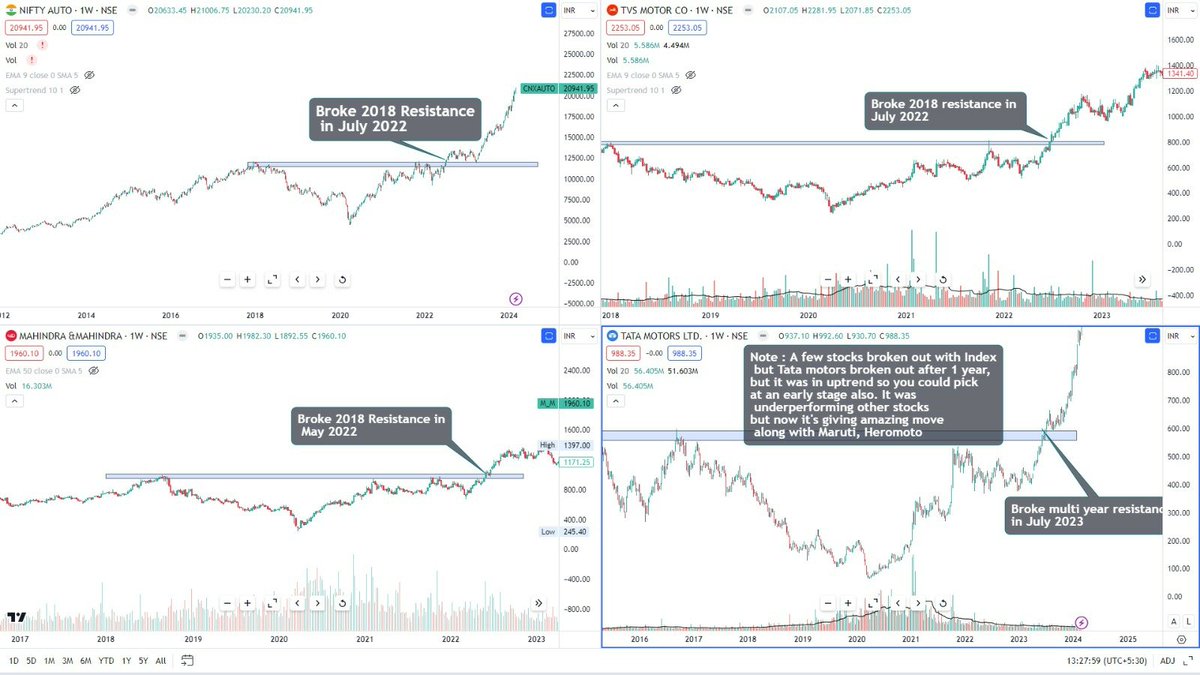
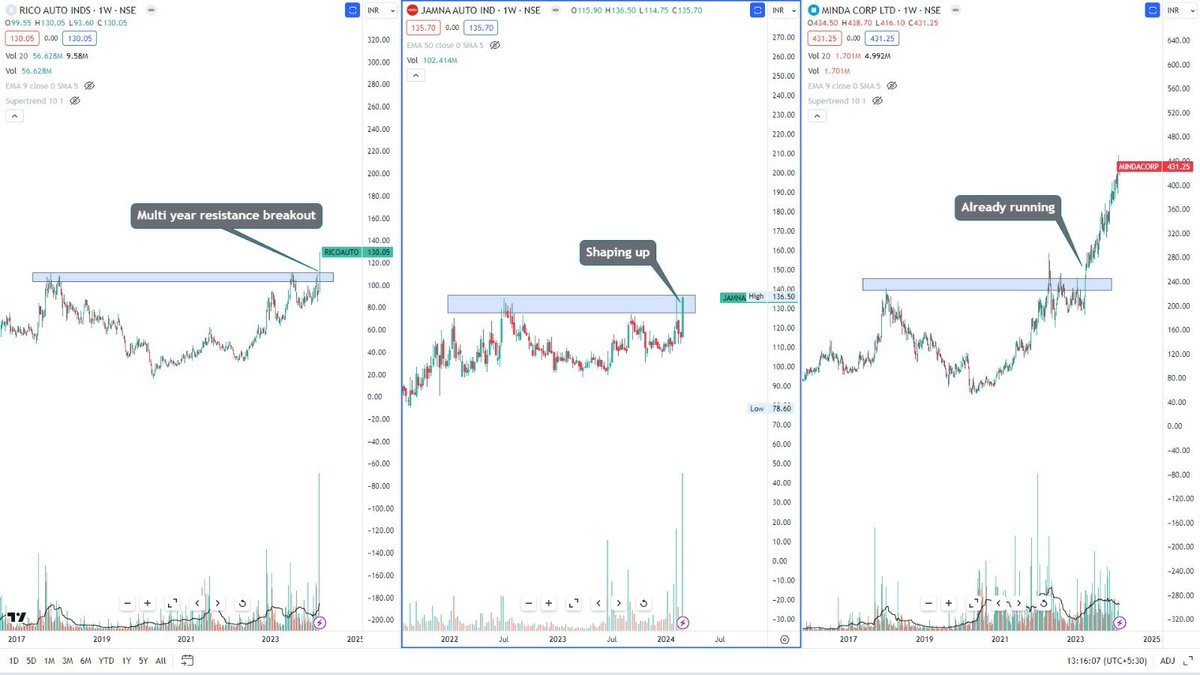
;it varies. A stock that did not perform well in the last rally may become a strong performer in the next. If you're new to market, you may find it initially challenging and it might require effort. However, as you gain experience, you'll begin to understand the behaviour.. (18/
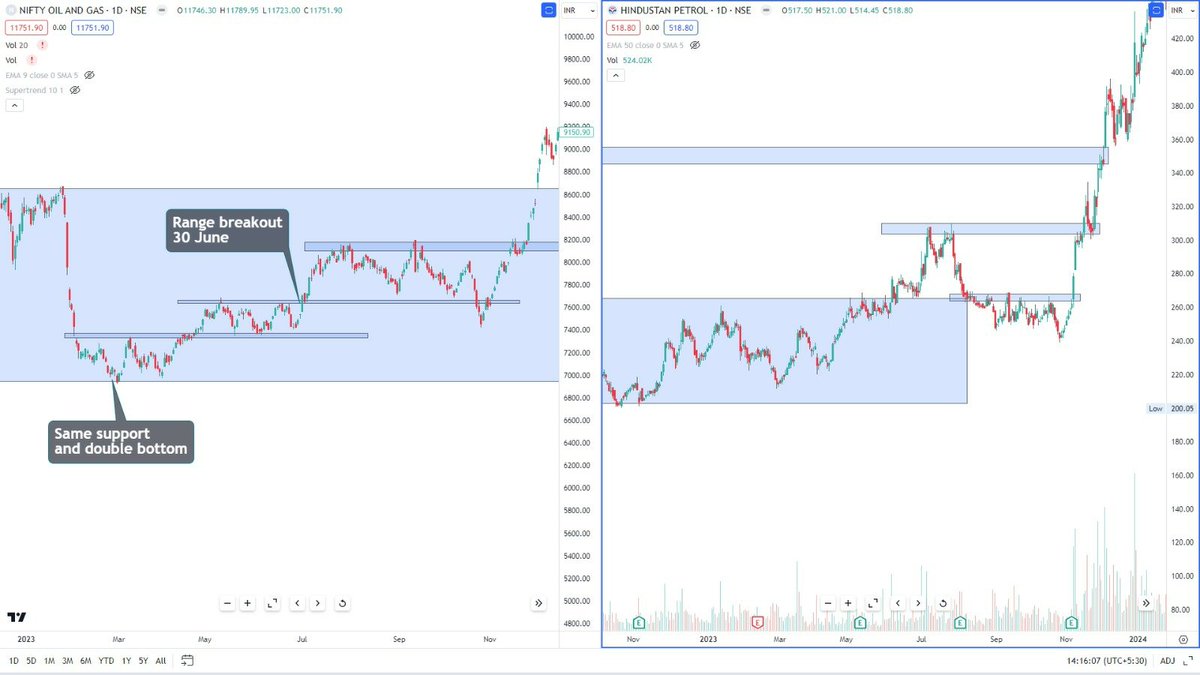
of stocks, identifying which ones move slowly, which move quickly and which ones are the better performers in their sector. You'll also learn to spot which stocks can reliably offer a 10-20% return. Indeed, experience is the best and expensive teacher in the market. (19/21)
In an extremely bullish market, when all indices are ATH, everything might seem effortless. However, when a correction occurs, it's essential to recognize when to stay on the sidelines, exit trades at the appropriate moment and patiently wait for the next opportunities. (20/21)
After a correction, when market begins to recover, up move is typically slow at first and only gains momentum after breaking the ATH. When not to trade, when to exit and how to trail will be covered in the next part. If this thread was helpful please like and repost. (21/21)
Loading suggestions...