

The Greeks and Romans were not gay.
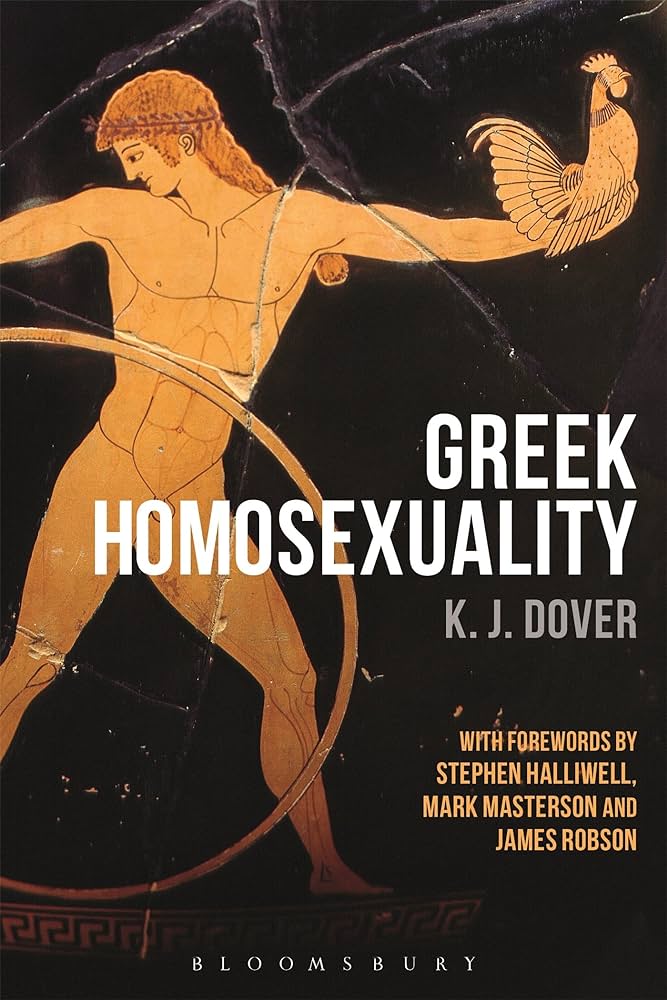
1/ The grossly misguided notion that Classical Greece, along with the broader Classical world, was some kind of homosexual utopia, burst into cultural consciousness in the 1970s, chiefly propelled by K.J. Dover's poorly researched work, "Greek Homosexuality."
The book, along with the preposterous notion that homosexuality was pervasive throughout the Greco-Roman world, has been discredited by discerning scholars still capable of critical thinking and objectivity. They have extensively critiqued this particular book for its baseless assertions about the prevalence of homosexuality in ancient Greece, purportedly supported by an analysis of 80,000 shards of ancient pottery. Out of these, only 30 pieces — a mere 0.0375% — display imagery that could be interpreted as homosexual in nature.
Furthermore, the majority of these "homosexual" pieces feature satyrs, creatures known for their hedonistic behavior, which renders such depictions contextually appropriate; thus, they were metaphorical or religious rather than literal in nature.
The Classical Greeks did not have a word for homosexuality as we do today because the modern concept of "homosexual love" did not exist until the modern era.
They did, however, use the word "kinaidos" to describe homosexual acts or cross-dressing.
Etymologically, "kinaidos" (κίναιδος) directly translates to "effeminate," but was also used to denote "one who causes shame" or a "catamite," and was associated with invoking the disfavor of Aidos, the goddess of shame, modesty, and respect. It was also an intentionally offensive and religiously impious word for an "effeminate love" that upset the gods and the natural order. The Roman Latin equivalent was "cinaedus."
1/ The grossly misguided notion that Classical Greece, along with the broader Classical world, was some kind of homosexual utopia, burst into cultural consciousness in the 1970s, chiefly propelled by K.J. Dover's poorly researched work, "Greek Homosexuality."
The book, along with the preposterous notion that homosexuality was pervasive throughout the Greco-Roman world, has been discredited by discerning scholars still capable of critical thinking and objectivity. They have extensively critiqued this particular book for its baseless assertions about the prevalence of homosexuality in ancient Greece, purportedly supported by an analysis of 80,000 shards of ancient pottery. Out of these, only 30 pieces — a mere 0.0375% — display imagery that could be interpreted as homosexual in nature.
Furthermore, the majority of these "homosexual" pieces feature satyrs, creatures known for their hedonistic behavior, which renders such depictions contextually appropriate; thus, they were metaphorical or religious rather than literal in nature.
The Classical Greeks did not have a word for homosexuality as we do today because the modern concept of "homosexual love" did not exist until the modern era.
They did, however, use the word "kinaidos" to describe homosexual acts or cross-dressing.
Etymologically, "kinaidos" (κίναιδος) directly translates to "effeminate," but was also used to denote "one who causes shame" or a "catamite," and was associated with invoking the disfavor of Aidos, the goddess of shame, modesty, and respect. It was also an intentionally offensive and religiously impious word for an "effeminate love" that upset the gods and the natural order. The Roman Latin equivalent was "cinaedus."
2/ In fourth-century BC Athens, the orator Demosthenes was labeled a kinaidos in the courtroom by his opponent Aeschines in an attempt to besmirch his masculinity and accuse him of shameless conduct. Aeschines also ascribed to Demosthenes the nickname "Batalos" ("arse"), attributing it to his "unmanliness and kinaidia," and frequently derided his "unmanly and womanish temper," even going so far as to criticize his effeminate style of dress.
In Plato's "Gorgias," the "life of the kinaidoi" is presented as the quintessential example of hedonistic and degenerate living.
Roman writers provide more details about what they considered wretched about the cinaedus' behavior: Catullus, Martial, and Juvenal all portray cinaedi as desiring sexual penetration by other men and often displaying extreme effeminacy.
Of course, many modern "academics" will bring up the much-maligned ancient institution of pederasty, but current conceptualizations of this age-old practice reflect contemporary perversions rather than historical realities. Contrary to popular modern belief, pederasty in Classical Greece did not entail sexual relations. It was an educational relationship where young men were mentored by older citizens.
Historians like Herodotus, Xenophon, and Plato, among others, wrote disdainfully of instances where pederasty was exploited by the elite for homosexual relations, which was considered akin to paedophilia. In his "Symposium," Plato mentioned that some parents would hire bodyguards to prevent such abuses.
For instance, Xenophon, a contemporary of Plato and fellow student of Socrates, condemned pederastic relationships that were tainted by homosexual activities as unacceptable and an "unnatural lust," a view shared by Plato, who believed such relationships were shameful.
The ancient Roman historian Claudius Aelianus noted that lewdness and sexual activity between men were not accepted in Sparta, as they were thought to bring shame. The penalties for such acts were severe, including death or exile.
Of course, this is not to say that homosexuality or pedophilia did not exist, but rather that they were not as widespread or deemed acceptable as current scholarly discourse would have us believe. Projecting contemporary moralities and worldviews onto the past, what historians call historical anachronism, says more about the degeneracy of the present rather than the reality of the past.
In Plato's "Gorgias," the "life of the kinaidoi" is presented as the quintessential example of hedonistic and degenerate living.
Roman writers provide more details about what they considered wretched about the cinaedus' behavior: Catullus, Martial, and Juvenal all portray cinaedi as desiring sexual penetration by other men and often displaying extreme effeminacy.
Of course, many modern "academics" will bring up the much-maligned ancient institution of pederasty, but current conceptualizations of this age-old practice reflect contemporary perversions rather than historical realities. Contrary to popular modern belief, pederasty in Classical Greece did not entail sexual relations. It was an educational relationship where young men were mentored by older citizens.
Historians like Herodotus, Xenophon, and Plato, among others, wrote disdainfully of instances where pederasty was exploited by the elite for homosexual relations, which was considered akin to paedophilia. In his "Symposium," Plato mentioned that some parents would hire bodyguards to prevent such abuses.
For instance, Xenophon, a contemporary of Plato and fellow student of Socrates, condemned pederastic relationships that were tainted by homosexual activities as unacceptable and an "unnatural lust," a view shared by Plato, who believed such relationships were shameful.
The ancient Roman historian Claudius Aelianus noted that lewdness and sexual activity between men were not accepted in Sparta, as they were thought to bring shame. The penalties for such acts were severe, including death or exile.
Of course, this is not to say that homosexuality or pedophilia did not exist, but rather that they were not as widespread or deemed acceptable as current scholarly discourse would have us believe. Projecting contemporary moralities and worldviews onto the past, what historians call historical anachronism, says more about the degeneracy of the present rather than the reality of the past.

@Empty_America:
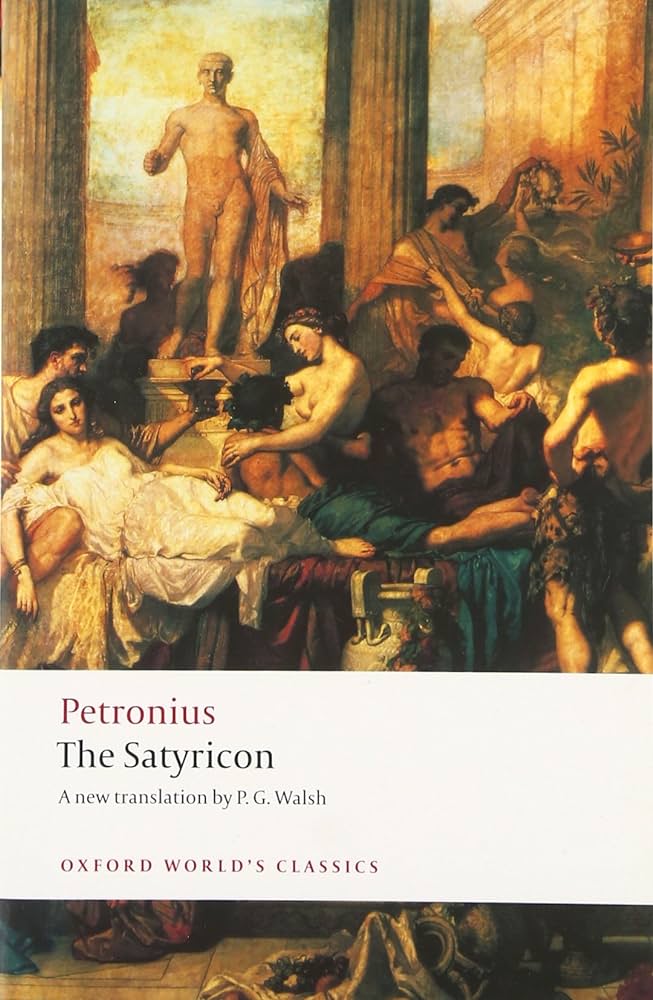
Good observation on Petronius's "Satyricon."
Petronius skillfully blends the cynical and parodic elements of Menippean satire with the idealizing and sentimental tropes of Greek romance, creating a complex narrative that examines the moral pitfalls associated with excessive wealth and leisure, and the lack of ethical, religious, and traditional constraints.
He offers a sharp critique of a decaying, morally bankrupt aristocracy being supplanted by a new immoral plutocracy. The vulgar and in your face homosexuality is meant to reflect this degeneration.
Moreover, the "Satyricon" details the nature of the emerging immorality and decadence as the Romans transitioned from Republic to Empire under the Julio-Claudians.
It's also been suggested that the "Satyricon" is a subtle attack on Nero and his alleged degeneracy.
Good observation on Petronius's "Satyricon."
Petronius skillfully blends the cynical and parodic elements of Menippean satire with the idealizing and sentimental tropes of Greek romance, creating a complex narrative that examines the moral pitfalls associated with excessive wealth and leisure, and the lack of ethical, religious, and traditional constraints.
He offers a sharp critique of a decaying, morally bankrupt aristocracy being supplanted by a new immoral plutocracy. The vulgar and in your face homosexuality is meant to reflect this degeneration.
Moreover, the "Satyricon" details the nature of the emerging immorality and decadence as the Romans transitioned from Republic to Empire under the Julio-Claudians.
It's also been suggested that the "Satyricon" is a subtle attack on Nero and his alleged degeneracy.
On the Theban Sacred Band and its alleged homosexuality:
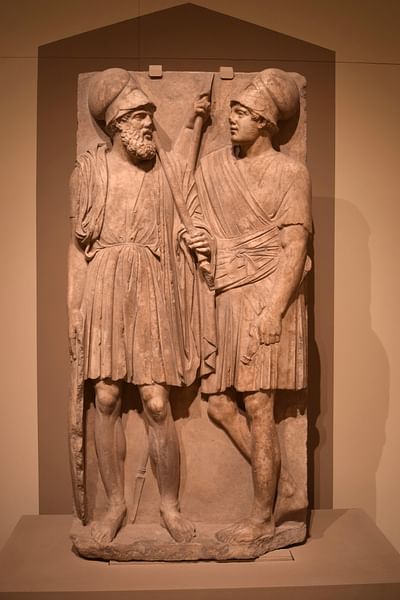
The Sacred Band was allegedly an elite military unit organized by the polis of Thebes (the last major power of Classical Greece; see the "Theban Hegemony" after Sparta's defeat at the Battle of Leuctra in 371 BC).
Its predominance began with its crucial role in the Battle of Leuctra and the subsequent defeat of Spartan hegemony in ancient Greece. Later, it was annihilated by Philip II of Macedon at the Battle of Chaeronea in 338 BC, during the Macedonian conquest of Greece.
Thanks almost exclusively to a couple of off-the-cuff comments by Plutarch, who writes, "Tribesmen or clansmen do not feel any great concern for their kinfolk in time of danger, but a band which is united by the ties of love is truly indissoluble and unbreakable, since both lovers and the beloved are ashamed to be disgraced in the presence of each other, and each stands his ground at a moment of danger to protect one another," some nondescript comments by both Plato and Xenophon, both of whom never mention the so-called Sacred Band, and some lazy, hazy, and speculative guesswork by Dover in his aforementioned book, "Greek Homosexuality," the Sacred Band is now popularly conceptualized as having consisted of 150 pairs of male lovers.
Plutarch is considered a moralizer—a storyteller more focused on extracting meaning from narratives than on strictly cataloging historical events. Essentially, he was inclined to adjust facts slightly to align with the lesson or viewpoint he was presenting. His account of the Sacred Band is a part of his renowned work, "Parallel Lives," a series of biographies of famous Greek and Roman figures, which includes a detailed biography of Alexander the Great. Within this context, Alexander is portrayed as the valiant leader who leads the Macedonians to victory against the Sacred Band. Given Plutarch's tendency to enhance Alexander's character throughout his work, it raises questions about the accuracy of his portrayal of the Sacred Band, suggesting it might be more hyperbolic than factual.
There is also some interesting archaeological evidence regarding the Sacred Band of Thebes. In 1818, a British architect stumbled upon the buried head of the Lion of Chaeronea, a massive statue allegedly commissioned to honor the Sacred Band after their defeat at the Battle of Chaeronea.
To add to the intrigue, excavators discovered the remains of 254 men buried within the enclosure surrounding the lion monument. Ancient weapons, pottery, coins, and other artifacts were also found nearby, as well as a tumulus that may have been used to cremate the dead.
For some scholars, this finding is definitive proof that the story of the Sacred Band is based on real events. However, many historians dispute the identity of the skeletons, theorizing that they may actually be Macedonians, NOT Thebans. It's also worth noting that even if the skeletons are indeed the remains of the Sacred Band, it only proves they existed and fought at Chaeronea, not that they were homosexual lovers.
Contemporary historians, such as James Romm, have extensively explored the theme of homosexuality within the Sacred Band, dedicating an entire book to the subject. However, it's important to note that there is scant evidence to conclusively prove the Band's members were in homosexual relationships, or to even firmly establish the unit existed at all.
The Sacred Band was allegedly an elite military unit organized by the polis of Thebes (the last major power of Classical Greece; see the "Theban Hegemony" after Sparta's defeat at the Battle of Leuctra in 371 BC).
Its predominance began with its crucial role in the Battle of Leuctra and the subsequent defeat of Spartan hegemony in ancient Greece. Later, it was annihilated by Philip II of Macedon at the Battle of Chaeronea in 338 BC, during the Macedonian conquest of Greece.
Thanks almost exclusively to a couple of off-the-cuff comments by Plutarch, who writes, "Tribesmen or clansmen do not feel any great concern for their kinfolk in time of danger, but a band which is united by the ties of love is truly indissoluble and unbreakable, since both lovers and the beloved are ashamed to be disgraced in the presence of each other, and each stands his ground at a moment of danger to protect one another," some nondescript comments by both Plato and Xenophon, both of whom never mention the so-called Sacred Band, and some lazy, hazy, and speculative guesswork by Dover in his aforementioned book, "Greek Homosexuality," the Sacred Band is now popularly conceptualized as having consisted of 150 pairs of male lovers.
Plutarch is considered a moralizer—a storyteller more focused on extracting meaning from narratives than on strictly cataloging historical events. Essentially, he was inclined to adjust facts slightly to align with the lesson or viewpoint he was presenting. His account of the Sacred Band is a part of his renowned work, "Parallel Lives," a series of biographies of famous Greek and Roman figures, which includes a detailed biography of Alexander the Great. Within this context, Alexander is portrayed as the valiant leader who leads the Macedonians to victory against the Sacred Band. Given Plutarch's tendency to enhance Alexander's character throughout his work, it raises questions about the accuracy of his portrayal of the Sacred Band, suggesting it might be more hyperbolic than factual.
There is also some interesting archaeological evidence regarding the Sacred Band of Thebes. In 1818, a British architect stumbled upon the buried head of the Lion of Chaeronea, a massive statue allegedly commissioned to honor the Sacred Band after their defeat at the Battle of Chaeronea.
To add to the intrigue, excavators discovered the remains of 254 men buried within the enclosure surrounding the lion monument. Ancient weapons, pottery, coins, and other artifacts were also found nearby, as well as a tumulus that may have been used to cremate the dead.
For some scholars, this finding is definitive proof that the story of the Sacred Band is based on real events. However, many historians dispute the identity of the skeletons, theorizing that they may actually be Macedonians, NOT Thebans. It's also worth noting that even if the skeletons are indeed the remains of the Sacred Band, it only proves they existed and fought at Chaeronea, not that they were homosexual lovers.
Contemporary historians, such as James Romm, have extensively explored the theme of homosexuality within the Sacred Band, dedicating an entire book to the subject. However, it's important to note that there is scant evidence to conclusively prove the Band's members were in homosexual relationships, or to even firmly establish the unit existed at all.
Loading suggestions...