

"He made us all strip naked and whipped us till we bled. Major Tahir Malik would personally supervise the whippings, abuse us, laugh at us, and punch us," said Mohammad Iqbal, Okara, October 23, 2003
The Okara Land Dispute & the Human Rights Abuses by Pakistan Army
A thread 🧵
The Okara Land Dispute & the Human Rights Abuses by Pakistan Army
A thread 🧵

Approximately 17,000 acres of state-owned agricultural land, the military farms in Punjab's Okara District, became the reason for the dispute b/w the Pakistan Army & the farmer community.
1/n
1/n

The Okara farmland had been leased to the army by the British colonial govt for 20 years under a contract signed in 1913. Peasants from East Punjab (now in India) were relocated to what are now Okara, Sahiwal, Khanewal, & Sargodha districts to cultivate the military farms
2/n
2/n
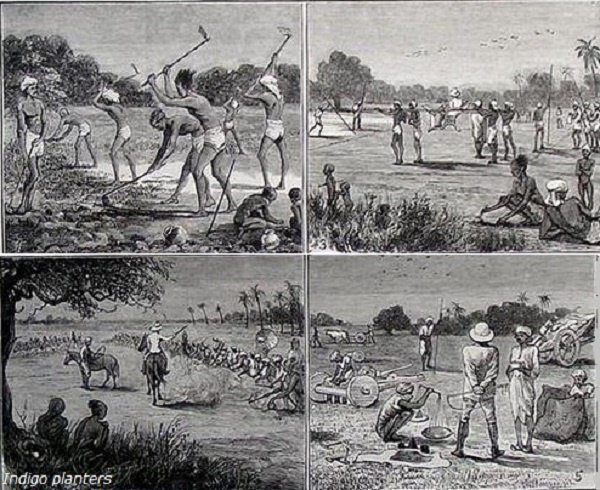
The 1913 contract, which was set to expire in 1933, was never renewed. Yet, the army continued to control the land, and after partition, control was shifted to the Pakistani army.
3/n
3/n
The tenant-landlord dynamics of the lands were defined by the Punjab Tenancy Act of 1887. It distinguishes between 'occupancy tenants' with legal rights to occupy the lands and 'simple tenants' who are under contract & can be evicted from land (continued)
4/n
4/n
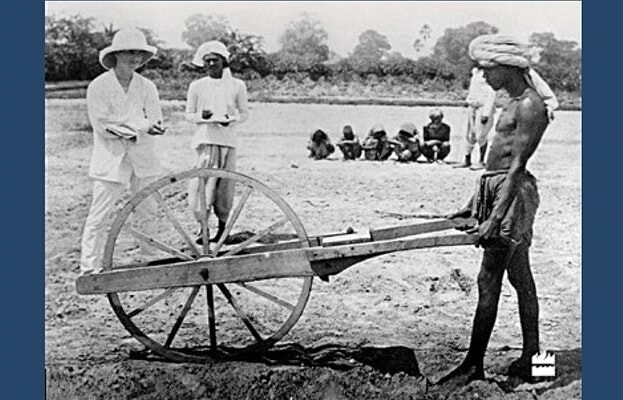
when contract with the landlord expires or they are unable to pay rent, which in this case is the produce
This is crucial to understand, as the ability of the farmers to retain their rights as occupancy tenants under the Act was central to the dispute b/w the army & farmers
5/n
This is crucial to understand, as the ability of the farmers to retain their rights as occupancy tenants under the Act was central to the dispute b/w the army & farmers
5/n
Tenant farmers have been giving harvest shares to the state since they settled in the area a century ago under the "battai" system, where a landlord cannot collect more than 43% of the harvest.
6/n
6/n

Though the farmers reported that under the “battai” system, the Pakistani military routinely carried out divisions in the absence of the farmers and regularly took crop shares as high as 60%.
7/n
7/n
The beginning of the real dispute:
In 2000, Pakistan's defense ministry unilaterally imposed a cash payment contract system for the tenants occupying the 17,000-acre Okara Military Farms. The new contract required cash payments of rent at fixed intervals throughout the year
8/n
In 2000, Pakistan's defense ministry unilaterally imposed a cash payment contract system for the tenants occupying the 17,000-acre Okara Military Farms. The new contract required cash payments of rent at fixed intervals throughout the year
8/n
Farmers resisted, aware that under the existing tenancy laws, as occupancy tenants, they're shielded from eviction. But as contract workers, they can be evicted from the land when contracts end or if they are unable to pay the cash rent (continued)
9/n
9/n

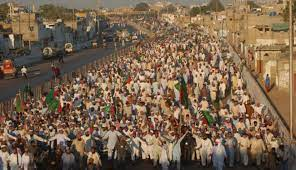
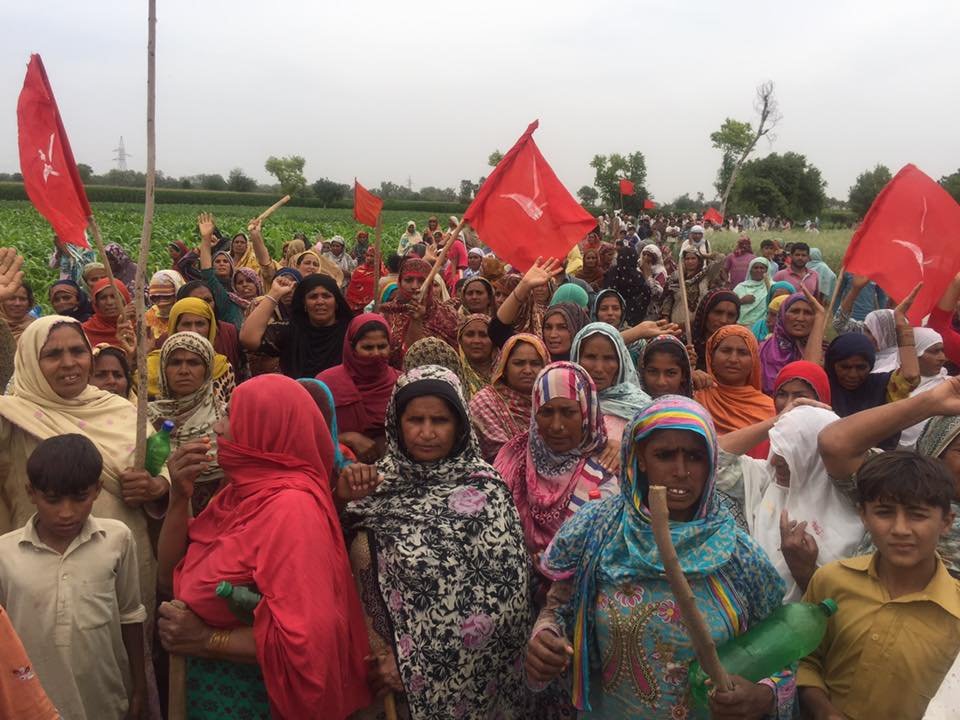
...as many farmers believed that they'd be unable to pay cash instead of produce as rent
Ahmed Rafay Alam, a lawyer at the Lahore High Court and Punjab Tenancy Law expert, puts it like this:
10/n
Ahmed Rafay Alam, a lawyer at the Lahore High Court and Punjab Tenancy Law expert, puts it like this:
10/n
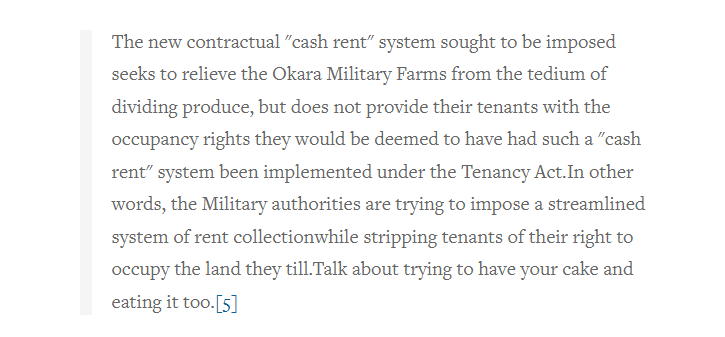
The Pakistani military lacks legal title to Okara Military Farms. While holding long-term leases & de-facto control, formal land ownership remains with the Punjab's govt, as explained in the letter below addressing the military's attempts to transfer the land to them
11/n
11/n
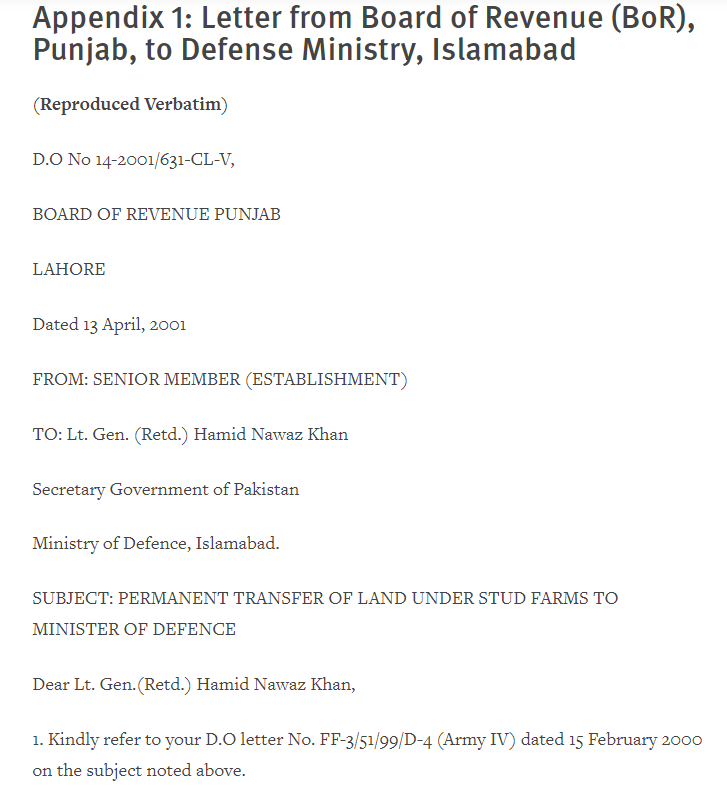

Also, when this was brought to the NHRC officially in 2018, Brigadier Rana M. Fahim, Okara Military Farms commandant, acknowledged that the land belongs to the Punjab govt. Army only retained control for fodder procurement.
12/n
12/n
As protests against this took on an organized shape, the Association of Punjab Tenant Farmers (Anjuman Mazarain Punjab, or AMP) became the principal representative org of the approximately one million peasant farmers and their families residing in Punjab
13/n
13/n
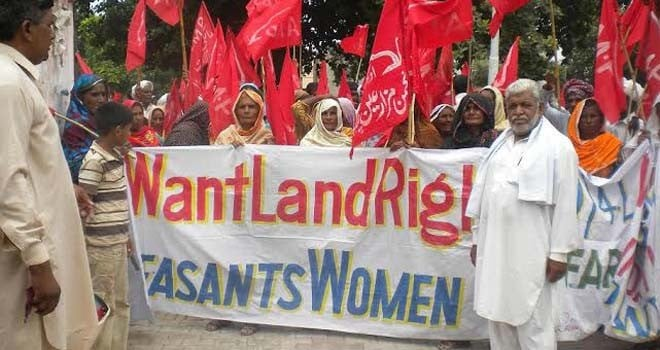
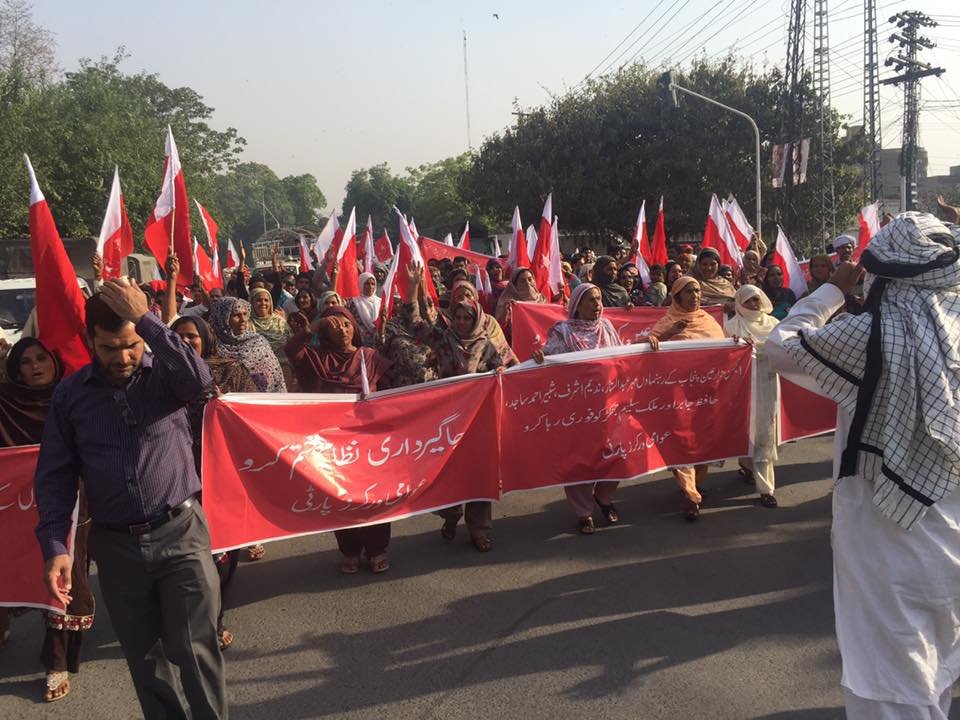
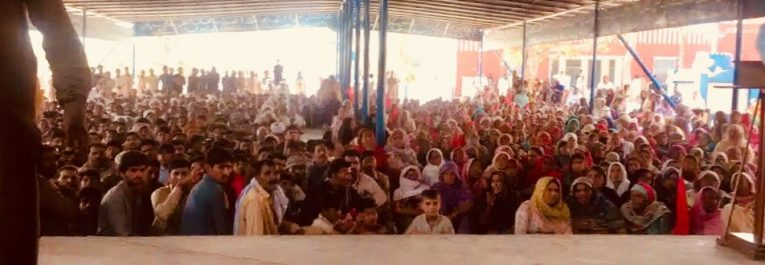

Before I get into the crimes committed by the army, there are two details that I want to address.
In 2000, Musharraf announced that "all state land would be allotted to landless farmers," and he had directed "all four provinces to give ownership rights to..."
14/n
In 2000, Musharraf announced that "all state land would be allotted to landless farmers," and he had directed "all four provinces to give ownership rights to..."
14/n
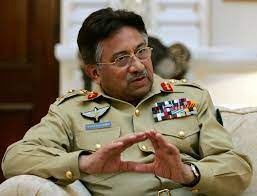
...all such people who had been living on state land for a long time."
After this, AMP's argument was: if the govt was giving state land away, then tenants already working on state land should be the first to receive it.
15/n
After this, AMP's argument was: if the govt was giving state land away, then tenants already working on state land should be the first to receive it.
15/n
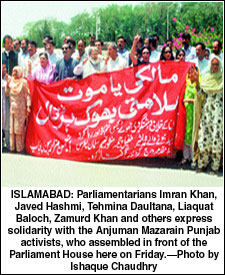
And the AMP consistently asked to meet with representatives of the Punjab govt, saying that they would not sign any agreement with any party that did not own title to the land, i.e., the military.
16/n
16/n

But in turn, a senior provincial govt official threatened the AMP leadership that the Punjab govt would be forced to crack down on the farmers at the behest of the army unless the movement subsided.
17/n
17/n
As the farmers movement & protests didn't stop, a meeting chaired by the Punjab governor, Lt. General (R) Khalid Maqbool, decided to deploy a large contingent of Pakistan Rangers to the affected districts on June 6, 2002, with a police force of 8k to 10k already deployed
18/n
18/n
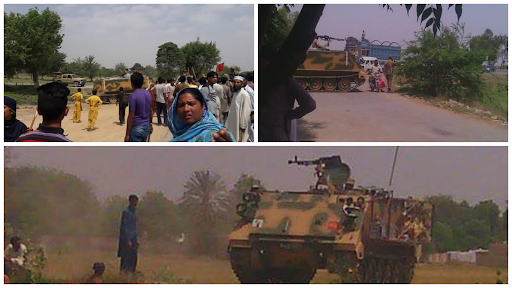
The Rangers besieged 18 villages in Okara district twice: on August 24, 2002, for approx 3 months, & from May 7, 2003, to August 5, 2003. The 1st siege took place following the Rangers' killing of farmer Salman Masih, and the 2nd followed the killing of farmer Mohammad Amir
19/n
19/n
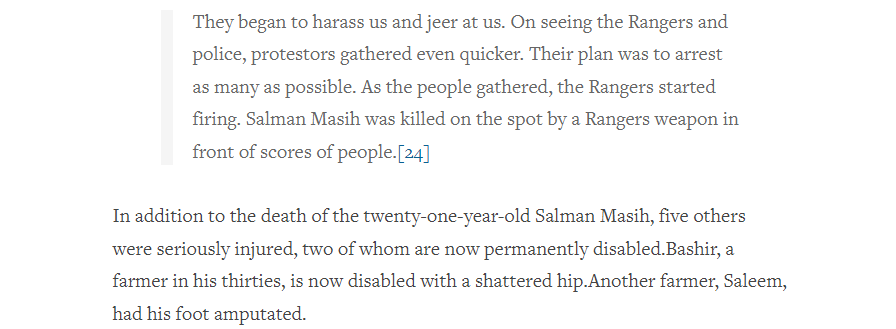
The Rangers didn't just impose curfew but also arrested or harassed residents of villages who were not tenants. Even milk, fruit, vegetable vendors & medical supplies from nearby urban areas were not allowed into the villages.
20/n
20/n
To intimidate and harass the tenant farmers into giving up their demands, security forces used to abduct the relatives of tenants. The Rangers closed the schools and turned them into control centers for operations.
21/n
21/n
During the second siege, the water canals to 2 villages (5/4-L and 4/4-L) were closed for the entire period, resulting in the destruction of the summer crop, the main source of livelihood for the community. Rangers also cut the electricity & telephone lines to the villages
22/n
22/n
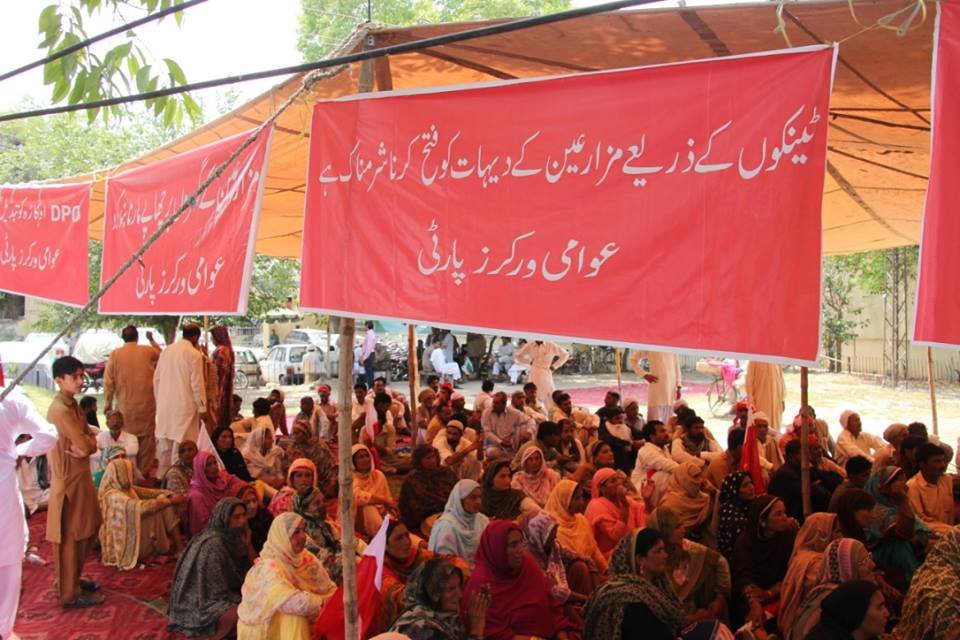
"Its nothing we cannot deal with. These people only understand the language of the stick," said a Rangers officer when interviewed by Human Rights Watch
23/n
23/n
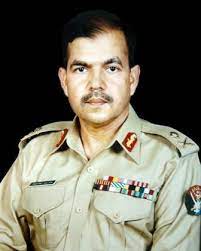
This is what DG ISPR Major-General Shaukat Sultan said about the army's view of the whole dispute: "Nobody has the right to say what the Army can do with 5,000 acres or 17,000 acres."
24/n
24/n

Testimonies of how the police, Rangers and Pakistan Army tortured, beat, kidnapped, and arbitrary arrested tenant farmers and their families, even going to the lengths of forced divorces.
Some of it will be in the tweet’s text, and the rest in the screenshots.
25/n
Some of it will be in the tweet’s text, and the rest in the screenshots.
25/n
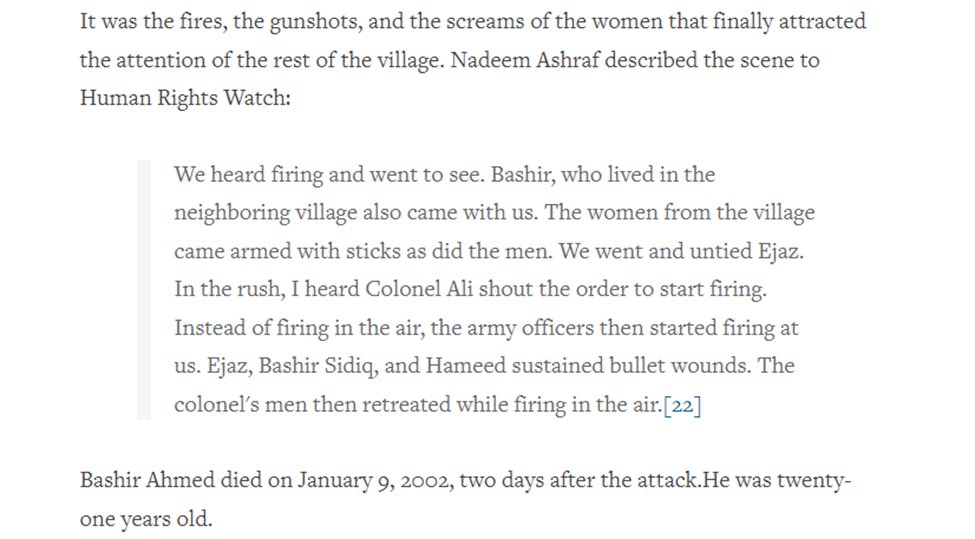
On Jan 7, 2002, Col. M. Ali, commanding officer at Renala Estate Military Farm, led an armed group of serving army officers and private thugs to seize land from elderly farmer M. Ali K. of Village 21/1-RB. 👇
26/n
26/n
The Colonel & his men tied up Kumboh's family & then set the family dairy & the grain depot on fire. When the 3 teenage daughters resisted, Colonel Ali's men beat them. As the villagers gathered, Colonel Ali gave the order to fire, & the army officers then started firing.
27/n
27/n
On May 20, 2002, the Army Welfare Trust (AWT) in Okara district tried to forcibly collect the wheat harvest from Village Dalmain Gunj. AWT officials, including Colonel (R) Iqbal & Colonel (R) Nawaz, opened fire on villagers, injuring 10 & killing M. Tufail Cheema
28/n
28/n

A villager, Bashir Ahmad, was abducted by the Rangers to coerce his father-in-law, M. Yaqub, into signing a contract and depositing contract money.
Read the horrifying details of his torture 👇
29/n
Read the horrifying details of his torture 👇
29/n
Another villager, Pervaiz, was abducted on Feb 4, 2002. He and the other villagers were stripped naked and forced to stand in freezing temperatures. Pervaiz told Human Rights Watch that Major Tahir Malik and Inspector Ashiq Ali whipped them every half hour.
30/n
30/n
These were Pervaiz's words after he was released:
"It was as if we were under the detention of officers of some enemy army. We never thought that one day we would have to face atrocities at the hands of officers of our own army."
31/n
"It was as if we were under the detention of officers of some enemy army. We never thought that one day we would have to face atrocities at the hands of officers of our own army."
31/n
Targeted killings of tenant farmers who were refusing to sign the contract. As the other farmers reported, this was done by the Rangers to intimidate the whole community
32/n
32/n


Another villager, Muhammad Iqbal, who was abducted and tortured for seven days by the Rangers because of his unwillingness to make contract payments, told Human Rights Watch:
33/n
33/n
Between May and August 2003, dozens of children were detained in "torture cells," beaten and whipped, to coerce their farmer parents and relatives into accepting the new tenancy agreements.
34/n
34/n
Adil, a thirteen-year-old schoolboy from Village 4/4-L, told Human Rights Watch how he was kidnapped by Rangers’ personnel on his way to school on the morning of May 9, 2003 👇
35/n
35/n
Adil also provided an eyewitness account of farmers being tortured, coerced, and beaten:
36/n
36/n

In another incident, five boys, ranging from nine to fourteen years old, all from families that were unwilling to sign the new contracts, were kidnapped by Rangers on May 11, 2003.
37/n
37/n
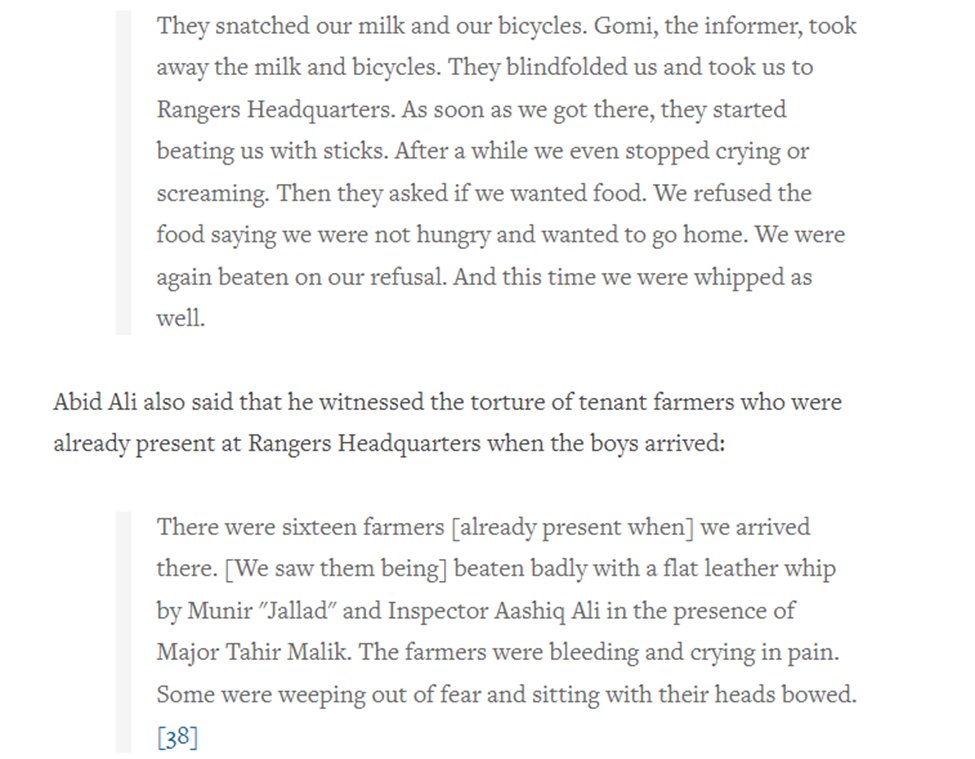
Another fourteen-year-old, Aqeel, was arrested on May 23, 2003. He told Human Rights Watch:
38/n
38/n
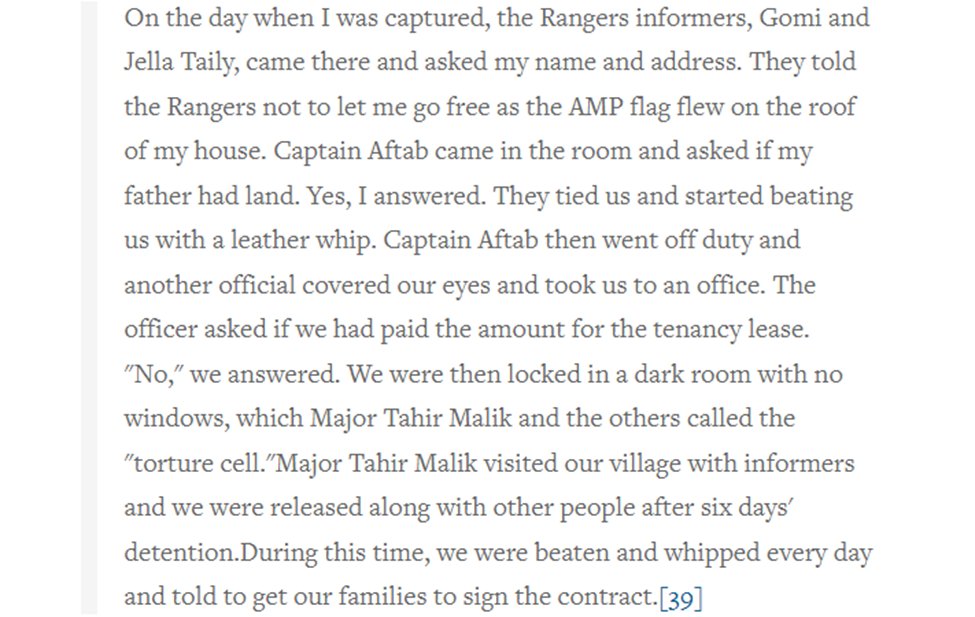
Ashraf, an eleven-year-old boy, and his two cousins were abducted while delivering milk on May 25, 2003 and taken to Rangers HQs.
39/n
39/n
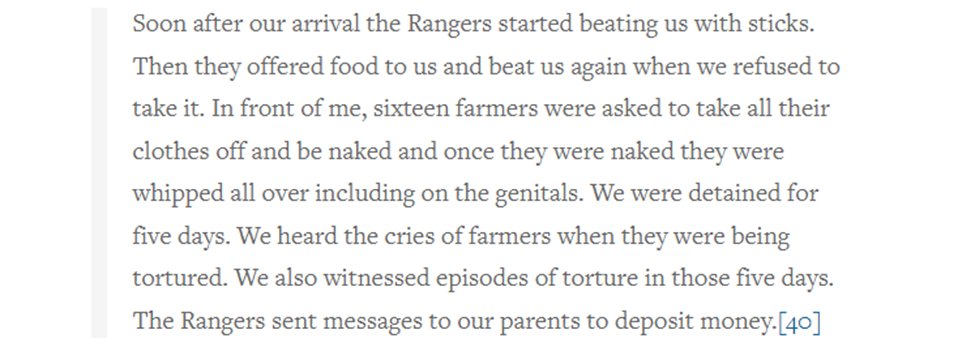
Mohammad Saleem, age twelve, recounted how he and a mentally disabled boy from his village were kidnapped and treated:
40/n
40/n

Now, the most sickening detail: in their attempt to coerce the farmers to sign the contract, the Rangers and army officials forced the divorces of the daughters and sisters of farmers.
41/n
41/n
Basharat Mehmood had been married for less than four months when he was kidnapped and taken to the Rangers Headquarters in Okara district. Once there, Basharat was beaten and whipped until he agreed to sign a document divorcing his wife.
Basharat's testimony 👇
42/n
Basharat's testimony 👇
42/n
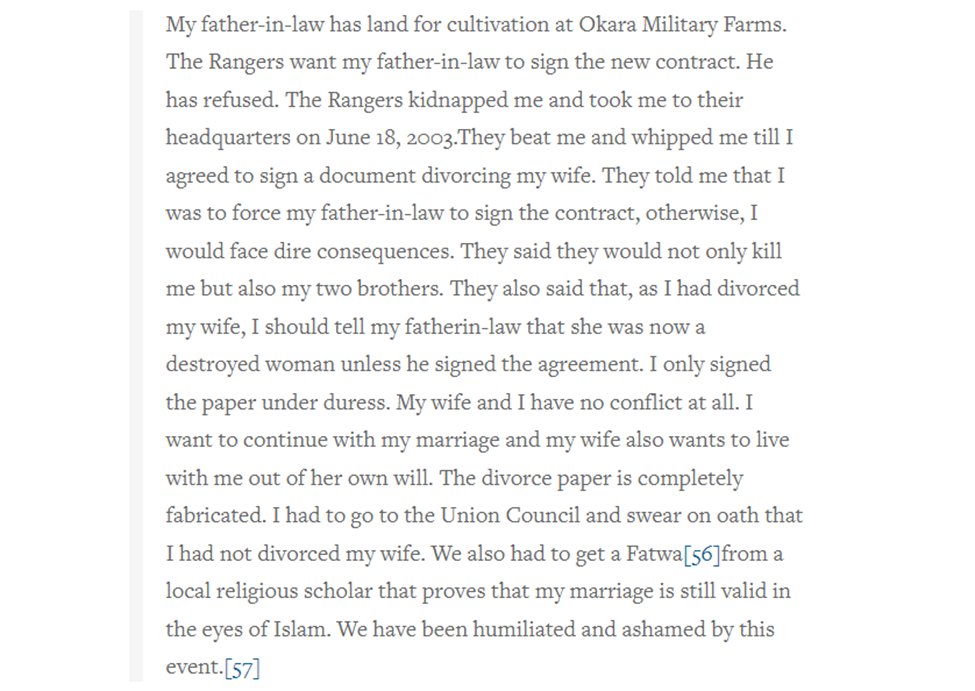
Mohammad S. was kidnapped by Rangers, beaten, and then coerced into making his son's father-in-law, a tenant farmer named Shakir H., sign a contract with the army. When Shakir H. refused, the Rangers told Mohammad S. to instruct his son to divorce Shakir H.'s daughter.
43/n
43/n
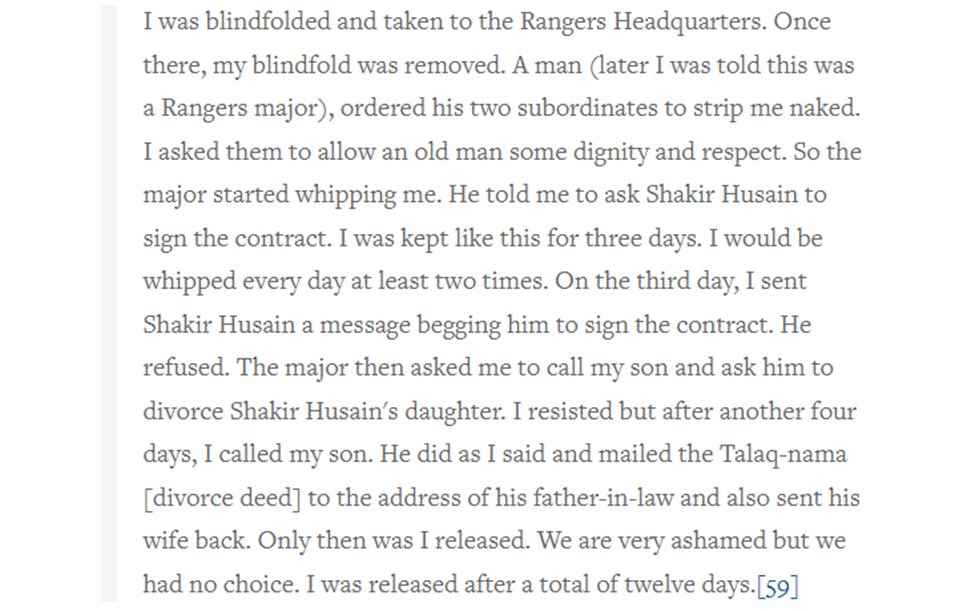
These are just some of the testimonies and eyewitness accounts of what the police, rangers, and Pak Army did to the people of Okara.
44/n
44/n
In 2018, the matter was officially brought before the NHRC. NHRC Chairman, retired Justice Ali Nawaz Chowhan, said:
45/n
45/n

This dispute is just one example of how the Pakistan Army has persecuted its own people and gone to all the lengths of barbarism to protect their interests.
It’s the same stories all over the country that didn't get reported.
46/n
It’s the same stories all over the country that didn't get reported.
46/n
My sources:
hrw.org
fairobserver.com
peoplesdispatch.org
thenewhumanitarian.org
thenews.com.pk
herald.dawn.com
Punjab Tenancy Act: faolex.fao.org
hrw.org
fairobserver.com
peoplesdispatch.org
thenewhumanitarian.org
thenews.com.pk
herald.dawn.com
Punjab Tenancy Act: faolex.fao.org
hrw.org/report/2004/07…
Soiled Hands
In the Pakistani military’s traditional stronghold of Punjab, paramilitary forces working with the a...

fairobserver.com/region/central…
Okara Military Farms: 'Ownership or Death' - Fair Observer
An examination of the Okara movement challenges hegemonic discourses of religious extremism and mili...

peoplesdispatch.org/2019/01/07/aft…
After decades of farmers' struggles, Pakistan army admits it does not own farm land : Peoples Dispatch
The Okara farmland's cultivators have been seeking ownership rights over the land for two decades. T...

thenewhumanitarian.org/news/2004/07/2…
Punjab land dispute has led to deaths and torture - HRW
Pakistani paramilitary forces have killed at least four Pakistani farmers, tortured dozens of others...

thenews.com.pk/tns/detail/556…
Fight on for land | Dialogue | thenews.com.pk
Once the subject of every dewy-eyed Pakistani college student’s fascination, the struggle of Okara’s...
herald.dawn.com/news/1153506
How Okara farmers have become the latest ‘enemies’ of the state
The notion that opposing the military is opposing the state, is after all, an old Pakistani truism.
faolex.fao.org/docs/pdf/pak19…
Loading suggestions...