
Jan van Eyck painted The Arnolfini Portrait 590 years ago, and it has been causing debate ever since.
Does it show a newly married couple? Or something more tragic? Who are the people in the mirror?
This is the story of art's most mysterious portrait...
Does it show a newly married couple? Or something more tragic? Who are the people in the mirror?
This is the story of art's most mysterious portrait...

Jan van Eyck, from the Flemish city of Bruges, was one of the greatest painters of the Northern European Renaissance.
His most famous painting was made in 1434 for an Italian merchant called Giovanni Arnolfini; it depicts him and his wife, whose name we don't know for certain.
His most famous painting was made in 1434 for an Italian merchant called Giovanni Arnolfini; it depicts him and his wife, whose name we don't know for certain.

Little wonder this painting is so famous — it is marvellously detailed and rich in symbolism.
Just look at the mirror, barely ten centimetres across but containing a reverse view of the entire scene, including two otherwise hidden onlookers, possibly even van Eyck himself.
Just look at the mirror, barely ten centimetres across but containing a reverse view of the entire scene, including two otherwise hidden onlookers, possibly even van Eyck himself.
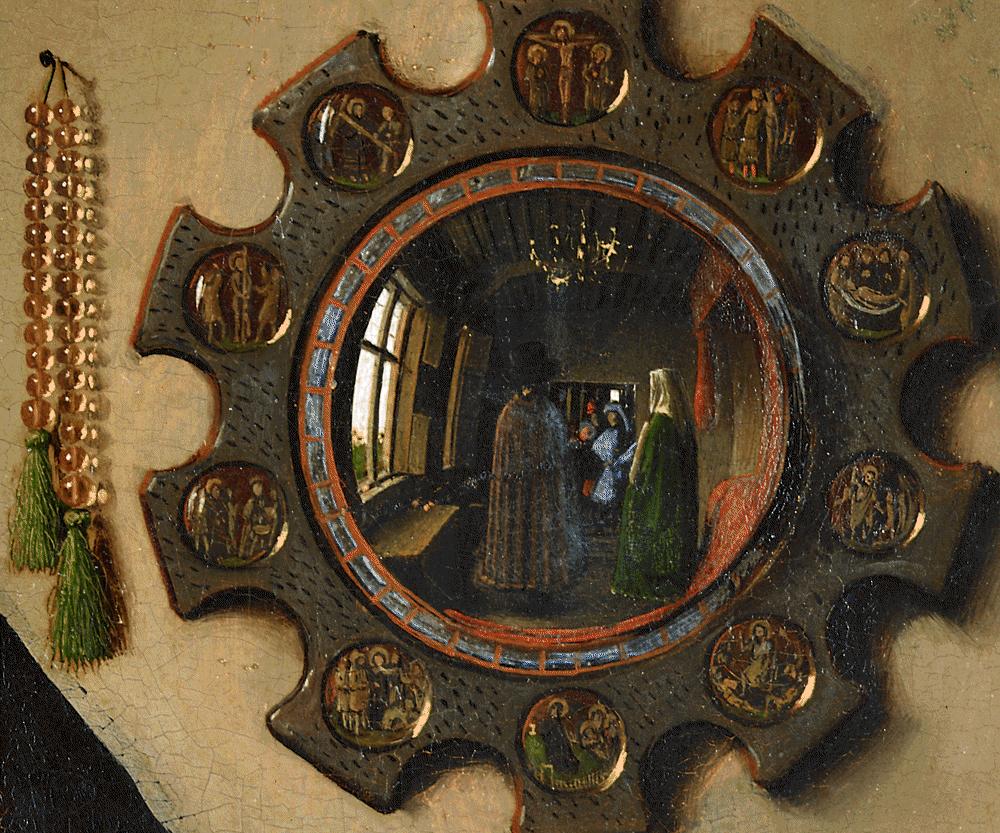
Van Eyck's Arnolfini Portrait has captivated people for decades and several theories about it have emerged.
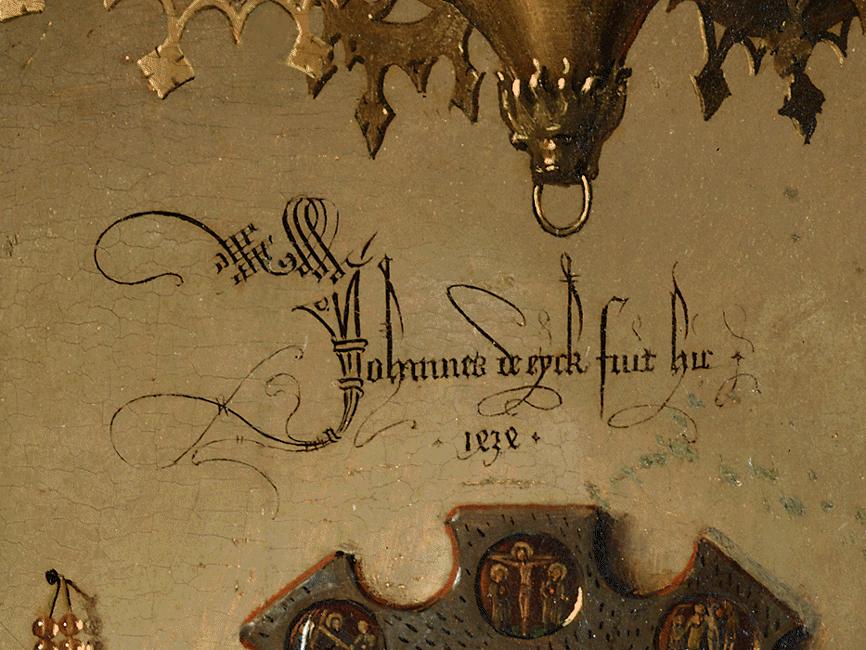
Some say it represents a marriage contract in the form of a painting, hence the mirror showing the legal witnesses and van Eyck's signature on the wall.
Some say it represents a marriage contract in the form of a painting, hence the mirror showing the legal witnesses and van Eyck's signature on the wall.
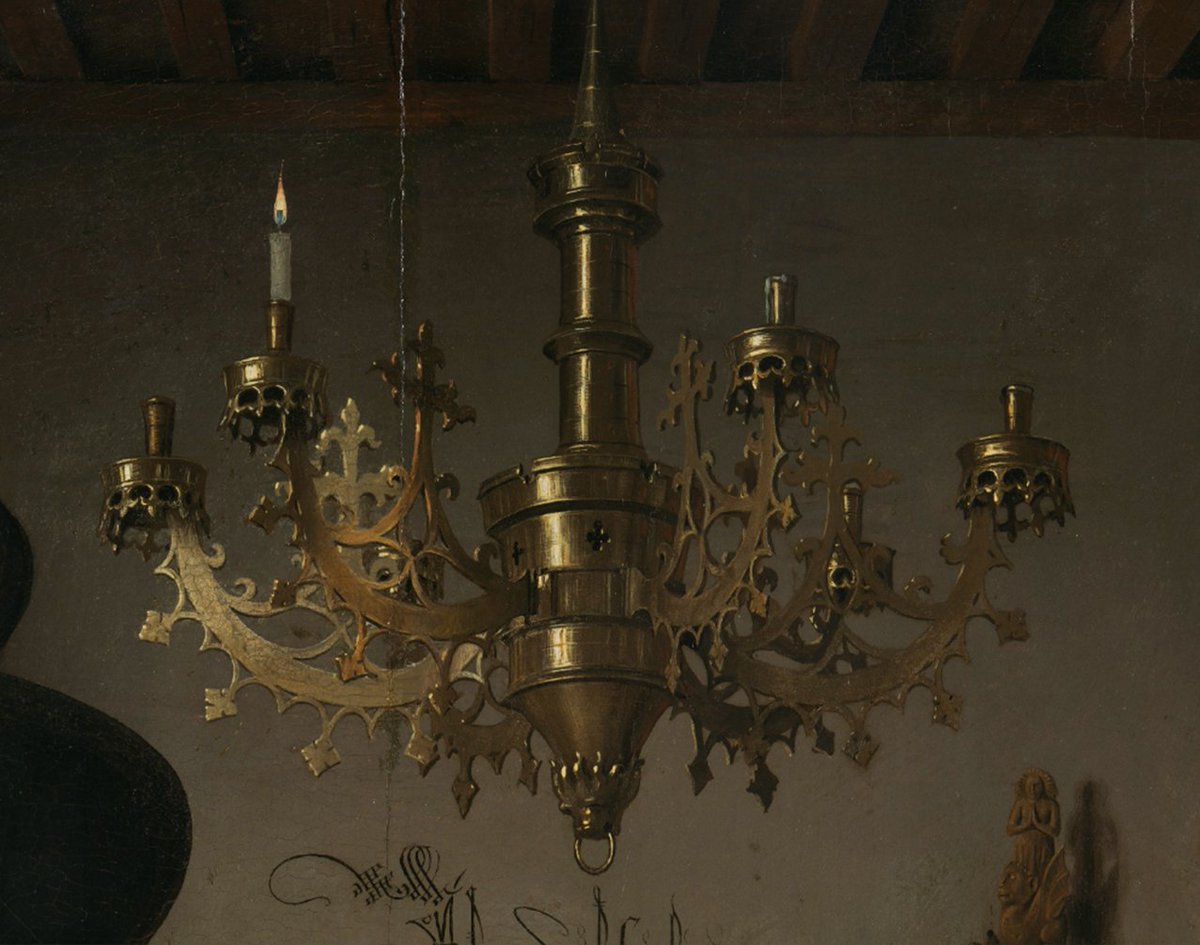
Others propose that Arnolfini's wife died and that this is an unusual, quite tragic memorial painting.
Clues are that Arnolfini is dressed all in black — mourning colours — while she is dressed brightly, along with the fact that there is a lighted candle above him, but not her:
Clues are that Arnolfini is dressed all in black — mourning colours — while she is dressed brightly, along with the fact that there is a lighted candle above him, but not her:
Then again, others have pointed to objects that symbolise a new marriage and indicate hope for childbirth, such as the carving of Saint Margaret, the patron saint of pregnancy, on the bed frame.
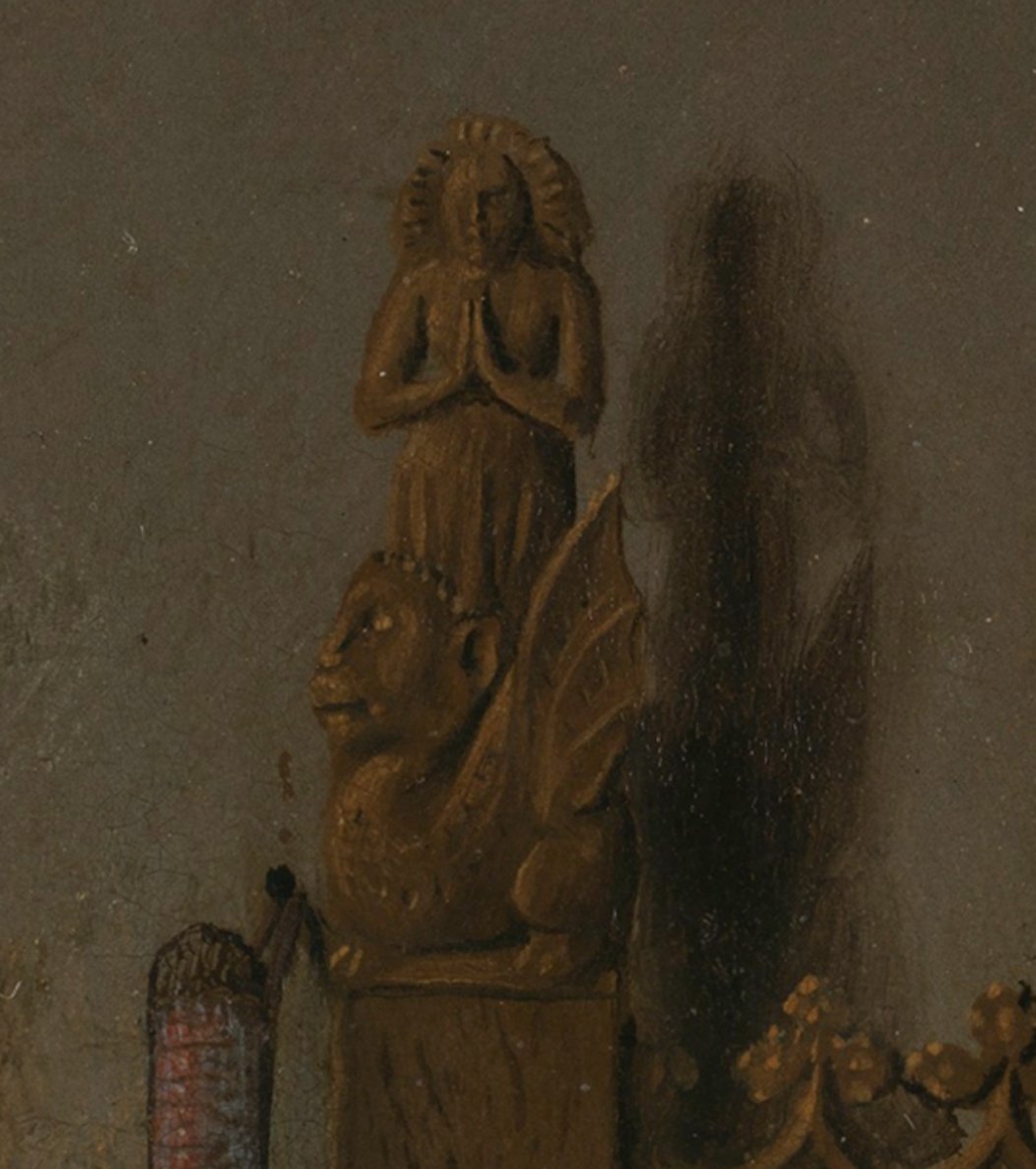
The painting is packed with potential symbolism.
What is the meaning of the dog? Why is it looking at the viewer? And the pairs of shoes on the floor? And the cherry tree visible through the window? And the fruits scattered below it?
It seems unlikely they were random choices.
What is the meaning of the dog? Why is it looking at the viewer? And the pairs of shoes on the floor? And the cherry tree visible through the window? And the fruits scattered below it?
It seems unlikely they were random choices.

Another curious decision by Jan van Eyck was placing one of the monsters carved into the seat directly above the woman's hand.
It makes for awkward composition, cluttering what should be the visual centrepiece — the couple holding hands.
So why is it there?
It makes for awkward composition, cluttering what should be the visual centrepiece — the couple holding hands.
So why is it there?
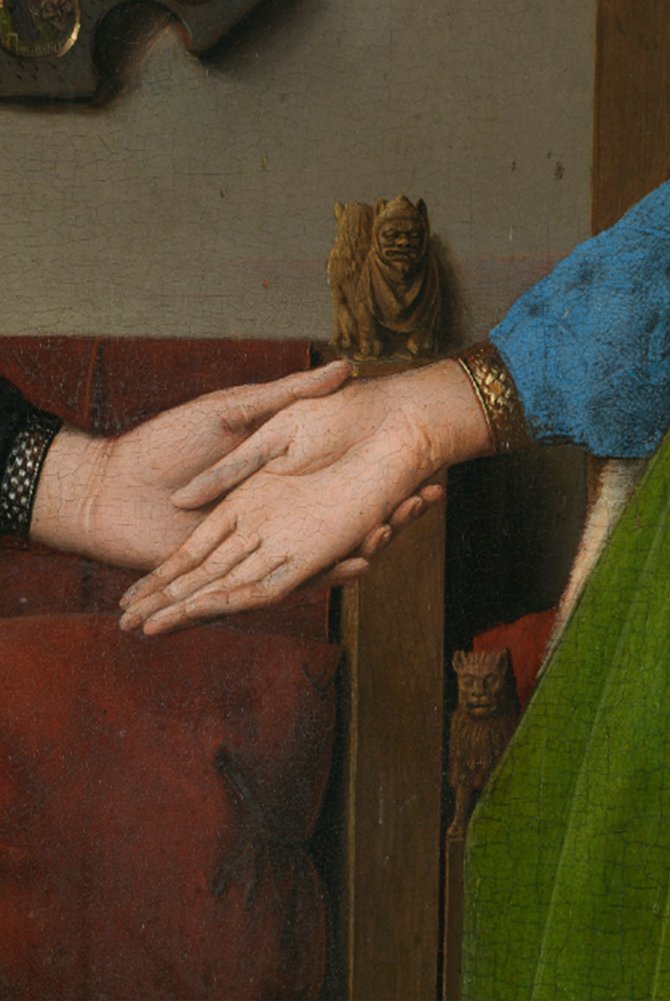
Others prefer not to overcomplicate things; perhaps we are looking too hard for obscure symbolism.
Maybe they are just showing off their wealth: fine clothes, jewellery, a brass chandelier, oranges, a mirror, a finely carved bed, rugs, and suchlike.
15th century social media?
Maybe they are just showing off their wealth: fine clothes, jewellery, a brass chandelier, oranges, a mirror, a finely carved bed, rugs, and suchlike.
15th century social media?

And regardless of what the painting might mean, it's worth stepping back to consider what we are actually looking at — because this was a revolutionary work of art.
Here we see a contemporary, domestic interior, a scene from daily life, a slice of 15th century Bruges!
Here we see a contemporary, domestic interior, a scene from daily life, a slice of 15th century Bruges!
When you think about Renaissance art it is probably the Italian Renaissance that comes to mind.
Somebody like Sandro Botticelli, perhaps, with his fanciful scenes from Classical Mythology.
Somebody like Sandro Botticelli, perhaps, with his fanciful scenes from Classical Mythology.
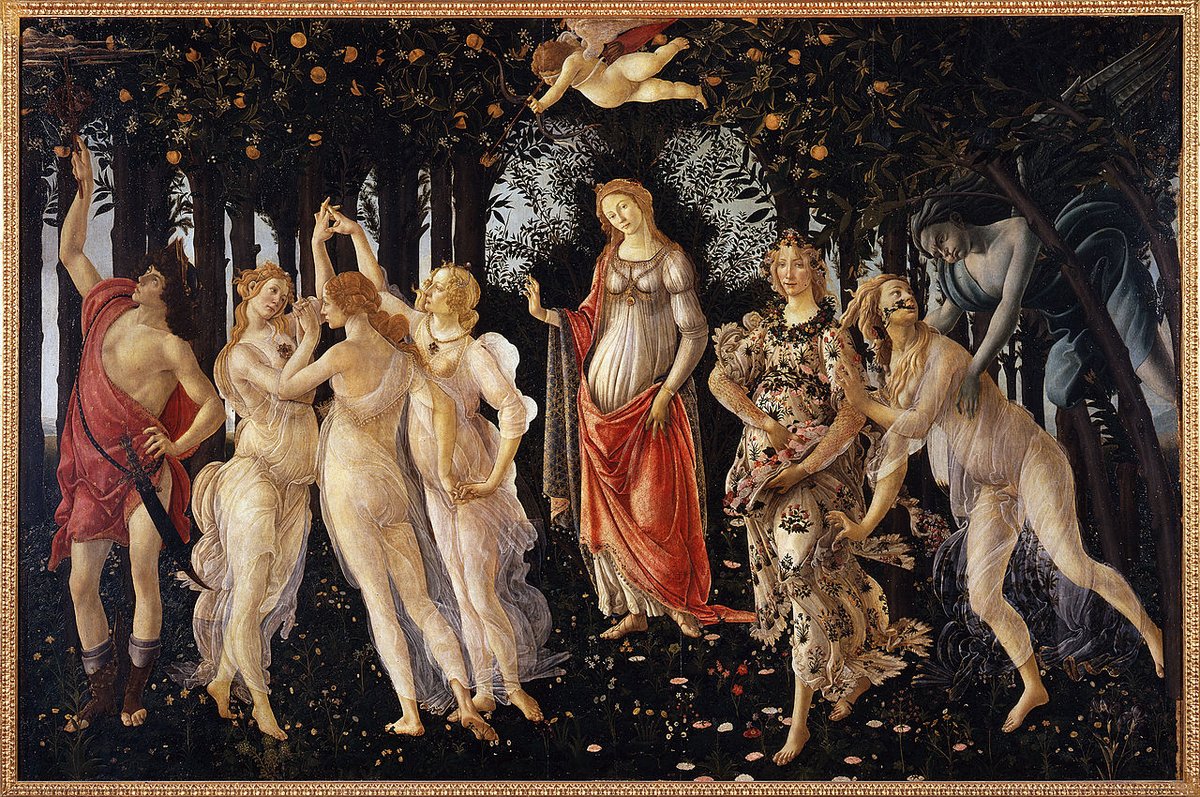
But there was a real difference in style between Northern Europe and Italy during the Renaissance.
Italian artists were painting scenes with a focus on ideal beauty, anatomically correct human form, harmonious composition, and clean images with relatively little detail.
Italian artists were painting scenes with a focus on ideal beauty, anatomically correct human form, harmonious composition, and clean images with relatively little detail.

Meanwhile Northern European painters delighted in painting objects and textures: silk, fur, pearls, gold, books, wood.
They embraced detail and — crucially — ordinary life.
Campin's Annunciation, from 1428, shows Mary in a highly detailed, almost cramped domestic interior.
They embraced detail and — crucially — ordinary life.
Campin's Annunciation, from 1428, shows Mary in a highly detailed, almost cramped domestic interior.
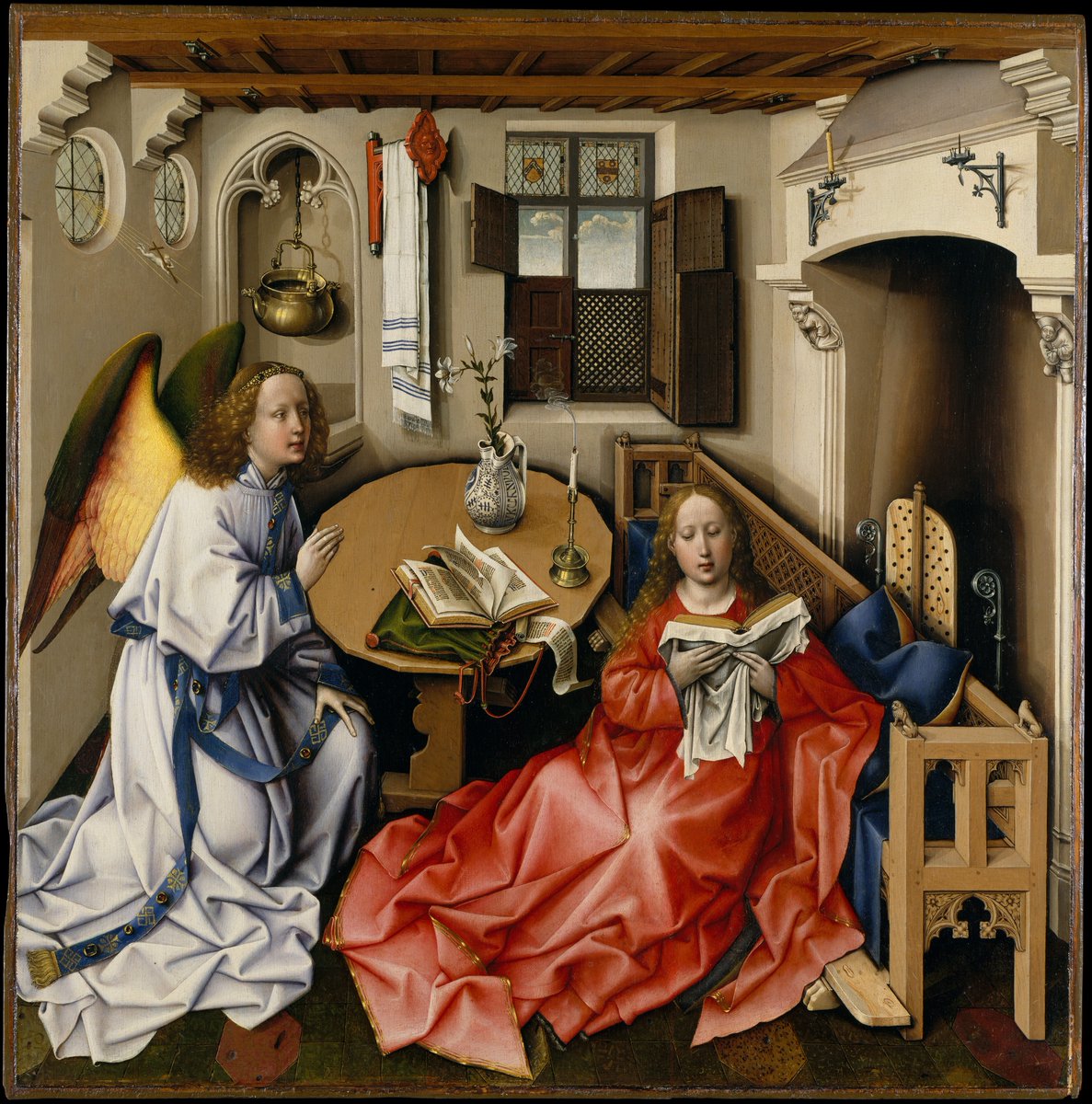
So whereas Italian art, under the influence of the Classics, was about *idealising* the world, Northern European art was about the world as it really appears.
In this closeup from the Ghent Altarpiece you can see how much attention van Eyck paid to the minutest details:
In this closeup from the Ghent Altarpiece you can see how much attention van Eyck paid to the minutest details:

And a key part of Jan van Eyck's story is oil painting — some even say he invented it.
Either way, he was the first master of oils, the first to learn the art of adding multiple, thin, translucent layers of paint to create such vividity and almost photorealistic precision.
Either way, he was the first master of oils, the first to learn the art of adding multiple, thin, translucent layers of paint to create such vividity and almost photorealistic precision.

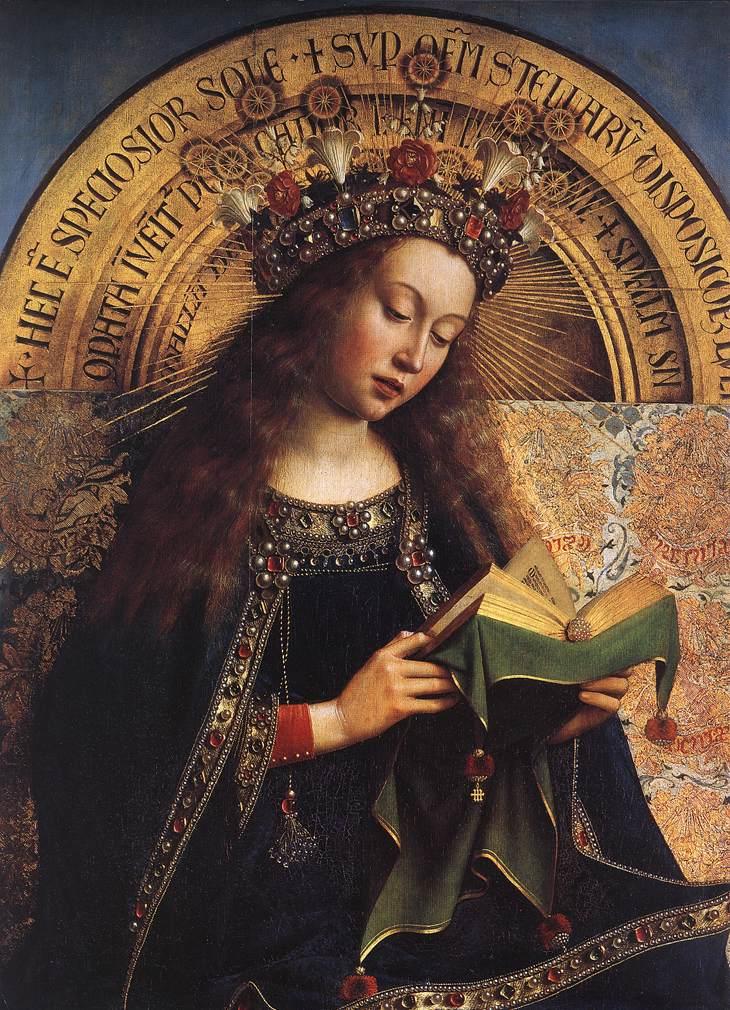
Consider van Eyck's Mary from the Ghent Altarpiece, completed in 1432.
Look at the book, jewels, and cloth — the verisimilitude is astonishing.
And remember that van Eyck was doing all this before Leonardo da Vinci was even born.
Look at the book, jewels, and cloth — the verisimilitude is astonishing.
And remember that van Eyck was doing all this before Leonardo da Vinci was even born.
However, this Northern disinterest in idealising the human form — a hangover from the Gothic art of the Middle Ages, seemingly — wasn't without consequence.
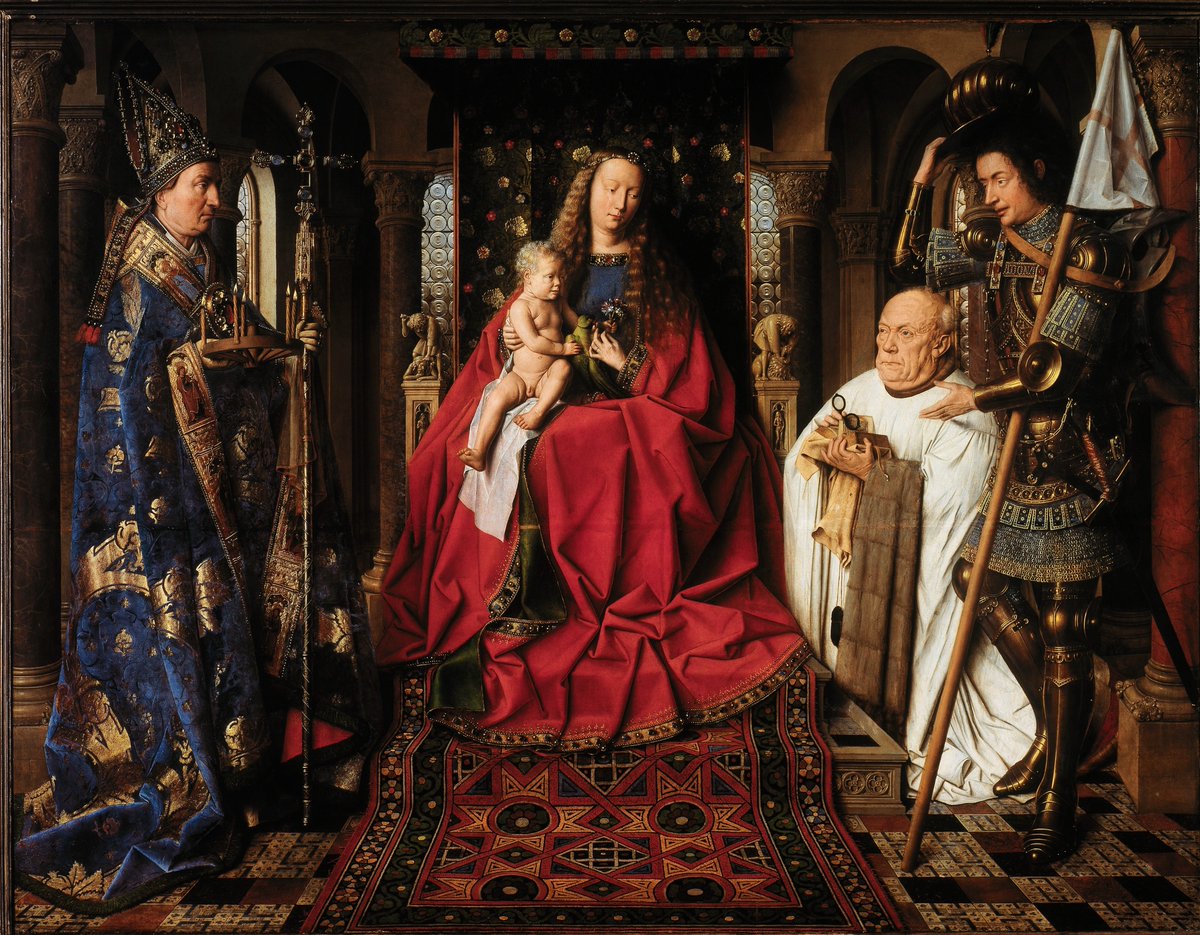
Even if his textures are luminous (look at the clothes here!) van Eyck's humans can look somewhat stiff and emotionless.
Even if his textures are luminous (look at the clothes here!) van Eyck's humans can look somewhat stiff and emotionless.
But it hardly matters.
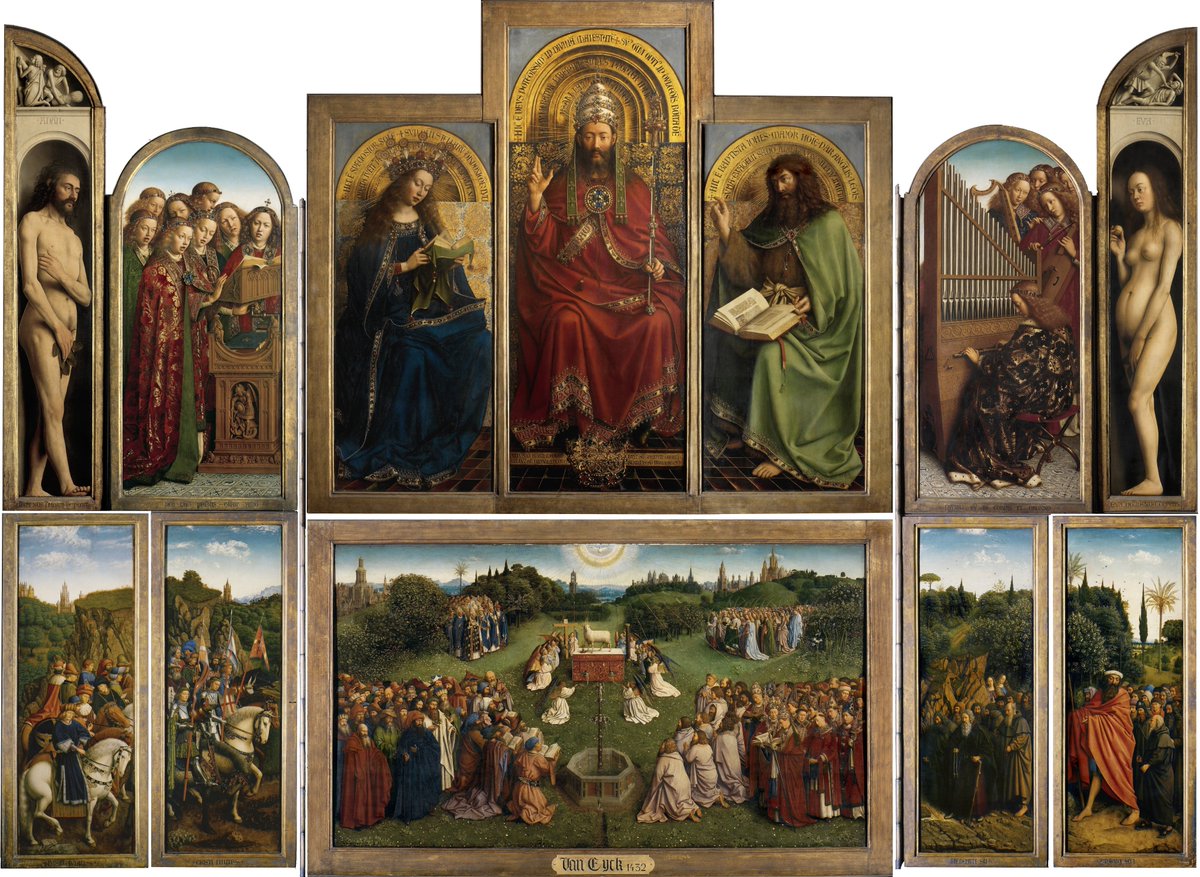
His Ghent Altarpiece is a masterpiece of detail and a certain kind of realism — even if the Italians conquered drama and the human form, not even Michelangelo could hold a candle to van Eyck's ability to depict the material world:
His Ghent Altarpiece is a masterpiece of detail and a certain kind of realism — even if the Italians conquered drama and the human form, not even Michelangelo could hold a candle to van Eyck's ability to depict the material world:
The divergence between the Northern and Italian Renaissance shows how different beliefs and interests naturally produce different art.
Northern Europe's interest in contemporary life continued with, for example, Pieter Brueghel and his famous peasants:
Northern Europe's interest in contemporary life continued with, for example, Pieter Brueghel and his famous peasants:

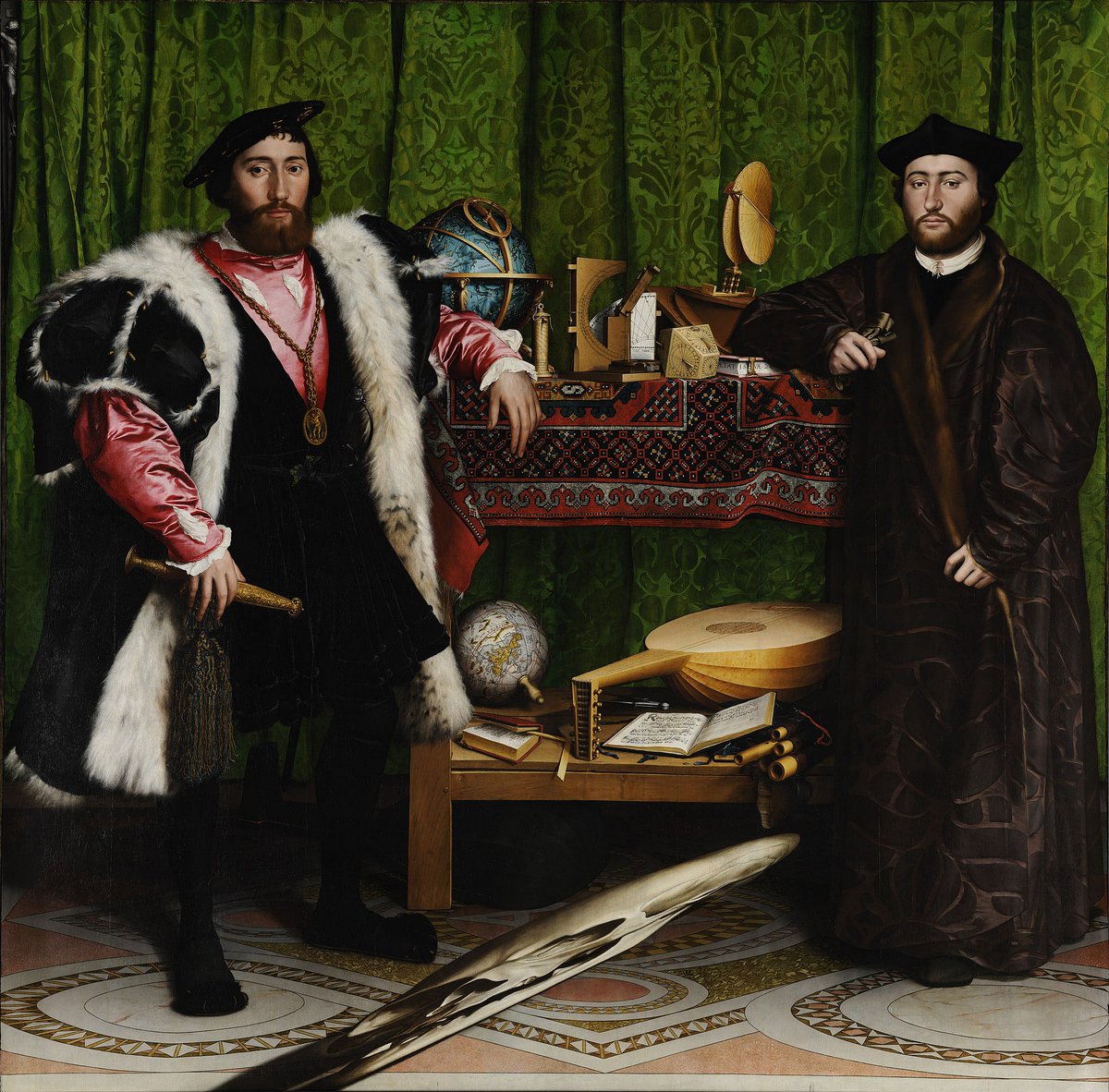
Meanwhile that fascination with texture survived in the likes of Hans Holbein the Younger.
Consider The Ambassadors, from 1533 — a profusion of perfectly, minutely rendered objects and materials.
The sign of a more commercial culture? Perhaps.
Consider The Ambassadors, from 1533 — a profusion of perfectly, minutely rendered objects and materials.
The sign of a more commercial culture? Perhaps.
But there is a caveat here; Northern European painters weren't only realists.
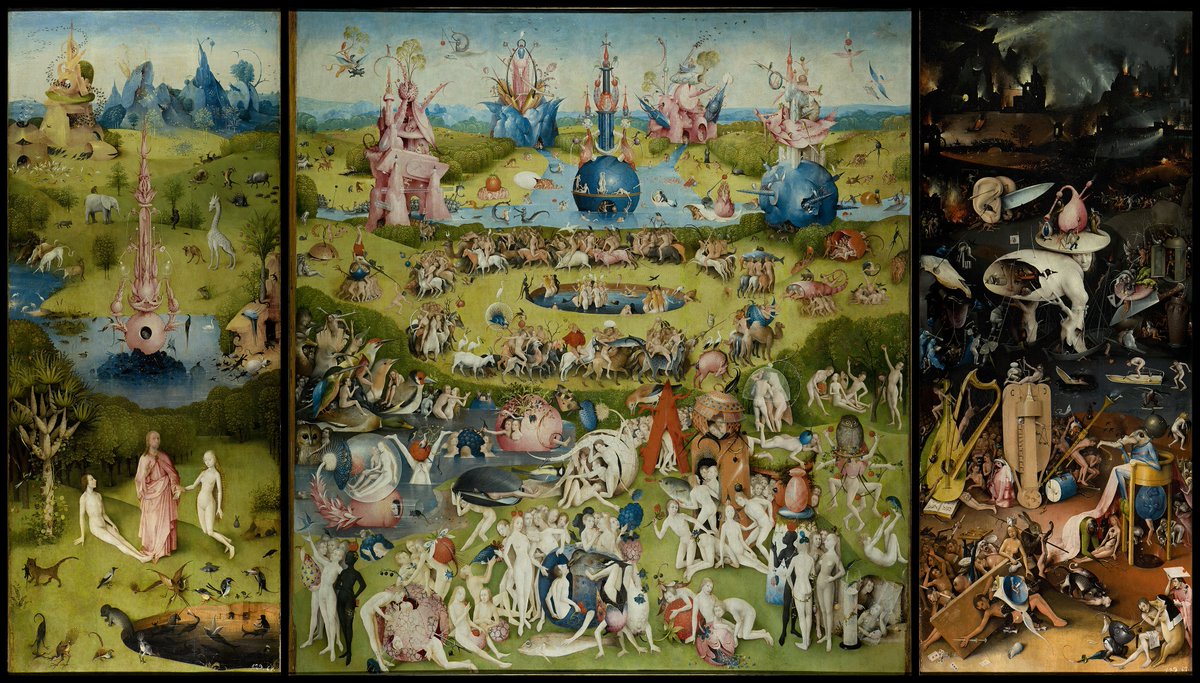
In truth, their disinterest in Classical idealism led to the creation of art far wilder than anything being produced in Italy — just think of Hieronymus Bosch's Garden of Earthly Delights:
In truth, their disinterest in Classical idealism led to the creation of art far wilder than anything being produced in Italy — just think of Hieronymus Bosch's Garden of Earthly Delights:
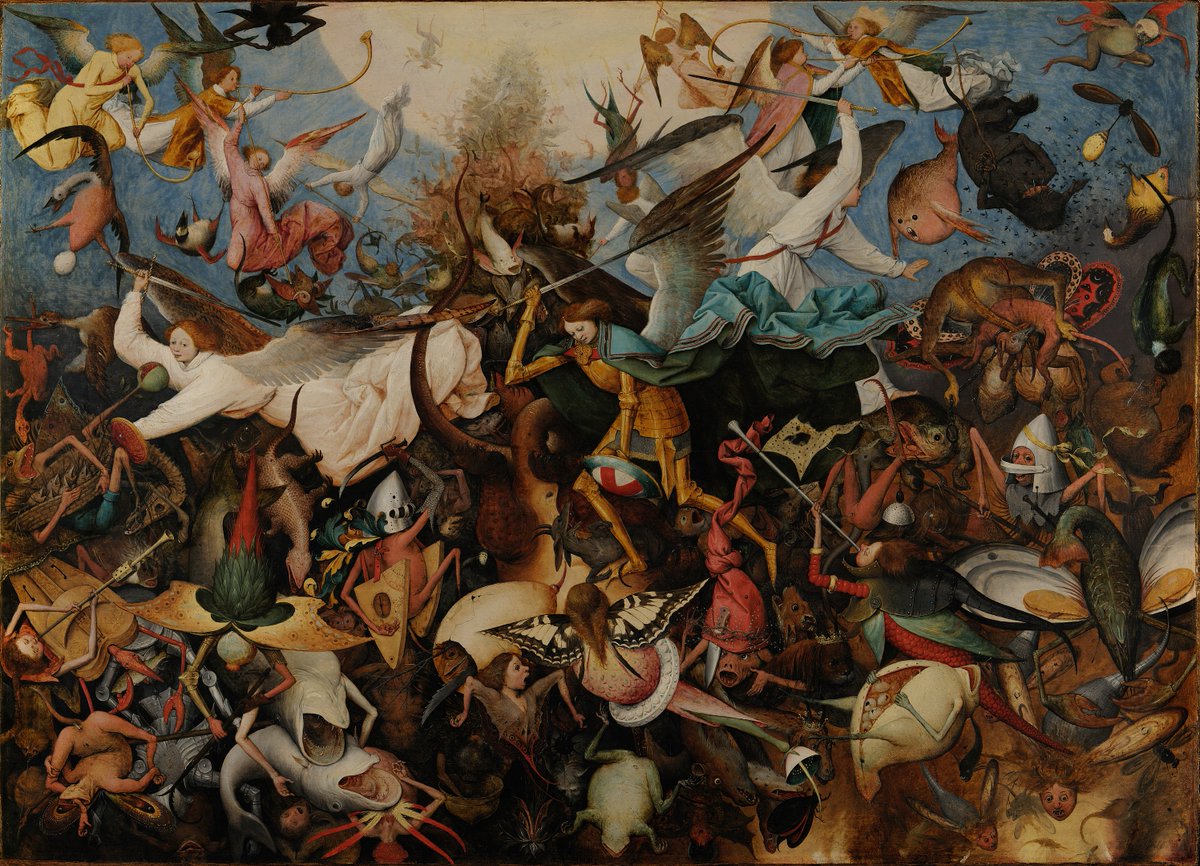
Even Brueghel, master peasant-painter of the 16th century, also made fabulously strange, darkly funny, phantasmagorically terrifying works of art — this is his Fall of the Rebel Angels.
It seems the grotesque Medieval imagination endured longer in Northern Europe.
It seems the grotesque Medieval imagination endured longer in Northern Europe.
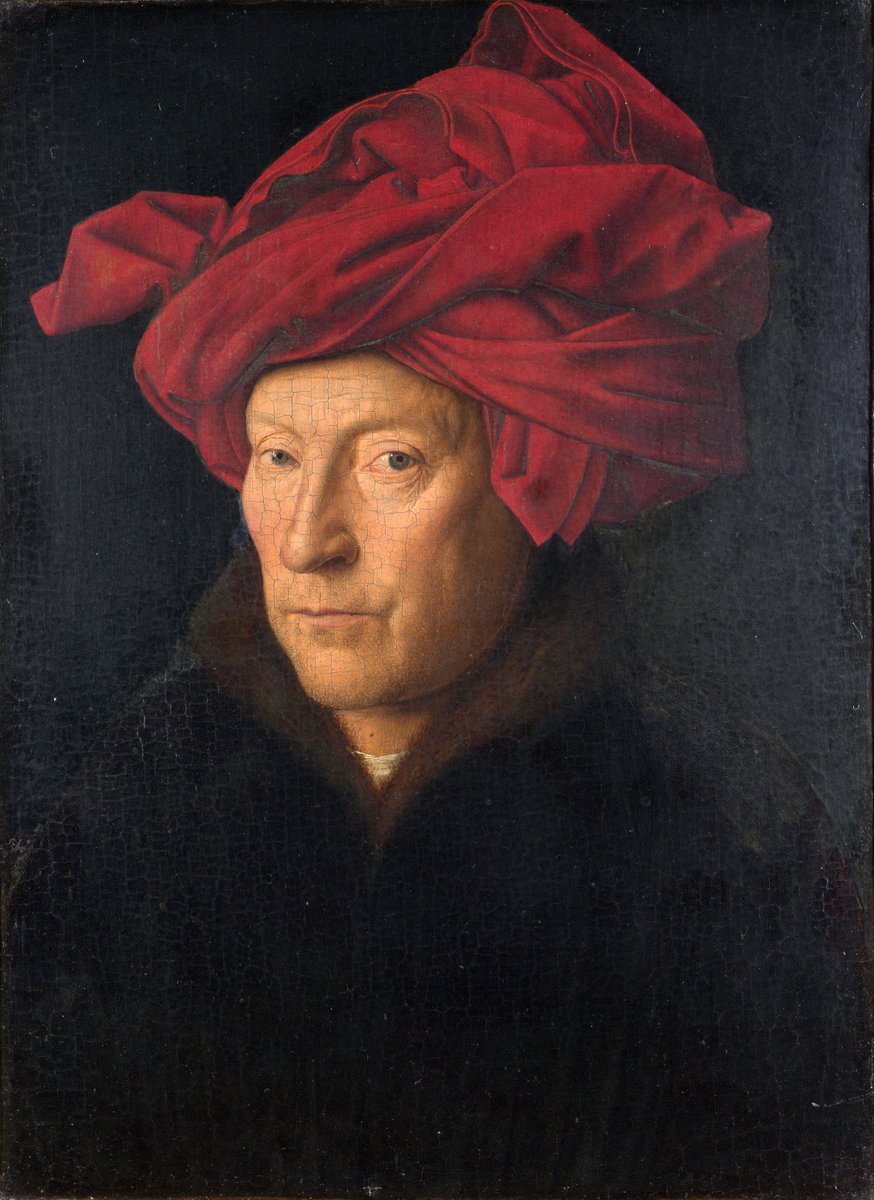
But, returning to where we began, here is a supposed self-portrait by Jan van Eyck himself.
Surely one of the most important painters who ever lived, whose mastery of oils, elusive symbolism, and scrupulous recreation of the details of our world boggles the mind to this day.
Surely one of the most important painters who ever lived, whose mastery of oils, elusive symbolism, and scrupulous recreation of the details of our world boggles the mind to this day.
Loading suggestions...