
Did you know that in the 1970s & 1980s, Israel looted one of the most important Canaanite sites in Gaza, which also was linked to ancient Egypt? The following thread tells the story of how Israeli archaeologists and military looted historical treasures from Deir el-Balah. 1/15
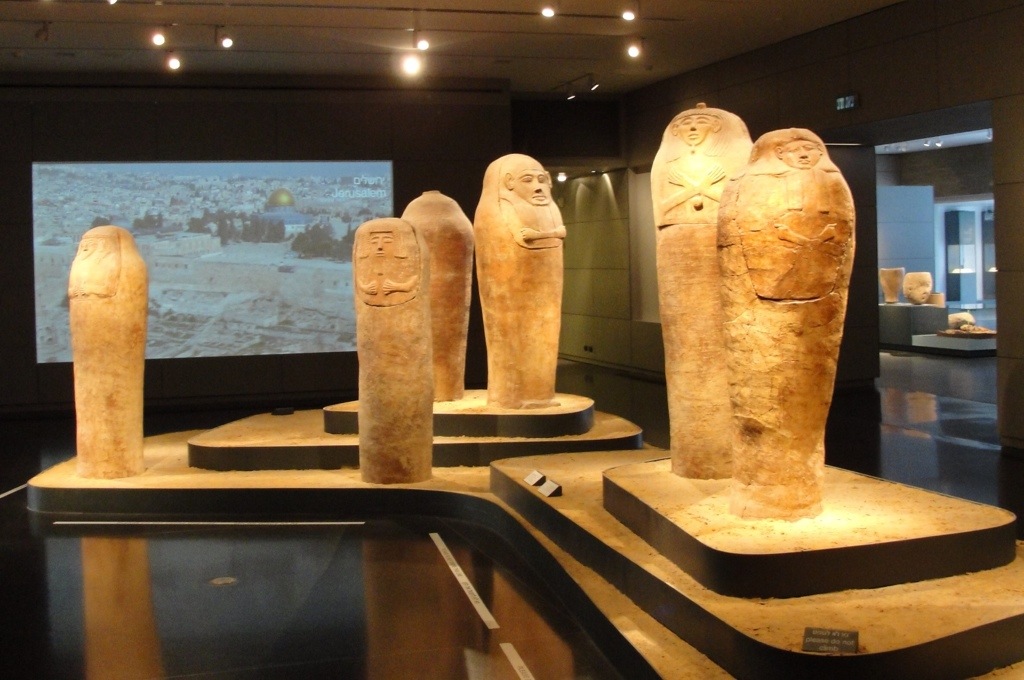
In 1982, National Geographic reported the uncovering of an ancient Canaanite settlement, fortress, and cemetery west of Deir el-Balah City, in the middle of the Gaza Strip. The site, which dates back to more than three millennia, was discovered by archaeologist Trude Dothan.2/15

The discovery happened by coincidence after Israel the 1967 occupation when Dothan saw a coffin lid in a souvenir store in Jerusalem, which she traced to Gaza’s sands. After months of searching, the lid was traced to a farm in Deir el-Balah, and the excavation started. 3/15
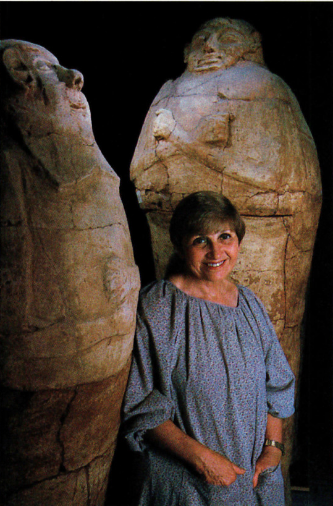


To conduct the excavation, Dothan relied on Israeli Defense Minister Moshe Dayan, who provided her with logistical and security support, especially during the early years of the occupation following the Six-Day War, as Gaza was fighting an insurgency against Israel. 4/15

As Dothan's team was digging, the scale of the discovery was beyond anything they anticipated. The site included tombs, artifacts, & anthropoid coffins. The site, which dates back to the Bronze Age, offered an account of life on the Palestinian shore, especially spiritual, cultural, & social practices such as burial and culinary habits. 5/15


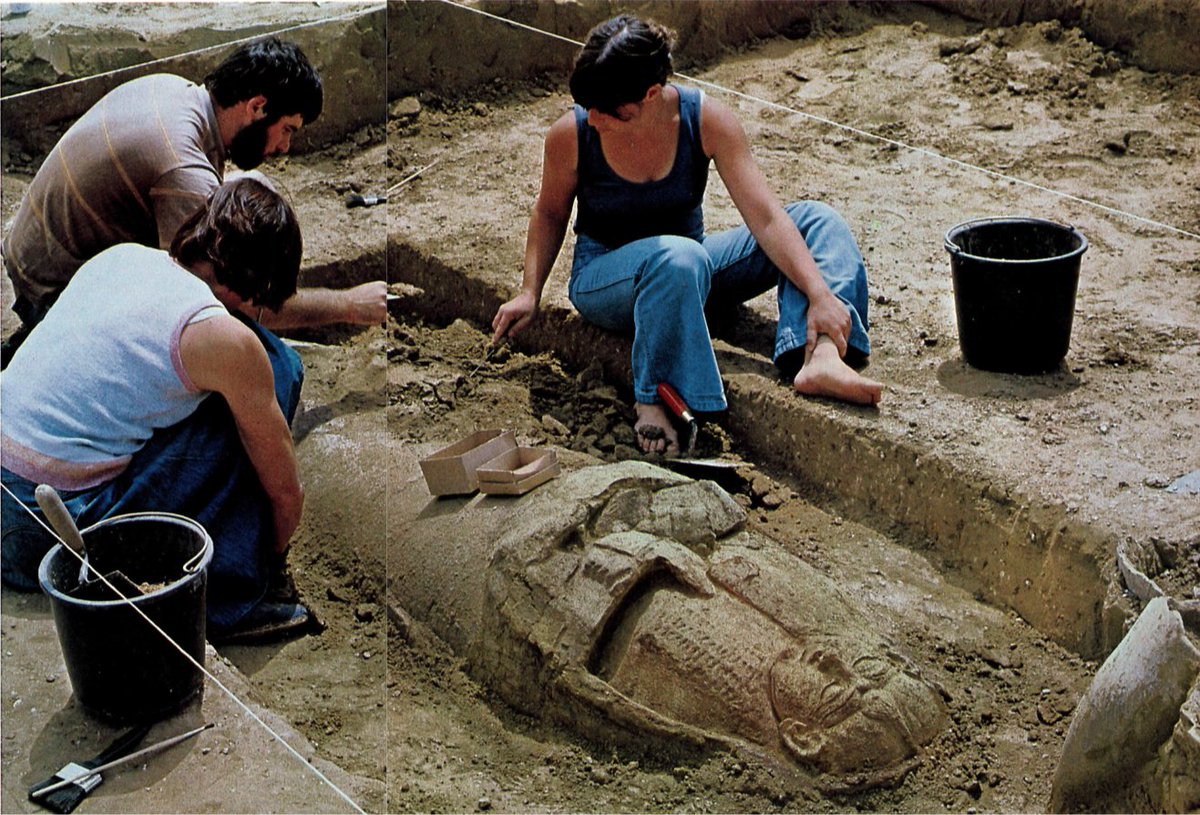

But most importantly, the site sheds light on the complex interactions between the Egyptian Empire & local Canaanites, suggesting a blending of cultures and perhaps even the presence of Egyptian officials or military in the region. 6/15

During ten years of excavation in the cemetery of Deir el-Balah, Dothan's team found several clay coffins varying in style and external shape. As the excavation continued, an important question emerged: Who lived in Deir el-Balah 3,300 years ago? 7/15


One of the key theories is that the population was a mix of local Canaanites who were influenced by and coexisted with Egyptians officials and soldiers securing the ancient "Way of Horus" which was of strategic value to the Egyptian Empire then. 8/15

In addition to the cemetery, Dothan’s team unearthed a 55-meter-long palace with 15 rooms and thick outer walls. They found a clay seal with hieroglyphic inscriptions like those at Tell el-Amarna, confirming the site's dating to the 14th century BC. 9/15
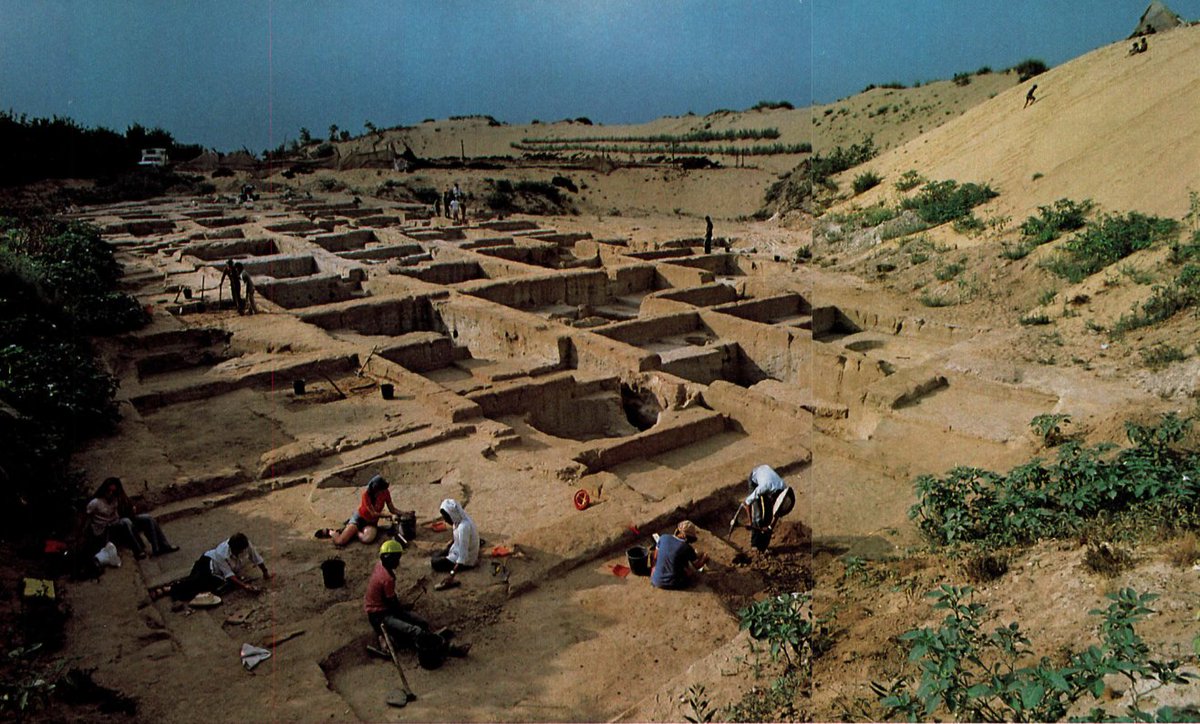


A fortress was also discovered. According to Dothan, the discovered Deir el-Balah fortress closely resembles the fortresses engraved on the walls of the Karnak temple, specifically those documenting the campaign of King Seti I in the land of Canaan. 10/15
The semi-final conclusions of Dothan's team indicate that the fortress was built during a period when the ties btwn Canaan & Egypt were strong. According to estimates, the fortress dates back to the reign of King Seti I, who ruled the "New Kingdom" between 1318 & 1304 BC. 11/15

But rather than celebrate discovery as reflective of Egypt and Palestine's rich history and interaction, Dothan and her team's main focus was on proving how their discovery in Deir el-Balah could provide evidence for the Exodus narrative. This is still the case today: 10/15

They believed that the presence of a fortress on the Way of Horus, as indicated by their findings, could explain why the Children of Israel took the longer desert route to Canaan instead of the shorter Way of Horus. 11/15
According to Dothan, the fortress suggested that the Israelites deliberately avoided the shorter route to Palestine to evade Egyptian garrisons stationed along it, aligning with the biblical account. 12/15

The obsession of proving "Exodus" reflected the commitment of archeologists to a Zionist narrative that prioritizes Old Testament history over tangible archaeological evidence, thus overshadowing the broader historical significance of their discoveries in Deir el-Balah. 13/15
With the coffins now displayed in "The Israel Museum" in Jerusalem, the fate of the archaeological site and its findings remain elusive, requiring answers from Israeli archaeologists and the military who emptied it of anything that could be carried to the museum. 14/15

Today, as Israel’s genocide continues to ravage Gaza, the fate of this site is unknown, and no one knows whether, assuming it’s still there, would survive, especially after Israel destroyed more than 200 heritage sites in Gaza with no regard to their value or importance. 15/15

after Israel's 1967 occupation*
Loading suggestions...