
The Last Supper by Leonardo da Vinci is 526 years old, and it's had a rough history.
Monks used to eat breakfast next to it, Napoleon's soldiers turned the room into a stable, and it was bombed during WWII.
And somebody once added a new door that destroyed the feet of Jesus...
Monks used to eat breakfast next to it, Napoleon's soldiers turned the room into a stable, and it was bombed during WWII.
And somebody once added a new door that destroyed the feet of Jesus...

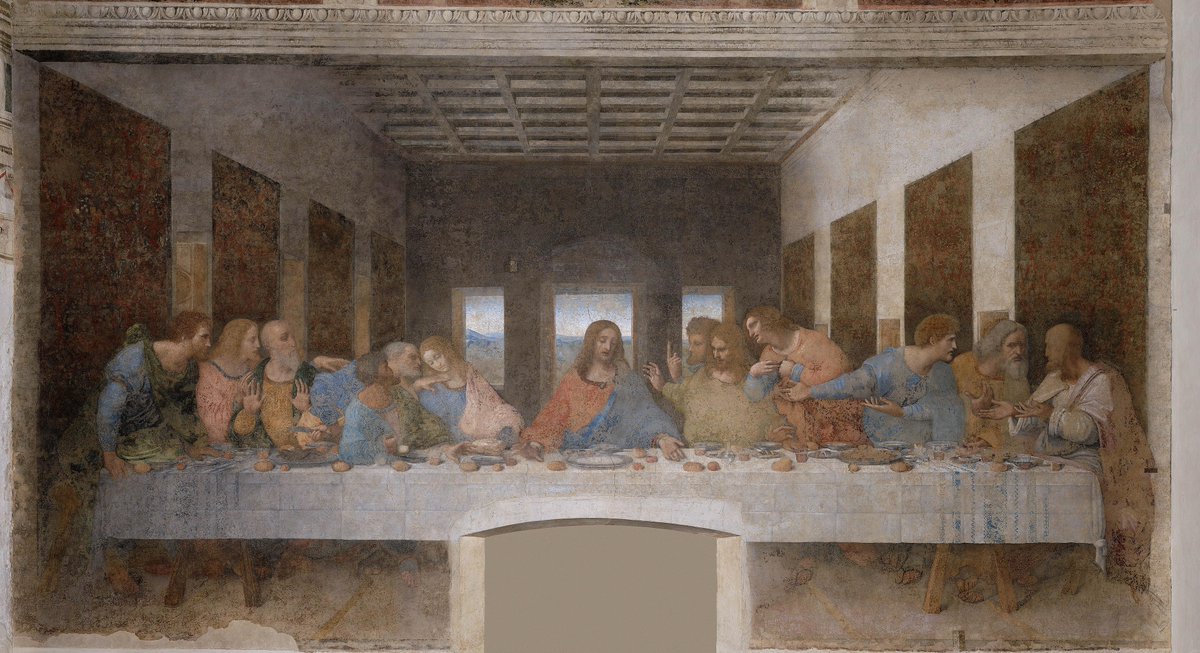
The Last Supper is one of the world's most instantly recognisable works of art, legendary on its own merits and just as famous for how often it's been parodied or referenced in popular culture.

But the zoomed-in image we usually see doesn't tell the full story.
Because it isn't, like many famous paintings, on a canvas in a gallery or museum.
It's a mural, painted by Leonardo on the wall of a refectory in the Dominican Convent at the Santa Maria delle Grazie in Milan.
Because it isn't, like many famous paintings, on a canvas in a gallery or museum.
It's a mural, painted by Leonardo on the wall of a refectory in the Dominican Convent at the Santa Maria delle Grazie in Milan.

Leonardo was from Tuscany and spent his early life in Florence, so why did he go to Milan?
The answer is Ludovico Sforza.
He became Duke of Milan in 1494 but had essentially ruled it as Regent for his young nephew since the early 1480s.
The answer is Ludovico Sforza.
He became Duke of Milan in 1494 but had essentially ruled it as Regent for his young nephew since the early 1480s.
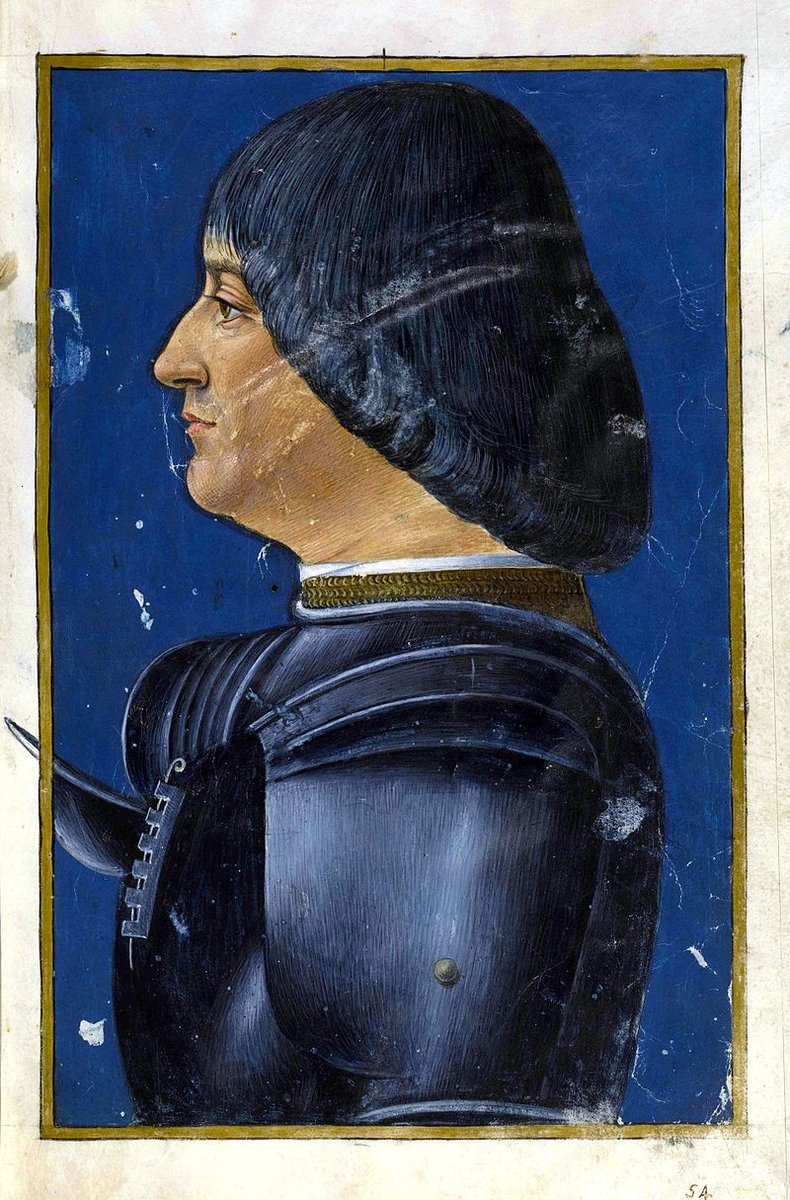
Ludovico was an accomplished politician and a deeply learned man — a sort of ideal Renaissance prince.
He became Regent and then Duke by a series of a complex political machinations. Under his rule Milan became one of the finest and most powerful cities in all of Europe.
He became Regent and then Duke by a series of a complex political machinations. Under his rule Milan became one of the finest and most powerful cities in all of Europe.
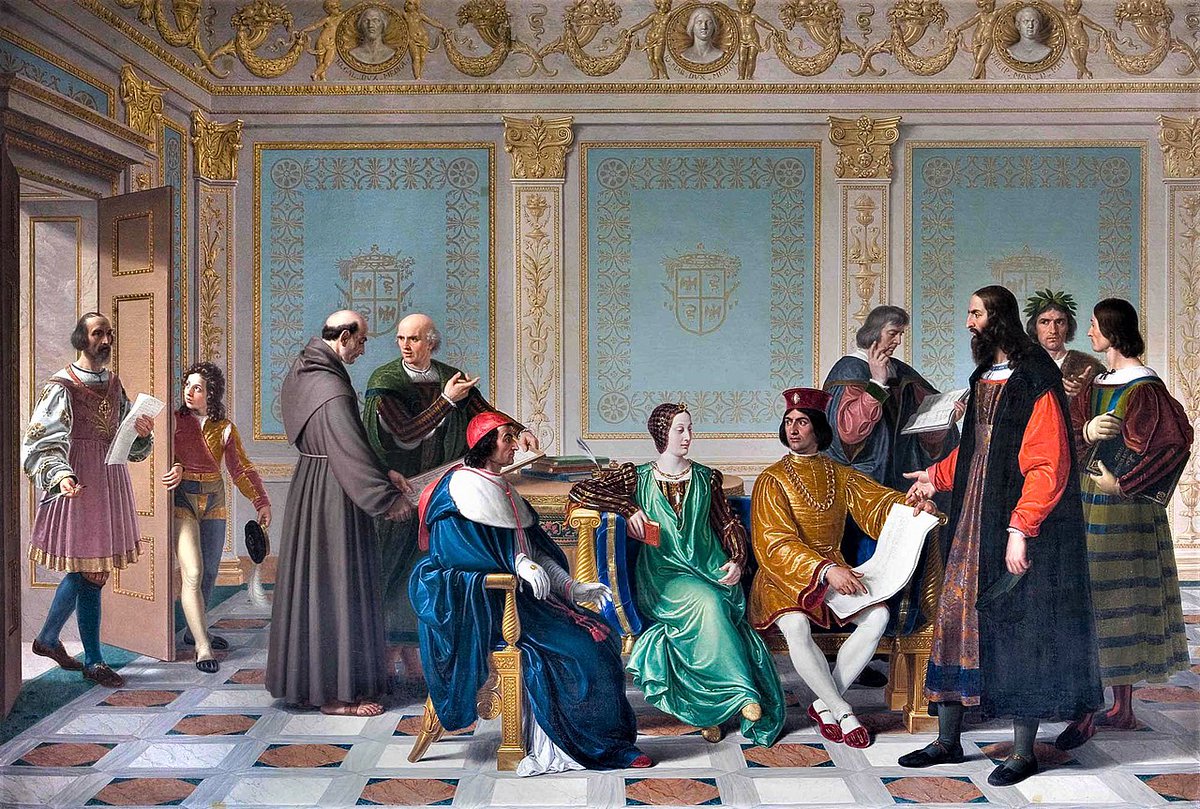
He was also a keen patron of the arts: poets, musicians, painters, and architects from around Italy assembled at his court.
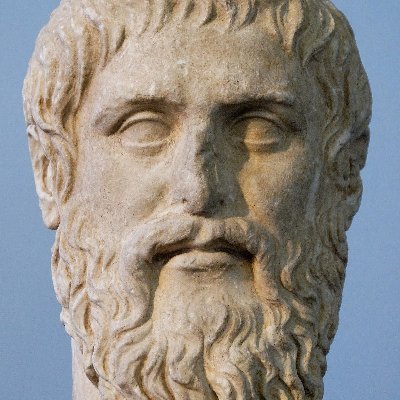
The jewel in his crown was Leonardo, already regarded as a genius when Ludovico invited him to Milan, as described by Giorgio Vasari a few decades later.
The jewel in his crown was Leonardo, already regarded as a genius when Ludovico invited him to Milan, as described by Giorgio Vasari a few decades later.
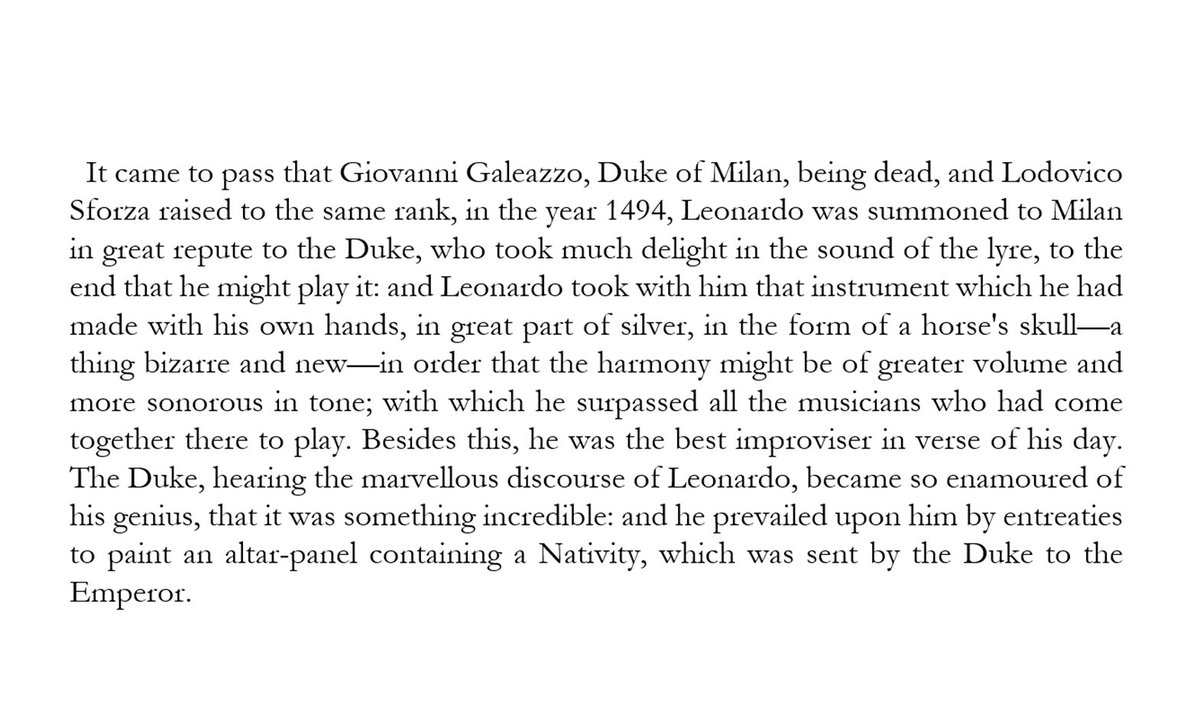
Leonardo did a number of things for Duke Ludovico, including designing canals and fortifications.
He then asked Leonardo to decorate the Santa Maria delle Grazie, a church and Dominican convent in Milan which Ludovico was rebuilding as a mausoleum for the Sforza family.
He then asked Leonardo to decorate the Santa Maria delle Grazie, a church and Dominican convent in Milan which Ludovico was rebuilding as a mausoleum for the Sforza family.
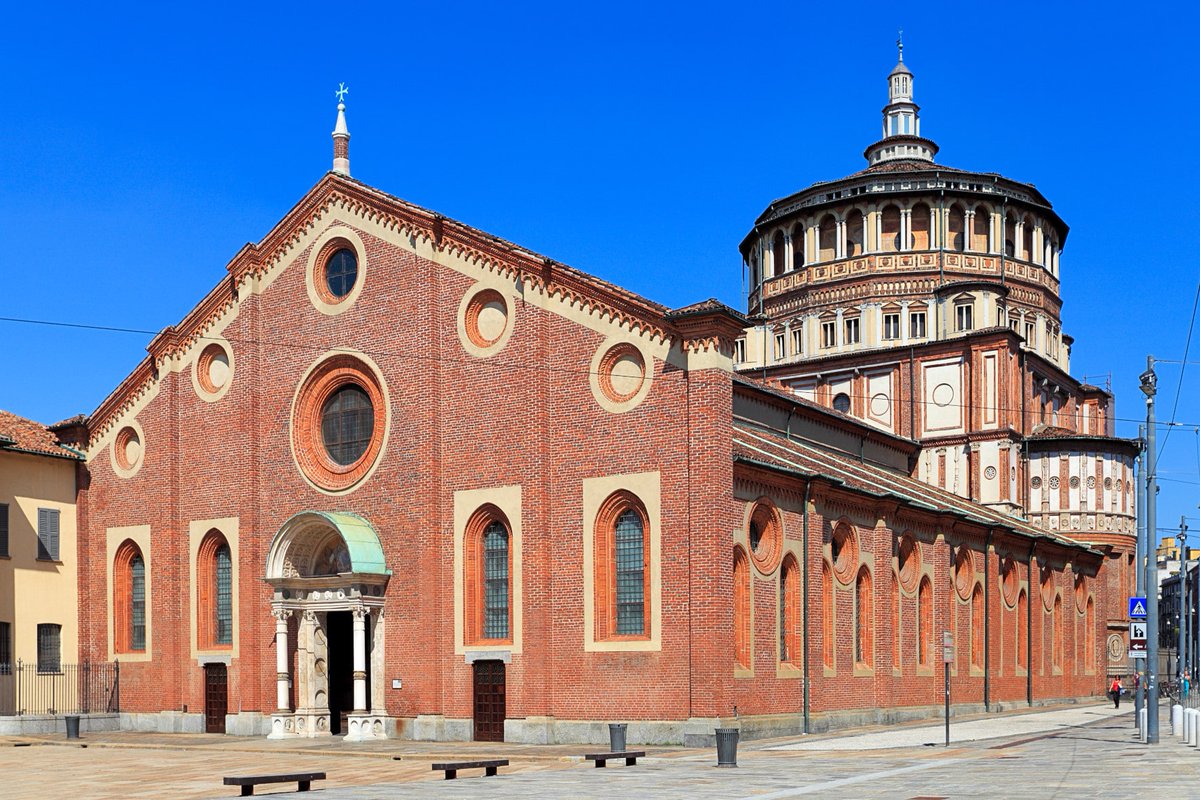
That was in 1495, and it took Leonardo three years to finish The Last Supper.
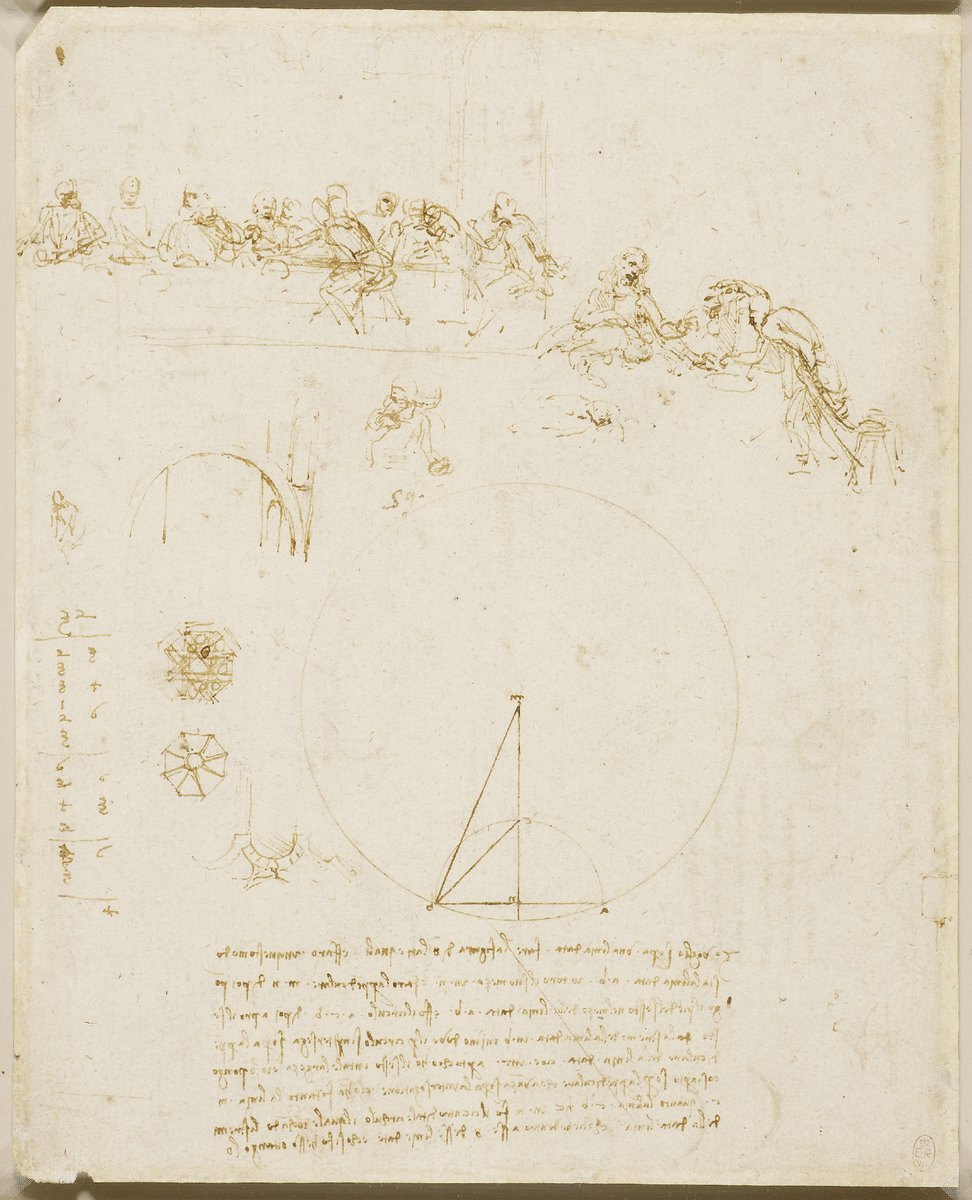
He was a slow, scrupulous, and easily distracted worker.
You can figure as much from his preparatory sketches for The Last Supper, which include drawings of unrelated projects and ideas.
He was a slow, scrupulous, and easily distracted worker.
You can figure as much from his preparatory sketches for The Last Supper, which include drawings of unrelated projects and ideas.
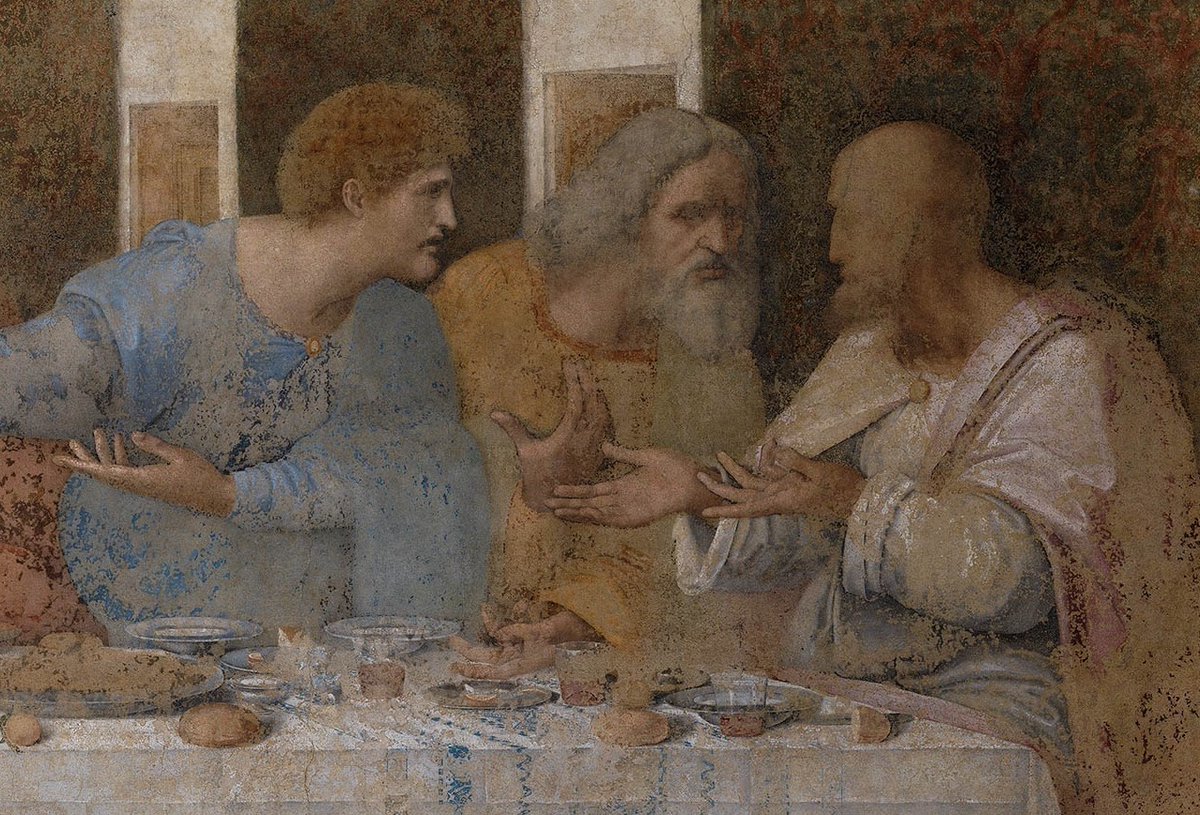
Leonardo chose to depict the precise moment during the Last Supper when Jesus reveals to the disciples that one of them will betray him.
Leonardo tried to give each of them a distinctive reaction based on their personalities as he understood them in the Gospels.
Leonardo tried to give each of them a distinctive reaction based on their personalities as he understood them in the Gospels.
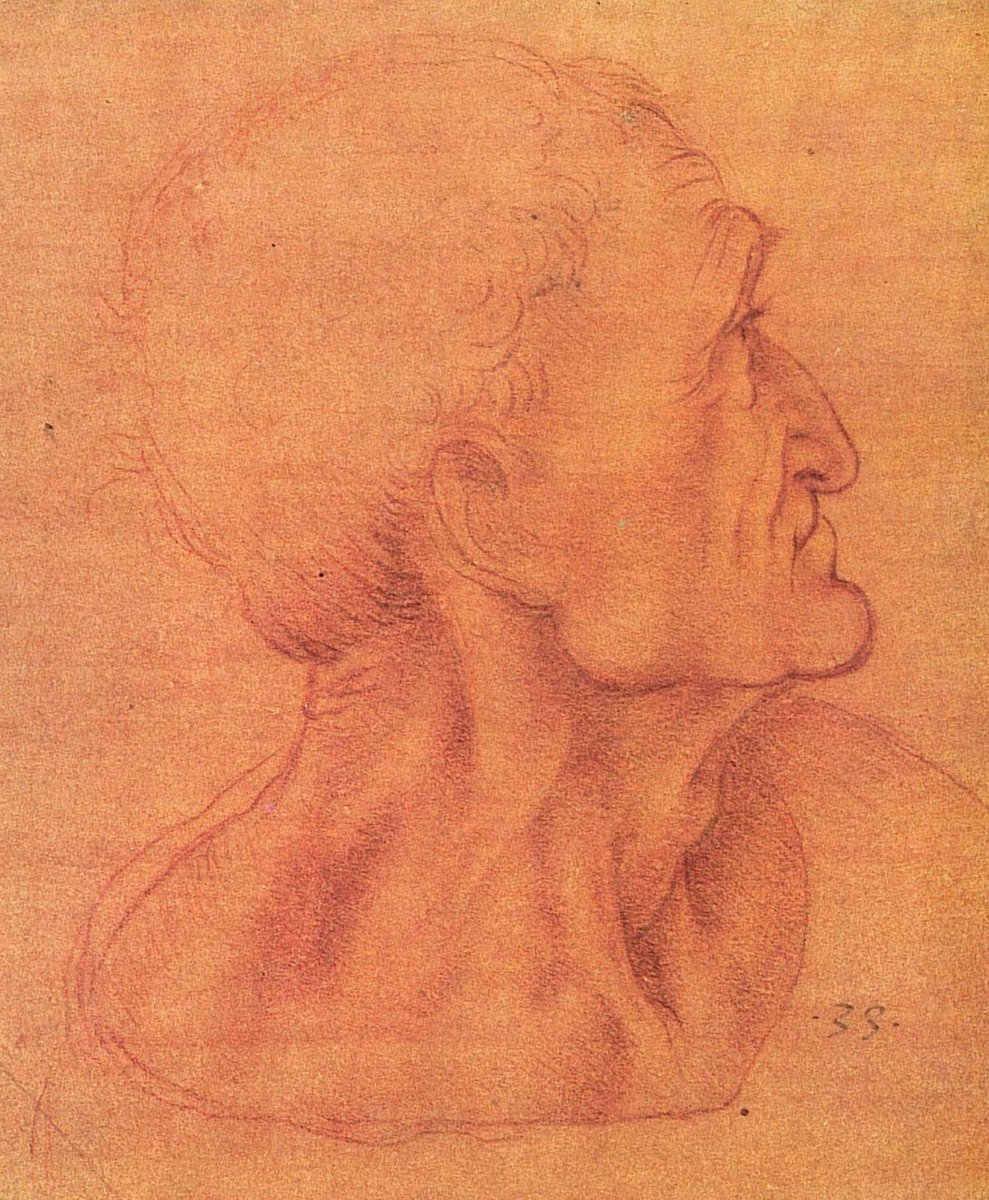
When the Prior of the convent complained about how long he was taking, Leonardo said it was hard to find a suitably evil model for the face of Judas, but that he would use the Prior's face if he wanted him to hurry up.
The Prior left him alone and Leonardo found the right model.
The Prior left him alone and Leonardo found the right model.
But he never found one for Jesus.
As Vasari writes, "he did not think it was possible to conceive in his imagination that beauty and heavenly grace which should be the mark of God incarnate."
So he left Christ's face unfinished, convinced no earthly representation would do.
As Vasari writes, "he did not think it was possible to conceive in his imagination that beauty and heavenly grace which should be the mark of God incarnate."
So he left Christ's face unfinished, convinced no earthly representation would do.
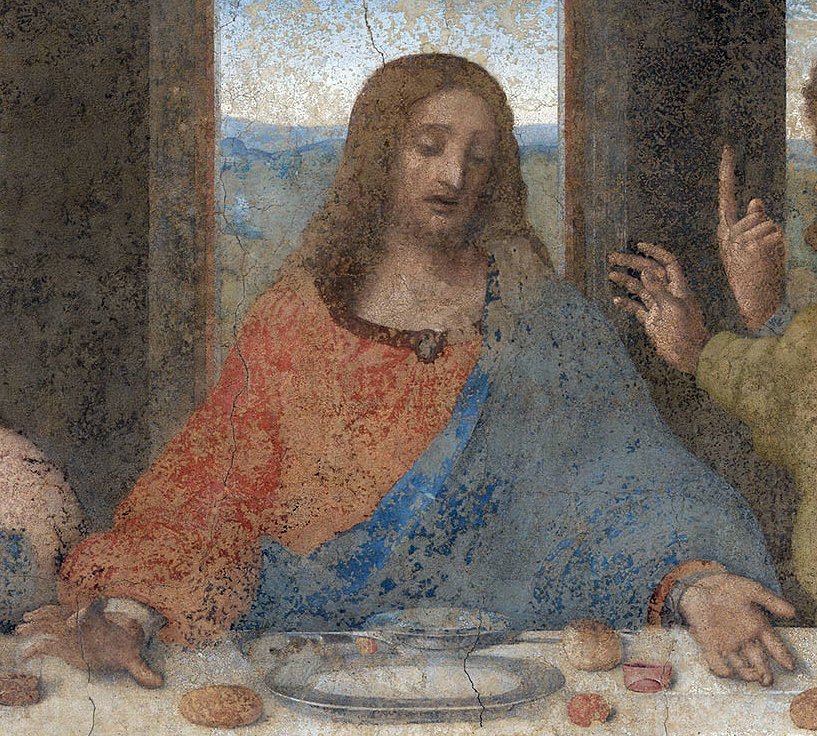
But, once everything else was done, The Last Supper was immediately hailed as a masterpiece.
Louis XII, King of France, even wanted to take it away from Milan — he employed architects to figure out how they could move the entire wall back to France.
Louis XII, King of France, even wanted to take it away from Milan — he employed architects to figure out how they could move the entire wall back to France.

The Last Supper has had a troubled life.
Ludovico's plans never came to fruition; a separate mausoleum was built and the room Leonardo decorated became the refectory — a dining hall — for the monks of the convent.
They ate breakfast next to this masterpiece.
Ludovico's plans never came to fruition; a separate mausoleum was built and the room Leonardo decorated became the refectory — a dining hall — for the monks of the convent.
They ate breakfast next to this masterpiece.
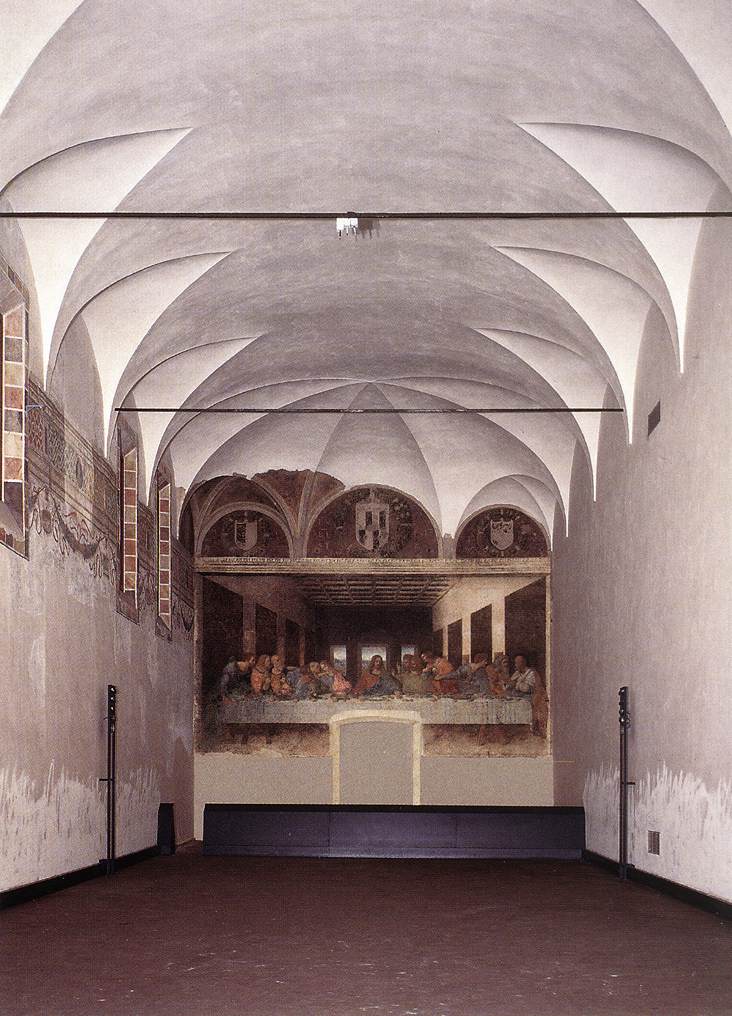
It deteriorated because of Leonardo's experimental methods and the steam and grime of the kitchens.
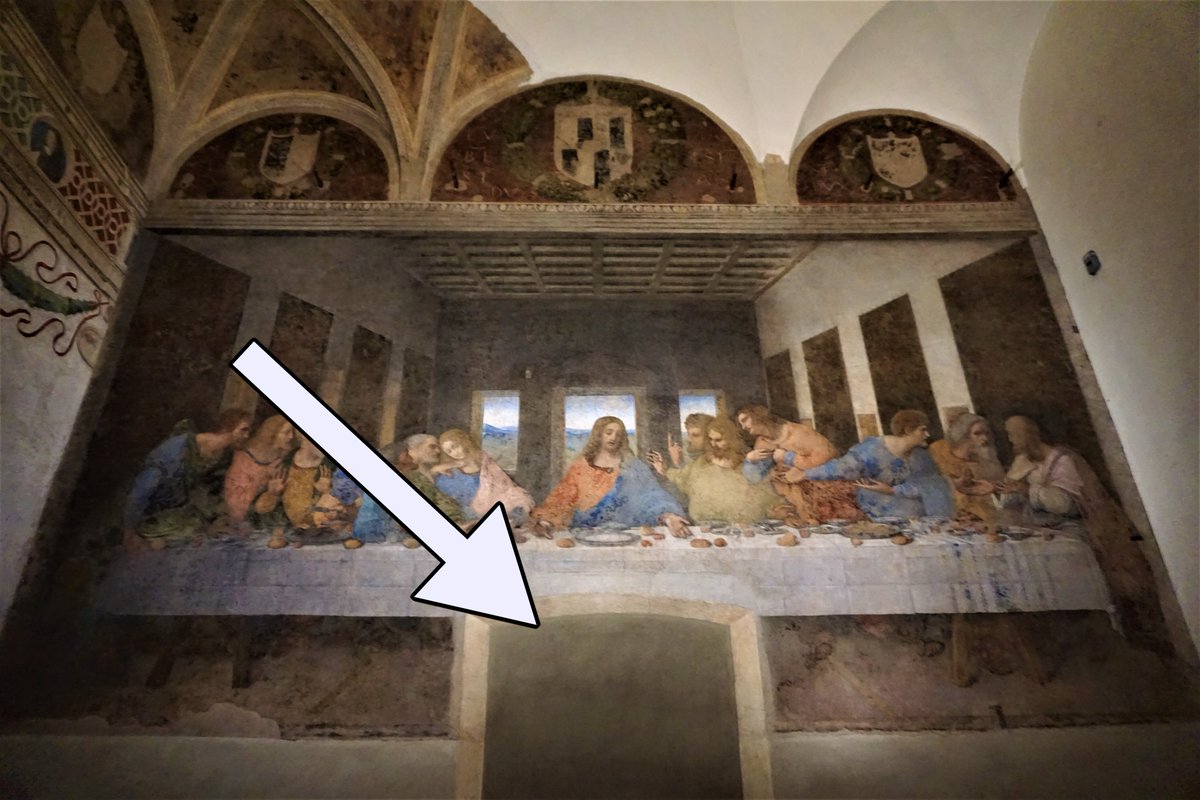
The refectory has been flooded, used as a prison, used as a stable during the Napoleonic Wars, and somebody even installed a new door that destroyed Christ's feet.
The refectory has been flooded, used as a prison, used as a stable during the Napoleonic Wars, and somebody even installed a new door that destroyed Christ's feet.
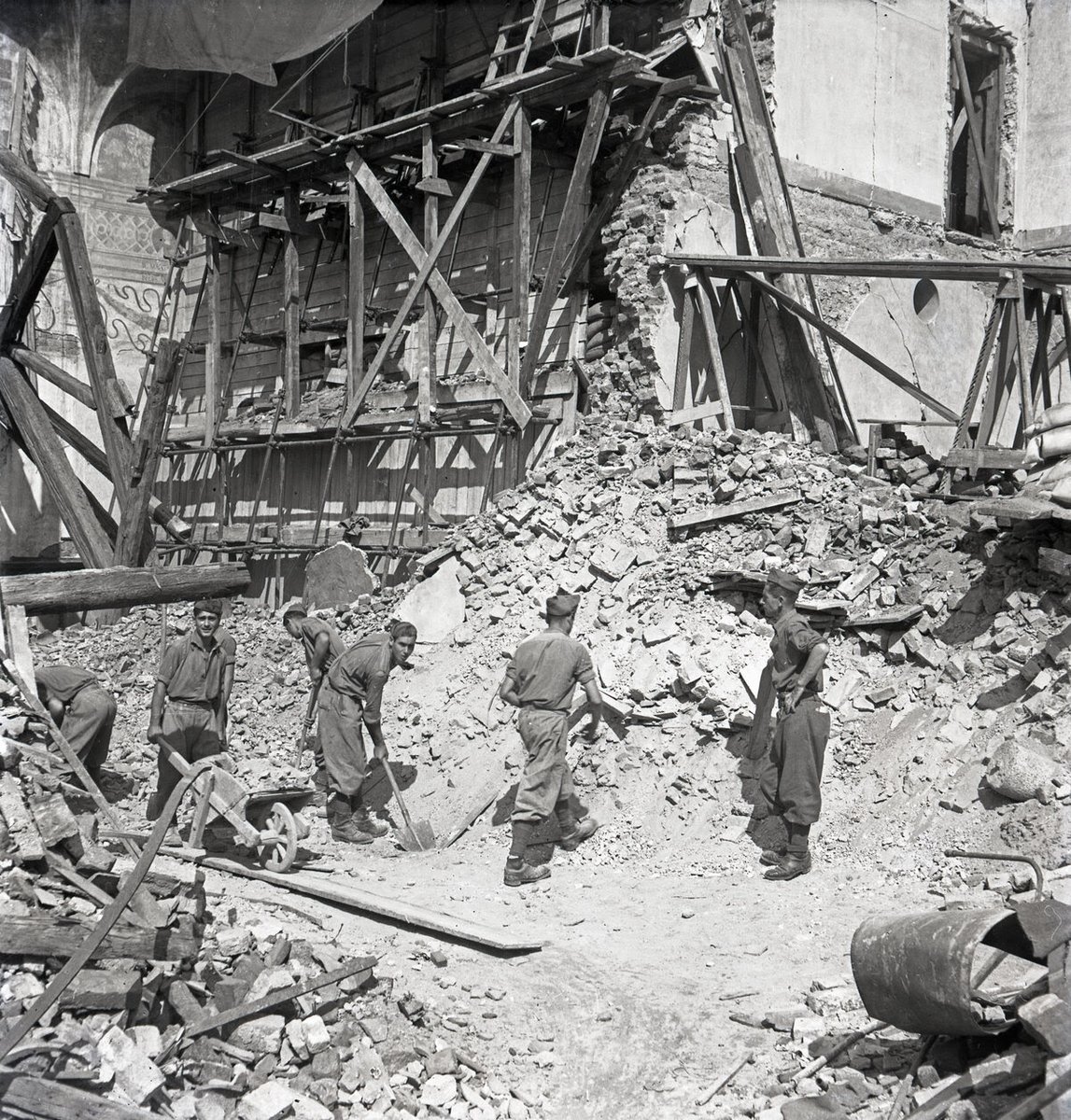
During the Second World War Milan was bombed.
Much of the Santa Maria delle Grazie was destroyed but — somehow — The Last Supper survived.
It had been protected with sandbags and planks, as you can see in the background of this photo.
Much of the Santa Maria delle Grazie was destroyed but — somehow — The Last Supper survived.
It had been protected with sandbags and planks, as you can see in the background of this photo.
That The Last Supper still exists is a miracle, and although most of Leonardo's work has been lost to deterioration and bad restoration, his original vision remains.
The deceptively simple composition, the expressions of the apostles, the overall impression of his conception.
The deceptively simple composition, the expressions of the apostles, the overall impression of his conception.
And The Last Supper also tells us where most "great art" in history came from.
The idea of an artist as a rebellious figure forging their own path in the world, rejected by society and pursuing their deeply personal creative journey alone, is a relatively modern one.
The idea of an artist as a rebellious figure forging their own path in the world, rejected by society and pursuing their deeply personal creative journey alone, is a relatively modern one.
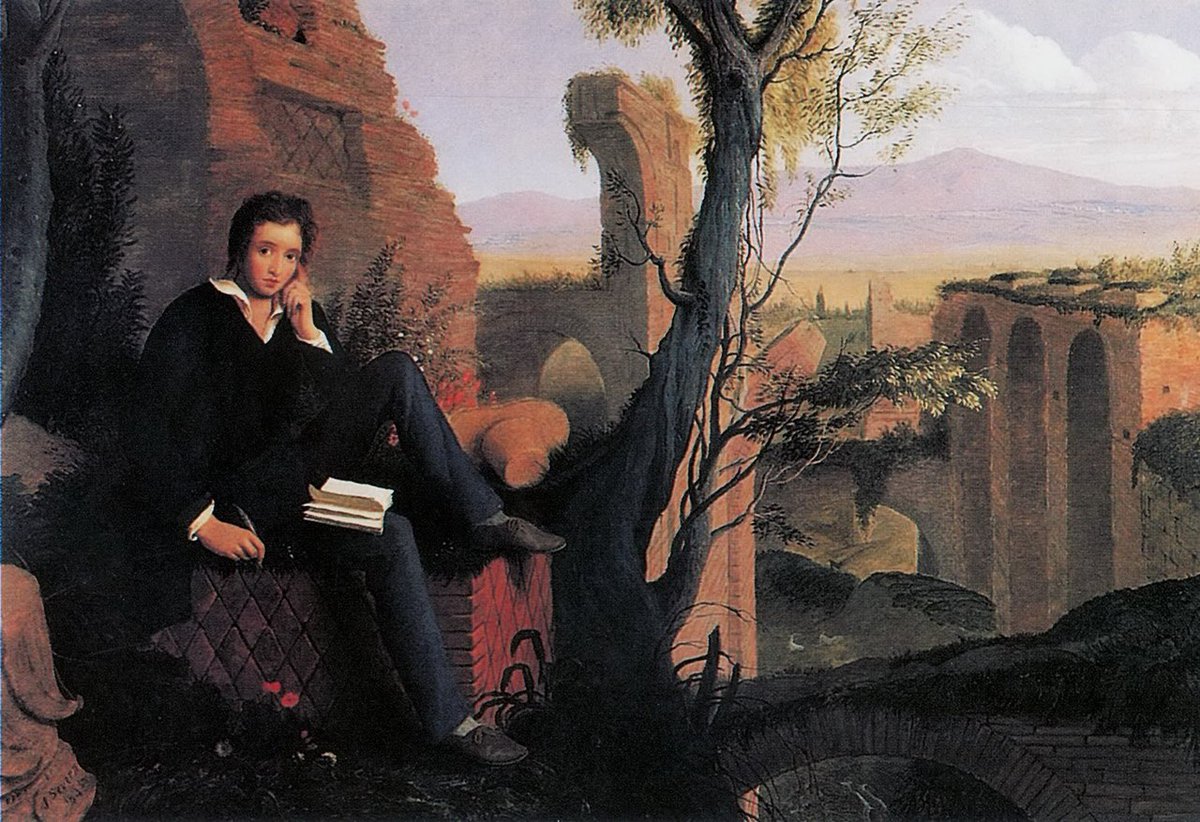
Leonardo, like all Renaissance artists, relied on support and commissions from patrons.
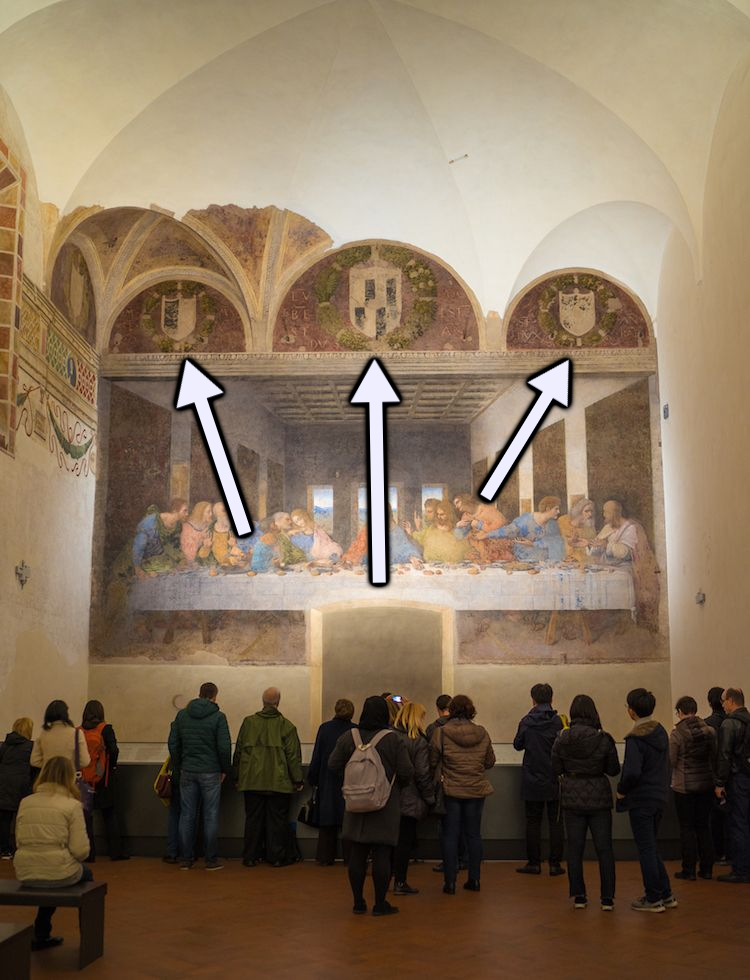
Hence he painted the Sforza coat of arms directly above The Last Supper.
A reminder that he was not an artist working in isolation — he was working for somebody else, for a specific purpose.
Hence he painted the Sforza coat of arms directly above The Last Supper.
A reminder that he was not an artist working in isolation — he was working for somebody else, for a specific purpose.
And that situation wasn't unique to Renaissance Italy.
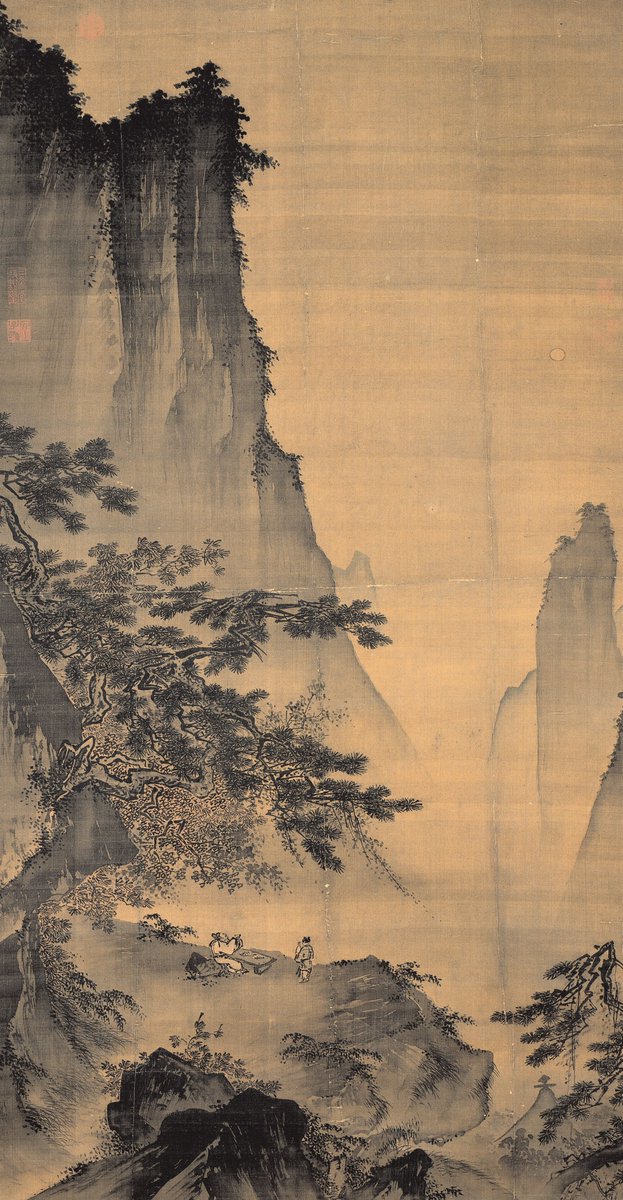
Take the great Chinese landscape painter Ma Yuan, who was a court painter in service of the 13th century Emperor Ningzong.
Take the great Chinese landscape painter Ma Yuan, who was a court painter in service of the 13th century Emperor Ningzong.
Nor is it only true of painting.
Michelangelo's David was commissioned by the city council of Florence, while many of Bernini's statues were commissioned by Cardinal Scipione Borghese — hence many of them are in Galleria Borghese, which was once Scipione's house.
Michelangelo's David was commissioned by the city council of Florence, while many of Bernini's statues were commissioned by Cardinal Scipione Borghese — hence many of them are in Galleria Borghese, which was once Scipione's house.

The same goes for literature.
In Rome it was Maecanas, one of Augustus' trusted advisors, who supported writers like Virgil and Horace.
And there would be no Divine Comedy without Cangrande della Scala, ruler of Verona; he supported Dante and is thus mentioned in Paradiso.
In Rome it was Maecanas, one of Augustus' trusted advisors, who supported writers like Virgil and Horace.
And there would be no Divine Comedy without Cangrande della Scala, ruler of Verona; he supported Dante and is thus mentioned in Paradiso.

The best art is so good *because* it exceeds any specific context and becomes universal.
But we can't forget that, for most of history, all over the world, great art didn't just appear.
Artists needed patrons and without them much of what we now call great art wouldn't exist.
But we can't forget that, for most of history, all over the world, great art didn't just appear.
Artists needed patrons and without them much of what we now call great art wouldn't exist.
Individuals working alone can also produce great art, of course, and they've been doing it for a long time.
Vincent van Gogh was a lone painter — well, apart from the unconditional support of his brother Theo.
He had neither a patron nor any customers whatsoever.
Vincent van Gogh was a lone painter — well, apart from the unconditional support of his brother Theo.
He had neither a patron nor any customers whatsoever.

Plenty of great art has also been produced by artists working in a commercial context.
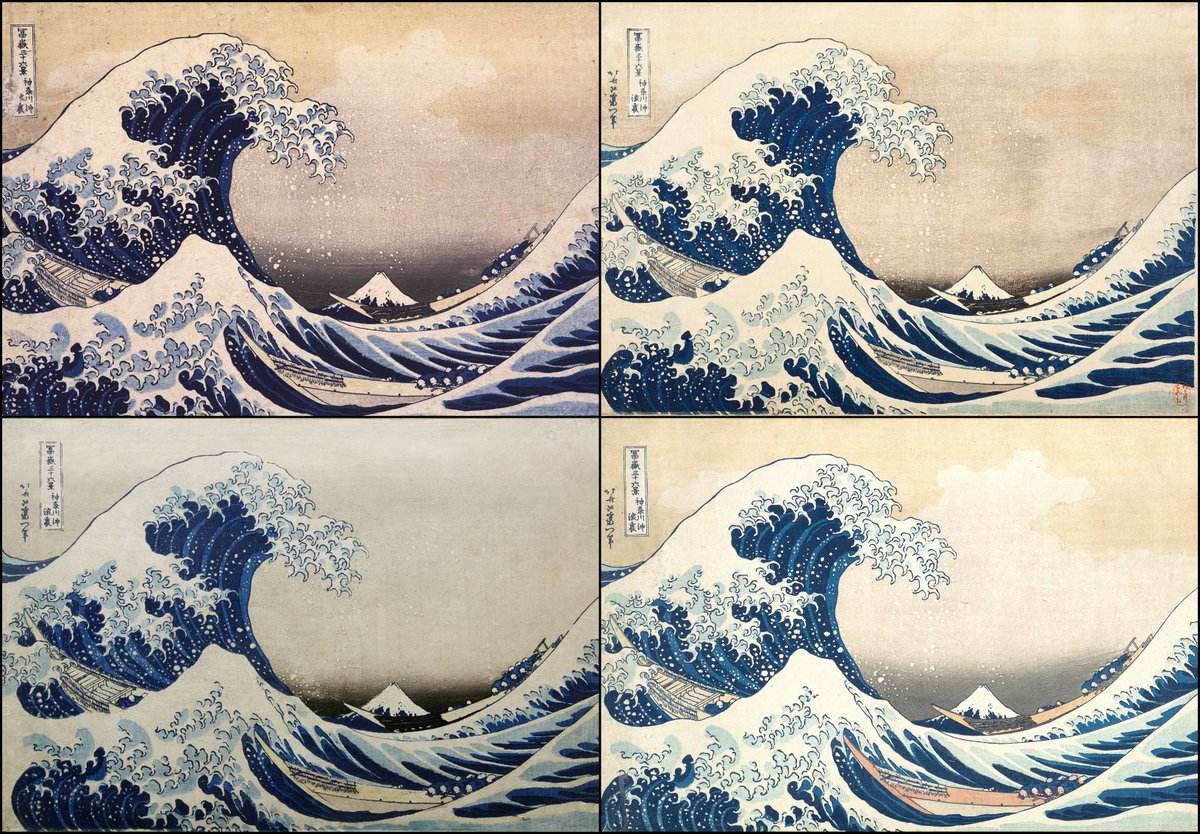
Like Pieter Bruegel the Elder producing prints for the middle classes of Antwerp, or Hokusai and Hiroshige wih their popular ukiyo-e prints in 19th century Japan, which sold by the thousands.
Like Pieter Bruegel the Elder producing prints for the middle classes of Antwerp, or Hokusai and Hiroshige wih their popular ukiyo-e prints in 19th century Japan, which sold by the thousands.
But the point is this: that old model of artistic patronage was responsible for some of the greatest works of art and architecture all around the world — including The Last Supper.
Could that model have something to offer in the 21st century?
Could that model have something to offer in the 21st century?
Loading suggestions...