
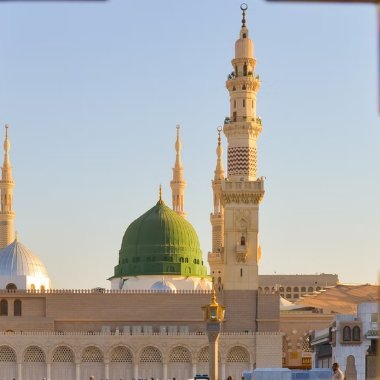
[🧵 Thread] What did the Salaf really believe about al-‘Uluww?
Did they believe Allāh is above the Throne with His Essence, or that He is only “above” His creation figuratively in terms of status and domination?
Below are various ways to prove that they affirmed the former… ⏬
Did they believe Allāh is above the Throne with His Essence, or that He is only “above” His creation figuratively in terms of status and domination?
Below are various ways to prove that they affirmed the former… ⏬
![[🧵 Thread] What did the Salaf really believe about al-‘Uluww?
Did they believe Allāh is above the T...](https://pbs.twimg.com/media/GJyj23hXEAAuuDu.jpg)
[1] A number of the Salaf affirmed a makān (place) for Allāh.
Ḥammād Ibn Zayd (d. 179) said, “Allāh is in His makān [above the Throne], and He draws near to His creation [i.e. descends] however He so wills.”
Ḥammād Ibn Zayd (d. 179) said, “Allāh is in His makān [above the Throne], and He draws near to His creation [i.e. descends] however He so wills.”
![[1] A number of the Salaf affirmed a makān (place) for Allāh.
Ḥammād Ibn Zayd (d. 179) said, “Allāh...](https://pbs.twimg.com/media/GJykBgvWUAETFR_.jpg)
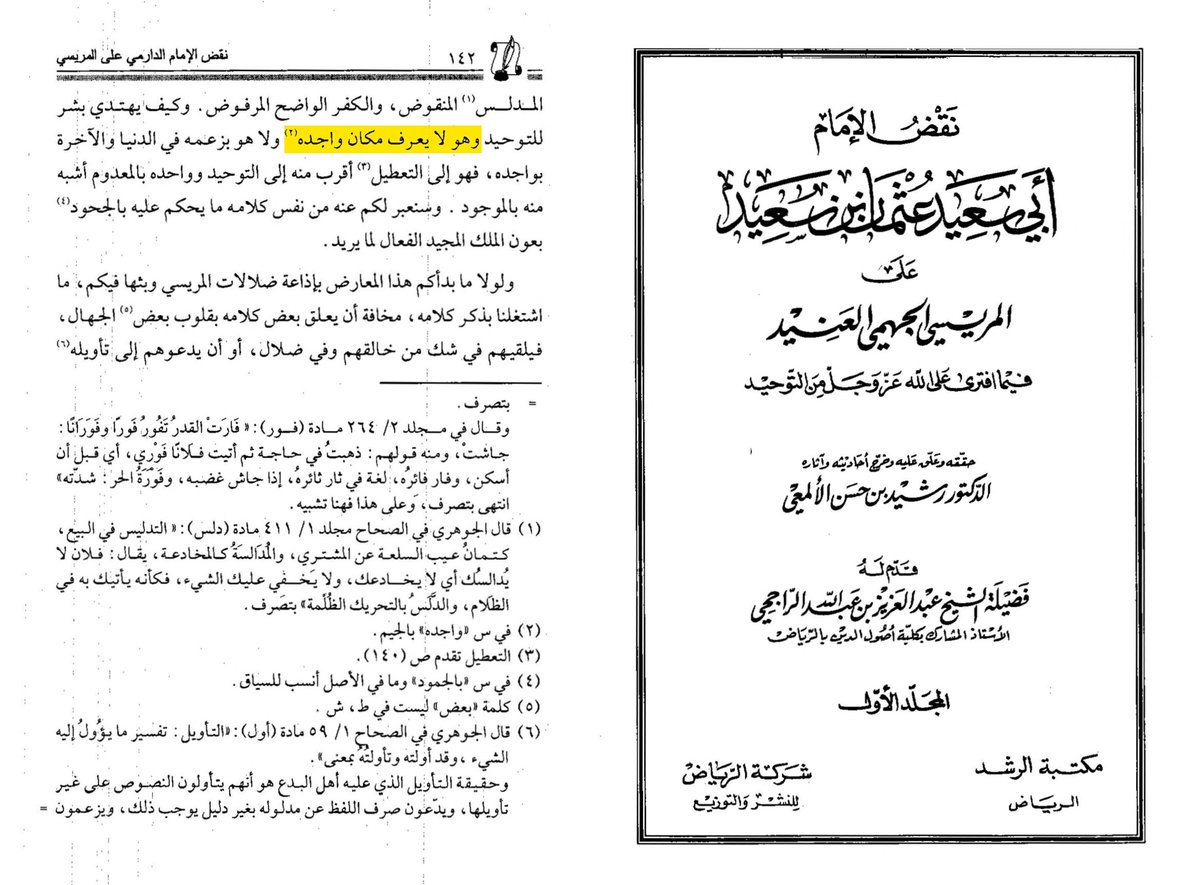
Al-Dārimī (d. 280): “How can Bishr be guided to Tawḥīd if he does not even know the makān of His Creator?!”
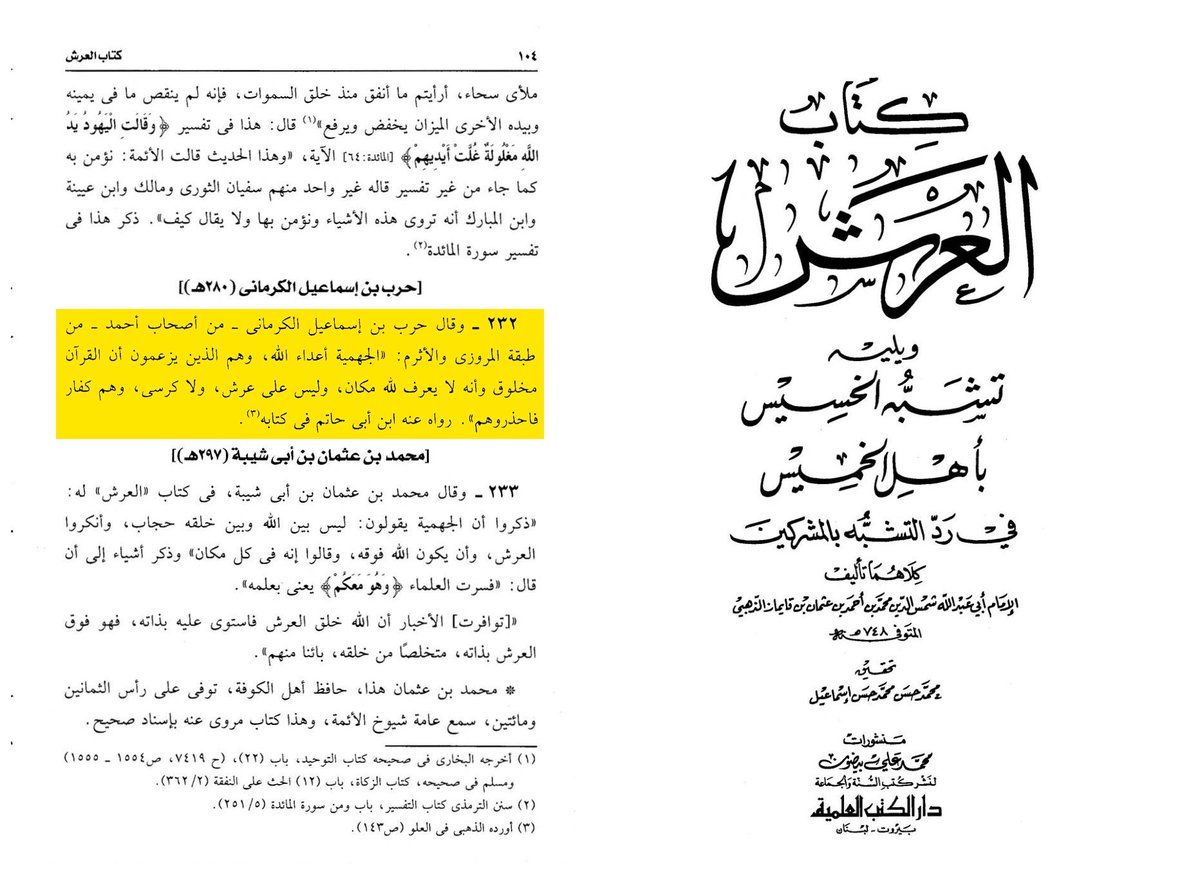
Ḥarb al-Kirmānī (d. 280): “The Jahmiyyah are Allāh’s enemies […] they do not acknowledge any makān for Him.”
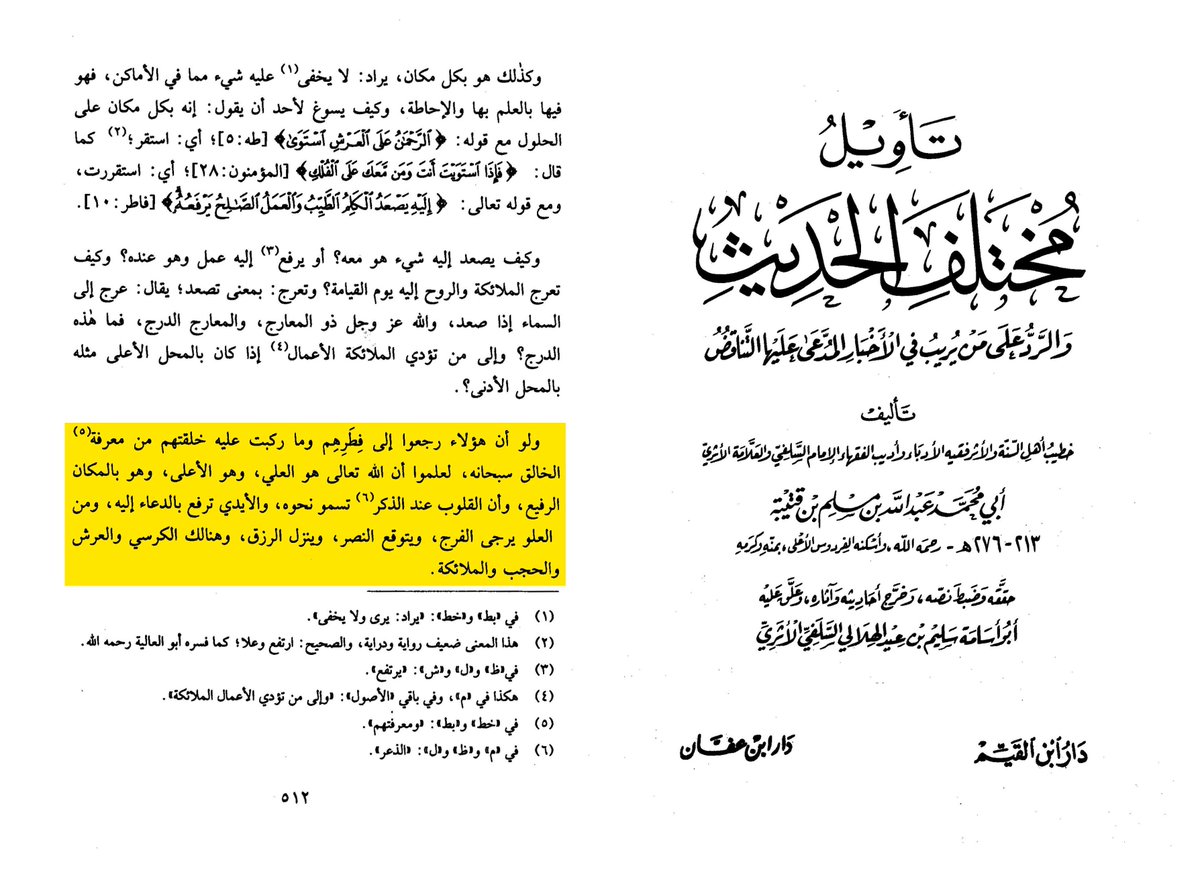
Ibn Qutaybah (d. 276): “Allāh is in the highest makān.”
Ḥarb al-Kirmānī (d. 280): “The Jahmiyyah are Allāh’s enemies […] they do not acknowledge any makān for Him.”
Ibn Qutaybah (d. 276): “Allāh is in the highest makān.”

[cf.] Exhibit A:
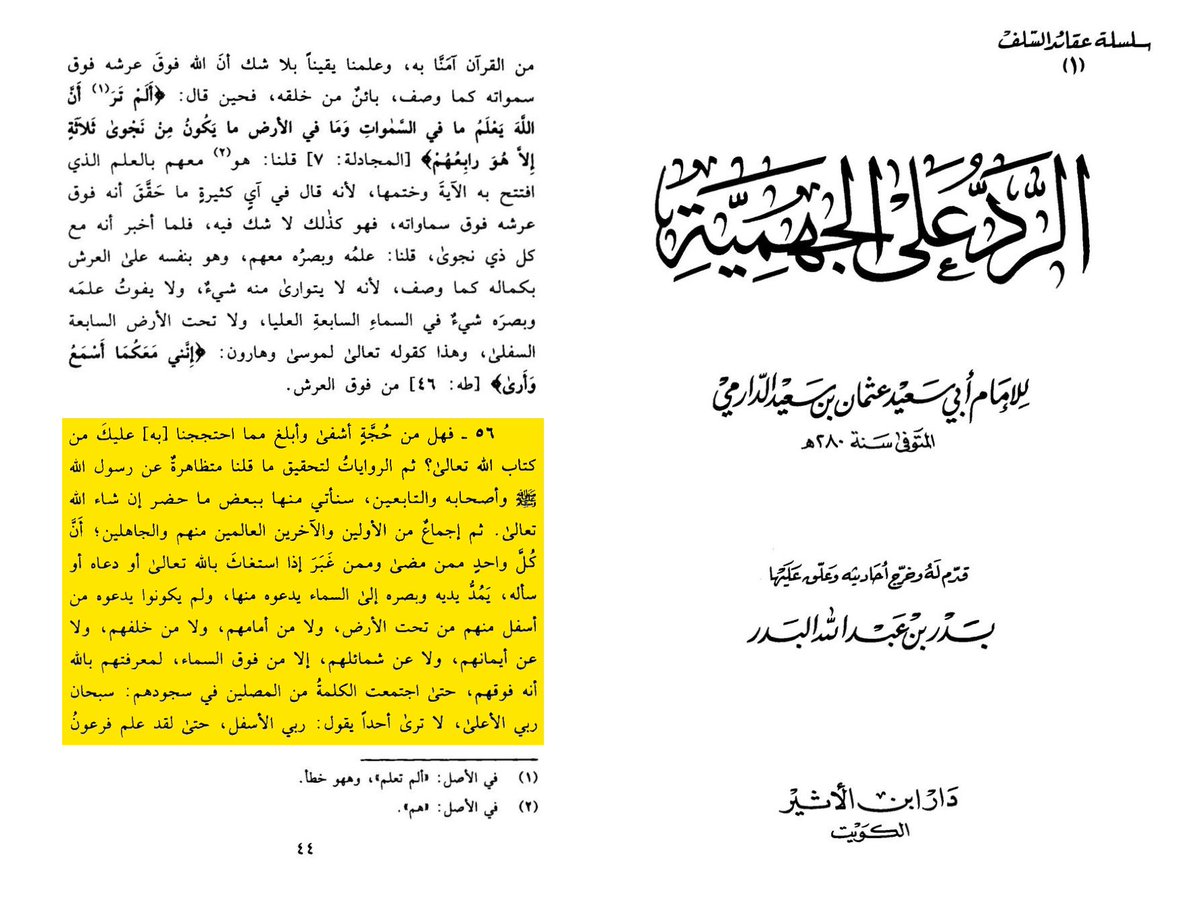
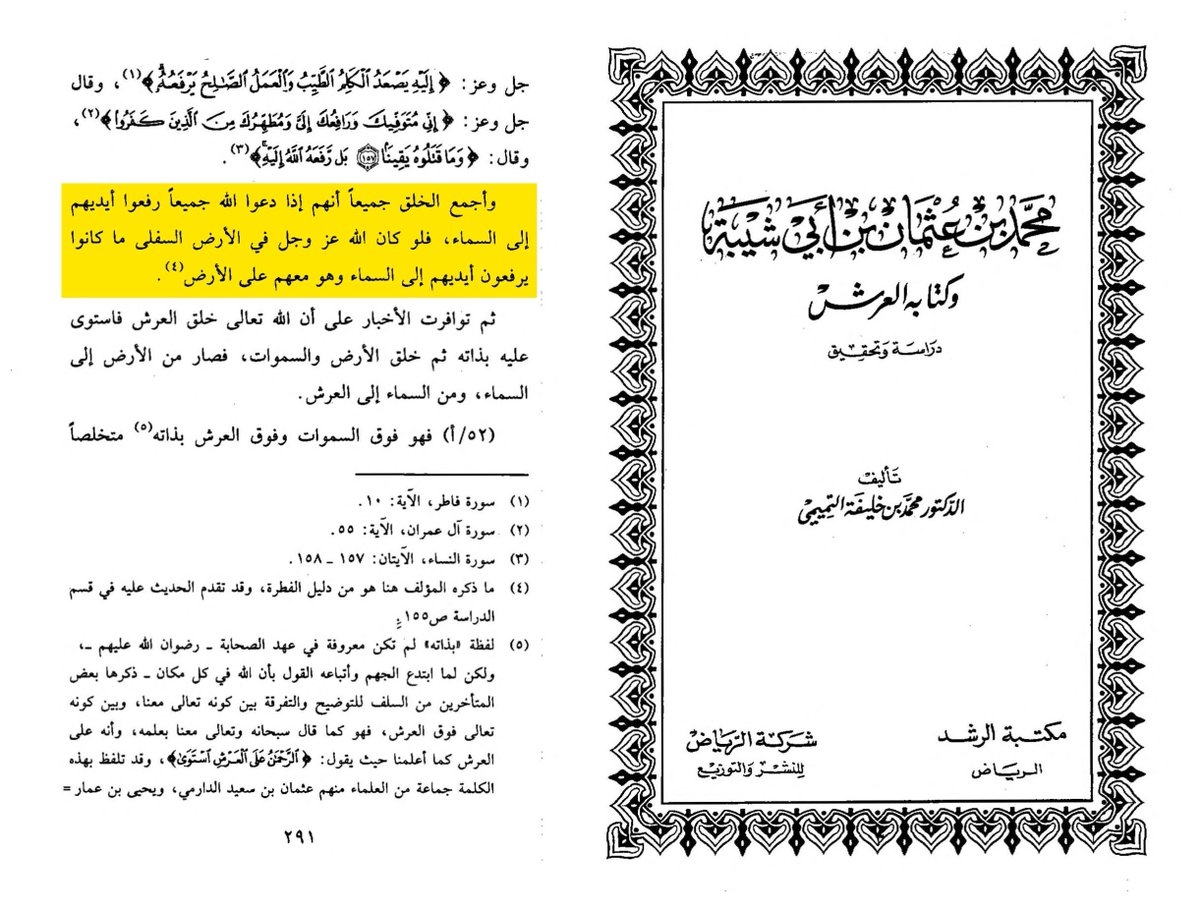
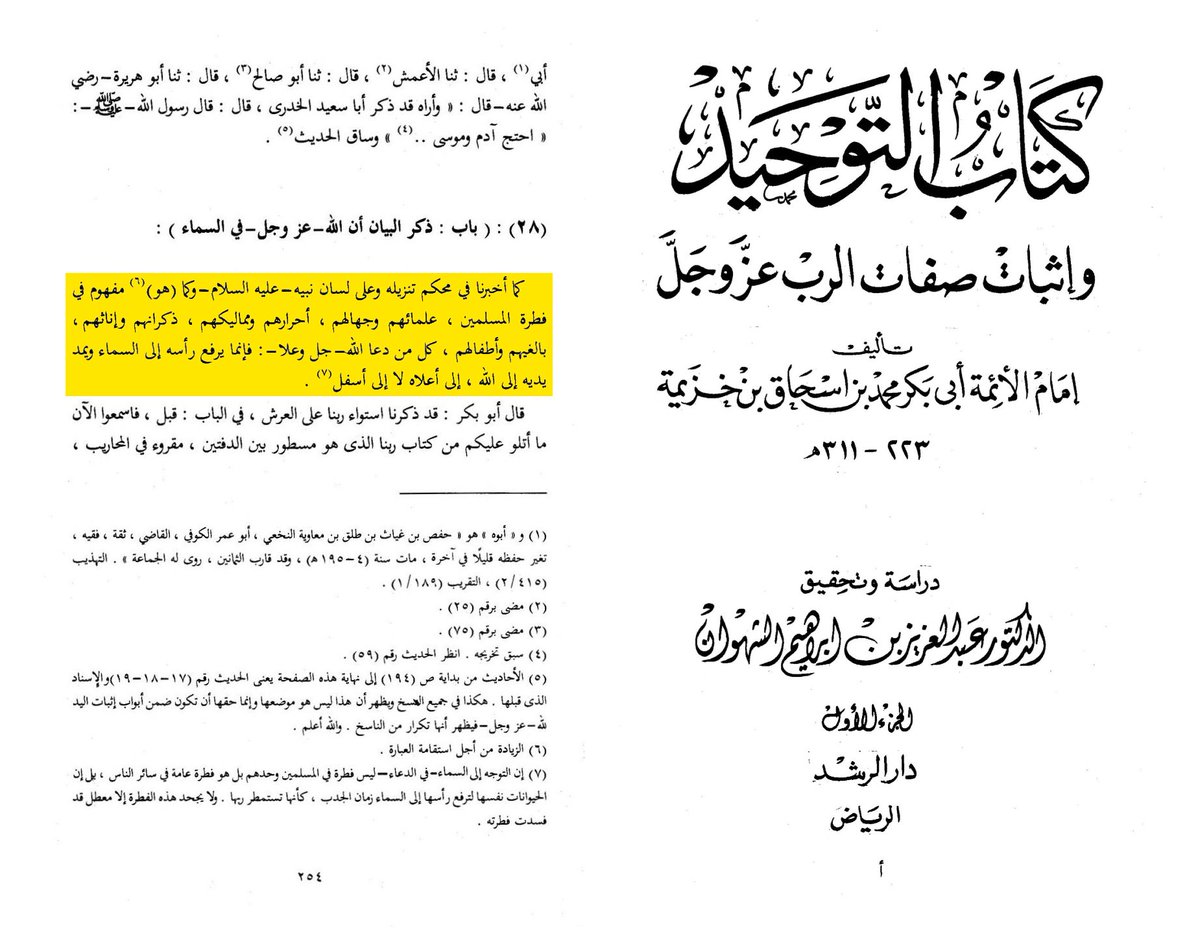
[2] The Salaf used looking up when referring to Allāh and supplicating to Him by raising the hands to the sky to signify His ‘Uluww.
Muḥammad Ibn Aslam (d. 242) said, “Why shouldn’t I raise my head to the heavens? Do I not seek goodness from He who is above the heavens?”
Muḥammad Ibn Aslam (d. 242) said, “Why shouldn’t I raise my head to the heavens? Do I not seek goodness from He who is above the heavens?”
![[2] The Salaf used looking up when referring to Allāh and supplicating to Him by raising the hands t...](https://pbs.twimg.com/media/GJyk5loXsAA6uwd.jpg)
Ibn Qutaybah, al-Dārimī, Muḥammad Ibn Abī Shaybah (d. 297), and Ibn Khuzaymah (d. 311) all spoke with respect to how the widespread practice of raising one’s hands upwards during supplication is in virtue of the people’s recognition of Allāh’s ascendancy.
[cf.] Exhibit B:
[3] The Salaf gestured upwards to signify Allāh’s ascendancy.
Al-Ḥasan Ibn Mūsā al-Ashyath (d. 209) said, “The Jahmī who exaggerates will claim that there is nothing [up] there,” and he pointed to the heavens to demonstrate that the Jahmiyyah deny anything is above the Throne.
Al-Ḥasan Ibn Mūsā al-Ashyath (d. 209) said, “The Jahmī who exaggerates will claim that there is nothing [up] there,” and he pointed to the heavens to demonstrate that the Jahmiyyah deny anything is above the Throne.
![[3] The Salaf gestured upwards to signify Allāh’s ascendancy.
Al-Ḥasan Ibn Mūsā al-Ashyath (d. 209)...](https://pbs.twimg.com/media/GJylPX4XAAA-QVX.jpg)
[cf.] Exhibit C:
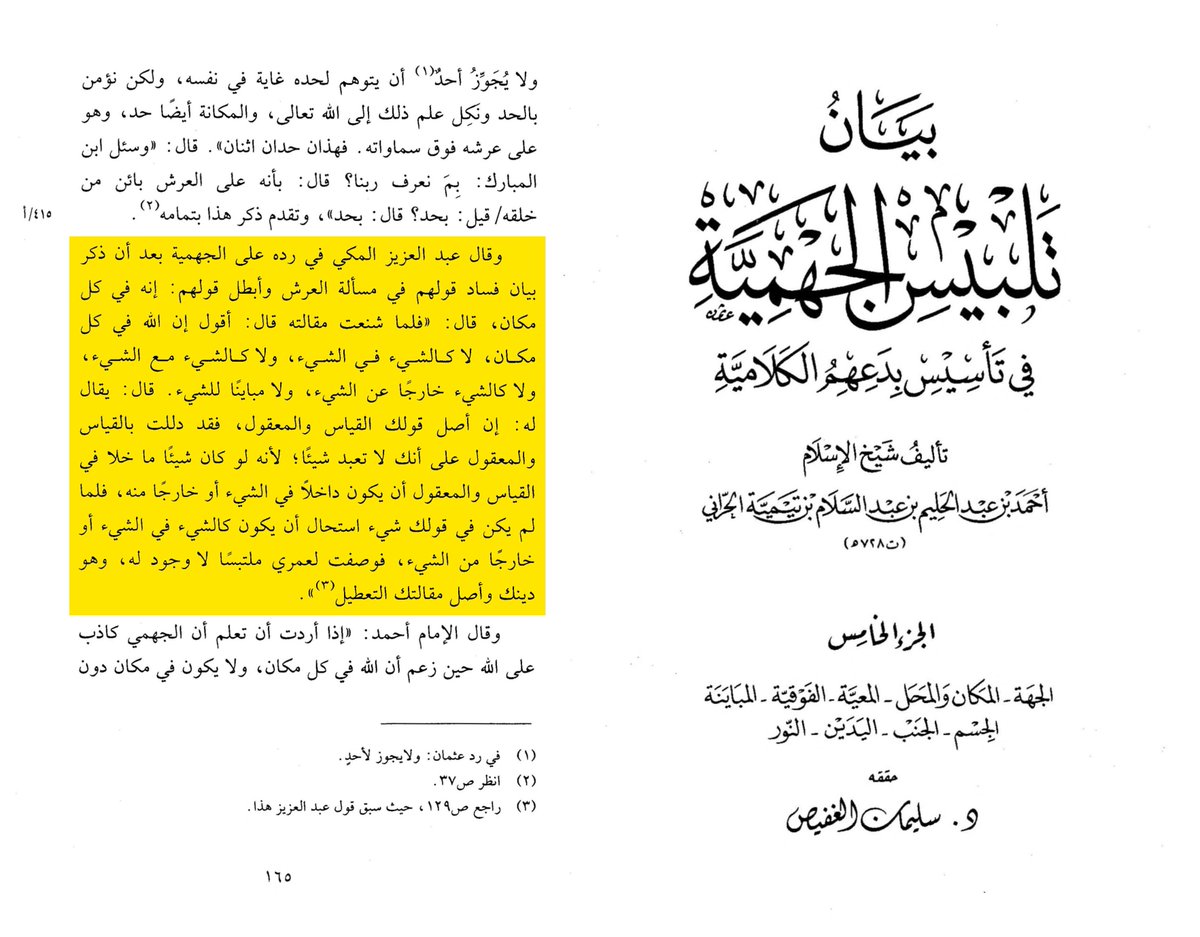
[4] The Salaf denied that Allāh is neither inside nor outside the creation.
The Jahmiyyah said, “Allāh is in every place without touching or being separate from anything.” Imām Aḥmad asks them, “If something is not touching another, is it not necessarily separate from it?”
The Jahmiyyah said, “Allāh is in every place without touching or being separate from anything.” Imām Aḥmad asks them, “If something is not touching another, is it not necessarily separate from it?”
![[4] The Salaf denied that Allāh is neither inside nor outside the creation.
The Jahmiyyah said, “Al...](https://pbs.twimg.com/media/GJylW3kWAAE_G6P.jpg)
The Jahmiyyah said, “No, [that is not necessitated],” so Imām Aḥmad retorted, “How can He be everywhere without touching anything or being separate from anything?! They will not find any good answer to this!”
![The Jahmiyyah said, “No, [that is not necessitated],” so Imām Aḥmad retorted, “How can He be everywh...](https://pbs.twimg.com/media/GJylXSmWQAE4-P2.jpg)
The Jahmiyyah said, “Allāh is everywhere but not inside anything, nor is He with anything, and nor is He outside of or separate from anything.”
‘Abd al-‘Azīz al-Kinānī (d. 240) replied, “You have implied that you worship nothing; something must either be inside or outside!”
‘Abd al-‘Azīz al-Kinānī (d. 240) replied, “You have implied that you worship nothing; something must either be inside or outside!”
[cf.] Exhibit D:
[5] The Salaf affirmed that higher things are closer to Allāh.
Imām al-Dārimī expounded upon this notion and relayed via Isḥāq Ibn Rāhawayh (d. 238) from ‘Abdullāh Ibn al-Mubārak (d. 181) that he stated, “The top of the minaret is closer to Allāh than its bottom.”
Imām al-Dārimī expounded upon this notion and relayed via Isḥāq Ibn Rāhawayh (d. 238) from ‘Abdullāh Ibn al-Mubārak (d. 181) that he stated, “The top of the minaret is closer to Allāh than its bottom.”
![[5] The Salaf affirmed that higher things are closer to Allāh.
Imām al-Dārimī expounded upon this n...](https://pbs.twimg.com/media/GJylqp8W8AAvhkc.jpg)
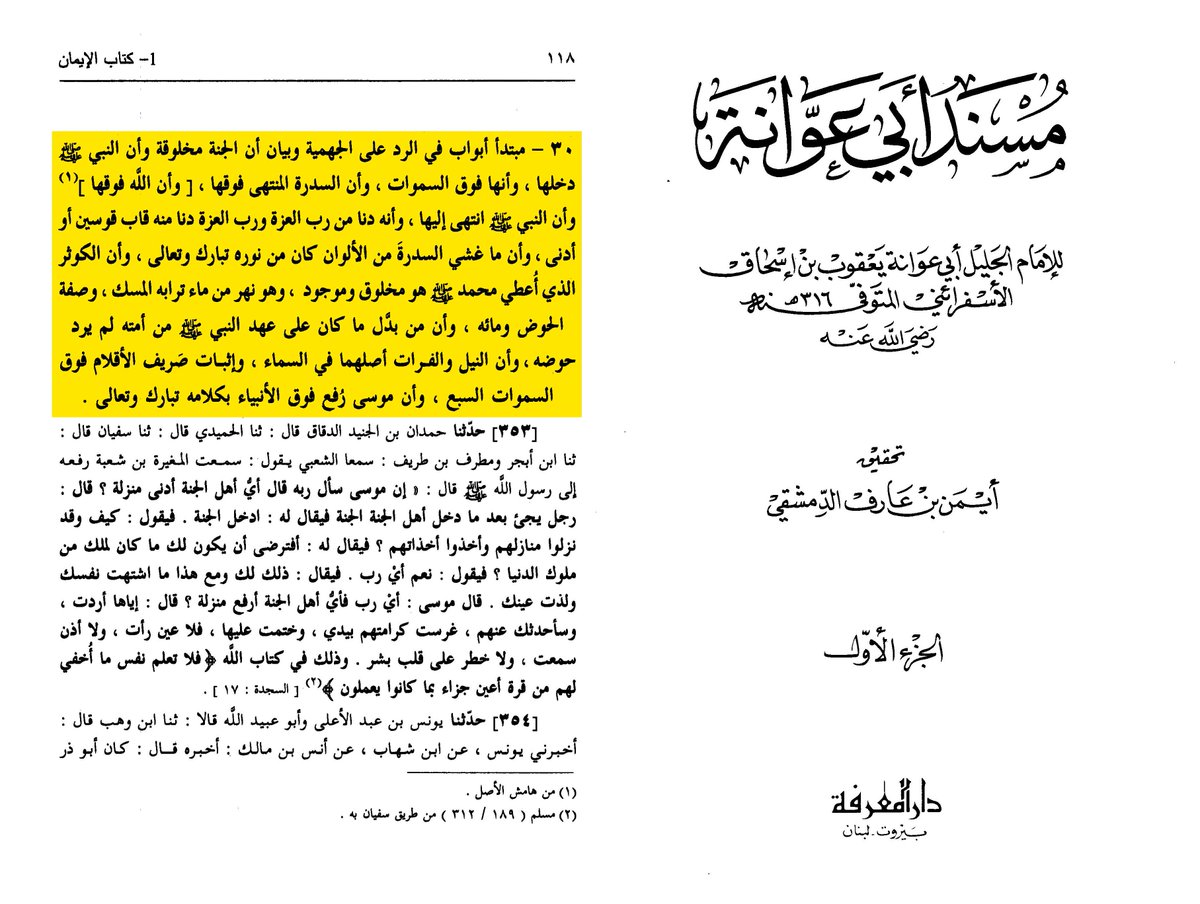
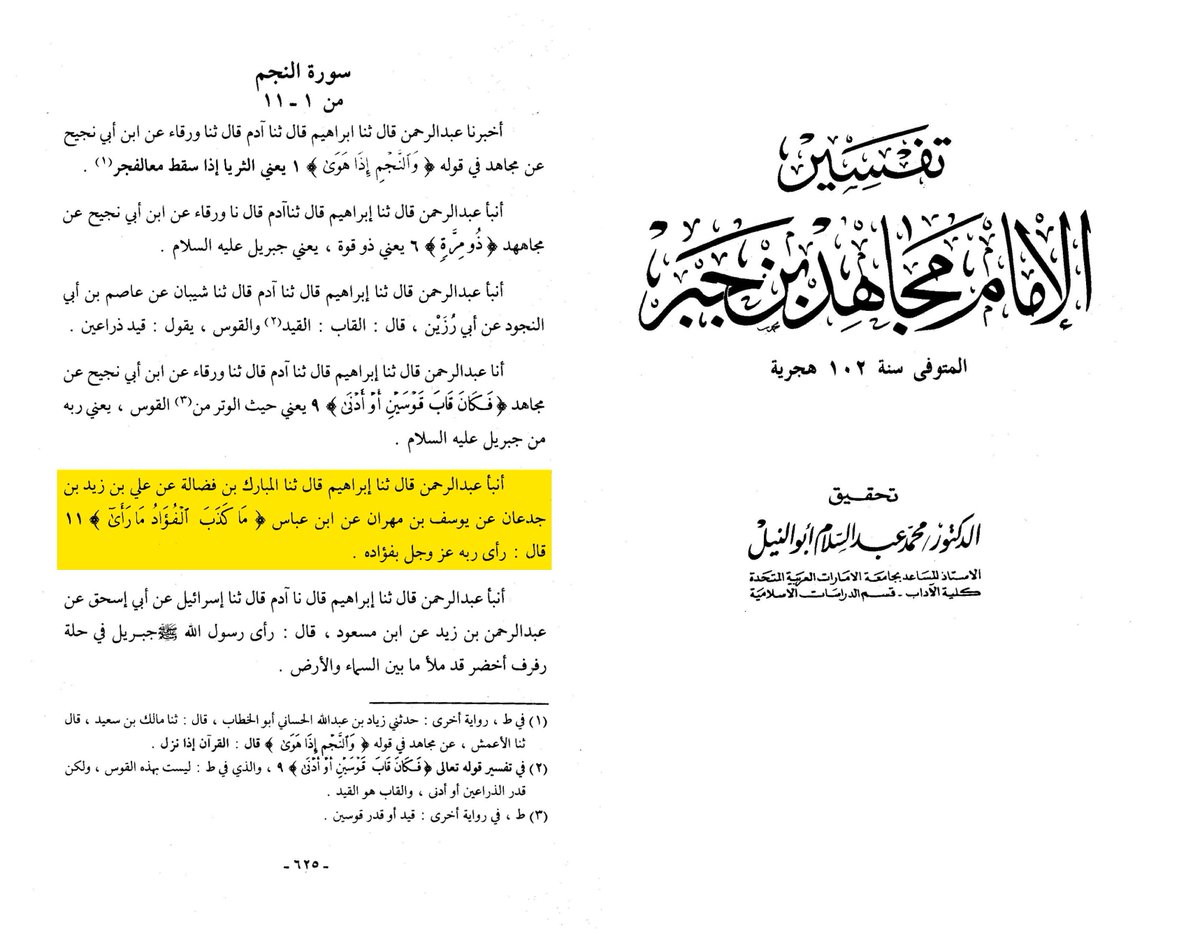
Abū ‘Awānah (d. 316) said in his Musnad that the Prophet (ṣall Allāhu ‘alayhi wa sallam) approached Allāh until he was the length of two units or closer to Him [53:9]. Imām al-Tafsīr Mujāhid (d. 103) instead held that it was Jibrīl who reached this close proximity to Allāh.
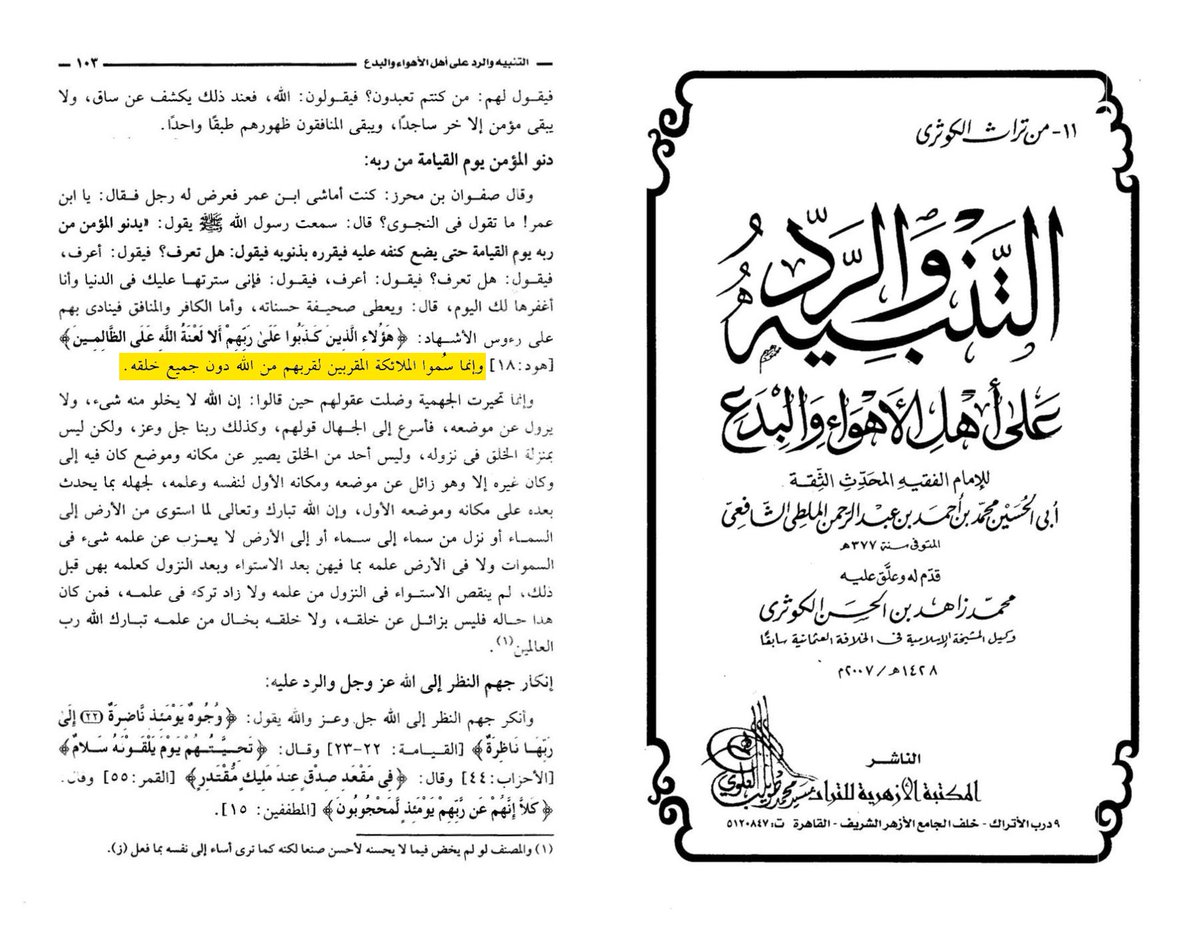
Al-Ḥāfiẓ Abū ‘Āṣim al-Nasā’ī (d. 253) said that certain angels are called “those who are drawn close” because they are closer to Allāh than others from the creation who are below them.
[cf.] Exhibit E:
[6] The Salaf appealed to other religions when affirming al-‘Uluww.
Sa‘īd ibn ʿĀmir (d. 208) said, “The Jahmiyyah are worse in opinion than the Jews and Christians […] who agree that Allāh is above the Throne. Instead, the Jahmiyyah say, ‘There is nothing above the Throne.’”
Sa‘īd ibn ʿĀmir (d. 208) said, “The Jahmiyyah are worse in opinion than the Jews and Christians […] who agree that Allāh is above the Throne. Instead, the Jahmiyyah say, ‘There is nothing above the Throne.’”
![[6] The Salaf appealed to other religions when affirming al-‘Uluww.
Sa‘īd ibn ʿĀmir (d. 208) said,...](https://pbs.twimg.com/media/GJyl2gCX0AAvOAm.jpg)
[cf.] Exhibit F:
[7] The Salaf used things going up to Allāh to prove He is above.
Imām al-Bukhārī (d. 256) used this method of argumentation near the end of his Ṣaḥīḥ under Kitāb al-Tawḥīd, which is in refutation of the Jahmiyyah.
Imām al-Bukhārī (d. 256) used this method of argumentation near the end of his Ṣaḥīḥ under Kitāb al-Tawḥīd, which is in refutation of the Jahmiyyah.
![[7] The Salaf used things going up to Allāh to prove He is above.
Imām al-Bukhārī (d. 256) used thi...](https://pbs.twimg.com/media/GJyl9U-WAAAhM3m.jpg)
Several other early scholars used this line of reasoning.
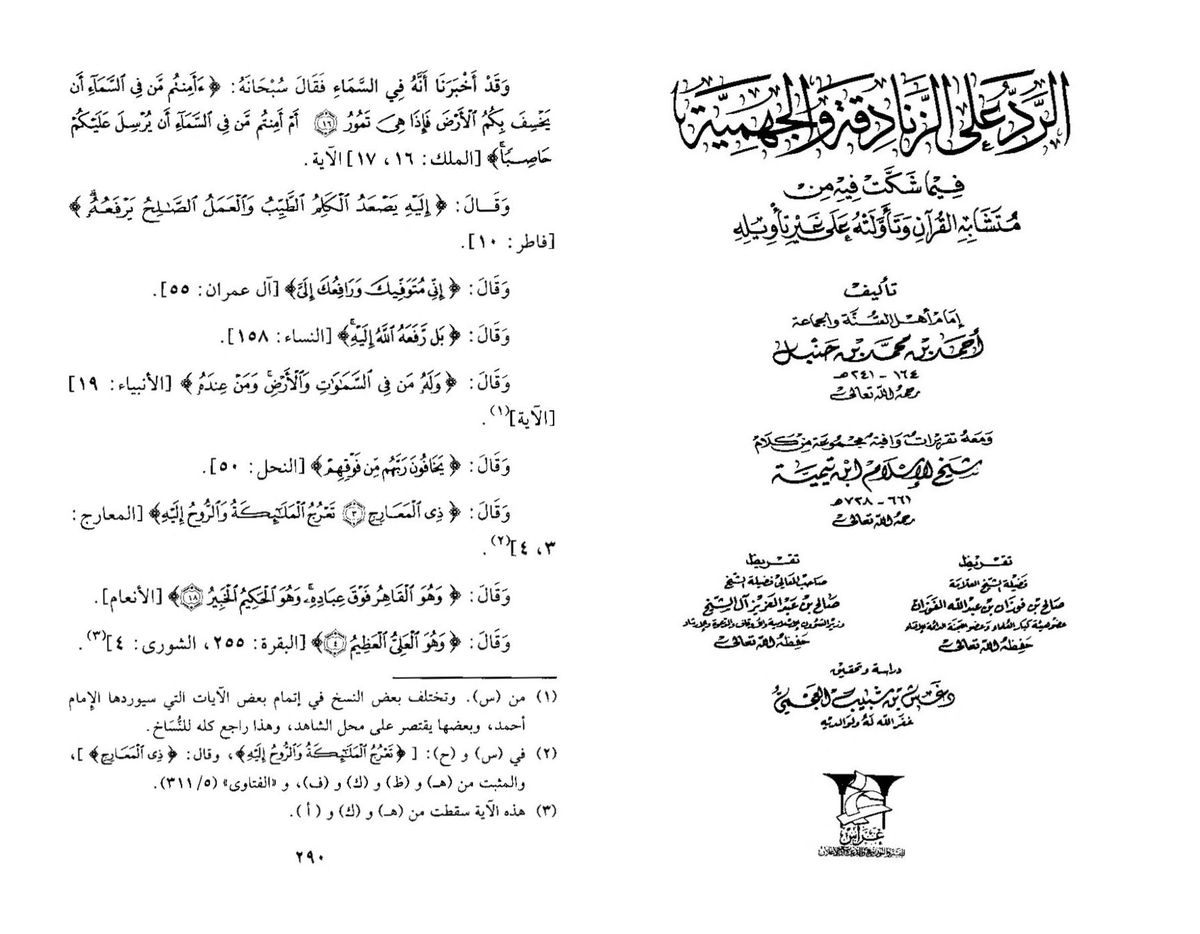
For one, Imām Aḥmad (d. 241) used ‘Īsā (‘alayhi al-salām) being raised up to Allāh as evidence that He is above the heavens and above the Throne.
For one, Imām Aḥmad (d. 241) used ‘Īsā (‘alayhi al-salām) being raised up to Allāh as evidence that He is above the heavens and above the Throne.
[cf.] Exhibit G:
[8] Several from the Salaf affirmed a ḥadd for Allāh.
‘Abdullāh Ibn al-Mubārak (d. 181) said, “Allāh is above the Throne and separate from His creation with a ḥadd (demarcation).” Imām Aḥmad, Isḥāq Ibn Rāhawayh, and others later confirmed this belief.
‘Abdullāh Ibn al-Mubārak (d. 181) said, “Allāh is above the Throne and separate from His creation with a ḥadd (demarcation).” Imām Aḥmad, Isḥāq Ibn Rāhawayh, and others later confirmed this belief.
![[8] Several from the Salaf affirmed a ḥadd for Allāh.
‘Abdullāh Ibn al-Mubārak (d. 181) said, “Allā...](https://pbs.twimg.com/media/GJymZxjWMAAasmx.jpg)
![[8] Several from the Salaf affirmed a ḥadd for Allāh.
‘Abdullāh Ibn al-Mubārak (d. 181) said, “Allā...](https://pbs.twimg.com/media/GJymcX1XgAEk8sA.jpg)
![[8] Several from the Salaf affirmed a ḥadd for Allāh.
‘Abdullāh Ibn al-Mubārak (d. 181) said, “Allā...](https://pbs.twimg.com/media/GJymeyNWoAA0365.jpg)
![[8] Several from the Salaf affirmed a ḥadd for Allāh.
‘Abdullāh Ibn al-Mubārak (d. 181) said, “Allā...](https://pbs.twimg.com/media/GJymhZgW4AAP3Vh.jpg)
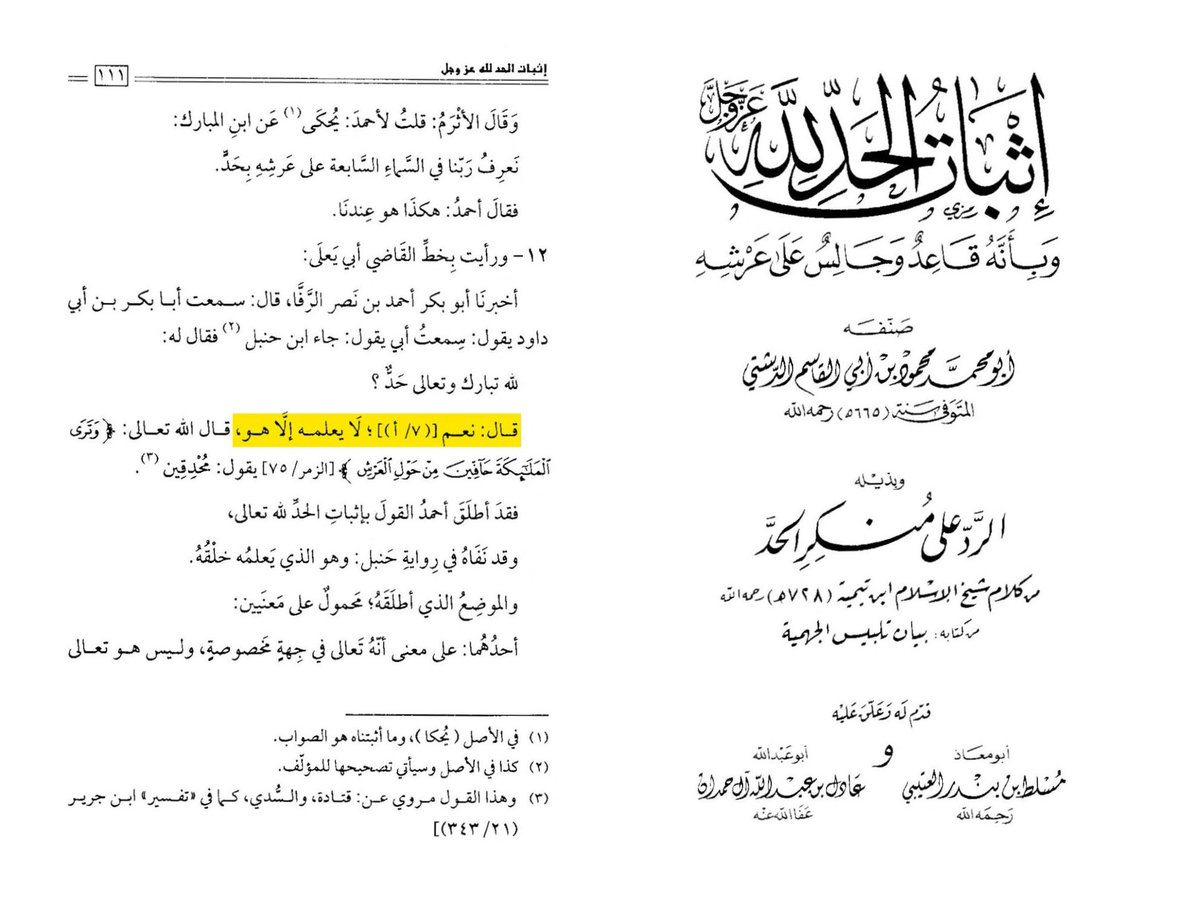
Al-Qāḍī Abū Ya‘lā narrated from Imām Abū Dāwūd al-Sijistānī (d. 275):
“A man came to Aḥmad Ibn Ḥanbal and asked him, ‘Does Allāh have a ḥadd?’ He replied, ‘Yes; no one knows it (its reality) except Him.’”
He then cited the Āyah of the angels surrounding the Throne as proof.
“A man came to Aḥmad Ibn Ḥanbal and asked him, ‘Does Allāh have a ḥadd?’ He replied, ‘Yes; no one knows it (its reality) except Him.’”
He then cited the Āyah of the angels surrounding the Throne as proof.
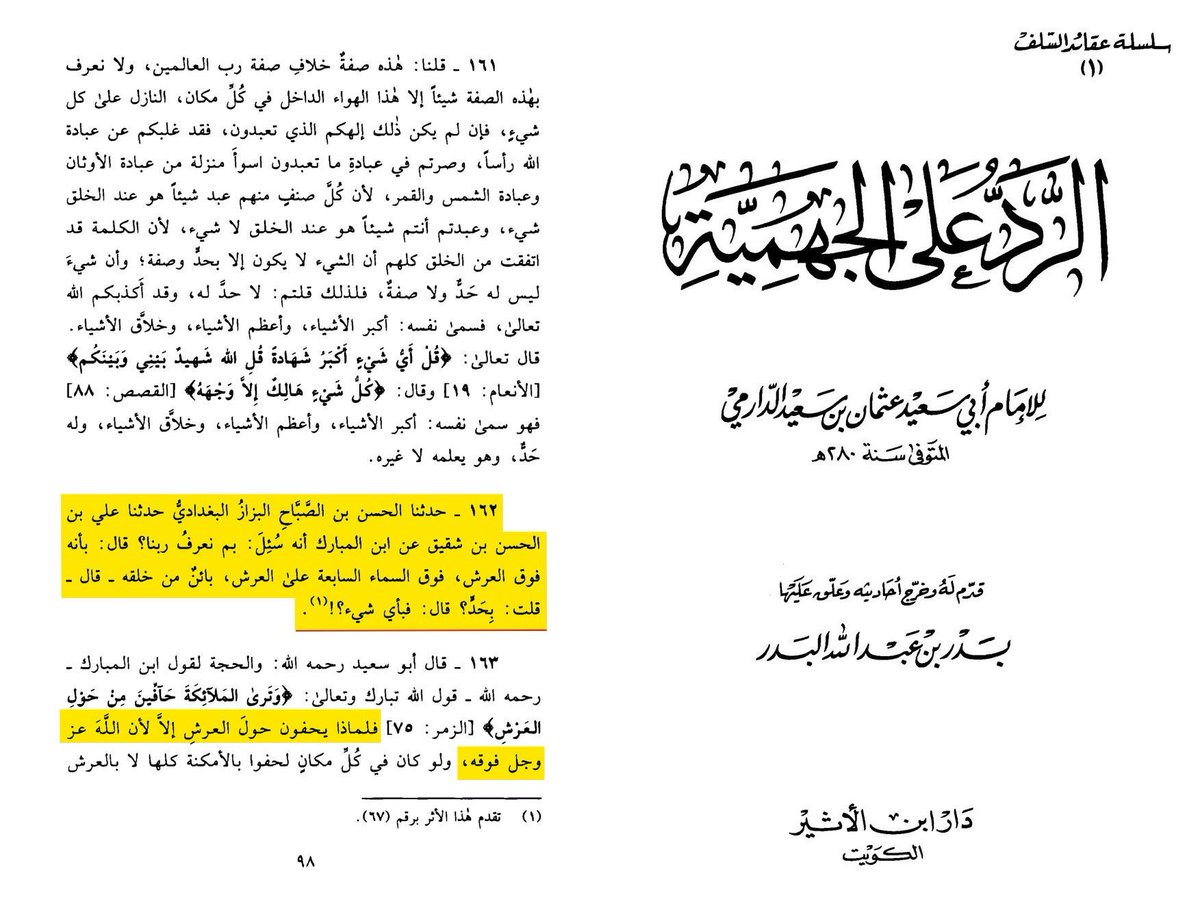
His student, Imām al-Dārimī, likewise argued, “Why would the angels be surrounding the Throne [in this manner] unless Allāh is above it?”
[9] Some spoke with respect to Allāh “residing” above the heavens.
Ibn Sallām al-Bīkandī (d. 225) said, “It has reached us that some of them [the Jahmiyyah] do not believe in any [Lord] residing above the heaven.”
Ibn Sallām al-Bīkandī (d. 225) said, “It has reached us that some of them [the Jahmiyyah] do not believe in any [Lord] residing above the heaven.”
![[9] Some spoke with respect to Allāh “residing” above the heavens.
Ibn Sallām al-Bīkandī (d. 225) s...](https://pbs.twimg.com/media/GJyny6iXAAEswSk.jpg)
[cf.] Exhibit H:
These should suffice for those who are sincere, but for those who are only seeking to reconcile their preconceived kalāmī notions with the Salaf’s pure creed, perhaps nothing will ever prove to be sufficient.
Loading suggestions...